
Reviewed · OSAKA CALLIGRAPHY CLASSES
Osaka: Temple Tour and Traditional Calligraphy Lesson
At Saishoji Temple, a short walk from central Osaka, you trade neon and department stores for a brush, black ink, and a quiet place to think. The main appeal is the pairing of Zen meditation with beginner-friendly calligraphy. You are not just watching a demonstration. You are asked to slow down, breathe, and make each stroke with care.
I like the personal souvenirs: a mini shikishi carrying your chosen kanji, a name card with Japanese characters and their meaning, and a small 8-centimeter ceramic plate. I also like the location. Saishoji is close enough to Shinsaibashi and Namba to fit neatly into a day of sightseeing. The main consideration is the one-hour limit. The program includes history, language, meditation, calligraphy, and a matcha tea activity, so the pace may feel brisk if you want long, detailed instruction in each part.
Key points at a glance
- Meditate before you write: A guided breathing exercise helps settle your attention before the brush reaches the paper.
- Learn Osaka in context: The introduction covers Shinsaibashi, Yotsubashi, Osaka Castle, and the difference between Japanese temples and shrines.
- Make three keepsakes: You write on a mini shikishi and receive a kanji name card plus an 8-centimeter ceramic plate.
- Suitable for solo visitors: The calm setting and kind, attentive instruction make it easy to attend alone.
- Central Osaka address: Saishoji Temple is three minutes from Yotsubashi Station, ten minutes from Shinsaibashi Station, and fifteen minutes from Namba Station.
- Low-cost cultural stop: At $20 per person, it offers a personal activity and several mementos for less than many major Osaka attractions.
Why this temple stop feels different from a standard Osaka activity
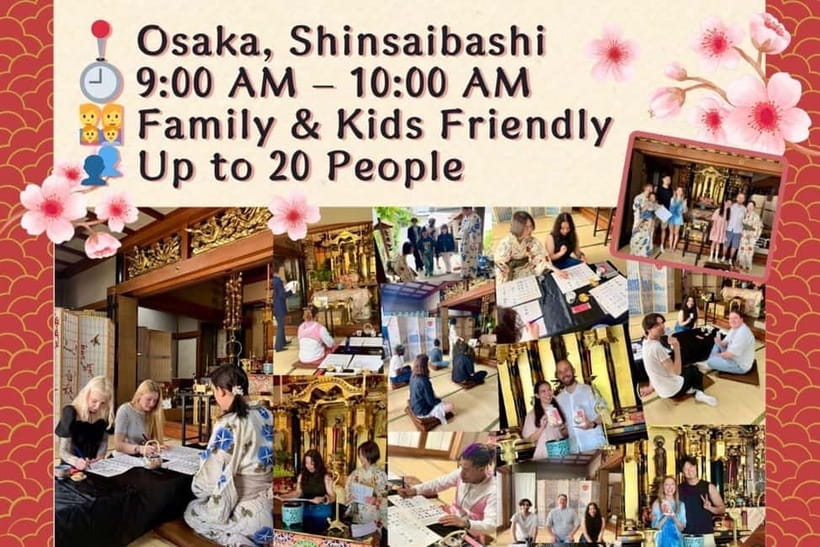
Many Osaka sightseeing stops ask you to look, photograph, and move on. This one asks you to pause. You sit in a temple setting, listen to an English-speaking instructor, and use your hands instead of simply taking in another view.
That change matters. Calligraphy is not difficult because you need to produce perfect Japanese. It is useful because the brush slows you down. You must watch the shape of each character, control the ink, and finish one stroke before starting the next. The guided meditation prepares you for exactly that kind of attention.
Saishoji Temple is in Kitahorie, near the Yotsubashi and Shinsaibashi shopping districts. You remain close to the city center, but the activity gives you a quieter hour away from shops, signs, and crowds. I see it as an easy cultural reset between sightseeing stops.
The experience has earned a 4.9 rating from 24 reviews, with repeated praise for the gentle staff, calm temple atmosphere, and clear instructions for first-time calligraphers. That pattern is useful. If you worry that you have poor handwriting or no artistic skill, the format is designed to help you take part without prior experience.
More temple tours in Osaka:
- Osaka: Minoh, Katsuoji Temple, & Minoh Falls Full-day Tour
★ 4.9 · 172 reviews - Osaka Temple Cool Foot Bath & Matcha Experience〈45min〉
★ 4.9 · 82 reviews - Osaka: Mind & Spirit Balance Temple Reiki Healing
★ 5.0 · 41 reviews
Starting with Osaka, temples, shrines, and simple Japanese
The session begins with a guided lesson about Osaka and the surrounding area. You hear about Shinsaibashi, Yotsubashi, and Osaka Castle, along with basic differences between temples and shrines.
This is a good introduction for a first visit to Japan. Visitors often see a torii gate, Buddhist statue, incense burner, or temple roof without knowing which tradition they are looking at. A short explanation gives those sights a clearer place in the city’s culture.
The language part adds another practical layer. The instructor teaches conversational phrases and idiomatic cultural expressions in English. Do not expect a full Japanese class in one hour. Instead, think of it as a compact lesson that gives you a few useful words and helps you understand how communication works in a Japanese cultural setting.
Because the session is taught in English, you do not need Japanese ability to follow along. The activity is also described as suitable for beginners and advanced learners, which makes sense here. Beginners can focus on the basic phrases and brush technique, while someone with more language experience can ask for more context or practice speaking.
Zazen meditation before the brush
The meditation portion is one of the most valuable parts of the hour. You are guided to clear your mind and focus on your breathing before moving into calligraphy.
This is not presented as a long retreat or a demanding religious practice. It is a short introduction to Zazen, designed to help you settle your attention. That makes it approachable if you have never meditated before.
I like the order. Starting with meditation gives the calligraphy a purpose beyond making a souvenir. You first slow your breathing, then carry that focus into the movement of the brush. Several of the comments about the experience describe this quiet concentration as a welcome break from daily routines.
The temple setting helps, but the real value comes from the structure. You are given a reason to put your phone away, sit still, and work at one small task. If you want a high-energy activity, this may feel too quiet. If you have spent the day shopping or moving between Osaka sights, that quiet may be exactly what you need.
Learning calligraphy without needing artistic skill
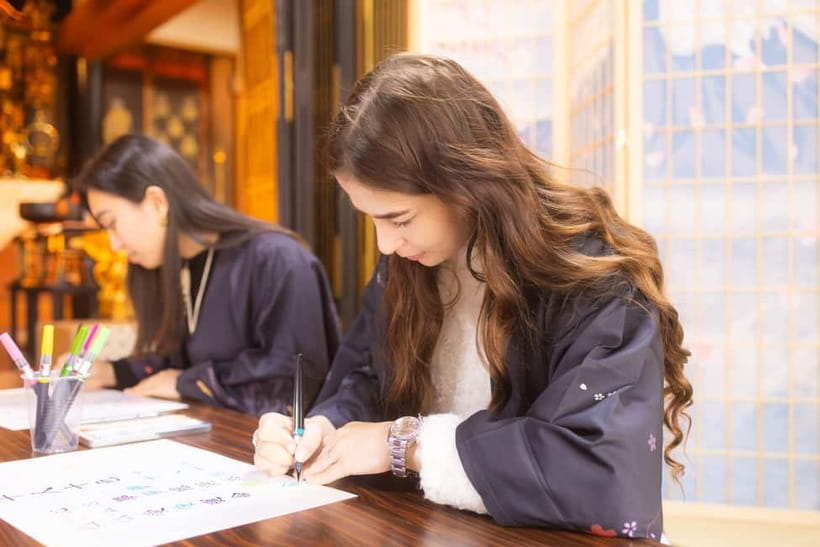
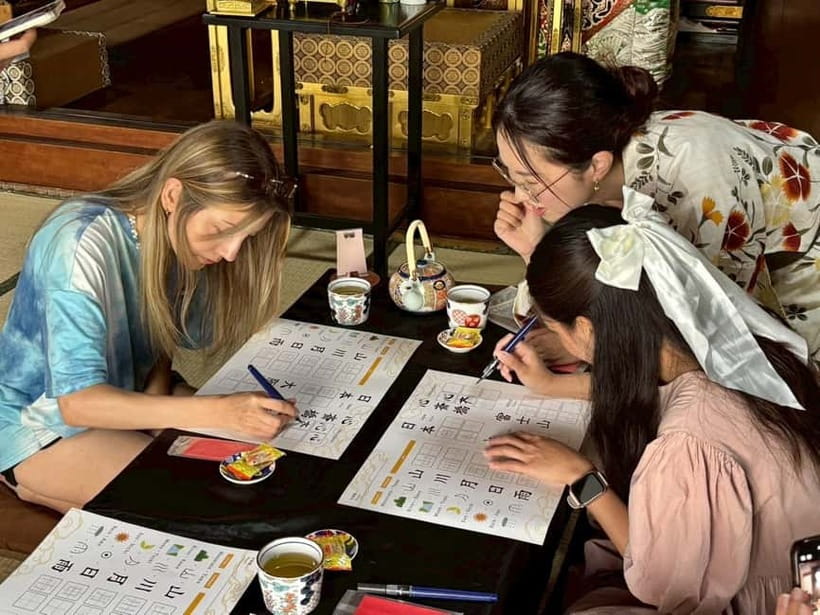
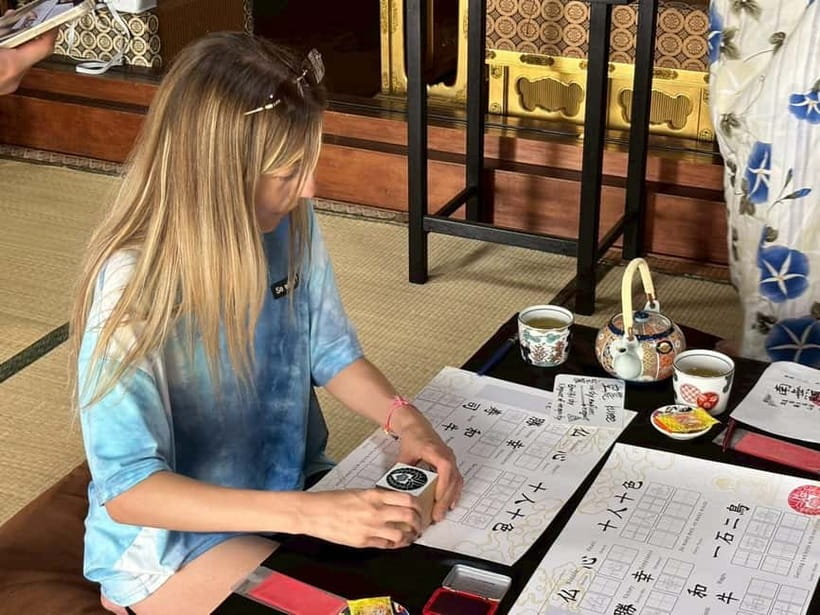
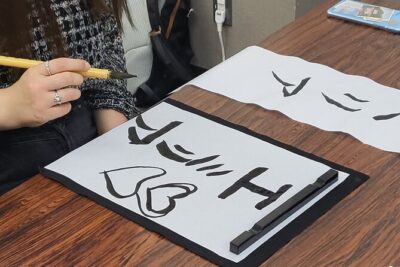
The calligraphy lesson is the heart of the activity. You practice basic brushwork and then write one favorite kanji on a mini shikishi.
A kanji is not just a decorative symbol. Individual characters can carry meanings connected to ideas such as love, peace, strength, beauty, or nature, though the specific choices available to you are not stated. The important point is that you choose one favorite kanji and take home a piece tied to its meaning.
The instructors give clear guidance, making this suitable for a first attempt. You can expect to work on the feel of the brush, the amount of ink, and the order or shape of the strokes. The goal is not to match a professional calligrapher. It is to understand why Japanese writing values balance, control, and empty space.
A useful tip is to treat the first practice marks as part of the lesson, not as failures. Your final kanji on the mini shikishi is the keepsake. The process leading up to it is where you learn to handle the brush.
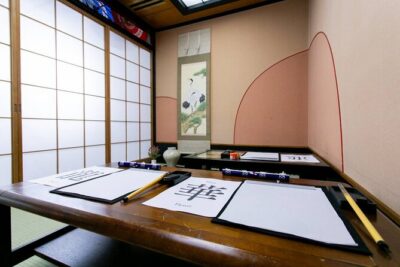
The setting also changes the mood. Writing Japanese characters at a desk in a classroom would still be interesting, but doing it inside a functioning temple gives the hour more weight. The ink, brush, silence, and religious surroundings all support the same idea: careful attention.
More calligraphy classes in Osaka:
- Osaka: Private Japanese Calligraphy Experience
★ 5.0 · 66 reviews - Calligraphy Workshop in Namba, Dotonbori
★ 5.0 · 57 reviews - Learning Zen of Japanese Calligraphy in kimono near Osaka Castle
★ 4.5 · 53 reviews - Osaka: Private Tea Ceremony and Calligraphy Experience
★ 5.0 · 50 reviews
The three keepsakes you take home
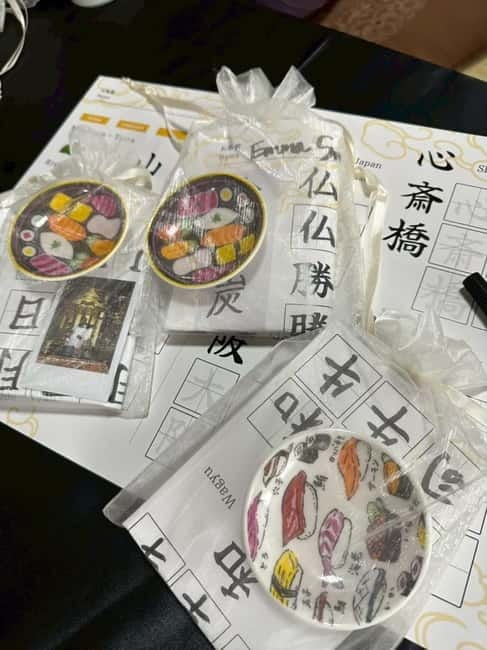
The mini shikishi is the main item you create. It gives you a compact piece of your own work rather than a mass-produced souvenir.
You also receive a name card featuring Japanese kanji and an explanation of its meaning. This is a thoughtful addition, especially if you want a souvenir connected to your identity rather than only to the place. Since the activity information does not specify how the Japanese name is selected, you should ask the instructor how the choice is made during the session.
The third gift is a small ceramic plate measuring 8 centimeters in diameter. It is modest in size, so it should be easy to pack compared with larger craft items. Still, ceramic can break, so you will want to protect it in your luggage.
The gifts add value to the $20 price. You receive activity materials, an original calligraphy piece, a personalized kanji card, and a small ceramic object. The experience would still have value without the gifts, but these items help you remember what you learned after returning home.
Matcha and the limits of a one-hour program
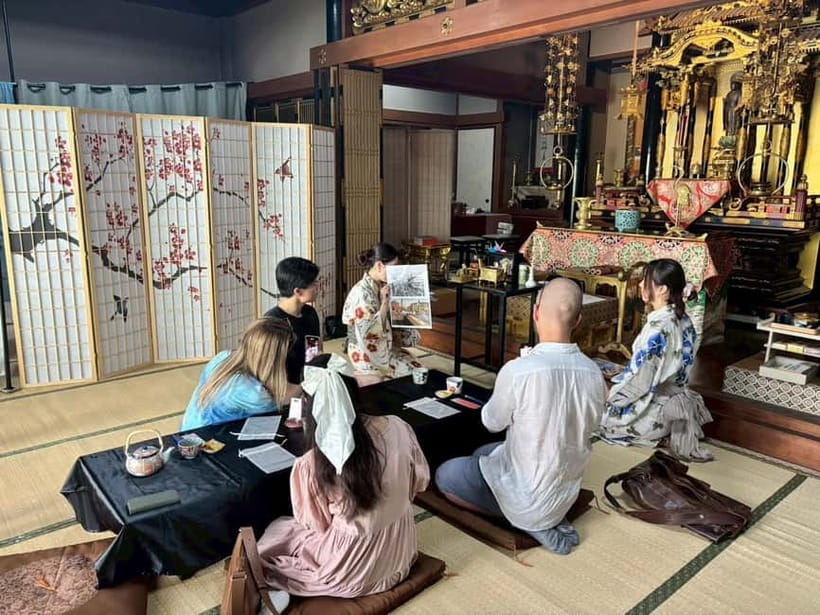
The full description includes a traditional matcha tea ceremony among the cultural activities. It also lists language learning, meditation, and calligraphy copying. This is a generous amount for a one-hour visit.
You should therefore think of the session as a compact sampler rather than a long tea ceremony or an advanced calligraphy workshop. Each part introduces a different aspect of Japanese culture, but the schedule cannot give every activity the same depth.
That is not necessarily a weakness. A first-time visitor may prefer a taste of several traditions in one convenient stop. You can learn the basic idea of meditation, try calligraphy, hear cultural context, and encounter matcha without committing half a day.
The tradeoff is time for personal questions and repeated practice. If your main aim is to improve calligraphy technique, a longer specialist class would be a better match. If you want several gentle cultural experiences close to central Osaka, the short format works well.
Getting to Saishoji Temple from Osaka’s main shopping districts
The meeting point is Saishoji Temple, at 1-6-18 Kitahorie, Nishi-ku, Osaka, 550-0014.
From Yotsubashi Station on the Osaka Metro Yotsubashi Line, use Exit 4 and walk for about three minutes. This is the easiest route and the one I would choose when planning the activity around a fixed start time.
Shinsaibashi Station on the Midosuji Line is about a ten-minute walk away. Namba Station is about fifteen minutes on foot. That makes the temple easy to combine with time in Shinsaibashi, Horie, or Namba.
The central setting is one of the strongest practical points. You do not need to travel out to a distant cultural site, and you can pair the session with shopping, food, or a walk through the nearby districts. Give yourself enough time to find the temple entrance. The meeting point is specific, but a three-minute walk still goes more smoothly when you are not rushing.
Who will get the most from this experience
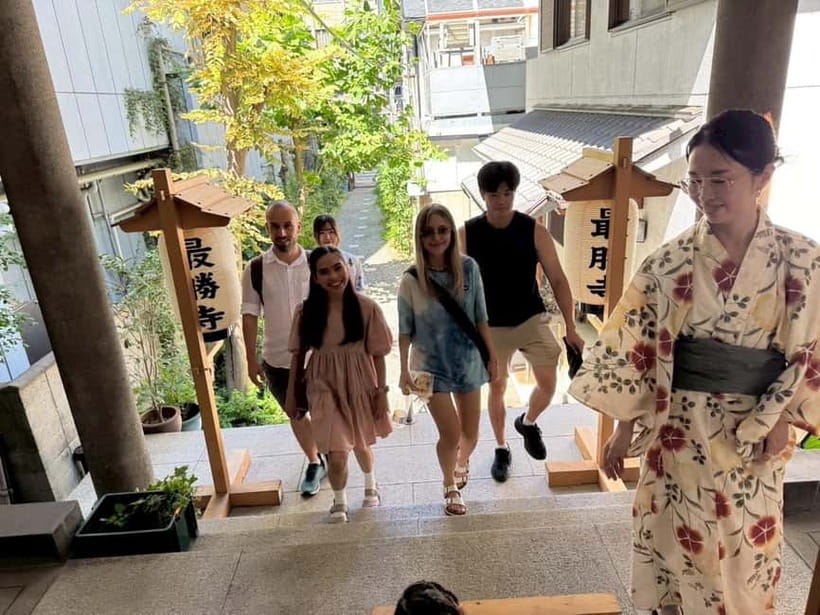
I would recommend this activity to first-time visitors who want a small, manageable introduction to Japanese culture. The English instruction removes a major barrier, and the basic calligraphy format does not require prior experience.
It also suits solo participants. The activity does not depend on having a companion, and the quiet format gives you room to concentrate without feeling out of place. The individual who joined alone found the staff accommodating and the atmosphere relaxing, which matches the design of the session.
Families can also enjoy it, especially if everyone wants to make something rather than only look at historic buildings. Keep in mind that the program requires quiet attention and careful handling of ink and brush, so it may not be ideal for very young children.
Couples and friends will appreciate having a personal souvenir from the same hour, but you do not need to treat it as a group performance. Each person creates a separate piece.
I would be more cautious about recommending it to someone seeking an in-depth religious lesson, an extended meditation retreat, or high-level calligraphy training. The hour gives you an introduction, not a full course.
Price, timing, and booking flexibility
At $20 per person, the experience is fairly priced for a one-hour guided cultural activity in central Osaka. The fee includes the Japanese history and language lesson, cultural activities, interaction with resident monks, and all materials.
The value improves if you care about the take-home items. You make your own mini shikishi and receive two additional gifts, including the ceramic plate and kanji name card. Those extras turn the activity into more than an admission ticket to watch someone demonstrate a tradition.
The price is less compelling if you want one subject taught in great detail. A specialist calligraphy lesson could offer more practice time, while a dedicated tea ceremony could spend longer explaining each step. Here, you pay for variety, convenience, and the atmosphere of a temple near Osaka’s center.
The duration is one hour, with starting times based on availability. The activity offers free cancellation up to 24 hours in advance, and you can reserve now and pay later. Those terms help if your Osaka schedule is still changing, though you should check the available start time before planning another timed booking around it.
A calm cultural pause in the middle of Osaka
The best part of Saishoji Temple is the way the pieces fit together. The history lesson tells you where you are. Meditation helps you slow down. Calligraphy gives your hands a job. The kanji card and small ceramic plate let you carry a little of the experience onward.
The format is friendly rather than formal. Clear instruction matters here because a first brush stroke can feel awkward, and the atmosphere should help you relax rather than worry about getting everything right.
I also like that the experience does not require a full day or a long trip across Osaka. You can walk from Yotsubashi, Shinsaibashi, or Namba, spend one focused hour at the temple, then return to the city’s shops and restaurants.
The main limitation remains the compressed schedule. You may leave wishing you had more time with the brush or tea. That is the cost of keeping the activity affordable and easy to fit into a busy itinerary.
Should you book the Saishoji Temple calligraphy experience?
Book it if you want a gentle, inexpensive cultural activity with English instruction, a central location, and tangible souvenirs. It is especially good for solo visitors, first-time calligraphers, families, and anyone who wants a quiet pause between Osaka’s louder attractions.
Skip it if you want a long meditation session, advanced calligraphy coaching, or a detailed tea ceremony. For most visitors, though, the combination of temple setting, breathing practice, beginner calligraphy, local context, and three keepsakes makes $20 a sensible use of one hour.
FAQ
Where does the temple and calligraphy activity take place?
It takes place at Saishoji Temple, 1-6-18 Kitahorie, Nishi-ku, Osaka, 550-0014, Japan.
How close is Saishoji Temple to Yotsubashi Station?
The temple is about a three-minute walk from Exit 4 of Yotsubashi Station on the Osaka Metro Yotsubashi Line.
How far is the temple from Shinsaibashi Station?
Saishoji Temple is about a ten-minute walk from Shinsaibashi Station on the Osaka Metro Midosuji Line.
How far is the temple from Namba Station?
The temple is about a fifteen-minute walk from Namba Station.
How long does the activity last?
The activity lasts one hour.
Is the activity taught in English?
Yes. The instructor language is English.
Do I need previous calligraphy experience?
No. The activity is designed for beginners as well as advanced learners, and basic calligraphy instruction is included.
What will I write during the activity?
You will practice basic calligraphy and write one favorite kanji on a mini shikishi.
What souvenirs are included?
You receive a kanji name card with its meaning and a small ceramic plate measuring 8 centimeters in diameter. Your mini shikishi calligraphy piece is also part of the experience.
Can I cancel for a full refund?
Yes. You can cancel up to 24 hours in advance for a full refund.
More Workshops in Osaka
- Sushi Making Osaka Roll and Authentic Japanese Sushi Class
★ 5.0 · 1,220 reviews - Matcha Making Class in Osaka with Authentic Japanese Sweets Set
★ 5.0 · 509 reviews - Osaka: Ramen and Gyoza Cooking Class in Dotonbori
★ 5.0 · 378 reviews - Osaka Cooking Class: Okonomiyaki &Japanese cuisines experience
★ 5.0 · 261 reviews
Just added in Osaka
- Urban Canvas: Osaka Street Art Bike Tour★ 5.0 · 10 reviews
- Anime Cosplay Photshoot-50 Digital Photos Provided★ 5.0 · 8 reviews
- TeamLab Botanical Garden Osaka Ticket★ 3.5 · 6 reviews
- Umeda Sky Building & Kuchu Teien Observatory Ticket in Osaka★ 4.5 · 3 reviews
- Immerse in Judo Martial Arts Class from Japan★ 5.0 · 4 reviews
- Cherry Blossom Buddha and Mt.Yoshino with Strawberry Picking Tour★ 4.5 · 5 reviews
- Traditional Home cooking Experience in Osaka, Japan★ 5.0 · 14 reviews
- Traditional Calligraphy Experience near Dotonbori★ 5.0 · 3 reviews
Osaka Calligraphy Classes, compared.
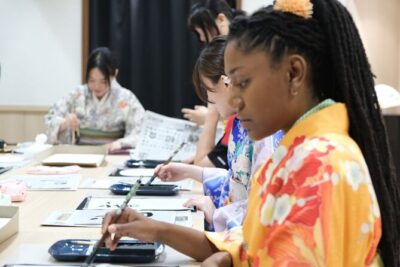
Learning Zen of Japanese Calligraphy in kimono near Osaka Castle
Read our review →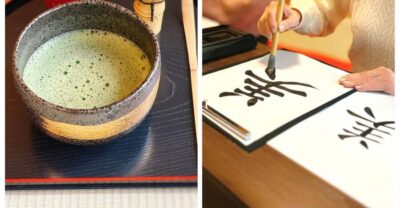
Samurai dress-up and shows, plus Tea Ceremony & Calligraphy
Read our review →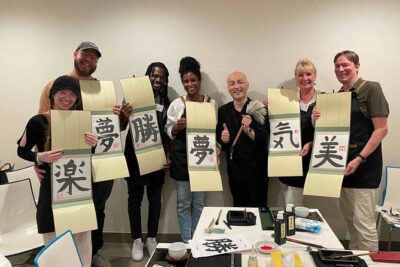
Premium Kimono Dressing, Tea Ceremony, Calligraphy, Samurai show
Read our review →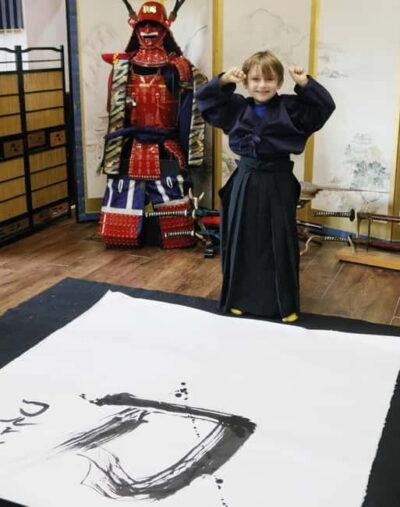
Learning Shodo with a kimono and Trying Samurai Calligraphy
Read our review →Browse the lists this tour appears in