
Reviewed · OSAKA CALLIGRAPHY CLASSES
Japanese Calligraphy Experience in Osaka
Japanese calligraphy is more than writing a character neatly. In this Osaka class, you learn how each stroke is made, choose a kanji that appeals to you, and leave with a piece of art you created yourself. Instructor Ryusho, who has taught calligraphy for 27 years, keeps the lesson clear and practical for beginners.
I like the small maximum group of 10, which gives the brush work a more personal feel than a large demonstration. I also like the finished souvenir: your work goes into a special, foldable hanging-scroll frame, so it is easier to carry home than a fragile sheet of paper.
The main consideration is timing. The class starts at 2:00 pm, lasts about 90 minutes, and takes place at a hotel on the first floor. It is a focused cultural activity, not a broad tour of Osaka, so book it for the hands-on experience rather than sightseeing.
Key points to know before booking
- Choose from 16 popular kanji: You select the character you want to practice and eventually write on your own artwork.
- Learn from instructor Ryusho: His 27 years of calligraphy teaching experience shape the lesson, from tool use to brush control.
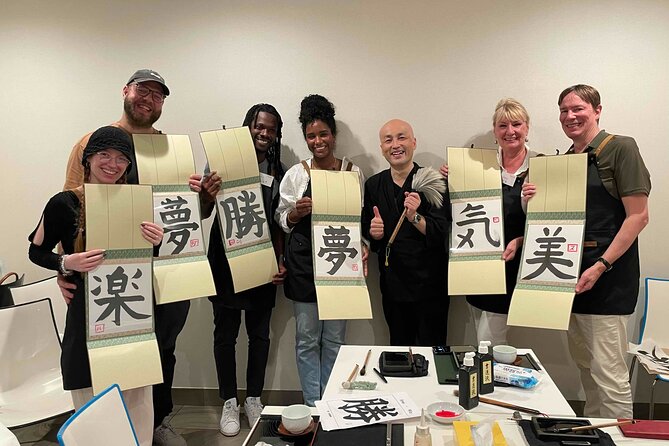
- Create a take-home souvenir: Your finished piece is placed in a foldable hanging-scroll style display case.
- Enjoy a calm cultural finish: Green tea, Japanese sweets, and a commemorative photo follow the writing session.
- Meet in central Shinsaibashi: The hotel meeting point is about a one-minute walk from a subway station.
- Expect a beginner-friendly class: The activity teaches basic strokes and brush handling, and most people can participate.
Why this calligraphy class works for a first visit
Many cultural activities in Japan let you watch a skilled person work. This one asks you to pick up the brush yourself. That difference matters. You are not simply buying a souvenir in Osaka. You are learning enough technique to make one.
Japanese calligraphy has been practiced for more than a thousand years, and the class presents it as both writing and character art. The strokes require attention, pressure, and patience. Even at a beginner level, the exercise gives you a small taste of the discipline behind the finished characters you see on signs, menus, temple plaques, and artwork around Japan.
I would not expect to produce professional calligraphy in 90 minutes. That is not the point. The value is in understanding the tools, trying the movements, and seeing how a few simple strokes become a recognizable kanji. The finished board gives the lesson a clear purpose from the start.
The class also suits people who want a quieter break from Osaka’s shopping streets. Shinsaibashi is in the center of the city, but the activity itself is built around concentration. You spend the session seated and focused on the brush rather than rushing between sights.
More calligraphy classes in Osaka:
- Osaka: Private Japanese Calligraphy Experience
★ 5.0 · 66 reviews - Calligraphy Workshop in Namba, Dotonbori
★ 5.0 · 57 reviews - Learning Zen of Japanese Calligraphy in kimono near Osaka Castle
★ 4.5 · 53 reviews
Meeting Ryusho in Shinsaibashi
The meeting point is at 1-chōme-1-3 Higashishinsaibashi, Chuo Ward, Osaka, 542-0083. The activity takes place on the first floor of a hotel, close to public transportation and about a one-minute walk from a subway station.
That location is useful if you are already exploring central Osaka. You do not need to set aside a full day or travel to a distant cultural site. The 2:00 pm starting time also leaves room for a morning activity, lunch, or a walk through the Shinsaibashi area before class.
You should allow enough time to find the hotel and arrive ready for the start. The experience ends at the same meeting point, so it is easy to continue into the afternoon afterward. Since the address is specific but the subway station name is not provided here, check the route carefully when you book and use the full street address for navigation.
The class has a maximum of 10 participants. That is large enough to give the session a social feel, but small enough that the instructor can demonstrate the brush work and keep the activity manageable. For a hands-on lesson, this group limit is one of the better practical features.
Step 1: Understanding Japanese calligraphy
Ryusho begins with an introduction to Japanese letters, calligraphy, and the cultural role of the art. This opening gives you some context before you start handling the brush.
That explanation is useful because kanji are not simply decorative symbols. Each character has meaning, and the order and shape of the strokes affect how the finished work looks. You do not need to read Japanese to take part, but learning what your chosen character represents gives the final piece more personal value.
The class prepares 16 kanji that are popular with people from overseas. You choose one of those samples rather than having to arrive with your own character in mind. This keeps the decision simple and avoids putting a beginner in the awkward position of selecting a character without knowing its meaning or difficulty.
Take a moment with your choice. Since the character will become the center of your finished artwork, pick one that means something to you or that you genuinely like seeing. The available selection is limited to 16 choices, so this is not a free-form calligraphy commission.
Step 2: Learning the tools and basic strokes
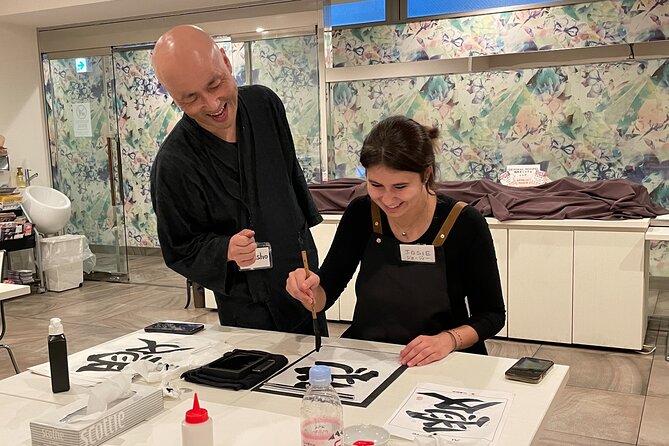
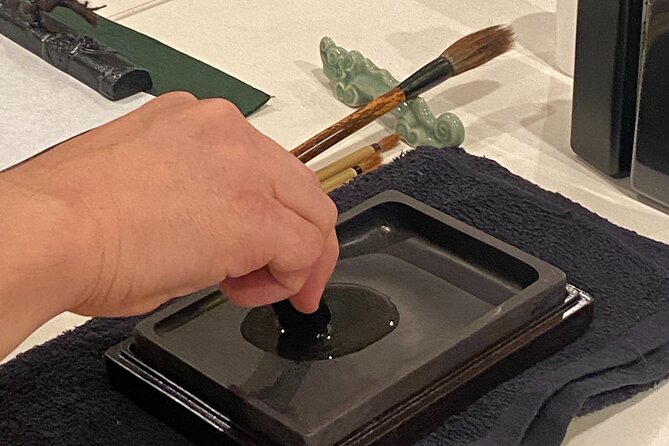
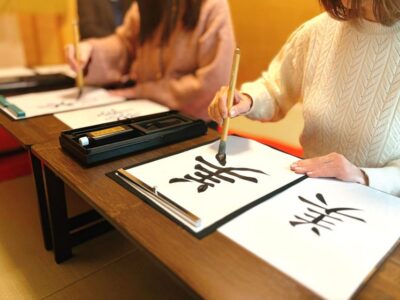
Next, you learn how to use the calligraphy tools. The class covers the basics of holding and controlling the brush, then moves into practice with individual strokes.
The preparation matters. A brush does not behave like a ballpoint pen. Pressure, direction, speed, and the amount of ink all affect the line. The class lets you try movements such as horizontal and diagonal strokes before you work on the final character.
This practice section is where a beginner can relax. Your early attempts are not the finished product. You are learning how the brush responds, and a few uneven lines are part of the process. The instructor’s step-by-step method makes the activity accessible even if you have never tried Japanese calligraphy.
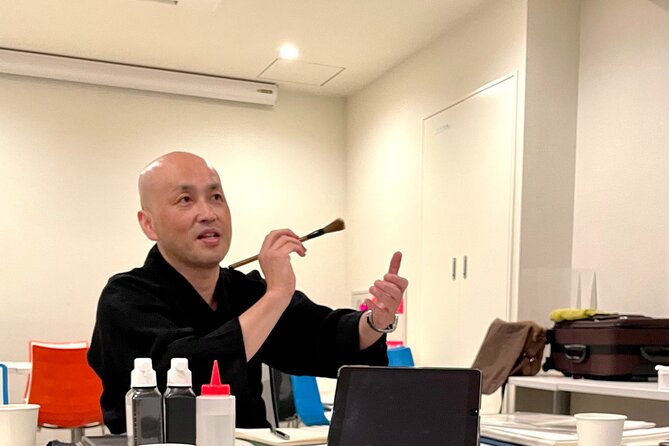
Ryusho also demonstrates brush use before asking you to work on your own. That visual example is especially helpful because the movement can be difficult to understand from spoken instructions alone. Watch the direction of the brush and the way the stroke begins and ends, then copy the basic motion at your own pace.
The class description emphasizes clear, detailed instruction, and that is important here. Calligraphy can look easy when an experienced performer makes a stroke. It feels different when you hold the brush. A demonstration followed by guided practice closes that gap.
Same city, a completely different kind of afternoon:
- Osaka Go Karting Tour with Funny Costume
★ 5.0 · 2,658 reviews - Osaka Castle: Museum and Tower Entry Ticket
★ 4.5 · 2,380 reviews - Osaka: Shinsekai Food Tour with 13-15 Dishes at 5 Eateries
★ 4.8 · 2,204 reviews - Osaka Food Tour: 13 Dishes at 5 Local Eateries
★ 5.0 · 2,149 reviews
Step 3: Practicing your chosen kanji
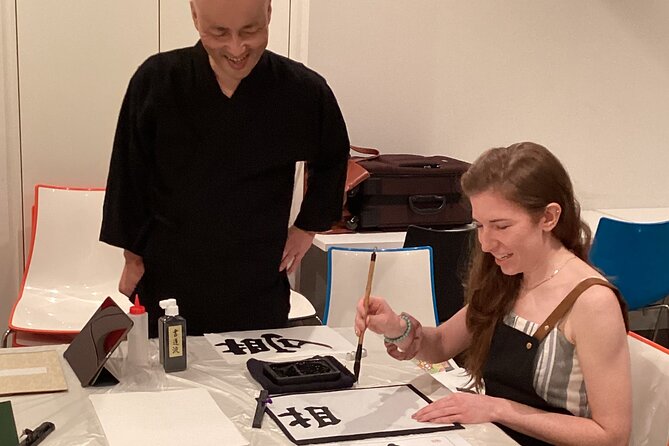
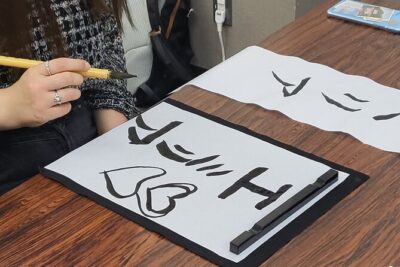
After the basic exercises, you practice the kanji you selected from the prepared samples. This gives the lesson a personal center. Everyone is working within the same class, but each person can finish with a different character.
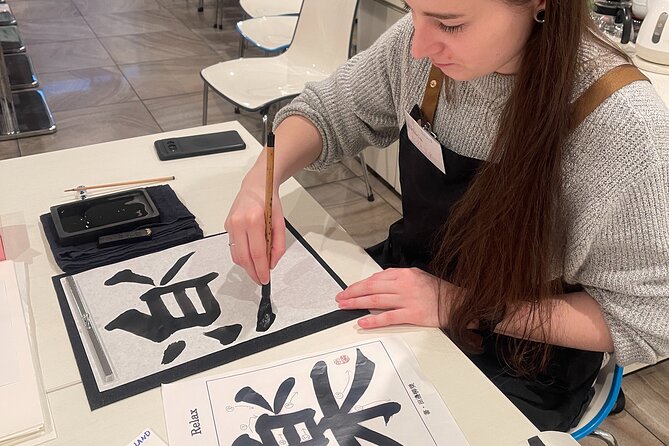
You should expect to write the character more than once before making the final version. Practice helps you find a comfortable grip and understand the size and balance of the kanji. It also gives you time to focus on the order of the strokes instead of trying to create a perfect piece immediately.
The activity is described as peaceful, and that is a fair expectation. Calligraphy rewards concentration. You need to watch the brush, control your hand, and give each line enough attention. This may appeal to you if you want something slower than Osaka’s usual food, shopping, and nightlife activities.
At the same time, the class is not presented as a silent meditation session. You receive instruction, practice alongside other participants, and work toward a finished souvenir. The social setting and teacher guidance keep it approachable rather than overly formal.
Step 4: Making the final artwork
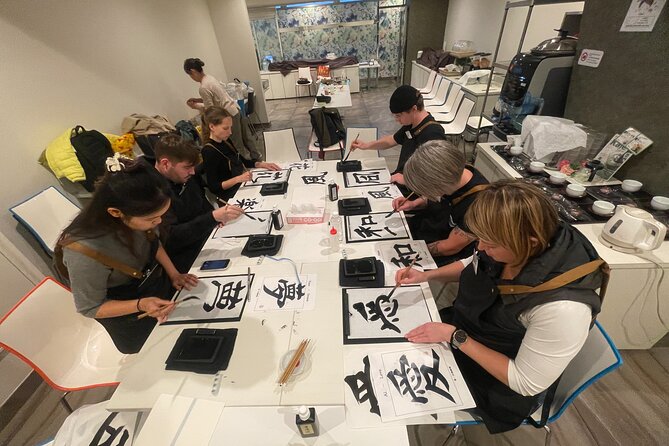
Once you are ready, you write your chosen kanji on a Japanese board measuring 242 by 273 millimeters. You also sign your name, creating a complete piece rather than a single isolated character.
The board is a useful size for a travel souvenir. It is large enough to display clearly, but not so large that it becomes difficult to pack. You create the artwork yourself, which gives it more meaning than a mass-produced item from a gift shop.
Expect small imperfections. That is part of the charm of a handmade piece, especially one made during your first calligraphy class. The goal is not factory-level uniformity. The goal is to understand the brush and produce a character that reflects your effort.
The finished work is placed in a special art frame designed as a hanging scroll. The frame is foldable and portable, making it easier to bring home. You can display it in your room after the trip, and the instructor encourages you to keep it visible rather than storing it away.
This take-home element helps justify the price. At $51.24 per person, you are paying for instruction, materials, the cultural lesson, and a completed artwork. If you only want to watch a demonstration, this may feel expensive. If you value a guided activity and a personal souvenir, the price is more reasonable.
Green tea, sweets, and the final photograph
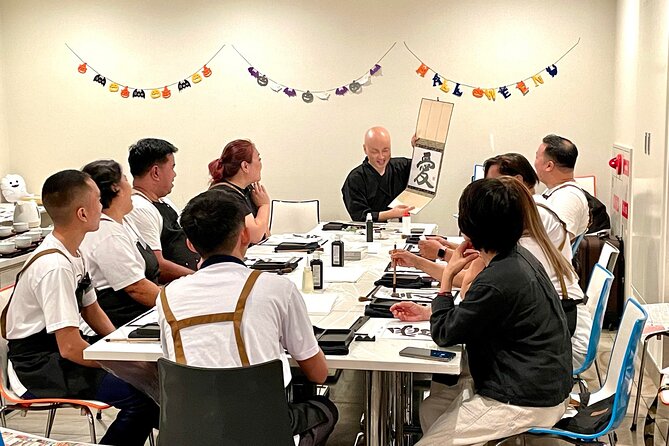
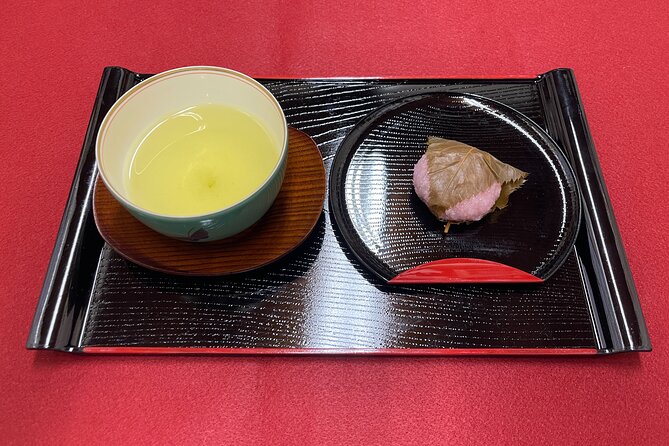
The class ends with Japanese green tea and Japanese sweets. This closing gives you time to appreciate the finished work after the concentrated brush practice.
The tea and sweets are not the main reason to book the class, but they complete the cultural format. You move from learning about calligraphy, to practicing it, to sitting back with a small traditional refreshment. It is a pleasant change of pace from a rushed attraction where you leave as soon as the main activity ends.
A commemorative photo is also included. You can take a picture with your completed artwork and the display case, creating a simple record of the experience. Since the finished piece is portable, the photo and the artwork work well together as reminders of the class.
The reviews supplied for this experience repeatedly praise the lesson as engaging and creative. One participant specifically described leaving with a personal masterpiece, while another highlighted the instructor’s explanations of letters, tools, and individual brush strokes. Those points match the actual structure of the class: it is not just a photo opportunity, and it is not just a lecture.
What the $51.24 price gets you
At $51.24, this is not the cheapest short activity in Osaka. The class lasts about one hour and 30 minutes, so the cost works out to a little under $35 per hour before considering the artwork, materials, tea, sweets, and instruction.
The strongest value comes from the combination of teaching and a finished object. You receive more than a temporary activity, but less than a full-day cultural program. The board and foldable frame are especially useful for visitors who want a meaningful souvenir without carrying a large item through Japan.
The price makes the most sense for you if you appreciate guided creative work. It is also a good option for couples, families, friends, and solo visitors who want an activity they can remember through something they made. The maximum of 10 helps protect the personal side of the lesson.
You may find less value here if you are already taking several craft classes or if your main goal is to see major Osaka sights. The experience does not include sightseeing, transportation around the city, or a meal. It is a compact class with a specific purpose.
Who should book this experience
I would recommend this class to first-time visitors who want a direct introduction to Japanese culture without committing to a long tour. You do not need prior calligraphy experience, and the activity is structured from the basics onward.
It also suits people who prefer a souvenir with a story. You will remember the brush practice, the chosen kanji, and the effort that went into signing the board. That is different from picking up a pre-made magnet or printed poster.
Families may appreciate the clear sequence of steps, though the information only confirms that most people can participate and does not specify a minimum age. If you are booking for children, confirm age details before paying.
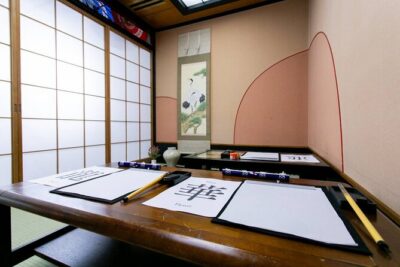
The class can also work well for a rainy afternoon because it takes place indoors at a central hotel. The supplied information does not promise a particular room setup beyond the first-floor location, so do not treat it as a sightseeing stop with a view.
Practical details that affect your day
The class begins at 2:00 pm and ends back at the meeting point after roughly 90 minutes. Build your schedule around that fixed start time, especially if you are connecting it with a timed attraction or dinner reservation.
Confirmation is provided when you book, and the activity uses a mobile ticket. Keep the ticket available on your phone. The location is near public transportation, and the short walk from the subway makes it one of the easier cultural activities to fit into a central Osaka itinerary.
Free cancellation is available if you cancel at least 24 hours before the local start time. Cancellations or changes made inside that window are not accepted for a refund, so check your Osaka plans before the deadline.
The activity is limited to 10 people, but the supplied information does not promise private instruction. You should expect a small shared class rather than a one-to-one lesson.
Should you book the calligraphy class?
Book it if you want to make something yourself, learn the basics from an experienced instructor, and bring home a displayable piece of Japanese art. Ryusho’s structured teaching, the choice of 16 kanji, and the foldable hanging-scroll frame give the 90-minute session a clear shape.
Skip it if you want a broad cultural tour, a longer workshop, or a sightseeing experience tied to Osaka landmarks. This is a focused indoor class, and its value depends on your interest in trying the brush.
For most visitors, the best reason to book is the balance of instruction and souvenir. You leave with more than a photograph of Japanese calligraphy. You leave with your own version, made slowly and carefully, plus a small tea-and-sweets finish in central Shinsaibashi.
FAQ
How long does the Japanese calligraphy experience last?
The activity lasts approximately 1 hour and 30 minutes.
What time does the class start?
The scheduled start time is 2:00 pm.
Where does the activity meet?
It meets at 1-chōme-1-3 Higashishinsaibashi, Chuo Ward, Osaka, 542-0083, Japan. The class takes place on the first floor of a hotel.
Is the meeting point near public transportation?
Yes. The location is near public transportation and is described as about a one-minute walk from a subway station.
How many people can join the class?
The activity has a maximum of 10 participants.
What do I take home?
You write your chosen kanji on a Japanese board, sign your name, and place the finished work in a foldable hanging-scroll style display case.
Can I cancel for a full refund?
Yes. You can cancel for a full refund up to 24 hours before the experience start time. Cancellations or changes made less than 24 hours before the start are not refunded or accepted.
Just added in Osaka
- Urban Canvas: Osaka Street Art Bike Tour★ 5.0 · 10 reviews
- Anime Cosplay Photshoot-50 Digital Photos Provided★ 5.0 · 8 reviews
- TeamLab Botanical Garden Osaka Ticket★ 3.5 · 6 reviews
- Umeda Sky Building & Kuchu Teien Observatory Ticket in Osaka★ 4.5 · 3 reviews
- Immerse in Judo Martial Arts Class from Japan★ 5.0 · 4 reviews
- Cherry Blossom Buddha and Mt.Yoshino with Strawberry Picking Tour★ 4.5 · 5 reviews
- Traditional Home cooking Experience in Osaka, Japan★ 5.0 · 14 reviews
- Traditional Calligraphy Experience near Dotonbori★ 5.0 · 3 reviews
Osaka Calligraphy Classes, compared.
Learning Zen of Japanese Calligraphy in kimono near Osaka Castle
Read our review →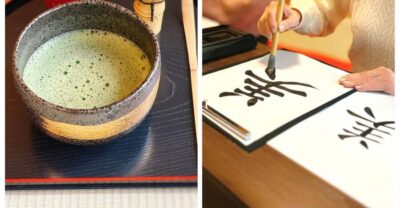
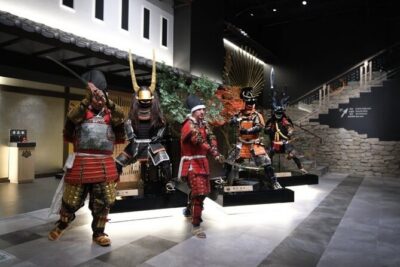
Samurai dress-up and shows, plus Tea Ceremony & Calligraphy
Read our review →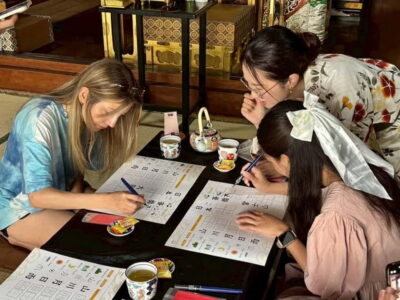
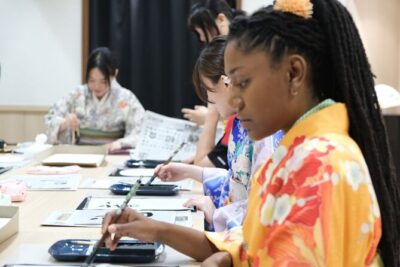
Premium Kimono Dressing, Tea Ceremony, Calligraphy, Samurai show
Read our review →
Learning Shodo with a kimono and Trying Samurai Calligraphy
Read our review →Browse the lists this tour appears in