
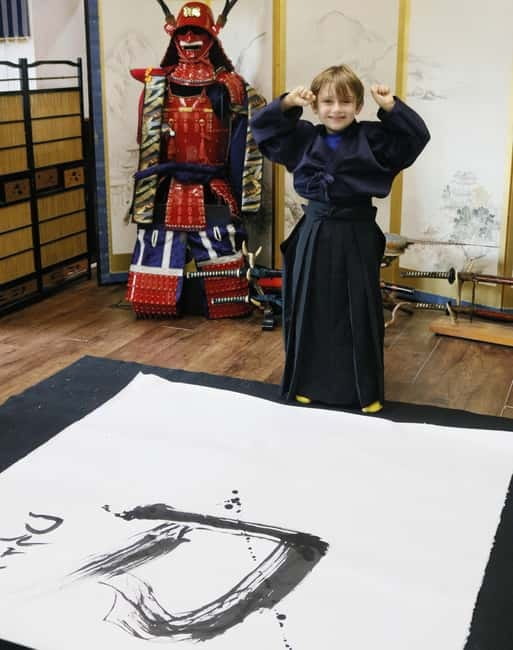
Reviewed · OSAKA SAMURAI EXPERIENCES
Learning Shodo with a kimono and Trying Samurai Calligraphy
The most memorable part of this Osaka activity is the chance to turn your name, an idea, or a personal feeling into Japanese calligraphy. You dress in a kimono or samurai costume, learn how brush and ink work, then make a large character with a brush more than five times the usual size.
I like the hands-on pace and the family appeal. You do not simply watch a demonstration, and children can take part in the basic brush work. I also like the keepsakes: your own paper work, a photograph, and a Samurai Honor bag marked with the kanji character you attempted.
The main caution is the setting and timing. The activity is described as one hour, yet the program includes a 60-minute shodo lesson plus a 30-minute samurai calligraphy session, along with changing time. The venue is near train tracks, and one visitor found the room and location less polished than expected.
Key points to know before booking
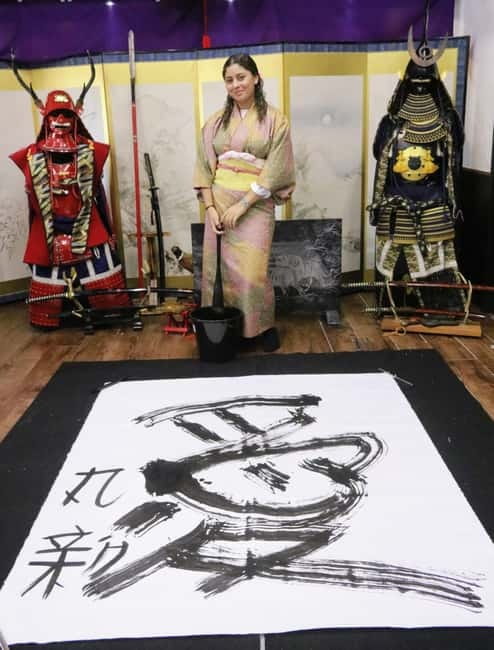
- You choose kanji with personal meaning: The teacher explains the meaning of the characters used for your name or selected word.
- Kimono and samurai clothing are included: Changing clothes comes before the brush work, so arrive 30 minutes early.
- The giant-brush session is the bold finale: You create one character on a 150 by 150 centimeter sheet of paper.
- Children can join the activity: The program is aimed at participants aged five and older, with calligraphy described as suitable for children from about six to eight.
- Photos and a special gift are included: Images are sent to your designated email, and your work goes home in a marked Samurai Honor bag.
- Hair styling and some display options cost extra: Japanese hair styling, hairpins, and calligraphy on a hanging scroll are paid options.
Dressing for shodo at Samurai Honor in Osaka
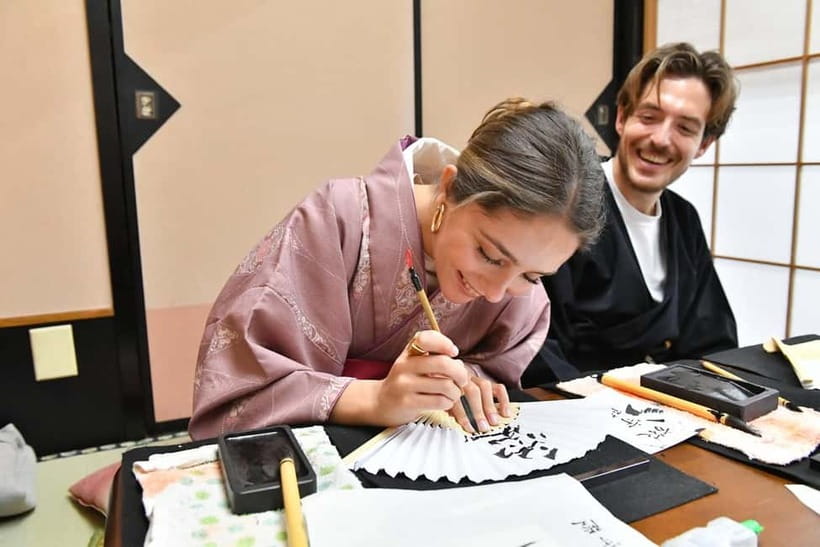
The experience takes place at Bushi no Homare, also called Samurai Honor, in Osaka’s Joto-ku. The address is Excellence Takayama 1F, 2-3-19 Shiginonishi, Joto-ku, Osaka-shi, Osaka 536-0014.
Use Google Maps for the address. The supplied directions warn that Apple Maps shows the wrong location. Look for a wooden sign reading Honor of the Samurai, activity pamphlets outside the shop, and kimono or hakama hanging nearby.
You should arrive 30 minutes before your booked time. That early arrival matters because the session begins with instructions and changing clothes. Bring a T-shirt, which is the practical layer to wear beneath the kimono or costume.
The costume portion gives the activity much of its visual appeal. You can pose in traditional clothing, take photographs, and then use that appearance as part of the calligraphy story. The women’s kimono option can include an obi sash, tabi socks, zori sandals, a basket bag, and an outdoor photo shoot, but the details depend on the package you select.
Japanese-style hair styling and a hairpin are not part of the basic price. If the hairstyle matters to you, check the paid option before booking. The same applies to calligraphy on a kakejiku, or hanging scroll.
The changing area and venue may not feel like a formal cultural center. One visitor found the room somewhat shabby and disliked the sound of trains rattling by outside. I would set your expectations accordingly: this is a practical workshop in a working neighborhood, not a quiet museum salon.
More kimono experiences in Osaka:
- Osaka: Sumo Show & Experience w/ Optional Kimono & Hot Pot
★ 4.5 · 609 reviews - Learning Zen of Japanese Calligraphy in kimono near Osaka Castle
★ 4.5 · 53 reviews - Osaka: Kimono or Yukata Rental &Photos Service Options
★ 4.9 · 25 reviews
Learning the brush before making kanji
The first calligraphy section is built around Japanese shodo, the art of brush writing. The teacher begins with preparation and mindset rather than handing you a brush and asking for a finished character.
You learn how to hold the brush, handle the tools, and control the movement of the tip. That foundation matters because Japanese calligraphy is not just handwriting with a different alphabet. The pressure, direction, speed, and order of each stroke shape the character.
The instructor then demonstrates brush techniques and guides you through practice. You work on the basic movements before attempting the kanji you selected earlier. This is a good feature for beginners, since you do not need previous calligraphy experience to take part.
Your selected kanji may represent your name or another idea. Each character carries meaning, so listen carefully when the teacher explains the characters used for you. A name written in kanji is not simply a sound-for-sound translation. The character choice also gives the name a visual and symbolic identity.
The teacher demonstrates the proper stroke order, and you follow it as you practice. Stroke order can seem fussy at first, but it helps the character keep its balance. It also gives you a clear task to focus on when the brush feels unfamiliar.
The early practice sheets are not the main souvenir. They are rehearsal for the final draft. You can choose to write your finished work on calligraphy paper, a fan, or a hanging scroll, depending on the package and any paid options.
The kanji name reveal
One of the most personal moments comes when the calligraphy master writes the foreign names of the participants using chosen kanji characters. The teacher also explains the meaning of those characters, so you get more than a decorative name card.
This part works well for families because each person can select or receive a character with a different meaning. Parents and children can compare the shapes, sounds, and ideas behind their names. The process gives younger participants a simple way to connect language with art.
Do not expect the final result to look like a professional calligrapher’s work. The value is in learning the movements and producing something with your own hand. The instructor’s demonstration gives you a model, but the unevenness of a beginner’s brush is part of the souvenir.
The final draft is your chance to slow down and apply what you practiced. Think about spacing before you begin. Japanese calligraphy gives importance to the blank areas around the letters, not just the dark brush marks. A crowded page can feel as unbalanced as a poorly shaped character.
Trying the oversized samurai brush
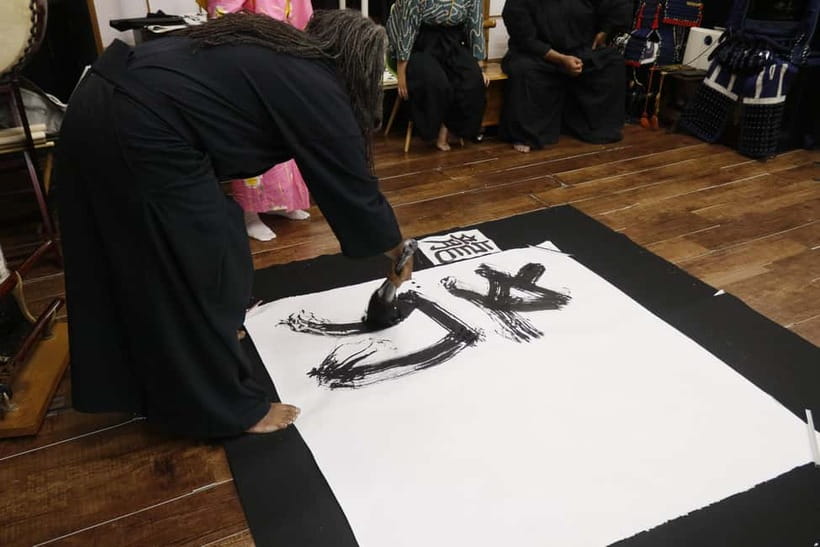
The samurai calligraphy section changes the mood. Instead of carefully practicing smaller characters, you consider one large character and the feeling you want it to express.
The activity uses dramatic language about a final character in life. You are asked to imagine what story, person, or feeling you would want to leave behind. This can sound serious, but the useful part is simple: choose one character that represents something meaningful to you.
You then think about the character’s composition and design. The empty areas matter here too. Japanese aesthetics often treat blank space as part of the work, so a powerful character does not need to fill every corner of the paper.
The teacher uses an oversized brush more than five times larger than a normal calligraphy brush. The work is made on a 150 by 150 centimeter sheet of paper. You use your whole body to guide the brush, rather than relying only on your wrist.
This is the most theatrical part of the experience, but it also gives you a clear lesson in movement. A large brush shows how pressure, speed, and direction affect the shape of a mark. You may find the result powerful, fragile, or simply surprising. The point is to make one bold attempt, not to produce a flawless studio piece.
Afterward, you sign the work. That signature identifies who made the character and gives the piece a clear owner. You also receive a photograph of yourself in the kimono or samurai costume with the artwork.
The large paper is not an especially easy souvenir to pack. Ask how the work will be handled and transported before you begin. The included Samurai Honor bag is designed to carry your calligraphy home, and the teacher writes the kanji character you attempted on the outside of the bag.
More calligraphy classes in Osaka:
- Osaka: Private Japanese Calligraphy Experience
★ 5.0 · 66 reviews - Calligraphy Workshop in Namba, Dotonbori
★ 5.0 · 57 reviews - Osaka: Private Tea Ceremony and Calligraphy Experience
★ 5.0 · 50 reviews - Samurai dress-up and shows, plus Tea Ceremony & Calligraphy
★ 5.0 · 27 reviews
What the $42 price really covers
At about $42 per person, the basic price covers more than a short brush lesson. You get costume use, instruction from a certified professional, interpretation in English by default, taxes, tips, photography, and the bag marked with your kanji.
That makes the price reasonable for a visitor who wants several elements in one stop: dressing up, a cultural lesson, a personal souvenir, and photographs. It can also save you from arranging a separate kimono photo session and a separate craft workshop.
The value is weaker if you only want a polished photo. The venue has received criticism for its plain appearance, and hair styling is extra. A traveler seeking a refined studio setting may prefer to pay more for a dedicated kimono salon.
The activity also has a timing question. It is promoted as a one-hour experience, but the detailed program lists 60 minutes for learning shodo and another 30 minutes for trying samurai calligraphy. Changing clothes and arriving early add more time.
I would ask the operator to confirm the total schedule before paying. This is especially important if you are connecting it to a train, meal reservation, or another Osaka tour.
A good family activity, with a few limits
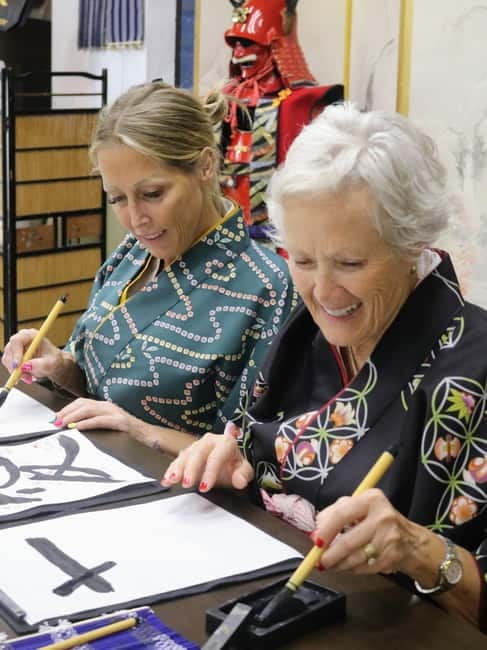
This is one of the better choices in the area for a family looking for something everyone can try. The basic brush practice is accessible, and the costume photographs give children a clear reason to stay engaged. The staff is described as patient with children, which matters when the brush work becomes slow or messy.
Children under five cannot take part. The program identifies six to eight as a common age for beginning calligraphy, but younger children within the permitted age range may still need help with the tools and concentration.
The activity has a maximum group size of 10. That is small enough for personal instruction, though the actual feeling will depend on how many people are booked at your time. An English interpreter is standard. Italian, Spanish, French, Chinese, Thai, and Indonesian support may be available, but you should ask before booking because staff availability is limited.
The experience is wheelchair accessible. Pets, baby strollers, baby carriages, alcohol, drugs, and nudity are not allowed. Babies under one year, children under five, people with altitude sickness, and people over 95 are listed as unsuitable for the activity.
For a family photo, bring a T-shirt and arrive early. Loose or complicated clothing may make changing more difficult, although the only specified item to bring is a T-shirt.
Getting there and setting expectations

Samurai Honor is not presented as a major sightseeing attraction in central Osaka. It is a specific workshop location in Joto-ku, and the directions depend on finding the wooden sign and outdoor pamphlet rack.
Use the Google Maps link provided by the operator rather than relying on Apple Maps. The warning about the incorrect Apple Maps address is unusually specific, so it is worth taking seriously.
No station or hotel transfer is included. You also pay for your own transportation and personal expenses. The activity itself does not include a sightseeing transfer or a wider tour of Osaka.
The train noise is the clearest practical drawback. Some people will treat it as background city sound. If you want a calm, polished, photo-focused setting, it may bother you, especially during the quieter calligraphy exercises.
On the other hand, a working local venue can make the experience feel less staged. You are going to a place where martial arts, calligraphy, and tea ceremony activities are offered, rather than a famous landmark built only for short photo stops.
Cancellation and booking flexibility
You can cancel up to 24 hours before the activity for a full refund. The reserve-now, pay-later option lets you hold a place without paying immediately, which is useful if your Osaka plans are still moving around.
Check the available starting times before you book. Since you need to arrive 30 minutes early, treat the meeting time as earlier than the advertised activity time.
The experience provider is Kabushiki Kaisha Bushi no Homare, or Samurai Honor. The operator lists English and Japanese, with possible support in Italian, French, Chinese, Thai, and Spanish. Ask about a non-English language before booking rather than assuming it will be available.
Who should book this Osaka activity?
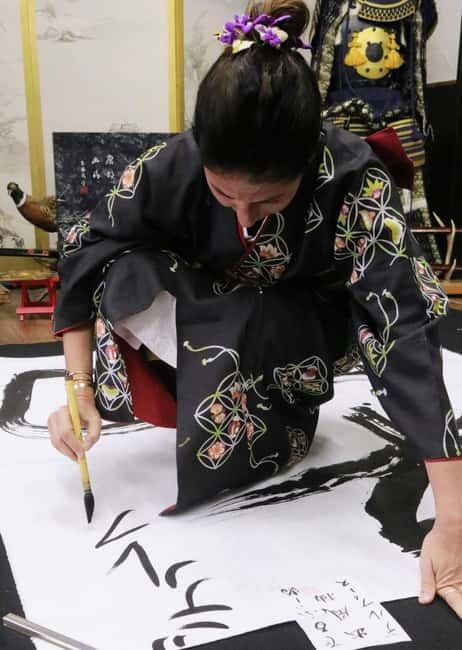
I would choose this for families, first-time visitors who want a short cultural activity, and anyone who prefers making a souvenir over buying one. The name-in-kanji portion and the final signed character give the session a personal shape.
It also suits couples or friends who want photographs in traditional clothing without committing to a full-day cultural program. The one-stop format keeps the plan simple.
I would hesitate if you want a quiet luxury setting, a formal museum lesson, or a guaranteed one-hour schedule. The room may feel plain, trains may be audible, and the full program appears longer than the headline duration.
Should you book it?
Book this experience if you value participation, family memories, and a take-home object with a story. At $42, the mix of costume, instruction, photographs, and a kanji-marked bag is fair, especially when several people in your group join.
Before booking, confirm the true total duration, check the cost of hair styling or a hanging scroll, and use Google Maps for the address. If you can accept a modest venue and some train noise, this offers a lively introduction to shodo that goes beyond posing in a kimono.
FAQ
Where does the calligraphy experience take place?
It takes place at Bushi no Homare, also called Samurai Honor, at Excellence Takayama 1F, 2-3-19 Shiginonishi, Joto-ku, Osaka-shi, Osaka 536-0014.
Which map should I use to find the venue?
Use Google Maps. The directions state that the address shown on Apple Maps is incorrect.
What marks the meeting point?
Look for a wooden sign reading Honor of the Samurai, a rack holding Samurai Honor activity pamphlets, and kimonos or hakama hanging outside.
How early should I arrive?
Arrive 30 minutes before your reserved time for instructions and changing clothes.
What should I bring?
Bring a T-shirt to wear under the kimono or costume.
Is the activity suitable for children?
Children aged five and older can participate. The activity notes that children commonly begin learning calligraphy around ages six to eight.
Are costumes included?
Kimono and samurai costumes are included. Some women’s attire details, such as the obi sash, tabi socks, zori sandals, basket bag, and outdoor photo shoot, depend on the package selected.
Is Japanese hair styling included?
No. Japanese-style hair styling and a hairpin are paid options unless included in a selected package such as Wasou bijin.
Is calligraphy on a hanging scroll included?
No. Calligraphy on a kakejiku, or hanging scroll, is a paid option unless included in the package you choose.
What languages are available?
English and Japanese are listed, with Italian, French, Chinese, Thai, and Spanish support potentially available. Ask about staff availability for a non-default language before booking.
More Samurai and Ninja Experiences in Osaka
- Samurai Training Experience KENDO in Osaka
★ 5.0 · 515 reviews - OSAKA NIGHT FUSION Japanese Taiko Kabuki Samurai Dance Show
★ 4.8 · 155 reviews - Osaka: Samurai Training Experience KENDO in Osaka
★ 5.0 · 111 reviews - Osaka: A Modern Samurai, Kabuki, Taiko, & Dance Show
★ 4.5 · 66 reviews
Just added in Osaka
- Urban Canvas: Osaka Street Art Bike Tour★ 5.0 · 10 reviews
- Anime Cosplay Photshoot-50 Digital Photos Provided★ 5.0 · 8 reviews
- TeamLab Botanical Garden Osaka Ticket★ 3.5 · 6 reviews
- Umeda Sky Building & Kuchu Teien Observatory Ticket in Osaka★ 4.5 · 3 reviews
- Immerse in Judo Martial Arts Class from Japan★ 5.0 · 4 reviews
- Cherry Blossom Buddha and Mt.Yoshino with Strawberry Picking Tour★ 4.5 · 5 reviews
- Traditional Home cooking Experience in Osaka, Japan★ 5.0 · 14 reviews
- Traditional Calligraphy Experience near Dotonbori★ 5.0 · 3 reviews
Osaka Samurai Experiences, compared.
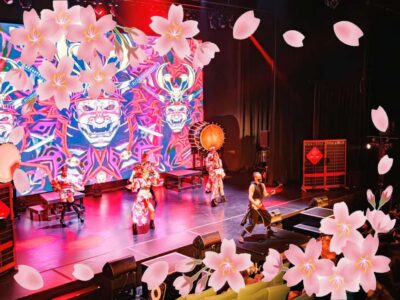
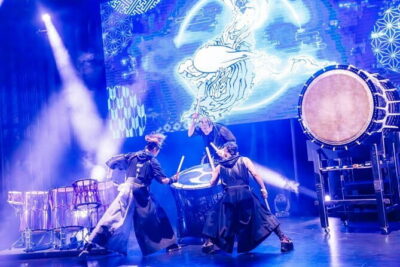
OSAKA NIGHT FUSION Japanese Taiko Kabuki Samurai Dance Show
Read our review →
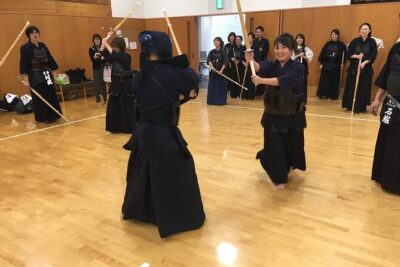
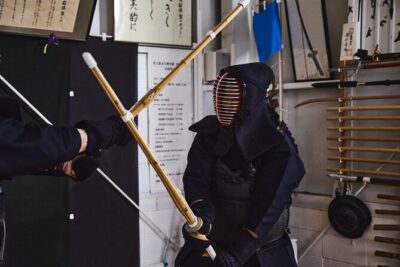
Osaka 2-Hour Genuine Kendo / Samurai Experience In Japan
Read our review →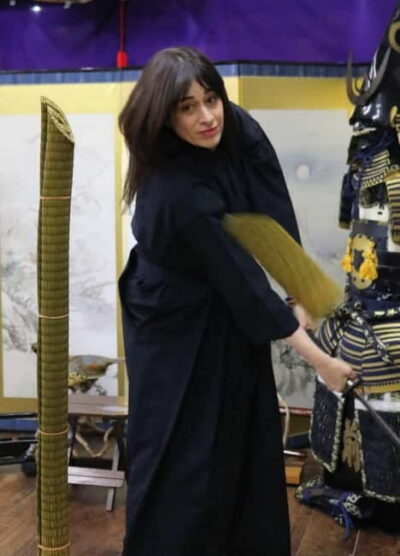
Learn Bushido – Trial Slashing with Samurai Sword
Read our review →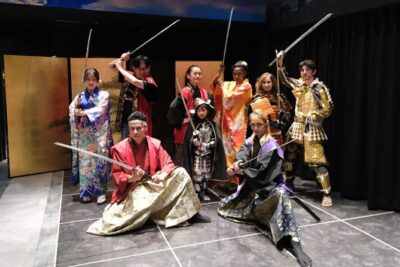
Samurai Show, Tea Ceremony, Japanese Traditional Activities
Read our review →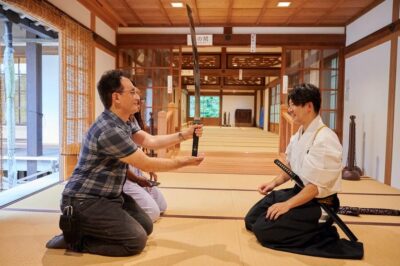
Private Samurai Experience – Train with Sword Master
Read our review →Browse the lists this tour appears in