
Reviewed · OSAKA SAMURAI EXPERIENCES
Samurai Training Experience KENDO in Osaka
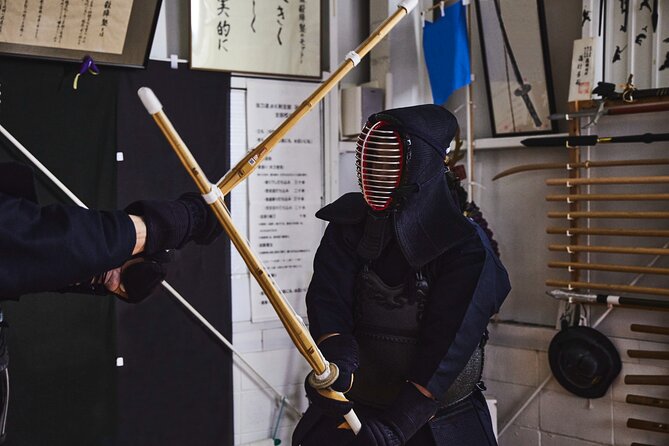
This is not just a samurai photo session. You enter a real dojo, learn the basics of kendo, put on protective armor, and face a partner in a supervised match. Toshi and Kumiko guide the class in English, combining practical instruction with stories about samurai culture and Bushidō.
I especially like the small maximum group of 12, which allows for personal corrections, and the free digital photos and videos sent after the class. The clean, air-conditioned facility also has changing rooms and showers. The main consideration is the price: at $131.32 per person, this is a premium two-hour activity, though the instruction, equipment, and media make it more than a quick costume stop.
Key points to know before booking
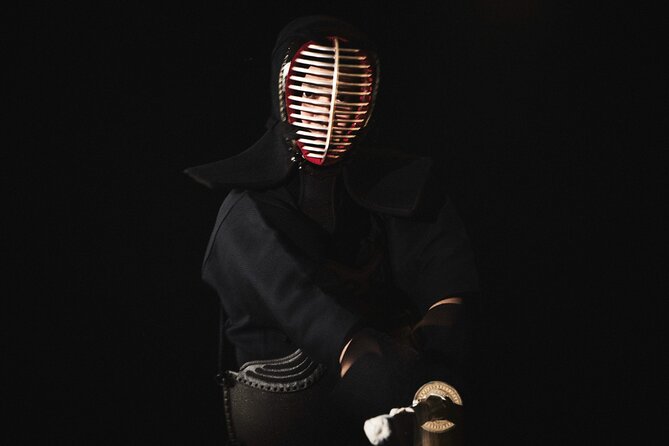
- You train in a real Osaka dojo: The space also displays samurai artifacts and memorabilia.
- Toshi and Kumiko teach in English: Expect history, demonstrations, step-by-step practice, and help with equipment.
- Armor and a bamboo sword are included: You learn basic strikes, footwork, combinations, and match etiquette.
- The final match is supervised: You may spar with another participant and, depending on the session, challenge the instructor.
- Photos and videos come with the experience: The instructors record much of the activity and send digital files afterward.
- The class suits beginners and families: No prior kendo experience is required, with a gentler format for children aged 3 to 5.
Entering a real dojo in central Osaka
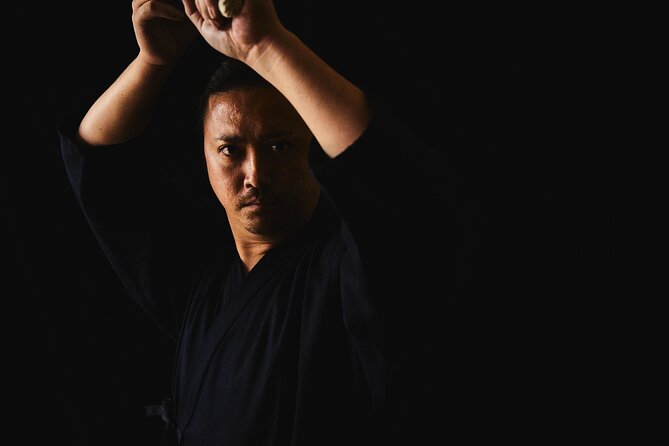
The meeting point is at 1-chōme-18-2 Honjōhigashi in Kita Ward, Osaka, near public transportation. The activity begins and ends there, so you do not need to arrange a separate return transfer or find your way to another venue afterward.
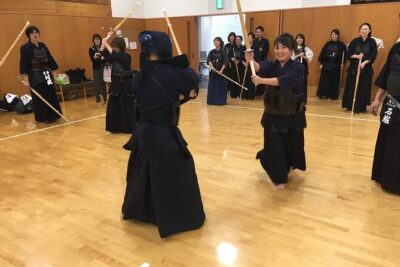
The setting matters. Kendo can be presented as a quick costume-and-photo activity, but this class takes place in a working-style dojo with equipment, uniforms, protective gear, and a small display of samurai objects. You get a look at the practice space before putting on the armor, which gives the lesson more substance than a staged backdrop.
The facility has air conditioning and heating, plus changing rooms and showers. That is useful because kendo involves repeated movement, strong vocal calls, and protective equipment. You can change without hunting for a public restroom, and the climate control is welcome in Osaka’s hot or cold seasons.
The group limit is 12 people. That is not the same as a guaranteed private lesson, but it is small enough for the instructors to watch your form and offer corrections. Solo visitors may find themselves in a particularly personal class if attendance is light. One reported session became one-on-one instruction, though that should be treated as a possibility rather than a promise.
More samurai and ninja experiences in Osaka:
- OSAKA NIGHT FUSION Japanese Taiko Kabuki Samurai Dance Show
★ 4.8 · 155 reviews - Osaka: Samurai Training Experience KENDO in Osaka
★ 5.0 · 111 reviews - Osaka: A Modern Samurai, Kabuki, Taiko, & Dance Show
★ 4.5 · 66 reviews
A short introduction to samurai culture and Bushidō
The first part of the class gives you context before the physical work begins. Toshi and Kumiko explain kendo, samurai culture, and Bushidō, the code and set of ideals associated with the samurai tradition.
This introduction is brief, but it helps you understand why kendo includes more than hitting a target with a bamboo sword. Posture, attention, respect, and proper conduct are part of the lesson. You learn why the class begins with preparation and manners rather than rushing straight into combat.
I like this approach because it connects the movements to Japanese culture without turning the session into a long lecture. The historical portion is aimed at first-time visitors, so you do not need to know the difference between kendo equipment or samurai ranks before arriving.
The history section is also where the English support matters. Toshi teaches the physical side, while Kumiko assists with explanation and communication. The class is conducted in English, and the pair’s warm, relaxed approach helps beginners ask questions without feeling foolish.
Changing into the uniform and armor
After the introduction, you change into an authentic kendo uniform and protective armor. The supplied information describes the equipment as traditional, and the class gives you time to wear the full outfit rather than simply pose in a costume.
You use a shinai, the flexible bamboo sword used in kendo practice. The protective armor allows you to work through the lesson more fully, but it also adds weight and heat. If you have never worn kendo gear, the first few minutes may feel awkward. That is normal. The instructors help you adjust and explain how to move safely.
This is a useful point for families. Children old enough to take part in the regular instruction can work through the same basic process at a suitable pace. For children aged 3 to 5, the focus is on safely wearing the uniform and armor and taking photos, not on a demanding sparring session.
The class is suitable for most people, but you should expect a physical activity rather than a passive cultural demonstration. You will move, practice strikes, call out, and wear protective equipment. The intensity can be adjusted, and you can approach the session as a gentle introduction or a more active workout.
Learning stance, footwork, and basic strikes
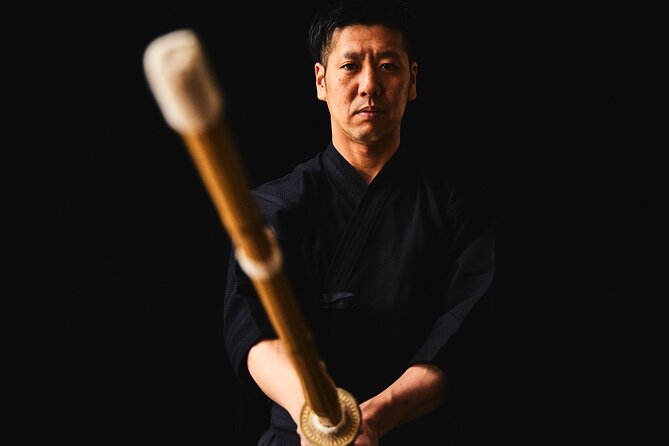
The practical teaching starts with basic form. You learn how to hold the shinai, position your body, and move your feet. The class then builds toward simple strikes and combinations.
The order is important. A beginner who starts with swinging often pays attention only to the sword. Kendo asks you to coordinate your feet, hands, posture, timing, and voice. Toshi breaks the movements into manageable pieces, then brings them together as your confidence improves.
You may practice dry movements before putting everything into a match. This gives you time to understand the basic actions without an opponent moving toward you. It also lets the instructor correct small problems, such as stance or foot placement, before they become habits.
Do not expect to become a skilled kendoka in two hours. You are learning a foundation, not completing a formal training course. The value is in trying the movements under close guidance and understanding how much control goes into a martial art that may look simple from the outside.
The class can be physical, but it does not have to become an exhausting contest. Instruction is adapted to the group, and the pace can be relaxed or more challenging. Tell the instructors what you want from the session. If your aim is cultural understanding and a few memorable photos, you can keep the workout moderate. If you enjoy martial arts, you can push the practice further.
Same city, a completely different kind of afternoon:
- Osaka Go Karting Tour with Funny Costume
★ 5.0 · 2,658 reviews - Osaka Castle: Museum and Tower Entry Ticket
★ 4.5 · 2,380 reviews - Osaka: Shinsekai Food Tour with 13-15 Dishes at 5 Eateries
★ 4.8 · 2,204 reviews - Osaka Food Tour: 13 Dishes at 5 Local Eateries
★ 5.0 · 2,149 reviews
From drills to a safe match
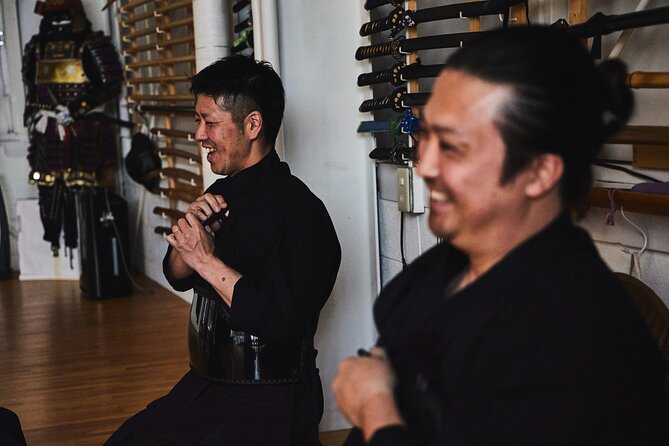
The final part turns the lesson into a controlled kendo encounter. You learn how a match works, how to use the techniques you practiced, and how to behave properly while facing another person.
This is the moment the earlier instruction starts to make sense. The basic strikes are no longer isolated movements. You have to watch your partner, manage distance, move your feet, and remember the correct form. Even a short match can feel surprisingly active.
Depending on the group, you may face another participant. Couples and families can be matched against one another, which adds a playful edge without removing the structure of the lesson. The instructors supervise the activity and keep it safe.
Some sessions may also include a challenge against Toshi. That can be a memorable finale because you quickly see the difference between beginner practice and an experienced instructor’s timing. You should not expect to beat the sensei, but you can appreciate the speed and precision more clearly after trying the basic movements yourself.
The sparring is one of the strongest reasons to choose this activity over a standard samurai dress-up session. You are not merely putting on armor for a photograph. You are using the equipment in the way it is intended, within a beginner-friendly format.
Still, the match is not full-contact fighting. It is a supervised practice session, and your aim should be to follow the instructions, maintain control, and enjoy the challenge. If you are nervous, say so. The teaching style is encouraging, and the activity can be adjusted.
Samurai artifacts and a better photo souvenir
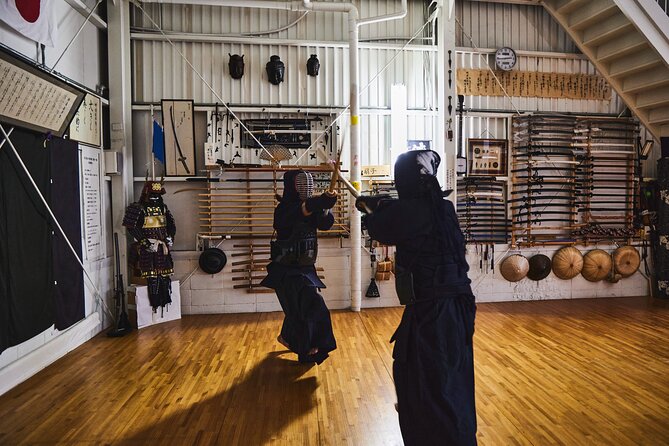
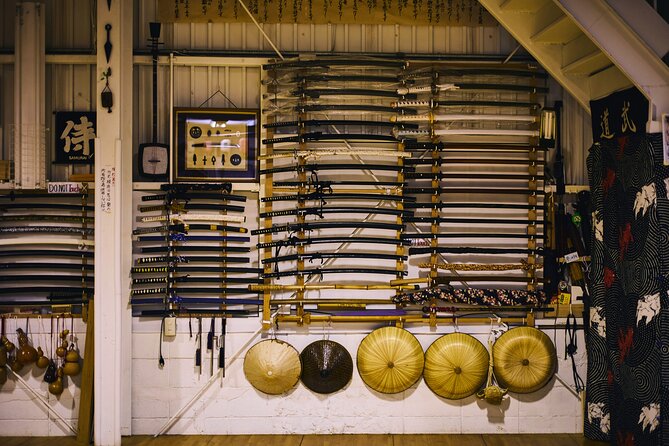
The dojo also functions as a small museum, with samurai artifacts and related memorabilia on display. This gives the photographs a more convincing setting and offers another reason to pause between exercises.
You can take pictures in the uniform and armor, and the instructors record parts of the lesson and sparring. Digital photos and videos are provided as a souvenir, with some participants receiving the files within about 24 hours.
That media adds real value to the price. Many cultural activities charge extra for photographs, while here the images and clips are part of the experience. You can show friends and family more than a posed portrait because the material may include your practice, match, and time in full gear.
The photos are also useful if you are traveling with children. The family-friendly format gives young participants a clear activity to remember, and the final match can be a highlight of a Japan trip. For a birthday or a special family day, the combination of instruction and pictures makes the outing feel more complete.
Keep your expectations sensible. This is not a professional photo shoot with elaborate lighting or unlimited posing. The focus remains on kendo, so the camera follows the class rather than replacing it.
What the $131.32 price buys you
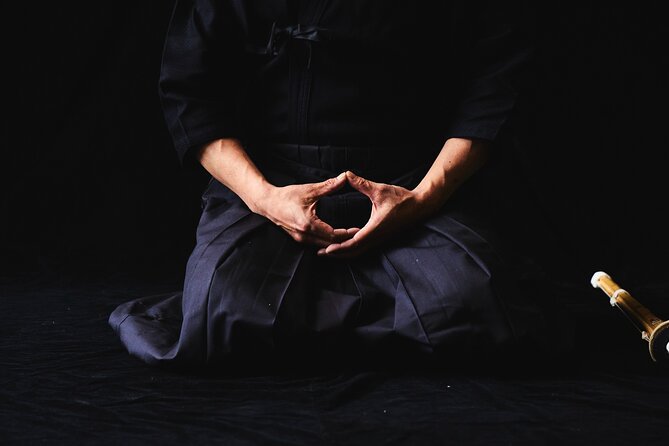
At $131.32 per person, this costs more than a short cultural demonstration or a museum visit. The comparison is not quite fair, though, because the fee covers a two-hour guided activity, uniform, protective armor, bamboo sword practice, instruction, use of the dojo, and digital photos and videos.
You are also paying for a small class and two instructors who can explain the material and help with equipment. If you are interested only in taking a samurai photograph, cheaper options may exist elsewhere. If you want to learn basic kendo and take part in a supervised match, the price is easier to justify.
The value is strongest for people who want a hands-on activity. A martial arts enthusiast will get more from the technique and sparring. A family can share the lesson and receive a set of digital memories. A solo visitor may benefit from the personal attention, especially if the class is small that day.
The price is less attractive if you dislike physical activities, have no interest in samurai culture, or want a quiet sightseeing stop. Two hours can feel long if you would rather look at artifacts than practice footwork and strikes.
There have been more than 20 bookings in a recent month, and the experience carries a 5 out of 5 rating with 100 percent recommendation on the supplied booking information. Those figures suggest strong demand, but they do not change the basic decision: book it for the training, not just the costume.
Who will enjoy this Osaka activity most
I would put this near the top of the list for martial arts fans, history enthusiasts, families with older children, and anyone looking for something more active than a temple visit.
It works especially well for:
- First-time visitors with no kendo experience
- Couples who want to practice together
- Families with children old enough for the regular lesson
- Solo visitors who like one-on-one or small-group instruction
- People curious about Japanese etiquette and martial arts
- Anyone who wants photos and videos tied to a real activity
The experience may not suit you if you are looking for a fully private session, a long academic lecture, or a relaxed photo-only package. The maximum group is 12, not one booking per instructor, and the session includes movement and armor.
Service animals are allowed, and the venue is near public transportation. Most people can participate, but the supplied information does not give detailed medical, mobility, or equipment restrictions. If you have a concern about movement or wearing armor, contact the provider before booking.
Timing, cancellation, and useful planning details
The session lasts about two hours. Allow a little extra time around it for arrival, changing, and receiving instructions, even though the listed activity itself is approximately two hours.
A mobile ticket is provided, and booking confirmation is issued at the time of reservation. The activity returns to the same meeting point, which keeps the rest of your Osaka plans simple.
Free cancellation is available up to 24 hours before the local start time for a full refund. Cancellations or changes made less than 24 hours before the start time are not accepted for a refund.
Because the activity includes armor and movement, wear something comfortable under the uniform. The facility has changing rooms, and showers are available. You do not need prior kendo experience, but arriving ready to listen and follow instructions will make the lesson much more enjoyable.
Should you book Samurai Training Experience KENDO in Osaka?
Book it if you want to do something rather than simply look at something. The strongest parts are the real dojo, patient English instruction from Toshi and Kumiko, the chance to learn proper basics, and the supervised match at the end.
The class also gives you more lasting value than a quick dress-up stop. You leave with a better idea of how kendo works, an appreciation for its discipline and manners, and digital photos and videos of the session.
Skip it if $131.32 feels too high for a two-hour activity or if you want a purely historical visit with no physical practice. For everyone else, especially families, martial arts fans, and curious first-time visitors, this is a well-shaped introduction to kendo that puts the emphasis on participation.
FAQ
Where does the kendo experience take place?
It takes place at 1-chōme-18-2 Honjōhigashi, Kita Ward, Osaka, 531-0074, Japan. The venue is near public transportation.
How long does the experience last?
The activity lasts approximately two hours.
Does the activity begin and end at the same location?
Yes. The experience ends back at the meeting point.
Is prior kendo experience required?
No. The class is beginner-friendly and teaches basic kendo techniques during the session.
Is the class taught in English?
Yes. The experience is conducted in English, with Toshi teaching and Kumiko assisting with explanations and translation.
What equipment do I use?
You change into a kendo uniform and protective armor, then practice with a shinai, which is a bamboo sword.
Will I take part in a kendo match?
The session includes a safe, match-style kendo practice under professional guidance. You may practice against another participant and may have the chance to challenge the instructor.
Are photos and videos included?
Yes. Digital photos and videos of the experience are provided as a souvenir.
Can young children take part?
Children aged 3 to 5 focus on wearing the uniform and armor safely and taking photos. The activity is otherwise described as suitable for most participants.
Is cancellation free?
You can cancel up to 24 hours before the experience start time for a full refund. Cancellations and changes made less than 24 hours before the start time are not accepted for a refund.
Just added in Osaka
- Urban Canvas: Osaka Street Art Bike Tour★ 5.0 · 10 reviews
- Anime Cosplay Photshoot-50 Digital Photos Provided★ 5.0 · 8 reviews
- TeamLab Botanical Garden Osaka Ticket★ 3.5 · 6 reviews
- Umeda Sky Building & Kuchu Teien Observatory Ticket in Osaka★ 4.5 · 3 reviews
- Immerse in Judo Martial Arts Class from Japan★ 5.0 · 4 reviews
- Cherry Blossom Buddha and Mt.Yoshino with Strawberry Picking Tour★ 4.5 · 5 reviews
- Traditional Home cooking Experience in Osaka, Japan★ 5.0 · 14 reviews
- Traditional Calligraphy Experience near Dotonbori★ 5.0 · 3 reviews
Osaka Samurai Experiences, compared.
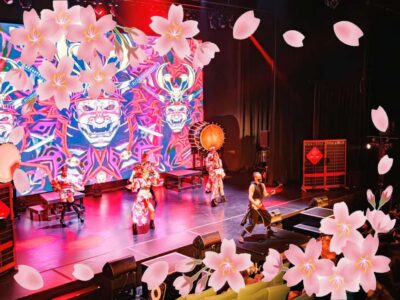
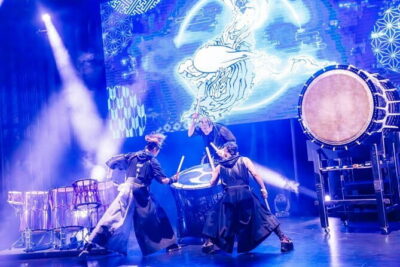
OSAKA NIGHT FUSION Japanese Taiko Kabuki Samurai Dance Show
Read our review →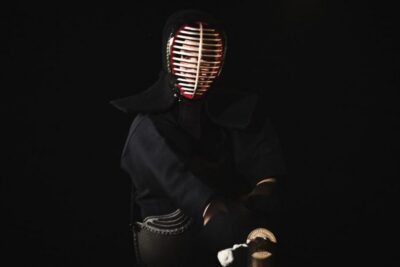
Osaka 2-Hour Genuine Kendo / Samurai Experience In Japan
Read our review →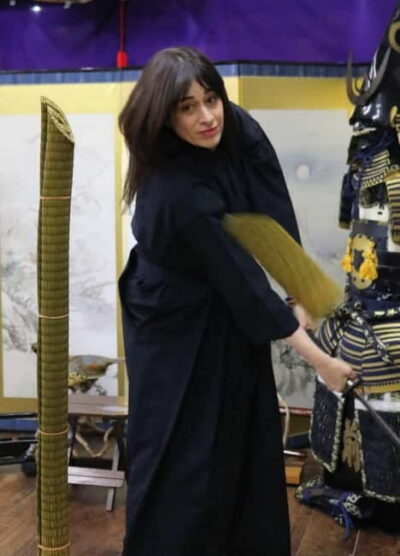
Learn Bushido – Trial Slashing with Samurai Sword
Read our review →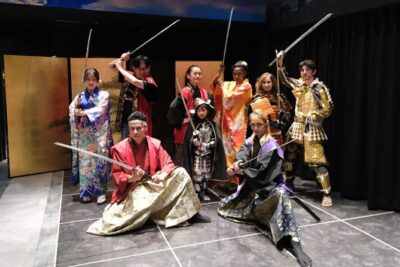
Samurai Show, Tea Ceremony, Japanese Traditional Activities
Read our review →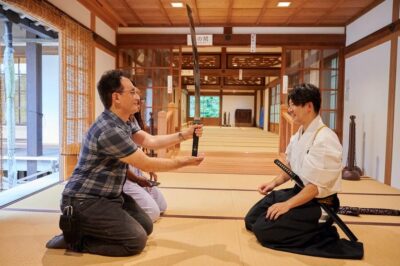
Private Samurai Experience – Train with Sword Master
Read our review →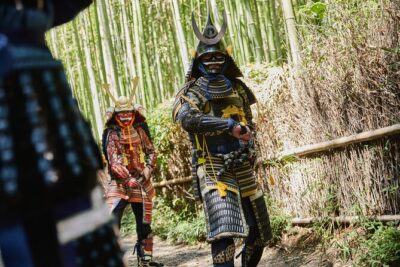
Honor – Experience Samurai & traditional Culture to the fullest
Read our review →Browse the lists this tour appears in