
Reviewed · OSAKA TEA CEREMONIES
Samurai Show, Tea Ceremony, Japanese Traditional Activities
Osaka’s samurai show is only the opening act. You also learn tea ceremony manners, brush Japanese calligraphy, handle traditional instruments, and join parts of the performance. It is a lively way to meet Japanese culture without needing museum-level patience.
I especially like the hands-on format and the strong value at about $44.92 per person. You are not just watching a staged program. You make tea, practice sword movements with safe practice weapons, and may take home a personalized fan from the calligraphy activity. The main thing to consider is time: the advertised 2 hours 30 minutes can stretch to three or four hours if you want to try everything.
Key points at a glance
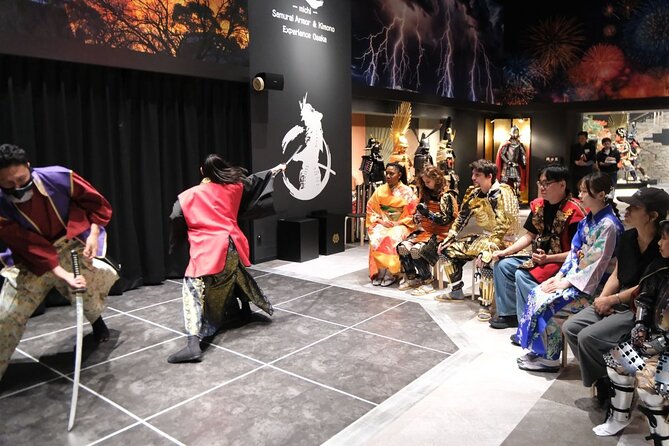
- Samurai performance with audience practice: Watch a dramatic sword show, then learn a few safe moves yourself.
- Tea ceremony and green tea: Follow the ceremony step by step and learn how to prepare a cup.
- Calligraphy you can keep: Practice Japanese brush writing and create a personalized fan.
- Traditional instruments: See live performances, then try instruments such as Japanese guitar, harp, flute, or a piano-like string instrument.
- Central Osaka meeting point: Start and finish at Shinsaibashi ARTY Inn near Dotonbori.
- Optional costume upgrades: Samurai armor, kimono, and ninja options are not part of the basic ticket.
What this Osaka cultural experience really includes
This is best understood as a compact culture center rather than a single stage show. The program combines demonstrations with short lessons, so you move between watching and doing.
The published duration is about 150 minutes. That should cover the core program, including the tea ceremony, calligraphy, Japanese music, and samurai performance. Still, allow more time if you want to linger at the activity stations, dress in a kimono, or take extra photos.
The venue is a large facility, which helps the program handle groups of up to 20 people. That is not a tiny private class, but it is small enough for staff to guide people through the stations. English interpreters assist throughout the experience, and staff help with photos and movement between activities.
The tone is friendly and playful. This is not a formal lesson in martial arts or a scholarly lecture on Japanese history. It is a well-organized introduction aimed at people who want to touch, try, and see several traditions in one sitting.
More tea ceremonies in Osaka:
- Osaka: Tea Ceremony Experience
★ 4.9 · 1,426 reviews - Tea Ceremony Experience in Osaka Doutonbori
★ 5.0 · 754 reviews - Matcha Making Class in Osaka with Authentic Japanese Sweets Set
★ 5.0 · 509 reviews
Starting near Dotonbori and Shinsaibashi
The meeting point is Shinsaibashi ARTY Inn, at 2-chōme-17-3 Nishishinsaibashi in Osaka’s Chuo Ward. The area is near public transportation and close to the Dotonbori district, making it easy to pair with an afternoon or evening in central Osaka.
The listed itinerary identifies Dotonbori as the stop, but the cultural activities take place at the facility near the stated meeting point. The activity ends back there, so you do not need to arrange a separate pickup or find your way across the city afterward.
I would plan this as a half-day block rather than squeezing it between two tightly timed attractions. The venue has several parts, and the staff move you through them in sequence. If you add a kimono or samurai costume option, photos and dressing take extra time.
The samurai show, then your turn
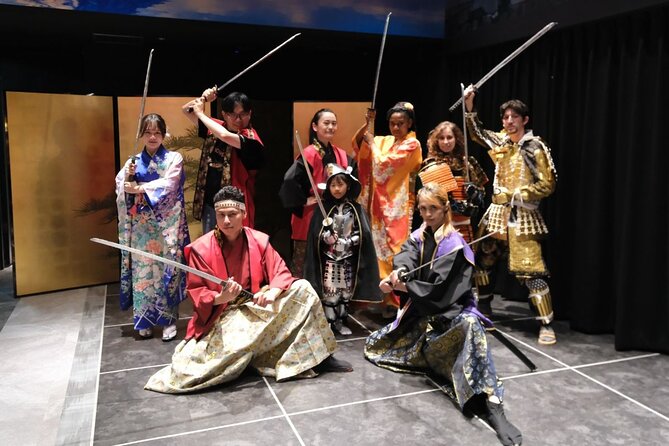
The samurai performance is the most theatrical part of the program. You watch a staged sword battle, then get the chance to practice a few moves under guidance. The swords used for participation are not real swords, so this is a safe performance activity rather than combat training.
The show has a playful side. A performer helps participants cross swords and practice basic movements, often adding humor that works well for children and adults. You should expect entertainment, not a historically exact reconstruction of a battle.
That distinction matters. One part of the experience uses reproduction pieces, and the samurai segment may feel less polished to someone seeking a serious martial arts performance. A more enthusiastic audience member may love the comedy and participation, while a visitor hoping for a grand theatrical production could find it modest.
Some schedules include two samurai performances or repeat demonstrations, according to the detailed program descriptions. The exact flow may vary, but the central idea is consistent: watch the show, then join the action in a controlled and lighthearted way.
The samurai segment works best for families, first-time visitors to Japan, and anyone who enjoys being called forward to participate. If you dislike audience participation, you can still watch, but the experience is designed around involvement.
Tea ceremony with a practical lesson
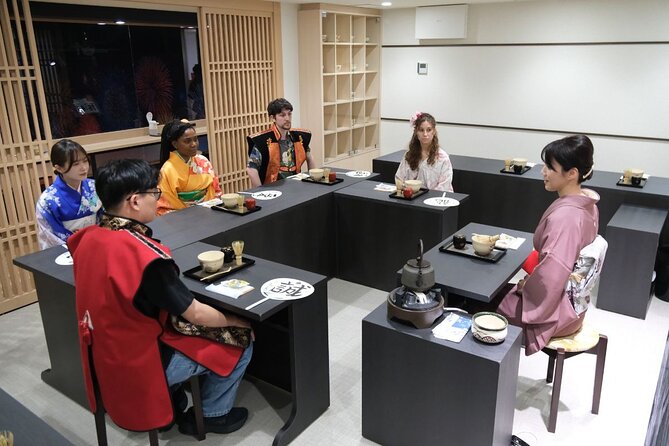
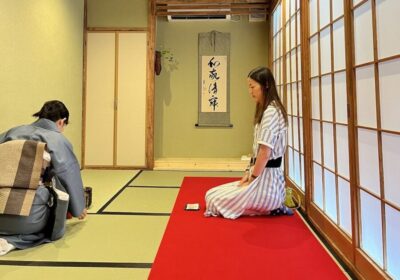
The tea ceremony gives the afternoon a calmer rhythm after the sword demonstration. You learn the basic order of the ceremony and take part in preparing a cup of green tea.
This is not presented as a long, silent ceremony requiring perfect posture for an hour. Instead, it is a guided introduction. Staff explain what you are doing and help you follow the correct movements, which makes the tradition easier to understand.
I like this part because it turns an unfamiliar custom into something you can practice. The ceremony has meaning beyond simply drinking tea. Small actions, careful handling, and attention to the person being served are part of the lesson.
You should not expect an elaborate meal or a full tea-school qualification. The value is in learning the basics without needing prior knowledge. It also provides a useful contrast to the high-energy samurai show.
The tea activity suits couples, families, and older visitors who want a quieter cultural experience. It is also a good choice if you have limited time in Osaka and want something more active than simply taking photographs in costume.
More samurai and ninja experiences in Osaka:
- Samurai Training Experience KENDO in Osaka
★ 5.0 · 515 reviews - OSAKA NIGHT FUSION Japanese Taiko Kabuki Samurai Dance Show
★ 4.8 · 155 reviews - Osaka: Samurai Training Experience KENDO in Osaka
★ 5.0 · 111 reviews - Osaka: A Modern Samurai, Kabuki, Taiko, & Dance Show
★ 4.5 · 66 reviews
Calligraphy and a useful souvenir
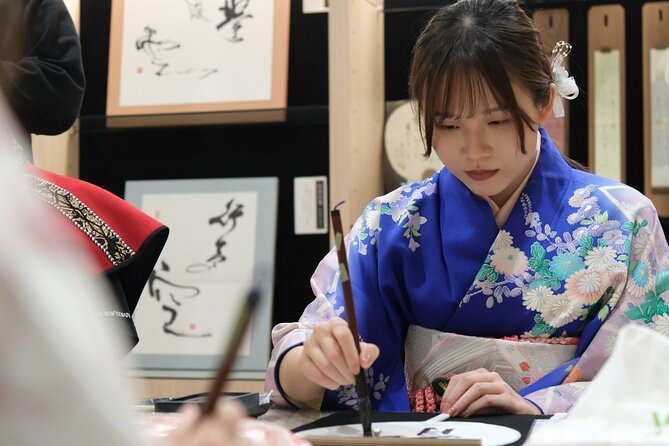
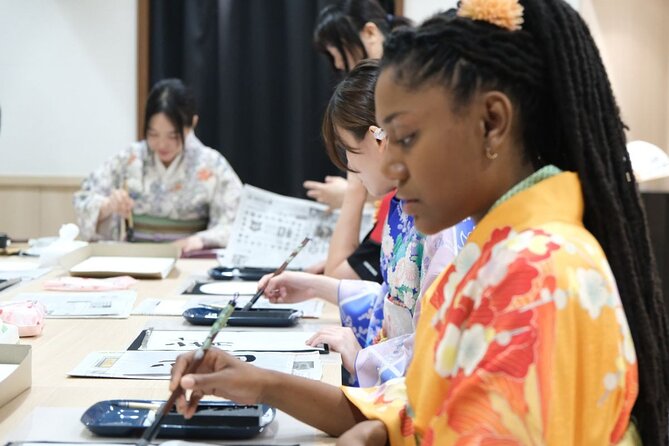
The calligraphy activity is one of the clearest take-home parts of the program. You use a brush, learn basic technique, and create personalized writing on a fan. Staff guide you through the process rather than leaving you to guess how much ink or pressure to use.
Do not worry about producing museum-quality lettering. The point is to learn how the brush behaves and to leave with something connected to your own visit.
This station can take longer than expected because people often want to repeat a character or improve the finished design. If you are traveling with children, calligraphy gives them a focused activity that does not depend on a long attention span.
The activity also offers a small language lesson. You can ask for help with Japanese writing and pronunciation, while staff support guests who are trying to learn. That friendly language exchange adds more value than a quick demonstration from a distance.
Traditional music you can actually try
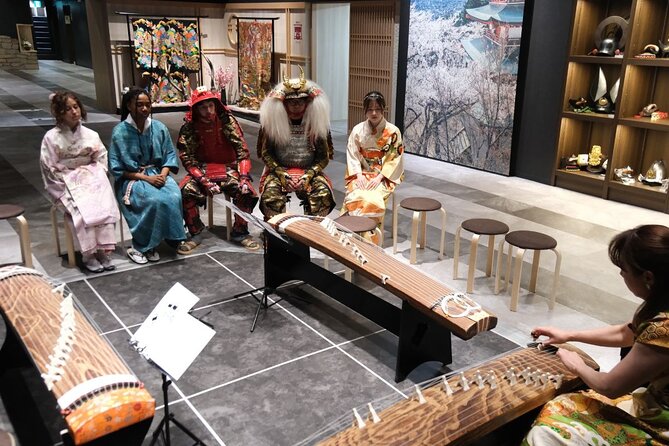
The music portion includes live performances on Japanese instruments, followed by opportunities to try them. Depending on the program, you might see a Japanese guitar, a harp, a Japanese flute, or a complex piano-like instrument.
The demonstrations are useful because they give you a sound and shape to connect with the instruments. Then you get a turn. You may not produce a beautiful melody on your first attempt, but that is part of the fun.
One detailed account describes learning from a performer playing a Japanese guitar and then trying the instrument. Another mentions attempting a Japanese flute and a harp. The experience is not designed to make you a musician in one afternoon, but it gives you a direct feel for instruments you might otherwise only see behind glass.
This is also where the program can become a little chaotic in a good way. People are learning, laughing, and moving between stations. If you want a quiet concert with uninterrupted music, this is not that. If you want to pick up an instrument and make a sound yourself, it is a strong fit.
Kimono, armor, and costume choices
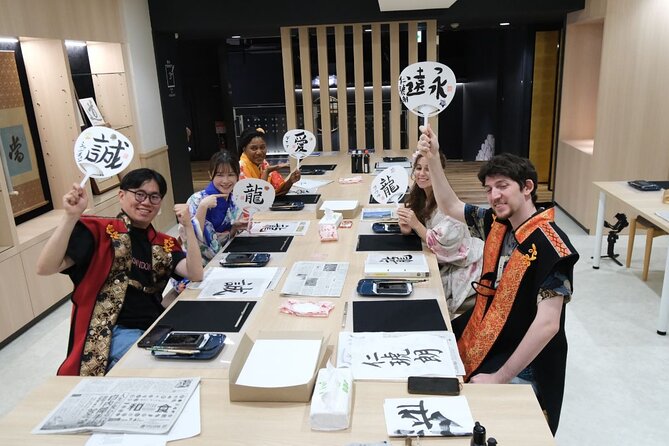
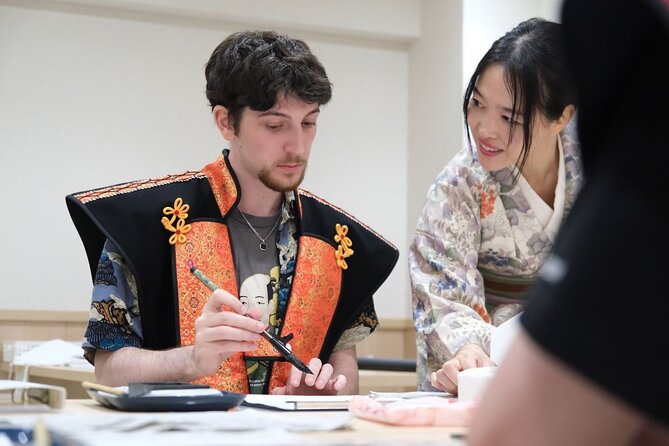
The basic price does not include samurai armor, kimono, or ninja dress. These are separate options, so check the cost before booking if dressing up is important to you.
The kimono option has been described as an upgrade costing 5,000 yen in one account. Staff dress you, help you move around the venue, and take photographs. Socks and undergarments were included for the person who chose that option.
The samurai armor option is separate as well. The program uses armor made by Marutake Industries, a company associated with detailed armor craftsmanship. That gives the costume element more substance than simply putting on a cheap plastic outfit, though the armor experience is not part of the $44.92 base admission.
A costume upgrade can make sense if you care about photographs or want a fuller role-play experience. It makes less sense if your main goal is tea, calligraphy, music, and the show. You can enjoy the core program without paying extra.
How long should you reserve?
The official estimate is 2 hours 30 minutes. I would reserve at least three hours, and preferably three and a half if your schedule allows.
The program has several moving parts:
- Samurai performance and practice
- Traditional music demonstrations and instrument practice
- Calligraphy
- Tea ceremony
- Optional costume dressing and photographs
The core sequence may finish near the stated time, but hands-on stations do not always move at the speed of a theater show. Groups may pause for questions, photos, or extra practice. Some people have spent three and a half to four hours enjoying the full set of activities.
That longer visit is not necessarily a problem. It means you get more from the ticket. Still, do not book a train, restaurant reservation, or major attraction immediately afterward unless you leave a generous buffer.
Is $44.92 good value?
At about $44.92, the base ticket is good value for a visitor who wants several Japanese cultural activities in one place. A separate tea lesson, calligraphy class, music demonstration, and samurai show could easily take more planning and cost more when booked individually.
The value comes from variety. You get four different types of activity, and most involve your hands rather than just your camera. The personalized fan is a useful bonus because it gives you a small souvenir without needing a separate shopping stop.
The price is less compelling if you only want a serious samurai performance. The show is staged and playful, and one section uses reproduction items. For that purpose, a dedicated theater production may suit you better.
The ticket also does not cover costume upgrades. Add those costs only if dressing in a kimono or armor is central to your plans. For a simple cultural afternoon, the base admission does enough.
Who will enjoy it most?
I would recommend this experience to:
- Families with children or grandchildren
- First-time visitors who want a broad introduction to Japan
- Couples looking for a rainy-day or hot-weather indoor activity
- People who enjoy learning by doing
- Anyone with a few spare hours near Shinsaibashi and Dotonbori
- Visitors who want photographs plus a cultural activity
It works especially well for mixed-age groups. A child may prefer the samurai practice, an adult may favor tea or calligraphy, and everyone can try the instruments.
It is less suitable for someone seeking a quiet, traditional tea ceremony in a formal tea house. It may also disappoint visitors expecting advanced sword instruction, authentic battlefield armor, or a long professional concert.
Group size, language, and comfort
The maximum group size is 20 people. That gives the program enough energy for a show while keeping the activity manageable. It is not a private tour, so you will share demonstrations and practice time with other participants.
English interpretation is available around the stations. Staff help explain the activities, assist with photographs, and guide people through the sequence. The team has also helped visitors practice Japanese language basics.
Most people can participate, according to the supplied details. The activity is near public transportation, and it takes place indoors at the main facility. The provider’s conditions still state that good weather is required, with a different date or full refund offered if poor weather causes cancellation, so check the forecast and the booking terms before you set out.
Free cancellation is available when you cancel at least 24 hours before the start time. Changes or cancellations inside that window are not accepted for a refund.
Should you book this Osaka experience?
Book it if you want a friendly, active introduction to several Japanese traditions and you like the idea of trying things yourself. The combination of samurai practice, tea, calligraphy, music, and a personalized fan gives you more to do than a standard stage performance.
I would book the basic option first unless kimono or armor photographs are a top priority. Leave three to four hours in your schedule, arrive ready to participate, and treat the samurai show as playful theater rather than a serious historical reenactment.
For most first-time visitors in Osaka, this is a smart choice when you want culture without a formal setting. It is particularly useful on a day when you need an indoor activity near Dotonbori. At the price, the breadth of activities makes the experience worth considering.
FAQ
Where does the experience begin?
It begins at Shinsaibashi ARTY Inn, 2-chōme-17-3 Nishishinsaibashi, Chuo Ward, Osaka, 542-0086, Japan.
Where does the experience end?
It ends back at the meeting point.
How long does the activity last?
The stated duration is approximately 2 hours 30 minutes. Some people spend three and a half to four hours when they take part in all activities and allow extra time.
What activities are included?
The basic experience includes a tea ceremony, calligraphy, traditional Japanese music, and a samurai performance.
Is the samurai sword practice included?
Yes. You can watch the samurai performance and take part in practice using safe, non-real swords.
Are kimono and samurai armor included?
No. Samurai armor, kimono, and ninja options are not included in the basic ticket.
Can I try traditional Japanese instruments?
Yes. The program includes traditional music performances and interactive instrument activities.
Can I take anything home?
The calligraphy activity may include a personalized fan that you can take home.
How many people can join the activity?
The maximum group size is 20 people.
What is the cancellation policy?
You can cancel for a full refund up to 24 hours before the start time. Cancellations or changes made less than 24 hours before the start time are not accepted for a refund. If poor weather causes the activity to be canceled, you are offered another date or a full refund.
More Shows and Performances in Osaka
- Osaka: Sumo Show & Experience w/ Optional Kimono & Hot Pot
★ 4.5 · 609 reviews - Osaka: Sumo Stage Show with Bento or Snack + Fight & Photo
★ 4.3 · 364 reviews - Osaka: English Stand Up Comedy Show at Osaka Comedy Club
★ 4.7 · 203 reviews - Osaka: UTAGE Japanese Taiko Live Show
★ 4.9 · 167 reviews
Just added in Osaka
- Urban Canvas: Osaka Street Art Bike Tour★ 5.0 · 10 reviews
- Anime Cosplay Photshoot-50 Digital Photos Provided★ 5.0 · 8 reviews
- TeamLab Botanical Garden Osaka Ticket★ 3.5 · 6 reviews
- Umeda Sky Building & Kuchu Teien Observatory Ticket in Osaka★ 4.5 · 3 reviews
- Immerse in Judo Martial Arts Class from Japan★ 5.0 · 4 reviews
- Cherry Blossom Buddha and Mt.Yoshino with Strawberry Picking Tour★ 4.5 · 5 reviews
- Traditional Home cooking Experience in Osaka, Japan★ 5.0 · 14 reviews
- Traditional Calligraphy Experience near Dotonbori★ 5.0 · 3 reviews
Osaka Tea Ceremonies, compared.
Matcha Making Class in Osaka with Authentic Japanese Sweets Set
Read our review →
Japanese Traditional Sweets Making and Tea Ceremony
Read our review →
Osaka Temple Cool Foot Bath & Matcha Experience〈45min〉
Read our review →
Osaka; Japanese Tea ceremony experience, Macha and Sencha
Read our review →Browse the lists this tour appears in