
Reviewed · OSAKA SAMURAI EXPERIENCES
Osaka: Private Samurai Experience – Train with Sword Master
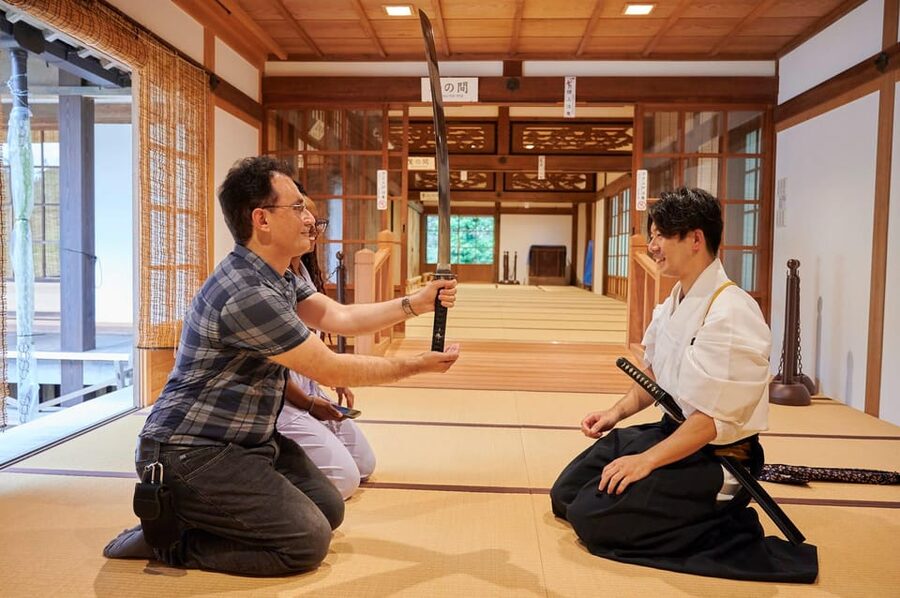
The most unusual part of this Osaka experience is the setting: you train with sword master Tatsuya Watanabe inside secluded grounds at Ryuan-ji or Saiko-ji Temple, areas normally closed to the public. The session links physical practice with temple history, discipline, and the spiritual side of traditional swordsmanship.
I like the small private-group format, which gives Watanabe room to correct your stance and strikes. I also like the skilled interpreters, including Benoit, Aimu, and Claire on different sessions, since careful translation matters when the lesson depends on posture and timing. The main consideration is that three hours can feel short if you hope to study swordsmanship in depth, and the actual schedule includes walking, temple history, demonstration, and practice.
Key points to know before booking
- Private temple access: Train in a restricted area of Ryuan-ji or Saiko-ji rather than in a standard tourist studio.
- Sword master Tatsuya Watanabe: Learn from the headmaster of Suishin-ryu, a classical Japanese sword school.
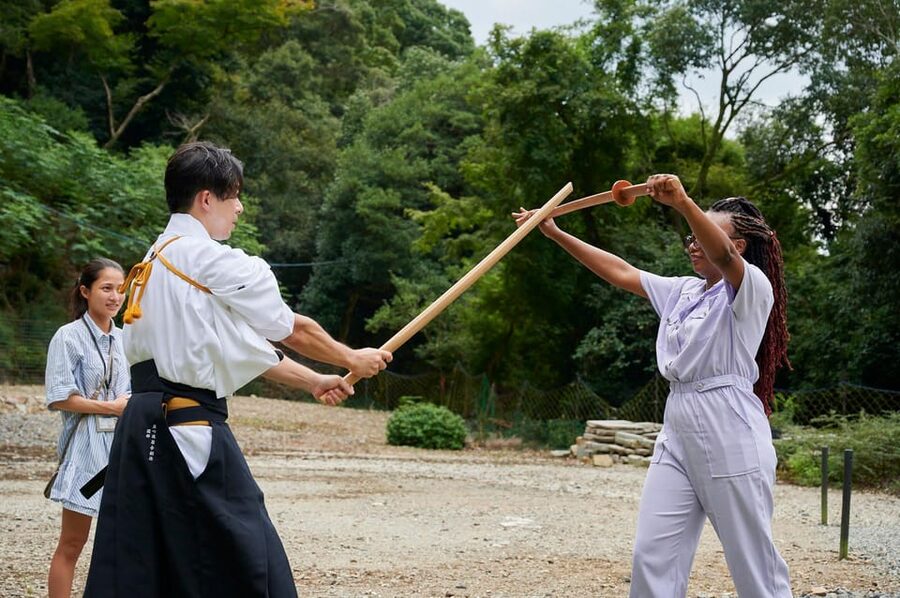
- Wooden sword practice: Expect instruction in basic strikes, cuts, posture, and handling before any work with actual swords.
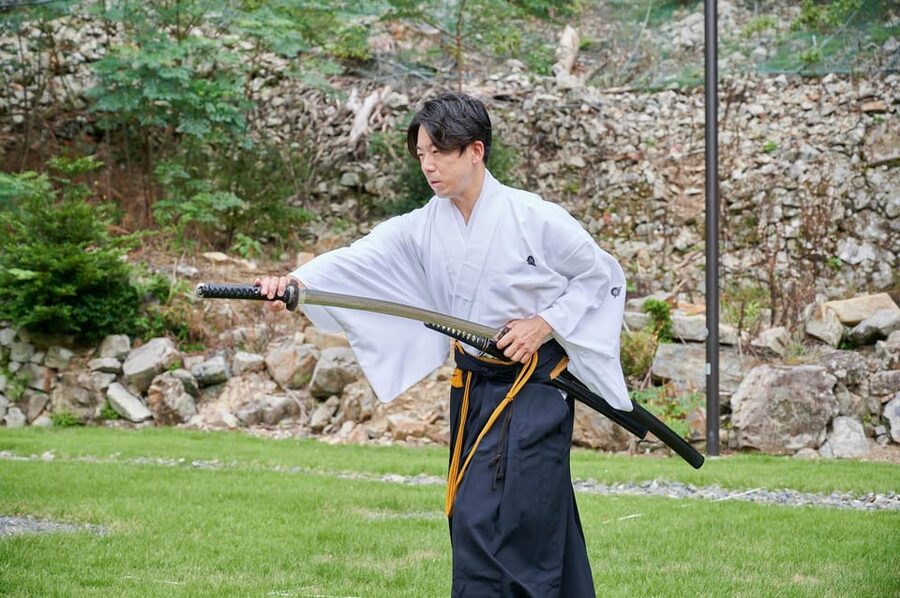
- A rare performance: Watanabe begins with a special display of control, movement, and precision.
- Strong interpretation: English, French, and Japanese support is available, with guides such as Benoit helping explain both technique and temple history.
- Minoh meeting point: You meet in front of Minoh Station, then travel on foot to the temple grounds and return to the station.
Why this is more than a costume-and-sword photo
Many samurai-themed activities in Japan are built around appearance. This one puts the emphasis on movement, concentration, and the ideas behind sword training. You do not simply hold a katana for a photograph. You learn how a sword is held, how the body moves, and why a controlled strike begins with posture and attention.
Watanabe’s background gives the session unusual weight. He began kendo as a teenager, then studied Yagyū Shinkage-ryu, one of Japan’s major classical schools of kenjutsu. He later trained in Suishin-ryu and became its soke, or headmaster, while still in his twenties.
That does not turn a three-hour class into a full martial arts apprenticeship. It does mean you are learning from someone who treats swordsmanship as a living discipline rather than a theatrical prop. The lesson includes practical technique, but also the mental focus and calm movement associated with classical training.
I especially like the way the setting supports the subject. A private training room or rented hall could teach the same basic motions, but a quiet temple area gives you a clearer sense of why these traditions survived. The surroundings are not decoration alone. They help connect the sword to Japanese religious, artistic, and historical culture.
More samurai and ninja experiences in Osaka:
- Samurai Training Experience KENDO in Osaka
★ 5.0 · 515 reviews - OSAKA NIGHT FUSION Japanese Taiko Kabuki Samurai Dance Show
★ 4.8 · 155 reviews - Osaka: Samurai Training Experience KENDO in Osaka
★ 5.0 · 111 reviews
Meeting at Minoh Station and walking toward the temple
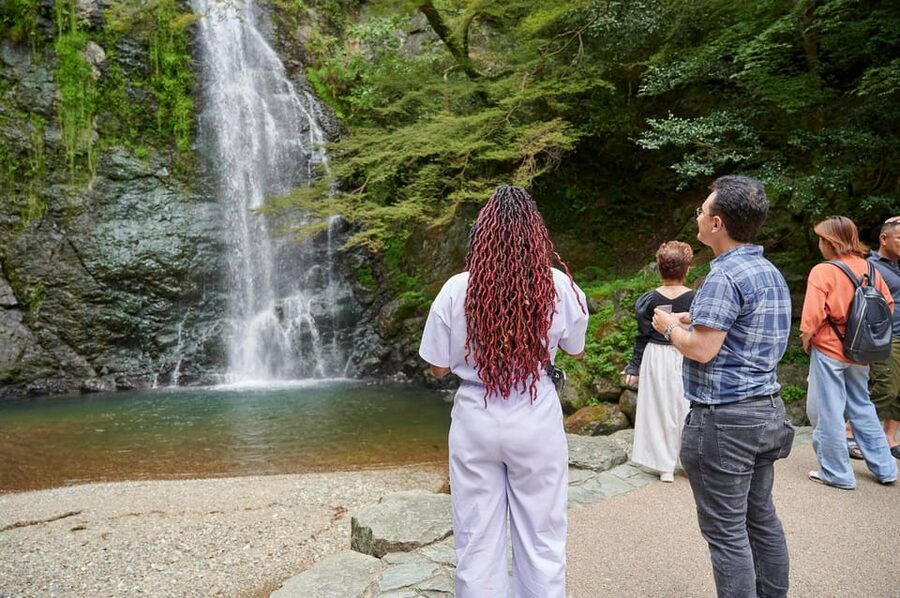
Your starting point is Minoh Station, where you meet the guide in front of the station. Look for the yellow sign with the DeepExperience logo. This simple arrangement matters because the temple is not the meeting point, and the guide provides the link between the station, the local area, and the restricted training grounds.
The walk is part of the program rather than dead time. Guides have explained the surrounding area and temple heritage along the way, giving you useful context before the sword lesson begins. Benoit, in particular, has been praised for making the history and instructions clear in English, while other sessions have included French or Japanese support.
Your guide may be more than a person who leads the way. During training, the guide translates Watanabe’s explanations and helps keep the class moving. Sword instruction depends on small details, such as where your hands sit, how your body turns, and how you finish a strike. A literal translation without physical context would not be enough, so the interpreter is an important part of the experience.
The exact temple used is Ryuan-ji or Saiko-ji, depending on the arrangement for your session. The program description focuses on Ryuan-ji in Minoh, a quiet religious site with a long connection to local tradition. Since the grounds used for training are normally closed to the public, your visit feels distinctly different from a standard temple stop.
Entering a restricted temple training area
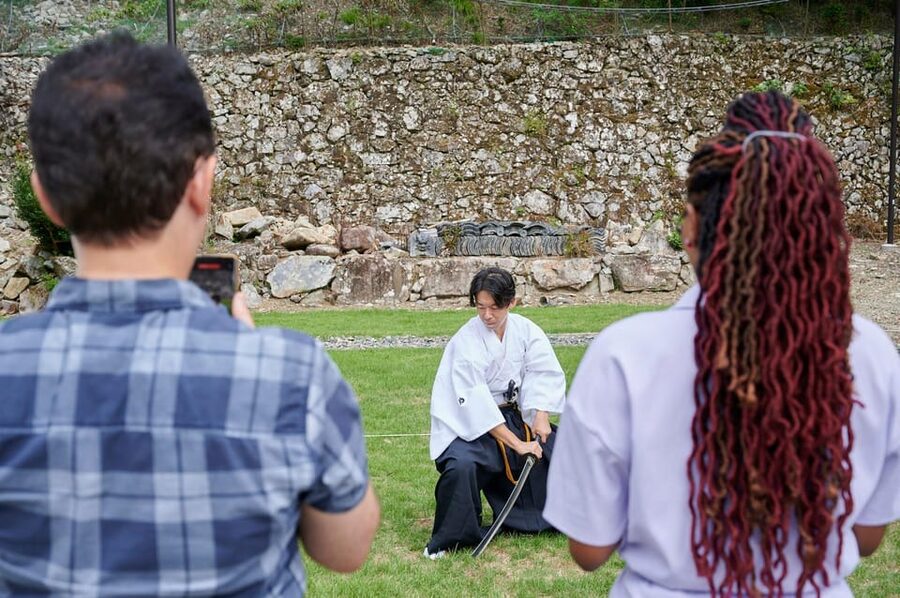
The temple grounds provide the first major surprise. You are not joining a large class in a busy public space. Instead, the program opens a secluded section for your private group, creating a quiet place to listen, practice, and watch the demonstration.
That privacy has practical value. You can ask questions without competing with another group, and the instructor can pay attention to each participant. A father and son, for example, were able to train together and receive individual advice. A private setup also suits beginners who might feel awkward making their first sword movements in front of a crowd.
The temple visit is not just a quick backdrop for the lesson. You learn about the site, its role in the area, and the connection between spiritual practice and sword discipline. The program can include access to weapons connected with the tradition, and some sessions have included a look at Watanabe’s personal sword collection, including a sword dated to 1370.
That access should be treated with care. You are handling objects tied to history and personal practice, not props supplied for casual play. The atmosphere is respectful, and the lesson asks you to slow down and pay attention.
Watching Tatsuya Watanabe’s sword performance
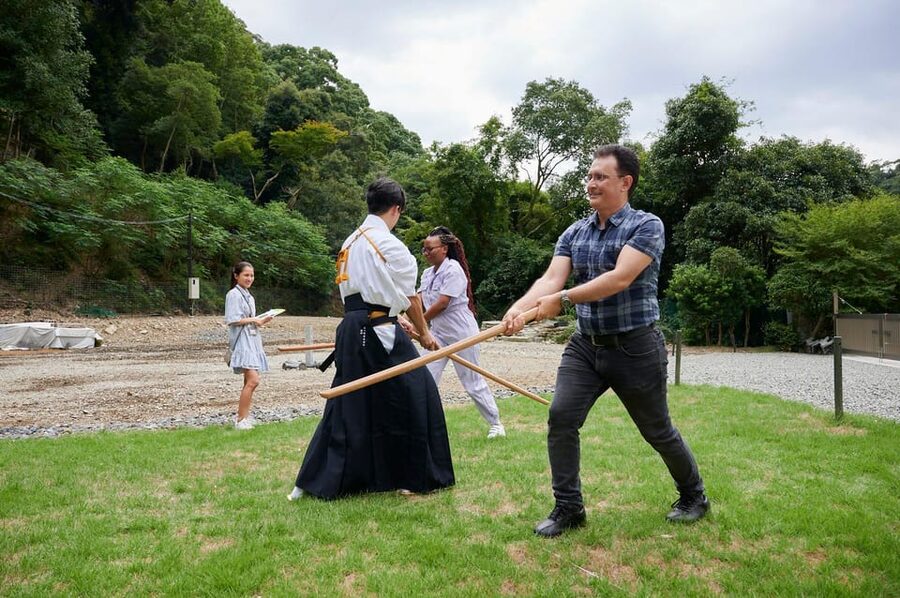
Before you begin, Watanabe gives a special performance reserved for this experience. This is the clearest way to understand the difference between knowing a movement and mastering it.
The display focuses on precision, control, fluidity, and presence. You see the economy of an expert who does not waste motion. The performance also gives you a useful reference point: after watching Watanabe move, you understand that the lesson is not about swinging hard or looking dramatic.
For many people, this will be the strongest visual moment of the program. It gives the class a clear purpose and shows what years of daily practice can produce. It also helps you watch the later instruction with a sharper eye. A small shift in balance or a smoother finish suddenly has meaning.
The performance does not mean you will handle a sharp sword in the same way. The emphasis for participants is controlled practice, mainly with wooden swords. One session included a chance to use actual swords and cut paper, but this is best understood as a special element rather than something to assume will happen every time. The standard program centers on safe, supervised instruction with wooden swords.
A few more Osaka half-days worth pricing up
- Sagano Romantic Train & Arashiyama, Kiyomizudera, Fushimi Inari Taisha Day Tour
★ 4.5 · 171 reviews - Full Day Hiroshima and Miyajima Tour by Bullet Train from Osaka
★ 4.5 · 117 reviews - Hiroshima & Miyajima 1 Day Bus Tour with Bullet Train Tickets
★ 4.5 · 105 reviews - From Osaka: Hiroshima and Miyajima Day Trip by Bullet Train
★ 4.6 · 83 reviews
Learning basic techniques with a wooden sword

The practical class lasts about an hour and a half according to the itinerary, while the complete activity is advertised at three hours, or 270 minutes. That longer period allows for the station meeting, walk, temple visit, explanations, demonstration, and training. You are not getting three uninterrupted hours of sword drills.
The training covers basic techniques such as holding the sword, posture, striking, and cutting motions. Watanabe also emphasizes fluid movement and the meditative qualities of the practice. The goal is not speed. You learn to move with control, keep your body aligned, and treat each action as deliberate.
This is where a private group helps. A class with only your party gives the instructor time to adjust individual movements. You may receive several different corrections during the session, especially if you are new to martial arts. That personal attention makes the lesson more useful than a simple demonstration followed by a short attempt.
The wooden sword is a sensible starting point. It lets you learn the basic pattern without turning the first lesson into a test of nerve. You can concentrate on the instructor’s explanation and the interpreter’s guidance rather than worrying about the weight or edge of a live blade.
Do not expect to leave with advanced fighting skills. The value is in learning the foundations and understanding the discipline behind them. If the session inspires you to continue, you may want to pursue a longer course later. One participant even bought a wooden sword after the class to keep practicing.
The importance of translation during sword training
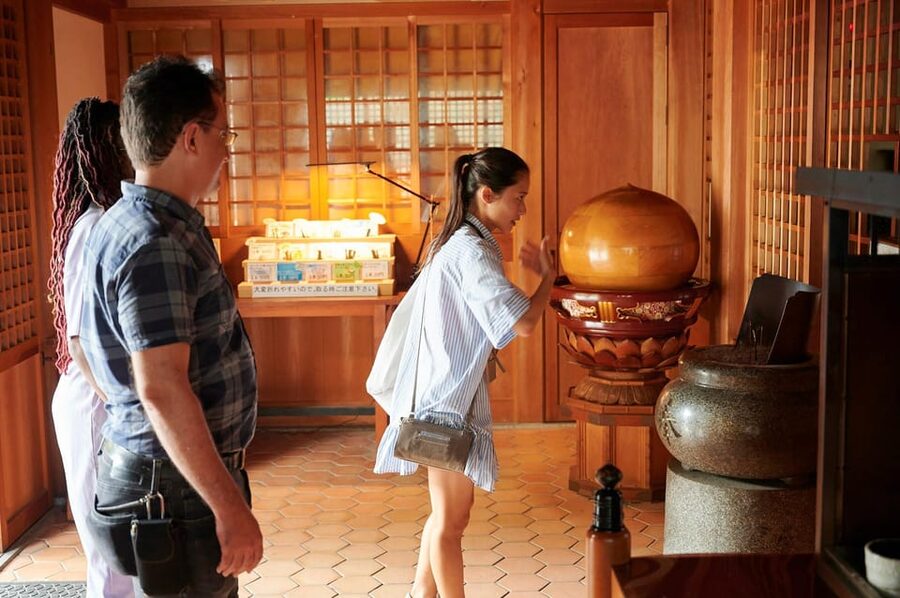
The available languages are English, Japanese, and French, but the sword master himself speaks Japanese. That makes the interpreter especially important for anyone who does not understand Japanese.
Benoit has served as an English interpreter, and Aimu and Claire have also guided sessions. The strongest part of their role is not just translating words. They explain Watanabe’s points as the lesson develops, help connect his personal story with the temple, and make sure instructions are clear before you try them.
You should pay attention to the language option when booking. A sword lesson involves physical correction, and a missed instruction can affect your posture or safety. The program is still possible for beginners, but the interpreter is central to making it work for an international group.
The translation also adds cultural value. Watanabe’s training is tied to ideas about purpose, discipline, and the spirit of the samurai. Without explanation, you might see only a sequence of movements. With interpretation, the class becomes a lesson in how a martial tradition is practiced and preserved today.
How the temple history changes the experience
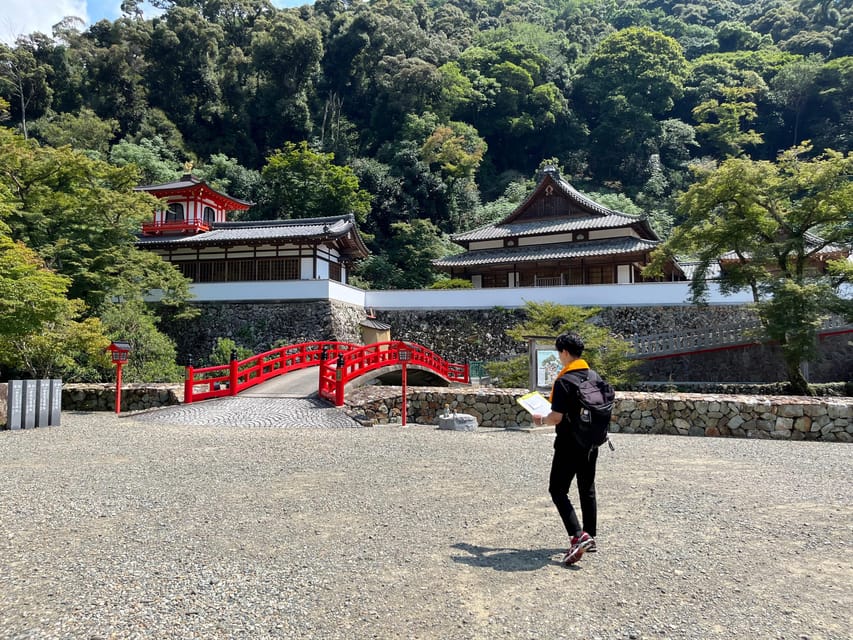
The program connects the sword lesson with the temple rather than treating the two as separate attractions. You hear about the site as you approach, then continue learning about its meaning once inside the restricted area.
That connection is worth your time. Samurai culture was not only about combat. It also involved discipline, aesthetics, ritual, and a relationship with spiritual practice. Training in a temple setting gives those ideas a physical place.
You may also see swords connected to the teacher’s own tradition, including an old sword from 1370. The chance to see an object of that age adds perspective, but the point is not simply that it is old. It shows how sword culture carries both technical and artistic value across generations.
I would choose this activity if you want to understand Japan through one focused subject. It offers more context than a quick temple visit and more cultural substance than a staged samurai photo session.
Is $158 a good value for three hours?
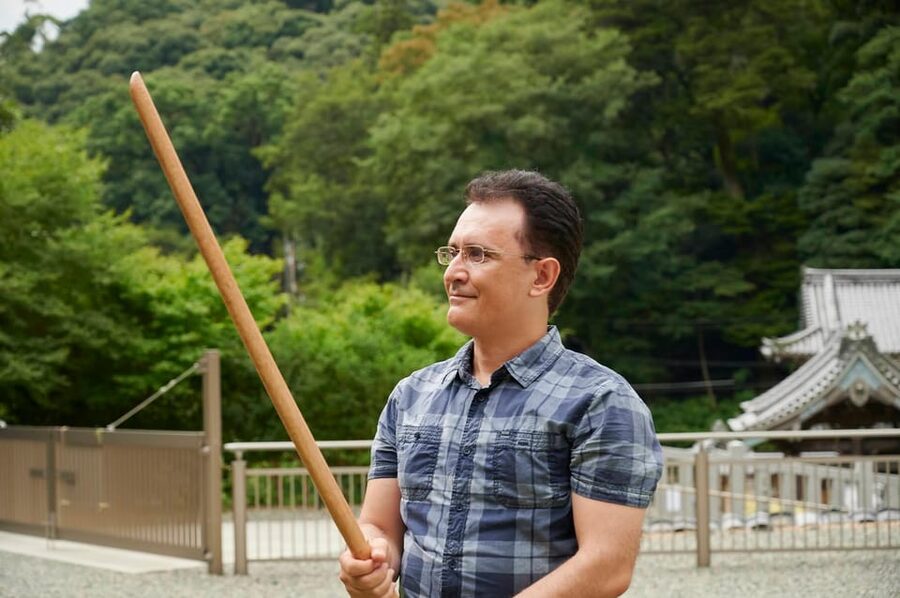
At $158 per person, this is not a low-cost activity. You are paying for a private group rather than a large public class, a specialist instructor, interpretation, access to a restricted temple area, and a performance that is not part of an ordinary visit.
The value depends on what you want from Osaka. If you only want to hold a sword for a few minutes, the price will feel high. If you want a carefully explained cultural experience with a skilled teacher, the private setting makes the cost easier to justify.
I also think the price reflects the unusual access. The temple area is normally closed to the public, and the program brings together a headmaster, a translator, a local walk, historical objects, and practical instruction. You are buying an organized cultural encounter, not just equipment rental.
Families, couples, solo visitors, and small groups can all fit the format. It is especially good for anyone who values personal instruction and wants an activity that feels specific to Osaka rather than interchangeable with one offered in every Japanese city.
Who should book this sword experience?
You should consider booking if you:
- Want a private, off-the-usual-route cultural activity near Osaka
- Have a strong interest in samurai history, Japanese martial arts, or traditional weapons
- Prefer learning by doing instead of only visiting museums and temples
- Are comfortable with a respectful, disciplined class rather than a playful costume show
- Want English, French, or Japanese support during the lesson
- Are traveling with family or a small private group
This may not suit you if you want a full day of martial arts training, a fast-paced combat class, or a guarantee that you will use a live sword. The class is introductory, and the focus is on technique, control, and cultural understanding.
Wear something that allows comfortable movement, since you will practice basic sword positions and strikes. The supplied information does not specify clothing rules, so it is sensible to avoid anything restrictive.
Cancellation is flexible up to 24 hours before the activity for a full refund, and you can reserve now and pay later. Starting times vary, so check availability before planning the rest of your day in Osaka.
Should you book it?
I would book this if you want an intimate cultural experience that combines a temple, a serious sword master, and hands-on practice. The strongest reasons are the restricted training area, Watanabe’s background, the quality of the interpretation, and the chance to see how swordsmanship connects with discipline and spiritual practice.
I would skip it only if your main goal is advanced training or a guaranteed live-blade demonstration. For everyone else, $158 buys a focused and memorable three hours, with enough history and personal instruction to make the experience feel like more than a tourist photo stop.
FAQ
Where does the experience begin?
You meet your guide in front of Minoh Station. The guide holds a yellow sign with the DeepExperience logo.
Where does the sword training take place?
Training takes place in a secluded area of Ryuan-ji or Saiko-ji Temple. These areas are normally closed to the public and open for this private program.
How long does the experience last?
The advertised duration is three hours, or 270 minutes. The itinerary includes a guided visit and class lasting about one and a half hours, along with the meeting, walk, temple visit, demonstration, and return to Minoh Station.
Who teaches the swordsmanship?
The session is led by Tatsuya Watanabe, a sword master and headmaster of Suishin-ryu. He began with kendo and later studied classical schools of Japanese swordsmanship.
Is the activity available in English?
Yes. Live guides are available in English, Japanese, and French. Interpreters such as Benoit have supported English-language sessions.
Will I use a real sword?
The main training uses wooden swords. Some sessions have included supervised use of actual swords and paper cutting, but this should not be assumed as a guaranteed part of every booking.
Is there a sword performance?
Yes. The program includes a special sword performance by Watanabe, showing traditional skill, control, and movement.
Is this a private group activity?
Yes. The experience is offered for a private group rather than a public class with unrelated participants.
What is included in the price?
The price includes the sword experience fee and guide fee. It does not list transport to Minoh Station or personal purchases as included.
Can I cancel the booking?
You can cancel up to 24 hours in advance for a full refund. The activity also offers reserve-now, pay-later booking.
Just added in Osaka
- Urban Canvas: Osaka Street Art Bike Tour★ 5.0 · 10 reviews
- Anime Cosplay Photshoot-50 Digital Photos Provided★ 5.0 · 8 reviews
- TeamLab Botanical Garden Osaka Ticket★ 3.5 · 6 reviews
- Umeda Sky Building & Kuchu Teien Observatory Ticket in Osaka★ 4.5 · 3 reviews
- Immerse in Judo Martial Arts Class from Japan★ 5.0 · 4 reviews
- Cherry Blossom Buddha and Mt.Yoshino with Strawberry Picking Tour★ 4.5 · 5 reviews
- Traditional Home cooking Experience in Osaka, Japan★ 5.0 · 14 reviews
- Traditional Calligraphy Experience near Dotonbori★ 5.0 · 3 reviews
Osaka Samurai Experiences, compared.
OSAKA NIGHT FUSION Japanese Taiko Kabuki Samurai Dance Show
Read our review →

Osaka 2-Hour Genuine Kendo / Samurai Experience In Japan
Read our review →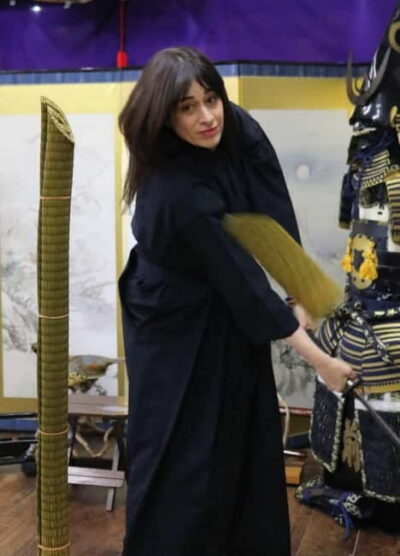
Learn Bushido – Trial Slashing with Samurai Sword
Read our review →
Samurai Show, Tea Ceremony, Japanese Traditional Activities
Read our review →
Honor – Experience Samurai & traditional Culture to the fullest
Read our review →Browse the lists this tour appears in