
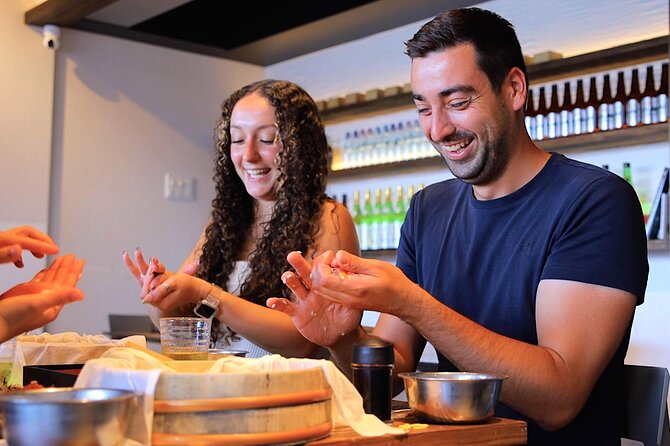
Reviewed · OSAKA SUSHI MAKING CLASSES
Sushi Making Osaka Roll and Authentic Japanese Sushi Class
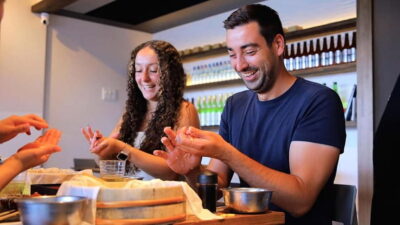
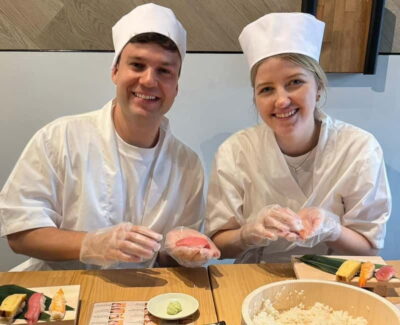
The best part of this Osaka experience is that you do not simply watch a chef work. You shape your own maki roll and nigiri, then sit down to eat what you made. The class is close to Dotonbori and Shinsaibashi, so it fits neatly into a day of sightseeing, shopping, and street food.
I like the friendly English-speaking instructors, who keep the class clear for beginners and often add useful sushi history. I also like the generous amount of food: you may make one maki roll and roughly four to eight pieces of nigiri, depending on your pace. The main catch is timing. The class lasts about 1 hour 40 minutes, and some people may find the final eating and photo time a little tight.
Key points to know before booking
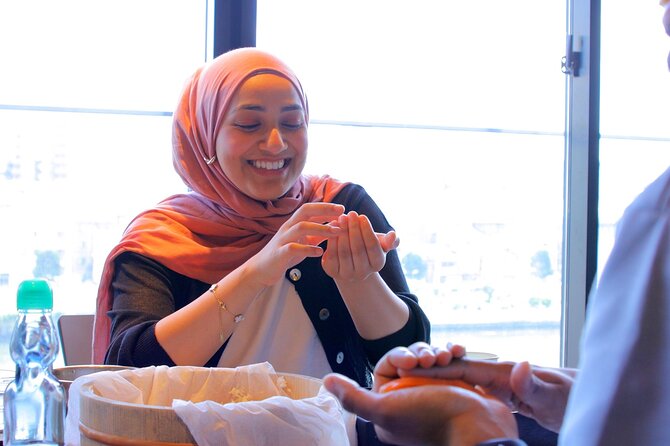
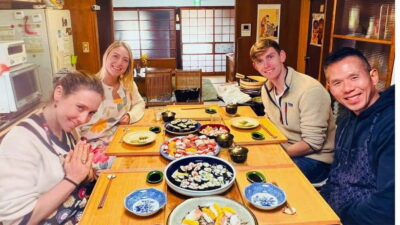
- Make and eat your own sushi: Prepare maki rolls and authentic nigiri, then enjoy the finished meal at the class table.
- Central Osaka location: The meeting point is on Higashishinsaibashi, close to Dotonbori and Shinsaibashi.
- Good for first-timers: No cooking experience is needed, and the instructors demonstrate each step.
- Family-friendly format: Children and teenagers can take part, with patient guidance around the table.
- Dietary requests matter: Vegetarian and fish choices are available, but note preferences when you book.
- Allow extra arrival time: The room can be tricky to find, and the class has a firm schedule.
Making sushi near Dotonbori
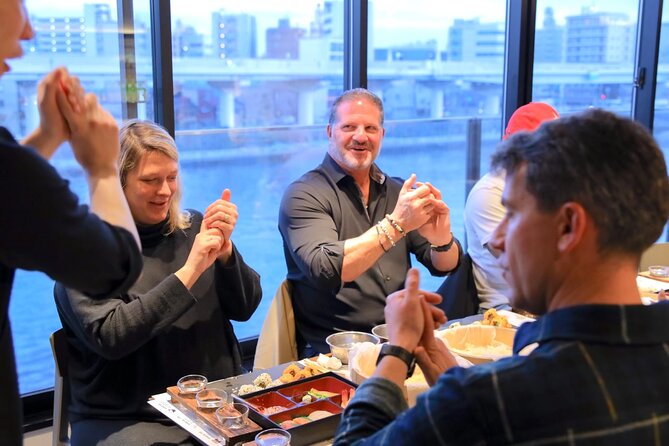
This is a practical way to add a hands-on food activity to an Osaka itinerary. The meeting point is Sushi Making Osaka, at 1-chōme-16-20 Higashishinsaibashi, in Chuo Ward. It is near the famous Dotonbori shopping street and Shinsaibashi, though the room can take a little effort to locate.
I would not cut your arrival time too close. One useful tip is to allow extra minutes to find the building and reach the class room, which is on the third floor according to the experience details. The class ends where it begins, so you can continue into Dotonbori for dinner, shopping, or a walk along the canal.
The central location is a real advantage. You are not spending half the afternoon crossing Osaka for a cooking lesson. Morning, afternoon, and evening sessions are offered, giving you room to fit the class around Kuromon Market, Osaka Castle, or a night out in Namba.
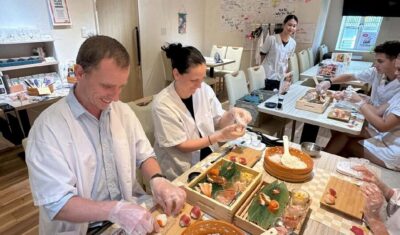
The group can include up to 20 people. That is large enough for a social class, but it also means this is not a private lesson. Your instructor moves around the table to help, and the strongest part of the format is the shared energy. If you want a quiet, highly personal lesson with long one-to-one coaching, a smaller class may suit you better.
More sushi making classes in Osaka:
- Osaka Sushi Making Experience
★ 5.0 · 400 reviews - Osaka: Roll and Authentic Sushi Making Class in Dotonbori
★ 4.9 · 239 reviews - Osaka: Sushi Class in Dotonbori
★ 4.9 · 160 reviews
What happens during the 1 hour 40 minute class
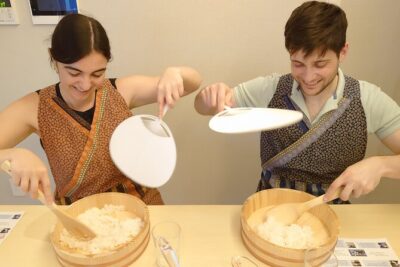
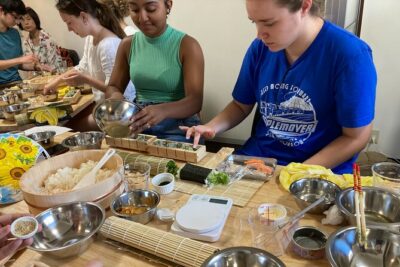
The ingredients are prepared before you arrive. That saves time and keeps the focus on technique rather than chopping, weighing, and kitchen setup. You can expect the instructor to explain the basic process, show you what to do, and then give you time to copy the movements.
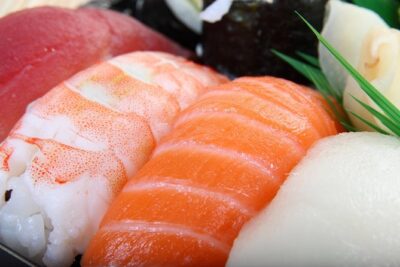
The class covers both maki sushi and nigiri sushi. Maki is the rolled style, with fillings enclosed in seaweed and rice. Nigiri is the hand-shaped rice topped with fish or another ingredient. Making the two forms gives you a useful contrast: one depends on rolling and slicing, while the other depends on shaping rice and placing the topping neatly.
You are not expected to arrive with cooking skills. The class is designed for beginners, and the demonstrations are broken into simple steps. You can ask sushi questions as you go, including questions about ingredients, technique, and Japanese food customs.
The experience also includes some background about sushi in Japan. Instructors such as Reika, Fuko, Fujiko, Aina, Arisa, Matty, Yui, and Ina have been praised for adding humor, history, and encouragement to the practical work. The instructor leading your session may be different, but the format is built around an approachable teacher rather than a silent demonstration.
A useful point to understand is that sushi looks easier than it is. Professional sushi chefs make the movements seem effortless, but rice shape, pressure, filling placement, and cutting all take practice. The class lets you see those small details from the inside. Your finished pieces may not look perfect, but that is part of the fun.
The maki roll is the hands-on centerpiece
The maki portion usually gives you the clearest sense of making something from scratch. You work with prepared ingredients, rice, and seaweed, then follow the instructor’s method for arranging and rolling them.
The important lesson is control. Too much filling makes the roll difficult to close. Too much pressure can crush the rice. Too little pressure leaves a loose roll that falls apart when sliced. The instructor’s demonstration helps you see the difference between simply wrapping ingredients and making a roll that holds together.
One review described making one maki roll as part of the class, along with several pieces of nigiri. That is enough to give you a full meal-sized tasting without turning the class into a long professional training session.
The completed roll is also the most photogenic part of the activity. If you want pictures, take them as you go rather than waiting until the final minute. The class moves on to cleanup and the next group, so the end can feel brisk.
Nigiri shows why sushi technique matters
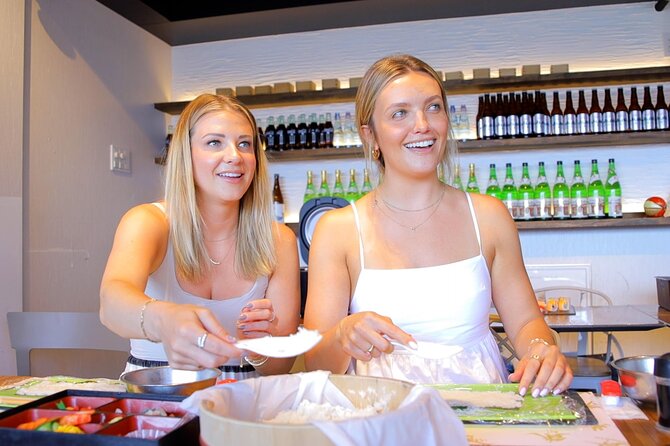
Nigiri is where you notice the difference between a casual sushi meal and the work behind it. The rice must be formed without becoming a hard block, and the topping needs to sit neatly on top. You will be shown how to shape the rice and assemble the pieces.
The amount you make can vary with your speed. A reasonable expectation is about four to eight pieces of nigiri, in addition to your maki roll. Faster hands may finish more, while first-timers may spend more time getting the shape right.
This is a good section for families. Children and teenagers can take part in a clear, physical task, and the finished sushi gives them an immediate reward. The instructors are described as patient with younger participants, which matters in a group setting where everyone works at a slightly different pace.
You also get to taste different types of sushi rather than making only one item. Fish and vegetarian options are available, but do not leave dietary requests until the class begins. If you do not eat shrimp, for example, you should state that when making your reservation. Ingredient substitutions may not be possible at the last minute.
A few more Osaka half-days worth pricing up
- Matcha Making Class in Osaka with Authentic Japanese Sweets Set
★ 5.0 · 509 reviews - Osaka: Ramen and Gyoza Cooking Class in Dotonbori
★ 5.0 · 378 reviews - Osaka Cooking Class: Okonomiyaki &Japanese cuisines experience
★ 5.0 · 261 reviews - Ramen and Gyoza Cooking Class in Osaka
★ 5.0 · 202 reviews
The instructors shape the experience
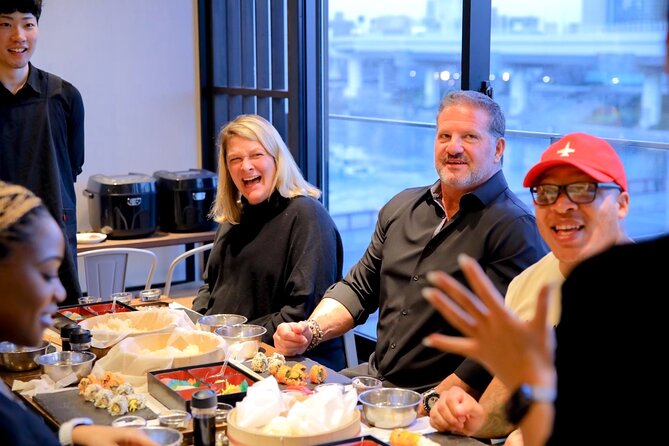
The sushi itself is only half the value. In a class for international visitors, the instructor’s manner makes a major difference. The best sessions are led with clear demonstrations, steady help, and enough humor to keep the group relaxed.
Specific instructors praised for their warmth and energy include Aina, Reika, Fuko, Fujiko, Matty, Yui, Arisa, and Ina. Their strengths vary. Fuko was described as patient, funny, and good at explaining the background of sushi. Aina and Arisa were noted for creating a welcoming atmosphere. Matty and Yui were praised for mixing instruction with entertainment.
You should not assume one particular instructor will lead your session, but these names give you a sense of the teaching style the experience aims for. The class is not presented as a formal culinary school. It is a social lesson where you learn enough technique to repeat the basics at home and enough context to understand what you are eating.
English is used throughout, making the class accessible to international visitors. Still, one instructor’s accent was considered somewhat difficult for one participant to follow. If you miss a spoken point, watch the demonstration closely and ask for the step again. This is a hands-on class, so seeing the movement is often as useful as hearing the explanation.
How much food do you get?
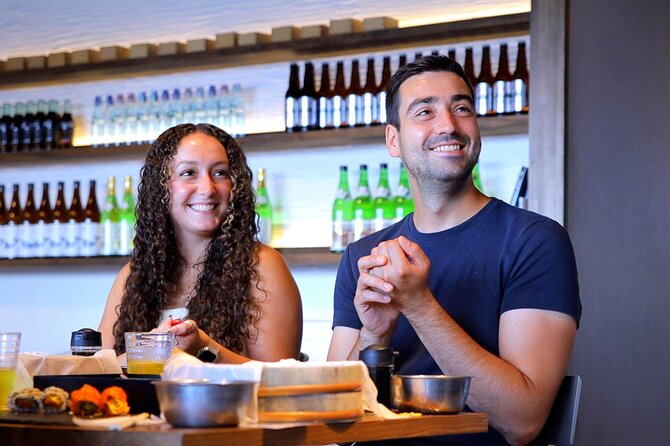
This is not a tiny tasting. The ingredients and the meal are included in the price, and the quantity is generally enough to serve as lunch or a light dinner. You make the food yourself, then eat it at the class venue.
The usual amount described is one maki roll and about four to eight pieces of nigiri, depending on how quickly you work. That makes the price of $31.01 per person reasonable for an activity that combines a lesson, ingredients, and a meal in central Osaka.
The value is strongest if you want more than a restaurant meal. At a sushi counter, you may eat better-finished sushi, but you will not learn how the pieces are formed. At this class, the appeal is the process, the shared table, and the chance to ask questions.
The price is less attractive if you are mainly looking for a large meal or a polished chef’s tasting. This is a beginner activity, not an omakase experience. You are paying for instruction and participation as much as for the food.
No sake or beer is included. If you are hoping for a drink with the meal, plan to visit a nearby bar or izakaya afterward rather than expecting alcohol during the class.
Family appeal and group atmosphere
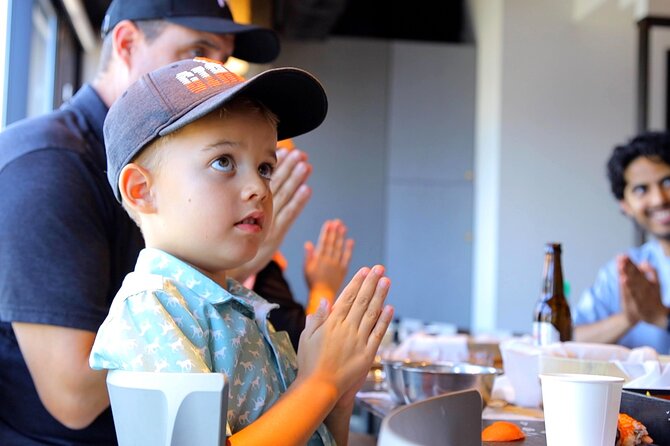
I would recommend this class to families with children or teenagers who enjoy making things with their hands. The process is short enough to hold attention, and the instructors provide help when a roll goes wrong or the rice shape needs work.
It also suits couples and friends who want a shared activity. You leave with a story that is more personal than simply saying you ate sushi in Osaka. The finished food gives you something to compare, photograph, and eat together.
The group size of up to 20 people creates a lively setting. That can be a plus if you like meeting other people and learning in a relaxed room. It can be a drawback if you want every minute tailored to your pace.
The class has received a very strong overall response, with a five-star rating based on 1,224 reviews and a 100 percent recommendation figure provided for the experience. That level of consistency suggests the basic formula works well: clear instruction, friendly staff, useful cultural context, and enough food to make the activity feel worthwhile.
Still, I would keep expectations realistic. A few practical concerns have been raised about the pace. One person wanted more time for making and eating and less time on history. Another felt rushed while the staff cleaned up for the next group. If your ideal cooking class includes long conversation, leisurely photos, and drinks around the table, this may feel too tightly scheduled.
Practical details that can affect your visit
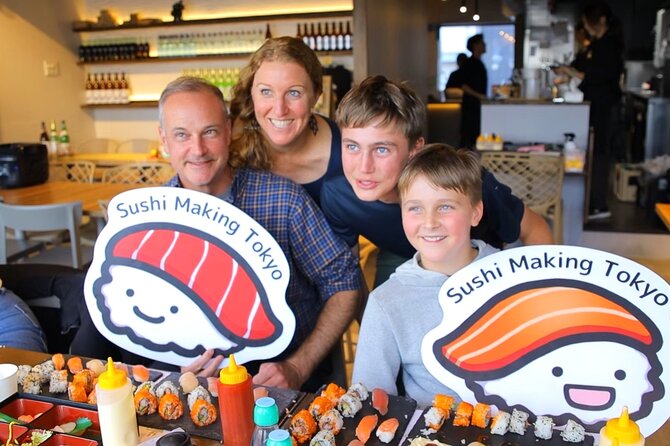
The activity lasts approximately 1 hour 40 minutes. That includes the instruction, preparation, eating, and likely the transition to the next group. I would reserve a little extra time before the start for finding the room, but avoid booking another fixed activity immediately afterward.
The class operates in a room near Dotonbori and Shinsaibashi, with public transportation nearby. There is no hotel pickup or drop-off, so you must make your own way to Higashishinsaibashi.
A mobile ticket is provided, and confirmation is received at the time of booking. Service animals are allowed. The experience is available at different times of day, which makes it easy to fit into a busy Osaka schedule.
Food handling is worth keeping in mind. A concern was raised about fish remaining out during the session rather than sitting over ice. The supplied information does not describe the exact food setup, so if this point matters to you, ask the provider before booking. Also share allergies and dietary needs in advance, since substitutions may be limited once the class begins.
You can cancel for a full refund if you do so at least 24 hours before the start time. Changes or cancellations made within 24 hours are not accepted for a refund, and the cutoff follows local Osaka time.
Who should book this Osaka sushi class?
I think this is a strong choice if you want an affordable, central, beginner-friendly food activity. It works especially well on a first visit to Osaka, when you want to learn something local without giving up a whole day.
Book it if you:
- Want to make both maki and nigiri
- Prefer a guided activity to a passive food tour
- Are traveling with children or teenagers
- Need an English-speaking class
- Want a meal-sized amount of sushi
- Like activities close to Dotonbori and Shinsaibashi
- Want a simple introduction to sushi technique and culture
Think twice if you want a private lesson, a long relaxed meal, alcohol during the session, or advanced knife and fish preparation. The ingredients are ready for you, which makes the class easier and faster, but it also means you are not learning every stage of sushi preparation.
Should you book it?
I would book this class if you want a fun Osaka memory with real participation and a fair price. The strongest reasons are the central location, approachable instruction, family-friendly format, and the chance to eat what you make. You do not need prior cooking experience, and the class gives you enough technique to try simple sushi at home.
Go in with the right expectations. This is a compact group workshop, not a long chef’s course. Arrive early, note dietary needs when booking, and take photos before the final cleanup begins. For many visitors, one maki roll, several pieces of nigiri, and a little sushi culture make a satisfying 100-minute break from sightseeing.
FAQ
How long does the sushi class last?
The class lasts approximately 1 hour and 40 minutes.
Where does the activity meet?
It meets at Sushi Making Osaka, at 1-chōme-16-20 Higashishinsaibashi, Chuo Ward, Osaka, 542-0083, Japan.
Where does the class end?
The activity ends back at the meeting point.
Is the class close to Dotonbori?
Yes. The class is conveniently located near Dotonbori and Shinsaibashi.
Is cooking experience required?
No. The class is designed for beginners, and the instructor demonstrates the sushi-making steps.
What types of sushi will I make?
You will learn to make sushi rolls, or maki, and authentic nigiri sushi.
Are ingredients and food included?
Yes. The English-speaking instructor, cooking-class ingredients, and the meal are included.
Are vegetarian options available?
Vegetarian and fish options are available. You should note dietary preferences when making your reservation, since last-minute substitutions may not be possible.
Can I cancel for a refund?
Yes. You can receive a full refund if you cancel at least 24 hours before the experience starts. Cancellations and changes made less than 24 hours before the start time are not accepted for a refund.
Just added in Osaka
- Urban Canvas: Osaka Street Art Bike Tour★ 5.0 · 10 reviews
- Anime Cosplay Photshoot-50 Digital Photos Provided★ 5.0 · 8 reviews
- TeamLab Botanical Garden Osaka Ticket★ 3.5 · 6 reviews
- Umeda Sky Building & Kuchu Teien Observatory Ticket in Osaka★ 4.5 · 3 reviews
- Immerse in Judo Martial Arts Class from Japan★ 5.0 · 4 reviews
- Cherry Blossom Buddha and Mt.Yoshino with Strawberry Picking Tour★ 4.5 · 5 reviews
- Traditional Home cooking Experience in Osaka, Japan★ 5.0 · 14 reviews
- Traditional Calligraphy Experience near Dotonbori★ 5.0 · 3 reviews
Osaka Sushi Making Classes, compared.
Roll and Authentic Sushi Making Class in Dotonbori
Read our review →
Osaka Sushi Miso soup Adventure: A Journey of Exotic Flavors
Read our review →Browse the lists this tour appears in