
Reviewed · DOTONBORI TOURS
Osaka: Sushi Class in Dotonbori
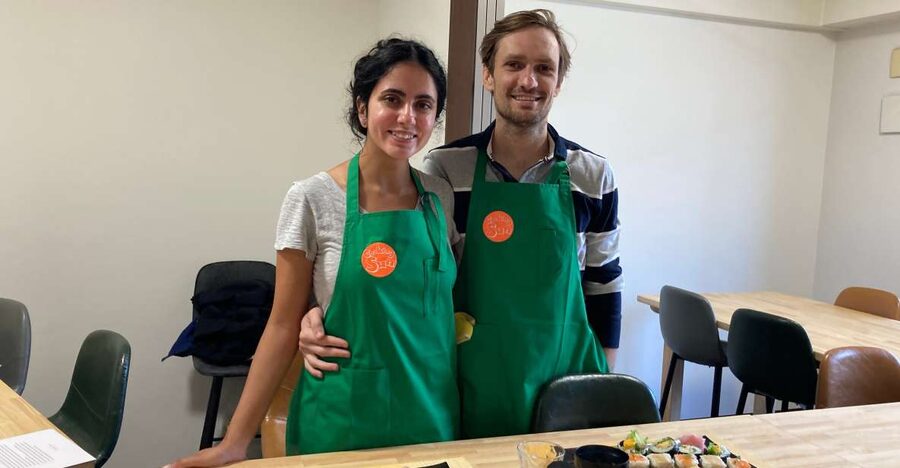
Osaka’s sushi story gets a hands-on introduction in this three-hour class. You make three distinct styles, including oshizushi, the square pressed sushi associated with Kansai, rather than simply watching a chef work behind a counter. The finished food becomes your lunch.
I like the small class size, which gives you room to ask questions and receive help with each technique. I also like the cultural side: instructors such as Yoshi, Yoko, Ami, and Eriko have explained Japanese cooking customs, preservation, pickling, dashi, and local food suggestions alongside the recipes. The main consideration is that you do not slice the fish yourself, so this is more about assembling and shaping sushi than full seafood preparation.
Key points
- Three sushi styles in one class: Make a salad roll, hand-shaped nigiri, and Osaka-style pressed oshizushi.
- A real Kansai specialty: Oshizushi is formed in a square wooden mold and cut into pieces before eating.
- Small English-speaking groups: The class is limited to eight participants, with clear step-by-step guidance.
- Plenty of food included: All sushi ingredients are supplied, and the finished meal is substantial.
- Useful cultural context: Instructors may cover dashi, pickling, food preservation, Japanese dining customs, and local places to eat.
- Good location, tricky entrance: The class meets at Cooking Sun Osaka, room 202, near Dotonbori. Press 202 and the 呼出 call button at the entrance.
Making Osaka Sushi Near Dotonbori
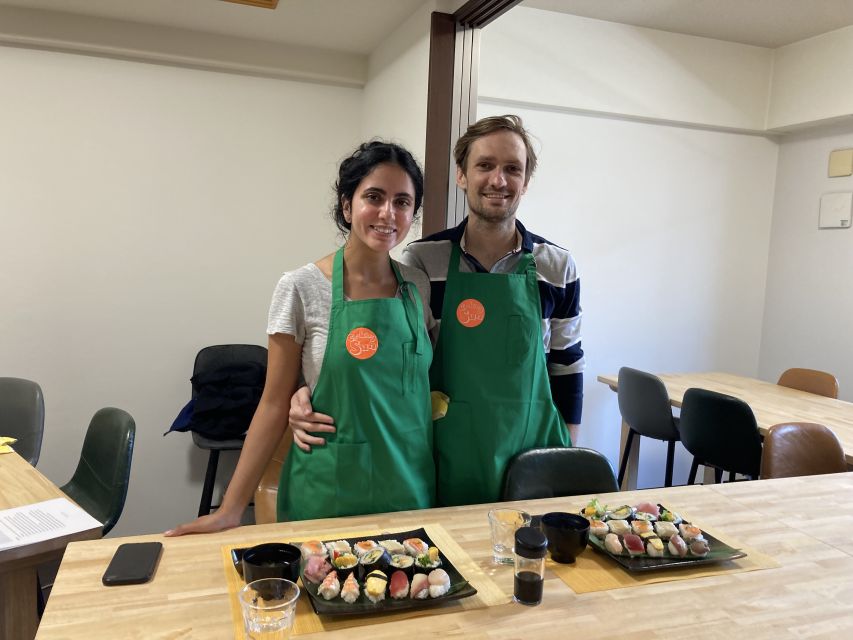
Dotonbori is famous for neon signs, canal views, takoyaki, and crowded food streets. This class gives you a quieter way to understand Osaka’s food culture, with your hands busy at a worktable instead of your camera pointed at a restaurant sign.
At $67 per person, the price is reasonable for a three-hour activity that includes instruction, ingredients, and a full meal. You are not paying only for a short demonstration. You prepare several kinds of sushi, learn the basic logic behind each one, and eat what you make at the end.
The class is held at Cooking Sun Osaka in room 202. Finding the entrance can take a little patience, especially if you arrive by taxi. The building entrance requires you to press 202 and then the 呼出 call button. Look for the tree outside, which has helped people identify the location more easily.
Plan to arrive with enough time to find the room. Dotonbori has plenty of signs and foot traffic, but that does not always make a small cooking school entrance obvious.
More Dotonbori walks and food stops:
- Osaka Local Foodie Walking Tour in Dotonbori and Shinsekai
★ 5.0 · 985 reviews - Osaka: Dotonbori District River Cruise with Drink Discount
★ 4.2 · 876 reviews - Ultimate Osaka Walking Tour: Castle, Dotonbori & Hidden Gems
★ 5.0 · 862 reviews
A Three-Hour Class With Room to Ask Questions
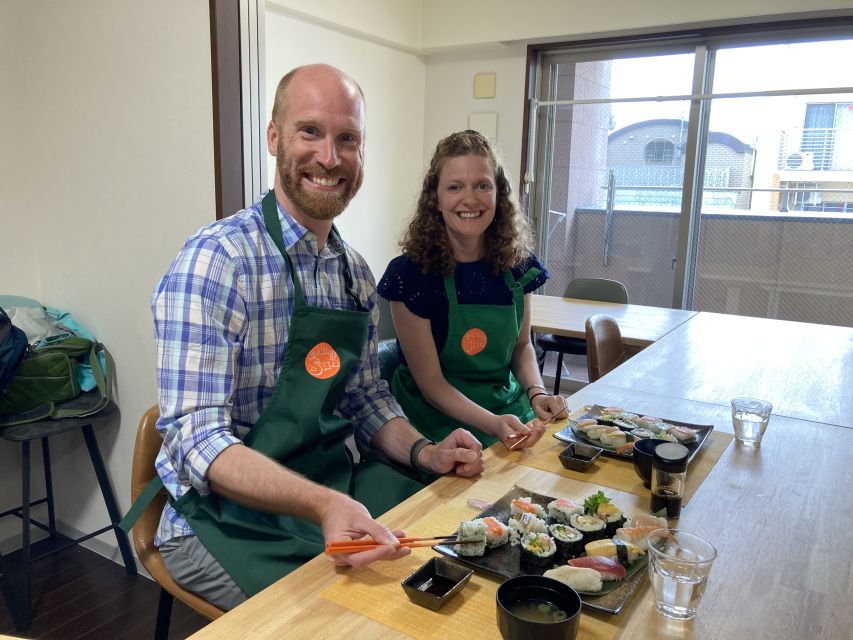
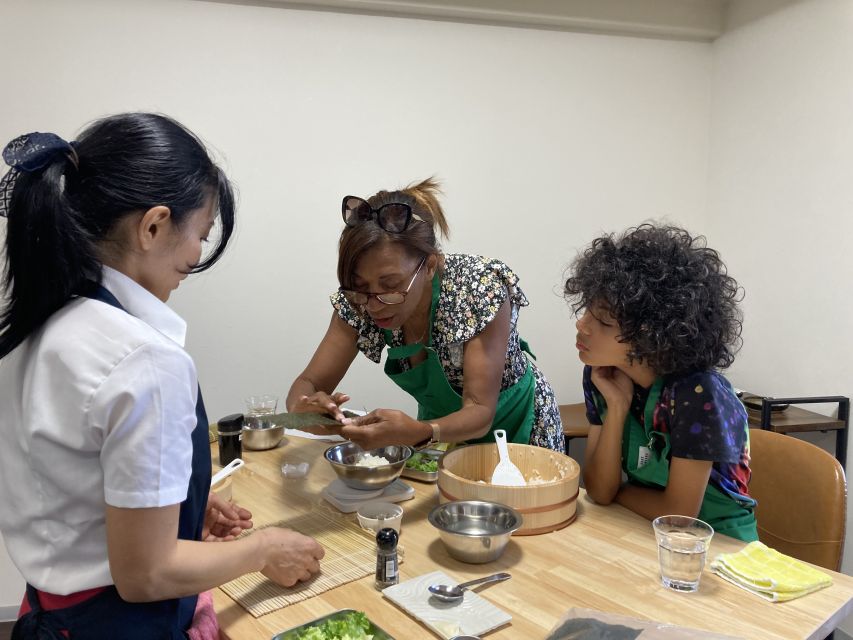
The class is conducted in English, and the teaching style is practical. You are shown what to do, then given time to copy the technique. That matters with sushi, since the steps can look easy until you try to spread rice, place fillings, or shape a neat piece by hand.
The group is limited to eight participants. In smaller sessions, the class may have only four people, giving the instructor plenty of time to watch each person’s work. You can ask about a sticky rice problem, a loose roll, or the right pressure for pressed sushi without waiting behind a large crowd.
The instructors named in past sessions include Yoshi, Yoko, Ami, Eriko, Naomi, and others. Their role goes beyond translating instructions. They have also explained Japanese food customs, suggested things to eat during the rest of your Osaka visit, and answered questions about buying ingredients or remaking the dishes at home.
You should expect a friendly, social class rather than a formal chef examination. Beginners are welcome, and the instructions are broken into manageable steps. If your first sushi roll looks more handmade than restaurant-perfect, that is part of the fun.
Salad Roll With Nori, Egg, and Fresh Vegetables
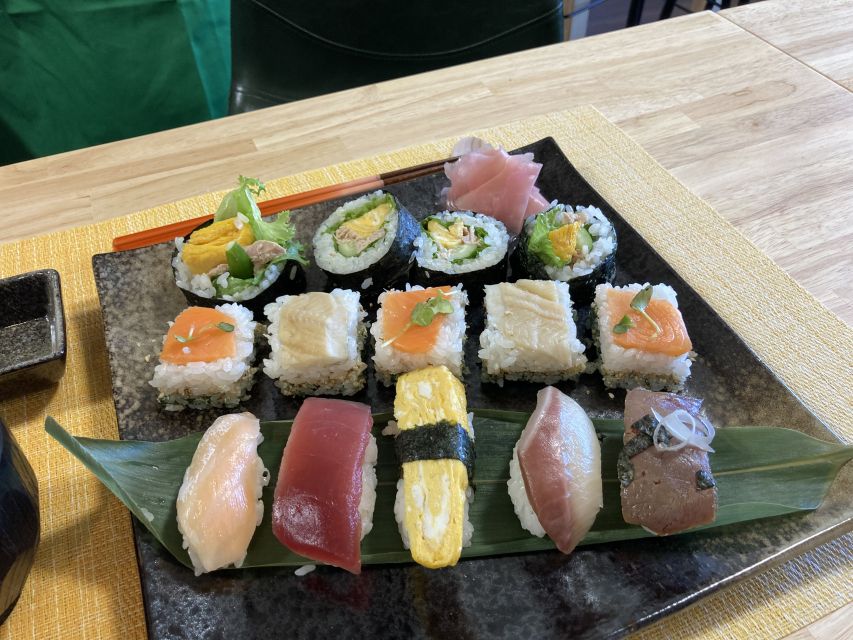
The first style is a salad roll, a type of makizushi made with nori seaweed wrapped around fillings. The stated ingredients include crab-flavored kamaboko, lettuce, cucumber, tuna mixed with mayonnaise, and tamagoyaki, the Japanese rolled omelet.
This is a useful starting point because it introduces the basic rolling motion. You learn how to distribute the filling, keep the roll together, and cut it into portions. The mix of creamy tuna, crisp vegetables, egg, and nori gives you a mild and approachable flavor.
The salad roll also suits people who are less comfortable with raw fish. The listed ingredients use tuna mixed with mayonnaise and crab-flavored kamaboko, while the class then moves on to nigiri and pressed sushi.
You should not expect a health-food workshop simply because the name includes salad. This is still a rice-based sushi meal, and the roll contains mayonnaise and egg. The appeal is its fresh vegetables and gentle flavor, plus the chance to learn a core sushi technique without beginning with the most delicate form.
Nigiri, the Most Recognizable Sushi Technique
Nigiri is the familiar piece of sushi formed from a small portion of vinegared rice with a topping placed on it. The class explains this style using fish, shellfish, or omelet as examples of suitable toppings.
Nigiri looks simple, but shaping the rice takes control. You need enough pressure to hold the rice together without crushing it. The topping must sit neatly on top, and the finished piece should be easy to pick up and eat in one or two bites.
This is the style most people picture when they hear the word sushi, so it gives the class an immediate connection to Japanese food outside the classroom. You learn why the rice matters as much as the topping and how sushi depends on balance, portion size, and careful handling.
One limitation is important for sushi enthusiasts who want a full fish-preparation lesson: you do not get to slice the fish yourself. The class focuses on shaping and assembling rather than filleting or cutting seafood from the whole piece.
That makes the activity accessible for first-time cooks, but less suited to someone looking for professional knife work. If you already have sushi-making experience, the main value is learning the Osaka style and hearing the cultural explanation rather than mastering advanced fish cutting.
More sushi making classes in Osaka:
- Sushi Making Osaka Roll and Authentic Japanese Sushi Class
★ 5.0 · 1,220 reviews - Osaka Sushi Making Experience
★ 5.0 · 400 reviews - Osaka: Roll and Authentic Sushi Making Class in Dotonbori
★ 4.9 · 239 reviews - Osaka Dotonbori: Sushi Making Experience
★ 4.9 · 122 reviews
Oshizushi Shows Osaka’s Local Style
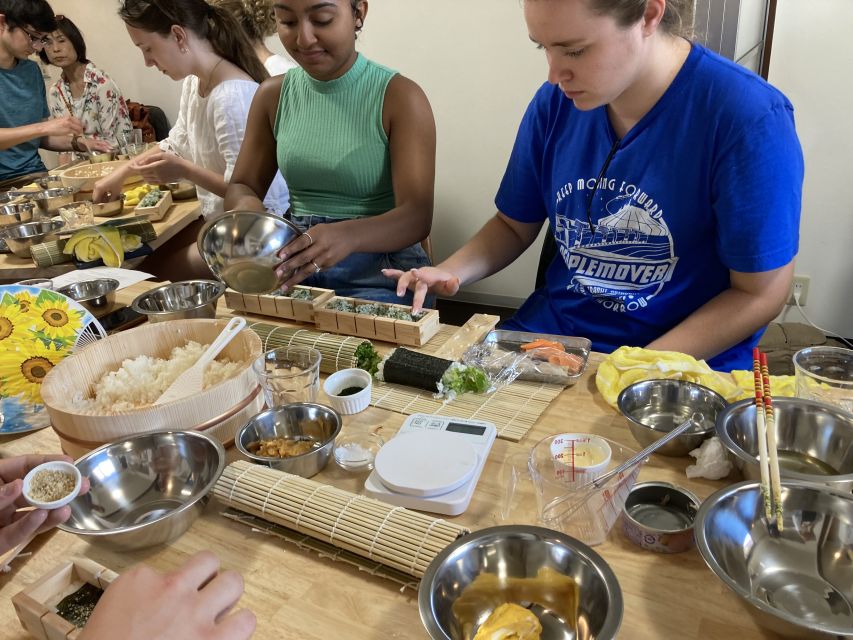
The most distinctive part of the class is oshizushi, also called pressed sushi or box sushi. This is a traditional Kansai style, and it gives the activity a direct connection to Osaka rather than presenting only the better-known Tokyo-style image of sushi.
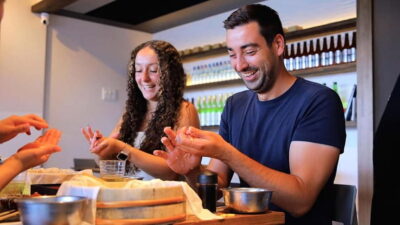
You fill a square wooden frame with sushi rice and toppings. Then you press the rice so it holds together with the toppings. Once removed from the frame, the sushi has a square shape and is cut into pieces before eating.
The method has a practical side. Pressing the rice into a box creates a compact piece that can be portioned neatly. It also gives you a clear lesson in how regional food traditions develop different shapes and methods around similar ingredients.
For me, this is the strongest reason to choose this class over a generic sushi lesson. Nigiri is familiar worldwide, but oshizushi offers a specifically Osaka-related food experience. You leave knowing that sushi is not one single technique.
The finished food may look more uniform than your hand-shaped nigiri, since the wooden frame does much of the shaping. Still, you take part in the process and learn why the pieces are square.
Food, Dashi, and a Meal at the End
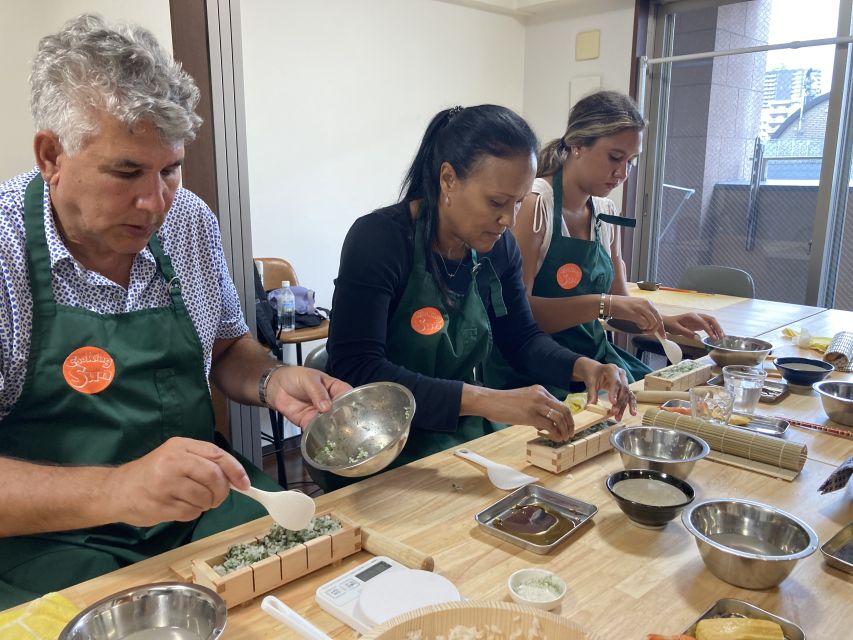
All ingredients for the sushi-making session are included. You do not need to shop for fish, prepare rice in advance, or bring cooking equipment.
Several class sessions have included more than the three named sushi styles. Dashi and miso soup have also appeared in the meal, and instructors have discussed how Japanese foods are preserved and pickled. These extra elements can vary, so you should treat them as possible additions rather than guaranteed parts of every booking.
The food quantity is one of the class’s strongest practical points. People with large appetites have found the finished meal substantial, and you are not left with only a few decorative pieces after three hours of work. Bring an appetite, especially if this class replaces lunch.
The meal also gives you a chance to judge your own work. A slightly uneven roll tastes just as good as a tidy one, but eating everything at the end makes the techniques feel useful rather than merely performative.
Fresh ingredients are central to the experience. You learn how the components fit together, then eat the result while the steps are still clear in your mind.
The Cultural Side Makes the Class Worth More
A good cooking class teaches a recipe. A better one explains why the food is prepared that way. Here, instructors have discussed Japanese cooking methods, food preservation, pickling, dashi, and the place of sushi in local food culture.
That background adds value to the $67 price. You can buy prepared sushi for less, but you cannot buy the same explanation and guided practice at a convenience store or restaurant counter.
The instructors also make the class useful beyond the scheduled time. They may suggest foods to try around Osaka and explain how to find ingredients or prepare similar dishes at home. This makes the activity a practical introduction to Japanese eating, not only a souvenir photograph with a plate of sushi.
The tone is informal and interactive. Instructors have chatted about visitors’ plans and offered food suggestions for the rest of the trip. If you enjoy asking questions, this is a good setting for it.
Who Will Enjoy This Class Most
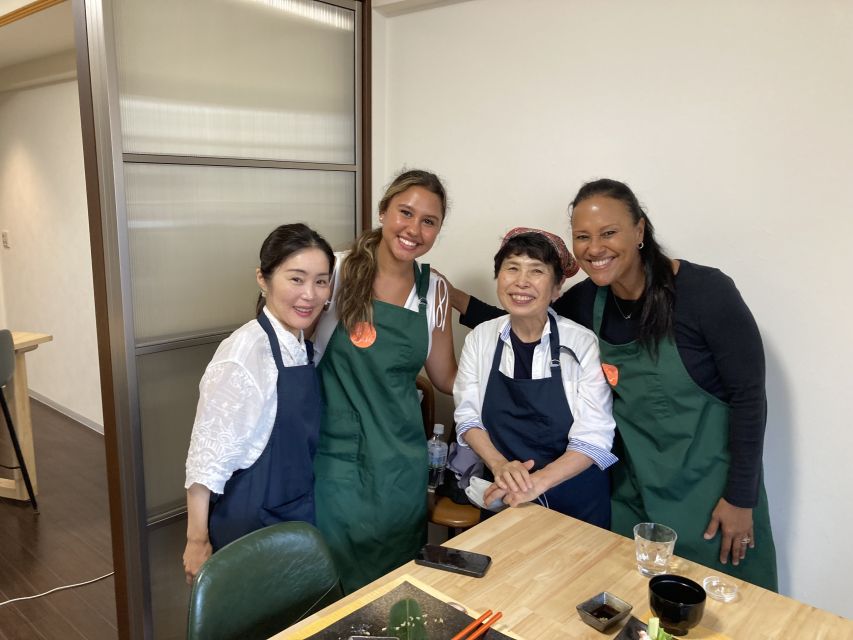
This experience suits first-time sushi makers, couples, families, and small groups of friends. You do not need advanced cooking skills, and the step-by-step teaching makes the class approachable for someone who has never shaped sushi before.
It also works well for sushi fans who want more context. The inclusion of oshizushi gives the class a local Osaka angle, while nigiri connects the lesson to the sushi you are likely to eat elsewhere in Japan.
The activity is especially useful on a rainy day or when you want a break from sightseeing. Three hours is long enough to feel like a real activity, but not so long that it takes over your entire day.
You may want to choose something else if your main goal is learning to cut fish, preparing a full multi-course meal, or watching a professional chef perform advanced knife work. This class is about accessible techniques, cultural explanation, and eating what you prepare.
The class is wheelchair accessible. If you need a vegetarian or gluten-free option, leave a note when booking. That request should be made in advance rather than raised only after the class begins.
Timing, Booking, and Small Practical Details
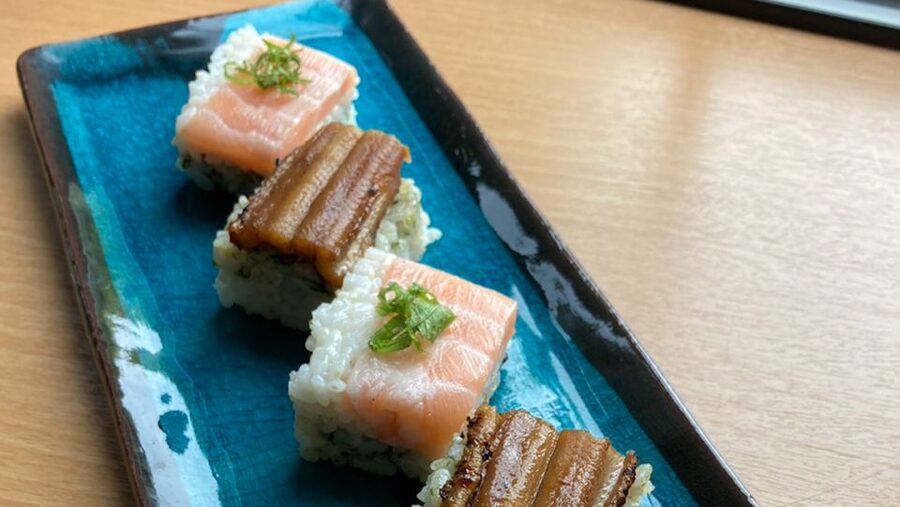
The duration is three hours, and starting times depend on availability. Since the class takes place near Dotonbori, it can fit into a day that includes central Osaka sightseeing, but allow time to locate the entrance.
Cancellation is free up to 24 hours before the activity for a full refund. You can also reserve now and pay later, which helps if you are still arranging your Osaka schedule.
The English instruction is a major benefit for international visitors. You are learning techniques that depend on hand movements, so clear demonstrations matter as much as spoken explanation.
The eight-person limit keeps the class personal, but it also means popular times can fill. If you want a particular day or time, book ahead instead of treating it as a last-minute stop between Dotonbori attractions.
Is the $67 Price Good Value?
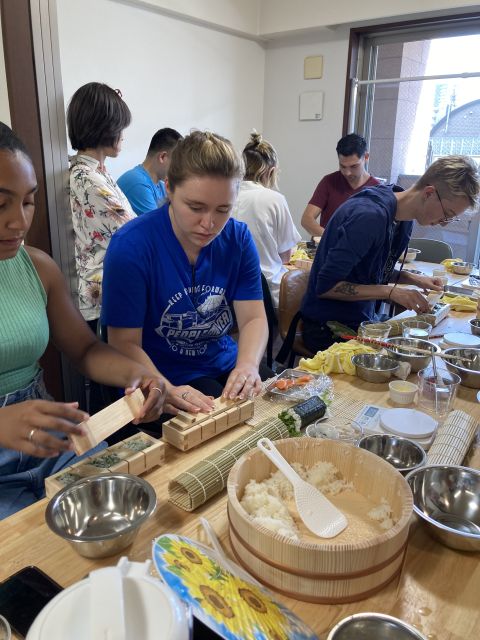
I think the price works well if you value both food and instruction. You receive three hours of guided activity, all sushi ingredients, a substantial amount of finished food, and an English-speaking teacher who can explain local customs and offer Osaka suggestions.
The value is strongest for beginners. You are paying for confidence, not just raw ingredients. By the end, you have practiced a roll, nigiri, and pressed sushi, and you have a better sense of how Japanese sushi differs by region and technique.
The value is slightly less clear for an experienced home sushi maker who already knows how to season rice, roll makizushi, and shape nigiri. Even then, the Osaka pressed-sushi method and cultural discussion may make the class worthwhile.
Should You Book the Cooking Sun Osaka Class?
Book it if you want an active food experience close to Dotonbori, prefer small groups, and like the idea of eating a proper meal made with your own hands. The standout feature is the mix of familiar nigiri with regional oshizushi, supported by friendly English instruction.
I would especially recommend it for a first sushi class, a honeymoon activity, or a rainy afternoon in Osaka. Skip it only if fish slicing and advanced chef skills are your priority. For most visitors, the combination of clear teaching, generous food, and local context makes this a strong-value three-hour activity.
FAQ
Where does the sushi class meet?
The class meets at Cooking Sun Osaka, room 202. At the entrance, press 202 and then press the 呼出 call button.
How long does the class last?
The class lasts three hours.
How much does the class cost?
The listed price is $67 per person.
Which languages are used during the class?
The class is conducted in English.
How many people can join?
The group is limited to eight participants.
Which types of sushi will I make?
You will make a salad roll, nigiri, and oshizushi, also called pressed or box sushi.
What is oshizushi?
Oshizushi is a Kansai-style sushi made by pressing sushi rice and toppings in a square wooden frame. The finished sushi is cut into pieces before eating.
Are ingredients included?
Yes. All ingredients needed for sushi making are included.
Is the class wheelchair accessible?
Yes, the activity is listed as wheelchair accessible.
Can I request a vegetarian or gluten-free option?
Yes. Leave a note when booking if you need a vegetarian or gluten-free option.
Can I cancel for a refund?
You can cancel up to 24 hours in advance for a full refund.
Can I pay later?
Yes. The reserve-now, pay-later option lets you book without paying on the day of reservation.
More Workshops in Osaka
- Matcha Making Class in Osaka with Authentic Japanese Sweets Set
★ 5.0 · 509 reviews - Osaka: Ramen and Gyoza Cooking Class in Dotonbori
★ 5.0 · 378 reviews - Osaka Cooking Class: Okonomiyaki &Japanese cuisines experience
★ 5.0 · 261 reviews - Ramen and Gyoza Cooking Class in Osaka
★ 5.0 · 202 reviews
Just added in Osaka
- Urban Canvas: Osaka Street Art Bike Tour★ 5.0 · 10 reviews
- Anime Cosplay Photshoot-50 Digital Photos Provided★ 5.0 · 8 reviews
- TeamLab Botanical Garden Osaka Ticket★ 3.5 · 6 reviews
- Umeda Sky Building & Kuchu Teien Observatory Ticket in Osaka★ 4.5 · 3 reviews
- Immerse in Judo Martial Arts Class from Japan★ 5.0 · 4 reviews
- Cherry Blossom Buddha and Mt.Yoshino with Strawberry Picking Tour★ 4.5 · 5 reviews
- Traditional Home cooking Experience in Osaka, Japan★ 5.0 · 14 reviews
- Traditional Calligraphy Experience near Dotonbori★ 5.0 · 3 reviews
Dotonbori Tours, compared.
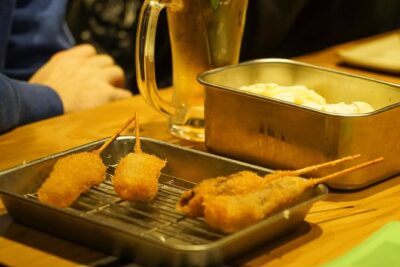
Osaka Local Foodie Walking Tour in Dotonbori and Shinsekai
Read our review →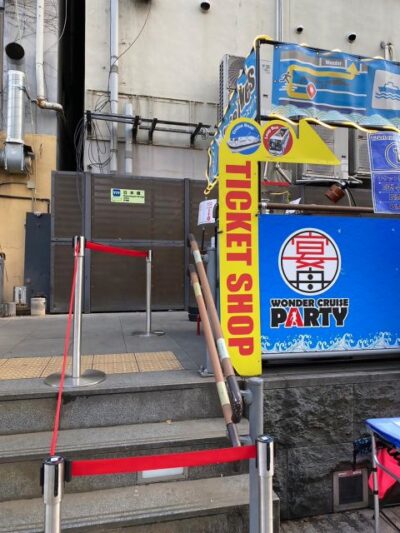
Dotonbori District River Cruise with Drink Discount
Read our review →
Ultimate Osaka Walking Tour: Castle, Dotonbori & Hidden Gems
Read our review →
Roll and Authentic Sushi Making Class in Dotonbori
Read our review →
Osaka Local Bar Crawl in Dotombori & Uranamba Area
Read our review →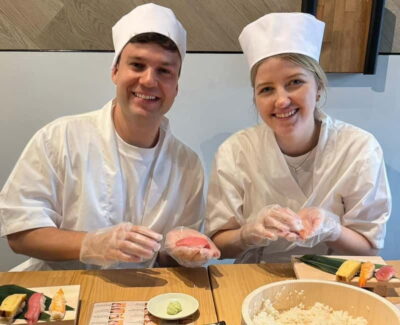
Browse the lists this tour appears in