
Reviewed · OSAKA TEA CEREMONIES
Osaka:Zen Tea Ceremony and Foot Bath Experience<45min>
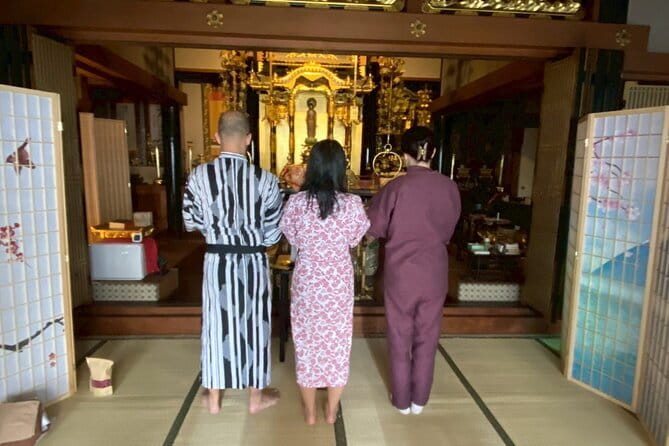
A 45-minute temple session can change the pace of an Osaka day. You’ll learn the basics of matcha, offer incense, sit with a short meditation, and finish with a cooling foot bath and light scrub massage. It is a compact cultural experience, but it does not feel like a rushed photo stop.
I like the tiny group size, capped at three people, because it gives the staff room to explain the rituals and help with the tea. I also like the mix of culture and comfort: the incense and worship give the visit purpose, while the foot bath lets you simply sit and rest. The main consideration is timing. The activity is advertised as about 45 minutes, though some booking details describe it as approximately one hour, so do not plan a tightly timed connection afterward.
Key points to know
- A 500-year-old temple setting: The ceremony takes place in a small temple atmosphere rather than a large commercial tea room.
- Several traditions in one visit: You’ll learn about worship, incense, meditation, matcha, and wagashi.
- A cooling foot bath with scrub massage: This adds a hands-on relaxation element rarely included in a basic tea ceremony.
- Small groups of no more than three: You can expect personal attention, especially if you are the only person booked.
- Photos with your smartphone: Staff will take pictures during the experience and provide them to you.
- $42.35 with free cancellation up to 24 hours ahead: The price is reasonable if you want both cultural instruction and a short massage-style treatment.
A small temple pause in the middle of Osaka
The appeal here is not a grand temple complex or a long formal ceremony. It is the chance to step into a quiet, intimate setting and take part in a few traditional practices without giving up half your day.
The meeting point is at Tossa de coracao, 1-chōme-6-19 Kitahorie, in Osaka’s Nishi Ward. The location is near public transportation, which matters in Osaka, where a short visit works best when you can reach it without a long detour. The activity ends at the same place.
You’ll find a staff-led introduction to the temple, its origins, and the proper way to worship. Guidebooks are used to support the explanation, so you are not expected to know the gestures or sequence in advance. That makes this a better choice for a first cultural experience than a formal ceremony where you are left to copy everyone else.
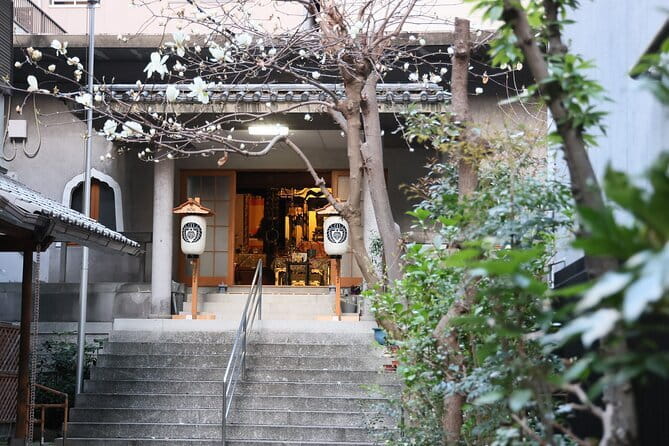
The temple setting is small and personal. One account describes it as a 500-year-old temple, while another calls it a mini temple. Either way, you should picture an intimate religious space rather than a vast tourist monument. That scale is part of the charm, but it also means the experience is about quiet attention, not sightseeing.
More tea ceremonies in Osaka:
- Osaka: Tea Ceremony Experience
★ 4.9 · 1,426 reviews - Tea Ceremony Experience in Osaka Doutonbori
★ 5.0 · 754 reviews - Matcha Making Class in Osaka with Authentic Japanese Sweets Set
★ 5.0 · 509 reviews
Worship, incense, and a short meditation
The first part introduces you to the spiritual side of the visit. You’ll learn how to worship and take part in an incense offering. You’ll also apply kneaded incense and spend time in meditation.
These steps give the matcha portion some context. Tea is not treated as a drink you grab between Osaka attractions. Instead, the staff connects it with slowing down, showing respect, and paying attention to small actions. You are given enough background to understand what you are doing, but the session is not presented as an advanced religious lesson.
The kneaded incense is a useful detail. It gives you something direct to do with your hands and senses before the tea begins. If you enjoy cultural activities that involve participation rather than a guide speaking at you, this part adds real value.
The meditation is also short enough to suit a busy itinerary. You will not be signing up for a full retreat. The point is to settle your mind for a few moments, which can feel especially welcome after time in Osaka’s shopping streets, train stations, and crowded food areas.
Learning matcha without a full-day commitment
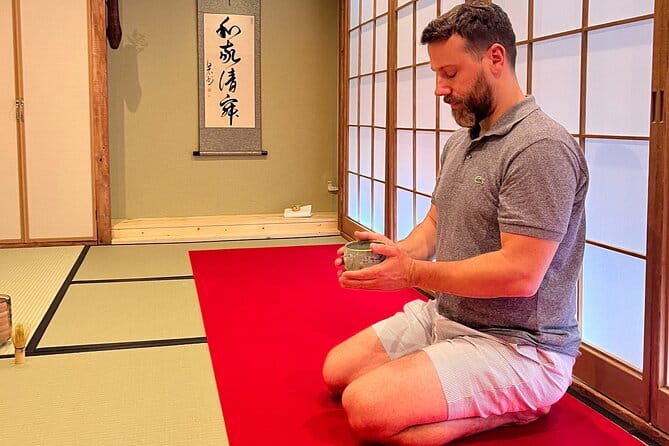
The tea ceremony is the central cultural feature. Staff explain the origins and traditions of matcha, then guide you through the preparation and drinking of the tea.
You can expect a clear introduction rather than a silent, highly formal performance. That is useful if you want to understand the meaning behind the movements. The emphasis is on appreciating the process, the atmosphere, and the flavor of the tea.
Matcha has a strong, grassy taste that may surprise you if you usually drink sweetened green tea. The included Japanese wagashi provides a small sweet counterpoint. Wagashi is not just a snack here. It is part of the tea experience, giving you a chance to notice how the sweet and bitter flavors work together.
The tea portion seems particularly well suited to first-time visitors. You do not need prior knowledge of Japanese etiquette, and the staff can explain the worship and tea customs in one connected session. If you have already taken a long tea ceremony elsewhere, you may find this version brief, but its shorter format makes it easy to fit into a day in Osaka.
Staff will also take photos with your smartphone and give them to you. This is a practical extra. You can enjoy the ceremony without constantly stopping to take pictures, though you should still check how the phone photography is handled when you arrive.
The foot bath adds comfort, not just culture
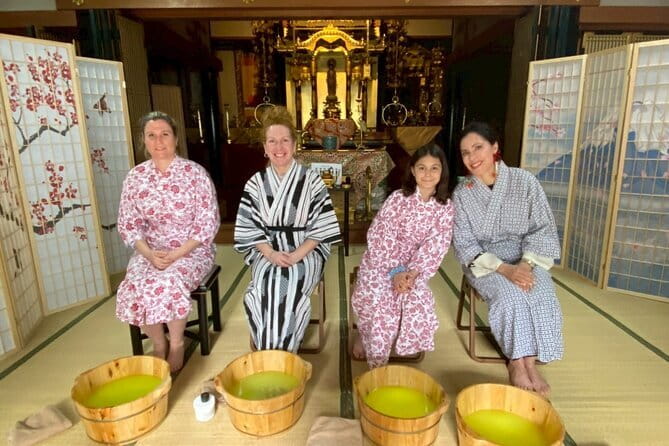
The foot bath is what makes this experience different from a standard temple tea ceremony. You sit with your feet in a cooling bath and receive a light scrub massage.
This is not described as a full spa treatment, and you should not book it expecting an extended massage. The treatment is a brief refreshment built into the cultural session. That said, it changes the mood. After the incense and tea, the foot bath gives you time to relax physically rather than simply observe another demonstration.
One staff member named Arisa is specifically associated with the massage and matcha ceremony. The staff are described as gentle and attentive, and the small group limit should help keep the treatment personal.
The foot bath may be especially useful on a rainy day or after a long period of walking. One account describes using the space as a peaceful break from rain, helped by its closeness to a train station. You can also expect a scrub element, so this is more than placing your feet in warm water for a few minutes.
The listing calls it a cooling foot bath, so do not assume it is a hot spring-style soak. If you prefer warm water or have strong expectations about the temperature, ask the staff at the start. The supplied details do not specify the exact temperature or the length of the massage.
More zen and meditation sessions in Osaka:
- Learning Zen of Japanese Calligraphy in kimono near Osaka Castle
★ 4.5 · 53 reviews - Learn Zen in a class of making Matcha tea near Osaka Castle
★ 4.8 · 17 reviews - Osaka: Japanese Zen Massage and Facial at the Temple/180-min
★ 4.8 · 10 reviews - Osaka Temple: 1-Hour Evening Zen Chill Experience
★ 4.9 · 10 reviews
Yukata, photos, and the feel of the visit
The experience may include changing into a yukata, the informal summer robe commonly associated with Japanese festivals and relaxed cultural settings. This adds a visual and tactile part to the ceremony, and it can make the photos feel more special than ordinary smartphone snapshots.
The clothing detail is worth considering when you plan your day. A short activity can take a little longer if changing is part of the arrival process. Since the published duration varies between 45 minutes and approximately one hour, allow a buffer before your next booking.
The photos are a nice touch for solo visitors and couples. With a maximum of three people, you have a better chance of getting pictures that show the ceremony rather than a crowded room. The staff’s help also means you can stay present instead of trying to frame every step yourself.
This is a calm, guided setting, but it is not necessarily silent throughout. The staff explain the temple and the rituals, answer questions, and lead you through each activity. You should expect instruction and conversation alongside the quiet moments.
What $42.35 gets you

At $42.35 per person, this experience sits above a basic matcha tasting but below the price of many longer private cultural sessions. The value depends on what you want from the hour.
If you only want to drink matcha, the price may feel high. Osaka offers simpler tea stops where you can have a bowl of tea and a sweet for less. Here, you are paying for the setting, guided instruction, incense, meditation, worship, a foot bath, a scrub massage, and staff assistance with photos.
The small group size improves that calculation. With no more than three people, the staff can give you direct help rather than delivering a standard talk to a large room. If you book alone, you may receive the undivided attention of two staff members, which makes the price feel more reasonable for a personal session.
I would also count the convenience. You can experience several elements of Japanese culture in less than an hour, then return to the same meeting point. That works well for a first day in Osaka, a rainy afternoon, or a gap between larger sightseeing plans.
The value is less clear for anyone seeking a long, deeply formal tea ceremony. This is an introduction with a wellness component, not a several-hour study of tea practice.
Who will enjoy this Osaka experience
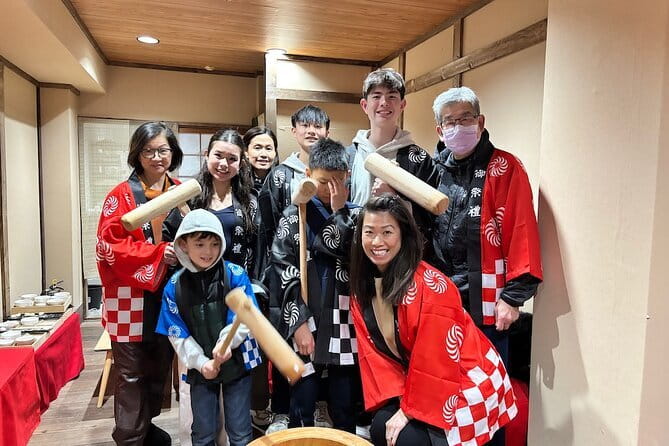
I would recommend it to first-time visitors who want a gentle introduction to Japanese customs. You receive explanations of worship, incense, matcha, and temple etiquette, so you can take part without feeling lost.
It also suits couples, friends, and solo visitors. Three friends can book together, but the small capacity keeps the setting from becoming a group event. Solo visitors may benefit most from the personal attention and photo help.
This is a good rainy-day plan. The temple provides a quiet place to sit, and the foot bath gives you a practical reason to stay rather than simply wait out the weather. It also suits anyone who has spent a morning walking and wants a restful cultural activity rather than another major attraction.
Families with very young children should think about the short meditation and calm format. The supplied details do not state a minimum age or child policy, so ask before booking if that is important to you.
You should also consider accessibility needs in advance. Service animals are allowed, and the activity is near public transportation, but the details do not explain stairs, seating, changing arrangements, or foot bath access.
Timing, booking, and cancellation
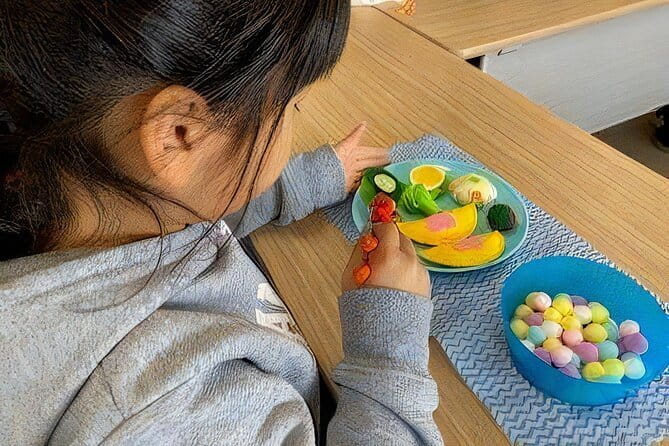
The published duration is approximately one hour, while the activity description gives 45 minutes. Treat it as a 45-minute ceremony with a little arrival or changing time, and leave extra space before your next appointment.
Confirmation is provided when you book, and the ticket is mobile, so you do not need to print anything. The activity starts and ends at the Kitahorie meeting point.
You can cancel for a full refund up to 24 hours before the local start time. Cancellations or changes made within 24 hours are not refunded or accepted. That policy is fairly flexible for a short activity, but check the local time carefully if you are booking while moving between time zones.
Should you book the temple tea and foot bath?
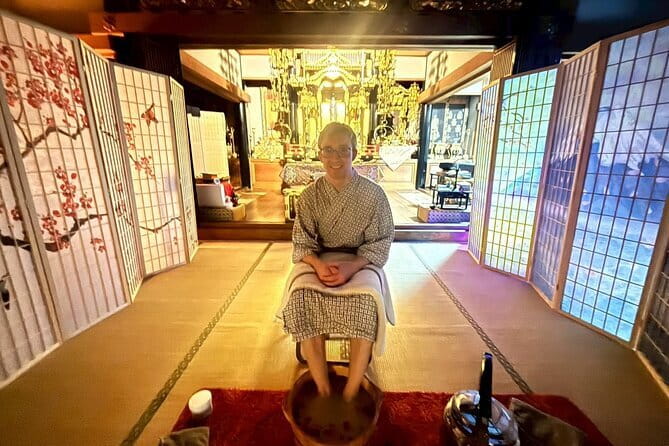
Book it if you want a small, personal cultural experience that combines ritual with simple physical relaxation. The strongest reasons are the 500-year-old temple setting, the maximum group size of three, and the unusual pairing of matcha with a cooling scrub foot bath.
Skip it if your main goal is a long, formal tea ceremony or a major historic temple visit. The session is short, and the temple itself is described as small. You are paying for guided participation and personal care, not a full afternoon of sightseeing.
For most visitors, I would place it on a flexible Osaka afternoon, especially if rain is in the forecast or your feet need a break. Leave at least an hour around the booking, arrive ready to follow simple instructions, and expect a quiet cultural pause rather than a grand performance.
FAQ
Where does the experience start and end?
It starts and ends at Tossa de coracao, 1-chōme-6-19 Kitahorie, Nishi Ward, Osaka, 550-0014, Japan.
How long does the experience last?
The activity is described as 45 minutes, while the general duration is listed as approximately one hour. Allow extra time for arrival or changing.
What is included in the experience?
You receive worship and an incense offering, kneaded incense and meditation, a cooling foot bath with scrub massage, matcha, and Japanese wagashi.
Is the tea ceremony held in a temple?
Yes. The experience takes place in a temple setting, described in the supplied details as a 500-year-old temple and a small temple space.
How many people can join?
The maximum group size is three people.
Is a foot massage included?
Yes. The foot bath includes a light massage and scrub treatment.
Will photos be taken?
Yes. Staff will take photos with your smartphone during the experience and provide them to you.
Is the activity near public transportation?
Yes. The meeting point is described as being near public transportation.
Can I cancel for a full refund?
Yes, if you cancel at least 24 hours before the local start time. Cancellations made within 24 hours are not refunded, and changes within that period are not accepted.
Just added in Osaka
- Urban Canvas: Osaka Street Art Bike Tour★ 5.0 · 10 reviews
- Anime Cosplay Photshoot-50 Digital Photos Provided★ 5.0 · 8 reviews
- TeamLab Botanical Garden Osaka Ticket★ 3.5 · 6 reviews
- Cherry Blossom Buddha and Mt.Yoshino with Strawberry Picking Tour★ 4.5 · 5 reviews
- Umeda Sky Building & Kuchu Teien Observatory Ticket in Osaka★ 4.5 · 3 reviews
- Immerse in Judo Martial Arts Class from Japan★ 5.0 · 4 reviews
- Traditional Home cooking Experience in Osaka, Japan★ 5.0 · 14 reviews
- Traditional Calligraphy Experience near Dotonbori★ 5.0 · 3 reviews
Osaka Tea Ceremonies, compared.
Matcha Making Class in Osaka with Authentic Japanese Sweets Set
Read our review →
Japanese Traditional Sweets Making and Tea Ceremony
Read our review →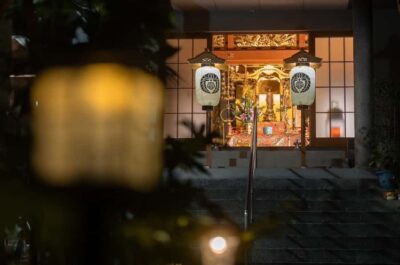
Osaka Temple Cool Foot Bath & Matcha Experience〈45min〉
Read our review →
Samurai Show, Tea Ceremony, Japanese Traditional Activities
Read our review →
Browse the lists this tour appears in