
Reviewed · OSAKA CASTLE TOURS
Learn Zen in a class of making Matcha tea near Osaka Castle
Passing through the low entrance to this tea room changes the mood at once. You leave ordinary rank and status outside, then learn how to sit, bow, walk, serve matcha, and receive it with care. I especially like the kimono and samurai dress, plus the way wagashi connects a small sweet to Japan’s seasons and sense of beauty.
The other strong point is the personal attention. Groups are limited to six, and instructor Kaori has been praised for explaining the history and preparation step by step. The drawback is that the one-hour session is short, and some extras, including traditional hair styling and outdoor photographs, cost more.
Key points to know before booking
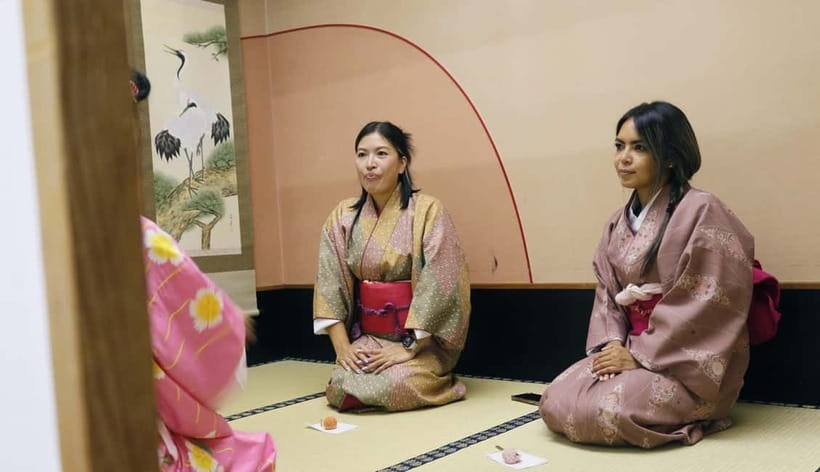
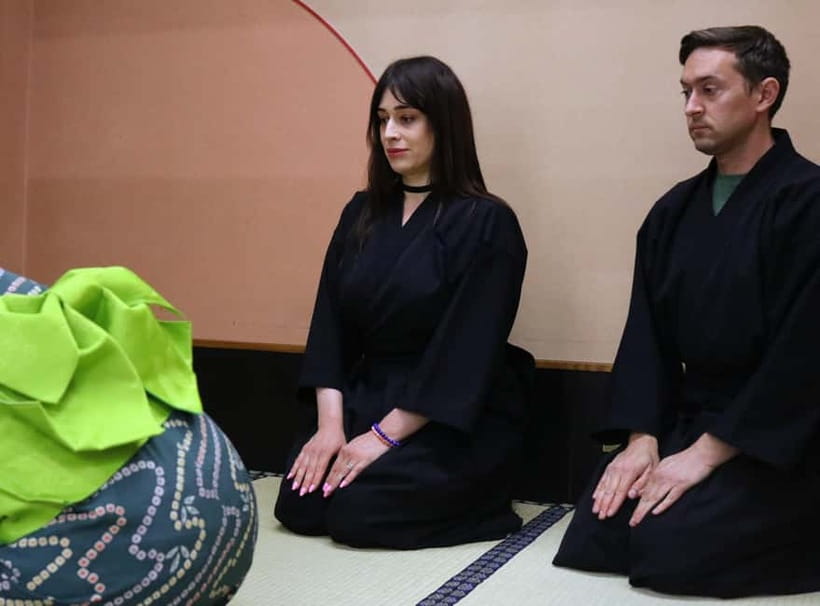
- Dress the part: Women wear kimono, while men wear hakama and dogi for a samurai-style presentation.
- Learn by doing: You do not only watch. You practice tea-making, gestures, bows, and guest etiquette.
- Wagashi adds cultural depth: The seasonal sweets introduce wabi-sabi, Japanese aesthetics, and food traditions.
- Photos are included: A photographer takes pictures during the session and sends the data to your email.
- Small groups help: With no more than six people, you should have a real chance to prepare matcha.
- Arrive early: Reach the venue 30 minutes before your booked time for changing and instructions.
A tea ceremony with a samurai doorway
This is not a quick cup of green tea in a souvenir shop. At Samurai Honor, you enter a traditional tea ceremony setting and learn the social rules that give chanoyu its shape. The session takes place at Excellence Takayama 1F, 2-3-19 Shiginonishi, Joto-ku, Osaka.
The activity is near Osaka Castle, but do not rely on Apple Maps for the address. The supplied information warns that Apple Maps is incorrect, so use the Google Maps location. Look for the wooden sign marked Honor of the Samurai, along with activity pamphlets, hanging kimonos, and hakama near the storefront.
You should arrive 30 minutes before your reserved start. That extra time is not wasted. You need it for changing clothes and receiving instructions, and the costume fitting is part of what makes this feel like more than a standard tea lesson.
The room accommodates a maximum of six participants. That matters because tea ceremony etiquette can be hard to follow from a distance. In a small group, you can see the instructor’s hands, ask questions, and take your own turn.
More ways to see Osaka Castle:
- Osaka Castle: Museum and Tower Entry Ticket
★ 4.5 · 2,380 reviews - Osaka Castle Walking Tour and Castle Tower Admission
★ 5.0 · 561 reviews - 5-Hour Osaka Bike Tour to the Neighborhood of Osaka Castle
★ 5.0 · 319 reviews
Changing into kimono or samurai clothing
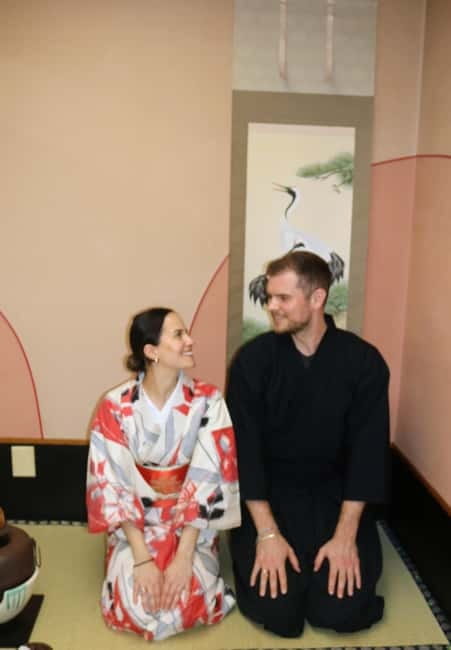
The clothing sets the tone before the tea begins. Women change into kimono, while men wear hakama and dogi. The activity presents the women’s look as Yamato Nadeshiko and the men’s as samurai, but the important point for you is practical: you get to take part in the ceremony while dressed in traditional Japanese clothing.
A review from Germany noted that the kimono colors could be chosen and that the clothing was carefully arranged. That makes the fitting more personal than simply pulling on a rental robe. You should bring a T-shirt, which is the only clothing item specifically requested.
Hair styling is a point to check before paying. The information lists collected hair and kanzashi, or traditional hair ornaments, as a paid option. One participant reported having her hair arranged with flowers at no extra cost, but the formal inclusions list does not promise that service. If an elaborate hairstyle matters to you, ask the staff about availability and price before booking.
For photographs, the costume is a major advantage. You can focus on the ceremony instead of trying to document every step yourself. An on-site photographer takes pictures, and the finished data is sent to your designated email address. Outdoor photo sessions and movie filming are optional paid extras, not part of the basic $40 package.
Learning the rules of matcha
Once changed, you are introduced to the basic idea behind the tea ceremony. The host prepares and serves matcha according to traditional manners, and you learn how to respond as a respectful recipient.
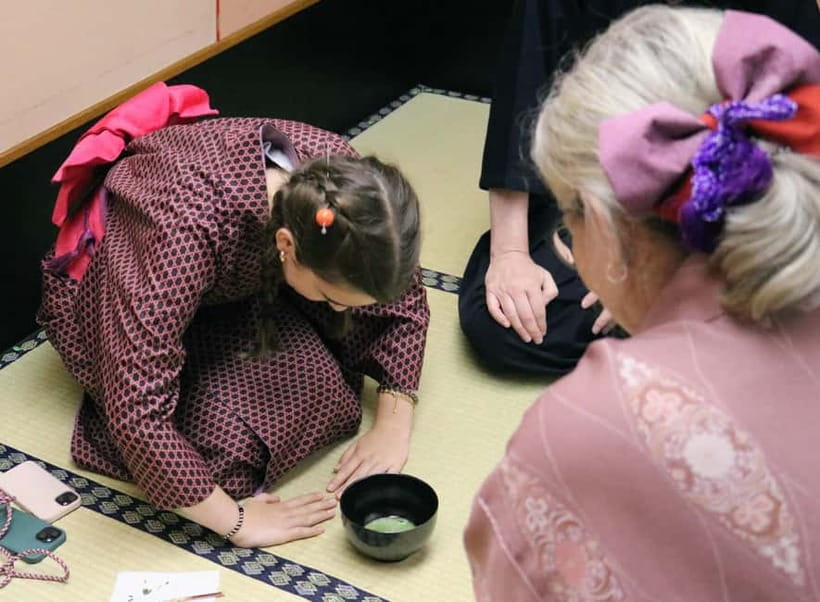
The lesson covers details that can seem small but carry meaning: how to sit, bow, stand, walk, and receive the bowl. The tea ceremony has many rules, yet the instructors present them as things to practice rather than a test you can fail. That is useful if you have never attended a formal Japanese ceremony.
You may also prepare tea for another participant. This is one of the best features of the session because it changes you from an observer into an active part of the exchange. The instructor can correct your movements and explain why each gesture matters.
The central idea is mutual hospitality. The person serving the tea is responsible for care and attention, but the recipient also responds with awareness and good manners. The ceremony works when both sides contribute to the atmosphere. That lesson gives the activity more substance than learning how to whisk powdered green tea.
Kaori has been specifically noted for explaining the preparation process step by step, along with the historical and cultural setting. Other sessions are led by two instructors, so the exact staff arrangement may vary. English and Japanese are the regular teaching languages.
Wagashi and Japan’s seasonal sense of beauty
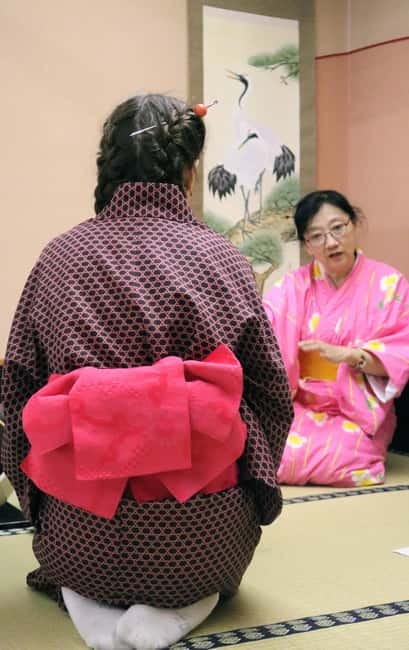
The wagashi is not just a sweet snack served beside the tea. It helps explain how Japanese aesthetics connect food, nature, and time of year.
These traditional sweets developed alongside tea culture and are often shaped and colored by hand. Their designs reflect the seasons, with spring, summer, autumn, and winter serving as a constant source of inspiration. You may find the sweet almost too carefully made to eat, which is part of the point.
Through wagashi, the class introduces wabi-sabi, a Japanese appreciation for simplicity, imperfection, age, and quiet beauty. You also get a window into Japanese food culture and the care given to presentation.
The available information discusses learning through wagashi and through making sweets, but it does not clearly promise a full wagashi-making lesson in every one-hour session. I would expect to taste and discuss the sweet as part of the tea ceremony. If making wagashi yourself is essential, confirm that detail before reserving.
More tea ceremonies in Osaka:
- Osaka: Tea Ceremony Experience
★ 4.9 · 1,426 reviews - Tea Ceremony Experience in Osaka Doutonbori
★ 5.0 · 754 reviews - Matcha Making Class in Osaka with Authentic Japanese Sweets Set
★ 5.0 · 509 reviews - Osaka: Matcha Making Experience with Japanese Sweets
★ 5.0 · 146 reviews
Photos that preserve the costume and ceremony
The photo service is one of the strongest practical benefits here. Traditional clothing can be awkward to photograph by yourself, especially when you are also trying to remember the correct way to hold the tea bowl.
A photographer takes pictures during the ceremony, allowing you to concentrate on the lesson. The images are sent to your email on the same day according to one detailed account, though the formal information only promises delivery by email. That makes this a good choice for families or couples who want a shared record without handing a phone to another person.
The photos also capture more than a posed costume portrait. They can show the tea preparation, the formal gestures, and the room itself. Outdoor photography and movie filming require additional payment, so the included service is best understood as an indoor photo session connected to the class.
If you want a particular kimono color, hairstyle, or photo style, ask before the session starts. The basic activity has a clear shape, but the optional styling and outdoor add-ons can change the final cost.
What the $40 price really covers
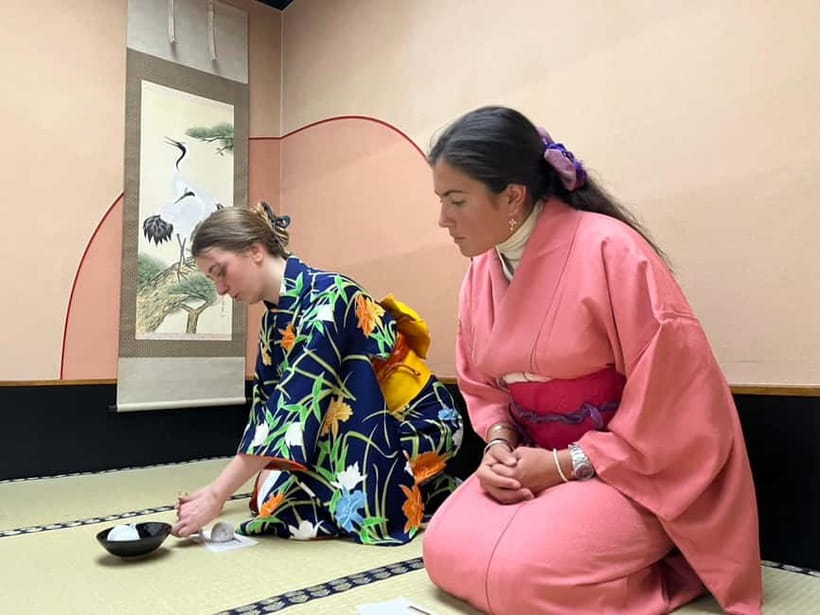
At $40 per person, this is a fair price for a one-hour cultural activity, especially because the fee includes several items that can otherwise add up. You receive the kimono clothing, matcha, wagashi, an English interpreter guide, a certified professional instructor, tax, tips, and photo data.
The value depends on what you want from your Osaka day. If you only want to drink matcha, the class may feel longer and more formal than necessary. If you want clothing, instruction, a cultural explanation, and photographs in one compact session, the package is stronger.
The price does not include transportation, hotel or station pickup, personal spending, outdoor photographs, movie filming, or the optional hair arrangement and kanzashi. You also need to make your own way to the venue. Keep those points in mind when comparing the total cost with a simple tea tasting.
The small group limit improves the value. A class of six or fewer gives you a better chance to practice rather than watch from the back. It also lets the instructor adjust the explanation for children, first-time participants, or people who need more help with the movements.
How this fits into an Osaka itinerary
The session lasts one hour, but the changing process means you should allow more time around the appointment. Arriving 30 minutes early is required, so avoid booking it immediately before a timed train, meal, or major attraction.
The venue is in Osaka’s Joto-ku district, near the Osaka Castle area. The supplied information does not include station pickup or transportation, so you must plan the route yourself. Use Google Maps and check the exact address before leaving.
This works well as a cultural pause during a day focused on Osaka Castle, but you should not assume the activity takes place inside the castle grounds. It is at Samurai Honor, a venue that also offers martial arts and calligraphy activities.
The one-hour format suits a busy schedule and families who may not want a long formal ceremony. It also means the class cannot cover every aspect of tea culture. You will learn the main etiquette and participate in the ritual, but you will not receive an extended school-style course.
Who will enjoy this most
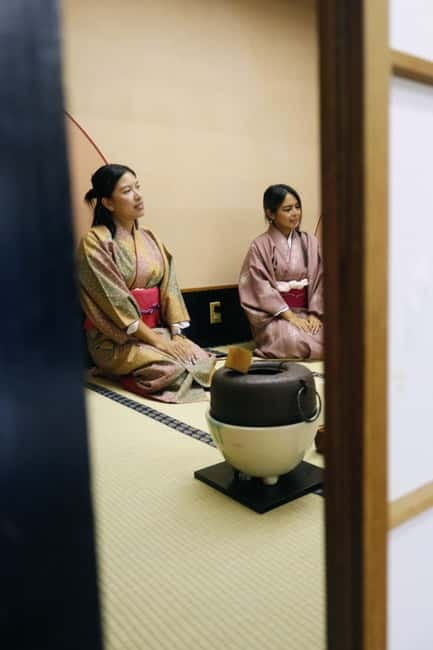
I would recommend this for first-time visitors who want a structured introduction to Japanese culture. The instructions are clear, the setting is small, and the clothing makes the experience feel special without requiring a full day.
Families should note the age limit. Children under 10 are not accepted, but children old enough to follow instructions may enjoy taking turns preparing tea and posing in traditional dress. The activity specifically presents itself as a way for families to share memories, though young participants still need to manage formal sitting and careful movements.
Couples and friends will appreciate the included photos. You can dress up together, learn the same etiquette, and receive images afterward without arranging a separate photographer.
This is also a good choice if English support matters. English and Japanese are the standard languages, and Kaori has been praised for giving cultural context in English. Italian, Spanish, French, Chinese, Thai, and Indonesian interpretation may be possible, but staff availability is limited and must be checked before booking.
The experience is not suitable for people with altitude sickness or anyone over 95, according to the supplied restrictions. Pets, alcohol, drugs, and nudity are not allowed.
Small details that make the class work
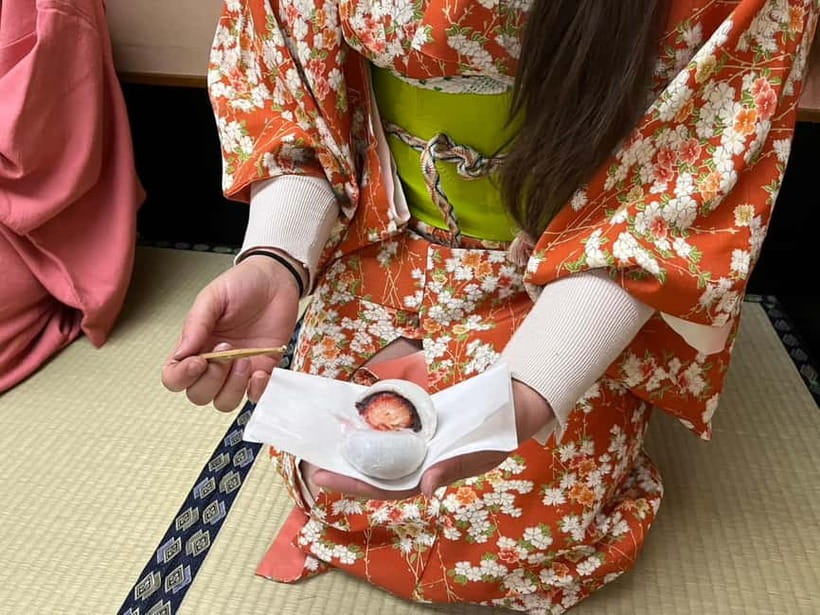
The best part of this activity is the exchange between host and participant. You are not simply handed a bowl of matcha and sent on your way. You learn how your actions affect the person serving you, and you respond through attention, posture, and thanks.
I also like the contrast between the formal rules and the friendly teaching style described by participants. The ceremony itself is precise, but the instructors are there to help you understand it rather than make you feel clumsy.
The clothing adds fun, while wagashi gives the lesson a quieter layer. The sweet’s shape and color are tied to the seasons, so even a small confection becomes an introduction to Japanese ideas about beauty.
The main limitation is time. One hour is enough for an enjoyable introduction, but not enough to explore every historical period, school, utensil, or regional variation in tea ceremony. Think of it as a hands-on first lesson, not a complete education in chanoyu.
Should you book this matcha class?
Book it if you want more than a tasting. For $40, you receive traditional clothing, instruction, matcha, wagashi, a small group setting, and photographs. The strongest reasons to choose it are the chance to prepare tea yourself, the careful explanation of etiquette, and the record of the session sent to your email.
Think twice if you dislike formal sitting, have a tight schedule, or mainly want outdoor kimono photographs. Those photos cost extra, transportation is not provided, and the one-hour class moves quickly once changing time is included.
For most people who want an approachable introduction to Japanese tea ceremony near Osaka Castle, this is a sensible pick. Confirm any hair styling, wagashi-making, language, or outdoor photo requests before booking, then arrive early and let the ceremony’s slower rhythm do its work.
FAQ
Where does the matcha tea ceremony take place?
It takes place at Bushi no Homare, also called Samurai Honor, at Excellence Takayama 1F, 2-3-19 Shiginonishi, Joto-ku, Osaka-shi, Osaka 536-0014.
Is the activity inside Osaka Castle?
No specific information says that it is inside the castle. The venue is described as being near Osaka Castle, at Samurai Honor in Joto-ku.
How long does the activity last?
The tea ceremony experience lasts one hour. You should also arrive 30 minutes before your reserved time for changing clothes and instructions.
What clothing is provided?
Women wear kimono. Men wear hakama and dogi, traditional clothing presented as a samurai-style outfit.
Is matcha included?
Yes. Matcha is included in the $40 price.
Is wagashi included?
Yes. Wagashi is included, and the class uses it to introduce Japanese seasonal beauty, wabi-sabi, history, and food culture.
Are photographs included?
Yes. Photo shooting and delivery of the data to a designated email address are included. Outdoor photo shoots and movie filming are paid options.
Is hair styling included?
Hair arrangement with collected hair and kanzashi is listed as a paid option. Ask the staff about availability and cost before booking.
What languages are available?
The regular languages are English and Japanese. Other language support may be possible in Italian, Spanish, French, Chinese, Thai, and Indonesian, but availability must be confirmed before booking.
Can children take part?
Children under 10 are not accepted. The activity is intended for participants aged 10 and older, subject to the other stated restrictions.
More Workshops in Osaka
- Sushi Making Osaka Roll and Authentic Japanese Sushi Class
★ 5.0 · 1,220 reviews - Osaka: Ramen and Gyoza Cooking Class in Dotonbori
★ 5.0 · 378 reviews - Osaka Cooking Class: Okonomiyaki &Japanese cuisines experience
★ 5.0 · 261 reviews - Osaka: Roll and Authentic Sushi Making Class in Dotonbori
★ 4.9 · 239 reviews
More Zen and Meditation Sessions in Osaka
- Learning Zen of Japanese Calligraphy in kimono near Osaka Castle
★ 4.5 · 53 reviews - Osaka: Japanese Zen Massage and Facial at the Temple/180-min
★ 4.8 · 10 reviews - Osaka Temple: 1-Hour Evening Zen Chill Experience
★ 4.9 · 10 reviews - Osaka:Zen Tea Ceremony and Foot Bath Experience<45min>
★ 5.0 · 7 reviews
Just added in Osaka
- Urban Canvas: Osaka Street Art Bike Tour★ 5.0 · 10 reviews
- Anime Cosplay Photshoot-50 Digital Photos Provided★ 5.0 · 8 reviews
- TeamLab Botanical Garden Osaka Ticket★ 3.5 · 6 reviews
- Umeda Sky Building & Kuchu Teien Observatory Ticket in Osaka★ 4.5 · 3 reviews
- Immerse in Judo Martial Arts Class from Japan★ 5.0 · 4 reviews
- Cherry Blossom Buddha and Mt.Yoshino with Strawberry Picking Tour★ 4.5 · 5 reviews
- Traditional Home cooking Experience in Osaka, Japan★ 5.0 · 14 reviews
- Traditional Calligraphy Experience near Dotonbori★ 5.0 · 3 reviews
Osaka Castle Tours, compared.

Osaka Castle Walking Tour and Castle Tower Admission
Read our review →
5-Hour Osaka Bike Tour to the Neighborhood of Osaka Castle
Read our review →

PRIVATE 6hr, Food tour from Osaka Castle, Kuromon, Dotonbori.
Read our review →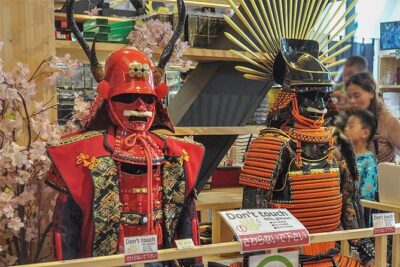
A Tour to Explore the Symbol of Osaka: Osaka Castle
Read our review →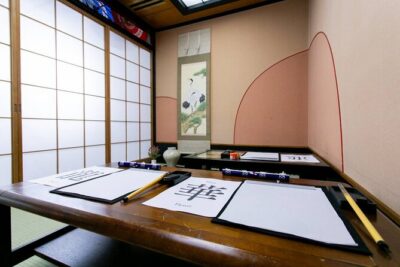
Learning Zen of Japanese Calligraphy in kimono near Osaka Castle
Read our review →Browse the lists this tour appears in