
Reviewed · OSAKA TEA CEREMONIES
Premium Kimono Dressing, Tea Ceremony, Calligraphy, Samurai show
At -michi-, you do more than watch Japanese customs from the sidelines. You put on a kimono, prepare matcha, practice calligraphy, and take part in traditional music and samurai sword performances. The setting at Shinsaibashi ARTY Inn includes a quiet courtyard and historical gallery, giving the session a pleasant change of pace from Osaka’s busy streets.
I especially like the step-by-step kimono dressing, since staff explain what each layer means instead of simply handing you a costume. I also like the hands-on calligraphy and tea ceremony, which give you something to do and remember after the photos are finished. The main point to check is that kimono dressing is listed for women only, while armor dressing costs an additional ¥10,000 per person.
Key points to know before booking
- Three hours of hands-on culture: The session combines clothing, tea, calligraphy, music, and samurai performance rather than focusing on one short demonstration.
- Women’s kimono dressing is included: Staff explain the dressing process and help you prepare for photographs.
- Armor dressing costs extra: The listed price does not include armor dressing, which is ¥10,000 per person.
- Tea and calligraphy are practical activities: You make matcha and produce your own calligraphy instead of only watching.
- Traditional music and sword performance add variety: You can watch and participate in parts of the music and samurai presentation.
- Easy central location: The meeting point is Shinsaibashi ARTY Inn, near public transportation, with a mobile ticket.
A compact cultural session in central Osaka
This is a good pick if you want a structured introduction to several Japanese traditions in one sitting. The roughly three-hour schedule gives each activity enough room to feel meaningful, though it is not a full-day cultural course.
You begin at Shinsaibashi ARTY Inn, a practical location for a first or final Osaka activity. The experience is near public transportation, and confirmation arrives at booking, so you can keep the arrival plan simple. A mobile ticket also means you do not need to print anything.
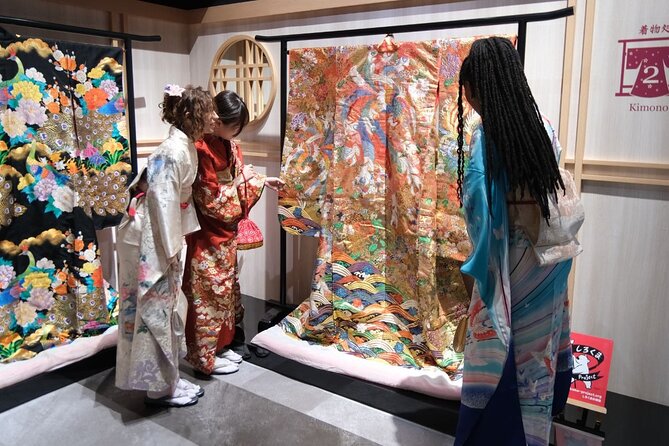
The setting helps. Along with the activity rooms, you can see a serene courtyard and a historical gallery. These details give you places to pause for photographs and make the visit feel more like a small cultural center than a quick costume stop.
I would not expect a private lesson built around one tradition. Instead, think of this as a guided sampler with a strong hands-on element. That variety suits first-time visitors who want cultural context without giving up most of a day.
More tea ceremonies in Osaka:
- Osaka: Tea Ceremony Experience
★ 4.9 · 1,426 reviews - Tea Ceremony Experience in Osaka Doutonbori
★ 5.0 · 754 reviews - Matcha Making Class in Osaka with Authentic Japanese Sweets Set
★ 5.0 · 509 reviews
Kimono dressing with an explanation of each layer
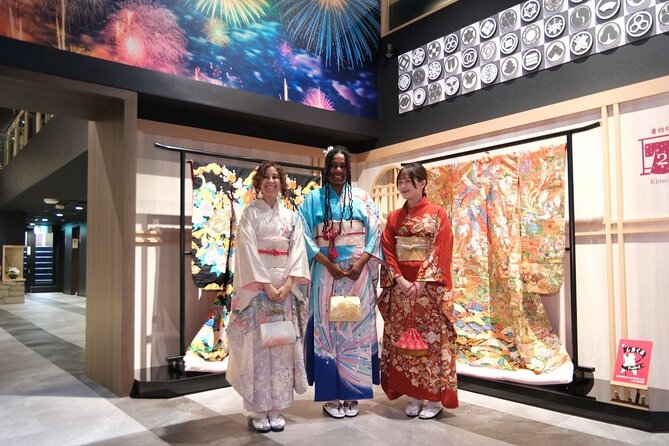
The kimono portion is one of the strongest reasons to book. Women can be dressed in a tailored kimono, with staff explaining the various steps as they work. That explanation matters because the clothing is not simply a photo prop. The dressing process shows how much care goes into arranging the garments and finishing the look.
You will want to allow time for staff to work carefully. A kimono has a formal shape and is fitted differently from everyday Western clothing, so this is not a quick change into a loose robe. The experience gives you a better sense of why traditional dress has such a strong visual presence.
The photo element is built naturally into the visit. The courtyard and gallery provide attractive backdrops, and the clothing makes the images more distinctive than ordinary sightseeing snapshots. Bring patience and enjoy the preparation, not only the final pose.
There is an important limitation. The included kimono dressing is specified for women only. The supplied details do not explain alternative clothing arrangements for men or children, so you should check directly before booking if your party does not fit that description.
Tea ceremony: a quiet change of pace
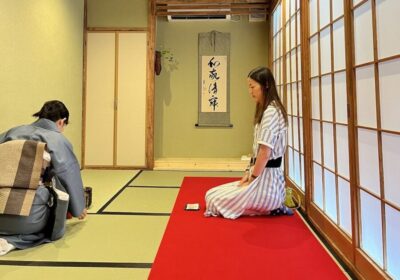
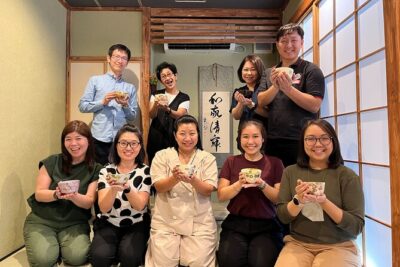
The tea ceremony brings a slower rhythm to the session. You learn about the custom and create your own matcha, rather than only sitting through a formal demonstration. That practical step helps you notice the care involved in preparing and serving the tea.
I like this part because it gives the experience a calm center. Kimono dressing, photographs, music, and a sword performance all have a visual or theatrical side. Tea preparation asks you to focus on small movements and follow instructions closely.
You should not approach this as a chance to drink a large amount of tea. The value is in learning the method and the meaning behind the ritual. Staff are described as warm, attentive, and clear when explaining cultural details, which is especially useful if this is your first contact with the ceremony.
The tea segment may suit visitors who want more than a staged performance. You are given a role, however simple, and that makes the custom easier to remember. It also provides a welcome contrast to Osaka’s fast urban pace.
Calligraphy you can take home
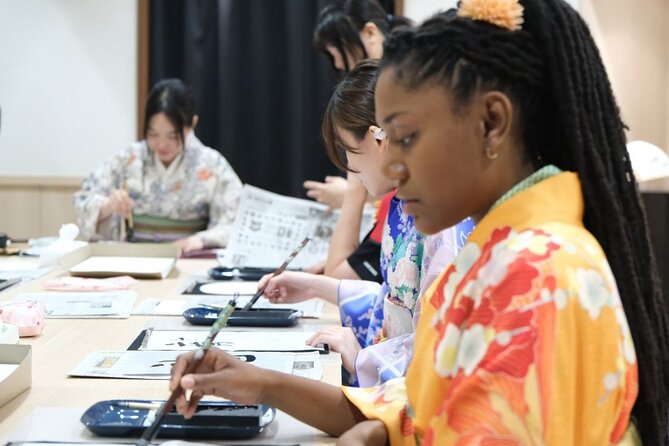
The calligraphy lesson is another hands-on section. You practice Japanese writing and create your own work, which gives you a small personal souvenir without requiring a purchase. The activity is designed for beginners, since the focus is on learning and trying rather than producing museum-quality work.
I would treat your first attempt as part of the fun. Calligraphy depends on brush control, pressure, and rhythm, so an imperfect result is expected. The finished piece can still have personal value, and one participant planned to frame the work.
This is also one of the better parts for families and groups with different interests, provided everyone can participate in the scheduled activities. Someone who is less interested in costume photographs may enjoy the brush lesson more, while another person may prefer the tea ceremony or samurai show.
Staff explain the meaning behind the activities, not just the physical steps. That extra context keeps calligraphy from feeling like a generic craft workshop. You leave with a clearer idea of why Japanese writing is treated as an art form as well as a means of communication.
More kimono experiences in Osaka:
- Osaka: Sumo Show & Experience w/ Optional Kimono & Hot Pot
★ 4.5 · 609 reviews - Learning Zen of Japanese Calligraphy in kimono near Osaka Castle
★ 4.5 · 53 reviews - Osaka: Kimono or Yukata Rental &Photos Service Options
★ 4.9 · 25 reviews - Kimono photoshoot-Includes 100 photo data
★ 5.0 · 21 reviews
Traditional music and the samurai performance
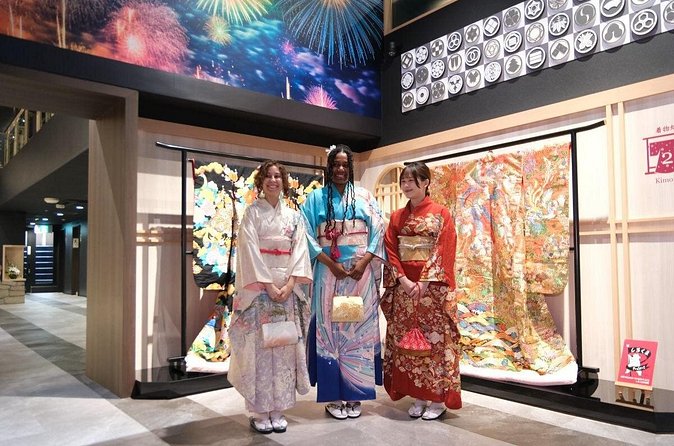
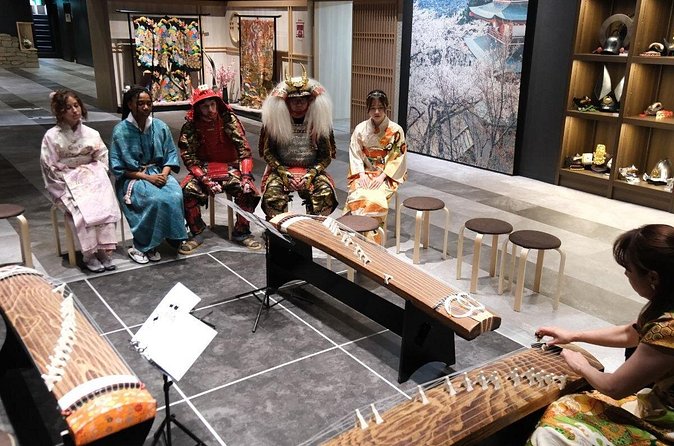
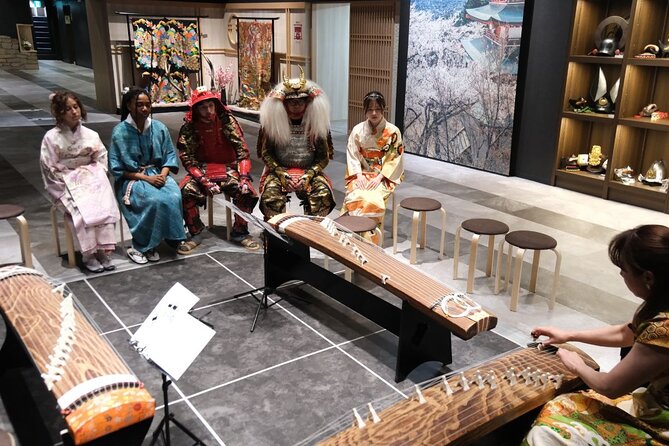
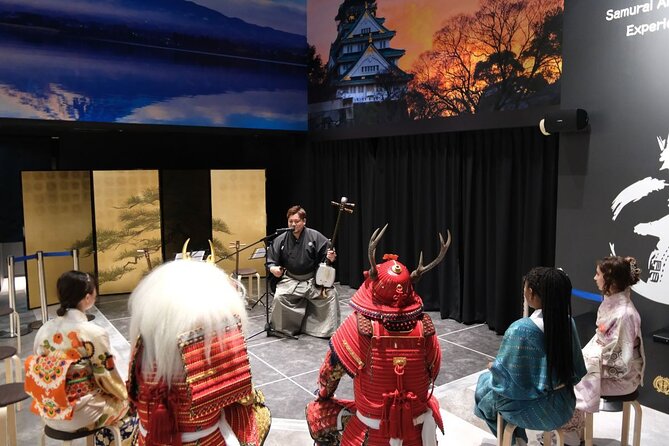
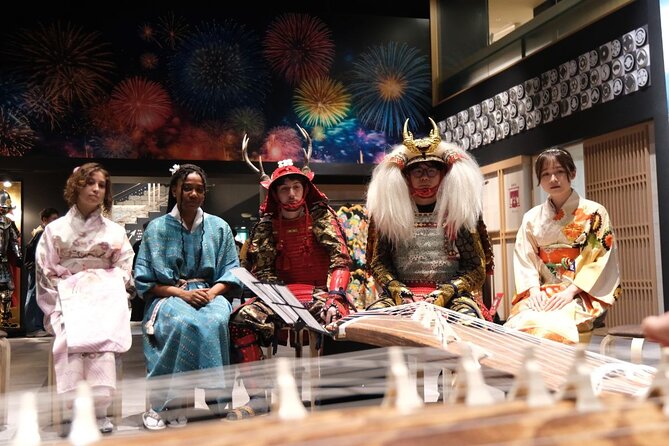
The program includes Japanese traditional music, with opportunities to watch and participate. The available details do not name the instruments or give a song list, so you should expect an introduction rather than a specialist concert.
That uncertainty is not necessarily a flaw. The music works as part of a broader cultural session, adding sound and performance to the clothing, tea, and calligraphy. It helps break up the quieter activities and keeps the three-hour visit varied.
The samurai section supplies the most theatrical moment. You can watch a samurai sword performance and take part in portions of the presentation. The program also connects the show with the chance to try on real armor, but armor dressing is not included in the listed price.
If armor is your main reason for coming, budget carefully. The additional charge is ¥10,000 per person, a meaningful supplement on top of the $123.49 base price. Confirm exactly what the armor option includes before paying, since the supplied information gives the price but not the length, costume details, or participation rules.
For visitors who mainly want kimono, tea, calligraphy, and music, the standard package already has plenty to occupy the session. For samurai fans, the armor upgrade may be worth considering, but it changes the total cost substantially.
What the $123.49 price buys you
At $123.49 per person, this is not a bargain-priced cultural demonstration. Its value depends on how much you want guided participation, costume dressing, photographs, and several activities in one place.
The price includes women’s kimono dressing, tea ceremony, calligraphy, and Japanese traditional music performance. You also get the samurai sword presentation, according to the experience description, while armor dressing and souvenirs are separate.
I see the main value in the staff time. Dressing a participant carefully, explaining the cultural meaning behind each activity, supervising tea and calligraphy, and presenting music and sword performance requires more attention than a quick walk-through exhibit. The experience is also useful for a short Osaka visit because you cover several traditions without arranging separate appointments.
The price becomes less attractive if you only want a kimono photograph. In that case, much of the three-hour program may not match your interests. It makes better financial sense if you want to take part in the activities and appreciate the explanations.
A souvenir costs ¥10,000 per person when listed separately, and armor dressing also costs ¥10,000 per person. Plan for those as optional extras rather than assuming they are folded into the advertised rate.
Who will enjoy this experience most
I would recommend it to a first-time visitor who wants a clear, friendly introduction to Japanese customs. The format is welcoming for people who have never worn a kimono, prepared matcha, or held a calligraphy brush.
It also suits photographers and families looking for memorable images. The courtyard, gallery, kimono, and armor option create more visual variety than a standard indoor workshop.
Couples and small groups may appreciate the boutique-like feel described by the experience provider. The staff’s warm and attentive approach is a major part of the appeal, especially when you are unsure how to behave during a formal activity.
You should think twice if you dislike scheduled participation or costume changes. This is not a casual museum visit where you can wander at your own speed. You will be guided through several activities, and the value comes from following along.
The experience may also be less suitable for anyone seeking a full historical lecture or advanced instruction in tea, calligraphy, music, or sword work. It introduces these subjects in one session rather than training you deeply in any one of them.
Timing, transport, and practical planning
Plan on about three hours from start to finish. Since there are several sections, arriving ready to follow a sequence will help you get more from the time.
The meeting point is Shinsaibashi ARTY Inn in Osaka. It is near public transportation, which makes it easier to fit into a day that includes shopping, dining, or sightseeing around Shinsaibashi.
Your confirmation is provided at booking, and the ticket is mobile. Keep the confirmation easy to access on your phone. The supplied information says most people can participate, but it does not provide detailed accessibility notes, so contact the provider if you have specific mobility or participation needs.
Booking is usually made well ahead of time, with an average booking window of 42 days. That suggests you should not leave this until the last moment if your Osaka dates are fixed, especially if you need a particular time.
Cancellation is flexible up to a point. You receive a full refund if you cancel at least 24 hours before the local start time. Cancellations or changes within 24 hours are not accepted for a refund.
My call: book it if you want to take part
I would book this experience if you want more than a photograph in Japanese clothing. The strongest combination is the careful kimono dressing, clear cultural explanations, tea preparation, calligraphy, and a lively samurai presentation.
The staff’s warmth is central to the experience. Their attention helps beginners feel comfortable during activities that might otherwise seem formal or difficult to approach.
Check the clothing details before booking if your group includes men or children, since the included kimono dressing is for women only. Also decide in advance if armor matters to you, because the ¥10,000 per-person supplement is not minor.
For a first visit to Osaka, this is a convenient way to encounter several Japanese traditions in one central location. Book it when you value participation, guidance, and a well-organized three-hour cultural session. Skip it if you want a low-cost photo stop or a long, specialist lesson in just one tradition.
FAQ
Where does the experience take place?
The activity takes place at Shinsaibashi ARTY Inn in Osaka.
How long does the experience last?
The experience lasts approximately three hours.
What is included in the price?
The listed price includes women’s kimono dressing, a tea ceremony, calligraphy, and a Japanese traditional music performance.
Is armor dressing included?
No. Armor dressing is not included in the listed price and costs ¥10,000 per person.
Is kimono dressing available for everyone?
The included kimono dressing is specified for women only.
Is the samurai performance included?
The experience includes viewing and participating in traditional samurai sword performances.
Is tea ceremony participation included?
Yes. The tea ceremony is included, and the activity description says you can create your own matcha.
Is calligraphy included?
Yes. Calligraphy is included as part of the experience.
Can I use a mobile ticket?
Yes. The experience provides a mobile ticket.
What is the cancellation policy?
You can cancel at least 24 hours before the local start time for a full refund. Cancellations or changes made within 24 hours are not refunded.
More Samurai and Ninja Experiences in Osaka
- Samurai Training Experience KENDO in Osaka
★ 5.0 · 515 reviews - OSAKA NIGHT FUSION Japanese Taiko Kabuki Samurai Dance Show
★ 4.8 · 155 reviews - Osaka: Samurai Training Experience KENDO in Osaka
★ 5.0 · 111 reviews - Osaka: A Modern Samurai, Kabuki, Taiko, & Dance Show
★ 4.5 · 66 reviews
More Calligraphy Classes in Osaka
- Osaka: Private Japanese Calligraphy Experience
★ 5.0 · 66 reviews - Calligraphy Workshop in Namba, Dotonbori
★ 5.0 · 57 reviews - Osaka: Private Tea Ceremony and Calligraphy Experience
★ 5.0 · 50 reviews - Samurai dress-up and shows, plus Tea Ceremony & Calligraphy
★ 5.0 · 27 reviews
Just added in Osaka
- Urban Canvas: Osaka Street Art Bike Tour★ 5.0 · 10 reviews
- Anime Cosplay Photshoot-50 Digital Photos Provided★ 5.0 · 8 reviews
- TeamLab Botanical Garden Osaka Ticket★ 3.5 · 6 reviews
- Umeda Sky Building & Kuchu Teien Observatory Ticket in Osaka★ 4.5 · 3 reviews
- Immerse in Judo Martial Arts Class from Japan★ 5.0 · 4 reviews
- Cherry Blossom Buddha and Mt.Yoshino with Strawberry Picking Tour★ 4.5 · 5 reviews
- Traditional Home cooking Experience in Osaka, Japan★ 5.0 · 14 reviews
- Traditional Calligraphy Experience near Dotonbori★ 5.0 · 3 reviews
Osaka Tea Ceremonies, compared.
Matcha Making Class in Osaka with Authentic Japanese Sweets Set
Read our review →
Japanese Traditional Sweets Making and Tea Ceremony
Read our review →
Osaka Temple Cool Foot Bath & Matcha Experience〈45min〉
Read our review →
Samurai Show, Tea Ceremony, Japanese Traditional Activities
Read our review →
Browse the lists this tour appears in