
Reviewed · OSAKA COOKING CLASSES
Osaka Sake Tasting with Takoyaki Cooking
Osaka’s signature snack and Japan’s signature drink make a fine pair. At this small, friendly class, you cook takoyaki yourself, then sit down with sake selected by Momo, an English-speaking sake sommelier and former brewer. The useful part is not simply trying several drinks. You learn how sake is made, how styles differ, and how to choose a bottle later.
I like the hands-on cooking, since you do not just watch a cook flip octopus balls on a hot plate. I also like the small maximum group of six, which leaves room for questions and gives the evening a personal feel. The main consideration is that the sake servings can be generous, so this is not a light tasting for someone who wants only a sip of each style.
Key points
- Make your own takoyaki: Cook Osaka’s famous octopus balls with Momo’s recipe and guidance.
- Taste more than 10 sake options: Choose from a seasonal selection, with several styles and flavor profiles available.
- Learn from a former brewer: Momo explains sake history, production, grading, and tasting in clear English.
- Add unusual fillings: Try wagyu beef, cheese, kimchi, corn, and other ingredients if octopus is not for you.
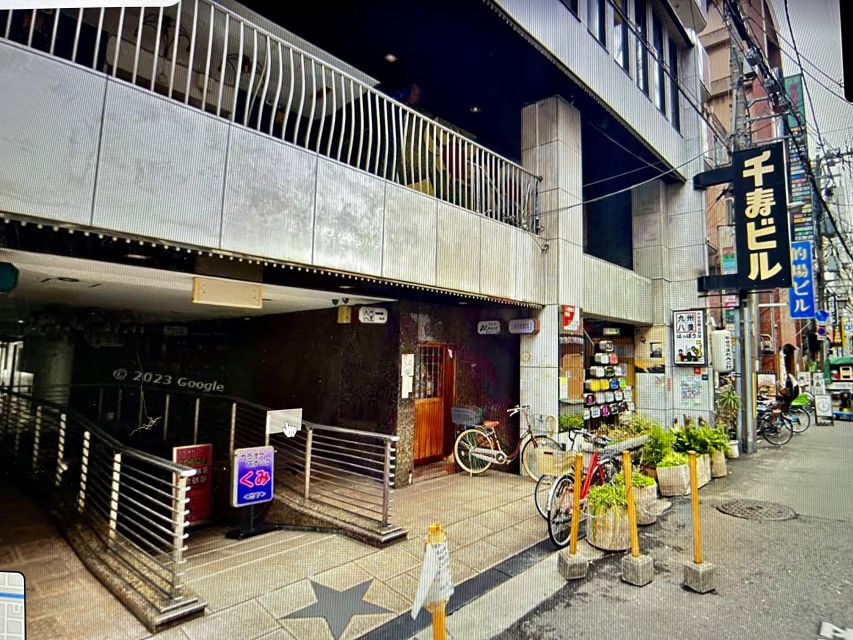
- Stay near Namba: The meeting point is MOMO to SAKE, on the second floor of the building.
- Finish with food and drink together: Your freshly cooked takoyaki becomes the meal alongside your chosen sake.
Why takoyaki and sake work so well together
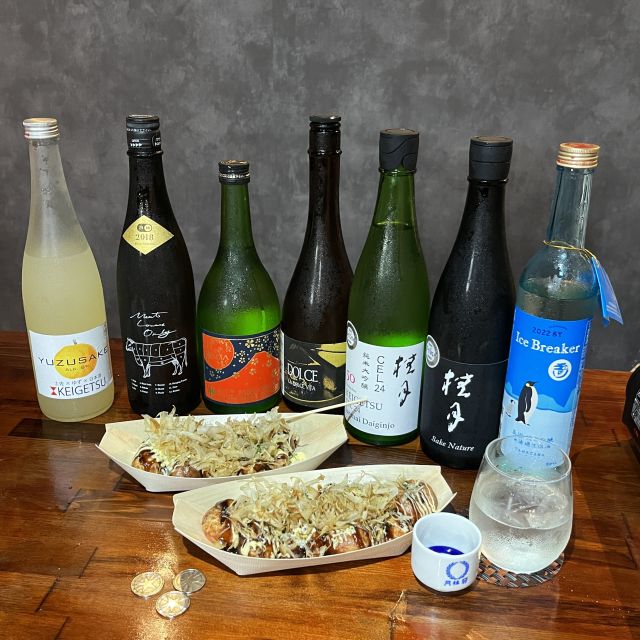
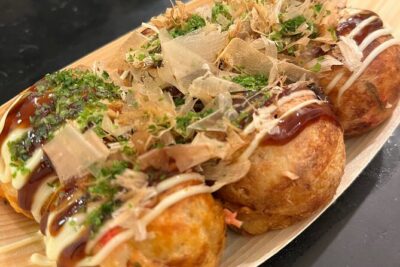
Takoyaki is Osaka street food in miniature: a soft batter center, a hot iron pan, savory toppings, and plenty of room for personal preference. The balls are cooked with octopus in the traditional style, but this class also offers fillings such as wagyu beef and cheese. Reviews also describe options including kimchi and corn, which is handy for anyone who does not eat octopus.
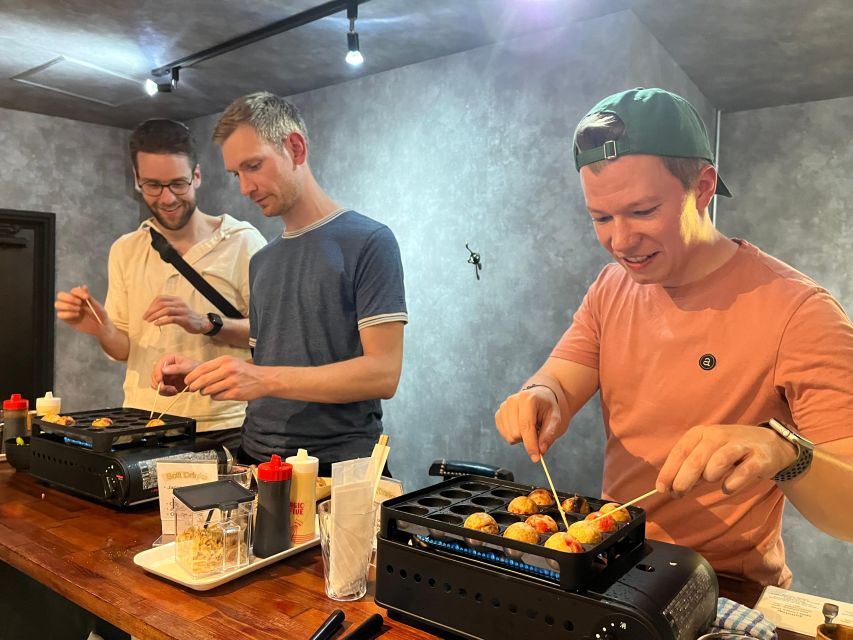
The cooking has a small learning curve. You pour the batter, add fillings, wait for the edges to set, and then turn each piece with picks. The first few may look untidy. That is part of the fun, and Momo guides you through the process rather than taking over.
I like this format because the food is not an afterthought to the sake lesson. You make it yourself, then eat it while tasting the drinks. That gives the class a social rhythm: cooking first, tasting afterward, and plenty of room for conversation in between.
Come hungry. The food is substantial enough to leave you full, and the sake pours may be more generous than the word tasting suggests.
More takoyaki classes in Osaka:
- Osaka Sake Tasting & Takoyaki Cooking Experience
★ 5.0 · 149 reviews - Osaka : Cooking Class Okonomiyaki & Takoyaki course in Nanba
★ 4.9 · 25 reviews - Osaka Street Food Festival :Takoyaki&Okonomiyaki for Families
★ 5.0 · 13 reviews
Meeting Momo at MOMO to SAKE
The class meets at MOMO to SAKE, on the second floor of the building, with easy access from the main Osaka Namba area. The location makes this a practical choice for an evening in central Osaka, especially if you want an activity before exploring nearby food and drink spots.
Momo is the key to the experience. She speaks English and Japanese, and she leads the session as a sake sommelier with former brewing experience. That background matters because she can explain both sides of the drink: how producers make it and how you taste it.
Her teaching style, based on the format of the class, is conversational rather than formal. You can ask about flavor, brewing, grading, food pairings, or how to order in Japan. Several participants found the explanations easy to follow even when they knew little about sake at the start.
The group limit is six people. That is small enough for direct help at the takoyaki grill and individual suggestions during the tasting. Some sessions may feel almost private, particularly when only one or two people book, while a full group will bring more shared laughter to the cooking.
The takoyaki lesson: from batter to hot plate
The class begins with cooking instructions and all ingredients supplied. Momo shows you how to prepare the takoyaki, then helps you manage the pan as the batter firms up.
Your task is to turn the balls at the right time. This takes practice, and you may produce a few lopsided pieces before getting the motion right. The reward is a plate made by your own hands, with the fillings you selected.
The classic octopus version gives you the true Osaka experience, but the extra ingredients make the lesson more flexible. Wagyu beef and cheese offer richer flavors, while kimchi and corn add different textures and a little variety. If one person in your group avoids seafood, this is a useful feature rather than a minor detail.
The cooking is also family-friendly in the sense that soft drinks are included, and the format can work for children alongside adults. One family specifically appreciated that Momo adapted the food for a participant with coeliac disease. If you have a serious allergy or dietary restriction, explain it before or at booking so the ingredients can be handled safely.
Expect a bit of heat, a bit of mess, and plenty of turning. You will gain a better appreciation for the skill of Osaka street-food cooks when you later watch them prepare takoyaki at a market or casual restaurant.
Learning sake without getting lost in the labels
Sake can seem difficult at first. Labels may include unfamiliar Japanese terms, and the differences between bottles are not always obvious to a first-time drinker. Momo’s lesson gives you a simple framework.
You learn about the drink’s history, culture, and making process. The class also covers different types and grades, along with the flavor traits you may notice in the glass. The goal is not to turn you into a brewer in two hours. It is to help you identify what you like and order with more confidence during the rest of your Japan trip.
This is where the former brewer background adds real value. Momo can connect production choices with taste, rather than presenting a list of labels to memorize. She also helps match the sake to your preferences, which is more useful than handing everyone the same flight.
I would pay attention to the vocabulary she gives you. Even a basic understanding of dry, sweet, light, full, aromatic, or rich styles can make a sake-bar menu less intimidating. You do not need to remember every technical term. You need enough information to say what you enjoy.
More sake tastings in Osaka:
- Osaka Cooking Class and Sake Tasting with Local Supermarket Visit
★ 5.0 · 79 reviews - Osaka: Cooking Class & Sake Tasting with Local Market Visit
★ 4.8 · 31 reviews - 3.5h Osaka Night guided Local Bar Hopping, Sake & Karaoke
★ 5.0 · 27 reviews - Sake “Omakase” in Osaka : Guided Tasting by a Active Sake brewer
★ 5.0 · 11 reviews
More than 10 sakes, with room to choose
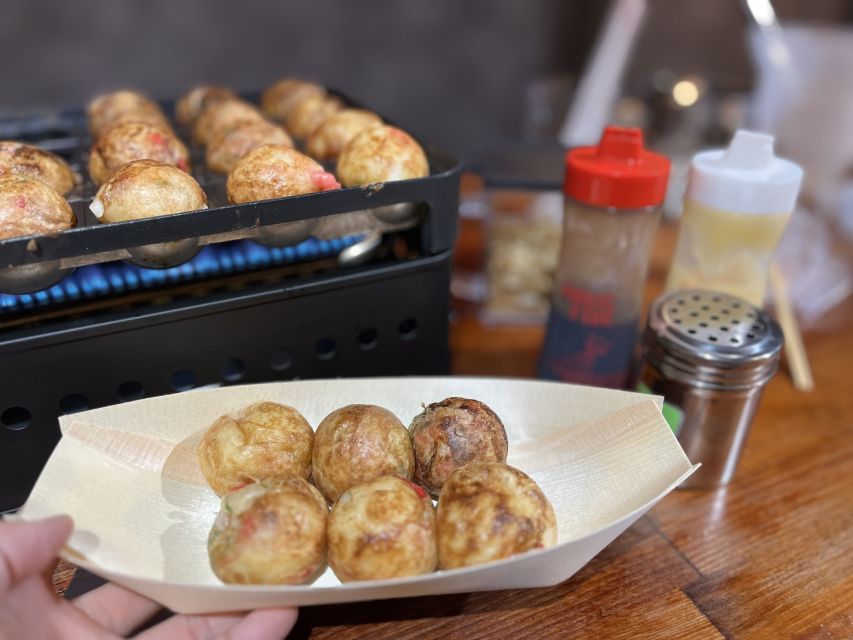
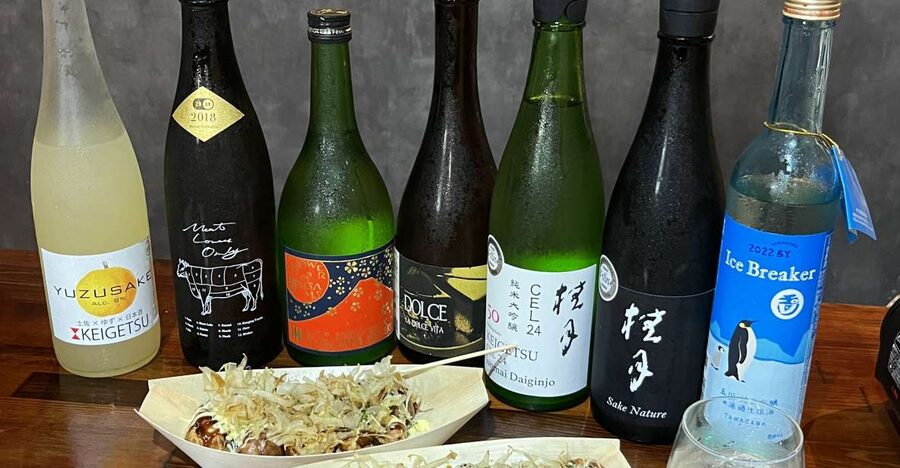
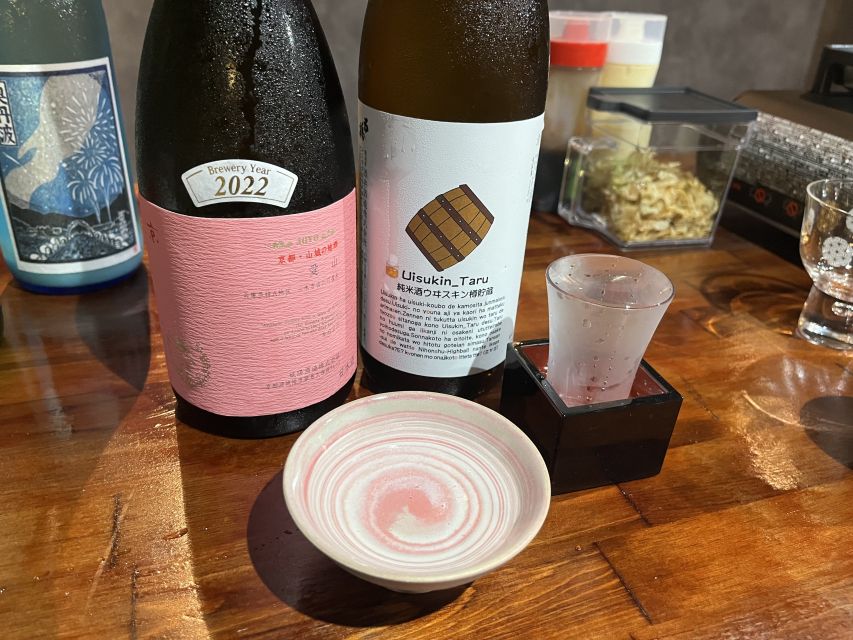
The selection includes more than 10 types of Japanese sake, with a seasonal menu chosen by Momo. You do not necessarily need to taste every option. The point is to compare styles and find your own favorites.
Several sessions included around seven sake samples per person, and the pours were described as generous. That makes the $70 price easier to understand, but it also means you should treat the class as a drinking experience, not a symbolic sampling. Pace yourself and use the water and food provided during the session.
The seasonal element is a plus. Sake is not presented as a fixed museum display. The menu can change, giving you a chance to taste bottles that reflect what is available at the time of your visit.
Momo explains each selection and helps you compare aroma, texture, and flavor. Some participants arrived with wine-tasting experience and found that the class helped them notice patterns in their own preferences. You do not need a trained palate, though. The atmosphere is relaxed, and there is no wrong answer if you like one style more than another.
The best practical benefit comes later. When you see sake on a restaurant menu, you can make a more informed choice instead of pointing at a random bottle. You may even leave with a stronger idea of what to buy at a shop back home.
Eating and drinking in the right order
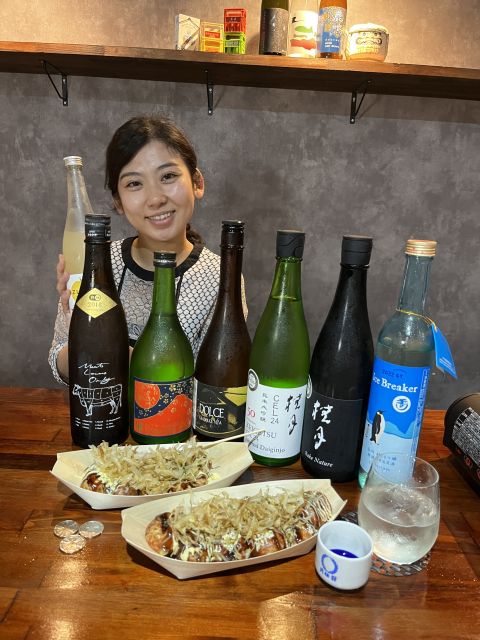
The stated plan is to cook first and enjoy the sake after the food is ready. This is a sensible arrangement. You can focus on the hot plate without holding a drink, then eat the takoyaki with the sake once everything is cooked.
That order also makes the final part feel like a shared meal rather than a lecture followed by a rushed tasting. You sit down with your handmade food, sample the selected sake, and discuss what works for you.
Some sessions also included dessert, although that should not be treated as a guaranteed feature unless confirmed when booking. Soft drinks are included, so non-drinkers and children can still take part in the social side of the class.
The food may be the biggest surprise for first-time visitors. Homemade takoyaki can taste fresher and more personal than a quick snack bought from a street stall. You control the fillings, and the cooking process gives you a better sense of how the dish comes together.
What the $70 price delivers
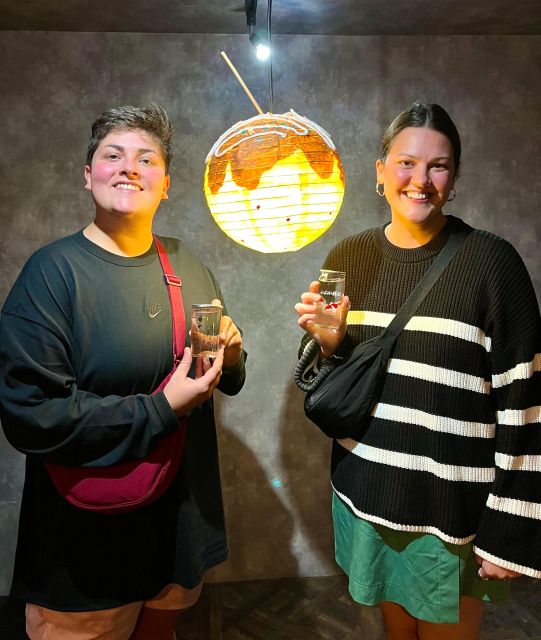
At $70 per person, this is not the cheapest way to eat takoyaki in Osaka. A street-food meal costs far less. You are paying for instruction, ingredients, a small group, a substantial sake selection, and Momo’s specialist guidance.
The value is strongest if you want to understand sake rather than simply drink it. More than 10 options are available, and several participants tasted seven different sakes during their session. Add a full hands-on food activity and two hours of personal instruction, and the price is reasonable for a special Osaka evening.
It is also good value for couples and small groups who prefer an intimate class to a large demonstration. A private session is possible when bookings are light, but the regular limit is six participants, so you should not assume total privacy.
The price is less compelling if you do not drink alcohol, have little interest in sake, or mainly want a quick cooking lesson. Soft drinks are included, but the class is built around the combination of takoyaki and sake.
Free cancellation is available up to 24 hours in advance for a full refund, and you can reserve now and pay later. Check available start times before booking, since the activity lasts two hours and the schedule may shape your evening plans.
Who will enjoy this Osaka experience most
I would recommend this class to first-time sake drinkers, food-focused visitors, couples, and small groups who enjoy learning by doing. It is also a good early activity in Osaka because the sake guidance can help you choose drinks at later bars and restaurants.
It suits people who want conversation as part of the experience. Momo has been praised for her warm, outgoing approach, and the class leaves space for questions about Japanese life as well as food and drink.
Families can take part, especially when children use soft drinks and alternative fillings are arranged. People with dietary restrictions should raise them in advance. The class can adapt in some cases, but the available information does not promise every type of dietary accommodation.
I would be more cautious if you dislike hot-plate cooking, cannot eat the listed ingredients, or want a quiet, highly formal tasting. The class is social, practical, and hands-on. You will be turning food, talking, and trying several drinks.
Practical details before you book
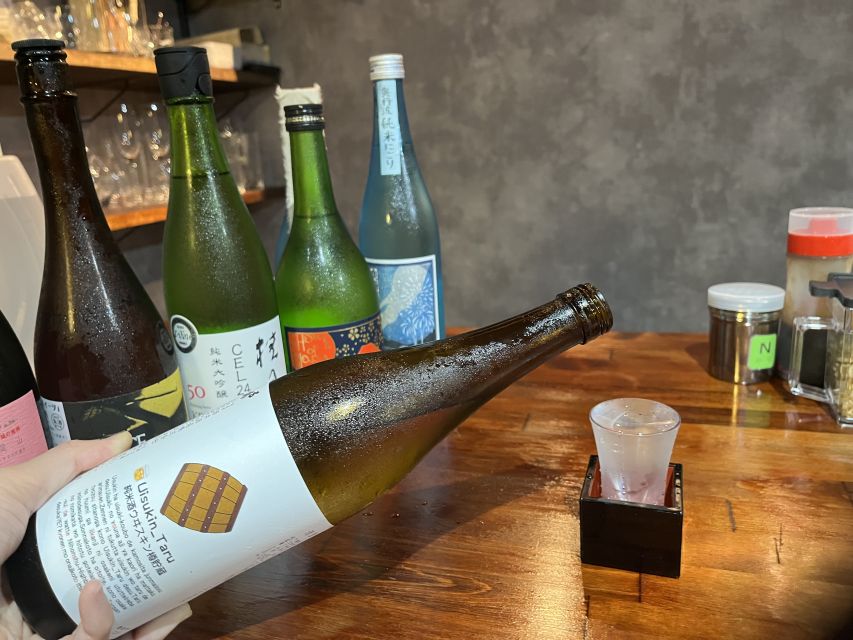
The activity lasts two hours and is held in English and Japanese. Meet at MOMO to SAKE, on the second floor of the building, near Osaka Namba.
The experience includes all cooking ingredients, instructions, more than 10 sake options, soft drinks, and an English-speaking local sake expert. The group is limited to six people.
Wear something comfortable for a cooking session. The available information does not specify an apron, so avoid bringing the outfit you most want to keep spotless. Most importantly, arrive ready to eat and drink at a measured pace.
If you want the class to shape the rest of your Osaka evening, book it near the beginning of your stay. You can then use your new sake vocabulary at local bars and order with less guesswork.
Should you book the takoyaki and sake class?
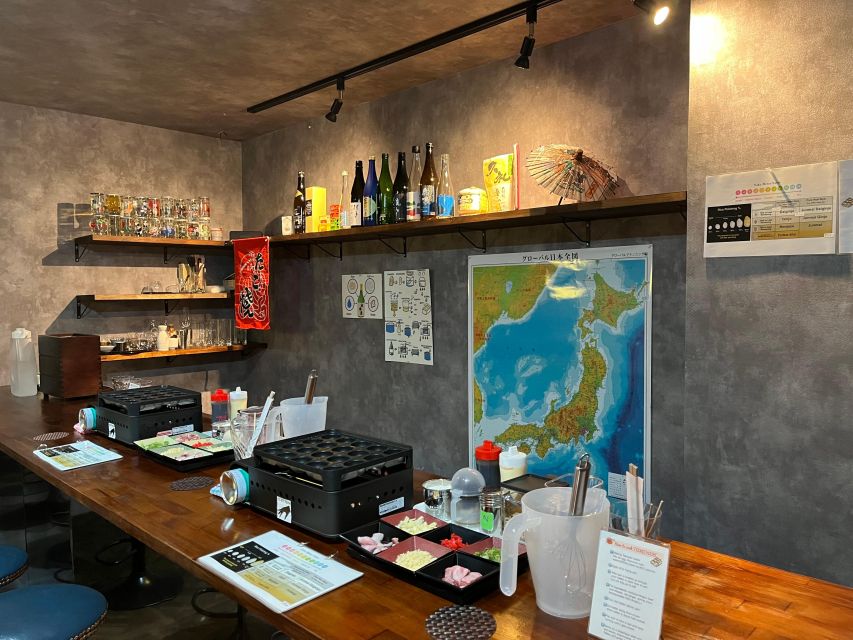
Yes, if you want one compact Osaka activity that combines local food, Japanese drink, and direct instruction. The strongest reasons are Momo’s personal teaching, the small group size, the broad sake choice, and the fact that you actually cook the takoyaki instead of watching someone else do it.
The main caution is the alcohol. Several samples may be generously poured, so this is not ideal for someone seeking a minimal tasting. At $70, it works best when you value the lesson and the food as much as the drinks.
For a first visit to Osaka, I would place this high on the list, especially if you book it early enough to use the sake advice later. You leave with a full stomach, a better sense of Japanese sake, and a new respect for the humble octopus ball.
FAQ
Where does the Osaka sake and takoyaki experience meet?
It meets at MOMO to SAKE, located on the second floor of the building near the main Osaka Namba area.
How long does the experience last?
The activity lasts two hours.
How many people can join the class?
The group is limited to six participants.
What languages are available?
The instructor offers the experience in English and Japanese.
How much sake can I taste?
More than 10 types of Japanese sake are available from a seasonal menu. The exact number you taste can vary, but several sessions included around seven generous samples per person.
Are soft drinks included?
Yes. Soft drinks are included along with the sake selection.
Can I cancel the booking?
You can cancel up to 24 hours in advance for a full refund. You can also reserve now and pay later.
More Bar Hopping Nights in Osaka
- Osaka: Namba Pub Bar Crawl with a Local Guide
★ 4.9 · 424 reviews - Osaka: Izakaya Bars Guided Walking Tour
★ 4.9 · 385 reviews - Osaka Pub Crawl and Nightlife Tour
★ 5.0 · 293 reviews - Osaka Local Bar Crawl in Dotombori & Uranamba Area
★ 5.0 · 199 reviews
More Cooking Classes in Osaka
- Matcha Making Class in Osaka with Authentic Japanese Sweets Set
★ 5.0 · 509 reviews - Osaka Sushi Making Experience
★ 5.0 · 400 reviews - Osaka: Ramen and Gyoza Cooking Class in Dotonbori
★ 5.0 · 378 reviews - Osaka: Traditional Mochi Pounding Experience with Tasting
★ 4.9 · 306 reviews
Just added in Osaka
- Urban Canvas: Osaka Street Art Bike Tour★ 5.0 · 10 reviews
- Anime Cosplay Photshoot-50 Digital Photos Provided★ 5.0 · 8 reviews
- TeamLab Botanical Garden Osaka Ticket★ 3.5 · 6 reviews
- Umeda Sky Building & Kuchu Teien Observatory Ticket in Osaka★ 4.5 · 3 reviews
- Immerse in Judo Martial Arts Class from Japan★ 5.0 · 4 reviews
- Cherry Blossom Buddha and Mt.Yoshino with Strawberry Picking Tour★ 4.5 · 5 reviews
- Traditional Home cooking Experience in Osaka, Japan★ 5.0 · 14 reviews
- Traditional Calligraphy Experience near Dotonbori★ 5.0 · 3 reviews
Osaka Cooking Classes, compared.
Matcha Making Class in Osaka with Authentic Japanese Sweets Set
Read our review →
Traditional Mochi Pounding Experience with Tasting
Read our review →
Osaka Cooking Class: Okonomiyaki &Japanese cuisines experience
Read our review →
Roll and Authentic Sushi Making Class in Dotonbori
Read our review →
Osaka Sake Tasting & Takoyaki Cooking Experience
Read our review →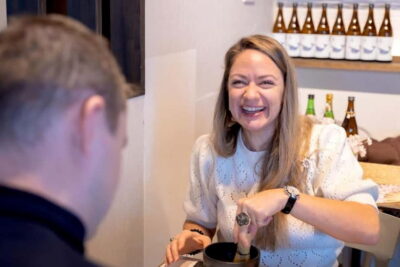
Browse the lists this tour appears in