
Reviewed · OSAKA COOKING CLASSES
Osaka: Cooking Class & Sake Tasting with Local Market Visit
Osaka’s food culture makes the most sense when you cook it yourself. This four-hour class takes you first to a neighborhood supermarket, then into MagicalTrip’s cooking studio to prepare niku-sui, okonomiyaki, and gyoza. I like the small group of up to seven and the way the recipes use ordinary ingredients you can find at home. I also like that drinks and conversation are part of the class, not an afterthought.
The main drawback is that this is not suitable for children under 13, wheelchair or stroller users, or anyone needing gluten-free food. You also need to arrive on time, since late arrivals cannot join. For everyone else, this looks like a warm, practical introduction to Osaka cooking, with guides such as Chie, Eri, Emi, Akko, Ayu, and Linda bringing their own personality to the class.
Key points at a glance
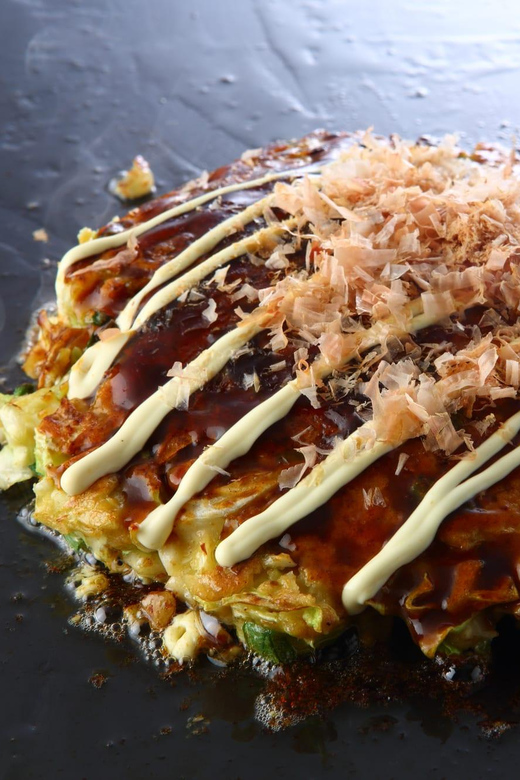
- Three Osaka dishes in one sitting: Make niku-sui beef soup, savory okonomiyaki, and handmade gyoza.
- A real supermarket visit: See the ingredients and food products Osaka residents buy for everyday meals.
- Small and social: The class is limited to seven people, so you can ask questions and work closely with the guide.
- Drinks included: You receive three canned alcoholic or non-alcoholic drinks, plus tea during the class.
- Recipes for home: Download the recipes afterward and try the dishes again in your own kitchen.
- Strong guide-led experience: Chie, Eri, Emi, Akko, Ayu, and Linda have each been praised for friendly teaching and useful cultural tips.
Starting at Minami Morimachi with a supermarket stop
Your meeting point is in front of FamilyMart, about a one-minute walk from Exit 4 of Minami Morimachi Station. That is a useful detail in Osaka, where a tour can become stressful if the meeting spot is vague or buried inside a large station.
The experience begins with a walk through a local supermarket. This is not a grand market tour with rows of street stalls. It is a look at ordinary Osaka shopping, which can be more revealing in its own way. You see the ingredients before they become lunch, and your guide can explain products, packaging, and the choices behind the recipes.
I like this opening because it gives the food some context. Instead of arriving at a studio where every item has already been laid out, you first see what goes into the meal and how familiar Japanese cooking begins with a simple shop. The supermarket visit also helps you understand that these are not restaurant-only dishes. They are foods you can make in a home kitchen.
The food selection is designed around three Osaka favorites. Niku-sui is a beef soup with a savory broth, and it is less familiar to many visitors than ramen or sushi. That makes it a useful choice for a class. You get to try something strongly connected to Osaka without being handed the same dish you might find on every Japanese menu.
More sake tastings in Osaka:
- Osaka Sake Tasting with Takoyaki Cooking
★ 5.0 · 156 reviews - Osaka Sake Tasting & Takoyaki Cooking Experience
★ 5.0 · 149 reviews - Osaka Cooking Class and Sake Tasting with Local Supermarket Visit
★ 5.0 · 79 reviews
Cooking niku-sui, okonomiyaki, and gyoza
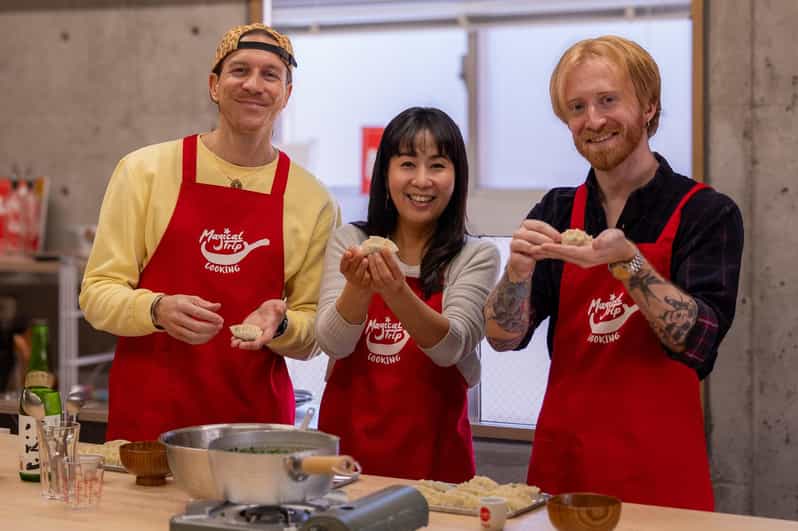
Back at the private cooking studio, your English-speaking guide takes you through each recipe. You do not need prior cooking experience. The class is meant to be clear and social, with the guide explaining the steps as you work.
Niku-sui gives the meal a comforting start. You learn how a few basic ingredients can create a satisfying beef soup. The dish is especially useful for home cooking because it does not depend on elaborate presentation. It is the kind of recipe you can imagine making on a cool evening after returning home.
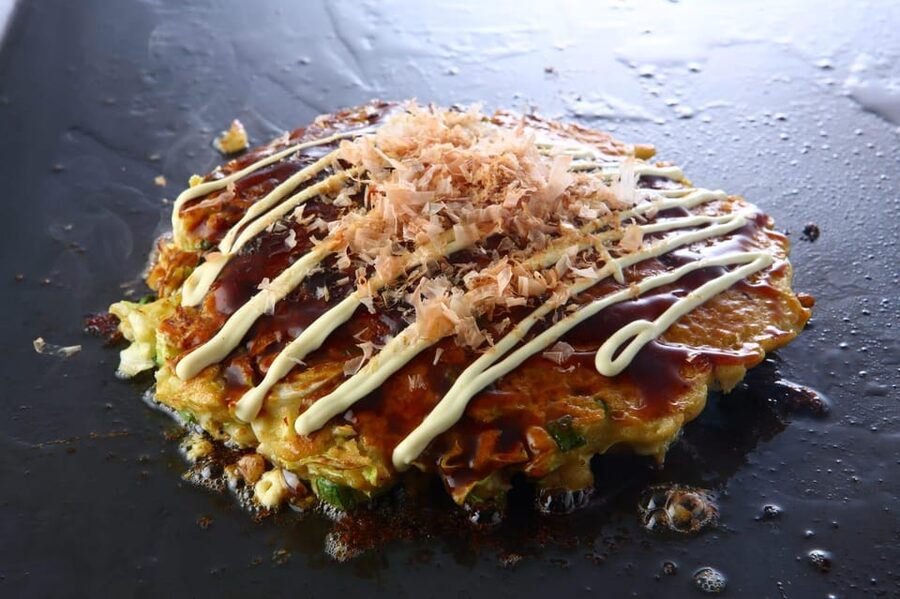
Then comes okonomiyaki, Osaka’s famous savory pancake. The dish allows for personal touches, and part of the fun is seeing how the mixture comes together. You are not simply watching a chef flip a finished pancake. You take part in the preparation and learn the method well enough to attempt it later.
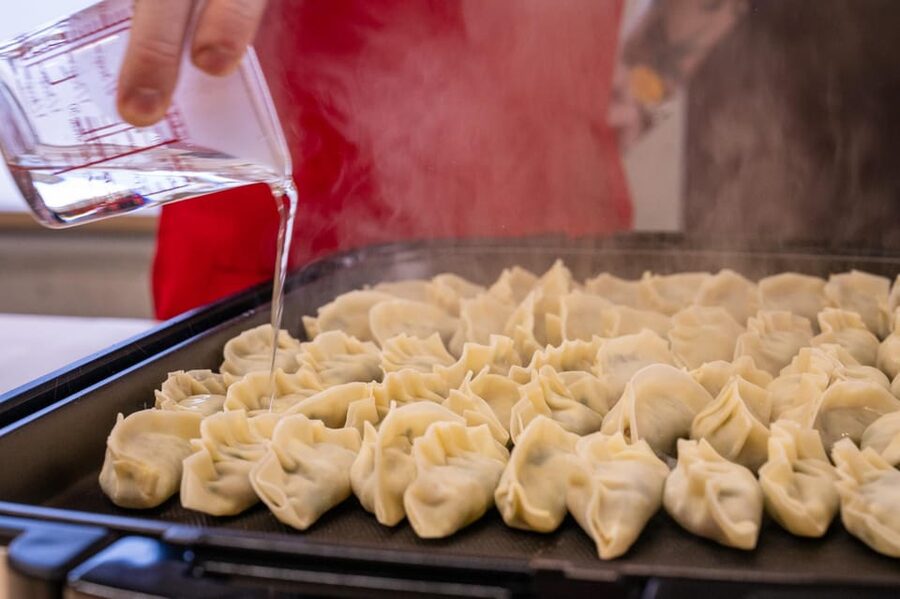
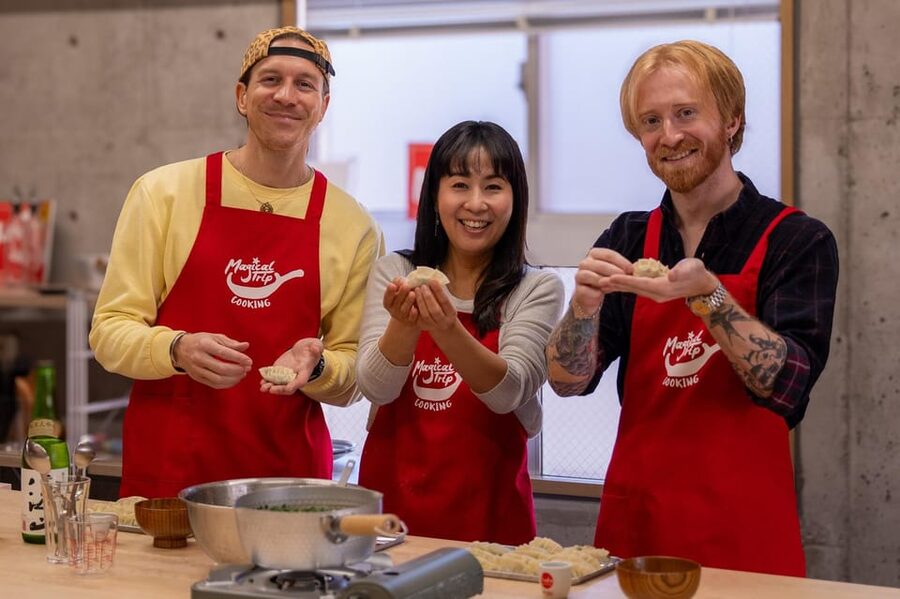
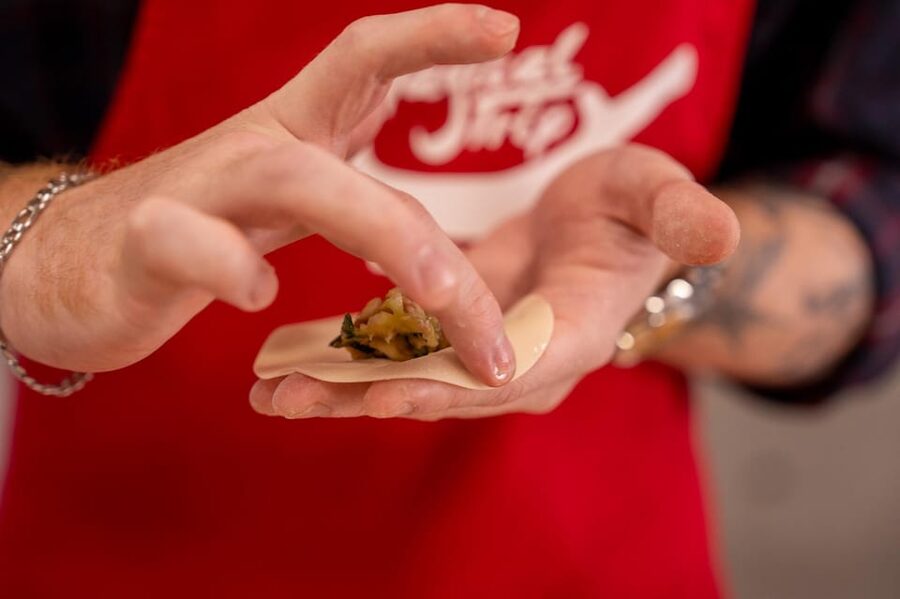
Gyoza adds the most hands-on work. Folding dumplings is easy to understand but takes a little practice, which makes it a good group activity. You can expect a few uneven folds along the way. That is part of the appeal. The process encourages conversation, and the class has room for laughter rather than requiring restaurant-level precision.
The menu also gives the four hours a good rhythm. Soup preparation, pancake cooking, and dumpling folding use different skills, so the session does not feel like repeating one task. You finish with a full lunch rather than a token tasting.
Why the supermarket visit matters
Cooking classes can sometimes feel detached from daily life. Ingredients appear in bowls, instructions arrive one at a time, and the connection to the place you are visiting gets lost. This experience avoids some of that by letting you see the food shop first.
You can ask your guide about ingredients and Japanese food habits while standing in the supermarket. The guides have also answered broader questions about Osaka, Kobe, Japanese regions, and local products during the class. That makes the experience useful for more than recipes. You may leave with ideas about what else to eat during your stay.
The visit is also a good fit for first-time visitors who want something more grounded than a restaurant meal. You see food as residents buy it, then use it in a meal. That sequence is simple, but it helps connect Osaka’s famous dishes with everyday life.
Do not expect a long market crawl or a historic food district tour. The supermarket stop is one part of a cooking experience, not the whole focus. If your priority is street food, restaurant hopping, or a traditional wholesale market, another activity may suit you better.
Three canned drinks and an easygoing table
The package includes three canned drinks, alcoholic or non-alcoholic, along with tea. The available choices can include local sake and beer, and you may also select soft drinks. This gives the class a relaxed social feel without making alcohol compulsory.
The drink service works best as a small cultural extra. You can taste sake while discussing the meal, compare drinks with the other participants, and continue chatting while the food cooks. One guide even went out of her way to help arrange a sake purchase after the class, which shows how the experience can extend into practical food and drink advice.
You should still think about the timing and your own comfort. Three drinks over four hours is not a reason to book the class if you do not drink alcohol, but non-alcoholic choices are included. Tea is served as well, so you can take part in the social side without ordering alcohol.
Music and conversation are part of the informal atmosphere. During one class, participants chose the background music while preparing the dishes. That detail tells you what sort of experience this is: participatory, friendly, and less formal than a demonstration where you sit quietly and take notes.
More cooking classes in Osaka:
- Matcha Making Class in Osaka with Authentic Japanese Sweets Set
★ 5.0 · 509 reviews - Osaka Sushi Making Experience
★ 5.0 · 400 reviews - Osaka: Ramen and Gyoza Cooking Class in Dotonbori
★ 5.0 · 378 reviews - Osaka: Traditional Mochi Pounding Experience with Tasting
★ 4.9 · 306 reviews
The guides make the difference
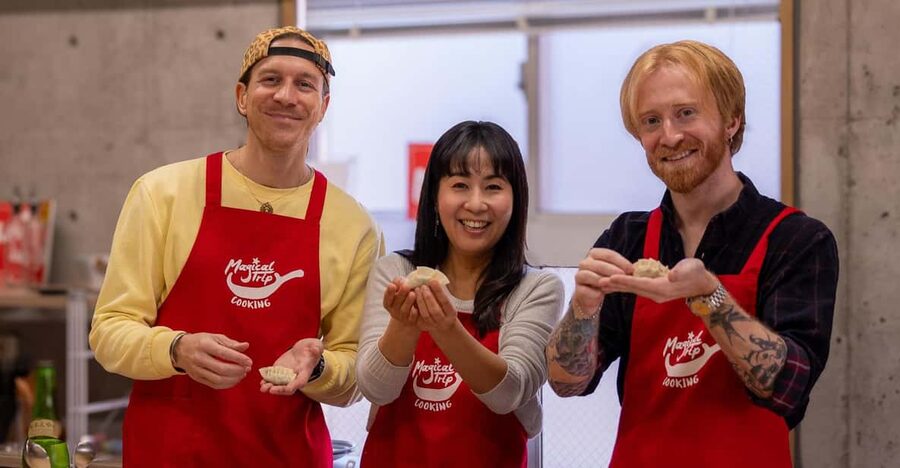
The cooking steps are important, but the guide will shape your experience. Chie has been praised for making the class easy and fun while explaining Japanese products and regional food traditions. Eri has been described as helpful, calm, and willing to answer questions about Osaka and local culture.
Emi has guided participants through the supermarket and all three recipes, while Akko has been praised for friendly conversation during cooking and lunch. Ayu has shared Osaka and Kobe tips, and Linda has added personal touches such as seasonal room decorations. These names matter because the experience is built around direct contact with the host.
You should not expect every session to feel identical. Different guides bring different stories, energy, and teaching styles. That variety is a plus if you enjoy meeting local people, though it also means the personality of your guide will be a major part of the day.
The repeated strength here is care. The guide is not only there to read instructions. You can ask about ingredients, cooking methods, Japanese regions, and places to visit in Osaka. If you want a class that feels like a conversation with a local cook rather than a formal lesson, this format should suit you.
A good value at $90
At $90 per person, this is not the cheapest way to eat lunch in Osaka. You could buy several inexpensive meals for that price. The value comes from the four-hour format and the amount packed into it.
You receive a supermarket visit, all ingredients, a full cooking session, lunch, three canned drinks, tea, an English-speaking local guide, and photos sent by email afterward. You also receive recipes that you can download and use at home. The practical benefit is clear: you are paying for instruction and cultural context, not only the food on the table.
The small group matters here. With a maximum of seven participants, the guide can watch your technique, answer questions, and keep the cooking moving. A larger class might cost less, but you would likely spend more time watching and less time folding gyoza or preparing the pancake yourself.
I consider the price fair for someone who wants an active food experience rather than a quick meal. It is less convincing for a person who only wants to taste Osaka specialties. If you are unlikely to cook the recipes again, the value depends more on the social setting, lunch, drinks, and local conversation.
Dietary needs and physical limits
Vegetarians and vegans are welcome, but you must tell the provider about dietary needs or allergies at least one day in advance. Same-day requests cannot be accommodated.
Gluten-free options are not available. The food is prepared in external kitchens, so an entirely allergy-free meal cannot be guaranteed. Substitutions may not always be possible, although the guide will try to make up for limitations at other stops.
This is also not a strong choice if you have walking difficulties. Parts of the experience may be inaccessible to wheelchairs or strollers, and a private tour is suggested for those who need more support. Ask before booking if mobility or food safety is a serious concern.
The age minimum is 13 because cooking includes cutting and heating. Older children and teenagers who can follow kitchen instructions may enjoy the hands-on format, but this is not a young-child activity.
Timing, weather, and what to bring
The experience lasts four hours, and you should allow enough time to reach Minami Morimachi Station and find Exit 4. The class starts on time. If you arrive late, you cannot join, reschedule, or receive a refund, so treat the meeting time seriously.
Osaka can be very hot in summer, with stated highs reaching 40°C, and cold in winter, with lows as low as -5°C. Dress for the season, especially for the walk to the supermarket and studio. Comfortable clothing is sensible for cooking, though no special equipment is listed as necessary.
Your guide takes photos during the tour and sends them afterward by email. That is a pleasant extra, particularly if you are busy cooking and do not want to spend the whole session taking pictures yourself.
Who should book this Osaka cooking class
I would recommend it most strongly to food-focused visitors who want to learn a few dishes they can repeat at home. Couples, friends, families with older children, and solo visitors can all fit the format, provided they are comfortable sharing a small group and taking part in the cooking.
It is also useful near the end of an Osaka stay. You can ask the guide for food suggestions, compare what you have eaten with the dishes you are making, and leave with recipes instead of only restaurant memories.
You may want another tour if your main interest is sake production, fine dining, street food, or a long market walk. This is a practical home-cooking class with a supermarket visit. Its strength is the combination of simple recipes, local conversation, and a relaxed table.
Should you book it?
Book this class if you want to do more than eat Osaka food. The three dishes give you a useful sample of local cooking, and the recipes are simple enough to try again after your trip. The supermarket stop, included drinks, small group, and guide-led conversation make the $90 price easier to justify.
Skip it if you need gluten-free food, have significant mobility limits, or prefer a polished restaurant meal over hands-on work. For everyone else, this is a friendly and practical way to spend four hours, especially if guides such as Chie, Eri, Emi, Akko, Ayu, or Linda bring the same warmth and attention described in past sessions.
FAQ
Where does the cooking class meet?
The meeting point is in front of FamilyMart, about a one-minute walk from Exit 4 of Minami Morimachi Station.
How long does the experience last?
The activity lasts four hours, including the supermarket visit, cooking, and lunch.
What dishes will I cook?
You will prepare niku-sui beef soup, okonomiyaki, and gyoza.
Are drinks included?
Yes. The experience includes three canned drinks, which may be alcoholic or non-alcoholic, as well as tea.
Is the class taught in English?
Yes. The four-hour experience includes an English-speaking local guide.
How large is the group?
The group is limited to seven participants.
Can vegetarians and vegans join?
Yes. Vegetarians and vegans are welcome, but you must inform the provider about dietary needs at least one day in advance.
Are gluten-free meals available?
No. Gluten-free options are not available, and allergy-free meals cannot be guaranteed because food is prepared in external kitchens.
More Food and Drink Tours in Osaka
- Osaka: Shinsekai Food Tour with 13-15 Dishes at 5 Eateries
★ 4.8 · 2,204 reviews - Osaka Food Tour: 13 Dishes at 5 Local Eateries
★ 5.0 · 2,149 reviews - Hungry Osaka Street Food Tour:15 Tastings & 3 Drinks with a Local
★ 5.0 · 1,727 reviews - Hungry Osaka Street Food Tour: 15 Dishes & 3 Drinks
★ 4.9 · 694 reviews
More Bar Hopping Nights in Osaka
- Osaka: Namba Pub Bar Crawl with a Local Guide
★ 4.9 · 424 reviews - Osaka: Izakaya Bars Guided Walking Tour
★ 4.9 · 385 reviews - Osaka Pub Crawl and Nightlife Tour
★ 5.0 · 293 reviews - Osaka Local Bar Crawl in Dotombori & Uranamba Area
★ 5.0 · 199 reviews
Just added in Osaka
- Urban Canvas: Osaka Street Art Bike Tour★ 5.0 · 10 reviews
- Anime Cosplay Photshoot-50 Digital Photos Provided★ 5.0 · 8 reviews
- TeamLab Botanical Garden Osaka Ticket★ 3.5 · 6 reviews
- Umeda Sky Building & Kuchu Teien Observatory Ticket in Osaka★ 4.5 · 3 reviews
- Immerse in Judo Martial Arts Class from Japan★ 5.0 · 4 reviews
- Cherry Blossom Buddha and Mt.Yoshino with Strawberry Picking Tour★ 4.5 · 5 reviews
- Traditional Home cooking Experience in Osaka, Japan★ 5.0 · 14 reviews
- Traditional Calligraphy Experience near Dotonbori★ 5.0 · 3 reviews
Osaka Cooking Classes, compared.

Matcha Making Class in Osaka with Authentic Japanese Sweets Set
Read our review →
Traditional Mochi Pounding Experience with Tasting
Read our review →
Osaka Cooking Class: Okonomiyaki &Japanese cuisines experience
Read our review →
Roll and Authentic Sushi Making Class in Dotonbori
Read our review →
Osaka Sake Tasting & Takoyaki Cooking Experience
Read our review →Browse the lists this tour appears in