
Reviewed · OSAKA COOKING CLASSES
Osaka Sake Tasting & Takoyaki Cooking Experience
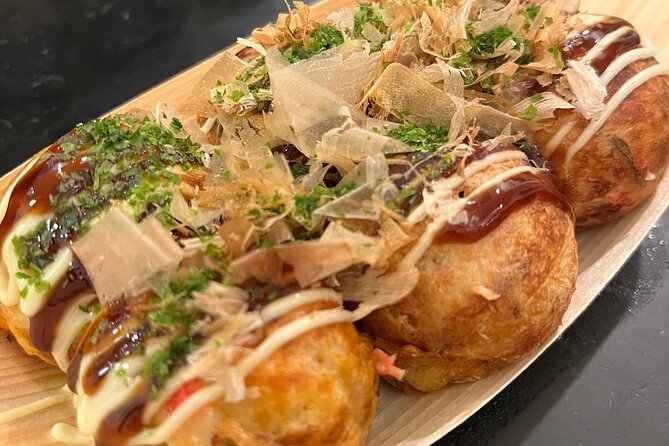
Osaka’s best food lessons do not need a long itinerary. This two-hour sake and takoyaki class puts you at a small kitchen near Dotonbori, where Momoko explains Japanese sake, pours a wide selection, and teaches you to turn batter and fillings into crisp, round takoyaki. It is part dinner, part cooking lesson, and part introduction to a drink many visitors find hard to order with confidence.
I like two things right away: the small maximum group of six keeps the cooking hands-on, and the sake lesson gives you useful tools for later meals. You learn about brewing, styles, labels, and how to choose sake at a restaurant. The special fillings, including Wagyu and cheese, also make this more than a standard octopus-ball demonstration.
The main consideration is alcohol. You are expected to eat after cooking and then enjoy the sake with your food, but the tasting can be generous. If you do not drink, have limited time, or want a large restaurant-style meal, this may not be the right fit.
Key details before you book
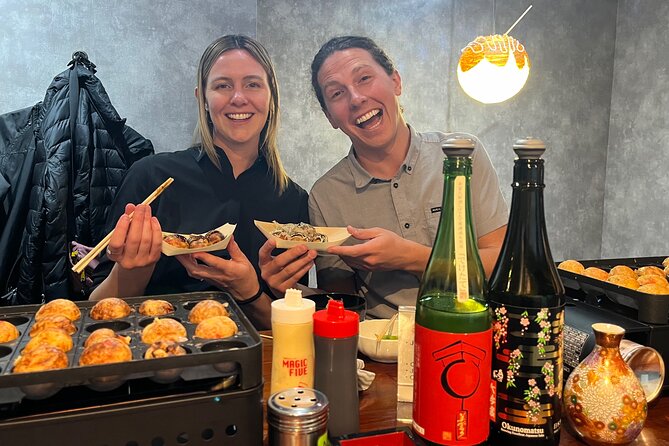
- Momoko leads the class: She is a certified sake sommelier with a strong background in sake making and speaks excellent English.
- You cook from scratch: You prepare takoyaki batter, work with several fillings, and learn how to turn the balls as they cook.
- The sake menu has 10 or more choices: The seasonal selection is chosen by a sake expert, with tasting guidance based on what you like.
- The setting is intimate: The class takes place on the second floor of MOMO to SAKE in Higashishinsaibashi, near Dotonbori.
- Afternoon and evening times are offered: That makes it easy to fit around Osaka sightseeing and dinner plans.
- The price is $72.67 per person: For two hours of instruction, food, ingredients, tools, and alcoholic drinks, the value is strongest for people who would otherwise pay separately for a cooking class and a sake tasting.
A small Osaka kitchen with a personal feel
You meet at MOMO to SAKE, at 1-chōme 6-22 Higashishinsaibashi, Chuo Ward, Osaka, in the Yoshiharu Kaikan building on the second floor. The activity ends at the same place, and you need to arrange your own public transportation.
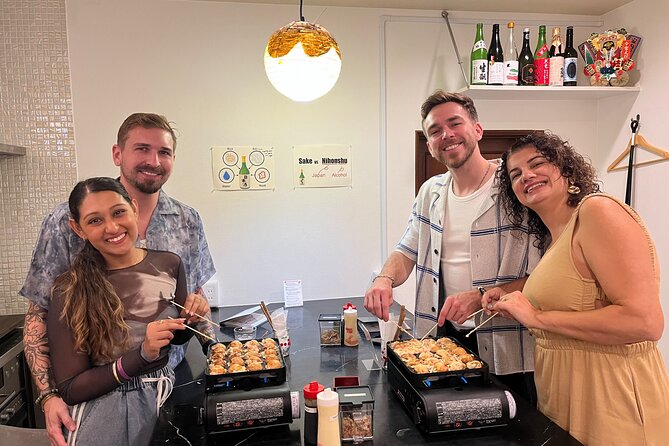
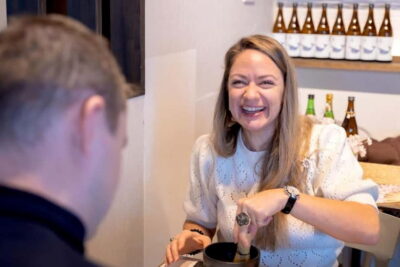
The room is small, which shapes the experience in a useful way. You are not watching a chef from the back of a large classroom. You are close enough to ask questions, get help with the hot plate, and compare your results with the other people in the group. The maximum is six, though the room can feel especially intimate when only a few people attend.
That setup suits solo visitors, couples, and small groups of friends. It also makes the class social without requiring you to perform for a large audience. Momoko’s friendly style is a major part of the appeal. She uses humor, answers questions patiently, and adjusts the conversation to the group’s interests.
The address is worth checking carefully before you leave. The meeting point is in a commercial building, not a large public attraction, and you should allow time to find the second-floor room. Since the experience is near Dotonbori, you can pair it with an evening walk through Osaka’s famous food district, but the class itself ends back at the meeting point.
More takoyaki classes in Osaka:
- Osaka Sake Tasting with Takoyaki Cooking
★ 5.0 · 156 reviews - Osaka : Cooking Class Okonomiyaki & Takoyaki course in Nanba
★ 4.9 · 25 reviews - Osaka Street Food Festival :Takoyaki&Okonomiyaki for Families
★ 5.0 · 13 reviews
Sake first, with practical lessons for later meals
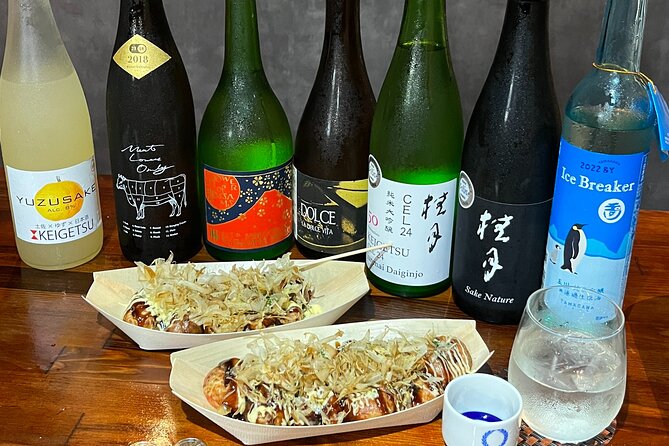
The sake portion is not just a line of small glasses. Momoko introduces the basics of nihonshu, the Japanese rice drink commonly called sake in English. You learn about its history, culture, and production process before tasting different bottles.
That background matters because sake menus can be confusing. Labels may give you information about style, polish, flavor, and serving preferences, but the terms do not always help if you have never tasted the differences. Momoko explains how to read the label and how the production process affects the drink in your glass.
The available menu includes 10 or more varieties of Japanese sake, with seasonal selections chosen by a sake specialist. The exact number you taste can depend on the session and your pace. Several people describe trying around seven types, which is enough to notice clear differences without turning the class into a rushed drinking contest.
You can talk about what you like as the tasting develops. Prefer something light, dry, fragrant, or fuller in flavor? Tell Momoko. She can use your reactions to guide the next pour. This personal approach is more useful than tasting a fixed flight with no explanation.
The strongest practical lesson is how to order later. After the class, you should feel more comfortable asking about sake in a sushi restaurant or izakaya. You may also recognize terms such as junmai and daiginjo, both of which come up in the tasting and in restaurant conversations.
The class does not promise that you will become a sake expert in two hours. It does give you a working vocabulary and a better sense of your own taste. That is a good return from a short lesson, especially if sake is part of your Japan trip but not yet part of your usual dining routine.
Making takoyaki from batter to crisp little balls
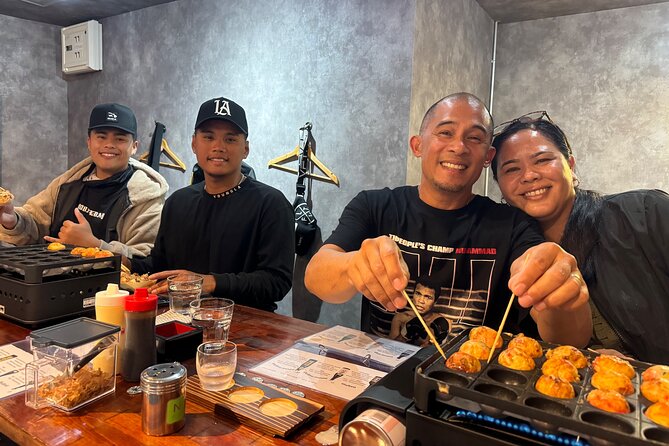
The cooking section gives the class its physical energy. Takoyaki is made by pouring batter into a special molded grill, adding fillings, and turning the partly cooked balls until they become round and browned.
At first, the turning can be awkward. The batter is soft, the heat is high, and the balls need to be rotated at the right time. Momoko demonstrates the technique, then lets you handle the picks yourself. That hands-on work is the point. You are not simply watching Osaka’s street food being made.
The recipe comes from Momoko, and the fillings go beyond the usual octopus. You may work with traditional ingredients along with Wagyu beef and cheese, giving the group several combinations to try. The result is a small tasting menu built around the same basic takoyaki form.
The class includes the ingredients, cooking tools, and the takoyaki you make. You can expect enough food to leave satisfied rather than merely nibbling between tastings. The instructions specifically advise you to arrive hungry, since the freshly cooked food is served with the sake after the cooking.
Sauces and toppings are part of the pleasure, though the supplied information does not list every topping used in each session. The key point is that you control the cooking and eat the results while they are fresh. That makes the dish more memorable than buying a box from a street stall and moving on.
If you do not eat seafood, tell the host in advance. A vegetarian or meat-based adjustment is not guaranteed by the standard description, but one guest had takoyaki made without seafood after explaining the need ahead of time. The same advance notice is wise for allergies and gluten concerns. Momoko has provided gluten-free ingredients when notified in advance, but you should not assume every dietary request can be handled on the day.
The order of the class makes sense
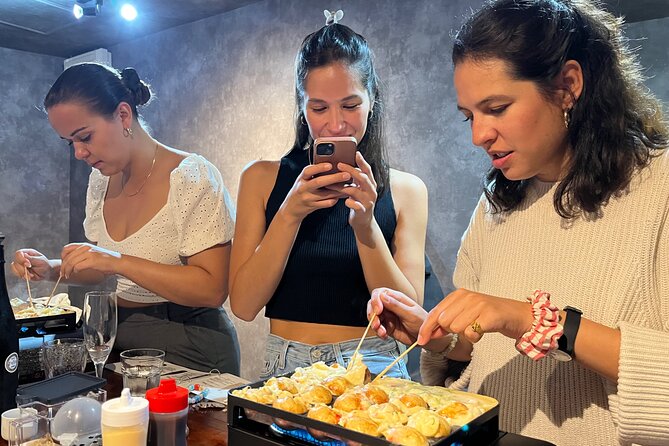
The activity combines the two parts in a sensible way. You cook first, then enjoy the sake with the food. That is better than drinking several samples on an empty stomach, particularly when the menu includes many varieties.
A typical flow begins with introductions and an explanation of takoyaki. You learn about the ingredients, prepare the batter, and start working at the grill. Momoko helps you judge when to turn each piece and shows you how to shape the balls as they cook.
The sake lesson follows or runs alongside the cooking, depending on the pace of the group. You hear about production and styles, taste from the seasonal menu, and discuss which bottles suit you. The class then brings the food and drink together.
This sequence also gives you a natural chance to talk with the host and the other people in the room. The setting is too small for you to disappear into the crowd, but the activity gives everyone something to do. Solo visitors can join without needing to organize their own group, while couples can share the cooking without simply watching one person work.
Plan on the full two hours. It is not a quick sample stop that you can squeeze into a 30-minute gap. Afternoon and evening options help, but you should leave enough time to arrive, cook, taste, and eat without watching the clock.
More sake tastings in Osaka:
- Osaka Cooking Class and Sake Tasting with Local Supermarket Visit
★ 5.0 · 79 reviews - Osaka: Cooking Class & Sake Tasting with Local Market Visit
★ 4.8 · 31 reviews - 3.5h Osaka Night guided Local Bar Hopping, Sake & Karaoke
★ 5.0 · 27 reviews - Sake “Omakase” in Osaka : Guided Tasting by a Active Sake brewer
★ 5.0 · 11 reviews
What the $72.67 price includes
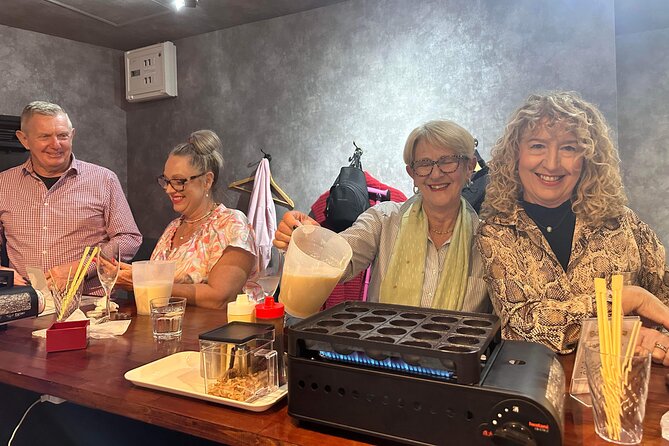
At $72.67 per person, this is not the cheapest way to eat takoyaki in Osaka. Street stalls and casual restaurants cost much less for a plate. You are paying for instruction, a small setting, ingredients, tools, a meal-sized portion of fresh takoyaki, and a guided sake tasting.
The value improves if you already planned to book a cooking class or a sake lesson. Here, you get both in one compact activity. The food is not only served to you, and the sake is not just poured without context. Momoko’s explanations are part of the price.
Alcohol is also included for legal adults. Since the selection includes 10 or more varieties, the drink portion can add meaningful value for someone who wants to compare styles rather than order a single glass at dinner.
The cost is less compelling if you do not drink alcohol or mainly want a cheap meal. It is also worth considering how much food you want. You should leave full and happy according to the structure of the class, but this is still a small-group workshop, not an all-you-can-eat dinner.
For food-focused visitors, couples, and people curious about Japanese drinks, the price is reasonable. You leave with more than a full stomach. You also gain a recipe, a new cooking skill, and enough sake knowledge to make later restaurant choices less intimidating.
The strongest reasons to choose this class
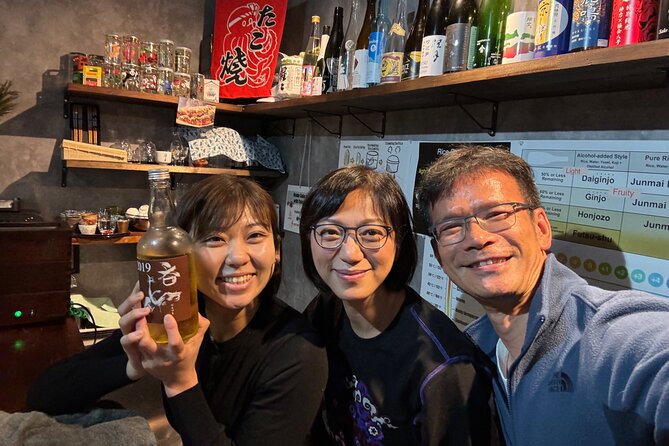
Momoko is the heart of the experience. Her sake background gives the tasting substance, while her warm English-speaking instruction makes the cooking approachable. You do not need prior sake knowledge, and you do not need to be good with a takoyaki pick when you arrive.
The best part for many people will be the mix of useful information and relaxed conversation. You can ask why one sake tastes different from another, how to read a bottle, or what to order at a restaurant. Then you can shift back to the hot plate and try to make a neat round of takoyaki.
I also like the flexibility of the food. Traditional octopus is available, but Wagyu and cheese add variety. Dietary needs may be handled when you contact Momoko ahead of time, including gluten-free ingredients in at least some cases. That is a practical strength for a cooking class, where ingredients matter as much as the lesson.
The setting has a few limits. The room is small, so it is not ideal if you want a quiet, private dinner or a spacious cooking studio. The alcohol tasting can also leave you tipsy, especially if you sample several varieties. Eat the food, pace yourself, and do not plan to drive afterward.
Who will enjoy it most
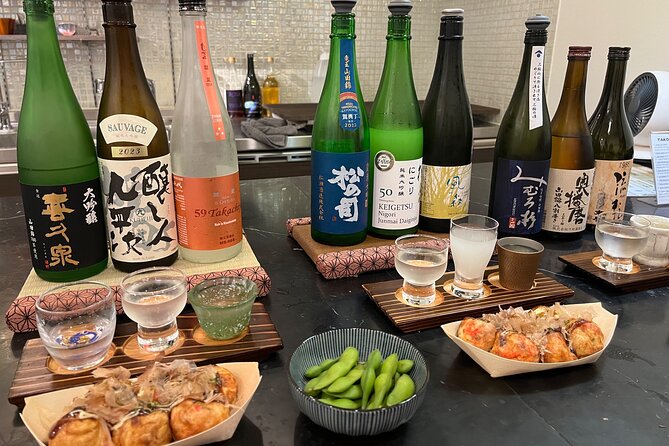
I would choose this for anyone who wants a more active food experience than a restaurant meal. It suits first-time visitors who want a simple introduction to Osaka food, as well as returning Japan visitors who have eaten takoyaki before but never learned to make it.
It is particularly good for:
- Couples looking for a shared activity
- Solo visitors who want an easy social setting
- Food lovers curious about sake
- Small groups who enjoy cooking together
- Visitors with an afternoon or evening free near Dotonbori
- People who want practical help ordering sake in Japan
You should think twice if you dislike alcohol, have serious food allergies that were not discussed in advance, or prefer a large professional kitchen. The cooking is hands-on, and that means some pieces may look less perfect than the ones made by a street-food expert. That is part of the fun, but perfectionists should expect to learn by trying.
The class is open to legal adults for the alcoholic beverage portion. Service animals are allowed, and the meeting point is near public transportation. Hotel pickup and drop-off are not included, so you handle the trip to and from Higashishinsaibashi yourself.
Cancellation and planning notes
You can cancel up to 24 hours before the start time for a full refund. Cancellations or changes made less than 24 hours before the experience are not accepted for a refund, and the cut-off follows Osaka local time.
Confirmation is provided when you book. Contact the host ahead of time with dietary requests, especially if you need gluten-free ingredients or do not eat seafood. Do not wait until the cooking begins, since the standard class includes octopus and other listed ingredients.
Should you book the Osaka sake and takoyaki experience?
Book it if you want to understand two Osaka favorites rather than simply consume them. The combination of a certified sake sommelier, a small group, a hands-on takoyaki lesson, and a seasonal selection of 10 or more sakes gives the two hours a clear purpose.
I especially recommend it for a first Osaka visit. You learn how to make the city’s signature street food, then gain enough sake vocabulary to order with more confidence during the rest of your Japan trip.
Skip it if you want a low-cost meal, do not drink, or need a large and spacious class. For everyone else, $72.67 buys a personal lesson, plenty of food, and a useful introduction to Japanese sake in a friendly second-floor kitchen near Dotonbori.
FAQ
How long does the Osaka sake and takoyaki experience last?
The experience lasts approximately two hours.
Where does the activity start and end?
It starts and ends at MOMO to SAKE, located at 1-chōme 6-22 Higashishinsaibashi, Chuo Ward, Osaka, in the Yoshiharu Kaikan building on the second floor.
How many people can join the class?
The activity has a maximum of six participants.
What is included in the price?
The price includes alcoholic beverages for legal adults, ingredients and tools for making takoyaki, and the takoyaki you prepare and eat.
How many types of sake are available?
More than 10 varieties of Japanese sake are available to choose from. The seasonal selection is chosen by a sake expert, and the number you taste can depend on the session.
Are afternoon and evening classes available?
Yes. The experience offers both afternoon and evening class options.
Can I cancel for a full refund?
Yes, if you cancel at least 24 hours before the experience start time. Cancellations or changes made less than 24 hours before the start time are not accepted for a refund.
More Bar Hopping Nights in Osaka
- Osaka: Namba Pub Bar Crawl with a Local Guide
★ 4.9 · 424 reviews - Osaka: Izakaya Bars Guided Walking Tour
★ 4.9 · 385 reviews - Osaka Pub Crawl and Nightlife Tour
★ 5.0 · 293 reviews - Osaka Local Bar Crawl in Dotombori & Uranamba Area
★ 5.0 · 199 reviews
More Cooking Classes in Osaka
- Matcha Making Class in Osaka with Authentic Japanese Sweets Set
★ 5.0 · 509 reviews - Osaka Sushi Making Experience
★ 5.0 · 400 reviews - Osaka: Ramen and Gyoza Cooking Class in Dotonbori
★ 5.0 · 378 reviews - Osaka: Traditional Mochi Pounding Experience with Tasting
★ 4.9 · 306 reviews
Just added in Osaka
- Urban Canvas: Osaka Street Art Bike Tour★ 5.0 · 10 reviews
- Anime Cosplay Photshoot-50 Digital Photos Provided★ 5.0 · 8 reviews
- TeamLab Botanical Garden Osaka Ticket★ 3.5 · 6 reviews
- Umeda Sky Building & Kuchu Teien Observatory Ticket in Osaka★ 4.5 · 3 reviews
- Immerse in Judo Martial Arts Class from Japan★ 5.0 · 4 reviews
- Cherry Blossom Buddha and Mt.Yoshino with Strawberry Picking Tour★ 4.5 · 5 reviews
- Traditional Home cooking Experience in Osaka, Japan★ 5.0 · 14 reviews
- Traditional Calligraphy Experience near Dotonbori★ 5.0 · 3 reviews
Osaka Cooking Classes, compared.
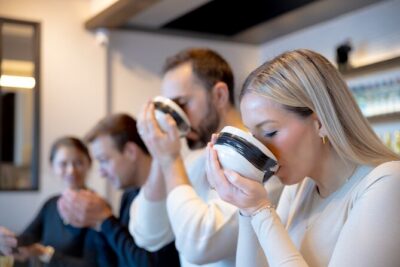
Matcha Making Class in Osaka with Authentic Japanese Sweets Set
Read our review →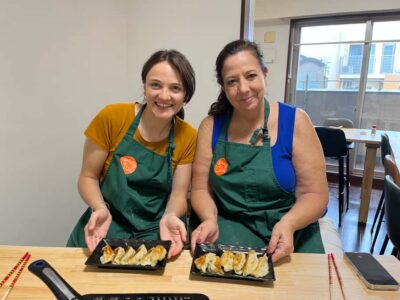
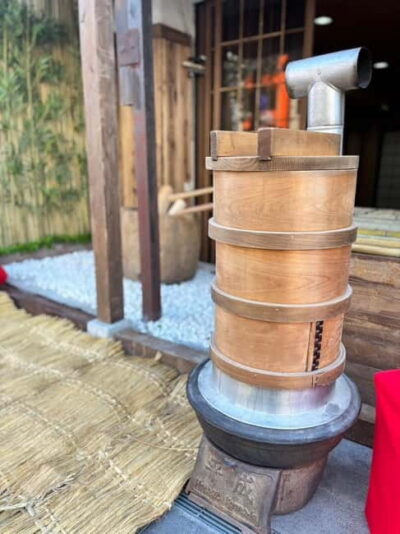
Traditional Mochi Pounding Experience with Tasting
Read our review →
Osaka Cooking Class: Okonomiyaki &Japanese cuisines experience
Read our review →
Roll and Authentic Sushi Making Class in Dotonbori
Read our review →
Browse the lists this tour appears in