
Reviewed · OSAKA STREET FOOD TOURS
Osaka Street Food Festival :Takoyaki&Okonomiyaki for Families
Osaka’s famous street food becomes a shared family activity here. You cook takoyaki and okonomiyaki on real teppan grills, then eat what you make. I like the hands-on format, especially for mixed-age groups, and the unlimited dagashi snacks and festival games give children something to do between cooking steps. The main drawback is the short 90-minute time limit, which may feel tight for a large group learning two dishes.
I also like the relaxed approach taken by Jalar, who helped a seven-person group choose how hands-on they wanted to be and worked patiently with novice cooks. The small maximum of 15 people keeps this from feeling like a large demonstration, but the $65.32 adult price is worth checking against your food budget, particularly if you are booking several family members.
Key points at a glance
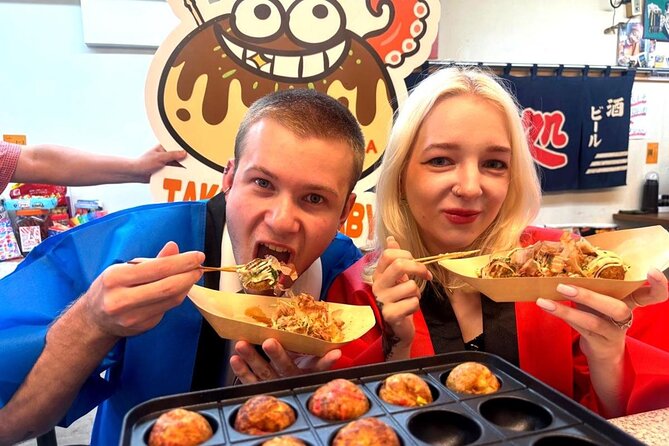
- Cook two Osaka classics: Make takoyaki and okonomiyaki on teppan grills instead of simply watching a chef.
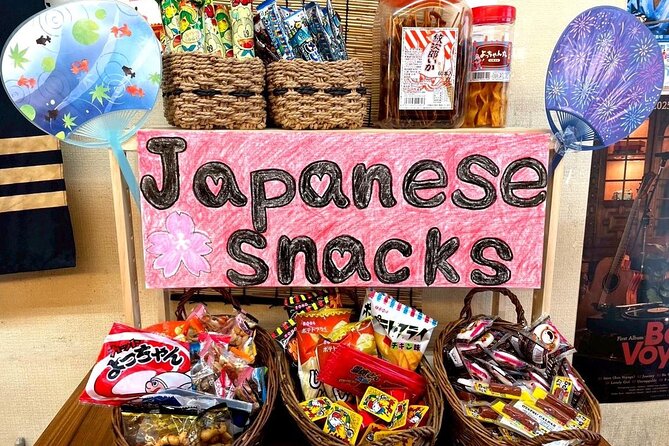
- Unlimited dagashi snacks: Try familiar Japanese sweets and small snacks while the meal comes together.
- Festival play included: Super ball scooping adds a simple game that works well for children and adults.
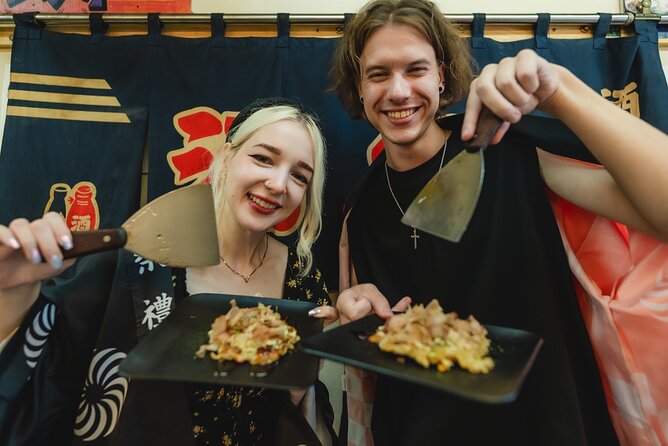
- Happi coats and group photos: Dress in festival-style coats for a memorable family picture.
- Central Dotonbori meeting point: Start and finish at 2-chōme-4-5 Dōtonbori, near public transportation.
- A short, social format: The activity lasts about 1 hour 30 minutes and accepts a maximum of 15 people.
A family festival inside Dotonbori
This experience takes the idea of an Osaka food tour and makes it more active. Instead of walking from stall to stall, you settle in at a cooking space and prepare two dishes that are strongly tied to Osaka food culture: takoyaki and okonomiyaki.
Takoyaki are small batter balls cooked in a special round mold, usually filled with pieces of octopus and finished with sauce and toppings. Okonomiyaki is a savory griddle dish made from a batter and other ingredients. The supplied details confirm the dishes and cooking setup, but not the exact fillings or toppings, so you should ask on arrival if anyone in your group has allergies or dislikes.
The activity starts and ends at 2-chōme-4-5 Dōtonbori, Chuo Ward, Osaka. That central address makes this easy to pair with time in Dotonbori, though private transportation is not included. You are responsible for reaching the meeting point yourself.
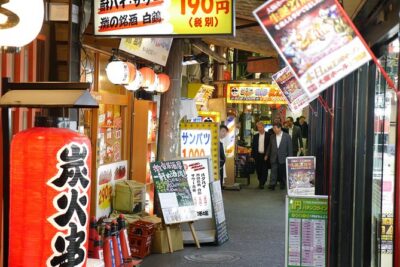
The location matters because Dotonbori is one of Osaka’s best-known food areas. You can plan this activity around a walk through the district, but avoid treating it as a substitute for exploring the surrounding streets. The cooking session gives you a seated break and a more personal food experience after the noise and crowds outside.
More takoyaki classes in Osaka:
- Osaka Sake Tasting with Takoyaki Cooking
★ 5.0 · 156 reviews - Osaka Sake Tasting & Takoyaki Cooking Experience
★ 5.0 · 149 reviews - Osaka : Cooking Class Okonomiyaki & Takoyaki course in Nanba
★ 4.9 · 25 reviews
Cooking takoyaki with the whole family
The strongest part of the activity is participation. Children, parents, and grandparents can work at the same grill, which makes the meal more social than a standard restaurant visit. You are not expected to arrive as a skilled cook.
That point is worth stressing. One seven-person group included novice cooks, and Jalar adjusted the level of hands-on involvement to suit them. The group wanted a very hands-on session, and each person received attention while learning. If your family has different confidence levels, this flexibility should help younger children or first-time cooks take part without slowing everyone down.
Takoyaki can be tricky at first. Turning the pieces at the right moment takes practice, and that small challenge is part of the fun. You may end up with some uneven shapes. That is not a problem here. The goal is to cook together, learn the basic motion, and enjoy the result.
For parents, this format has another advantage: children are given a clear task. Rather than sitting through a long explanation, they can help prepare food and watch it change on the hot grill. You should still keep a close eye on young children around the cooking surface, since the experience uses real teppan grills.
The ingredients for takoyaki and cooking utensils are included. Okonomiyaki is also included as part of the meal. The information does not specify a separate menu for dietary restrictions, so contact the provider before booking if your group needs a particular ingredient-free or allergy-safe arrangement.
Okonomiyaki turns dinner into a group project
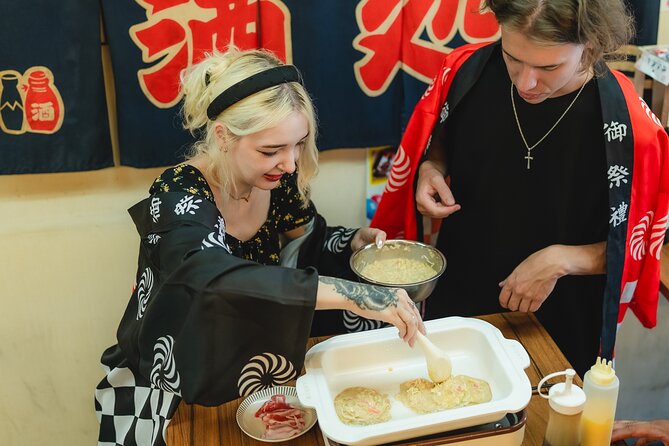
The second dish gives the session a different rhythm. Takoyaki involves small individual portions and repeated turning. Okonomiyaki is a larger griddle meal, so your group can watch it cook and then share the finished food.
I like this pairing because it gives you two distinct Osaka cooking experiences in a short session. Takoyaki is playful and hands-on. Okonomiyaki feels more like assembling a shared meal. Together, they suit families better than a class focused on only one dish.
The supplied information lists okonomiyaki as a meal inclusion, along with takoyaki ingredients. It does not state the exact serving size, the number of pieces, or the full ingredient list. If you are booking for a large family, ask how the food is portioned before you rely on the activity as a major meal.
The experience has a maximum of 15 people. That is small enough to support interaction, but it is not a private class unless your own group fills the space. A family of four may share the session with other participants. A larger family group can make the setting feel more like a private gathering, especially if it approaches the capacity limit.
Dagashi snacks keep the pace easy
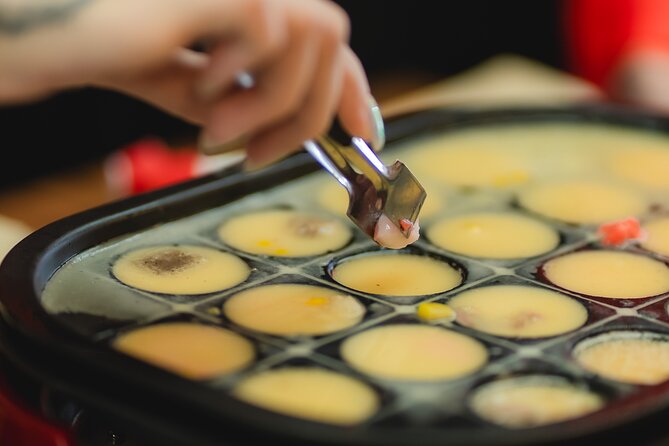
Japanese dagashi are inexpensive, often nostalgic snacks sold in small portions. Here, they are available without an extra charge during the activity. This is a useful touch for families because the snacks add variety while the cooked dishes are being prepared.
You can sample dagashi instead of waiting around during every cooking stage. For children, the snack selection gives the session a festival feel. For adults, it offers a small taste of everyday Japanese snack culture rather than only the better-known restaurant dishes.
The exact dagashi selection is not listed, so you should expect variety without planning around a particular sweet. The important value is the open access during the session, not a fixed tasting menu.
Soda and other pop drinks are included. Alcoholic beverages are also listed among the inclusions, though the available choices are not specified. Since the activity welcomes families and includes children, adults should confirm the drink options and any age-related serving rules directly with the provider.
More okonomiyaki classes in Osaka:
- Osaka Cooking Class: Okonomiyaki &Japanese cuisines experience
★ 5.0 · 261 reviews - Cooking Ramen&Gyoza/KatsuCurry/Bento/Okonomiyaki+Store Tour@Osaka
★ 5.0 · 138 reviews - Osaka Okonomiyaki Cooking Experience!
★ 5.0 · 79 reviews - Osaka Okonomiyaki Cooking Class “Learn here and make it at home”
★ 5.0 · 20 reviews
Festival games and happi coats
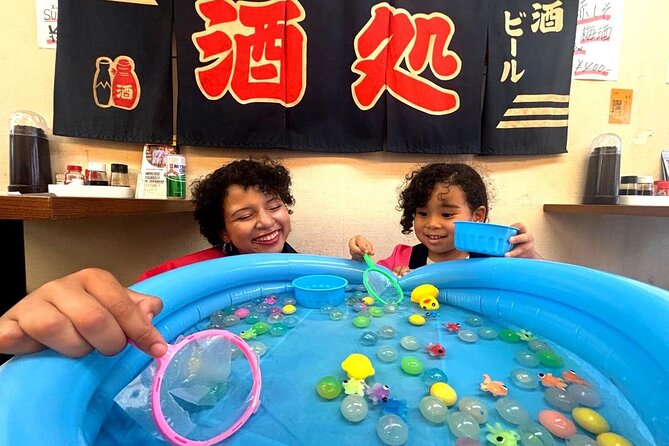
The food is the main reason to book, but the extra activities help explain why this is more than a cooking class. You can try classic festival games such as super ball scooping, a simple activity that requires patience and a steady hand.
Super ball scooping is especially useful for mixed-age groups. A grandparent who does not want to cook every minute can join the game. A child who finishes a cooking task early has something else to do. The activity does not depend on everyone having the same level of interest.
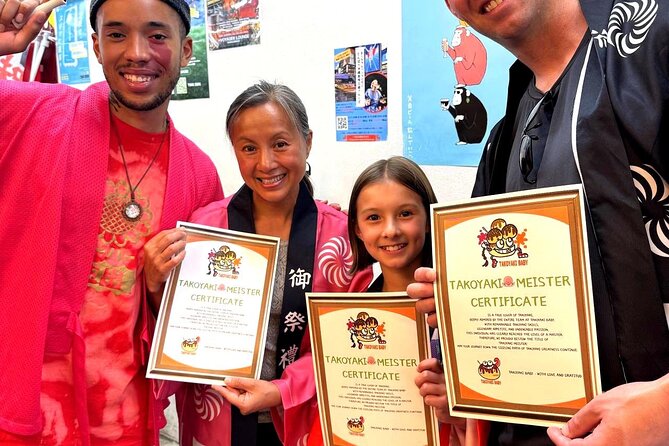
You can also wear festival-style happi coats for group photos. These coats are strongly associated with Japanese festivals and give the session a clear visual theme. The photos can become the best souvenir from the activity, particularly for a multigenerational family that wants one picture with everyone involved.
The supplied details do not promise professional photography or a particular number of photos. Plan to take your own group pictures if you want them saved on your phone. The coat experience is included as part of the festival setting, but photography arrangements are not described in detail.
What the 90-minute schedule means
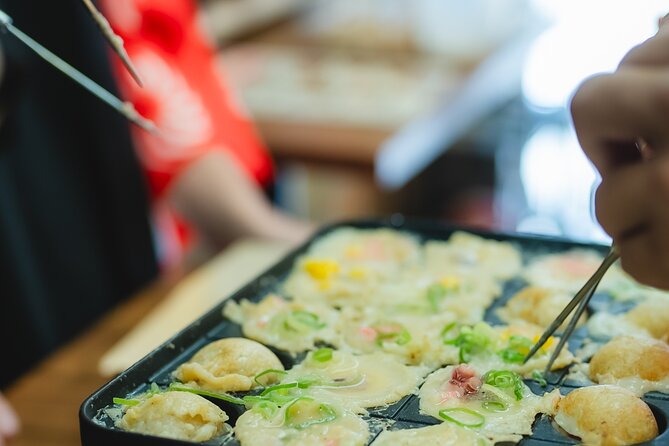
At approximately 1 hour 30 minutes, this is a compact activity. That makes it easy to fit between sightseeing plans in Osaka, but it also means the class cannot move at a slow, leisurely pace.
You should arrive ready to take part. The session needs to cover introductions, cooking both dishes, eating, snacks, games, and photos. The exact order is not provided, so the flow may vary by group. A family that wants to cook every portion personally should make that clear at the start.
The experience is best for people who enjoy doing rather than simply watching. If you want a long lesson about Osaka cuisine, detailed culinary history, or an extended market tour, this is not that kind of activity. It is a short food event built around participation and social time.
The timing works well for a family itinerary because it does not consume half a day. You can schedule it before or after other Dotonbori activities. Since the tour ends back at the meeting point, you do not need to arrange a separate return transfer.
Is the $65.32 price good value?
The adult price is $65.32 per person. Children in elementary school and younger are listed at ¥7,000, so check the price shown for each age category before finalizing the booking. The difference between the quoted adult amount and the child price means your total may not be obvious until you enter the full group.
The cost includes the takoyaki ingredients, cooking utensils, okonomiyaki meal, alcoholic beverages, soda or pop, and snacks. You also receive the cooking activity, festival games, and happi-coat photo opportunity. Private transportation is not included.
I would judge the value by the size and makeup of your group. For a family that wants dinner plus a shared activity, the price covers more than a restaurant meal. You are paying for guided participation, food, drinks, snacks, and a little entertainment. The value is strongest when most people in your party plan to cook and join the games.
For a couple or a solo visitor mainly interested in tasting Osaka food, the price may feel less compelling. You could likely eat takoyaki and okonomiyaki for less elsewhere, though you would not get the cooking lesson, group games, or themed photos.
A group of seven can make good use of the format because there are enough people to share tasks and laugh over the results. Jalar’s willingness to adjust the level of hands-on cooking is also important here. A mixed group does not have to choose between a fully guided demonstration and total independence.
Who should book this experience?
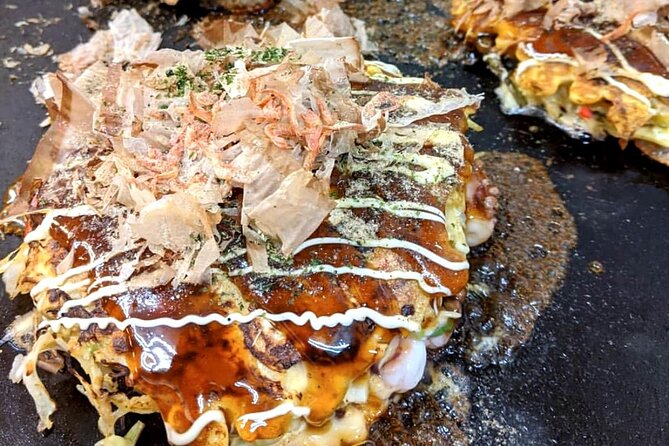
I would recommend it most strongly to families with school-age children, multigenerational groups, and friends who want a casual activity in Dotonbori. The cooking is simple enough for beginners, and the games and snacks give children more than one reason to stay engaged.
It also suits large groups that find ordinary restaurant seating awkward. With a maximum of 15 people, a family reunion or group of friends can cook in one shared setting instead of splitting across several tables.
Young children may enjoy the snacks and games more than the cooking itself. Parents should decide how comfortable they are with children near hot grills. The activity is family-friendly, but real cooking equipment still requires adult supervision.
I would be more cautious about booking it for a guest who wants a quiet, refined meal. The point is to participate, make mistakes, and enjoy a festival-style setting. It is casual and social by design.
Service animals are allowed, and the meeting point is near public transportation. No private transportation is supplied. Confirmation is received at booking, and free cancellation is available if you cancel at least 24 hours before the local start time. Changes or cancellations inside that window are not accepted for a refund.
Should you book the Osaka Street Food Festival?
Book this if you want your Osaka meal to become a group memory. The best parts are the shared cooking, Jalar’s patient support for beginners, unlimited dagashi snacks, and the small festival touches such as super ball scooping and happi coats.
Think twice if your group dislikes structured activities, has strict dietary needs that have not been confirmed, or wants a long cooking course. The 90-minute schedule is short, and the $65.32 adult price makes the most sense when you use the food, drinks, games, and social setting together.
For a family visiting Dotonbori, this is a practical way to eat Osaka specialties without asking children to sit still through a formal meal. You cook, play, take pictures, and finish where you started. That simple combination makes it a good fit for an easygoing day in Osaka.
FAQ
Where does the Osaka Street Food Festival start?
It starts at 2-chōme-4-5 Dōtonbori, Chuo Ward, Osaka, 542-0071, Japan.
Where does the activity end?
The activity ends back at the meeting point in Dotonbori.
How long does the experience last?
It lasts approximately 1 hour 30 minutes.
What food do I make?
You make takoyaki and okonomiyaki. Takoyaki ingredients and cooking utensils are included, and okonomiyaki is included as a meal.
Are drinks and snacks included?
Yes. Soda or pop, alcoholic beverages, and snacks are listed as included. Japanese dagashi snacks are available without limit during the activity.
Are children allowed to join?
Yes. Children, parents, and grandparents can take part. The listed price for children in elementary school and younger is ¥7,000.
How many people can join?
The activity accepts a maximum of 15 travelers.
Can I cancel for a full refund?
Yes, if you cancel at least 24 hours before the experience start time. Cancellations or changes made less than 24 hours before the start time are not eligible for a refund.
More Food and Drink Tours in Osaka
- Hungry Osaka Street Food Tour: 15 Dishes & 3 Drinks
★ 4.9 · 694 reviews - Kuromon Market Food Walking Tour in Osaka (6 stops, 6 tastes)
★ 5.0 · 550 reviews - Osaka: Guided Food Tour with 12 Dishes at 4 Local Eateries
★ 5.0 · 533 reviews - Absolute Osaka Food Tour
★ 5.0 · 309 reviews
More Street Food Tours in Osaka
- Osaka: Shinsekai Food Tour with 13-15 Dishes at 5 Eateries
★ 4.8 · 2,204 reviews - Osaka Food Tour: 13 Dishes at 5 Local Eateries
★ 5.0 · 2,149 reviews - Hungry Osaka Street Food Tour:15 Tastings & 3 Drinks with a Local
★ 5.0 · 1,727 reviews - Osaka Local Foodie Walking Tour in Dotonbori and Shinsekai
★ 5.0 · 985 reviews
Just added in Osaka
- Urban Canvas: Osaka Street Art Bike Tour★ 5.0 · 10 reviews
- Anime Cosplay Photshoot-50 Digital Photos Provided★ 5.0 · 8 reviews
- TeamLab Botanical Garden Osaka Ticket★ 3.5 · 6 reviews
- Umeda Sky Building & Kuchu Teien Observatory Ticket in Osaka★ 4.5 · 3 reviews
- Immerse in Judo Martial Arts Class from Japan★ 5.0 · 4 reviews
- Cherry Blossom Buddha and Mt.Yoshino with Strawberry Picking Tour★ 4.5 · 5 reviews
- Traditional Home cooking Experience in Osaka, Japan★ 5.0 · 14 reviews
- Traditional Calligraphy Experience near Dotonbori★ 5.0 · 3 reviews
Osaka Street Food Tours, compared.
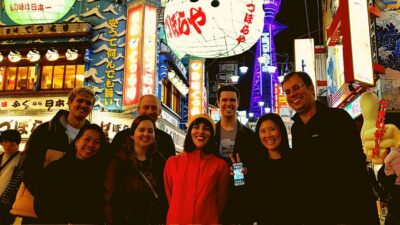
Shinsekai Food Tour with 13-15 Dishes at 5 Eateries
Read our review →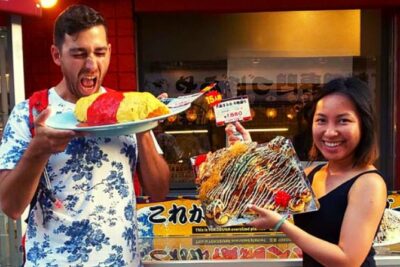
Osaka Food Tour: 13 Dishes at 5 Local Eateries
Read our review →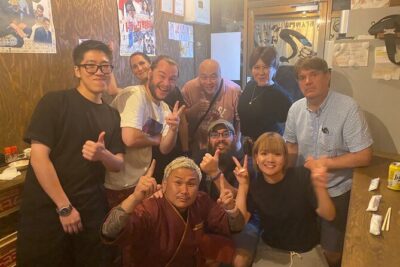
Hungry Osaka Street Food Tour:15 Tastings & 3 Drinks with a Local
Read our review →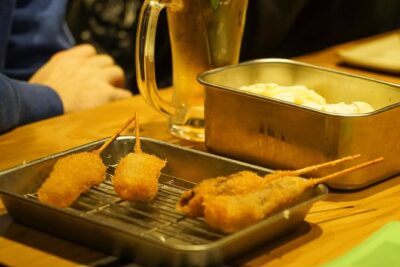
Osaka Local Foodie Walking Tour in Dotonbori and Shinsekai
Read our review →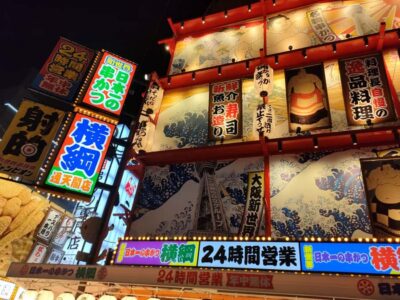
Hungry Osaka Street Food Tour: 15 Dishes & 3 Drinks
Read our review →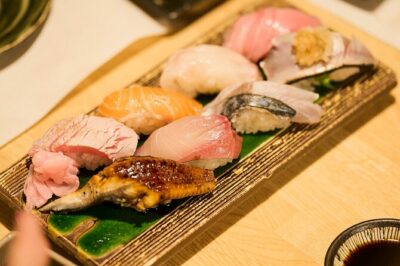
Guided Food Tour with 12 Dishes at 4 Local Eateries
Read our review →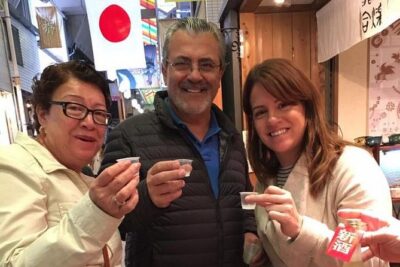
Osaka After Dark: Small-Group Night Food Tour (Max 6)
Read our review →Browse the lists this tour appears in