
Reviewed · OSAKA TEA CEREMONIES
Osaka: Castle, Tea Ceremony, Calligraphy, and Samurai Armor!
Osaka Castle is the big draw here, but the tour becomes more memorable once you move beyond sightseeing. You’ll pair the castle with a tea ceremony and calligraphy lesson, then see a samurai show and finish among the neon signs and food stalls of Dōtonbori.
I like the mix of major sights and hands-on activities, especially the chance to write Japanese characters instead of simply watching a demonstration. I also like the family appeal: children can try specially made samurai armor. The main catch is that armor and kimono rental cost an extra ¥4,820, so the advertised price is not the final cost if you want the full dress-up experience.
Key points at a glance
- Osaka Castle anchors the day: Enter one of Osaka’s best-known landmarks and visit its museum.
- Tea and calligraphy add participation: You do more than take photos, with traditional activities built into the schedule.
- Samurai fun costs extra: Armor, and women’s kimono rental, are optional at ¥4,820.
- Dōtonbori finishes the outing: Plan on photos, shopping, and Osaka street food after the cultural stops.
- Local trains may be part of the day: Allow energy and time for moving between locations.
- Best for culture-curious families and first-time visitors: The day covers several classic Osaka experiences in one booking.
Osaka Castle gives the day a strong opening
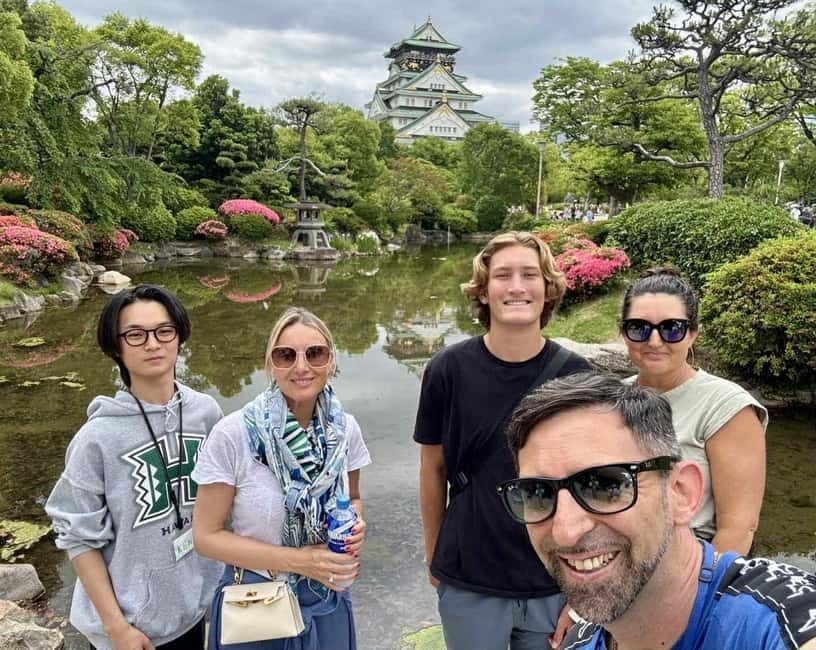
The tour begins at Osaka Castle, one of Japan’s most recognizable landmarks. You’ll enter the castle and have time for photos, while the museum offers a closer look at Osaka’s past and the people connected with the castle.
That combination matters. A castle exterior can make for a quick photo stop, but entering the building gives the visit more substance. One account specifically notes that the museum is worthwhile and that the staff are helpful. You should still think of this as one part of a larger day, not a slow, specialist castle study.
The castle is also a useful first stop because it gives you a clear sense of place before the more theatrical activities begin. You get architecture, museum displays, and city history first. Then the day shifts to customs, performance, and food.
Bring a camera, but do not let the photo opportunities turn the stop into a race. The tour promises time to capture images, though the exact amount of time at each location is not provided. If Osaka Castle is your main reason for booking, check the day’s pace with the guide at the start.
More tea ceremonies in Osaka:
- Osaka: Tea Ceremony Experience
★ 4.9 · 1,426 reviews - Tea Ceremony Experience in Osaka Doutonbori
★ 5.0 · 754 reviews - Matcha Making Class in Osaka with Authentic Japanese Sweets Set
★ 5.0 · 509 reviews
Tea ceremony and calligraphy make culture hands-on
The tea ceremony is the quieter center of the experience. Japanese tea preparation is built around careful movement, attention, and formal manners. You should expect an introduction to the practice rather than an advanced lesson in tea history.
That distinction helps set the right expectations. This is not presented as a private tea-school course. It is a guided cultural activity designed to fit into a full Osaka day. I like that choice because it gives you a taste of a custom that can seem mysterious when viewed only from the outside.
Calligraphy follows as another practical activity. You’ll learn about writing Japanese characters and have the chance to put brush to paper yourself. This is one of the tour’s strongest features for families and first-time visitors because you leave with a personal memory of the lesson, not just a set of photographs.
Calligraphy can also slow the day down in a useful way. Osaka is full of noise, signs, trains, and crowds. Sitting down to work on a character asks you to focus on one small task. The listing does not specify which characters you’ll write or whether you take your work home, so ask your guide if that detail matters to you.
Samurai demonstrations add theater and photo appeal
A samurai show is included, and it gives the day a lively change of pace after the castle and calligraphy. The program also includes playing traditional instruments, with the shamisen, koto, and shinobue named as options. These touches turn the cultural portion into a broader introduction to Japanese performance.
The show should be understood as a staged presentation, not a combat class or a historical reenactment with detailed battle training. That makes it a good fit for families, casual sightseers, and anyone who wants a memorable photo moment. If your main interest is serious martial arts instruction, this tour may feel too light.
You can add a samurai armor experience for ¥4,820. Children can use armor made for them, which is a thoughtful detail for families. The fee is separate from the ¥135 tour price, and you need to select the option or tell the guide on the day. You can also contact the operator through WhatsApp to arrange it.
The supplied information says the ¥4,820 price applies until the end of August. Since extra-fee details can change, confirm the current amount before booking. Cash is listed as something to bring, so carrying yen is sensible.
Women can choose a kimono-wearing experience for the same additional ¥4,820. This option is listed for women only. The program does not state how long the clothing experience lasts or what styles are available, so treat it as a short add-on rather than a full kimono rental day.
Traditional instruments widen the cultural menu
The mention of shamisen, koto, and shinobue gives this outing more variety than a standard castle tour. These instruments represent different sounds and playing styles, and even a brief introduction can help you notice Japanese music in a new way.
The exact format is not explained. You might receive a demonstration, a chance to try an instrument, or both. Ask the guide how much hands-on time is available if music is a priority for you.
I see this as a bonus rather than the main reason to book. The tour already has several scheduled elements, and each one may be fairly brief. Still, the instruments are a welcome break from the usual sightseeing pattern of walking, listening, and taking pictures.
More calligraphy classes in Osaka:
- Osaka: Private Japanese Calligraphy Experience
★ 5.0 · 66 reviews - Calligraphy Workshop in Namba, Dotonbori
★ 5.0 · 57 reviews - Learning Zen of Japanese Calligraphy in kimono near Osaka Castle
★ 4.5 · 53 reviews - Osaka: Private Tea Ceremony and Calligraphy Experience
★ 5.0 · 50 reviews
Dōtonbori brings the day back to modern Osaka
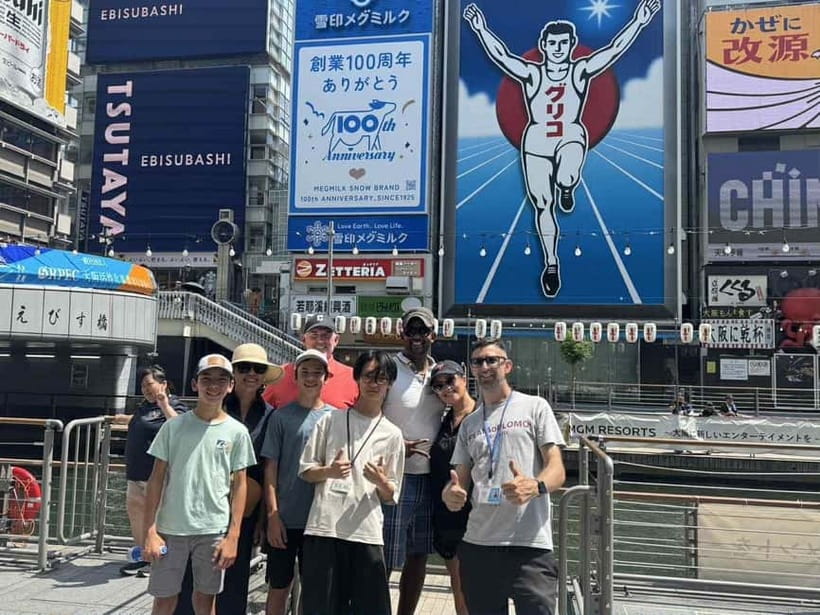
The final stop is Dōtonbori, Osaka’s famous entertainment and street-food district. Here the mood shifts from castles and formal customs to bright signs, shopping, restaurants, and local snacks.
This is a smart ending. Dōtonbori is best enjoyed with some freedom, and the description highlights photos, shopping, and tasting local delicacies. You’ll have a chance to see a very different side of Osaka after the more structured cultural activities.
Food is not listed as included, so plan to pay separately for anything you eat. Bring cash, especially if you want to buy small snacks or souvenirs. The tour does not specify a restaurant booking or a set food tasting, so you should view Dōtonbori as an area visit rather than a guided meal.
The experience ends back at the Osaka JOINER base, even though Dōtonbori is the final sightseeing stop. That return arrangement is useful if you want a definite finish point, but ask the guide how much independent time you’ll have in Dōtonbori before returning.
Getting to the Osaka JOINER base
The meeting point is the Osaka JOINER base on the B1 floor of Namba Walk, an underground shopping street, near Exit B23. The shop is between the Mizuno shop and Docomo Shop. If you are coming from Starbucks, head to the other side of the passage.
This location is practical but easy to miss if you are unfamiliar with Namba’s underground walkways. Give yourself extra time to find the correct section of Namba Walk rather than arriving at the last minute. Look for the two neighboring shops named above.
Local train travel may be part of the route between the castle and the cultural activities. One detailed account describes using Osaka’s train system during the day. That can be a helpful part of the experience, since you see how the city connects, but it also means this is not a sit-down coach tour from start to finish.
Wear shoes you can walk in and bring cash. Smoking indoors is not allowed. The experience is not suitable for people with back problems or those over 70, according to the stated restrictions.
Is the ¥135 price good value?
At $135 per person, this is not the cheapest way to see Osaka Castle. The value comes from combining several separate activities: castle entry, a tea ceremony, calligraphy, a samurai show, traditional instruments, and a Dōtonbori visit.
I would judge the price by how much of that program you actually want. If you only care about Osaka Castle, you can likely find a simpler visit. If you want a guided day that bundles history, cultural practice, performance, and food-district sightseeing, the price is easier to justify.
The extra-cost options change the calculation. Samurai armor or women’s kimono rental adds ¥4,820, and the same fee is not included in the base price. That can be worthwhile for a family photo or a special occasion, but it is not necessary to enjoy the core tour.
The small number of stated ratings is very positive, with a perfect score from four reviews. The praise focuses on the friendly, professional guide, the fun atmosphere, Osaka Castle, and the cultural activities. One person called the price reasonable. That supports the idea that the tour works best as an entertaining introduction, rather than as a deep specialist program.
Who will enjoy this Osaka culture tour?
I’d recommend it to first-time visitors who want several classic Osaka experiences arranged in one day. You get a landmark, museum time, traditional activities, samurai entertainment, and Dōtonbori without having to plan each piece separately.
Families should take a close look at it. The children’s armor option is a real plus, and the day offers enough variety to keep young people from spending hours in one museum. The extra armor fee should be part of your family budget from the start.
It also suits couples and friends who want strong photos and a few activities they can talk about afterward. Calligraphy and armor create more distinctive memories than simply walking past another famous building.
You may want a different tour if you prefer a slow, highly specialized cultural lesson. The schedule covers many subjects, so each one may receive only a short introduction. People with back problems should not book, and the stated age restriction excludes people over 70.
The English-language format is useful for visitors who want explanations throughout the day. No other languages are listed. If you need a language besides English, confirm availability before paying.
Practical advice before you book
Reserve only after deciding if you want the optional dress-up. The base price does not include samurai armor or kimono, and asking on the day may be possible, but advance notice through WhatsApp is also offered. I would arrange it early if getting those photos matters to you.
Keep some cash with you for the optional fee and Dōtonbori snacks. The tour does not include food, and the instructions specifically say to bring cash.
Leave room in your schedule after the tour if you want more Dōtonbori time. The activity ends back at the meeting point, but the exact duration and the amount of free time in the district are not stated.
Cancellation is flexible up to 24 hours before departure for a full refund, and you can reserve while paying later. That helps if your Osaka plans are still shifting.
Should you book this experience?
Book it if you want an energetic introduction to Osaka that mixes major sightseeing with hands-on culture. The best parts are the combination of Osaka Castle, calligraphy, tea, and the samurai program, plus the easy finish in Dōtonbori.
Skip it if you want a quiet castle-only visit, a long formal tea lesson, or a detailed martial arts course. Also skip the add-ons unless you are happy to pay ¥4,820 more for armor or kimono.
For families, first-time visitors, and anyone who likes variety, this is a sensible choice. Just meet at the Namba Walk base early, carry cash, and decide in advance how much you want to spend on the costume experience.
FAQ
Where does the tour start?
It starts at the Osaka JOINER base on the B1 floor of Namba Walk, near Exit B23. The shop is between Mizuno shop and Docomo Shop.
Where does the tour end?
The activity ends back at the Osaka JOINER meeting point.
Is Osaka Castle included?
Yes. The tour includes a visit to Osaka Castle and entry to the castle.
Is the tea ceremony included?
Yes. A Japanese tea ceremony is part of the tour.
Is Japanese calligraphy included?
Yes. The program includes a Japanese calligraphy session.
Does the base price include samurai armor?
No. The samurai armor experience costs an additional ¥4,820. Children can use specially designed armor.
Is kimono wearing included?
No. Kimono wearing is an optional extra for women and costs an additional ¥4,820.
What language is the tour offered in?
The listed tour language is English.
More Samurai and Ninja Experiences in Osaka
- Samurai Training Experience KENDO in Osaka
★ 5.0 · 515 reviews - OSAKA NIGHT FUSION Japanese Taiko Kabuki Samurai Dance Show
★ 4.8 · 155 reviews - Osaka: Samurai Training Experience KENDO in Osaka
★ 5.0 · 111 reviews - Osaka: A Modern Samurai, Kabuki, Taiko, & Dance Show
★ 4.5 · 66 reviews
Just added in Osaka
- Urban Canvas: Osaka Street Art Bike Tour★ 5.0 · 10 reviews
- Anime Cosplay Photshoot-50 Digital Photos Provided★ 5.0 · 8 reviews
- TeamLab Botanical Garden Osaka Ticket★ 3.5 · 6 reviews
- Umeda Sky Building & Kuchu Teien Observatory Ticket in Osaka★ 4.5 · 3 reviews
- Immerse in Judo Martial Arts Class from Japan★ 5.0 · 4 reviews
- Cherry Blossom Buddha and Mt.Yoshino with Strawberry Picking Tour★ 4.5 · 5 reviews
- Traditional Home cooking Experience in Osaka, Japan★ 5.0 · 14 reviews
- Traditional Calligraphy Experience near Dotonbori★ 5.0 · 3 reviews
Osaka Tea Ceremonies, compared.

Matcha Making Class in Osaka with Authentic Japanese Sweets Set
Read our review →
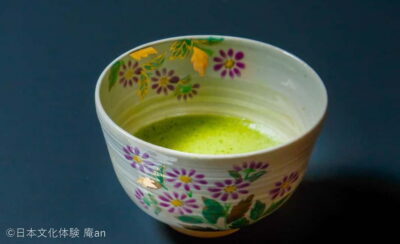
Japanese Traditional Sweets Making and Tea Ceremony
Read our review →
Osaka Temple Cool Foot Bath & Matcha Experience〈45min〉
Read our review →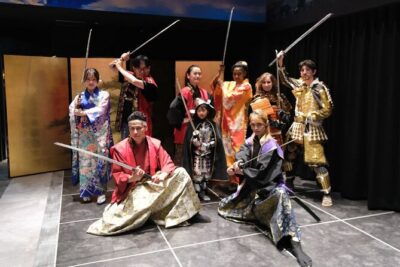
Samurai Show, Tea Ceremony, Japanese Traditional Activities
Read our review →
Browse the lists this tour appears in