
Reviewed · DOTONBORI TOURS
Calligraphy Workshop in Namba, Dotonbori
Japanese calligraphy becomes much more meaningful when you learn what the characters represent, not just how to copy their shapes. In this two-hour Namba workshop, teacher Nao introduces shodo step by step, while English support helps you follow the cultural background and brush technique.
I like the calm setting near Dotonbori, Nihonbashi, and Kuromon Market, and I like that you leave with a personal Japanese name keepsake rather than a souvenir picked from a shop. The main consideration is that the meeting point is inside a building and can be a little hard to spot, so allow time to find the third-floor studio.
Key points at a glance
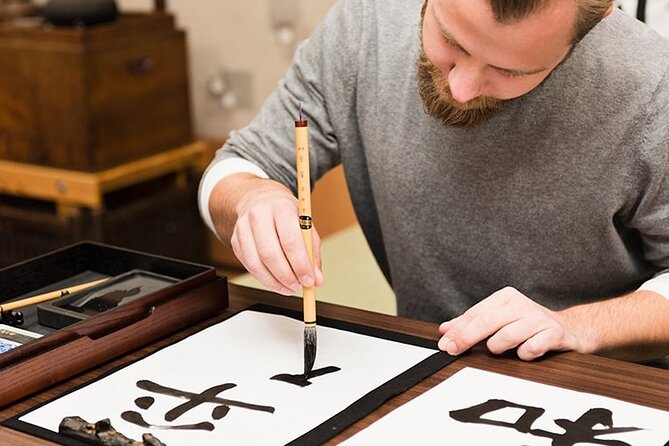
- Write your own name in Japanese: Choose kanji or katakana and take home a handmade name card or luggage tag.
- Teacher Nao leads the calligraphy practice: English interpretation from Stephen or Stephan helps explain both technique and meaning.
- Small groups of up to six: You get room to practice and receive individual guidance.
- A peaceful break in central Osaka: The class offers a quiet change of pace close to Dotonbori, Nihonbashi, and Kuromon Market.
- Suitable for first-timers and families: Children as young as 9 have taken part, and most people can participate.
- Easy to pair with sightseeing: The workshop begins and ends at the same Namba meeting point.
Why this Namba calligraphy class feels different
Many Japanese cultural activities give you a quick demonstration, a few minutes of practice, and a souvenir. This one gives you time to understand the idea behind the art before you start making marks yourself.
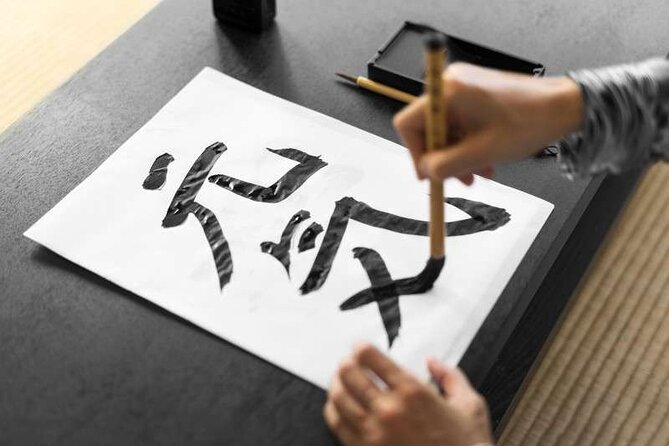
Shodo, the Japanese word for calligraphy, is not simply neat handwriting. The movement of the brush, the pressure of the stroke, the amount of ink, and the empty space on the paper all matter. You may not produce a museum-worthy character on your first try, but you will begin to see why the process requires patience and concentration.
I like that the workshop treats calligraphy as both a craft and a cultural subject. You learn about the meaning of kanji and the place of calligraphy in Japanese culture, then put that information to work with a brush in your hand.
The class is held in Namba, one of Osaka’s most useful bases for sightseeing. Dotonbori is nearby, as are Nihonbashi and Kuromon Market. That location makes the activity easy to fit into a day of food, shopping, and city wandering.
More Namba tours:
- Osaka: Namba Pub Bar Crawl with a Local Guide
★ 4.9 · 424 reviews - 3Hour Osaka Pub Crawl Bar Hopping Nightlife Guided Tour in Namba
★ 5.0 · 122 reviews - Osaka: Bar-Hopping Night Tour in Namba
★ 4.7 · 117 reviews
Finding the studio at Nanbanaka 1-chome
The meeting point is Isuku English Academy Japan, at Takeda Building 3F, 1-chome 6-1 Nanbanaka, Naniwa Ward, Osaka 556-0011. The workshop starts and finishes there.
The address is near public transportation, but the entrance may not look like a traditional art studio. A practical tip is to check the signs carefully around the building and allow extra time for the final approach. One participant found the studio confusing to locate because of a nearby nail salon sign, and the provider planned to add clearer guidance near the elevator.
This is not a tour with a moving route or several scheduled stops. You arrive at the studio, settle in, and spend the session at the same location. That makes it a good choice when you want a dependable indoor activity, especially on a rainy Osaka day or when your feet need a rest.
A mobile ticket is provided, and confirmation arrives at booking. Since the group can be limited to six people, booking ahead makes sense. The experience is booked an average of 38 days in advance, which suggests that popular dates can fill before your Osaka visit.
The first stage: understanding shodo before touching the brush
The class begins with an introduction to Japanese calligraphy and the meaning behind the characters. Teacher Nao explains the subject, with English interpretation provided by Stephen or Stephan, whose name appears in the experience details in slightly different forms.
This opening matters. If you begin by copying strokes without context, the activity can feel like a handwriting exercise. Here, you get a clearer idea of why the order and shape of each stroke matter, and why a single character can carry more than a simple dictionary translation.
The instruction is designed for beginners. You do not need to read Japanese, know kanji, or have used a calligraphy brush before. The teaching approach is patient and encouraging, with explanations repeated as needed.
Families have found this part useful because it gives children a way into Japanese culture without requiring a long lecture. The class has worked well for children around 9 and 11, as well as teenagers and adults. Younger participants will still need to focus and follow directions, but the activity is hands-on soon after the introduction.
Practicing brush, ink, and kanji
Once the basics are explained, you begin practicing. This is where the class becomes pleasantly challenging.
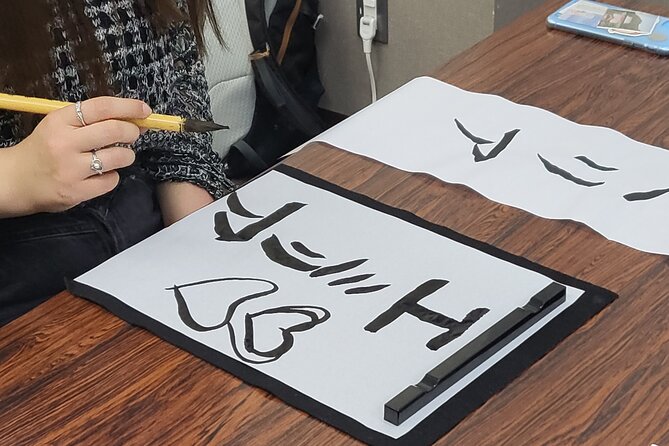
A brush does not behave like a pencil. Too much pressure can widen a stroke, too little can make it faint, and too much ink can blur the shape. You work through the movements with guidance from Nao, building control one mark at a time.
Do not expect instant perfection. Part of the fun is discovering that a character that looks simple can be surprisingly difficult to reproduce. The practice also gives you permission to make mistakes. You can concentrate on the movement rather than worry about producing a perfect first attempt.
The small group size is important here. With no more than six participants, the instructors can look at your work and offer direct corrections. Several people have found the teaching reassuring because the instructors make the art feel less intimidating.
The tone is calm and friendly rather than formal or severe. You will likely spend much of the practice time concentrating quietly, then chatting with the instructors between attempts. That balance works well. Calligraphy needs focus, but the session does not feel stiff.
More Dotonbori walks and food stops:
- Osaka Local Foodie Walking Tour in Dotonbori and Shinsekai
★ 5.0 · 985 reviews - Osaka: Dotonbori District River Cruise with Drink Discount
★ 4.2 · 876 reviews - Ultimate Osaka Walking Tour: Castle, Dotonbori & Hidden Gems
★ 5.0 · 862 reviews - Tea Ceremony Experience in Osaka Doutonbori
★ 5.0 · 754 reviews
Creating your Japanese name keepsake
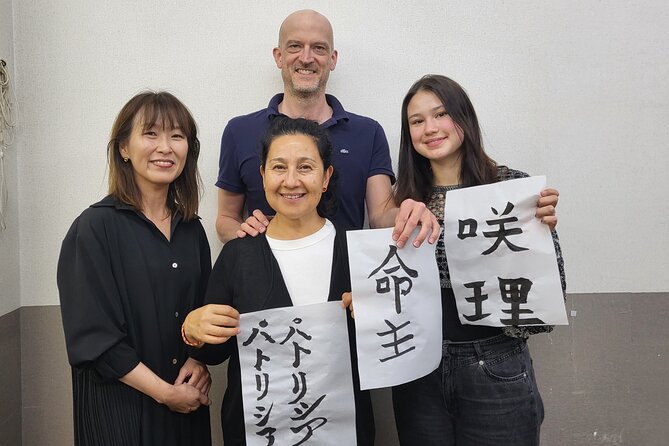
The most personal part comes when you write your own name in Japanese. You may work with kanji or katakana, depending on how your name is represented.
This is more interesting than simply copying a famous character. Your final piece connects the lesson to you, and you get to think about what your name looks like in another writing system. The workshop also explains the meaning of the characters used, so the result is not just decorative lettering.
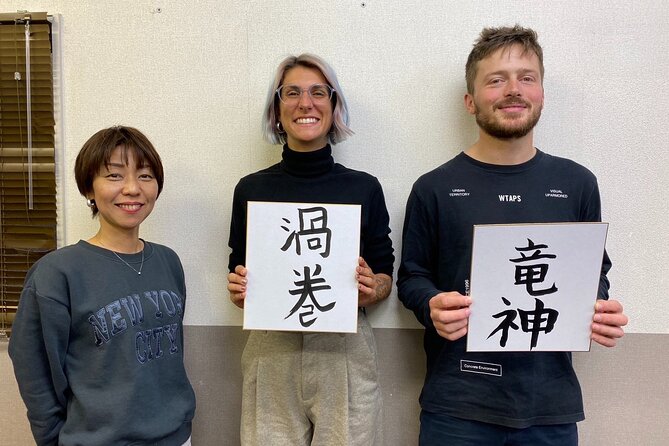
At the end, you write your name onto colored paper or a luggage tag. The exact format may vary, but the goal is the same: you leave with an original piece made during the session.
The keepsake is not factory-perfect, and that is the point. Brush variations, uneven edges, and small differences in pressure show that you made it yourself. I would keep it flat and protected in your luggage, especially if you choose paper rather than a tag.
For families, this gives everyone a clear end result. Each person can take home a different version of their name, and the finished pieces become an easy way to remember the day. For solo visitors, it is a compact souvenir that takes up almost no space.
Teacher Nao and the English support
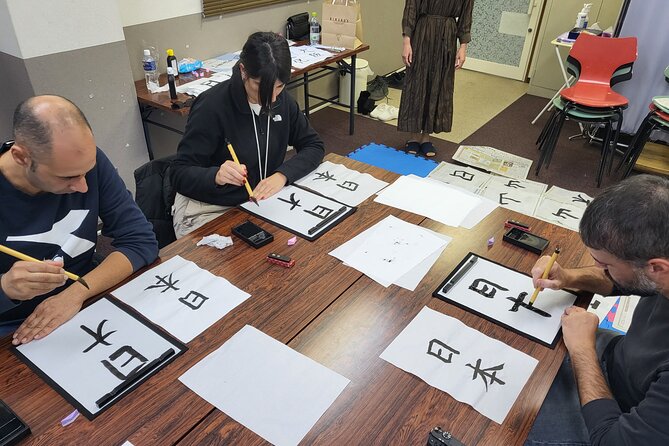
Teacher Nao is the calligraphy instructor. English interpretation has been provided by Stephen or Stephan, allowing English-speaking participants to ask questions and understand the explanations.
That language support is a major practical benefit. Calligraphy instruction relies on precise descriptions of pressure, direction, and stroke order. It is much easier to improve when you understand exactly what the instructor wants you to change.
The English assistance also extends beyond technique. You can ask about the meaning of a character, the cultural ideas behind shodo, and the difference between simply copying a shape and writing it with intention.
The class is not presented as an advanced artist’s course. You are there to learn the fundamentals, practice with help, and create a meaningful final piece. If you already study Japanese calligraphy, you may find the class basic. If you are starting from zero, the pace should be more comfortable.
How the two-hour timing works for your day
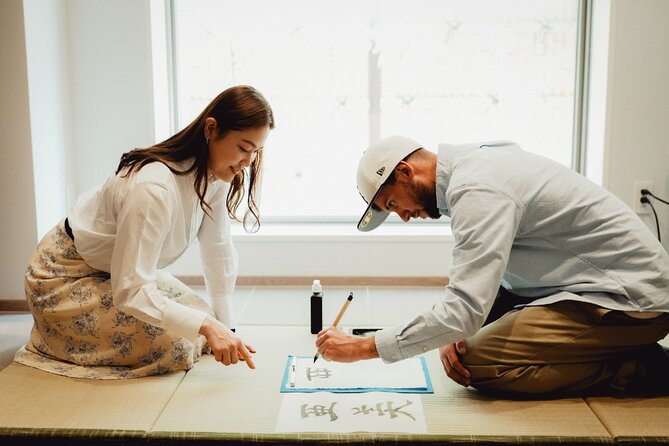
Two hours is long enough to feel substantial without taking over your Osaka schedule. You get an introduction, guided practice, cultural explanation, and time to make your name keepsake.
The session begins and ends at the meeting point, so you do not have to arrange separate transport at the finish. That is especially helpful if you plan to continue sightseeing immediately afterward.
The central location creates several easy combinations:
- Visit Kuromon Market before class for food and browsing.
- Walk toward Nihonbashi afterward for electronics, anime, and shopping.
- Plan Dotonbori for the evening, when its famous signs and canal-side streets are at their most atmospheric.
You should still allow a buffer around the two-hour estimate. The activity itself lasts approximately two hours, but you do not want to rush from a market lunch to the building entrance or schedule a train immediately afterward.
Because the class is indoors and stationary, it also gives you a useful pause from Osaka’s busy streets. A quiet brush exercise can reset your attention before you return to shopping, food, and nightlife.
Is $49.54 a fair price?
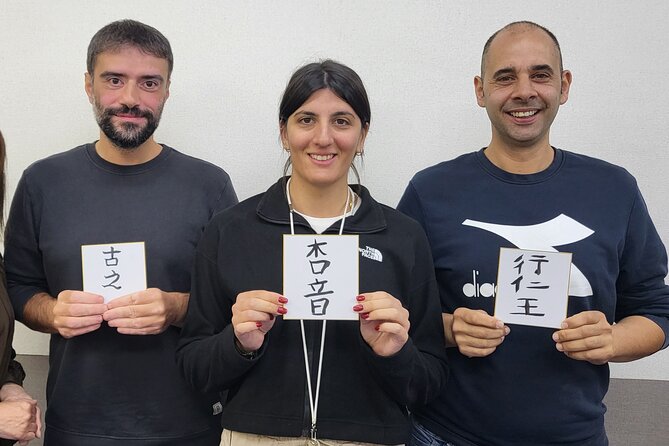
At $49.54 per person, this is not the cheapest short activity in Osaka. The value depends on what you want from a cultural experience.
You are paying for more than access to paper and ink. The price includes instruction from a dedicated calligraphy teacher, English interpretation, cultural explanation, guided practice, and a personalized piece to take home. The group limit of six also gives the session a more personal feel than a large demonstration.
I consider the price reasonable for someone who wants an activity with real participation. You are not just watching a performance. You spend the session working with the tools, asking questions, and making something connected to your own name.
The value is stronger for families and couples who want a shared activity. Six people can attend, making it possible for a whole family group to participate together. It is also a good use of an extra day in Osaka when you want something different from temples, shopping, and food tours.
The price may feel high if you only want a quick souvenir or have no interest in Japanese writing. In that case, a shop-bought name card will cost less and take less time. This experience earns its price through the lesson and the process, not through the material value of the final paper.
Who will enjoy this most?
I would recommend the workshop to:
- First-time visitors who want a direct introduction to Japanese culture.
- Families with school-age children or teenagers who can focus for two hours.
- Couples looking for a quiet shared activity in central Osaka.
- Solo visitors who want a personal souvenir and a chance to meet local instructors.
- Anyone interested in Japanese language, design, handwriting, or traditional arts.
- People with a free morning or afternoon near Namba.
It is less suitable if your schedule is packed minute by minute, if you dislike seated craft activities, or if you want an advanced calligraphy course. The workshop is built around an accessible first experience rather than specialist training.
Most people can participate, and the activity is near public transportation. The available information does not provide detailed wheelchair or mobility specifications, so contact the provider before booking if you need specific access arrangements.
Booking, timing, and cancellation details
Confirmation is provided at the time of booking, and you can use a mobile ticket. The activity may require a minimum number of participants. If that minimum is not reached and the class is canceled, you will be offered another date or experience, or a full refund.
Free cancellation is available up to 24 hours before the start time. Cancel at least 24 hours ahead for a full refund. Changes or cancellations made within 24 hours are not accepted for a refund, and cut-off times follow local Osaka time.
Since the group size is capped at six and the activity is often booked well in advance, I would reserve it once you know your Namba sightseeing day. Then double-check the building address and plan a little extra time for finding the entrance.
Should you book the Namba calligraphy workshop?
Book it if you want to do something with your hands, learn the meaning behind Japanese writing, and leave Osaka with a souvenir you made yourself. The combination of teacher Nao’s patient instruction, English interpretation, a six-person maximum, and a central Namba location gives the class strong practical value.
I especially like it for families and first-time visitors. You do not need prior knowledge, and the final name card gives the session a clear personal finish. Just remember that this is a two-hour lesson, not a quick photo stop, and allow time to find the studio inside the building.
If you are happy to slow down, practice, and accept that your first kanji may look less graceful than you hoped, this is a worthwhile addition to an Osaka itinerary.
FAQ
Where does the calligraphy workshop meet?
It meets at Isuku English Academy Japan, Takeda Building 3F, 1-chome 6-1 Nanbanaka, Naniwa Ward, Osaka 556-0011. The activity ends at the same location.
How long does the workshop last?
The workshop lasts approximately two hours.
Do I need previous calligraphy experience?
No. Beginners are welcome, and the instructor provides step-by-step guidance.
What will I write during the class?
You will practice Japanese calligraphy and learn to write your own name in kanji or katakana.
What do I take home?
You create a handwritten souvenir by writing your name on colored paper or a name tag, such as a luggage tag.
How many people can join the activity?
The group has a maximum of six participants.
More Workshops in Osaka
- Sushi Making Osaka Roll and Authentic Japanese Sushi Class
★ 5.0 · 1,220 reviews - Matcha Making Class in Osaka with Authentic Japanese Sweets Set
★ 5.0 · 509 reviews - Osaka: Ramen and Gyoza Cooking Class in Dotonbori
★ 5.0 · 378 reviews - Osaka Cooking Class: Okonomiyaki &Japanese cuisines experience
★ 5.0 · 261 reviews
More Calligraphy Classes in Osaka
- Osaka: Private Japanese Calligraphy Experience
★ 5.0 · 66 reviews - Learning Zen of Japanese Calligraphy in kimono near Osaka Castle
★ 4.5 · 53 reviews - Osaka: Private Tea Ceremony and Calligraphy Experience
★ 5.0 · 50 reviews - Samurai dress-up and shows, plus Tea Ceremony & Calligraphy
★ 5.0 · 27 reviews
Just added in Osaka
- Urban Canvas: Osaka Street Art Bike Tour★ 5.0 · 10 reviews
- Anime Cosplay Photshoot-50 Digital Photos Provided★ 5.0 · 8 reviews
- TeamLab Botanical Garden Osaka Ticket★ 3.5 · 6 reviews
- Umeda Sky Building & Kuchu Teien Observatory Ticket in Osaka★ 4.5 · 3 reviews
- Immerse in Judo Martial Arts Class from Japan★ 5.0 · 4 reviews
- Cherry Blossom Buddha and Mt.Yoshino with Strawberry Picking Tour★ 4.5 · 5 reviews
- Traditional Home cooking Experience in Osaka, Japan★ 5.0 · 14 reviews
- Traditional Calligraphy Experience near Dotonbori★ 5.0 · 3 reviews
Dotonbori Tours, compared.
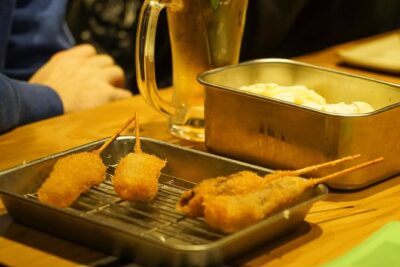
Osaka Local Foodie Walking Tour in Dotonbori and Shinsekai
Read our review →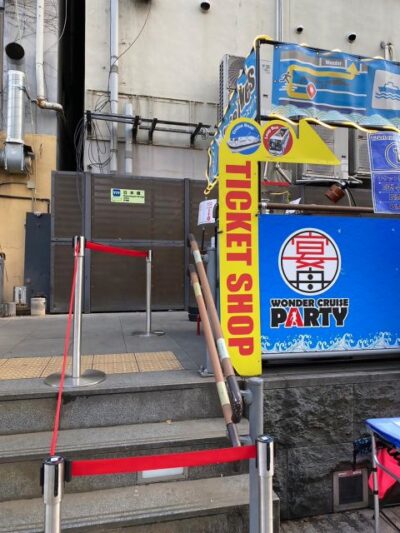
Dotonbori District River Cruise with Drink Discount
Read our review →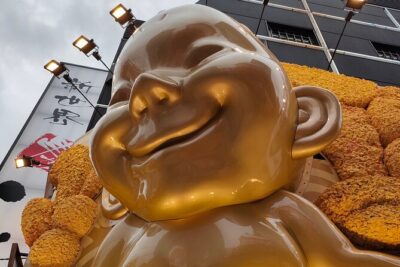
Ultimate Osaka Walking Tour: Castle, Dotonbori & Hidden Gems
Read our review →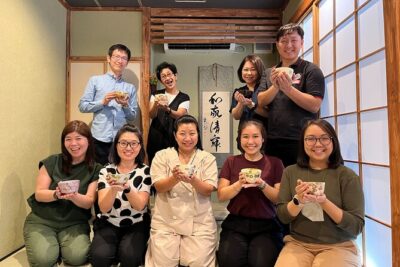
Roll and Authentic Sushi Making Class in Dotonbori
Read our review →
Osaka Local Bar Crawl in Dotombori & Uranamba Area
Read our review →
Browse the lists this tour appears in