
Reviewed · OSAKA SAMURAI EXPERIENCES
Osaka 2-Hour Genuine Kendo / Samurai Experience In Japan
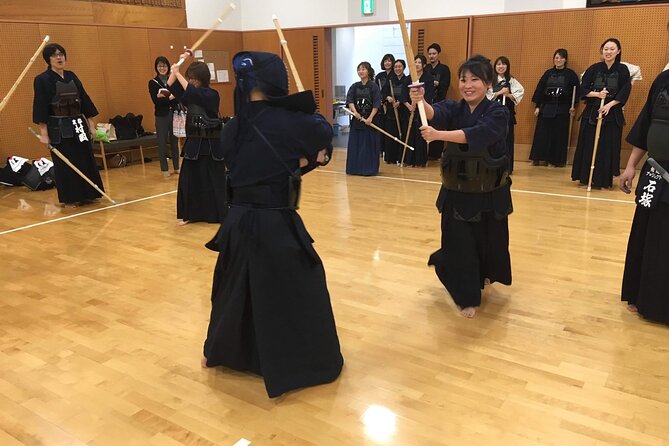
Kendo is more than swinging a bamboo sword. In this two-hour Osaka class, you learn how manners, focus, and movement fit together, then work toward basic strikes and light sparring. The English-speaking instruction makes the first steps easy to follow, even if you know nothing about Japanese martial arts.
I like the small maximum group of seven, which gives the instructor room to correct your stance and pace the class to the people in front of him. I also like that the session connects kendo with Japanese culture, rather than treating it as a quick sword-fighting stunt. The main drawback is physical: expect to sweat, especially in August, and come ready for a moderate workout.
Key points to know before booking
- Two hours at Shigino Hall: The class starts at 10:00 am and ends back at the meeting point.
- English-speaking instruction: Hiroki and Yama are among the instructors praised for patient, clear teaching.
- Small-group format: The maximum is seven people, and some sessions may feel nearly private.
- Culture before competition: You learn etiquette, history, spirit, footwork, and core strikes.
- Sparring comes later: The class can build toward short practice bouts in protective gear.
- Useful inclusions: Kendo equipment, bottled water, and a free kendo towel are provided.
Your first steps into kendo at Shigino Hall
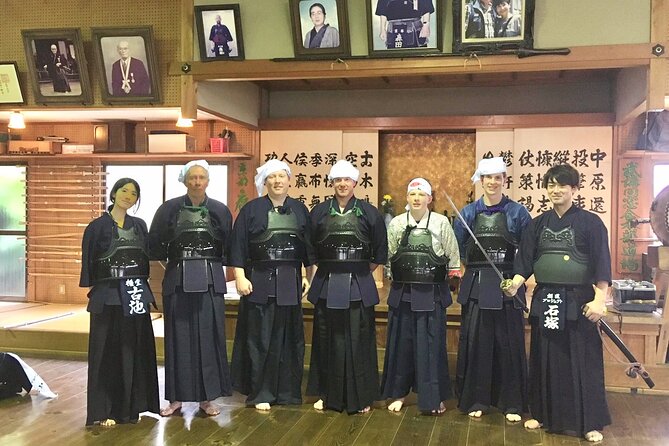
The experience begins at Shigino Hall in Osaka’s Joto Ward, at 1-chōme18, Shiginonishi, Osaka 536-0014. The start time is 10:00 am, and the class finishes at the same place, so you do not need to arrange a second pickup point.
The setting matters. This is not a staged samurai show where you watch someone perform a few theatrical sword moves. You are there to learn a martial art with rules, form, and discipline. That gives the session more weight than a simple photo opportunity.
Your instructor begins by explaining what kendo is and why it is practiced. The central ideas include unifying your spirit, showing proper manners, and treating kendo as a lifelong practice. Those principles may sound lofty at first, but they help explain why posture, bowing, controlled movement, and attention are treated as part of the lesson rather than side details.
The teaching is aimed at first-timers. You do not need previous martial arts experience, and the English-speaking instructor guides you through the process step by step. Hiroki and Yama are names associated with especially patient instruction, while the class may be led by another member of the teaching team.
More samurai and ninja experiences in Osaka:
- Samurai Training Experience KENDO in Osaka
★ 5.0 · 515 reviews - OSAKA NIGHT FUSION Japanese Taiko Kabuki Samurai Dance Show
★ 4.8 · 155 reviews - Osaka: Samurai Training Experience KENDO in Osaka
★ 5.0 · 111 reviews
Etiquette and the culture behind the sword
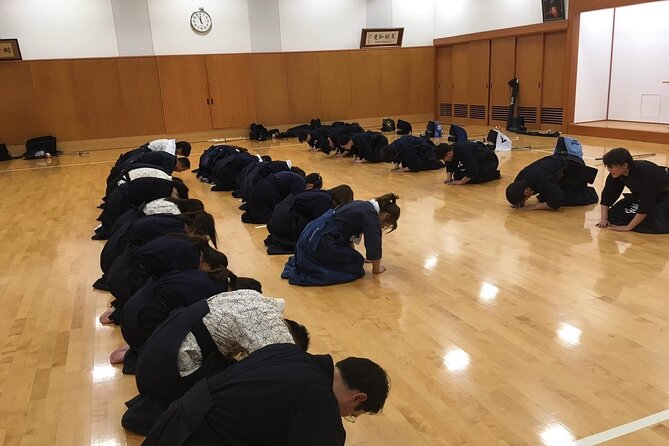
Before you start hitting targets or partners, you learn the basic etiquette of kendo. That is one of the best features of the experience because it places the physical movements in a Japanese cultural setting.
Kendo developed from traditional Japanese sword training, but the modern practice is not simply about pretending to be a samurai. Respect, self-control, and concentration are built into the activity. You learn that how you enter the practice space, address the instructor, and handle the equipment matters.
I like this part because it keeps the class from becoming a shallow martial-arts sampler. You get a clearer sense of why practitioners repeat movements and why a clean, controlled strike matters more than simply hitting hard.
The cultural explanation also gives you a useful lens for the rest of your time in Japan. Many Japanese arts place value on repetition, form, and respect for the group. Kendo makes those ideas physical. You feel them through your feet, hands, breathing, and posture instead of only hearing a short lecture about them.
Still, do not expect a long history seminar. Two hours must cover etiquette, technique, practice, and sparring, so the cultural section is an introduction. It works best for you if you want context alongside action, not a detailed academic course on Japanese sword traditions.
Learning footwork, posture, and basic strikes
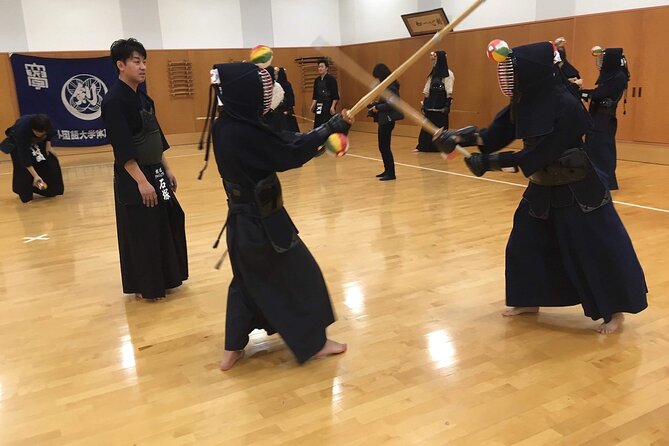
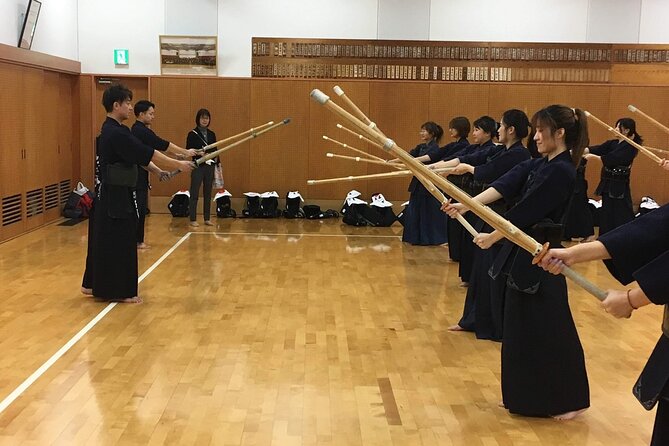
The physical part starts with the building blocks. You work on basic footwork and the main types of strikes, following the instructor’s demonstrations and corrections.
For a beginner, footwork can be harder than it looks. Kendo asks you to move with purpose while keeping your body aligned and your actions controlled. The class gives you time to repeat the motions, which is where the small group earns its value. With no more than seven people, the instructor has a better chance of spotting an awkward stance or a mistimed movement.
The pace is designed to be approachable. You are not thrown straight into a competitive bout. Instead, the class moves from explanation to practice, allowing you to understand what each movement is meant to do.
Expect to use your whole body. Kendo is not just an arm exercise. You will work your feet, legs, shoulders, and core while trying to maintain focus. That is why the experience is often described as a workout as well as a cultural activity.
You receive the necessary kendo equipment, so you do not need to bring your own sword or protective gear. Bottled water is included, along with a kendo towel. The towel is a small but useful souvenir, especially after a warm session.
The physical demand is moderate, but the class can become strenuous. People who attended in August found the heat noticeable, and the repeated movements can leave you sweating in any season. Wear something suitable for exercise and arrive ready to move. The supplied information does not specify a dress code, so check the booking details if you need guidance before the day.
From careful practice to light sparring
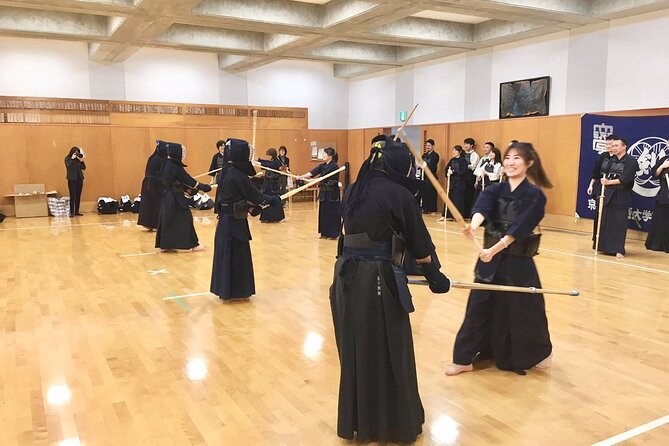
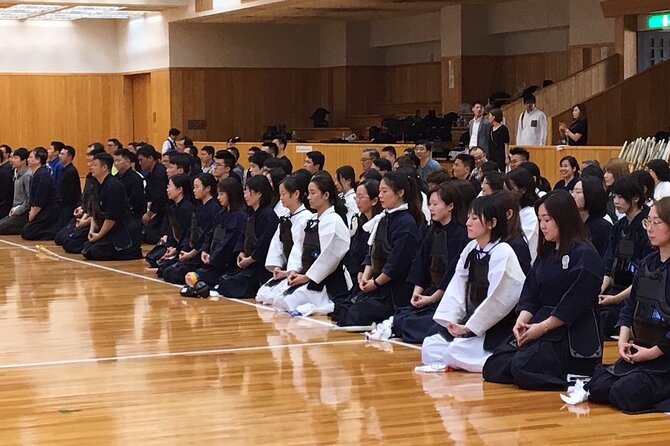
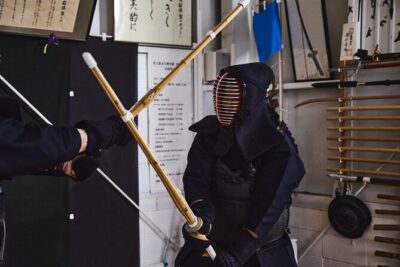
The class builds toward the most exciting section: short practice bouts in full protective gear. This is where the earlier work starts to make sense. Footwork, distance, timing, and etiquette come together in a controlled exchange.
Do not mistake this for an open competition. The point is to use the basics and experience the feel of kendo under supervision. The instructor can keep the activity at a level suited to beginners, and the small group makes it easier to receive attention as you try something unfamiliar.
Sparring is often the moment that turns a lesson into a memorable experience. You are no longer copying a movement in isolation. You must watch your partner, manage your nerves, and decide when to act. Even a short bout can show you why kendo requires both physical skill and mental discipline.
The class may also let you spar with the instructor and another member of your group. If you come with a friend, that creates a natural partner for practice. If you come alone, the small-group format can still make it easy to take part. One solo participant shared a class with a family, and the mix added to the enjoyment rather than making the experience awkward.
The word light matters here. You should book this for a guided introduction, not for a hard-contact fight. The goal is to learn and participate safely within the session’s structure.
A few more Osaka half-days worth pricing up
- Osaka: 2-Hour Nightlife District Walking & Local Food Culture
★ 5.0 · 199 reviews - Osaka: 2-Hour Local Street Food Tour – Dotonbori & Namba
★ 4.6 · 95 reviews - 1.5〜2 Hours Traditional Kintsugi Work Shop in Namba Osaka
★ 5.0 · 75 reviews
Why the small group changes the experience
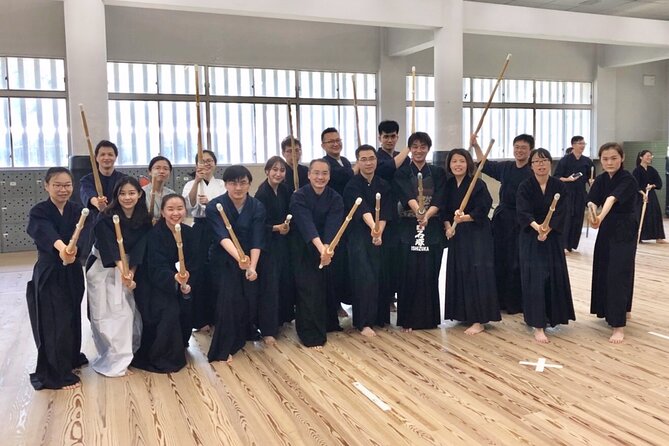
The maximum group size is seven, but the actual number may be lower. Some sessions have had only two people, creating something close to a private lesson. Another group had four people, which offered enough company without making the class feel crowded.
That flexibility is important. In a larger class, a beginner can spend much of the time copying from the back of the room. Here, you have a better chance of receiving individual corrections and asking questions in English.
The instructor’s attitude also shapes the day. The teaching style described for Hiroki and Yama is patient, encouraging, and easy for beginners to follow. That matters when you are trying to remember foot placement, hold equipment correctly, and perform a strike while people watch.
You should still be ready to listen and repeat. Kendo is not a passive experience, and a small group does not remove the need for concentration. If you want a casual activity that requires almost no effort, choose something else. If you enjoy learning by doing, this format is a good fit.
Price, timing, and practical value
The price is $118.89 per person for about two hours. That is not a bargain basement activity, but the value becomes clearer when you consider what is included: all kendo equipment, bottled water, the instructor’s teaching, and a souvenir towel.
You are also paying for a small class rather than a large demonstration. If the group is full, seven is still a manageable number. If only a few people book, you may receive far more individual attention than the price suggests.
The experience is strongest for someone who wants more than a quick cultural photo. You get instruction in etiquette and history, physical training, basic technique, and the chance to try controlled sparring. It is a compact way to connect Japanese culture with something active.
The timing is another plus. A 10:00 am start leaves much of the day open for Osaka sightseeing, food, or a slower afternoon. The activity ends at the meeting point, so you can continue on your own without waiting for a tour vehicle.
There is no hotel pickup or drop-off, and food is not included. The hall is near public transportation, and one participant found it easy to reach by train. You should still allow time to find Shigino Hall, particularly if you are unfamiliar with Osaka’s train system.
Free cancellation is available if you cancel at least 24 hours before the 10:00 am start time. Changes or cancellations made inside that window are not accepted for a refund, so keep the local cut-off time in mind when your plans are uncertain.
Who will enjoy this Osaka kendo class
This is a good choice for first-timers, couples, friends, solo visitors, and families with older children. A 13-year-old took part with a parent, and the step-by-step approach suited them. The supplied information calls for moderate physical fitness, so you should be comfortable standing, moving, and exercising for an extended period.
You do not need to arrive as a martial-arts fan. Curiosity is enough. The class works particularly well if you enjoy Japanese history, want to try a sport connected to local culture, or prefer active experiences to bus tours and observation decks.
It may be less suitable if you have limited mobility, want a purely relaxing activity, or dislike structured instruction. There is no promise of a full samurai costume, a long sightseeing tour, or a meal. The appeal is the practice itself.
I would also think about the season. The experience can be done in warm weather, but August may feel hot once you begin moving in equipment. If you have a choice of dates, a cooler season may make the workout more comfortable.
Is the $118.89 experience worth booking?
I would book this if you want a genuine introduction to kendo rather than a staged samurai performance. The strongest reasons are the small group, English instruction, cultural explanation, and the chance to work up to light sparring in protective gear.
The price makes the most sense when you value personal instruction. A full group of seven may feel like a standard class, while a two-person session can feel like a private lesson. Either way, the equipment and water are included, and the two-hour length gives you enough time to move beyond a quick demonstration.
Book it if you are ready to sweat, listen closely, and practice unfamiliar movements. Skip it if you want a short photo stop or have less than moderate physical fitness. For an active Osaka morning that links Japanese manners, martial arts, and hands-on practice, this is a strong choice.
FAQ
Where does the Osaka kendo experience start?
It starts at Shigino Hall, 1-chōme18, Shiginonishi, Joto Ward, Osaka 536-0014, Japan.
What time does the class begin?
The experience starts at 10:00 am.
How long does the kendo class last?
The class lasts approximately two hours.
Where does the experience end?
It ends back at the meeting point at Shigino Hall.
Is the instructor English-speaking?
Yes. The experience includes an English-speaking instructor who guides you through the history, etiquette, cultural ideas, and basic techniques of kendo.
How many people can join the class?
The maximum group size is seven people.
Is kendo equipment provided?
Yes. All necessary kendo equipment is included.
Are water and a souvenir included?
Bottled water and a free kendo towel are included.
Can I cancel for a full refund?
Yes. You can cancel for a full refund if you cancel at least 24 hours before the experience start time. Cancellations or changes made less than 24 hours before the start are not accepted for a refund.
Just added in Osaka
- Urban Canvas: Osaka Street Art Bike Tour★ 5.0 · 10 reviews
- Anime Cosplay Photshoot-50 Digital Photos Provided★ 5.0 · 8 reviews
- TeamLab Botanical Garden Osaka Ticket★ 3.5 · 6 reviews
- Cherry Blossom Buddha and Mt.Yoshino with Strawberry Picking Tour★ 4.5 · 5 reviews
- Umeda Sky Building & Kuchu Teien Observatory Ticket in Osaka★ 4.5 · 3 reviews
- Immerse in Judo Martial Arts Class from Japan★ 5.0 · 4 reviews
- Traditional Home cooking Experience in Osaka, Japan★ 5.0 · 14 reviews
- Traditional Calligraphy Experience near Dotonbori★ 5.0 · 3 reviews
Osaka Samurai Experiences, compared.
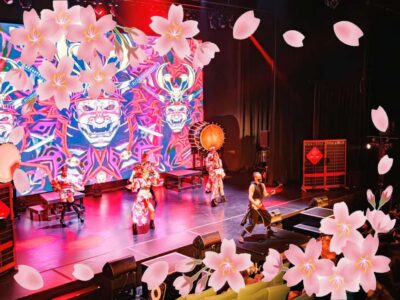
OSAKA NIGHT FUSION Japanese Taiko Kabuki Samurai Dance Show
Read our review →
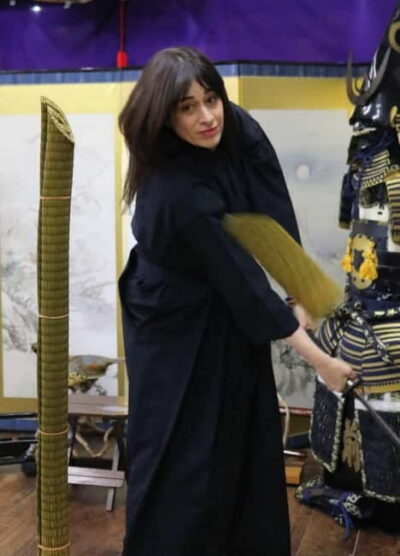
Learn Bushido – Trial Slashing with Samurai Sword
Read our review →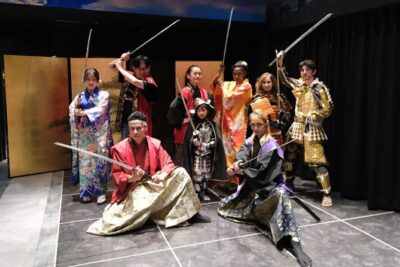
Samurai Show, Tea Ceremony, Japanese Traditional Activities
Read our review →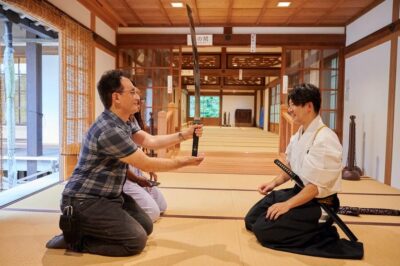
Private Samurai Experience – Train with Sword Master
Read our review →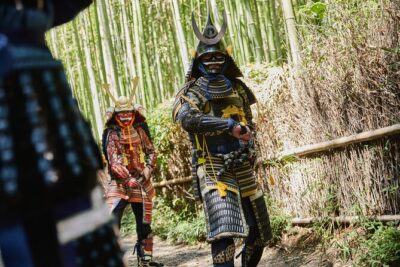
Honor – Experience Samurai & traditional Culture to the fullest
Read our review →Browse the lists this tour appears in