
Reviewed · OSAKA COOKING CLASSES
Osaka Sushi Cooking Class “Learn here and make it at home”
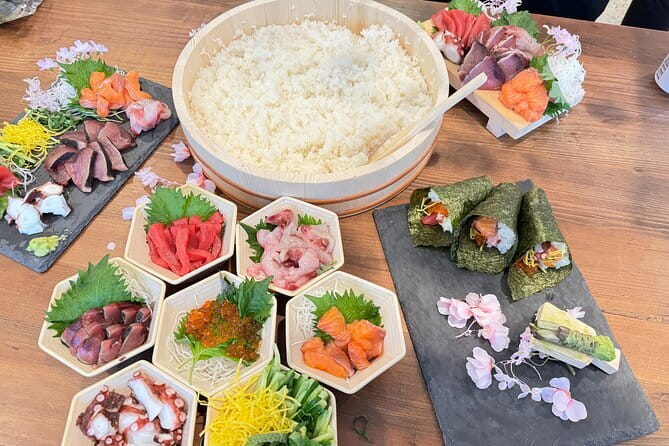
The best part of this Osaka class is that you do not simply watch a chef work. You make maki sushi and temari sushi with your own hands, then sit down to eat what you prepared. Temari sushi is especially friendly for beginners: rice is shaped with plastic wrap into small balls, then topped with fish or vegetables.
I like the practical format, with 30 minutes to get oriented, 90 minutes of cooking, and a full hour to taste the results. I also like the small maximum of eight people and the instructors’ English, Japanese, and Spanish skills. The main thing to consider is that this is a sushi-making class, not a broad tour of Osaka food culture, and the three-hour session requires you to stay focused in one kitchen.
Key points to know before booking
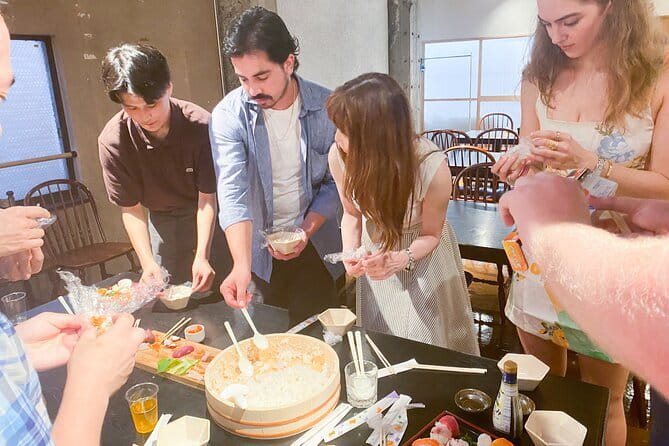
- Two homemade sushi styles: Prepare rolled maki sushi and cute, bite-sized temari sushi.
- A real hands-on class: Ingredients, tools, aprons, and disposable gloves are supplied, so you can start without shopping or preparation.
- One hour for eating and drinks: Taste your finished sushi with sake, beer, or soft drinks after the cooking ends.
- Small group size: The class accepts a maximum of eight people, which should allow useful guidance at the worktable.
- Easy central location: The kitchen is about a five-minute walk from both Shinsaibashi and Honmachi stations.
- Good for families: The temari technique is simple enough to be engaging for children, though alcoholic drinks are only available to people aged 20 and over.
Making Osaka sushi you can repeat at home
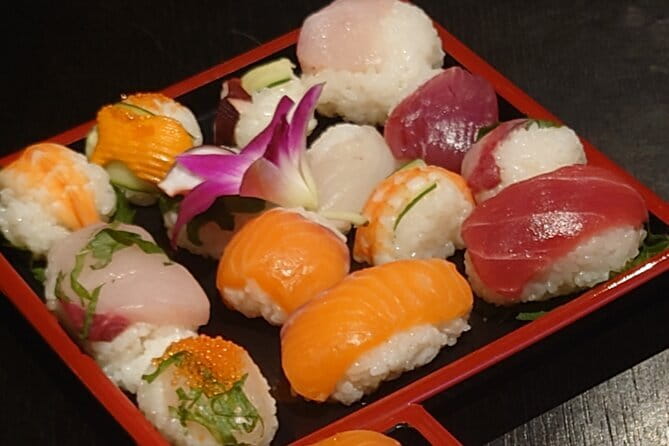
This class is aimed at a useful skill, not just a pretty photograph. You learn two sushi styles that can fit into a home kitchen without demanding special equipment. That makes the experience more valuable than a demonstration where the chef does all the difficult work.
Maki sushi is the familiar rolled style. Rice, fish, and vegetables are placed inside seaweed and rolled into a cylinder before being cut into pieces. You will work through the basic method step by step, with the instructor guiding you as you handle the ingredients and tools.
Temari sushi is different. You shape rice into small balls, often using plastic wrap, then add fish or vegetables on top. It looks neat and festive, but the method is quite approachable. If rolling a tight maki feels awkward at first, temari gives you another way to make attractive sushi without needing perfect technique.
I especially like this pairing because it gives you two levels of challenge. Maki asks you to coordinate rice, fillings, seaweed, and rolling. Temari is more forgiving and lets you focus on portioning and presentation. By the end, you should have a better feel for which style you would want to make at home.
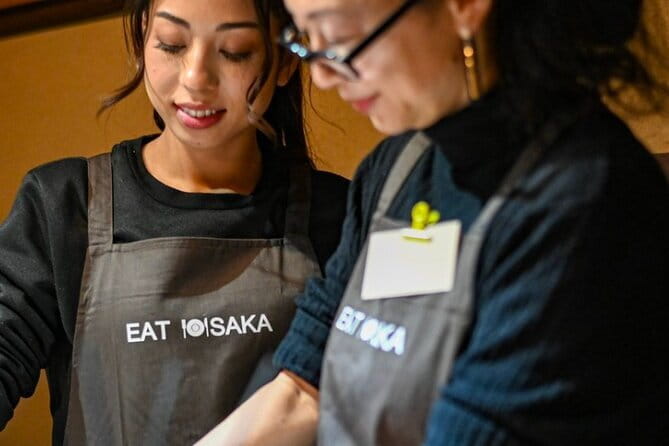
The class supplies all ingredients and kitchen tools. You do not need to bring cooking equipment, buy seafood beforehand, or prepare anything in your accommodation. Aprons and disposable plastic gloves are provided as well. Bring yourself, arrive ready to work, and let the kitchen handle the rest.
More sushi making classes in Osaka:
- Sushi Making Osaka Roll and Authentic Japanese Sushi Class
★ 5.0 · 1,220 reviews - Osaka Sushi Making Experience
★ 5.0 · 400 reviews - Osaka: Roll and Authentic Sushi Making Class in Dotonbori
★ 4.9 · 239 reviews
The 30-minute start near Shinsaibashi
The session begins with about 30 minutes of orientation and preparation. This opening matters because sushi looks simple until you need to judge the amount of rice, place fillings neatly, and form a shape that holds together.
Use this time to pay attention to the instructor’s demonstrations and get comfortable with the ingredients. The class is taught in English, with Spanish and Japanese instruction available upon request. That language support is helpful in a cooking lesson, where a small detail in hand position or timing can make a big difference.
The location is in a quiet neighborhood in central Osaka, about five minutes on foot from Shinsaibashi and Honmachi stations on the Osaka Metro. This is convenient if you are already spending time around the shopping and dining districts, and it avoids the need for private transportation. The meeting point is at 南船場コレット904, 4-chōme-3-1 Bakurōmachi, Chuo Ward.
Because the class is in a central area, you can pair it with other Osaka plans. Still, do not treat the short walk from the station as a reason to arrive at the last second. You will get more from the class if you have enough time to find the building and settle in before the preparation begins.
The maximum group size is eight. That is small enough to keep the session personal without making it a private lesson. You can expect to work alongside other people rather than receive one-on-one instruction, but the size should make it easier to ask for help when a roll goes crooked or a rice ball refuses to hold its shape.
Ninety minutes of rolling, shaping, and tasting
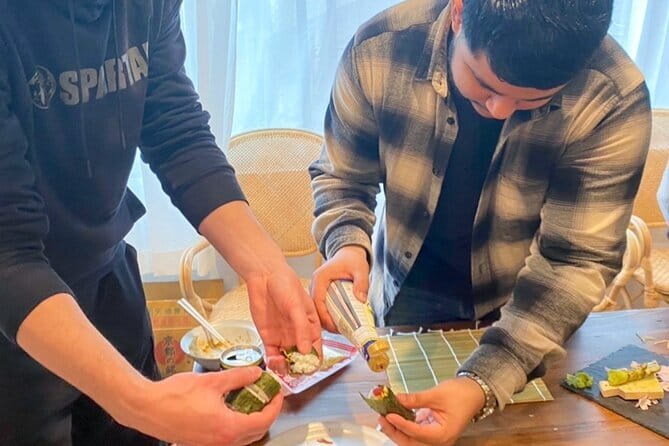
The main cooking section lasts about 1.5 hours. This is where the class earns its price. You are not paying only for a meal. You are paying for instruction, ingredients, equipment, and time to practice.
The maki portion teaches you the basic structure of a sushi roll. You combine rice with fillings inside seaweed, roll the package, and prepare it for serving. The finished pieces may not look identical to a professional sushi chef’s work, and that is part of the point. You get to see how small adjustments affect the result.
Temari sushi offers a more relaxed task. You form rice into small balls, often with plastic wrap, then top each one with fish or vegetables. The technique is also a good family activity because the shape is clear and the results appear quickly. Children can take part in shaping and decorating, with adults handling any steps that require closer supervision.
The cooking is interactive, but you should not expect an advanced sushi apprenticeship. The description focuses on popular homemade dishes, not knife skills, fish butchery, market shopping, or the formal traditions of an elite sushi counter. If you want a technical chef-training course, this will likely feel light. If you want sushi you can realistically attempt in your own kitchen, the level makes sense.
One useful tip is to treat the class as practice rather than a performance. Concentrate on making a manageable amount of rice, keeping the fillings controlled, and forming pieces that hold together. The skills are easier to remember when you understand the sequence instead of rushing to make the most attractive plate.
An hour to eat what you made
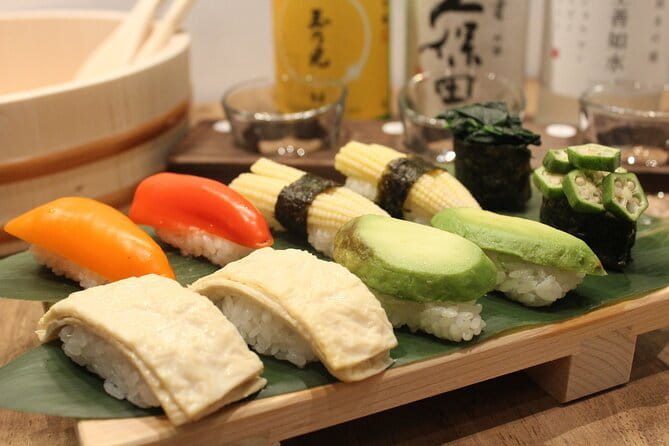
After the cooking, you have about one hour to taste your sushi with drinks. That extra time gives the class a pleasant social finish. You can sit down, look at the results, and find out how the sushi tastes after all the handling and shaping.
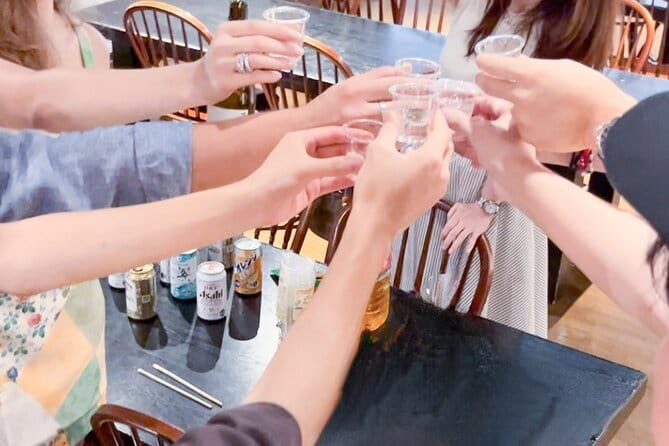
Alcoholic options include Japanese sake and beer. Soda and other soft drinks are also available. The alcohol rule is clear: only people aged 20 and over may receive alcoholic drinks. Anyone younger than 20 is served non-alcoholic drinks instead.
I like this tasting period because it keeps the lesson from feeling like a rushed workshop. You have time to enjoy the food rather than pack up immediately after the last roll is finished. It also lets you compare the two styles. Maki has the familiar seaweed-and-filling structure, while temari sushi is small, rounded, and visually playful.
Do keep your expectations sensible. The menu centers on the sushi you make during the class. This is not advertised as a large restaurant meal or a full Osaka food crawl. You are there to eat your own work, enjoy a drink, and leave with a new method to try at home.
More cooking classes in Osaka:
- Matcha Making Class in Osaka with Authentic Japanese Sweets Set
★ 5.0 · 509 reviews - Osaka: Ramen and Gyoza Cooking Class in Dotonbori
★ 5.0 · 378 reviews - Osaka: Traditional Mochi Pounding Experience with Tasting
★ 4.9 · 306 reviews - Osaka Cooking Class: Okonomiyaki &Japanese cuisines experience
★ 5.0 · 261 reviews
Why the small class and multilingual teaching matter
A cooking class can lose its value if you are left watching from the back of a crowded room. With a maximum of eight people, you should have a reasonable chance to see the demonstrations and receive help during the practical parts.
The instructors speak English, and Spanish or Japanese instruction can be requested. That is useful for families and mixed-language groups. Cooking directions often involve short, exact instructions, so having an instructor who can explain the process clearly is more important here than hearing a long lecture about sushi.
The teaching style is built around making Japanese homemade sushi with your own hands. That phrase matters. You will not simply receive a finished plate and a quick explanation. The goal is to give you a method you can remember after leaving Osaka.
The class also received strong praise for its friendly atmosphere, food, and family appeal. The most useful detail for you is that temari sushi can be made with a simple plastic-wrap technique. That lowers the barrier for first-time cooks and gives children a task they can understand quickly.
A small souvenir has also been provided to children in the past, though you should not treat that as a guaranteed inclusion unless the provider confirms it for your date. The listed inclusions are the instructor, drinks, tools, ingredients, aprons, and gloves.
The $70 price: what you are really paying for
At $70 per person, this is not the cheapest way to eat sushi in Osaka. If your only aim is to have a plate of sushi, a restaurant will usually be the simpler choice.
The value improves when you count the full package. The price includes roughly three hours of activity, instruction in a small group, all ingredients, kitchen tools, an apron, disposable gloves, and drinks during the tasting period. You also leave with techniques that can be repeated at home instead of only a memory of a meal.
For a family, the class can replace part of an afternoon of sightseeing while giving everyone something to do together. For friends, it offers a shared activity with a clear result. For solo visitors, the eight-person limit makes it easier to work alongside others than in a large tour group.
The value is weaker if you dislike hands-on activities, do not eat sushi, or are looking for a detailed explanation of Osaka’s culinary history. The experience is practical and social. It is not a formal lecture, a market visit, or a high-end tasting menu.
You should also consider your food needs before booking. Vegetarian and food allergy options may be possible, but you need to contact the provider after booking to discuss them. Do not assume that the standard ingredients will suit your diet without asking.
Who will enjoy this Osaka activity most
I would recommend this class to several types of visitors:
- Families with children: Temari sushi is simple, colorful, and easy to shape with plastic wrap. Younger participants can take part in the hands-on work, while adults can help with any more precise steps.
- First-time sushi makers: You receive all ingredients and equipment, with no preparation required.
- Friends looking for a relaxed activity: The cooking period gives you something to do together, and the final hour leaves time to eat and share drinks.
- Visitors staying near central Osaka: The five-minute walk from Shinsaibashi or Honmachi makes this easy to fit into an urban sightseeing day.
- People who want a skill to take home: The class focuses on homemade dishes rather than restaurant-style performance.
I would think twice if you want a private experience, a large meal, or advanced culinary training. The class is small but not necessarily private, and the focus is on accessible homemade sushi.
Timing, transport, and practical details
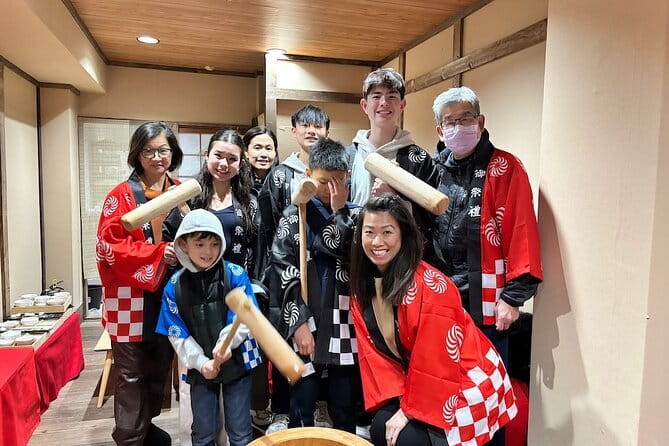
Plan on about three hours from start to finish. The structure is straightforward: 30 minutes of orientation and preparation, 90 minutes of cooking, and one hour of sushi tasting with drinks.
The activity begins and ends at the same meeting point. Private transportation is not included, but it should not be necessary for most people staying in central Osaka because the kitchen is close to two Osaka Metro stations.
A mobile ticket is provided, which is convenient if you keep bookings on your phone. Confirmation is normally received at booking, but reservations made within two days of the activity may take up to 48 hours to confirm and remain subject to availability.
Free cancellation is available if you cancel at least 24 hours before the start time. Changes or cancellations inside that window are not accepted for a refund. The stated policy also says the activity requires good weather, and a weather cancellation brings the choice of another date or a full refund.
Should you book this sushi class?
Book it if you want to do more than eat in Osaka. The strongest reasons are the hands-on format, the small group, the easy central location, and the practical pairing of maki rolls with beginner-friendly temari sushi.
I would especially choose it for a family or small group of friends. The temari method is approachable, the drinks add a comfortable finish, and you can try the recipes again after returning home. At $70, the class makes the most sense when you value the activity and instruction as much as the food.
Skip it if you want a serious sushi education, a private chef lesson, or a broad tour of Japanese cuisine. For everyone else, this is a useful and enjoyable way to spend three hours in Osaka, with a meal you help create and skills you can carry into your own kitchen.
FAQ
How long does the Osaka sushi cooking class last?
The activity lasts approximately three hours. It includes 30 minutes of orientation and preparation, 1.5 hours of cooking, and one hour of sushi tasting with drinks.
Which sushi dishes will I make?
You will make maki sushi, the rolled sushi made with rice, fish, and vegetables inside seaweed, and temari sushi, small rice balls topped with fish or vegetables.
Are ingredients and cooking equipment provided?
Yes. The class provides all ingredients, kitchen tools, aprons, and disposable plastic gloves. You do not need to bring preparation or cooking equipment.
Is the class taught in English?
Yes. English-speaking instructors are included. Spanish-speaking and Japanese-speaking instructors are available upon request.
Can children receive alcoholic drinks?
No. Alcoholic drinks, including Japanese sake and beer, are served only to people aged 20 and over. Travelers under 20 receive non-alcoholic drinks.
Where does the class meet?
The meeting point is 南船場コレット904, 4-chōme-3-1 Bakurōmachi, Chuo Ward, Osaka, 541-0059, Japan. The kitchen is about a five-minute walk from Shinsaibashi and Honmachi stations, and the activity ends back at the meeting point.
More Workshops in Osaka
- Ramen and Gyoza Cooking Class in Osaka
★ 5.0 · 202 reviews - Osaka: Sushi Class in Dotonbori
★ 4.9 · 160 reviews - Three Types of Ramen Cooking Class in Osaka
★ 5.0 · 119 reviews - Osaka: Cooking Class Ramen & Gyoza Course in Nanba
★ 4.9 · 86 reviews
Just added in Osaka
- Urban Canvas: Osaka Street Art Bike Tour★ 5.0 · 10 reviews
- Anime Cosplay Photshoot-50 Digital Photos Provided★ 5.0 · 8 reviews
- TeamLab Botanical Garden Osaka Ticket★ 3.5 · 6 reviews
- Umeda Sky Building & Kuchu Teien Observatory Ticket in Osaka★ 4.5 · 3 reviews
- Immerse in Judo Martial Arts Class from Japan★ 5.0 · 4 reviews
- Cherry Blossom Buddha and Mt.Yoshino with Strawberry Picking Tour★ 4.5 · 5 reviews
- Traditional Home cooking Experience in Osaka, Japan★ 5.0 · 14 reviews
- Traditional Calligraphy Experience near Dotonbori★ 5.0 · 3 reviews
Osaka Cooking Classes, compared.

Matcha Making Class in Osaka with Authentic Japanese Sweets Set
Read our review →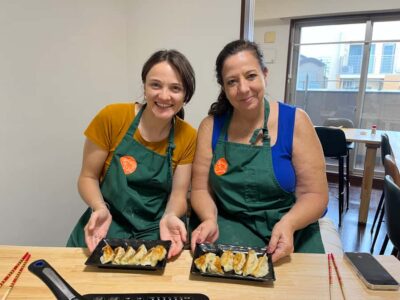
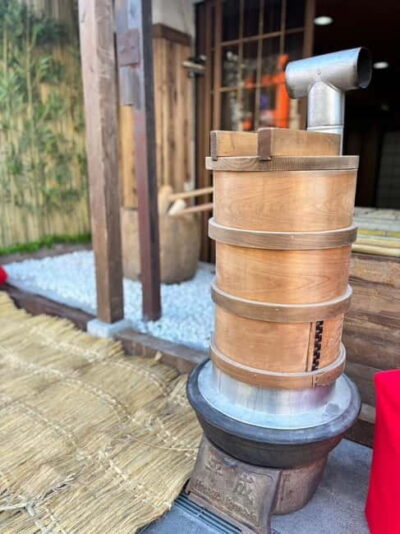
Traditional Mochi Pounding Experience with Tasting
Read our review →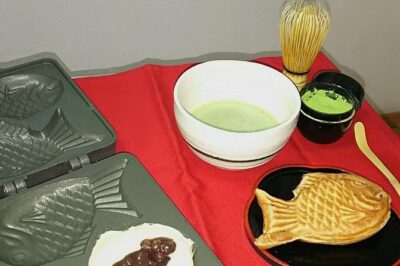
Osaka Cooking Class: Okonomiyaki &Japanese cuisines experience
Read our review →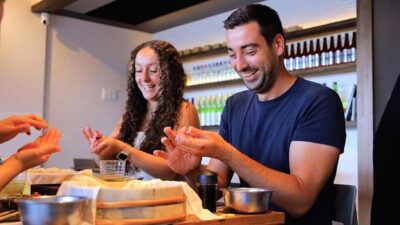
Roll and Authentic Sushi Making Class in Dotonbori
Read our review →

Osaka Sake Tasting & Takoyaki Cooking Experience
Read our review →Browse the lists this tour appears in