
Reviewed · OSAKA COOKING CLASSES
Three Types of Ramen Cooking Class in Osaka
Making ramen from scratch is the star here. You mix and shape your own noodles, prepare three different soups, cook the toppings, and sit down to eat the results. The class covers salt ramen with pork and bean sprouts, soy sauce ramen with cabbage and corn, and miso ramen with spicy chicken and egg.
I like the hands-on noodle making and the chance to compare three distinct ramen styles in one sitting. I also like the useful take-home recipe, which gives you a fair shot at repeating the meal after Japan. The main consideration is the amount of food: the total noodle portion is listed as 100 grams, so this is more of a tasting and learning session than an enormous ramen feast.
Key points at a glance
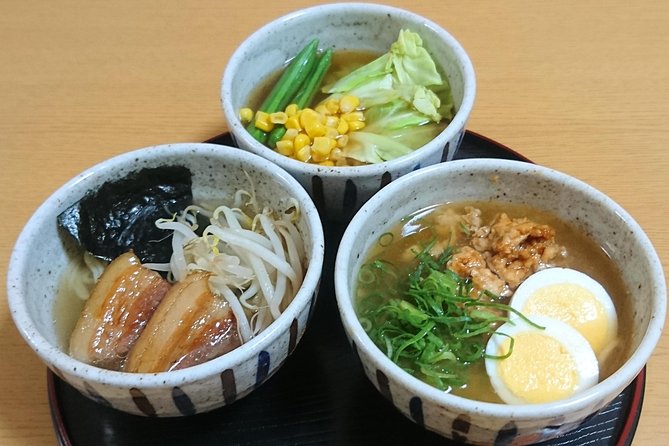
- Three bowls, three flavor profiles: Make salt, soy sauce, and miso ramen during one class.
- Noodles made from scratch: You learn the basic process rather than simply assembling prepared ingredients.
- A small class setting: The experience is intended for a small group, with the published maximum listed as 12 people.
- Useful for beginners: The instructions are simple enough for children and adults with little cooking experience.
- Dietary requests can be discussed: Vegetarian versions have been prepared when requested in advance.
- Food and materials are included: Ingredients, utensils, equipment, dessert or seasonal fruit, green tea, and a printed recipe are provided.
Arriving in Kitahorie for the ramen lesson
The class meets at Banix Kitahorie, in Osaka’s Nishi Ward, near public transportation. The address is listed as 3-chōme 6-2 Kitahorie, inside the System Gallery building. Since the meeting point may not look like a large cooking school from the street, give yourself enough time to find the exact entrance.
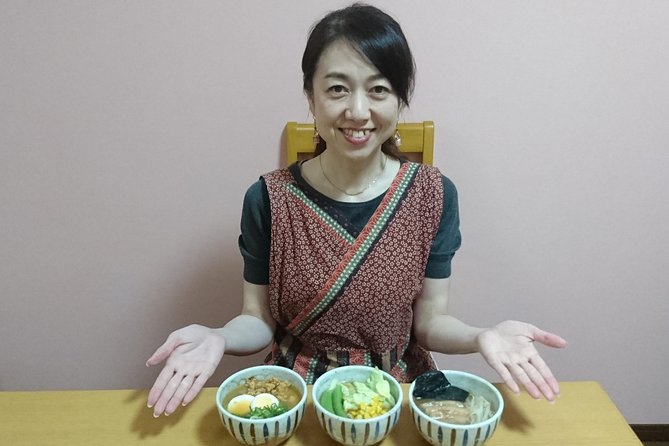
A useful practical detail is the red apron worn outside by one instructor, Keigo, which helped make the entrance easier to spot. Your host may be Fumi, Keiyo, Keigo, Tomiko, or another member of the cooking team, but Fumi is the name most closely associated with the class. English instruction is available, and the teaching style is friendly and clear.
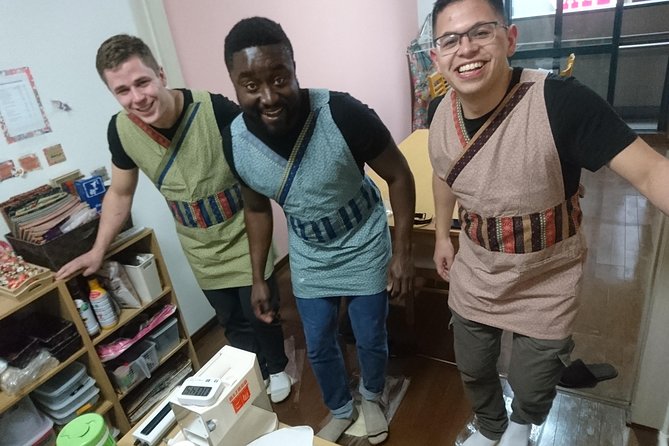
Once inside, you put on an apron and settle into the kitchen. The class is listed at about two hours and 30 minutes. That is long enough to include preparation, cooking, eating, dessert, and questions without turning the activity into an all-day commitment.
The group is described as limited to eight for a more personal lesson, while the additional information gives a maximum of 12 participants. The actual size can therefore vary. A two-person booking may feel close to a private lesson, while a larger session will have a livelier, more shared atmosphere.
More ramen and gyoza classes in Osaka:
- Osaka: Five Must-See Highlights Walking Tour & Ramen Lunch
★ 4.7 · 411 reviews - Osaka: Ramen and Gyoza Cooking Class in Dotonbori
★ 5.0 · 378 reviews - Ramen and Gyoza Cooking Class in Osaka
★ 5.0 · 202 reviews
Starting with 100 grams of handmade noodles
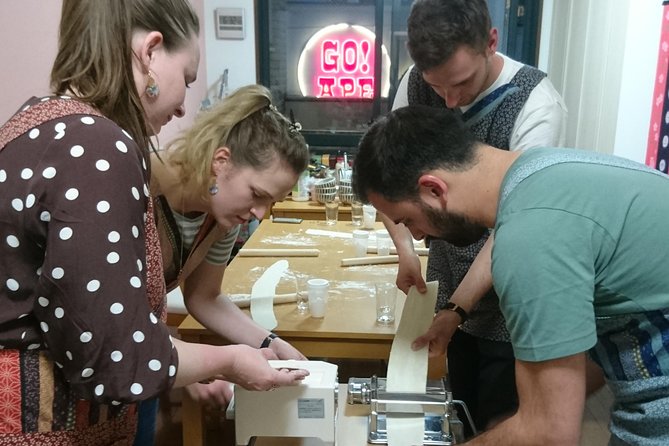
The class begins with the part many people are most curious about: making the noodles. You work through the dough-making process, then prepare the noodles for the three ramen dishes.
This is a worthwhile skill to learn because ramen noodles are not just an afterthought. Their texture affects how the soup feels and how well it carries the broth. You do not need to arrive as a cook. The instructions are broken into simple steps, and the class is designed to keep beginners involved.
The total quantity of noodles is listed as 100 grams. That amount is divided across the three ramen styles, so do not expect three full restaurant-size bowls. The portion is sensible for a class where you are also tasting several soups, toppings, dessert, and tea.
The hands-on work is also the part most likely to appeal to children and families. A 10-year-old has been able to follow the instructions and stay engaged through the session. You will be using kitchen equipment, so younger children should still have an adult close by, but the format is not aimed only at serious home cooks.
Salt ramen with pork, bean sprouts, and seaweed
The first bowl is salt ramen. Its toppings include juicy sweet pork, bean sprouts, and seaweed.
Salt ramen can look simple on paper, but that is part of its value in this class. With a lighter seasoning base, you get a clear sense of how the broth, noodles, and toppings work together. It is a useful starting point before moving to the stronger soy sauce and miso flavors.
The pork adds richness, while bean sprouts bring crunch. Seaweed contributes a familiar Japanese savory note. You will prepare the toppings as part of the cooking process, so the class is not limited to mixing a packet of soup with noodles.
This first style gives you a baseline for comparison. By the time you reach the second bowl, you can notice how much the soup character changes even though the basic noodle-making lesson is shared.
Soy sauce ramen with cabbage, greens, and corn
The soy sauce ramen uses steamed cabbage, green vegetables, and sweet corn. Compared with the salt version, it has a more recognizable soy-based flavor and a different balance of vegetables.
The toppings here are a good reminder that ramen does not have one fixed formula. Cabbage gives the bowl body, while greens and corn add color and contrasting textures. If you are cooking for family members at home, this combination is easy to understand and adapt.
I like having the three styles in one class because you are not left with a single recipe and a vague idea of how other ramen tastes. You can compare the seasonings directly and decide which version you would most want to make again.
More cooking classes in Osaka:
- Matcha Making Class in Osaka with Authentic Japanese Sweets Set
★ 5.0 · 509 reviews - Osaka Sushi Making Experience
★ 5.0 · 400 reviews - Osaka: Traditional Mochi Pounding Experience with Tasting
★ 4.9 · 306 reviews - Osaka Cooking Class: Okonomiyaki &Japanese cuisines experience
★ 5.0 · 261 reviews
Miso ramen with chicken, egg, and green onion
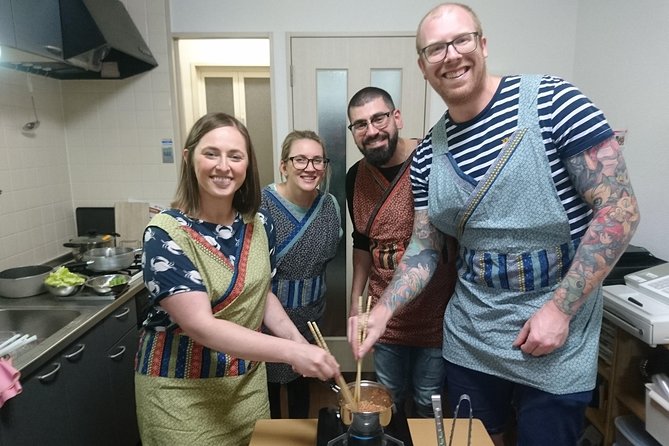
The third bowl is miso ramen, topped with spicy chicken, boiled egg, and green onion. It is the boldest of the three styles and gives the class a strong finish.
Miso adds a fuller, more powerful flavor than the salt base, while the chicken and egg make the dish feel substantial. Green onion cuts through the heavier soup with a fresh bite. If you add chili oil, use a light hand at first. It is easy to add more, but one enthusiastic pour can leave your lips tingling well after the class.
You prepare the soups and toppings during the lesson, so the three bowls also show how a few seasoning changes can create very different meals. That is more useful than simply learning one signature recipe.
Sitting down for ramen, dessert, and tea
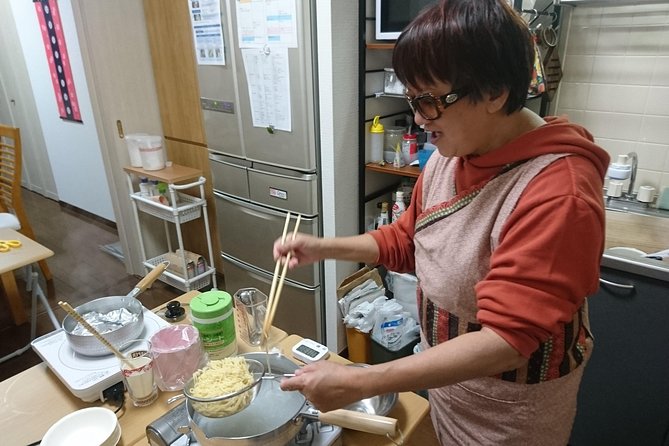
When the cooking is finished, the food is served with chopsticks, and the group says itadakimasu before eating. This shared meal is an important part of the activity. You are not just watching a demonstration, then leaving with a recipe. You eat what you made while the techniques are still fresh.
The class includes ingredients for the meal, kitchen equipment, dessert or seasonal fruit, and green tea. Additional drinks and personal expenses are not included. The dessert is a pleasant way to finish after three savory preparations, though the central value remains the cooking lesson rather than a large multi-course meal.
The portion size deserves a clear note. The listed noodle total is 100 grams, but the toppings and soup make the meal filling enough for many people. Several participants have found they could not finish everything, especially after tasting all three ramen styles. Appetite varies, so arrive ready to cook and eat, but do not assume this replaces an enormous dinner.
How the teaching style affects the experience
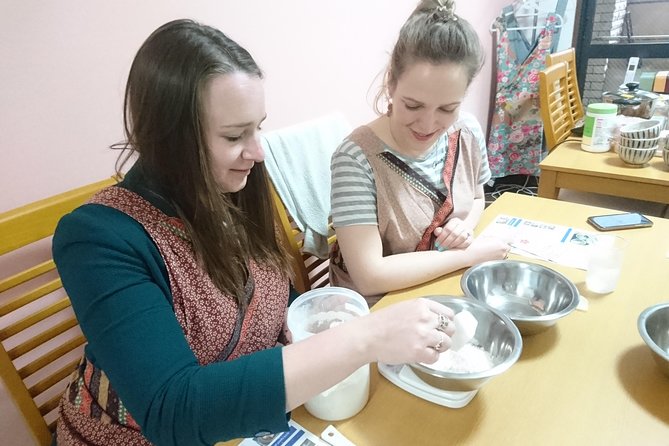
The instructors focus on clear directions and practical cooking tips. Fumi is repeatedly singled out by name as an engaging teacher, and Keiyo is also praised for making the class comfortable and easy to follow. The teaching team has been described as attentive, patient, and good at explaining each step in English.
That matters because ramen preparation can seem technical from a distance. You need to coordinate noodles, soup, proteins, and vegetables, yet the class breaks the work into manageable sections. Even people who say they cannot cook have managed to produce a successful meal.
The atmosphere is friendly rather than formal. Couples may find themselves in a cozy session, while families can work together at the same stations. The class also suits hospitality professionals and keen home cooks who want a closer look at Japanese ingredients and home cooking methods.
You should not expect a professional culinary-school course with long lectures on broth science. This is a practical, social lesson. You learn by making, tasting, and asking questions. For most holidaymakers, that is the right balance.
Vegetarian requests and food planning
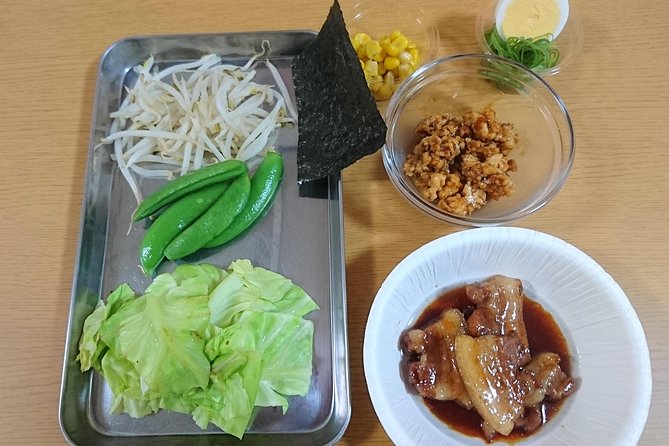
Vegetarian adaptations have been handled carefully in past classes. This has included checking the toppings and making sure the broth contains no animal products. If you need a vegetarian version, contact the provider before booking or as early as possible rather than waiting until the class begins.
The published menu includes pork for the salt ramen and chicken for the miso ramen, so the standard meal is not vegetarian. The menu also includes egg in the miso ramen and several vegetable toppings. No broad allergy information is provided, so anyone with serious allergies should confirm ingredients directly with Sakura Cook before reserving.
This is one area where advance communication makes a real difference. The cooking team can only plan a suitable menu if they know what you need.
What the $79.28 price covers
At $79.28 per person, the price is reasonable if you want both a meal and a lasting cooking skill. You are paying for about two and a half hours of instruction, three ramen preparations, all ingredients, kitchen tools, dessert or fruit, green tea, and a printed recipe.
The value is strongest for people who would otherwise book a separate food tour and a meal. Here, the meal is part of the activity, and you get to see how it comes together. The printed recipe adds value after your trip, although you may need to find comparable ingredients at home.
The price is less compelling if you only want to eat ramen quickly. Osaka has plenty of ramen shops, and a restaurant bowl will cost far less in both time and money. This class makes sense because you want to understand the work behind the bowl and take the method home.
Hotel pickup and drop-off are not included. You make your own way to Kitahorie, and the activity finishes back at the meeting point. The location is near public transportation, so it fits neatly into a day exploring Osaka, but allow time to locate the building.
Who should book this Osaka cooking class?
I would recommend it most strongly to:
- First-time visitors who want a food activity beyond restaurant dining
- Couples looking for a relaxed shared activity
- Families with children who can follow simple cooking instructions
- Ramen fans who want to compare salt, soy sauce, and miso styles
- Home cooks who want a recipe they can repeat after Japan
- Vegetarians who confirm their needs before booking
It is also a good rainy-day plan. The kitchen is air-conditioned, and the activity gives you a structured indoor break from sightseeing.
You may want to skip it if your main goal is a large meal, a formal chef-led course, or a lesson devoted to one highly technical ramen recipe. The three-style format favors variety and participation over deep specialization in a single bowl.
Booking and cancellation details
Confirmation is sent within 48 hours of booking, subject to availability. The class accepts mobile tickets, which keeps the entry process simple.
Free cancellation is available when you cancel at least 24 hours before the scheduled start time. Cancellations or changes made less than 24 hours before the start are not accepted for a refund. The cut-off follows local Osaka time, so check the timing carefully if you are booking from abroad.
The published rating is 4.9 from 119 ratings, with 100 percent recommending the activity. That strong response fits the class’s main strengths: clear instruction, friendly hosts, good food, and a hands-on format that works for beginners.
Should you book the three-ramen class?
Book it if you want to do more than eat ramen in Osaka. Making the noodles, preparing three soups, and comparing the toppings gives you a much better feel for the dish than a restaurant visit alone. The recipe and practical tips also give the activity value after your holiday.
I especially like it for couples and families because everyone has a task, and the final meal gives the work a clear payoff. Just remember that the total noodle amount is 100 grams, the group size may be larger than eight, and vegetarian or allergy requests should be arranged ahead of time.
For a food-focused Osaka itinerary, this is a solid choice at $79.28. You leave with a full stomach, a recipe, and a better understanding of why ramen can taste so different from one bowl to the next.
FAQ
Where does the ramen cooking class meet?
The class meets at Banix Kitahorie, 3-chōme 6-2 Kitahorie, Nishi Ward, Osaka, 550-0014, inside the System Gallery building.
How long does the class last?
The activity lasts approximately two hours and 30 minutes.
How many types of ramen do you make?
You make three types: salt ramen, soy sauce ramen, and miso ramen.
Do you make the noodles from scratch?
Yes. The class includes handmade noodle preparation, along with soup and topping preparation.
What toppings are used?
Salt ramen includes pork, bean sprouts, and seaweed. Soy sauce ramen includes steamed cabbage, green vegetables, and sweet corn. Miso ramen includes spicy chicken, boiled egg, and green onion.
Is food included in the price?
Yes. Ingredients for the meal, kitchen utensils, and equipment are included. Dessert or seasonal fruit and green tea are also provided.
Is a recipe provided?
Yes. You receive a printed recipe to take home.
Can vegetarians join the class?
Vegetarian versions have been prepared, including broth without animal products. You should contact Sakura Cook before the class to arrange this.
What is the cancellation policy?
You can cancel for a full refund up to 24 hours before the experience start time. Cancellations or changes made less than 24 hours before the start are not accepted for a refund.
More Workshops in Osaka
- Sushi Making Osaka Roll and Authentic Japanese Sushi Class
★ 5.0 · 1,220 reviews - Osaka: Roll and Authentic Sushi Making Class in Dotonbori
★ 4.9 · 239 reviews - Osaka: Sushi Class in Dotonbori
★ 4.9 · 160 reviews - Osaka: Cooking Class Ramen & Gyoza Course in Nanba
★ 4.9 · 86 reviews
Just added in Osaka
- Urban Canvas: Osaka Street Art Bike Tour★ 5.0 · 10 reviews
- Anime Cosplay Photshoot-50 Digital Photos Provided★ 5.0 · 8 reviews
- TeamLab Botanical Garden Osaka Ticket★ 3.5 · 6 reviews
- Cherry Blossom Buddha and Mt.Yoshino with Strawberry Picking Tour★ 4.5 · 5 reviews
- Umeda Sky Building & Kuchu Teien Observatory Ticket in Osaka★ 4.5 · 3 reviews
- Immerse in Judo Martial Arts Class from Japan★ 5.0 · 4 reviews
- Traditional Home cooking Experience in Osaka, Japan★ 5.0 · 14 reviews
- Traditional Calligraphy Experience near Dotonbori★ 5.0 · 3 reviews
Osaka Cooking Classes, compared.

Matcha Making Class in Osaka with Authentic Japanese Sweets Set
Read our review →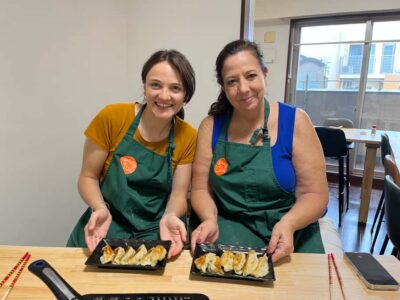
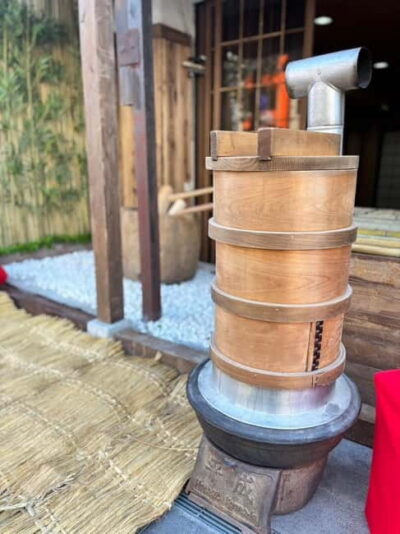
Traditional Mochi Pounding Experience with Tasting
Read our review →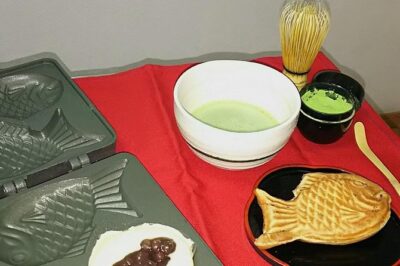
Osaka Cooking Class: Okonomiyaki &Japanese cuisines experience
Read our review →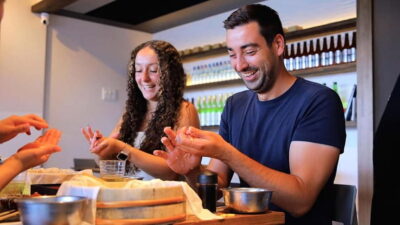
Roll and Authentic Sushi Making Class in Dotonbori
Read our review →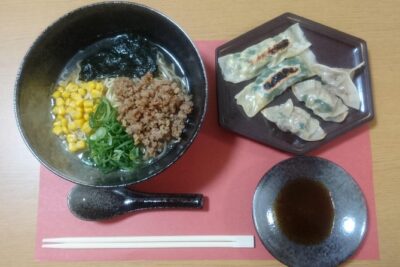


Osaka Sake Tasting & Takoyaki Cooking Experience
Read our review →Browse the lists this tour appears in