
Reviewed · DOTONBORI TOURS
Osaka: Ramen and Gyoza Cooking Class in Dotonbori
Making ramen from a packet is easy. Making the noodles yourself is the point here. You knead wheat dough, roll and cut it with a noodle machine, prepare a broth from chicken bones and dried sardines, then fold gyoza with minced chicken before sitting down to eat.
I like the small-group format, with two instructors for as many as eight people, and I like that the class keeps moving without making you feel hurried. The recipes go home with you, too, so this is not just a meal in Dotonbori. It gives you a fair chance of repeating the dishes in your own kitchen.
The main consideration is time and location. Plan on roughly two to three hours, and Cooking Sun Osaka can be tricky to find inside its building. The meeting point is room 807, so arrive with the address ready and press 807 followed by the 呼出 call button at the entrance.
Key points to know before booking
- Make ramen noodles from wheat dough: Kneading and cutting the noodles gives this class its most memorable hands-on task.
- Prepare two dishes in one session: You make soy sauce ramen and minced chicken gyoza, then eat both as your meal.
- Learn the broth basics: The soup uses chicken bones and dried sardines, with miso available as an optional change.
- Expect close instruction: Two English-speaking teachers help you keep pace, answer questions, and step in when needed.
- Dietary adjustments are possible: Plant-based and fish-free substitutions have been provided, but you should explain your needs at the start.
- Budget about $70 per person: That price includes the ingredients and a substantial cooked meal, not hotel transportation.
Why this Dotonbori class is more than a ramen tasting
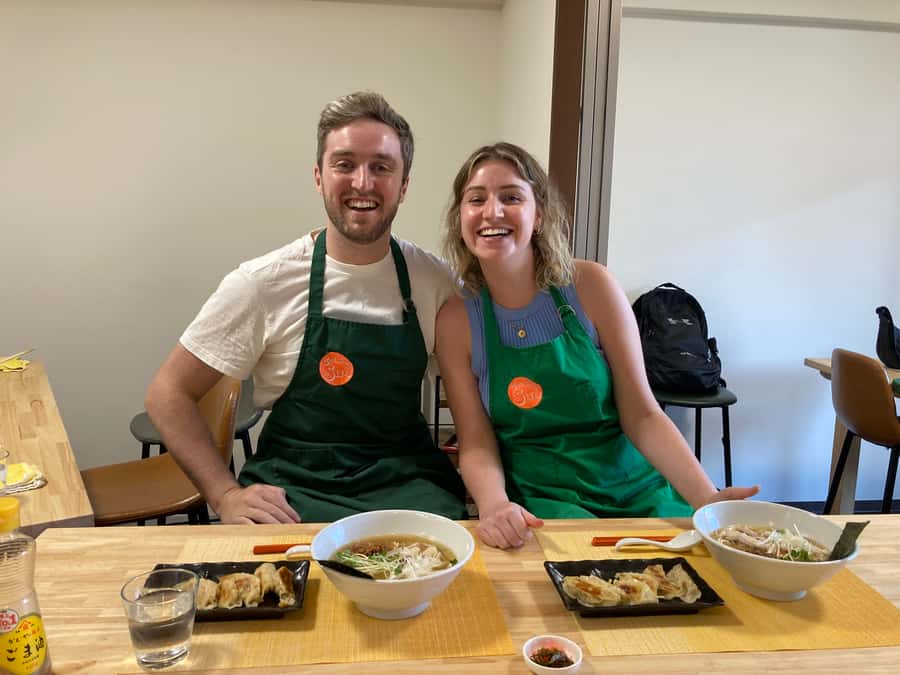
Osaka is an excellent place to study ramen because the dish is part of ordinary Japanese eating culture, not simply a special-occasion food. In Japan, ramen and gyoza are commonly ordered together at a ramen shop. This class lets you see why that pairing works: the hot, savory soup is balanced by crisp-edged dumplings and their seasoned filling.
You do not simply watch a chef prepare lunch. You handle the flour, shape the dough, cut the noodles, fill the dumplings, and choose how to finish the bowl. That difference matters. By the time you eat, you understand the work behind a dish that can look very simple when it arrives at a restaurant.
The class focuses on standard soy sauce ramen, which is a sensible choice for a first lesson. It gives you a clear base and leaves room for small changes. You can add toppings or stir miso into the soup for a different style. The result is your own version rather than a fixed restaurant serving.
More Dotonbori walks and food stops:
- Osaka Local Foodie Walking Tour in Dotonbori and Shinsekai
★ 5.0 · 985 reviews - Osaka: Dotonbori District River Cruise with Drink Discount
★ 4.2 · 876 reviews - Ultimate Osaka Walking Tour: Castle, Dotonbori & Hidden Gems
★ 5.0 · 862 reviews
From flour to noodles with a noodle machine
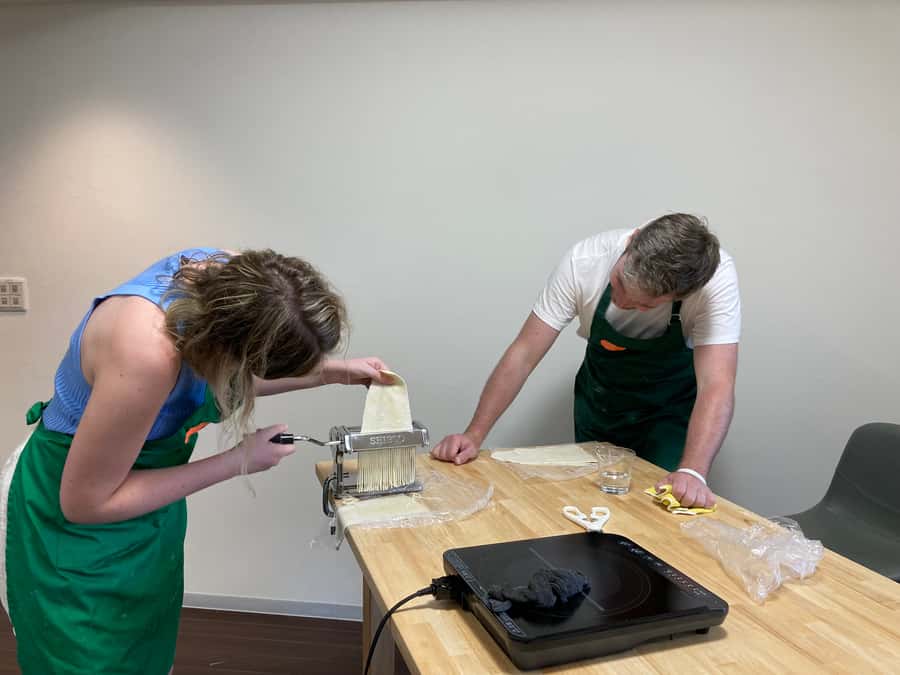
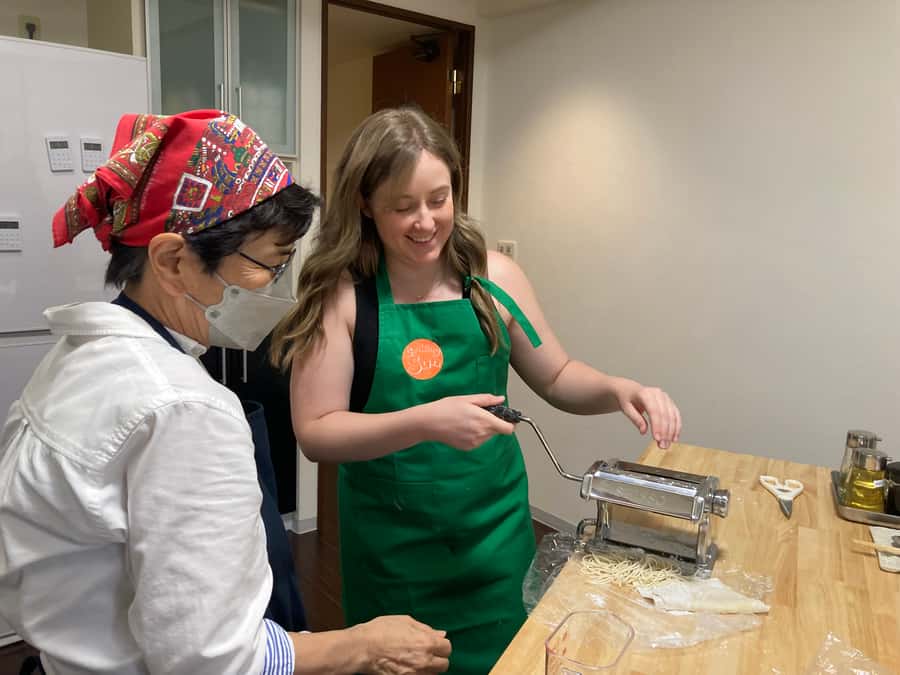
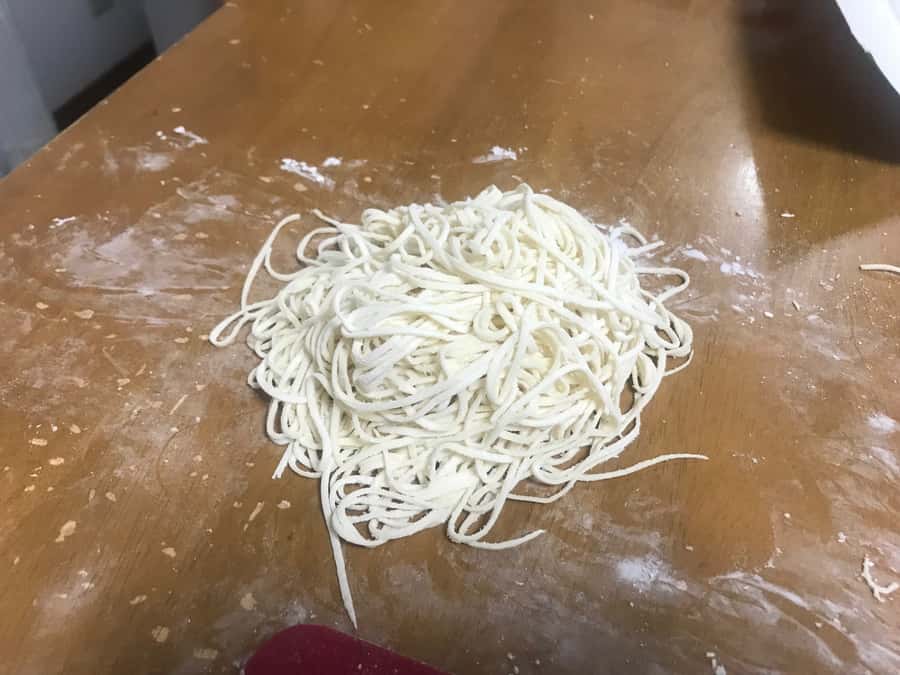
The ramen portion begins with the dough. You knead wheat to form the noodles, an activity that takes more effort than most first-time cooks expect. This is also where the class becomes tactile and useful. You can feel how the dough changes as it comes together instead of treating noodles as a mysterious finished product.
After the dough is prepared, you use a noodle machine to cut it. The machine gives you a practical look at how uniform ramen strands are made. It also removes some of the frustration that comes with trying to cut fresh noodles by hand.
The process has a built-in rhythm. While the dough rests, you move on to the gyoza filling, so the class does not sit around waiting. The instructors keep the stages organized, and they can help if you fall behind. That steady pace is especially helpful for families or anyone who feels nervous about cooking in front of other people.
The noodle task is likely to be the class highlight. You get a skill you can try again at home, and you gain a better sense of why fresh noodles have a different texture from dried ones. Just remember that the class is hands-on. You should expect to work, not sit back and take photos for the whole session.
Building the broth and choosing your ramen style
The soup is made with chicken bones and dried sardines. These ingredients give you a useful introduction to the savory foundation behind ramen. You also learn how the broth connects with other Japanese ingredients, including different kinds of miso and when they can be used.
The standard version is soy sauce ramen. It is a good starting point because it highlights the broth without making the lesson too complicated. If you want to change the flavor, you can add miso to create a miso ramen style, and you can choose toppings to make the bowl your own.
Do not expect a full lesson in every regional ramen tradition. The class teaches one approachable preparation and gives you a few ways to adjust it. That is a strength for most people, since you leave with a recipe you can realistically try again rather than a long lecture on styles you may never cook.
The finished bowl is also more filling than the word class might suggest. You are preparing a complete meal, not sampling a spoonful. Several people have found it useful to arrive hungry, especially because the gyoza comes alongside the ramen.
Folding minced chicken gyoza
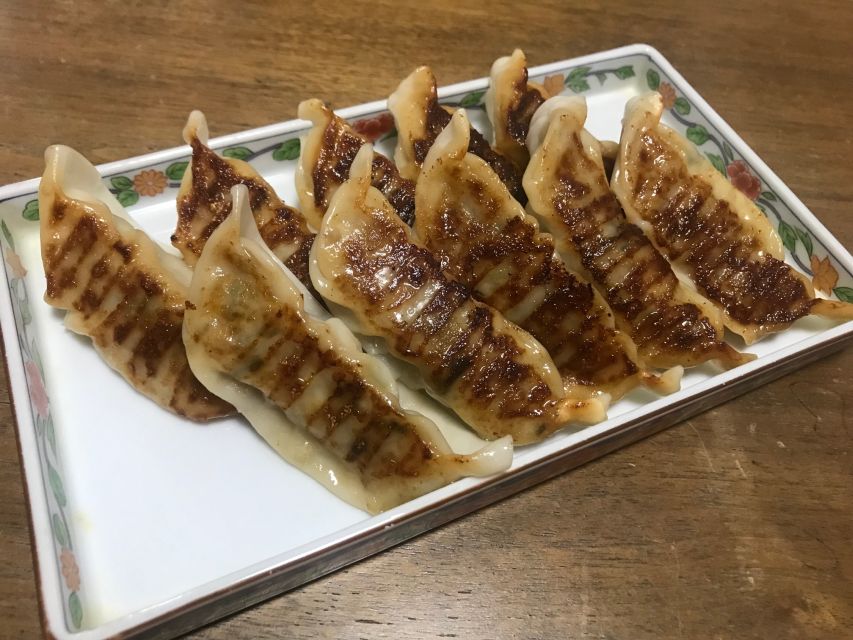
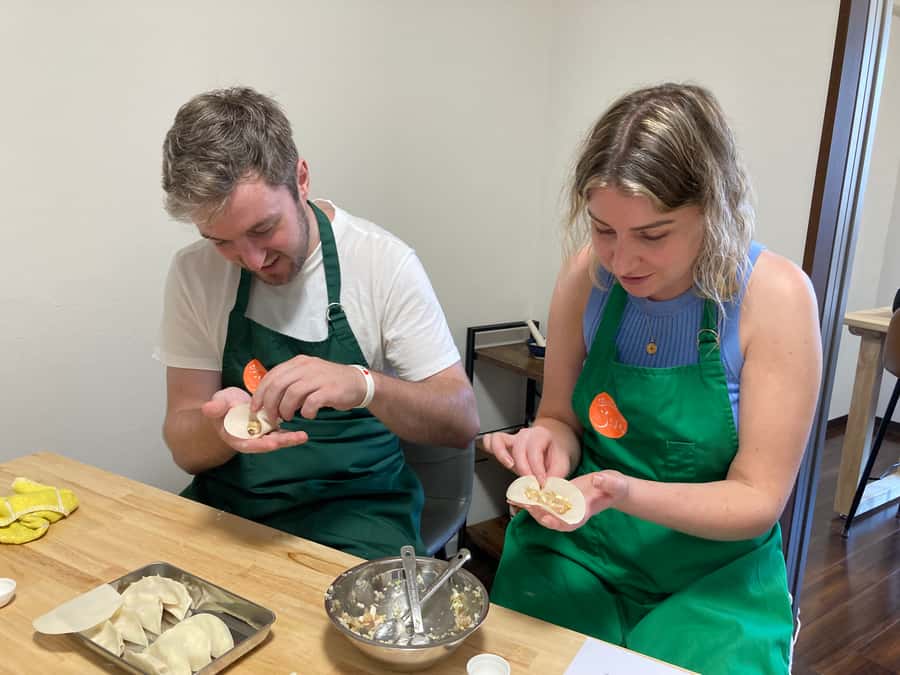
While the ramen dough rests, you prepare the gyoza. The filling uses minced chicken, and the class takes you through the process of making original dumplings rather than handing you preassembled pieces.
Folding gyoza neatly takes a little practice. The instructors show you the method and help you correct the shape if necessary. This is one of the places where the small class size pays off. With two teachers helping a group of no more than eight, you can ask for assistance without stopping the entire lesson.
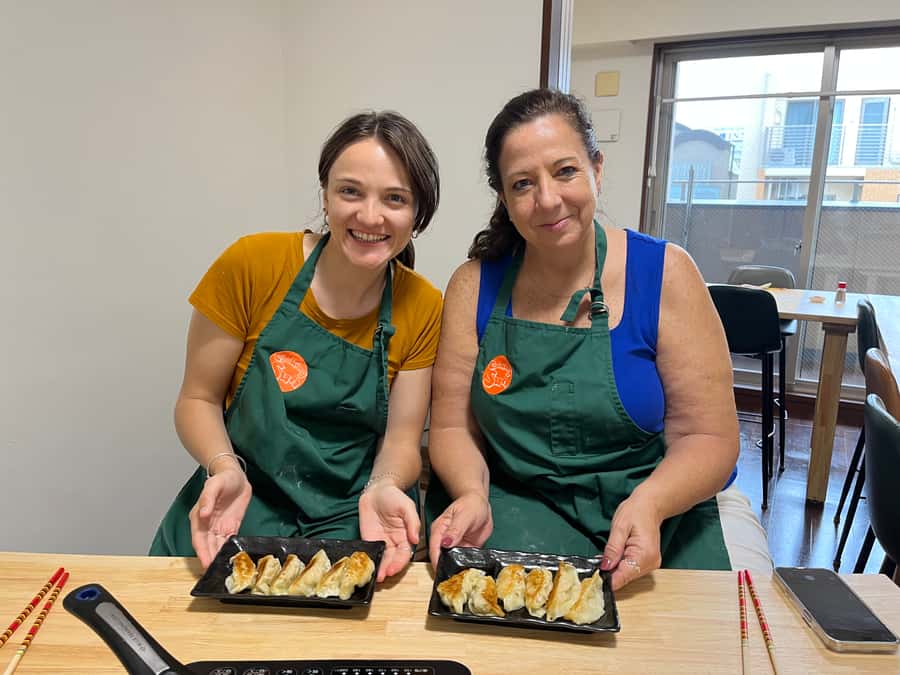
The reward comes at the end, when the dumplings are cooked and served with the ramen. The contrast is excellent: soft noodles and hot broth on one side, savory dumplings with a browned exterior on the other. You also leave with a better idea of how much filling to use and how careful you need to be when sealing the wrapper.
The gyoza recipe is not presented as a restaurant secret. That is good news. You are given practical guidance that you can use again at home, and the recipe is available to take with you.
More ramen and gyoza classes in Osaka:
- Osaka: Five Must-See Highlights Walking Tour & Ramen Lunch
★ 4.7 · 411 reviews - Ramen and Gyoza Cooking Class in Osaka
★ 5.0 · 202 reviews - Walking Tour of Osaka’s 5 Must-See Sights, with Ramen for Lunch
★ 5.0 · 158 reviews - Cooking Ramen&Gyoza/KatsuCurry/Bento/Okonomiyaki+Store Tour@Osaka
★ 5.0 · 138 reviews
What the English-language instruction is like
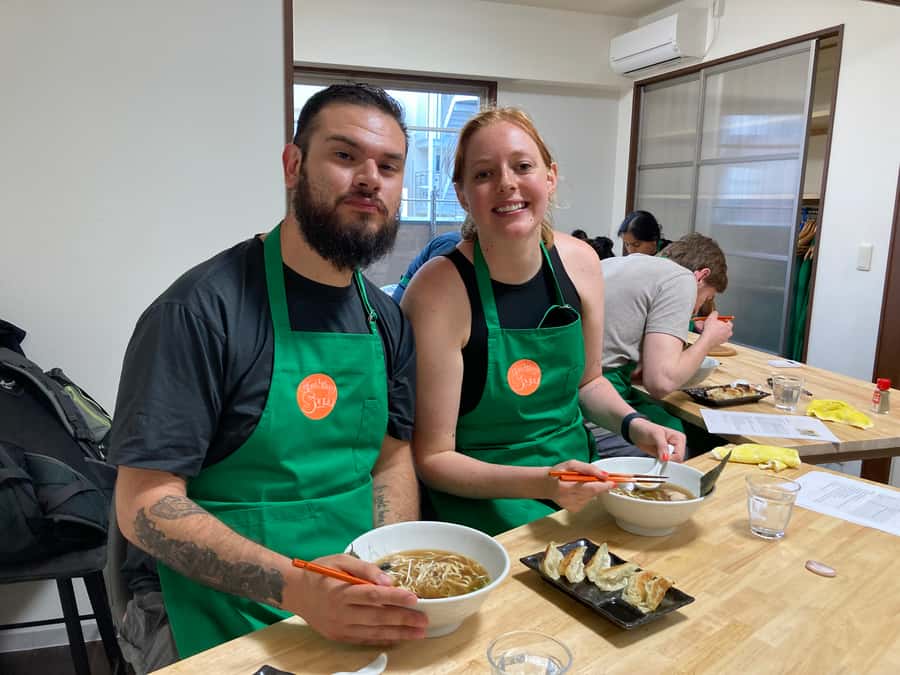
The activity is conducted in English. The instructors explain the steps clearly, provide background about ingredients and Japanese eating customs, and answer questions during the cooking.
Miki and June have been especially noted for keeping the group together and helping people who fall behind. Other sessions have included teachers such as Yoshi and Kasa. Staff members also take photos when you want them to, which is useful when your hands are covered in dough and you cannot document the process yourself.
The teaching style sounds patient rather than formal. You get detail about the ingredients, but the class remains social and relaxed. That balance should suit you if you want to learn something real without signing up for a professional cooking course.
The small-group setup also helps families. An 11-year-old has enjoyed the class, and a family with a 14-year-old found the pace manageable. Children still need to follow cooking instructions and work carefully, but the activity gives them something concrete to do at every stage.
Dietary changes and ingredient concerns
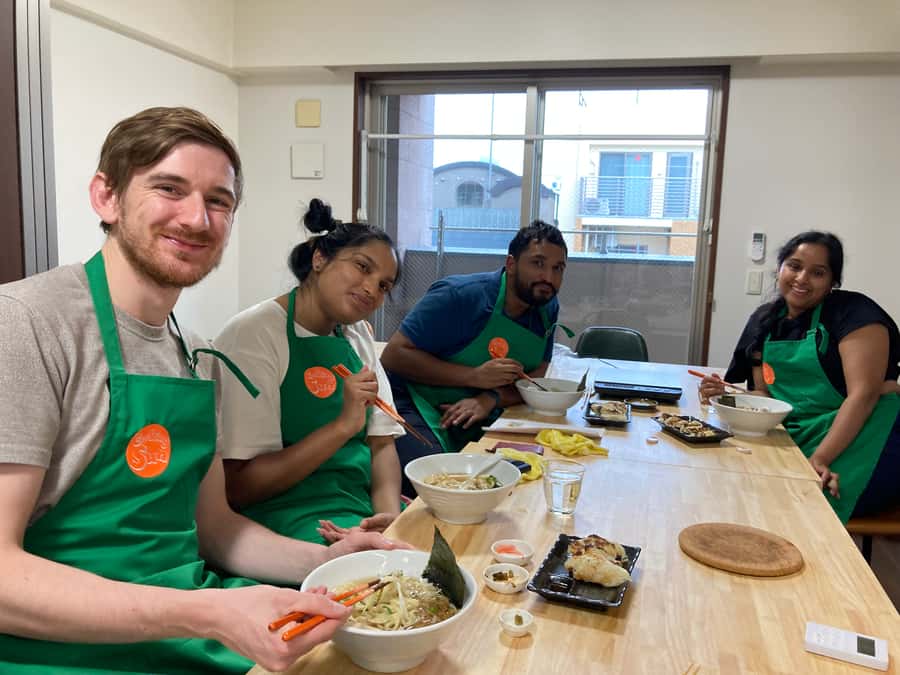
The standard gyoza uses minced chicken, and the broth includes dried sardines. If you are vegetarian, vegan, or avoid fish, tell the instructors as soon as you arrive. Plant-based substitutions have been made, and a fish-free broth option has also been provided.
The important point is to raise the issue at the beginning rather than wait until the soup or filling is already prepared. The class has shown flexibility, but the available information does not promise every possible dietary requirement. People with serious allergies should ask the provider directly before booking.
For everyone else, the ingredients are included in the $70 price. You do not need to shop for flour, broth ingredients, wrappers, or fillings yourself. That makes the fee easier to assess, particularly in Dotonbori, where a casual ramen and gyoza meal would cost less than the class but would not include instruction or recipes.
Is $70 a fair price?
At $70 per person, this is not the cheapest way to eat ramen in Osaka. If you only want lunch, visit a ramen shop. You will spend less and get your food faster.
The value changes if you want an activity. The price covers all cooking ingredients, an English-language lesson, two dishes, help from the instructors, and the meal you prepare. You also receive recipes for future use. For a visitor who enjoys food and wants more than another restaurant stop, that is a reasonable package.
I would especially consider it good value for a couple, family, or small group that might otherwise spend several hours wandering between food stops without learning anything. The class turns a familiar meal into a skill-based activity. It also gives you a break from sightseeing while keeping you connected to Japanese food culture.
The class appears to last around two to three hours, with one session described as three hours and another as about two. Allow the longer amount in your schedule. The precise length may depend on the pace of the group and the cooking stages.
Finding Cooking Sun Osaka in Dotonbori
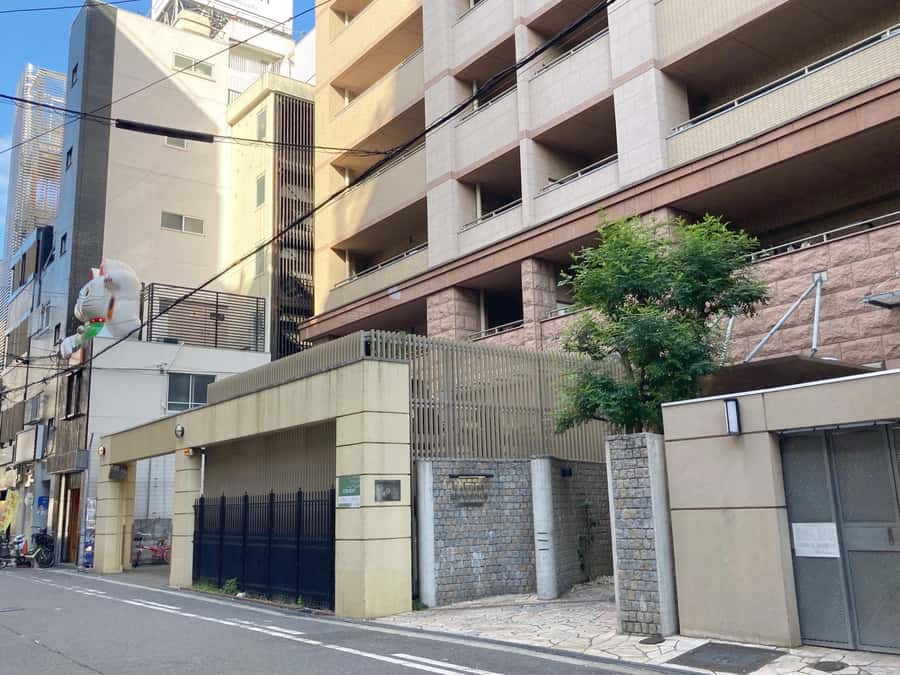
The class starts at Cooking Sun Osaka, room 807. At the entrance, press 807 and then press the 呼出 call button. There is no hotel pickup or drop-off, so you must make your own way there.
Finding the building may take a little patience. The address is not presented as a street-level restaurant with an obvious ramen sign, and locating room 807 can be the most annoying part of the day. Give yourself extra time, keep the meeting instructions open on your phone, and do not arrive at the last minute.
The class ends back at the meeting point. That makes it easy to continue around Dotonbori afterward, provided you leave enough time for the meal and cleanup.
Who will enjoy this class most?
I would book this for you if you enjoy Japanese food, prefer doing something active, or want a break from temples, shopping, and restaurant queues. It also works well as a family activity because the steps are varied and the teachers help people at different speeds.
It suits first-time cooks as well as confident home cooks. You do not need to know how to make noodles or fold dumplings before arriving. The instructors explain the process, and the recipes give you a way to practice later.
It may be less suitable if you want a quick activity, dislike working with flour, or are looking for a highly advanced culinary lesson. The class is designed to be accessible and enjoyable, not a professional chef workshop. You should also avoid booking it immediately after a large meal, since the finished ramen and gyoza make a substantial lunch or dinner.
Practical booking advice for your Osaka schedule
The activity is conducted in English, and you can reserve now while paying later. Cancellation is available up to 24 hours in advance for a full refund, which gives you some room if your Osaka plans change.
Wear something you can cook in comfortably. You will knead dough, handle filling, and work through several preparation steps. The kitchen is described as spacious, but a cooking class is still a practical activity rather than a polished show.
Bring your appetite and arrive early enough to find room 807. If you have dietary needs, state them immediately. If you want photos, ask the instructors during the class, as they have helped participants capture the experience.
Should you book the ramen and gyoza class?
Book it if you want to understand two everyday Japanese dishes by making them yourself. The strongest parts are the fresh noodle work, the patient two-teacher setup, the useful recipes, and the complete meal at the end.
I would not book it solely for a cheap meal. You are paying for instruction and participation, not just food. But for about $70, this is a well-rounded Osaka activity with enough cooking to feel worthwhile and enough explanation to help you recreate the dishes at home. Just allow up to three hours, plan carefully for the hard-to-find meeting point, and mention dietary restrictions before cooking begins.
FAQ
Where does the cooking class start?
It starts at Cooking Sun Osaka, room 807. At the entrance, press 807 and then press the 呼出 call button.
Where does the class end?
The activity ends back at the meeting point.
How much does the class cost?
The price is $70 per person.
What food do you make?
You make ramen noodles from wheat dough and prepare ramen with a standard soy sauce broth. You also make gyoza using minced chicken.
Are the ingredients included?
Yes. All ingredients used in the cooking class are included.
Is the class taught in English?
Yes. The listed language is English.
How long does the class take?
Allow about two to three hours. One description gives a three-hour duration, while another indicates about two hours.
Can vegetarian or vegan participants join?
Plant-based adjustments have been provided, and vegan participants have been accommodated. Tell the instructors at the start of the class.
Can the broth be made without fish?
A fish-broth substitution has been provided for participants who do not like fish broth. Ask about your needs when you arrive.
Is hotel transportation included?
No. Hotel pickup and drop-off are not included, so you must travel to and from the Cooking Sun Osaka meeting point yourself.
More Workshops in Osaka
- Sushi Making Osaka Roll and Authentic Japanese Sushi Class
★ 5.0 · 1,220 reviews - Osaka: Roll and Authentic Sushi Making Class in Dotonbori
★ 4.9 · 239 reviews - Osaka: Sushi Class in Dotonbori
★ 4.9 · 160 reviews - Three Types of Ramen Cooking Class in Osaka
★ 5.0 · 119 reviews
More Cooking Classes in Osaka
- Matcha Making Class in Osaka with Authentic Japanese Sweets Set
★ 5.0 · 509 reviews - Osaka Sushi Making Experience
★ 5.0 · 400 reviews - Osaka: Traditional Mochi Pounding Experience with Tasting
★ 4.9 · 306 reviews - Osaka Cooking Class: Okonomiyaki &Japanese cuisines experience
★ 5.0 · 261 reviews
Just added in Osaka
- Urban Canvas: Osaka Street Art Bike Tour★ 5.0 · 10 reviews
- Anime Cosplay Photshoot-50 Digital Photos Provided★ 5.0 · 8 reviews
- TeamLab Botanical Garden Osaka Ticket★ 3.5 · 6 reviews
- Umeda Sky Building & Kuchu Teien Observatory Ticket in Osaka★ 4.5 · 3 reviews
- Immerse in Judo Martial Arts Class from Japan★ 5.0 · 4 reviews
- Cherry Blossom Buddha and Mt.Yoshino with Strawberry Picking Tour★ 4.5 · 5 reviews
- Traditional Home cooking Experience in Osaka, Japan★ 5.0 · 14 reviews
- Traditional Calligraphy Experience near Dotonbori★ 5.0 · 3 reviews
Dotonbori Tours, compared.
Osaka Local Foodie Walking Tour in Dotonbori and Shinsekai
Read our review →
Dotonbori District River Cruise with Drink Discount
Read our review →
Ultimate Osaka Walking Tour: Castle, Dotonbori & Hidden Gems
Read our review →
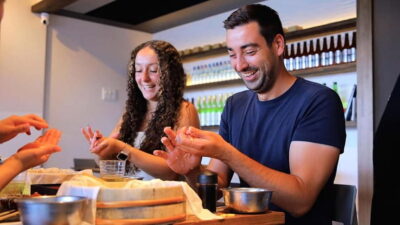
Roll and Authentic Sushi Making Class in Dotonbori
Read our review →
Osaka Local Bar Crawl in Dotombori & Uranamba Area
Read our review →
Browse the lists this tour appears in