
Reviewed · OSAKA COOKING CLASSES
Osaka: Japanese Cooking Class with Matcha Experience
Japanese cooking becomes much more approachable when you are making the food yourself. At Wa Cafe Kitajima, you choose between home-cooked dishes, okonomiyaki, or bento, then work with a local chef before finishing with a matcha experience. It is a hands-on way to meet everyday Japanese food, not just admire it through a restaurant menu.
I like the small group of up to 10 people, which should give you room to ask questions and work alongside your family or friends. I also like the warm teaching style associated with Ikuko, an Osaka mom who helps beginners feel at home. The main drawback is that the class is not suitable for wheelchair users or people with food allergies, so check the details carefully before booking.
Key points to know before booking
- Choose one of three Japanese cooking paths: home-style dishes, okonomiyaki, or bento.
- Make matcha as part of the same two-hour visit, giving you both a cooking activity and a traditional tea element.
- Learn with local guidance from a chef and Osaka mom Ikuko, with support in English and Japanese.
- Reach the venue in about seven minutes from Morinomiya Station, with easy access from Osaka Castle, Shinsaibashi, and Namba.
- Plan this as a family-friendly activity, especially if your children enjoy doing things with their hands.
- Check allergy and mobility restrictions first, since the experience is not suitable for people with food allergies or wheelchair users.
Choosing your Japanese dish in Osaka
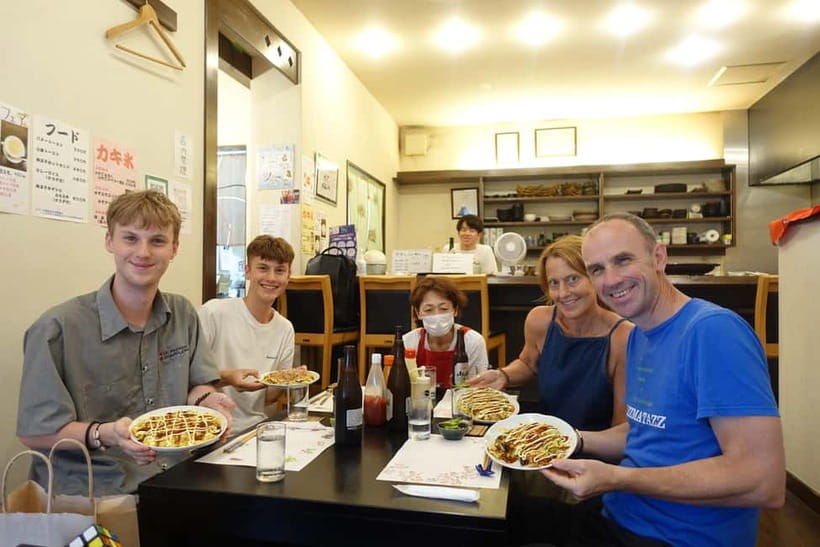
The first important choice is the food you will make. You select one option from home-cooked dishes, okonomiyaki, or bento. That choice changes the feel of the class, so it is worth thinking about what you want to take away from the experience.
The home-cooked option is likely the best fit if you want a taste of ordinary Japanese life. Restaurant dishes can be polished and elaborate, but home cooking helps you understand what people prepare for themselves. If your goal is to recreate the meal later, this is the most practical direction.
Okonomiyaki gives you a more recognizably Osaka experience. This savory dish is strongly associated with the city, and preparing it yourself makes the meal more memorable than simply ordering one. Choose this if you want your cooking class to connect closely with Osaka rather than with Japan in general.
Bento offers another useful angle. A bento is not only a meal, but also an organized way of presenting food in separate portions. If you enjoy neat presentation or want ideas for packed lunches, this option may suit you best.
The activity information does not specify the exact recipes or the individual dishes available under each category. That is worth keeping in mind. You are choosing a cooking style, not selecting a named menu in advance. If a particular ingredient or dish matters to you, ask before the class.
More tea ceremonies in Osaka:
- Osaka: Tea Ceremony Experience
★ 4.9 · 1,426 reviews - Tea Ceremony Experience in Osaka Doutonbori
★ 5.0 · 754 reviews - Matcha Making Class in Osaka with Authentic Japanese Sweets Set
★ 5.0 · 509 reviews
What the two-hour schedule is likely to feel like
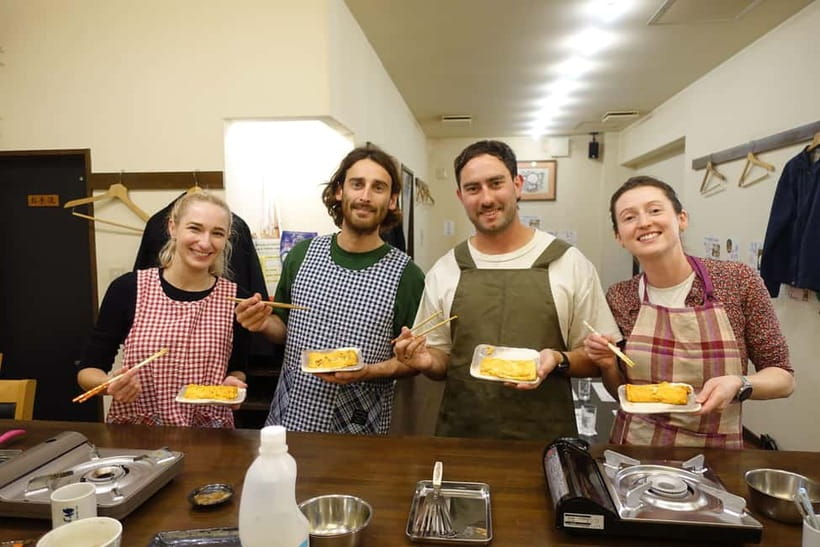
This is a compact two-hour activity, so you should expect a focused session rather than a long food workshop. The class includes cooking with a local chef, preparing the ingredients for your selected dish, and making matcha.
You will not need to arrange a separate tea activity afterward. The matcha experience is built into the visit, which gives the class a pleasant change of pace. Cooking asks you to work, watch, and follow instructions. Matcha offers a quieter finish and a chance to pay attention to a different Japanese tradition.
The exact order is not stated, so you should not assume that matcha comes at the end. Still, the two parts fit well together. You get the practical side of Japanese food and a short introduction to tea preparation in one booking.
Two hours is also a sensible length for families. Younger children may lose interest during a longer lesson, while a short class gives them a clear activity without taking over the entire day. One verified booking specifically described the experience as a hit for children, and another noted that the children enjoyed it a lot. Those comments make this a stronger choice for families than a formal, observation-only food tour.
Learning with a local chef and Ikuko
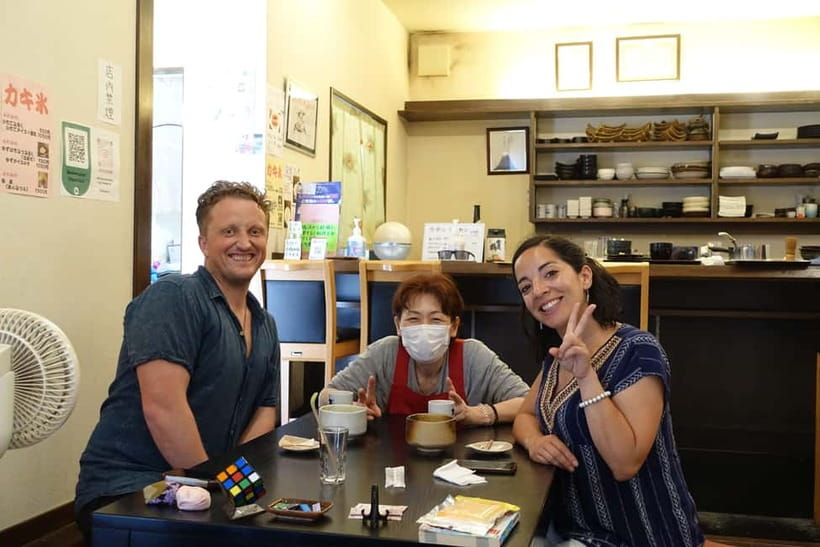
The class is taught by a local chef, with support from Ikuko, described as an Osaka mom. That matters if you are not comfortable in a kitchen. You are not expected to arrive with professional skills or a working knowledge of Japanese cooking.
The teaching style appears to be one of the strongest parts of the experience. One family booking praised the teacher as enthusiastic and happy, with techniques that came through clearly. Another specifically described Ikuko as lovely and said she made the group feel at home.
That kind of support can make a big difference. Cooking instructions are easier to follow when the teacher is willing to slow down, demonstrate again, and help you correct a small mistake. A friendly guide also helps children take part instead of leaving all the work to the adults.
English and Japanese are available. That does not mean every cooking term will be explained in perfect English, but it does give you a useful language bridge during the class. You should still pay attention to demonstrations, gestures, and the order of each step.
The group limit is 10 participants. That is small enough to feel personal without requiring the price of a private lesson. If you are traveling with family or friends, you can cook together and share the finished result rather than splitting up into separate activities.
Why the cooking choices matter
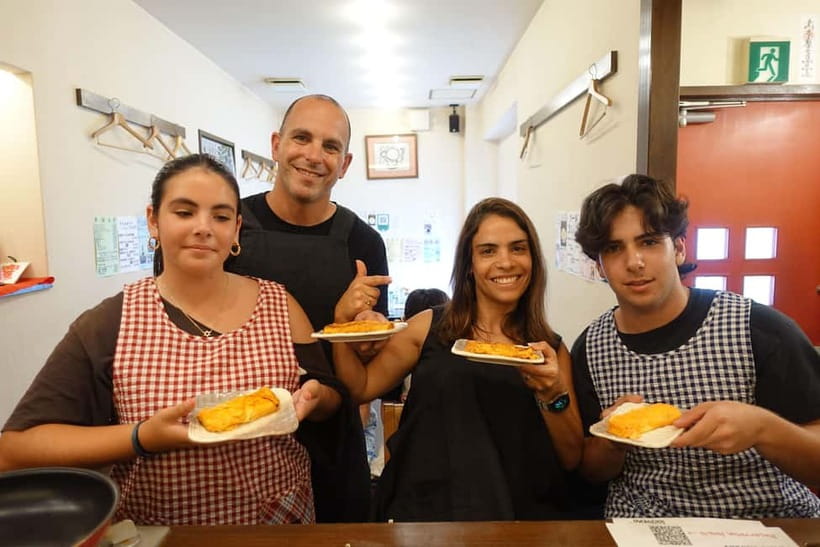
A good cooking class should teach you something you can use after the holiday. This one has that advantage because the focus is on dishes commonly enjoyed in Japan and Osaka.
You may not leave with a professional recipe book or a long list of techniques. The available information does not promise that. What you can expect is a practical introduction to selected Japanese dishes, guided by someone who cooks and teaches locally.
The German couple who attended said the recipes were delicious and that they would be able to recreate them at home. That is an important detail for anyone comparing this with a simple food tasting. You are paying for instruction and participation, not only for a meal.
Still, keep your expectations sensible. The class lasts two hours and covers both cooking and matcha. That leaves limited time for a large number of dishes or advanced techniques. The value is in learning one chosen style well enough to remember it, not in racing through an entire Japanese cookbook.
If you are deciding between the three choices, ask yourself what you want most:
- Choose home-cooked dishes for everyday Japanese food.
- Choose okonomiyaki for a clear Osaka connection.
- Choose bento for food arrangement and portable meal ideas.
More cooking classes in Osaka:
- Osaka Sushi Making Experience
★ 5.0 · 400 reviews - Osaka: Ramen and Gyoza Cooking Class in Dotonbori
★ 5.0 · 378 reviews - Osaka: Traditional Mochi Pounding Experience with Tasting
★ 4.9 · 306 reviews - Osaka Cooking Class: Okonomiyaki &Japanese cuisines experience
★ 5.0 · 261 reviews
The matcha portion adds a welcome change
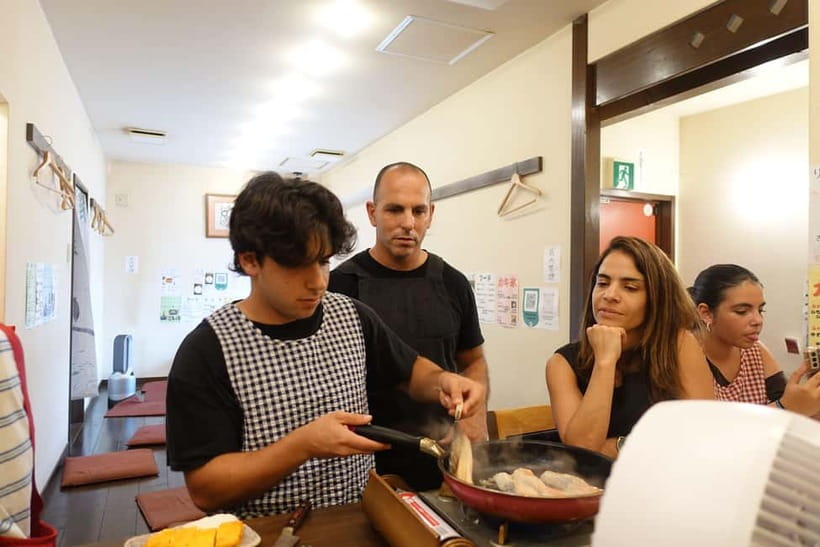
The matcha experience is included in the $64 price. This gives the class a second subject beyond cooking and makes the visit feel more rounded.
The provided details do not state exactly how the matcha is prepared, how long that part lasts, or whether you drink a serving at the end. You should treat it as an introduction rather than a full tea ceremony. Even so, it adds cultural context to a cooking lesson and gives you something different to try.
Matcha is also useful for groups with mixed interests. One person may be excited about making okonomiyaki, while another may prefer the tea element. Since both are part of the same activity, you do not have to choose between food and culture.
For families, the matcha portion may work best as a short change of rhythm after the cooking. For adults, it can add a more traditional touch to an otherwise relaxed kitchen session. The class is not presented as a formal ceremony, so you should expect a hands-on experience rather than strict ritual.
$64 value for a two-hour small-group class
At $64 per person, this is not the cheapest way to eat in Osaka. You can buy a meal for much less. The price makes more sense when you count the chef-led instruction, ingredients for your selected dish, matcha activity, and the convenience of a small group.
You are also paying for an activity that can replace part of your sightseeing schedule. Instead of spending two hours only looking around, you take part in something you can remember and possibly repeat at home.
The value is strongest for three types of visitor:
- A family that wants an activity everyone can do together.
- A first-time visitor curious about Japanese food beyond restaurants.
- A home cook who wants recipes and techniques suitable for later use.
The price is less attractive if you mainly want a large meal, many different dishes, or a formal tea ceremony. The class offers one selected cooking option and a matcha experience, not an all-day food program.
The small group helps justify the cost. With no more than 10 participants, you should have a better chance of seeing the demonstration and getting help than in a large commercial class. The enthusiastic teaching style also matters here. A recipe is only useful if you can follow the method.
Getting there from Morinomiya and Osaka Castle
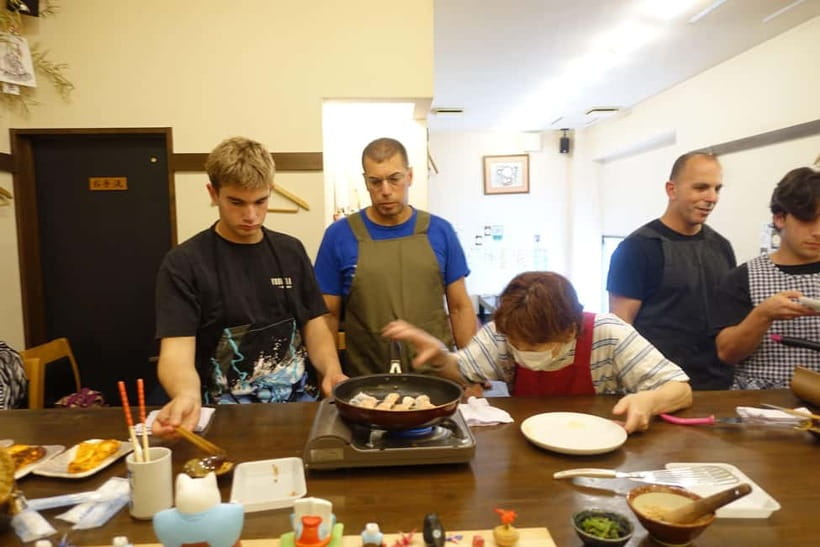
The venue is about a seven-minute walk from Morinomiya Station. It is also just one station from Osaka Castle Station on the JR line, so you can pair the class with a visit to Osaka Castle.
This makes the timing practical. You could schedule the cooking class before visiting the castle, or use it as a food-focused stop after sightseeing. The activity is also accessible from Shinsaibashi and Namba, so it can fit into a day that begins or ends in central Osaka.
Allow time for the walk from the station. Seven minutes is short, but you still need to find the correct entrance and look for the sign at the meeting point. Since the meeting information simply notes that there is a sign, check the exact directions supplied after booking rather than relying only on the station name.
Transportation to and from the activity is not included. That is normal for a city cooking class, but you should add your train or subway fare when planning the day. The central location keeps this cost and effort fairly modest.
The best pairing is probably Osaka Castle, since the route is particularly convenient. Shinsaibashi and Namba also work, though you should allow enough time for the class and the rest of your plans. This is not an activity to squeeze into a schedule with a train departure immediately afterward.
Who will enjoy this class most
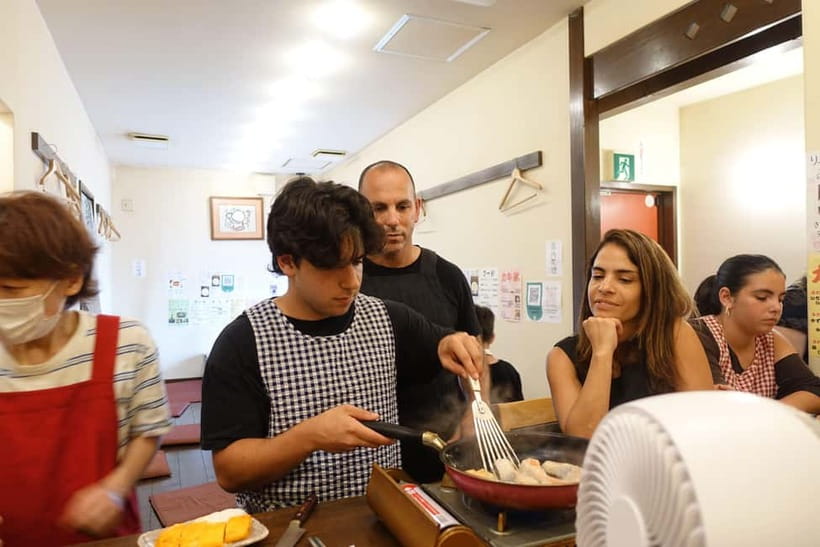
I would put this near the top of the list for families. The cooking is collaborative, the class is short, and the format gives children a job to do. The available feedback from families points to an enthusiastic teacher and children who enjoyed the activity.
It also suits couples and friends who want a shared experience. Cooking together creates natural conversation, and the small group size avoids the feel of a large factory-style tour. You can work on the same selected dish and enjoy the matcha portion together.
Beginners should feel comfortable booking. The class specifically provides support from an Osaka mom for people unfamiliar with cooking. You do not need to be the person who normally prepares meals at home.
Experienced cooks may still enjoy it, but the appeal will be cultural and social rather than technical. Since you choose one cooking category and have only two hours, this is not designed as an advanced culinary course.
People with food allergies should not book this activity. The information asks you to report allergies or dietary restrictions in advance, but it also lists people with food allergies as not suitable. That is a clear reason to contact the provider before making any payment, and to choose another activity if your needs cannot be safely accommodated.
The class is also not suitable for wheelchair users. Comfortable shoes and comfortable clothes are recommended, which is sensible for a kitchen-based activity.
Practical planning tips for the day
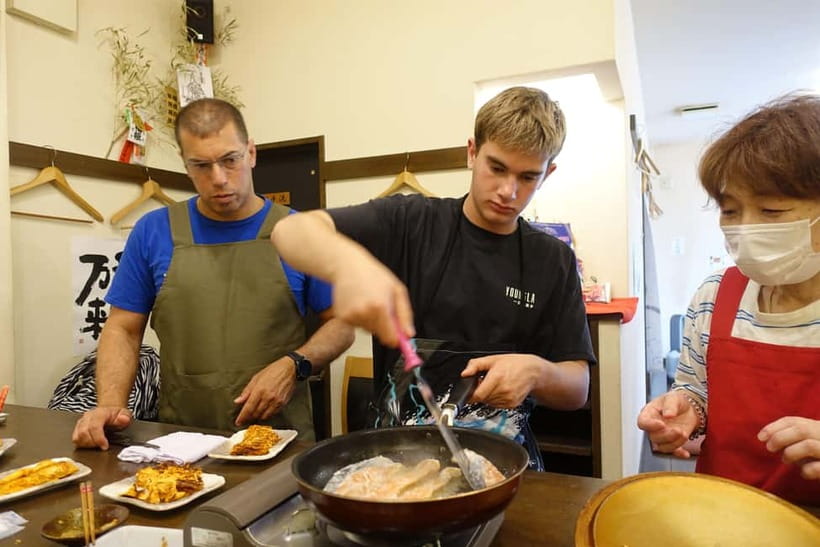
Wear clothes you can move in and shoes that feel steady. You will be taking part in food preparation, so this is not the moment for restrictive clothing or footwear you dislike walking in.
The included items are the cooking class, ingredients for the selected dish, and the matcha experience. The information also says to bring ingredients, which conflicts with the note that all ingredients are provided. I would clarify this point before attending so you know if anything specific is expected from you.
Tell the provider about dietary restrictions in advance. Even if you do not have a food allergy, it is wise to share relevant food concerns before the class rather than raising them after cooking begins.
The host or greeter can communicate in English and Japanese. The meeting point has a sign, and the venue is a seven-minute walk from Morinomiya Station. Keep these details handy on the day, especially if you are arriving with children.
Free cancellation is available up to 24 hours before the activity for a full refund. You can also reserve now and pay later, which helps if your Osaka schedule is still changing. Check the available starting times because the class duration is two hours, and the exact schedule may affect your plans for Osaka Castle or central Osaka.
Should you book the Wa Cafe Kitajima class?
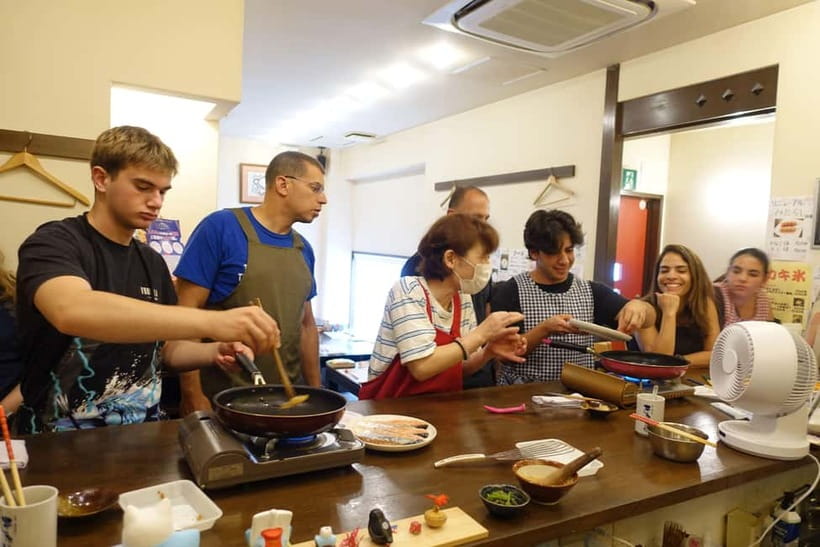
Book it if you want to do more than eat Japanese food. The strongest reasons are the small group, the choice of an Osaka-linked okonomiyaki option, the practical home-cooking and bento choices, and the friendly help associated with Ikuko.
I would especially recommend it for families, first-time visitors, and anyone who wants recipes they can try again at home. The combination of cooking and matcha gives you a good two-hour break from sightseeing without sending you far from Osaka’s main areas.
Skip it if you need wheelchair access, have food allergies, or want a formal tea ceremony or an advanced culinary lesson. The price is fair for guided participation and a small group, but it is not a bargain meal.
For most visitors who enjoy hands-on activities, this is a useful and personal way to spend part of an Osaka day. Choose your dish carefully, confirm the ingredient instructions, and leave enough time to walk from Morinomiya Station.
FAQ
How long does the Japanese cooking and matcha experience last?
The activity lasts two hours.
How much does the experience cost?
The listed price is $64 per person.
Which dishes can I choose to make?
You can choose one option from home-cooked dishes, okonomiyaki, or bento.
Is matcha included?
Yes. A matcha making experience is included with the cooking class.
Where is the meeting point?
The venue is about a seven-minute walk from Morinomiya Station. There is a sign at the meeting point.
Is the activity suitable for people with food allergies or wheelchair users?
No. The activity is listed as not suitable for people with food allergies or wheelchair users. You should also inform the provider in advance about any dietary restrictions.
More Workshops in Osaka
- Sushi Making Osaka Roll and Authentic Japanese Sushi Class
★ 5.0 · 1,220 reviews - Osaka: Roll and Authentic Sushi Making Class in Dotonbori
★ 4.9 · 239 reviews - Ramen and Gyoza Cooking Class in Osaka
★ 5.0 · 202 reviews - Osaka: Sushi Class in Dotonbori
★ 4.9 · 160 reviews
Just added in Osaka
- Urban Canvas: Osaka Street Art Bike Tour★ 5.0 · 10 reviews
- Anime Cosplay Photshoot-50 Digital Photos Provided★ 5.0 · 8 reviews
- TeamLab Botanical Garden Osaka Ticket★ 3.5 · 6 reviews
- Umeda Sky Building & Kuchu Teien Observatory Ticket in Osaka★ 4.5 · 3 reviews
- Immerse in Judo Martial Arts Class from Japan★ 5.0 · 4 reviews
- Cherry Blossom Buddha and Mt.Yoshino with Strawberry Picking Tour★ 4.5 · 5 reviews
- Traditional Home cooking Experience in Osaka, Japan★ 5.0 · 14 reviews
- Traditional Calligraphy Experience near Dotonbori★ 5.0 · 3 reviews
Osaka Cooking Classes, compared.

Matcha Making Class in Osaka with Authentic Japanese Sweets Set
Read our review →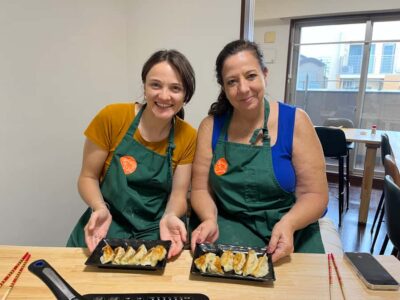
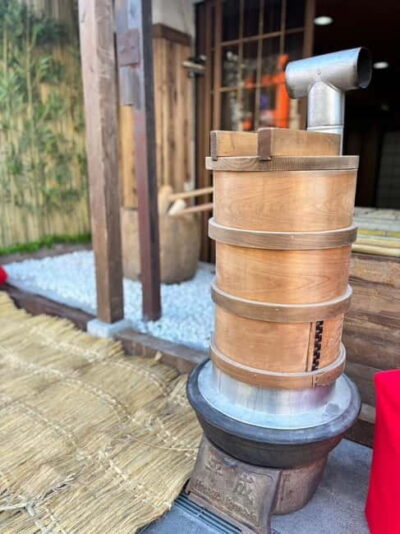
Traditional Mochi Pounding Experience with Tasting
Read our review →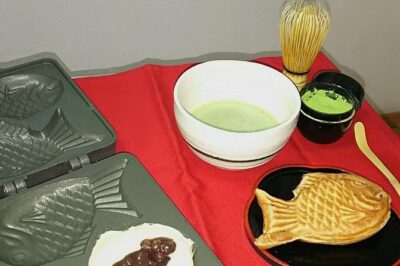
Osaka Cooking Class: Okonomiyaki &Japanese cuisines experience
Read our review →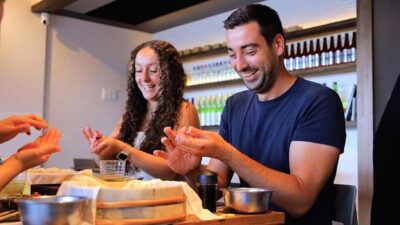
Roll and Authentic Sushi Making Class in Dotonbori
Read our review →

Osaka Sake Tasting & Takoyaki Cooking Experience
Read our review →Browse the lists this tour appears in