
Reviewed · OSAKA TEA CEREMONIES
Osaka: Tea Ceremony, Calligraphy, and Kimono Experience
A kimono fitting, a bowl of matcha, and your own Japanese calligraphy make this more than a photo stop. At Sazanka, you move through three classic arts in a quiet indoor setting, with English guidance and only your own group taking part.
I like the private format, which keeps the pace personal rather than rushed. I also like the practical souvenirs: you can take home your calligraphy, and several visitors have made a fan or other paper piece to remember the afternoon.
The main consideration is the price, $97.73 per person. That is not a bargain for a short cultural activity, and transportation to Sazanka is not included. Still, the fee covers dressing, clothing, tea, sweets, materials, and English help in one booking.
Key points to know before booking
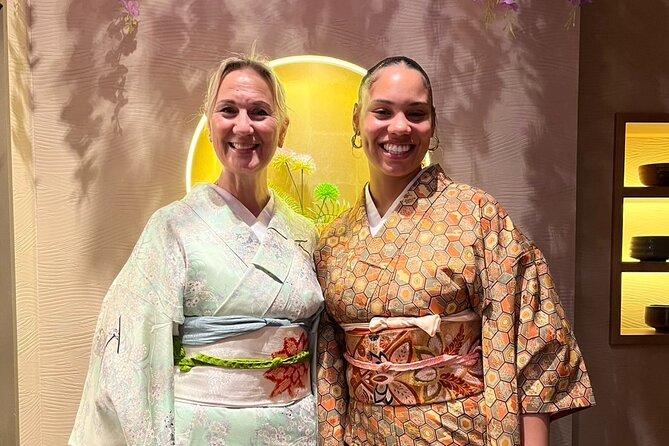
- Three Japanese traditions in one visit: Kimono, matcha tea ceremony, and calligraphy are combined into a single three-hour session.
- A private setting: Only your group participates, which is useful for families, friends, and anyone who prefers not to perform in front of strangers.
- English support throughout: Beginners receive friendly explanations and help with each stage.
- A comfortable indoor retreat: The climate-controlled room is a practical choice during Osaka’s hot, humid summers or rainy days.
- Useful take-home memories: Your calligraphy supplies and paper are included, and you can photograph yourself in the kimono.
- Central Osaka location: Sazanka is near public transportation in Tennoji Ward, though you arrange your own way there.
Three Japanese arts in one quiet afternoon
This experience works because the three activities complement one another. The kimono gives you the visual transformation, calligraphy gives you something to make, and the tea ceremony slows the visit down.
You are not simply watching a demonstration. You put on the clothing, hold the brush, and take part in the tea ritual. That hands-on approach makes the session a good introduction if Japanese customs feel unfamiliar or intimidating.
The setting matters, too. Sazanka is indoors and climate-controlled, so you do not need to plan around Osaka’s heat, rain, or winter chill. For a city sightseeing day, three hours in an air-conditioned traditional setting can be a welcome change of pace.
The experience is private, not a large class. That means you can ask questions, receive help, and take photos without worrying about keeping up with a room full of people. It is especially well suited to a family group, a pair of friends, or a parent and grown child.
More tea ceremonies in Osaka:
- Osaka: Tea Ceremony Experience
★ 4.9 · 1,426 reviews - Tea Ceremony Experience in Osaka Doutonbori
★ 5.0 · 754 reviews - Matcha Making Class in Osaka with Authentic Japanese Sweets Set
★ 5.0 · 509 reviews
Choosing a kimono at Sazanka
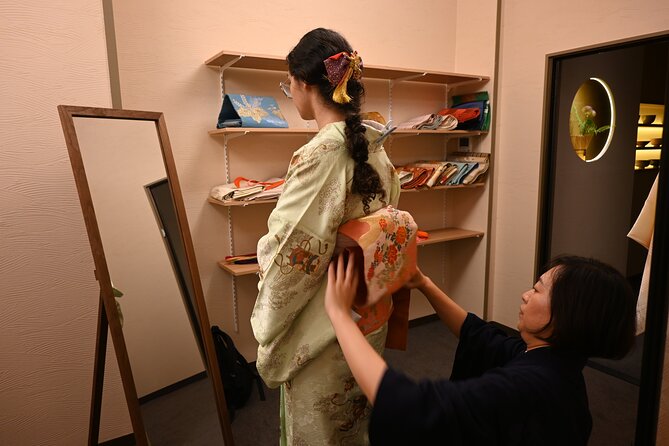
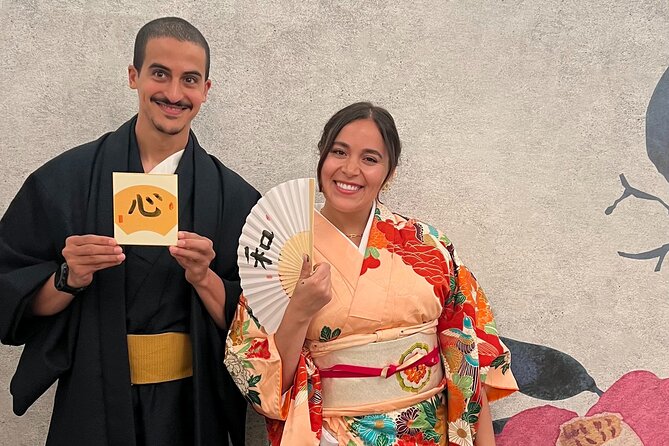
The kimono portion begins with selecting your outfit and receiving a full rental package. The price includes the kimono, obi sash, and accessories, along with private dressing service.
If you have never worn a kimono, this is where the staff’s assistance matters most. A kimono is not something you casually wrap around yourself and tie in place. The layers, sash, and accessories need careful arrangement, and having someone handle the fitting lets you enjoy the look without struggling with the details.
The dressing is part of the cultural lesson. You get a sense of how structured the clothing is, how the obi changes the silhouette, and why getting dressed is traditionally a formal process rather than a quick costume change.
Some descriptions of the visit also include hair styling with the kimono. Since the listed inclusions specifically guarantee the clothing, accessories, and dressing service, ask about the exact hair arrangements available when you book if that detail is important to you.
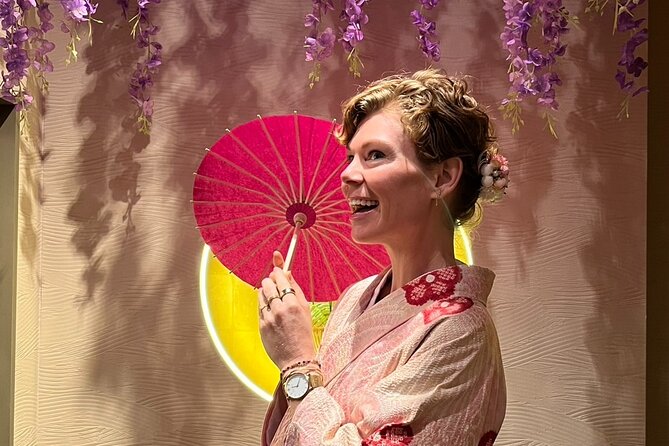
Allow time for photos once you are dressed. The kimono is one of the most memorable parts of the afternoon, and the indoor setting gives you a reliable place to take pictures even when the weather outside is poor.
One practical point: formal Japanese clothing can feel snug and restrictive compared with everyday clothes. You may want to wear something comfortable underneath and avoid scheduling a rushed activity immediately afterward. The supplied information does not state a dress code, so you can ask the provider if you have concerns about clothing, footwear, or changing arrangements.
A beginner-friendly calligraphy lesson
Calligraphy brings a quieter, more focused part to the session. You receive the tools and paper needed for the activity, so you do not need to bring supplies.
The value here is not producing museum-quality work. It is learning how the brush behaves, trying the strokes yourself, and seeing how much control Japanese writing requires. English-speaking support helps take the pressure off, especially if you cannot read Japanese characters.
You may create a paper piece or fan to take home. That small souvenir has more personal value than a standard shop purchase because you made it during the lesson. It also gives you a physical reminder of the day that is easy to pack.
Calligraphy can be surprisingly absorbing. The brush forces you to slow down, and the act of making one careful mark feels very different from taking a quick photograph. If you are visiting Osaka with children, the activity offers a creative break from sightseeing, though very young children may need extra help with the tools and paper.
Do not expect a long formal course in Japanese writing. The overall visit includes three separate traditions, so the calligraphy lesson is one part of a larger program. Think of it as a guided introduction and a chance to create something, not a path to mastering the art in one afternoon.
Matcha, sweets, and the tea ceremony
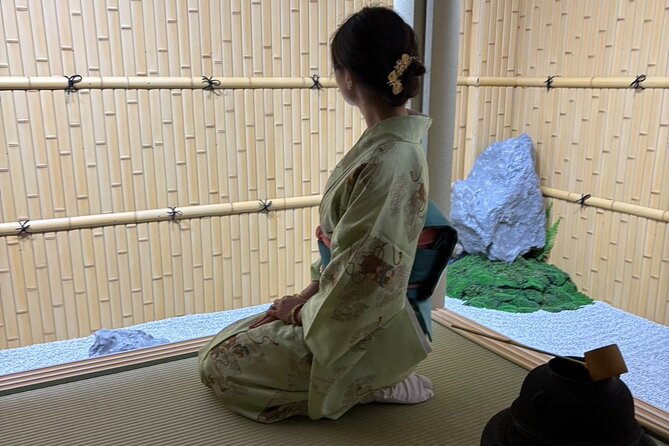
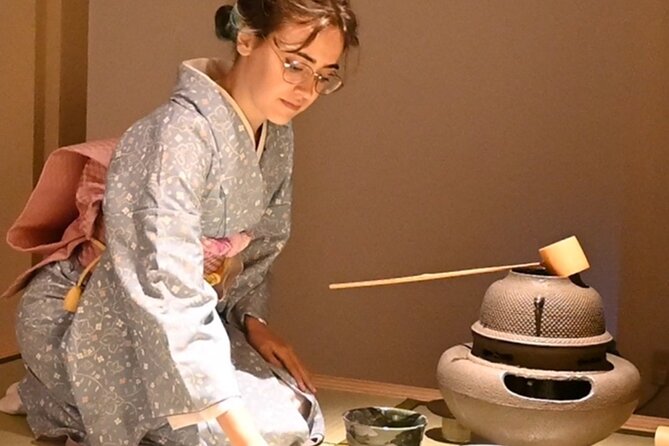
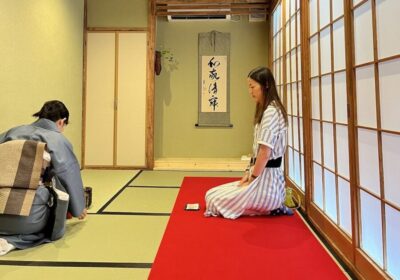
The tea ceremony is likely to be the emotional center of the visit. You receive matcha and traditional sweets, while the host explains the meaning and sequence of the ceremony.
This is not simply a cup of green tea served in a pretty room. The ceremony places importance on calm movement, attention, and respect between host and guest. Even a short introduction can help you notice details that would be easy to miss if you only encountered tea culture at a café.
English guidance is particularly useful here. Tea ceremony customs can feel mysterious when you do not know what to do with your hands, when to drink, or how to respond. The hosts explain the process so you can participate with confidence rather than guess.
The setting is described as peaceful, and the private format should make the ceremony feel more personal. You are not trying to hear an explanation over a large group, and you can ask about the history and meaning behind what you see.
Matcha has a strong, grassy taste that not everyone loves. The sweets help balance it, but do not book this solely because you expect a familiar sweet drink. The appeal is the ritual and the chance to learn, as much as the flavor.
The tea ceremony also supplies a useful contrast to the kimono photos and calligraphy. After the excitement of dressing and the concentration of writing, sitting quietly with tea gives the afternoon a slower rhythm.
More kimono experiences in Osaka:
- Osaka: Sumo Show & Experience w/ Optional Kimono & Hot Pot
★ 4.5 · 609 reviews - Learning Zen of Japanese Calligraphy in kimono near Osaka Castle
★ 4.5 · 53 reviews - Osaka: Kimono or Yukata Rental &Photos Service Options
★ 4.9 · 25 reviews - Kimono photoshoot-Includes 100 photo data
★ 5.0 · 21 reviews
Why English support makes a difference
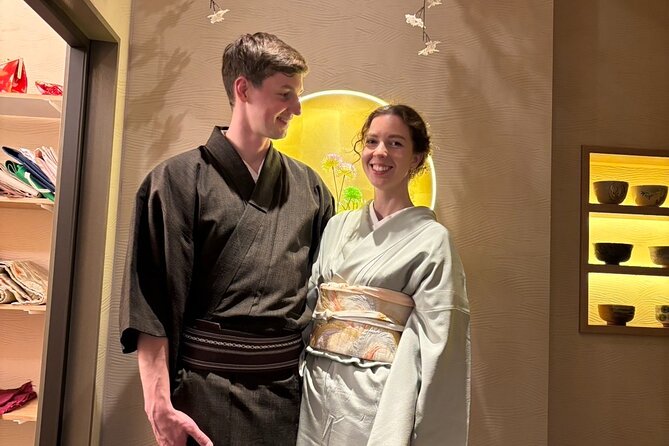
The experience is designed for beginners, and English-speaking assistance is included. That does not mean interpretation is available in every language. Support in languages other than English is not included, so keep that limitation in mind when choosing this activity.
For an English-speaking visitor, the guidance should help at several important moments: choosing and wearing the kimono, following the tea ceremony, and handling calligraphy tools. These are activities where a little explanation changes the experience from awkward to enjoyable.
The hosts are described as warm and welcoming, with patient help at each stage. That matters in a private activity because the tone of the session depends heavily on the people guiding it. You are likely to get more from the visit if you ask questions about the clothing, tea, and writing rather than treating the program as a quick photo opportunity.
At the same time, remember that the experience is an introduction. It offers a taste of Japanese customs, not a complete study of kimono culture, calligraphy, or tea ceremony. If you already have serious training in any of these arts, the lesson may feel basic. For a first encounter, that simplicity is an advantage.
The practical value of a $97.73 booking
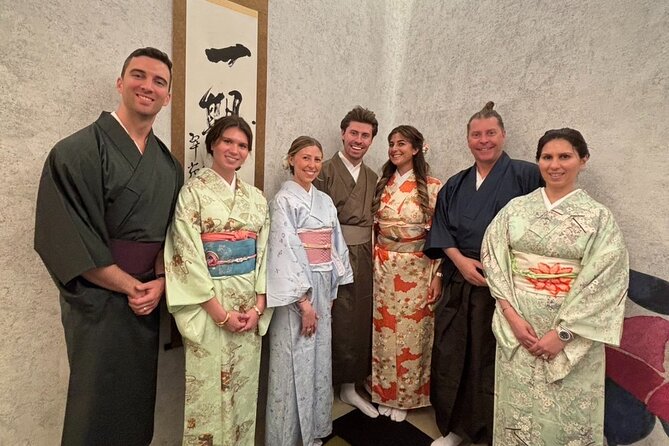
At $97.73 per person, this experience sits in the mid-to-high range for a three-hour activity. You are paying for several services bundled together: full kimono rental, accessories, private dressing, matcha, sweets, calligraphy materials, English assistance, and a private room.
If you priced those pieces separately, the package becomes easier to understand. A kimono fitting alone can be worthwhile for visitors who want photos, while the tea ceremony and calligraphy add cultural content rather than just decoration. The private format also gives the booking more value for a small group than for a solo visitor.
I would compare the price with your priorities. If you mainly want to wear a kimono for ten minutes, this is more than you need. If you want a relaxed afternoon that combines clothing, food, craft, and explanation, the fee is more reasonable.
The six current ratings are all five out of five, with praise focused on the calm atmosphere, kind hosts, clear help, and the chance to try all three activities. That is a small sample, so I would not treat it as proof that every visit will be perfect. It does point to the strongest parts of the program: personal attention and an easy introduction to Japanese tradition.
There are no hidden transportation costs in the listed price, but getting to Sazanka is your responsibility. The meeting point is at 山茶花 Sazanka, 2nd floor of Hayakawa Building, 5-chome 7-21 Uehonmachi, Tennoji Ward, Osaka 543-0001. It is near public transportation, and the activity returns to that same meeting point.
Who will enjoy this most
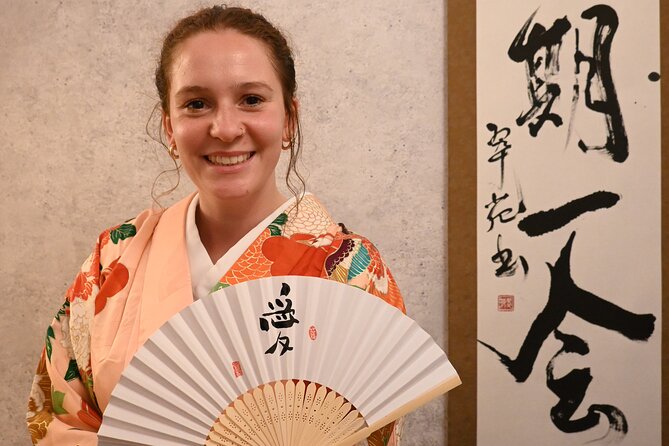
I would recommend the experience to first-time visitors who want a clear introduction to several Japanese customs without spending a full day at a museum or formal cultural school.
It fits especially well for:
- Families, because the private setting allows different ages to participate at their own pace.
- Friends, who can take photos together and compare their calligraphy.
- Couples, especially if one person has always wanted to wear a kimono.
- Parents and adult children, since the activity creates a shared memory without demanding strenuous walking.
- Visitors escaping summer heat, thanks to the indoor, climate-controlled setting.
- People with limited time, because three major cultural activities are combined in about three hours.
It may not be the right choice if you dislike dressing up, have little interest in tea or calligraphy, or want a long, highly technical lesson in one art. It is also less suitable if your schedule is so tight that you cannot spare a full three-hour block.
The private format helps, but it does not turn the session into a completely independent activity. You follow guidance and a planned set of cultural experiences. That structure is helpful for beginners, though visitors seeking a free-form photo session may prefer a simpler kimono rental.
Booking, timing, and cancellation
You receive confirmation when you book, and the mobile ticket makes the reservation easy to keep on your phone. Plan to arrive at the stated meeting point rather than expecting transportation or hotel pickup.
The activity lasts about three hours and ends where it begins. Build in enough time to find the building and reach the second floor, particularly if you are coming from another part of Osaka.
Free cancellation is available if you cancel at least 24 hours before the start time. A cancellation made less than 24 hours in advance is not refundable, and changes inside that window are not accepted. The cut-off follows Osaka local time, so check the time zone before making a last-minute change.
Should you book Sazanka?
Book this if you want one well-organized cultural afternoon with personal help, indoor comfort, and tangible keepsakes. The combination of kimono, calligraphy, and tea ceremony gives you more variety than a single-activity workshop, and the private setting is a real advantage for families and friends.
I would hesitate only if the price feels high for a three-hour introduction or if you want an advanced lesson in one specific tradition. For most first-time visitors, the strongest value is the range: you get dressed, make something, taste matcha and sweets, and learn why the rituals matter.
If that sounds like the kind of Osaka memory you want, this is a sensible booking. Just arrange your own transport, allow the full three hours, and keep your expectations focused on a welcoming first taste rather than expert-level training.
FAQ
How long does the Osaka tea ceremony, calligraphy, and kimono experience last?
The activity lasts approximately three hours.
What is included in the price?
The price includes a full kimono rental with obi and accessories, private kimono dressing, a Japanese tea ceremony with matcha and sweets, calligraphy tools and paper, and English-speaking support.
Is the activity private?
Yes. Only your group participates in the activity.
Where does the experience take place?
It begins and ends at 山茶花 Sazanka Osaka, located at 5-chome 7-21 Uehonmachi, Tennoji Ward, Osaka 543-0001, on the second floor of Hayakawa Building. The location is near public transportation.
Is transportation included?
No. Transportation to the Sazanka store is not included.
Can I cancel for a full refund?
Yes, if you cancel at least 24 hours before the experience start time. Cancellations or changes made less than 24 hours in advance are not accepted for a refund.
More Calligraphy Classes in Osaka
- Osaka: Private Japanese Calligraphy Experience
★ 5.0 · 66 reviews - Calligraphy Workshop in Namba, Dotonbori
★ 5.0 · 57 reviews - Osaka: Private Tea Ceremony and Calligraphy Experience
★ 5.0 · 50 reviews - Samurai dress-up and shows, plus Tea Ceremony & Calligraphy
★ 5.0 · 27 reviews
Just added in Osaka
- Urban Canvas: Osaka Street Art Bike Tour★ 5.0 · 10 reviews
- Anime Cosplay Photshoot-50 Digital Photos Provided★ 5.0 · 8 reviews
- TeamLab Botanical Garden Osaka Ticket★ 3.5 · 6 reviews
- Umeda Sky Building & Kuchu Teien Observatory Ticket in Osaka★ 4.5 · 3 reviews
- Immerse in Judo Martial Arts Class from Japan★ 5.0 · 4 reviews
- Cherry Blossom Buddha and Mt.Yoshino with Strawberry Picking Tour★ 4.5 · 5 reviews
- Traditional Home cooking Experience in Osaka, Japan★ 5.0 · 14 reviews
- Traditional Calligraphy Experience near Dotonbori★ 5.0 · 3 reviews
Osaka Tea Ceremonies, compared.

Matcha Making Class in Osaka with Authentic Japanese Sweets Set
Read our review →
Japanese Traditional Sweets Making and Tea Ceremony
Read our review →
Osaka Temple Cool Foot Bath & Matcha Experience〈45min〉
Read our review →
Samurai Show, Tea Ceremony, Japanese Traditional Activities
Read our review →
Browse the lists this tour appears in