
Reviewed · OSAKA CALLIGRAPHY CLASSES
Tea and Calligraphy Session at a Table in Osaka
Osaka’s Shinsaibashi district offers a quick, hands-on introduction to two Japanese traditions: preparing and enjoying matcha, then making your own calligraphy artwork. The session takes place at a table rather than on tatami, which makes it easier for first-timers, older visitors, and anyone who would rather not kneel.
I like the smart one-hour format and the chance to take home something you made yourself. I also like the friendly, attentive staff, who can help with photographs and keep the session relaxed. The main consideration is that this is a short introduction, not a full formal tea ceremony or an advanced calligraphy lesson.
Key points at a glance
- Two traditions in one hour: Combine matcha tea ceremony and Japanese calligraphy in a compact cultural session.
- Table seating: You can take part without sitting on the floor in traditional tatami style.
- Your artwork goes home: Make a calligraphy piece and keep it as a personal Osaka souvenir.
- Professional guidance: A tea master leads the tea portion, with staff support throughout the experience.
- Small group size: The session accepts a maximum of 10 people, keeping the format fairly personal.
- Central Shinsaibashi setting: Meet at Shinsaibashi ARTY Inn, with the activity ending at the same location.
A practical introduction to Japanese culture in Shinsaibashi
This experience works because it avoids trying to explain all of Japanese culture at once. In roughly an hour, you get two clear activities with something to do at every stage. You are not simply watching a demonstration, and you are not expected to arrive with prior knowledge.
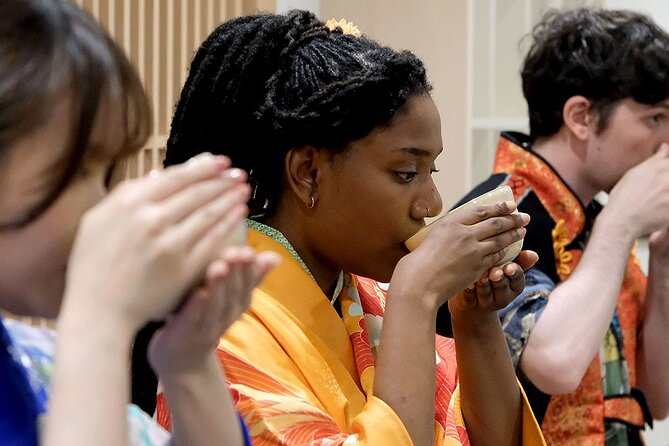
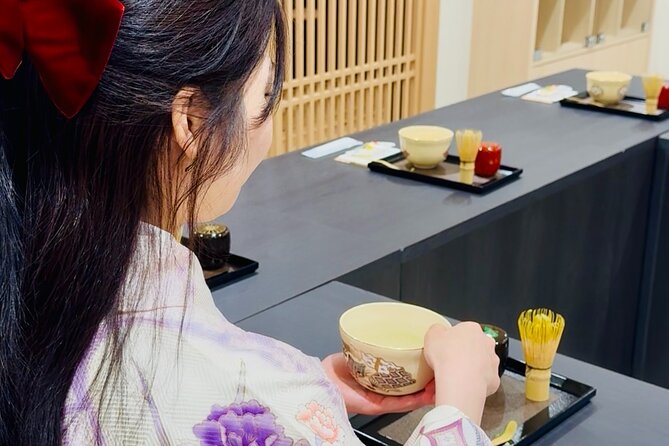
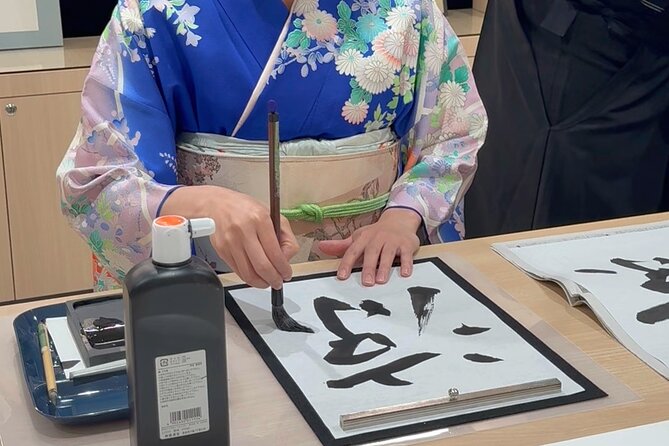
The first part centers on tea ceremony, including matcha and Japanese sweets. A professional tea master guides you through the process and explains the meaning behind what you are seeing. The calligraphy portion gives you a brush, ink, and a chance to create a piece of artwork under instruction.
That mix gives the session a useful balance. Tea ceremony is about careful movement, attention, and hospitality. Calligraphy is more active and personal. You can make choices, practice your brushwork, and leave with a physical reminder of the hour.
The setting at Shinsaibashi ARTY Inn also makes this a practical choice for a busy Osaka day. You do not need to set aside half a day or travel far outside the city center. The meeting point is 2-chōme-17-3 Nishishinsaibashi, in Chuo Ward, and the activity finishes there.
More calligraphy classes in Osaka:
- Osaka: Private Japanese Calligraphy Experience
★ 5.0 · 66 reviews - Calligraphy Workshop in Namba, Dotonbori
★ 5.0 · 57 reviews - Learning Zen of Japanese Calligraphy in kimono near Osaka Castle
★ 4.5 · 53 reviews
Why the table setting matters
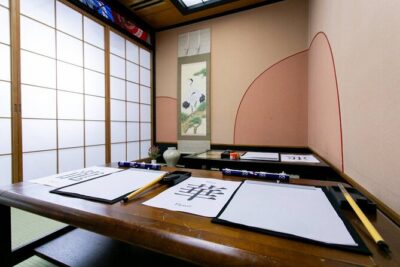
Traditional tea ceremony can involve sitting on tatami flooring, often in a kneeling position. That is part of the classic form, but it is not comfortable for everyone. A table-based session removes one of the biggest physical barriers and lets you focus on the tea, sweets, and instruction.
I see this as one of the experience’s best choices. You can still learn about the tea ceremony and its manners without worrying about stiff knees or struggling to get up. It also makes the activity less intimidating if you have never taken part in a Japanese cultural program before.
The table format may feel less formal than a full tea ceremony in a traditional tearoom. That is the trade-off. If your main goal is to experience the strict architecture, posture, silence, and ritual of a formal ceremony, this session will give you only a shorter, more accessible version.
For most visitors, though, the relaxed format is a benefit. You can ask questions, follow the demonstration, and enjoy the matcha without feeling that one small mistake will spoil the event.
What happens during the tea ceremony
The tea portion includes matcha and Japanese sweets, with guidance from a professional tea master. The available information does not name the tea master, so you should not expect to request a particular instructor when booking.
You can expect the tea master to explain the basic flow and show you how the tea is prepared and served. The value here is not only the taste of matcha. You also get a short lesson in the care given to presentation, utensils, movement, and the relationship between host and guest.
The sweets are an important part of the experience. Japanese tea ceremony traditionally pairs a sweet with matcha, and the sweetness helps balance the tea’s strong, grassy taste. If matcha is new to you, this pairing makes the first sip easier to appreciate.
The tea section is likely to be the calmer half of the hour. It gives you a chance to slow down after walking through Osaka’s busy shopping streets. You will not receive a full historical study in this time, but you will gain a working sense of why the ceremony values precision and hospitality.
Pay attention to the small gestures. The way the bowl is presented, how you receive it, and how you drink are part of the lesson. The staff are also known for helping with photographs, which is useful if you want a record of the occasion without spending the whole session looking at your phone.
Making calligraphy you can actually keep
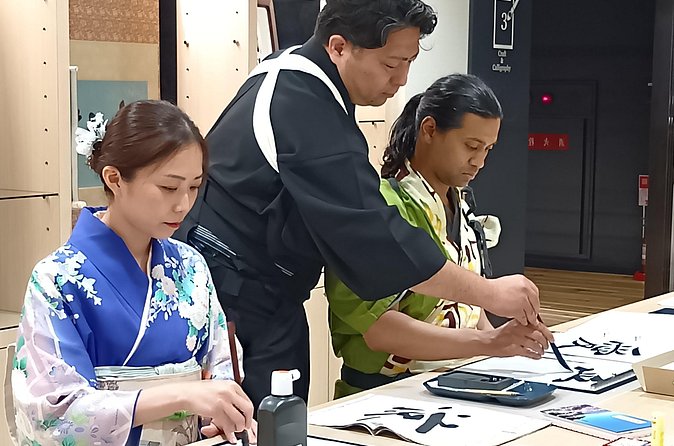
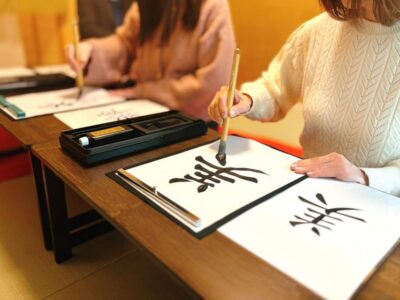
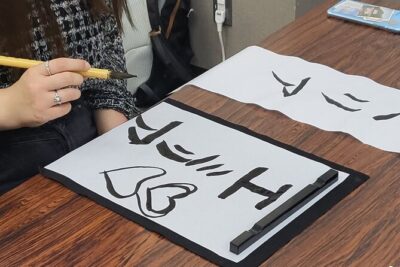
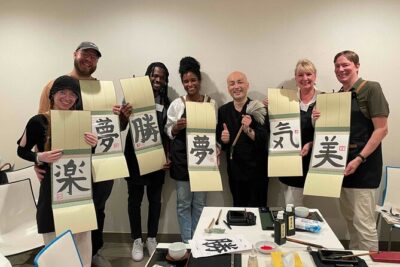
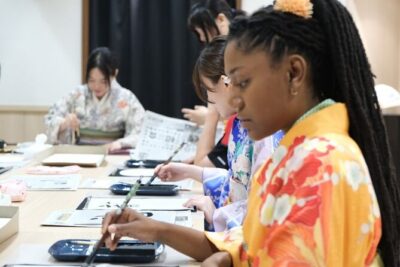
The calligraphy lesson gives the hour a more active finish. You create your own artwork and take it home, which makes the session more memorable than a demonstration alone.
Calligraphy is easy to underestimate. A brushstroke may look simple, but pressure, speed, and direction all affect the result. The instruction gives you a chance to try the technique instead of merely admiring finished examples.
You should approach this as a cultural craft session, not a professional art class. The goal is to learn the basics, enjoy the movement of the brush, and produce something personal. A crooked line or uneven character is part of the experience. You are making a souvenir with your own hand, not buying a flawless piece from a shop.
The activity has earned especially warm praise for being fun and easy to enjoy. That makes it a good choice for families, couples, friends, and solo visitors who want a cultural activity with a clear result at the end. It can also work well if you have a rainy afternoon and want to do something more memorable than another indoor attraction.
Since the session lasts about an hour, the calligraphy instruction will be introductory. If you already practice Japanese calligraphy, you may find it too basic. If you are new to it, the short format is likely just right.
Same city, a completely different kind of afternoon:
- Osaka Go Karting Tour with Funny Costume
★ 5.0 · 2,658 reviews - Osaka Castle: Museum and Tower Entry Ticket
★ 4.5 · 2,380 reviews - Osaka: Shinsekai Food Tour with 13-15 Dishes at 5 Eateries
★ 4.8 · 2,204 reviews - Osaka Food Tour: 13 Dishes at 5 Local Eateries
★ 5.0 · 2,149 reviews
The staff make the short format work
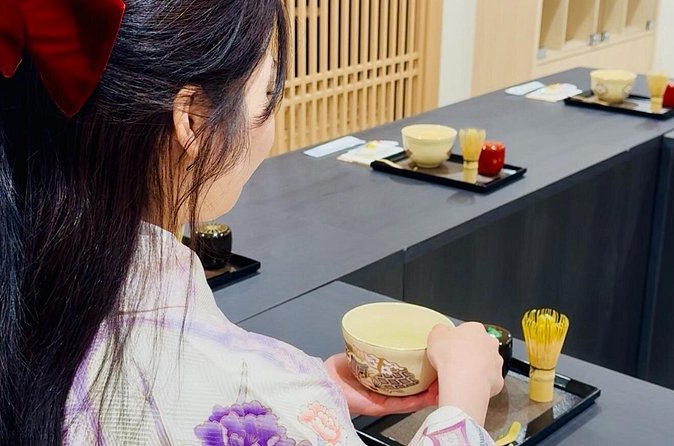
The strongest positive response centers on the staff’s friendliness and attention. That matters in an activity involving unfamiliar customs. Good guidance keeps the tea ceremony from feeling stiff and helps calligraphy beginners relax.
Staff members are also reported to help with photographs. This is a small detail, but it has real value. Cultural activities often make it awkward to take pictures while participating. Having staff who can help means you can stay involved and still leave with a few useful images.
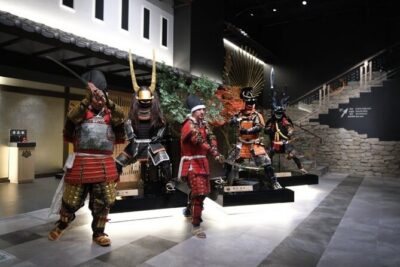
The facility may also have displays of samurai outfits, which add visual interest before or after the main session. Some feedback also refers to musical instruments and a samurai experience at the same facility. These are separate offerings, not part of the $22.76 tea and calligraphy price, so keep the main activity’s limits clear.
You can pay extra for other options, including a samurai immersive experience with traditional Japanese music at ¥3,300 per person, samurai armor dressing at ¥12,000, kimono dressing at ¥12,000, or ninja dressing at ¥5,000. Those additions may appeal if you want a larger photo session, but they can quickly change the cost of the visit.
Is $22.76 good value?
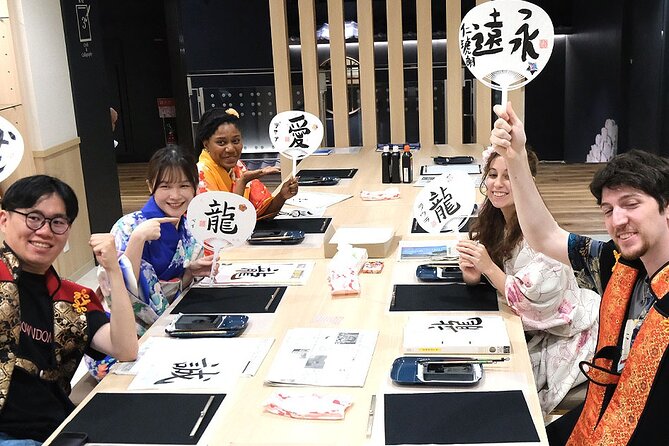
At $22.76 per person, this is priced as an accessible cultural introduction rather than a luxury ceremony. You receive matcha, Japanese sweets, professional tea guidance, calligraphy instruction, and artwork to take home.
I consider that solid value if you want two activities in one visit. Paying separately for a tea experience and a calligraphy lesson would usually take more time and planning. Here, the two are joined in one location, and the one-hour duration fits neatly into a day of sightseeing.
The value is strongest for first-time visitors. You get a clear sample of two traditions without committing to a long formal program. The price also makes this easier to add to an Osaka itinerary than a more elaborate dressing or performance package.
There are limits. The session is short, and the tea ceremony is adapted for a table. You should not book it expecting an extensive cultural lecture, a formal tearoom setting, or advanced calligraphy training. If those are your priorities, a specialist experience may be a better fit.
The additional activities are another point to consider. The base price does not include samurai displays as an interactive experience, traditional music, armor dressing, kimono dressing, or ninja dressing. Ask yourself what you really want before adding extras. The basic tea and calligraphy session already provides a complete one-hour activity.
Group size, location, and timing
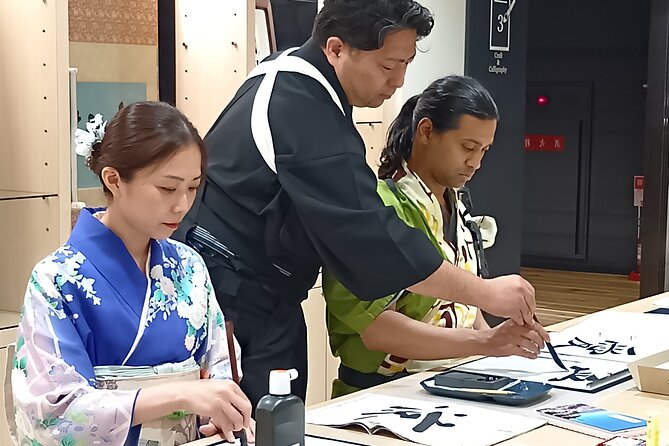
The maximum group size is 10 people. That is small enough to keep the session manageable, though it is not a private lesson. Your experience may feel more personal than a large bus group, but you will still share the table and instruction with others.
The activity takes place at Shinsaibashi ARTY Inn in Osaka’s Chuo Ward. The location is near public transportation, making it practical to pair with time in Shinsaibashi. You meet at 2-chōme-17-3 Nishishinsaibashi, and you return to the same point when the session ends.
Because the experience lasts about one hour, you can place it between shopping, meals, or another attraction. I would avoid scheduling it too tightly against a train departure or timed ticket. The session itself is short, but city transport and finding the correct building can take extra time.
The activity is available as a mobile ticket, so you do not need to carry a printed voucher. Confirmation arrives at booking. Service animals are allowed, and most people can participate.
It is wise to check the meeting address before setting out. Shinsaibashi is an easy area to reach, but busy commercial streets can make a precise building entrance harder to spot than expected.
Who will enjoy this experience most?
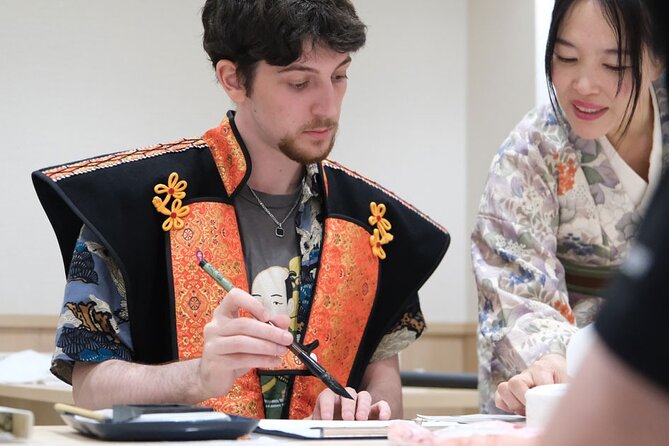
This is a good match for you if you want a short, friendly introduction to Japanese culture with plenty of hands-on participation. It suits first-time visitors, couples, families, solo visitors, and anyone who wants a slower cultural break during a day in central Osaka.
It is also helpful for people who cannot or do not want to sit on tatami. The table setup makes the activity physically easier without removing the main elements of the tea and calligraphy lessons.
Children and adults can both find something to enjoy, though the provided details do not specify a minimum age. If you are booking for a child, confirm age requirements before paying.
You may want to skip it if you already have extensive experience with tea ceremony or calligraphy. Advanced students may want longer instruction and more time to practice. You may also prefer another option if your main interest is dressing in traditional clothing or taking part in a samurai activity.
For everyone else, the compact structure is a strength. You get a taste of two traditions, not a long lecture about them.
Booking and cancellation advice
You can cancel for a full refund up to 24 hours before the experience’s start time. Cancellations made less than 24 hours in advance are not refunded, and changes inside that window are not accepted.
The experience is booked, on average, 18 days ahead. That suggests you should reserve in advance if your Osaka schedule is fixed, especially if you need a particular time. The group limit of 10 also makes early planning sensible.
Since the activity ends at the meeting point, you can arrange your next stop from there. That makes it simple to continue exploring Shinsaibashi without arranging a separate transfer.
Should you book the tea and calligraphy session?
Book it if you want an affordable, central, beginner-friendly way to try matcha tea ceremony and Japanese calligraphy in one hour. The table seating, friendly staff, professional tea guidance, and take-home artwork give the experience real practical value.
Do not book it expecting a complete formal ceremony or a serious calligraphy course. This is a welcoming introduction, with enough ritual to feel authentic and enough flexibility to keep beginners comfortable.
For most visitors, I would choose the combined tea and calligraphy option rather than doing only one activity. The two halves complement each other, and the finished artwork gives you a lasting souvenir. If you want a low-cost cultural stop in Osaka that feels personal without taking over your day, this is a sensible pick.
FAQ
Where does the tea and calligraphy session take place?
It takes place at Shinsaibashi ARTY Inn in Osaka. The meeting address is 2-chōme-17-3 Nishishinsaibashi, Chuo Ward, Osaka, 542-0086, Japan.
How long does the experience last?
The session lasts approximately one hour.
What is included in the price?
The experience includes a tea ceremony with matcha and Japanese sweets, plus Japanese calligraphy. You create a calligraphy artwork and take it home.
Can I choose only tea ceremony or only calligraphy?
Yes. You can choose to take part in both activities or select only tea ceremony or only calligraphy.
Is the tea ceremony held on tatami flooring?
No. The experience uses a table setting rather than traditional tatami seating, which is more accessible for beginners.
How many people can join the session?
The maximum group size is 10 people.
What happens if I need to cancel?
You receive a full refund if you cancel at least 24 hours before the experience start time. Cancellations or changes made less than 24 hours before the start time are not accepted for a refund.
Just added in Osaka
- Urban Canvas: Osaka Street Art Bike Tour★ 5.0 · 10 reviews
- Anime Cosplay Photshoot-50 Digital Photos Provided★ 5.0 · 8 reviews
- TeamLab Botanical Garden Osaka Ticket★ 3.5 · 6 reviews
- Umeda Sky Building & Kuchu Teien Observatory Ticket in Osaka★ 4.5 · 3 reviews
- Immerse in Judo Martial Arts Class from Japan★ 5.0 · 4 reviews
- Cherry Blossom Buddha and Mt.Yoshino with Strawberry Picking Tour★ 4.5 · 5 reviews
- Traditional Home cooking Experience in Osaka, Japan★ 5.0 · 14 reviews
- Traditional Calligraphy Experience near Dotonbori★ 5.0 · 3 reviews
Osaka Calligraphy Classes, compared.
Learning Zen of Japanese Calligraphy in kimono near Osaka Castle
Read our review →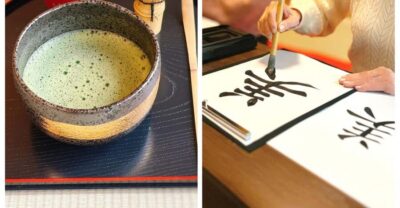
Samurai dress-up and shows, plus Tea Ceremony & Calligraphy
Read our review →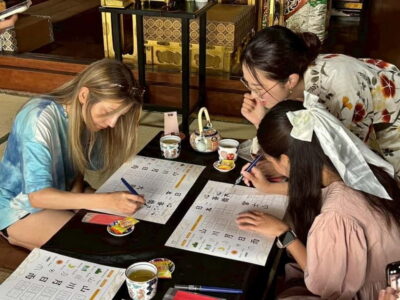
Premium Kimono Dressing, Tea Ceremony, Calligraphy, Samurai show
Read our review →Browse the lists this tour appears in