
Reviewed · OSAKA COOKING CLASSES
Osaka Okonomiyaki Cooking Class “Learn here and make it at home”
Osaka’s best-known comfort foods are made for hands-on cooking. In this small class, you prepare okonomiyaki, a savory pancake packed with cabbage and fillings, then turn batter and octopus into takoyaki, those round street-food bites that look simple until you try to shape them.
I like two things right away: the group is limited to eight people, and the class gives you written recipes plus a chance to see the ingredient packaging you may need at a Japanese supermarket. I also like the relaxed hour at the end, when you eat what you made with sake, beer, or soft drinks. The main consideration is that the experience lasts about three hours, so it needs a proper place in your Osaka schedule rather than a quick stop between sights.
Key points at a glance
- Two Osaka specialties in one class: Make both okonomiyaki and takoyaki from the basic ingredients.
- Small groups of up to eight: You get more room to ask questions and work with the instructors.
- Useful take-home help: Written recipes and ingredient packaging make it easier to repeat the dishes at home.
- Central but quiet setting: The kitchen is a five-minute walk from Shinsaibashi and Honmachi stations.
- One hour for eating and drinks: Your cooking ends with a full tasting session, including sake, beer, and soft drinks.
- Multilingual instruction: English is available, with Japanese and Spanish support upon request.
Why these two dishes fit Osaka so well
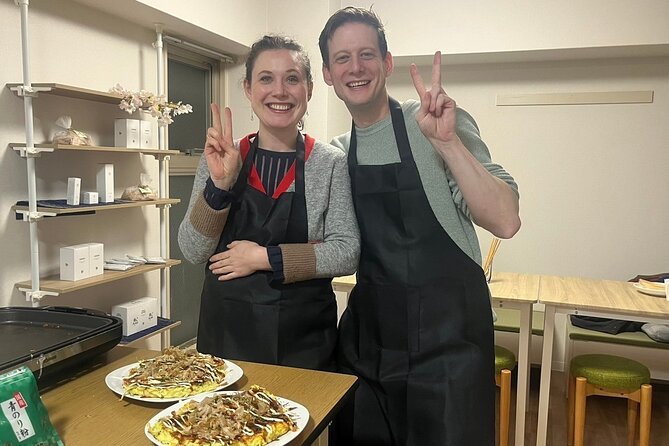
Okonomiyaki is often described as a Japanese savory pancake, but that simple label misses its appeal. The batter holds cabbage and fillings such as pork or seafood, then the cooked pancake is finished with sauce, bonito flakes, and other toppings. It is filling, casual food, and the ingredient mix gives you a clear sense of how Japanese home-style cooking can be both practical and fun.
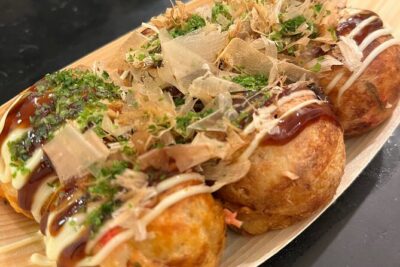
Takoyaki takes a different kind of skill. The savory dough is cooked in round molds with octopus inside, then finished with sauce, bonito flakes, and seaweed powder. Getting neat balls takes practice, which is part of the entertainment. You are not just watching a cook flip food on a hot surface. You are learning the movements yourself.
Making both dishes gives you a useful comparison. Okonomiyaki teaches you how batter, cabbage, and fillings come together in one large pancake. Takoyaki shows how the same broad idea can be shaped into individual portions. You leave with two recipes rather than one, and each uses techniques you can try again in your own kitchen.
More okonomiyaki classes in Osaka:
- Osaka Cooking Class: Okonomiyaki &Japanese cuisines experience
★ 5.0 · 261 reviews - Cooking Ramen&Gyoza/KatsuCurry/Bento/Okonomiyaki+Store Tour@Osaka
★ 5.0 · 138 reviews - Osaka Okonomiyaki Cooking Experience!
★ 5.0 · 79 reviews
A quiet kitchen near Shinsaibashi and Honmachi
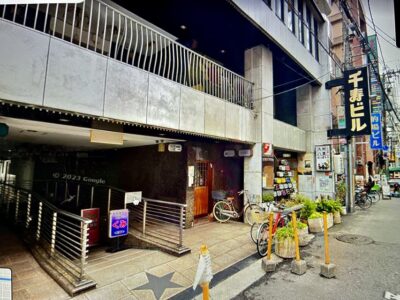
The kitchen is in central Osaka, about a five-minute walk from both Shinsaibashi and Honmachi stations on the Osaka Metro. That makes the class easy to pair with time in the city center, while the quiet neighborhood setting gives you a break from the noise of the main shopping streets.
The meeting point is listed at 南船場コレット, 4-4-3-1 Bakurōmachi, Chuo Ward, Osaka, 541-0059, Japan. Check the exact map pin and address after booking, especially if you are arriving in the evening. The activity begins and ends at the same location, and private transportation is not included.
This arrangement is simple but useful. You do not need to arrange a separate ride home, and you can plan dinner or an evening walk around the same part of Osaka. Since the class includes food and drinks, you may not need another full meal afterward.
The first 30 minutes: ingredients, tools, and a clear start
The class opens with about 30 minutes of orientation and preparation. This is the part that helps you understand what you are about to cook before the hot work begins.
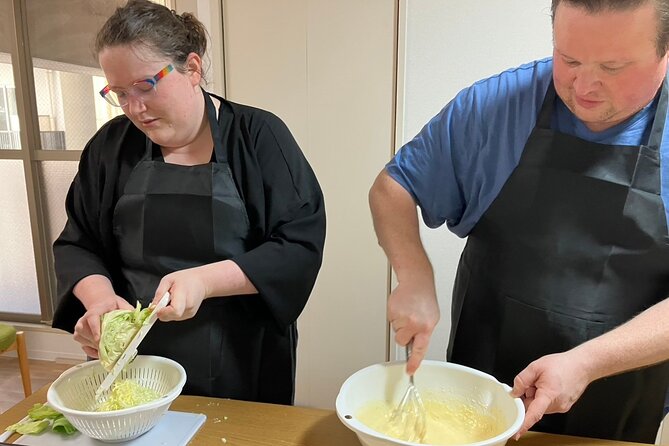
All ingredients and kitchen tools are provided. You also receive an apron and disposable plastic gloves, so you can arrive with nothing more than yourself. That is convenient for people moving around Osaka with limited luggage or those who do not want to shop for specialty ingredients before class.
The preparation period is also where the cooking becomes more useful for home use. You learn about the different ingredients that go into the dishes, and the packaging can help you recognize what to look for in a Japanese supermarket later. That detail matters. A recipe is easier to repeat when you know not only the ingredient name, but also what the package looks like on a crowded shelf.
The instructors speak English, and Japanese or Spanish instruction is available upon request. That makes the class a practical choice if you want to ask questions as you work, rather than simply follow a demonstration. The group size of eight or fewer should also help keep the preparation personal.
The 90-minute cooking session
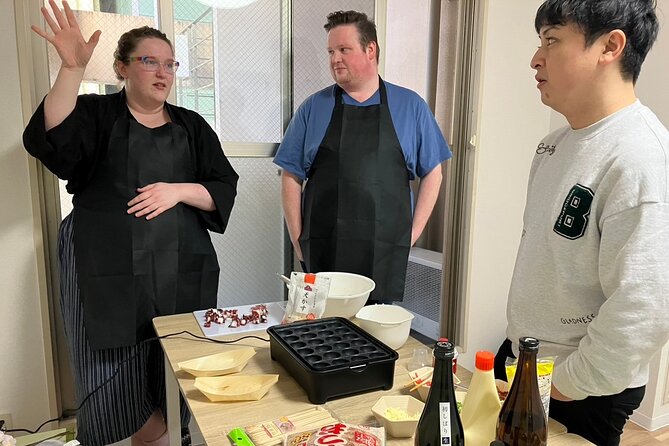
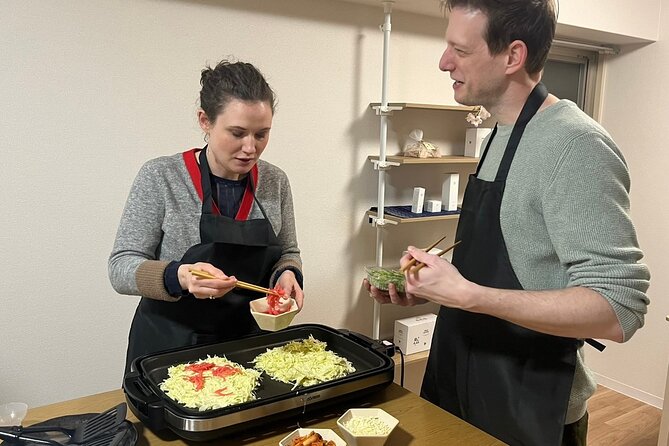
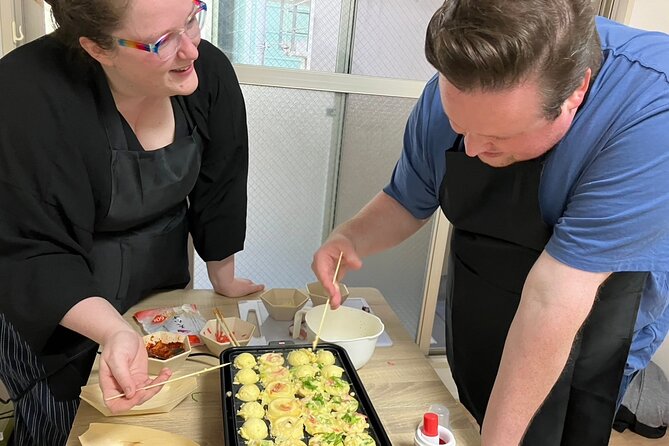
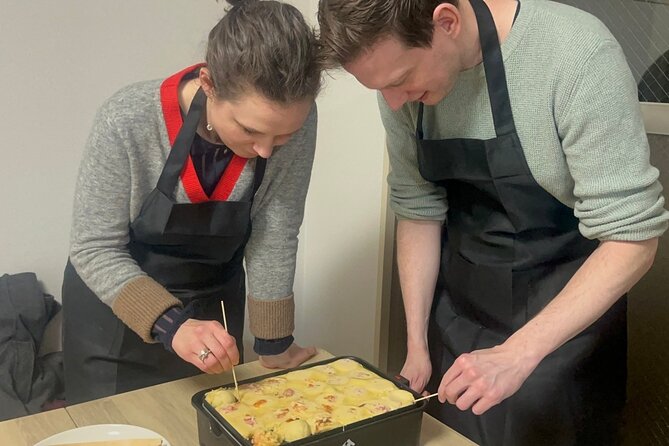
The main cooking period lasts about an hour and a half. You work through okonomiyaki and takoyaki with step-by-step help from the instructor.
For okonomiyaki, expect to handle the batter, cabbage, and selected fillings before cooking the pancake and adding the finishing toppings. The dish is flexible by nature, with choices such as pork and seafood. The important lesson is not just the final taste. It is seeing how the ingredients are combined, cooked, and finished with sauce, bonito flakes, and other toppings.
Takoyaki is likely to demand more attention. The dough balls are cooked in a special mold and filled with octopus. The food is served with sauce, bonito flakes, and seaweed powder. The round shape is part of the dish’s identity, but it also makes the cooking more active than simply placing a pancake on a hot surface.
The class format suits people who learn by doing. If you prefer to sit back and watch a chef work, this may feel more involved than expected. That is also its strength. You get direct practice, and the instructor can guide you through the parts that are difficult to judge from a written recipe alone.
Families can take part, and the class has worked well for younger children. Still, the cooking involves hot equipment, so an adult should expect to stay involved with children throughout the session. The experience is also a good fit for couples, friends, and solo visitors who enjoy meeting a small group around a shared task.
More cooking classes in Osaka:
- Matcha Making Class in Osaka with Authentic Japanese Sweets Set
★ 5.0 · 509 reviews - Osaka Sushi Making Experience
★ 5.0 · 400 reviews - Osaka: Ramen and Gyoza Cooking Class in Dotonbori
★ 5.0 · 378 reviews - Osaka: Traditional Mochi Pounding Experience with Tasting
★ 4.9 · 306 reviews
The final hour: eat what you made
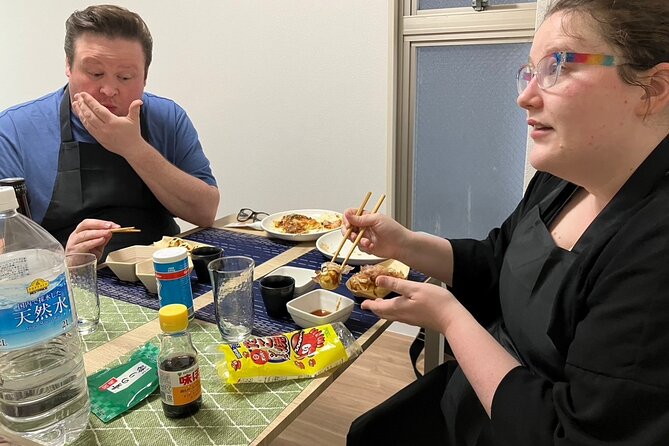
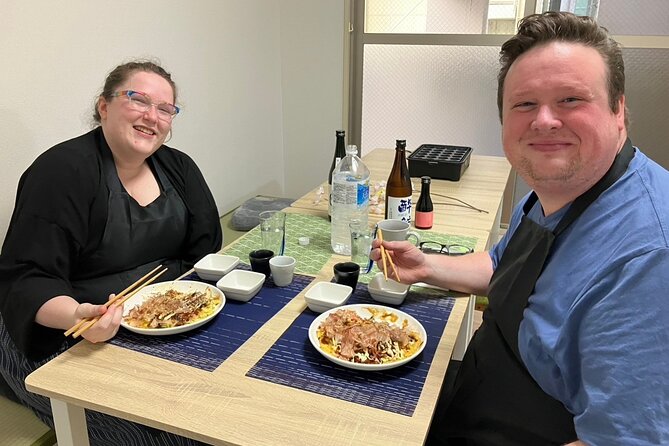
After cooking, you have about an hour to sit down and taste the okonomiyaki and takoyaki. This is more than a quick sample. The food you have prepared becomes the main event, with drinks included.
People aged 20 and above can have Japanese sake and beer. Anyone under 20 receives non-alcoholic drinks instead. Soda and other soft drinks are included as well, so the class works for mixed-age groups and for anyone who does not drink alcohol.
The tasting period gives you time to compare the two dishes while they are fresh. You can notice the contrast between the larger, softer okonomiyaki and the crisp-edged, round takoyaki. It also leaves room for conversation with the instructor and the rest of the small group. One especially appealing feature is the relaxed pace. You are not rushed out as soon as the food is ready.
Because the class includes a full hour for eating, the $70 price should be judged as more than a short cooking demonstration. You are paying for three hours of instruction, ingredients, equipment, aprons, recipes, and drinks, along with a meal. It is not the cheapest way to eat okonomiyaki in Osaka, but it offers practical instruction and a social meal rather than just a plate of food.
What makes the recipes useful at home
The most valuable part of this experience is its attention to repetition. The class is designed to show you how to make these dishes at home, not just enjoy them once in Osaka.
The written recipes give you something concrete to take away. The chance to see ingredient packaging is equally useful, since Japanese supermarket labels can be difficult to identify if you are not familiar with the products. You can use that visual memory when shopping later, either in Japan or at a Japanese grocery store back home.
You should still keep your expectations realistic. Recreating restaurant-style food depends on the equipment available in your kitchen, especially for takoyaki. The class gives you the method and ingredients, but the result at home may vary if you do not have the same cooking surface or mold. That is not a flaw in the class. It is simply part of learning a dish that has its own specialized shape.
The people who will get the most from this class
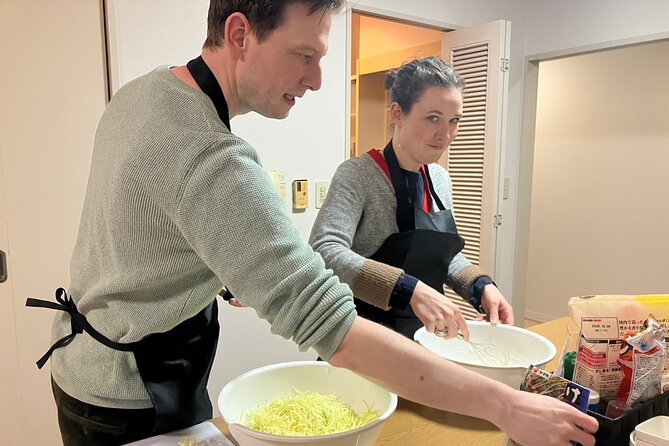
I would choose this class if you want a food activity with a clear local connection and a useful skill at the end. It is especially well suited to:
- Couples or friends who want to cook together rather than sit through a passive demonstration.
- Families looking for an activity that can include younger children.
- First-time visitors who want an approachable introduction to Osaka food.
- People who enjoy recreating dishes from a trip at home.
- Anyone who appreciates a small class with English instruction and optional Japanese or Spanish support.
It may not be the best pick if your priority is a very fast meal, a private class, or a broad tour of several Osaka neighborhoods. You stay in one kitchen for roughly three hours, and the focus is narrow by design: two dishes, their ingredients, the cooking process, and the meal afterward.
Timing, booking, and practical details
This experience is commonly booked around 19 days ahead, so I would not leave it until the last night of a short Osaka visit. Confirmation is normally sent at booking, although reservations made within two days of the start time may take up to 48 hours to confirm, subject to availability.
You can cancel for a full refund up to 24 hours before the start time. Changes or cancellations made inside that window are not accepted and are not refunded. The stated policy also says the activity requires good weather. If poor weather causes a cancellation, you are offered another date or a full refund.
The class uses a mobile ticket, and you should bring the phone containing your booking details. There is no need to bring ingredients, utensils, an apron, or gloves. Private transportation is not included, but the nearby Metro stations make public transit the sensible choice.
How the experience feels for different groups
For a couple, the class offers a friendly evening with enough structure to avoid awkwardness. You have a shared task, a meal at the end, and time to talk while cooking and eating. If only two people book a particular session, the setting can feel especially personal, though the group size will depend on the date.
For families, the hands-on format can hold attention better than a long cultural talk. Children can see the ingredients change as they cook, and the final tasting gives them a clear reward. Adults should be ready to help with hot cooking surfaces and follow the instructor’s directions closely.
For solo visitors, the small maximum group makes it easier to join the conversation. The instructors are there throughout the cooking, so you are not left trying to interpret each step on your own. The meal afterward also gives the class a natural social finish.
The multilingual setup is another practical advantage. English is part of the regular instruction, while Japanese and Spanish support can be requested. If you need a particular language, ask after booking rather than assuming it will be available at every session.
Should you book the Osaka cooking class?
Book it if you want to do more than sample Osaka food. The strongest reasons are the two-dish format, the small group, the written recipes, and the useful look at ingredient packaging. The included meal and drinks make the $70 cost easier to justify, particularly if you value instruction as much as eating.
Skip it if you only want a quick, inexpensive plate of okonomiyaki, or if a three-hour kitchen session does not fit your plans. For most food-minded visitors, though, this is a friendly and practical way to spend an evening in Osaka. You eat well, learn a pair of local specialties, and take home enough guidance to try them again.
FAQ
How long does the Osaka cooking class last?
The class lasts approximately three hours. It includes 30 minutes of orientation and preparation, 1 hour and 30 minutes of cooking, and 1 hour of tasting with drinks.
Where does the cooking class meet?
The kitchen is at 南船場コレット, 4-4-3-1 Bakurōmachi, Chuo Ward, Osaka, 541-0059, Japan. It is about a five-minute walk from both Shinsaibashi and Honmachi stations on the Osaka Metro.
What dishes will I make?
You will make okonomiyaki, a savory pancake with batter, cabbage, and fillings such as pork or seafood, and takoyaki, savory dough balls filled with octopus.
Are drinks included?
Yes. The class includes sake, beer, and soft drinks. Alcohol is served only to people aged 20 and above. Those under 20 receive non-alcoholic drinks.
Is the class taught in English?
Yes. An English-speaking instructor is included. Japanese and Spanish-speaking instructors are available upon request.
What happens if I need to cancel?
You can cancel up to 24 hours before the start time for a full refund. Cancellations or changes made less than 24 hours before the start are not accepted. If poor weather cancels the activity, you are offered another date or a full refund.
More Workshops in Osaka
- Sushi Making Osaka Roll and Authentic Japanese Sushi Class
★ 5.0 · 1,220 reviews - Osaka: Roll and Authentic Sushi Making Class in Dotonbori
★ 4.9 · 239 reviews - Ramen and Gyoza Cooking Class in Osaka
★ 5.0 · 202 reviews - Osaka: Sushi Class in Dotonbori
★ 4.9 · 160 reviews
Just added in Osaka
- Urban Canvas: Osaka Street Art Bike Tour★ 5.0 · 10 reviews
- Anime Cosplay Photshoot-50 Digital Photos Provided★ 5.0 · 8 reviews
- TeamLab Botanical Garden Osaka Ticket★ 3.5 · 6 reviews
- Umeda Sky Building & Kuchu Teien Observatory Ticket in Osaka★ 4.5 · 3 reviews
- Immerse in Judo Martial Arts Class from Japan★ 5.0 · 4 reviews
- Cherry Blossom Buddha and Mt.Yoshino with Strawberry Picking Tour★ 4.5 · 5 reviews
- Traditional Home cooking Experience in Osaka, Japan★ 5.0 · 14 reviews
- Traditional Calligraphy Experience near Dotonbori★ 5.0 · 3 reviews
Osaka Cooking Classes, compared.

Matcha Making Class in Osaka with Authentic Japanese Sweets Set
Read our review →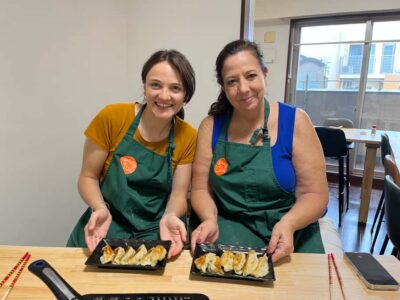
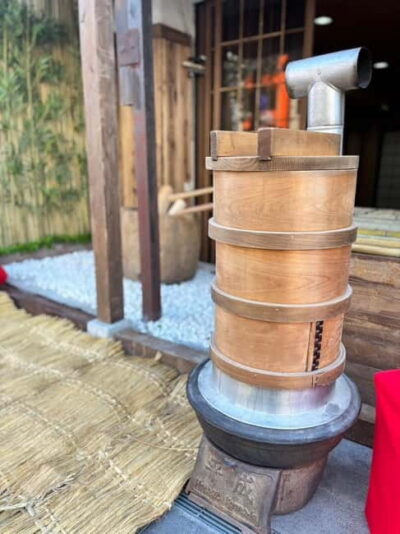
Traditional Mochi Pounding Experience with Tasting
Read our review →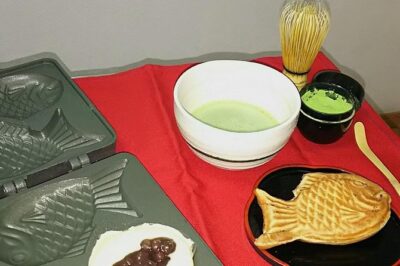
Osaka Cooking Class: Okonomiyaki &Japanese cuisines experience
Read our review →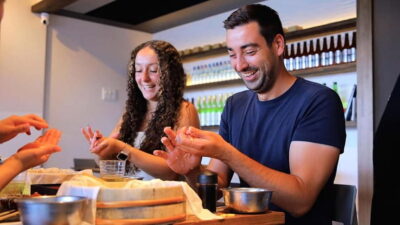
Roll and Authentic Sushi Making Class in Dotonbori
Read our review →
Osaka Sake Tasting & Takoyaki Cooking Experience
Read our review →Browse the lists this tour appears in