
Reviewed · OSAKA SAMURAI EXPERIENCES
Osaka: Learn Bushido – Trial Slashing with Samurai Sword
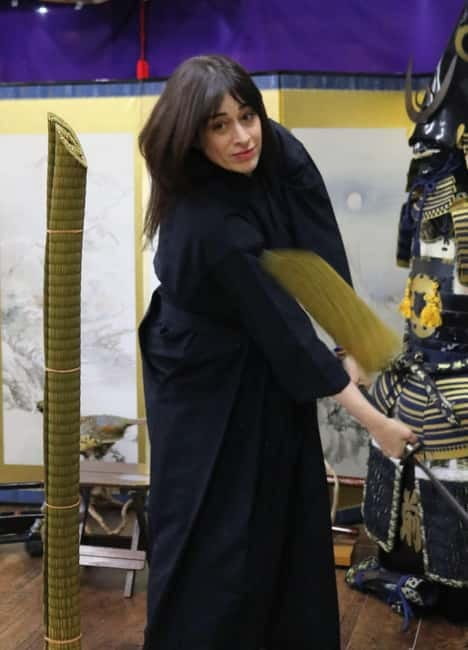
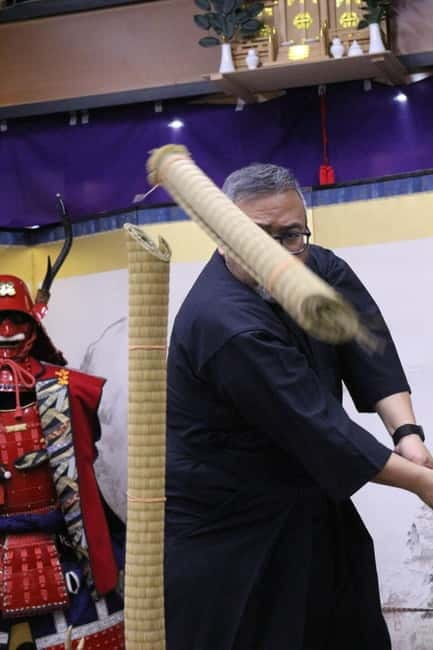
The sharpest part of this Osaka experience comes at the end: after learning how samurai hold, draw, swing, and return a sword, you make a controlled cut through a rolled tatami mat with a real Japanese sword. It is more hands-on than a costume photo stop.
I like the small groups of up to four, which give the instructor room to correct your stance. I also like the balance of physical practice and cultural detail, from bowing at the dojo shrine to learning why the sword carried such weight in samurai life.
The main consideration is timing. It is sold as a one-hour activity, but a session can run closer to two hours when interpretation, photographs, and extra practice are included. Arrive ready to change clothes and stay focused.
Key points to know before booking
- You practice before you cut: The real sword comes only after basic stances, swings, and sword handling.
- You wear dogi and hakama: Clothing is supplied, so you look and move the part without packing a costume.
- The group is limited to four: This matters when you are learning movements that need close correction.
- You receive photographs: Staff photograph the test cutting and send the images to your designated email address.
- The location is near Osaka Castle: The actual venue is Bushi no Homare, across the river from Osakajokoen Station.
- The price is $92 per person: That includes clothing, an instructor, tax, tips, and photos, but not transport or hotel pickup.
What this samurai lesson really offers
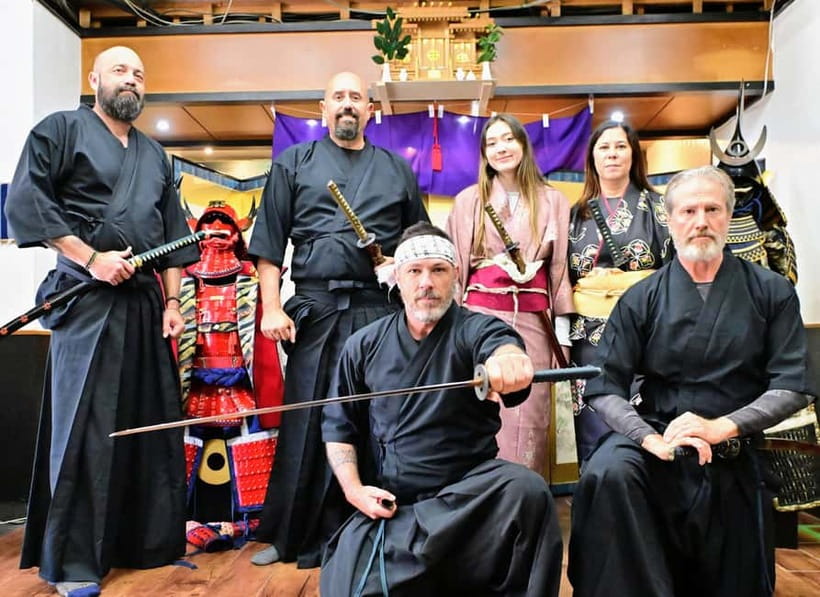
This is not a staged sword show where you sit back and watch a master perform. You change into traditional training clothes, learn the basic movements, and eventually handle a real Japanese sword under instruction.
The activity takes place at Bushi no Homare, also called Samurai Honor, in Osaka’s Joto-ku. The venue also offers calligraphy and tea ceremony activities, and the sword lesson shares a room with a calligraphy space. Look for a wooden sign marked Honor of the Samurai, a rack of activity pamphlets, and kimonos or hakama hanging near the storefront.
The experience is framed through bushido, the code associated with samurai conduct. The lesson connects sword work with courtesy, discipline, self-control, and responsibility. That gives the activity more substance than simply dressing up and posing with a katana.
You should also keep your expectations in check. In one hour, you will not become a trained swordsman. You will learn a compact set of movements, receive an introduction to manners and terminology, and make a supervised cut. That is enough for a memorable taste of the practice, not a full martial arts course.
More samurai and ninja experiences in Osaka:
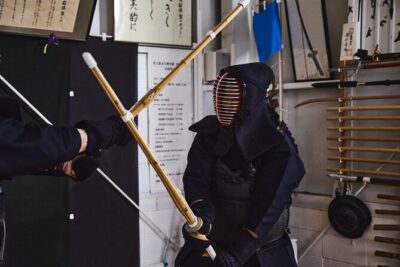
- Samurai Training Experience KENDO in Osaka
★ 5.0 · 515 reviews - OSAKA NIGHT FUSION Japanese Taiko Kabuki Samurai Dance Show
★ 4.8 · 155 reviews - Osaka: Samurai Training Experience KENDO in Osaka
★ 5.0 · 111 reviews
Changing into dogi and hakama
Arrive 30 minutes before your reserved start time. You need that extra time for instructions and changing clothes, and the supplied outfit is part of what makes the lesson feel different from an ordinary sightseeing stop.
You wear a dogi, the training jacket associated with Japanese martial arts, along with hakama trousers. Bring a T-shirt to wear underneath. The supplied clothing is practical for the session, but you should still arrive in something comfortable enough for swinging and stepping.
The outfit also helps you understand the formality of the lesson. The instructor is not simply handing you a prop. You are being asked to move with care, bow correctly, and treat the sword as a serious object.
Some participants have also had the chance to try on samurai armor. That is not presented as a guaranteed part of every booking, so consider it a possible extra rather than a promised feature.
Beginning with a bow at the dojo shrine
The lesson opens and closes with a bow. A shrine is enshrined in the dojo, and the bow sets the tone for the session.
This may feel formal if you expected a quick photo opportunity, but it gives the activity a clear structure. The bow signals that sword practice is tied to respect and self-control, not just force. You will be shown how samurai manners fit into the movements before you begin handling the sword.
The instructor also explains the bond between a samurai and the Japanese sword. The sword was treated as the samurai’s soul, and carrying it meant accepting responsibility for a deadly weapon. The lesson includes details about how young samurai learned sword use and how a serious sword belt was traditionally worn from around age 15.
Some of the historical explanation is presented through stories of daily life. The sword stayed close even in peaceful times, including during meals and sleep, so it could be drawn quickly if needed. These details help explain why the session places so much attention on how you walk, bow, draw, and return the sword.
Learning to walk and wear the sword
Before the larger swings, you practice the samurai walk. This includes learning how to move with the sword belt and how to carry yourself while wearing it.
The lesson uses Japanese terms for the main actions:
- Battou is drawing the sword from its scabbard to cut.
- Chiburui is the symbolic action of removing blood from the blade after a cut.
- Nottou is returning the sword to its scabbard.
You will not simply memorize vocabulary. The terms are tied to a sequence of movements, and the instructor demonstrates how each part fits together. This makes the lesson easier to follow, especially for first-time participants.
The formal language of the samurai class also appears near the end. It connects speech with loyalty, discipline, and bushido. The language lesson is brief, but it adds a cultural layer to the physical practice.
Same city, a completely different kind of afternoon:
- Osaka Go Karting Tour with Funny Costume
★ 5.0 · 2,658 reviews - Osaka Castle: Museum and Tower Entry Ticket
★ 4.5 · 2,380 reviews - Osaka: Shinsekai Food Tour with 13-15 Dishes at 5 Eateries
★ 4.8 · 2,204 reviews - Osaka Food Tour: 13 Dishes at 5 Local Eateries
★ 5.0 · 2,149 reviews
Practicing stances and basic kata
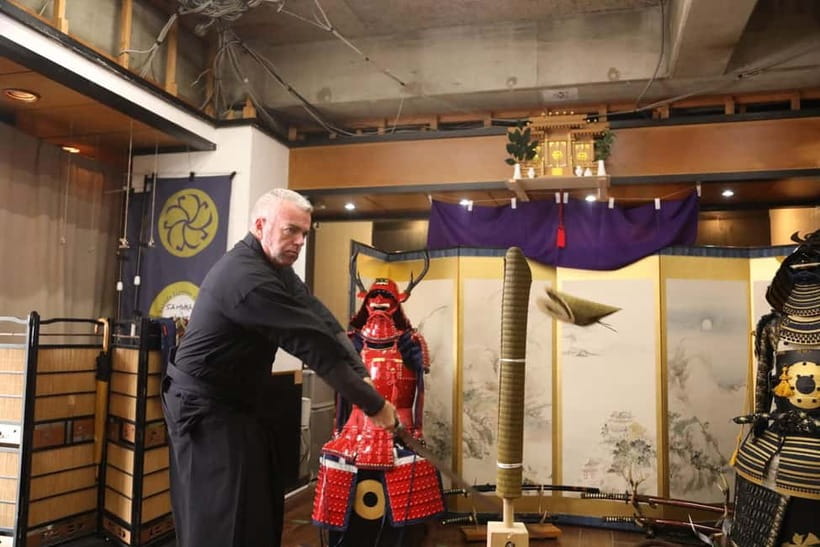
The instructor then introduces the main stances. These include middle stance, upper stance, lower stance, side stance, and an eight-phase stance.
You practice drawing and swinging with an iai practice sword before attempting the final cut. This is a sensible progression. You can learn the footwork and position without immediately working with a live blade.
The key instruction is to let the sword’s weight do the work rather than relying on arm strength. A correct swing may produce a distinctive sound called hi-nari. That sound gives you a simple way to understand whether your movement is close to the intended form.
The master or sensei guides you through basic kata and sword swings, moving to more advanced motions once your first movements are satisfactory. That step-by-step approach matters. Beginners often want to swing harder, but the lesson stresses control and body position instead.
Because the group is limited to four, you have a better chance of receiving individual corrections than you would in a large demonstration. If you are alone, you may receive a private session, depending on the booking pattern.
The real sword and the final tatami cut
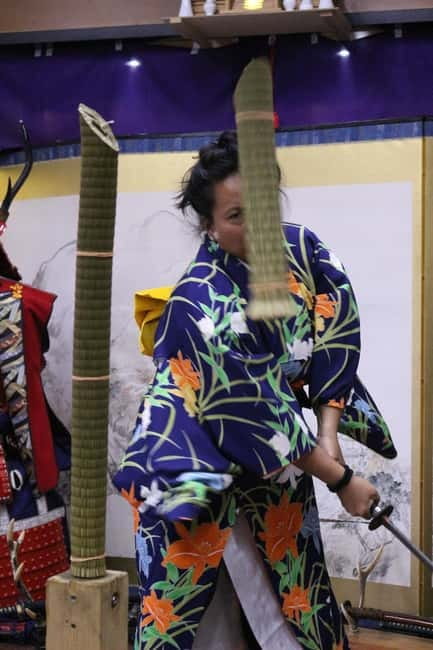
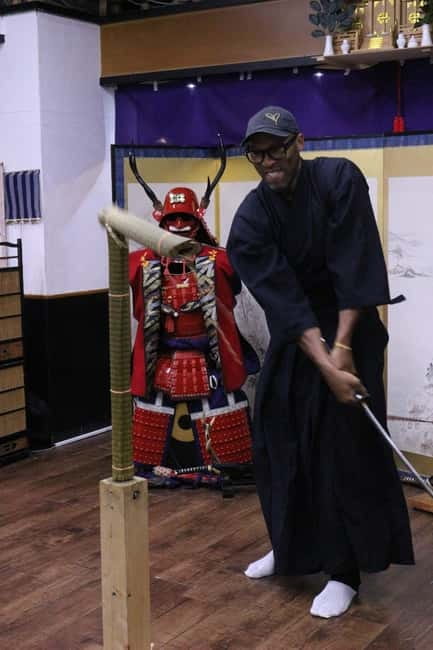
The climax is tameshigiri, or test cutting. You use a real Japanese sword to cut a rolled straw target mounted on a stand.
The target may look like bamboo at first glance, but it is actually rolled tatami mat material. That detail is useful because the cut depends on technique, not brute strength. If the angle or motion is wrong, the sword will not pass cleanly through.
You practice first, then approach the cutting stage under the instructor’s direction. The sequence makes the final moment feel earned. You have already learned the stance, swing, and follow-through, so the cut becomes a practical test of the movements rather than a random stunt.
This is also the point where the activity feels most serious. A real Japanese sword is not a toy, and the session’s emphasis on manners and control makes sense once you reach the cutting stage. Listen closely to the instructor and do not rush the movement.
Photography is included. Staff photograph the moment of test cutting and send the images to your designated email address. You may also ask staff to take pictures on your own phone. The photo service is useful because it lets you concentrate on the lesson rather than trying to set up your own camera.
Video filming is not included, but it is available as a paid option. If you want moving footage, ask about that before the lesson begins.
How much time should you allow?
The advertised duration is one hour. That is a useful planning figure, but you should not schedule a tight connection immediately afterward.
One session described by a participant lasted almost two hours after clothing changes, explanations, practice, and photography. The exact length can depend on the group and the pace of instruction. If you are planning Osaka Castle sightseeing on the same day, leave a comfortable buffer.
The venue is near Osaka Castle, but it is not inside the castle grounds. The address is Excellence Takayama 1F, 2-3-19 Shiginonishi, Joto-ku, Osaka-shi, Osaka 536-0014. The building is easy to reach from Osakajokoen Station, across the river, but use Google Maps rather than Apple Maps because the Apple Maps address is reported as incorrect.
There is no pickup or drop-off at your hotel or station. Transportation is also not included. That keeps the booking simple, but you need to plan your own route and allow time to find the wooden Honor of the Samurai sign.
Is $92 a fair price?
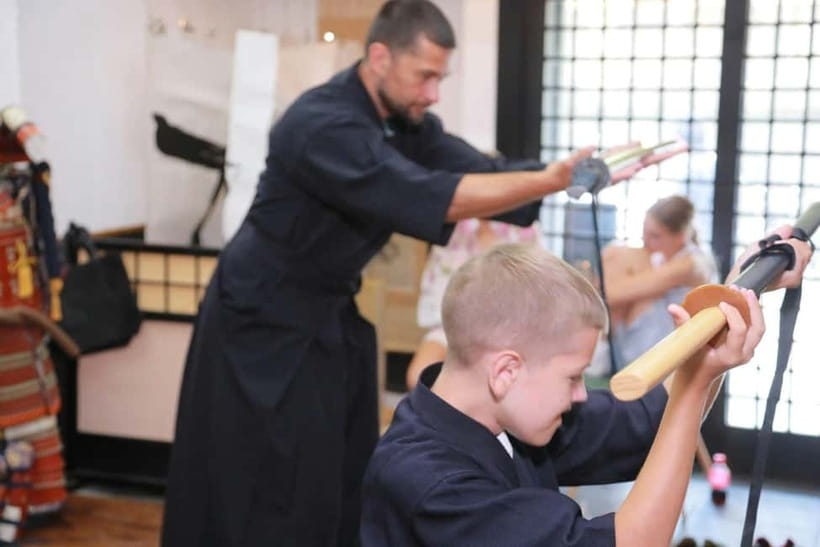
At $92 per person, this is not the cheapest short activity in Osaka. The value depends on what you want from it.
The price includes samurai clothing, a certified professional instructor, tax, tips, and photographs sent by email. It also includes supervised practice with a real Japanese sword and the chance to perform a tatami cut. For someone who wants a focused cultural activity rather than a quick costume photo, those inclusions make the price reasonable.
The small group size is another part of the value. Sword handling requires attention to posture and timing, and an instructor working with no more than four people can give you more direct guidance.
The price is less attractive if you only want to hold a sword for a picture. You spend much of the session learning manners, stances, and technique before the cutting stage. That is a strength for curious learners, but it may feel slow if you want only a fast photo stop.
Tips are included, so you do not need to budget extra for the instructor. Personal expenses, transport, and optional movie shooting cost more.
Who will enjoy this most?
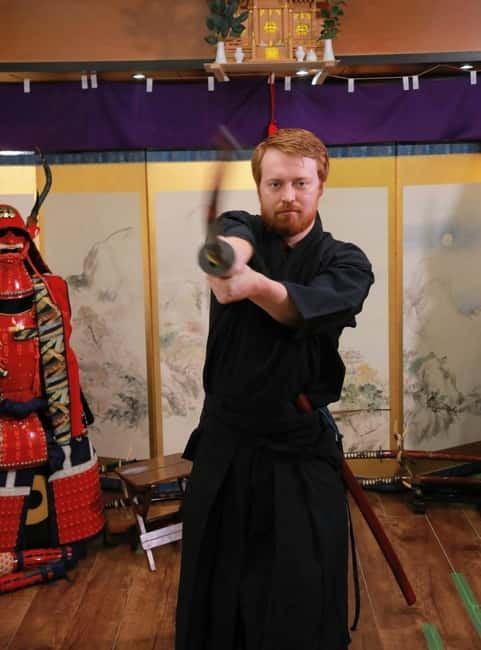
This suits adults and children aged 10 or older who can listen carefully and follow physical instructions. Families can take part together, and the activity can work well for parents who want something more active than a museum visit.
It is also a good fit for anyone who grew up watching samurai films and wants to understand the movements behind the image. The practice is short, but it replaces movie-style action with controlled steps and formal behavior.
You do not need previous sword experience. The lesson starts with basic stances and uses a practice sword before the real cutting. Still, you should be comfortable standing, walking, and swinging a sword under instruction.
The activity is not suitable for children under 10, people with altitude sickness, or people over 95. Strollers, food, drinks, alcohol, drugs, and bachelor or bachelorette party groups are not allowed. This is a quiet, disciplined class, not a party activity.
English and Japanese are the standard languages. Interpreters may be available for Italian, Spanish, French, Chinese, Thai, or Indonesian, but staff schedules are limited. Ask about availability before booking instead of assuming a non-English interpreter can be arranged.
Should you book the samurai sword experience?
Book it if you want to do more than pose in a costume. The strongest part is the clear progression from bowing and samurai manners to stances, sword swings, and a supervised tatami cut. The photographs give you a lasting record, and the small group keeps the lesson personal.
Think twice if your schedule is packed or you dislike formal instruction. The one-hour description can stretch longer, and the activity asks you to pay attention rather than simply watch. For most visitors who want a hands-on cultural experience near Osaka Castle, the combination of clothing, explanation, practice, and real sword cutting makes the $92 worthwhile.
FAQ
Where does the samurai sword activity take place?
It takes place at Bushi no Homare, also called Samurai Honor, at Excellence Takayama 1F, 2-3-19 Shiginonishi, Joto-ku, Osaka-shi, Osaka 536-0014.
What landmark should I look for?
Look for a wooden sign that reads Honor of the Samurai. A rack with Samurai Honor activity pamphlets stands in front of the store, and kimonos and hakama may be hanging nearby.
How long does the activity last?
The stated duration is one hour. You should allow extra time because changing clothes, instruction, practice, and photographs may make the session longer.
How early should I arrive?
Arrive 30 minutes before your reserved start time for instructions and changing clothes.
What clothing should I bring?
Bring a T-shirt. Samurai clothing, including a dogi and hakama, is supplied.
Is transportation included?
No. Hotel and train station pickup and drop-off are not included, and you arrange your own transportation.
What languages are available?
The instructors speak English and Japanese. Interpretation for Italian, Spanish, French, Chinese, Thai, and Indonesian may be possible, but you must ask about staff availability before booking.
Are photographs included?
Yes. Staff photograph the test cutting and send the images to your designated email address. Staff may also take pictures on your phone. Movie shooting is a paid option.
Can children join the activity?
Children under 10 cannot join. Participants aged 10 and older may take part if they can follow the instructor’s directions.
Just added in Osaka
- Urban Canvas: Osaka Street Art Bike Tour★ 5.0 · 10 reviews
- Anime Cosplay Photshoot-50 Digital Photos Provided★ 5.0 · 8 reviews
- TeamLab Botanical Garden Osaka Ticket★ 3.5 · 6 reviews
- Umeda Sky Building & Kuchu Teien Observatory Ticket in Osaka★ 4.5 · 3 reviews
- Immerse in Judo Martial Arts Class from Japan★ 5.0 · 4 reviews
- Cherry Blossom Buddha and Mt.Yoshino with Strawberry Picking Tour★ 4.5 · 5 reviews
- Traditional Home cooking Experience in Osaka, Japan★ 5.0 · 14 reviews
- Traditional Calligraphy Experience near Dotonbori★ 5.0 · 3 reviews
Osaka Samurai Experiences, compared.
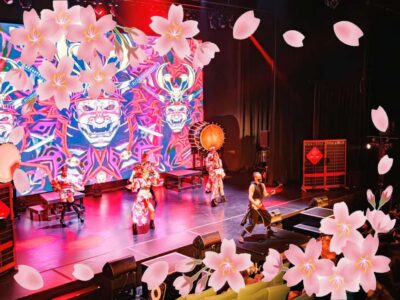
OSAKA NIGHT FUSION Japanese Taiko Kabuki Samurai Dance Show
Read our review →

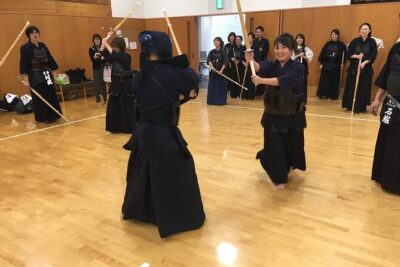
Osaka 2-Hour Genuine Kendo / Samurai Experience In Japan
Read our review →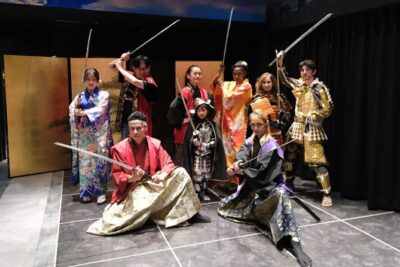
Samurai Show, Tea Ceremony, Japanese Traditional Activities
Read our review →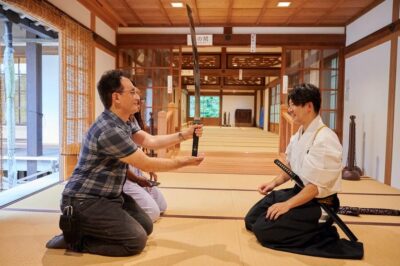
Private Samurai Experience – Train with Sword Master
Read our review →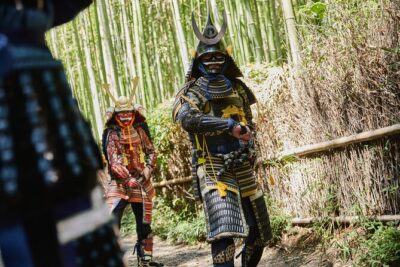
Honor – Experience Samurai & traditional Culture to the fullest
Read our review →Browse the lists this tour appears in