
Reviewed · OSAKA TEA CEREMONIES
Tea ceremony experience in Osaka with a small group
The heart of this experience is simple: you sit in a tatami room, watch a Japanese tea master prepare matcha, then make a bowl yourself. It is not just a tea tasting. You learn how to enter the room, follow the ceremony, handle the tea, and enjoy a traditional sweet in the proper setting.
I like the private group limit of four, which gives the teacher room to explain each step without a crowd. I also like the clear, beginner-friendly format. You do not need prior knowledge of Japanese culture, and an assistant helps make the lesson relaxed and easy to follow.
The main drawback is the meeting point. It is near Ibaraki-shi Station, not in central Osaka, and you must walk about 10 to 15 minutes from the station. The exact address and contact details arrive after booking, so this takes a little more planning than a tour with a fixed hotel pickup.
Key points
- A private group of up to four: You receive more personal attention than in a large cultural demonstration.
- A real tatami-room setting: Learn how to enter and behave in a Japanese-style room before the tea begins.
- You make your own matcha: The session moves beyond watching, with hands-on preparation in the Ryurei table style.
- Traditional sweets are included: The sweet is served with the matcha as part of the ceremony.
- A useful Osaka-Kyoto location: Ibaraki sits between the two cities, making this a possible stop during a wider day of sightseeing.
- A 60 to 90 minute lesson: The timing fits well before or after other plans, though transport time is extra.
Why this small Osaka tea ceremony works for beginners
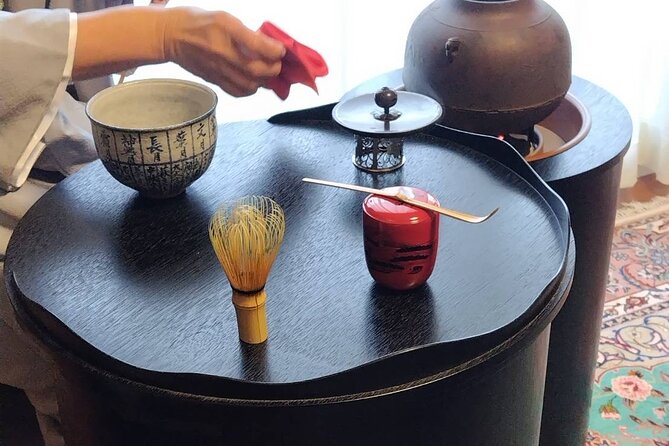
Japanese tea ceremony can look formal from the outside. The gestures are controlled, the room is quiet, and the rules may seem hard to follow. This session breaks the process into manageable pieces, so you can appreciate the meaning without needing to arrive with any background.
The teacher first explains how to enter the tatami room. That detail matters. The room is not simply a pretty backdrop for photographs. The way you enter, sit, receive the tea, and move around the space forms part of the experience.
You then watch a demonstration using matcha and a Japanese traditional sweet. Seeing the full sequence first gives you a useful frame for the hands-on portion. When it is your turn, you already know the basic rhythm and can focus on the small movements instead of trying to understand everything at once.
I would choose this experience if you want cultural context in a calm setting. It is also a good match for people who enjoy learning by doing. You will not merely hold a cup of tea while someone else performs the ceremony for you.
More tea ceremonies in Osaka Prefecture:
- Osaka: Tea Ceremony Experience
★ 4.9 · 1,426 reviews - Tea Ceremony Experience in Osaka Doutonbori
★ 5.0 · 754 reviews - Matcha Making Class in Osaka with Authentic Japanese Sweets Set
★ 5.0 · 509 reviews
Entering the tatami room and learning the first rules
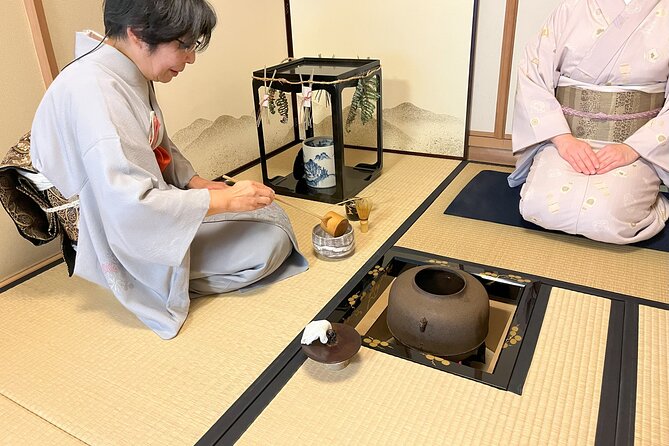
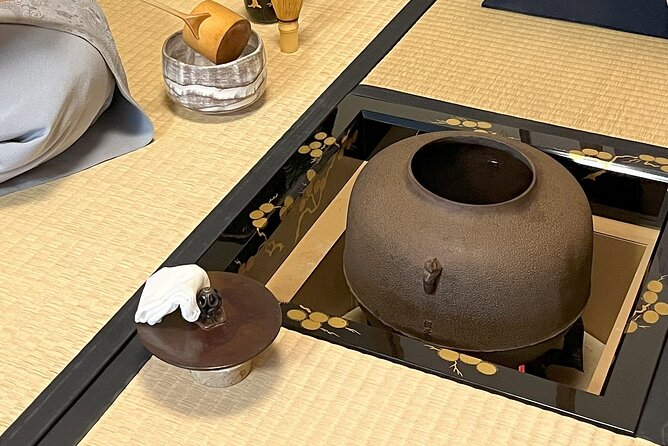
The session begins with an introduction to entering the Japanese-style room. This may sound like a small detail, but it sets the tone for the entire lesson. Tatami rooms have their own customs, and a teacher can explain them far more clearly in person than a guidebook can.
Expect the opening part to be instructional rather than rushed. You are shown how the room is used and how to approach the ceremony. For a first-time visitor, this helps remove the worry of making a serious mistake.
The tatami setting also gives the experience a stronger sense of place than a standard restaurant or hotel workshop. You are learning about tea in a room designed for this style of gathering. That connection between the activity and its setting is one of the best reasons to choose this session.
The information does not specify whether you must kneel for the full ceremony, so anyone concerned about sitting arrangements should ask the provider before booking. The available details only confirm the tatami-room setting and the introduction to room entry.
Watching matcha preparation with a traditional sweet
After the room introduction, the tea master demonstrates the ceremony with matcha and a Japanese traditional sweet. The demonstration gives you time to watch the order of the steps before you try them yourself.
Matcha is prepared from powdered green tea rather than from leaves steeped in a pot. The preparation is part of the experience, not just a way to produce a drink. You will see how the tea is handled and presented, then enjoy it with the sweet provided.
The sweet is an important part of the sequence. It offers a contrast to the strong, earthy character of matcha and shows how tea ceremony treats the food and drink as parts of one planned presentation.
This is also where the teacher’s explanations matter most. The experience is designed for people who know little about Japanese culture, so you can ask questions and follow along without feeling that you should already understand the etiquette.
A five-star assessment from one participant praised the session as both relaxing and informative. That balance is worth noting. This is not a lecture packed with dates and technical terms. The pace is intended to give you a pleasant hour while still teaching you how the ceremony works.
Making your own tea in the Ryurei style
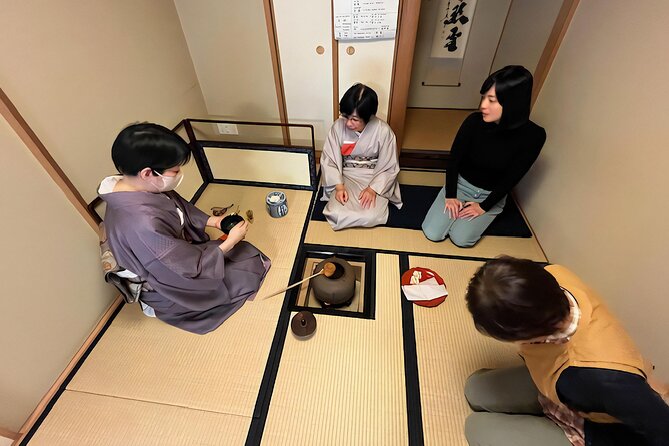
The most hands-on part comes after the demonstration. You are introduced to the Ryurei style, a table-based form of tea ceremony, and shown how to make matcha yourself.
This is a practical choice for an introductory session. A traditional floor-based ceremony can feel formal and physically demanding, while the table style gives you a clear way to learn the preparation. You can concentrate on the tea-making steps and the guidance from the teacher.
You then drink the matcha you prepared with a Japanese traditional sweet. That personal step changes the experience. Instead of remembering only what the teacher did, you leave with a sense of how the tea was made and what the ceremony asks you to notice.
The teacher and assistant are described as attentive during the lesson, and the small group size supports that kind of help. With no more than four people in your party, the instructor can watch your movements and explain corrections as you go.
Do not expect a professional tea-school qualification or a long study of every tea tradition in Japan. The session lasts about 60 to 90 minutes. Its strength is a friendly introduction, not an advanced course.
Same city, a completely different kind of afternoon:
- Full Day Tour of Kyoto with Private Transportation
★ 5.0 · 130 reviews - Sakai – Knife Factory and Craft Walking Tour
★ 5.0 · 44 reviews - Kyoto private tour (Shore excursion available from Osaka or Kobe port)
★ 5.0 · 39 reviews - Private arrival Transfer from Kansai airport to Osaka city
★ 4.5 · 36 reviews
A private group of four makes a real difference
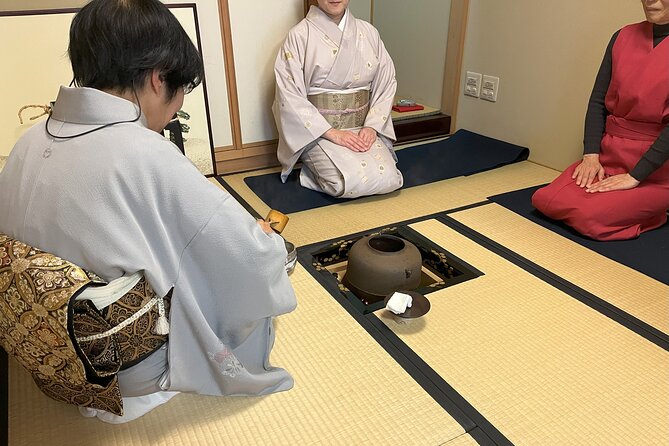
The group size is one of the clearest advantages here. Only your group participates, and the maximum is four people. That arrangement works especially well for couples, families, and close friends who want to share the activity without being placed in a large class.
A private format also makes it easier to ask basic questions. You can pause when a gesture is unclear and receive an explanation suited to your group. That is valuable in a ceremony where small movements may otherwise pass too quickly.
The tradeoff is that the price is set at $67.11 per person, so this is not the cheapest way to spend an hour in Osaka. Still, you are paying for a private lesson, the teacher’s time, the tatami-room setting, the matcha, the sweets, and the tools and materials used during the activity.
I see the price as reasonable for people who value personal instruction. If you only want to drink matcha once, you can likely find less expensive options elsewhere. If you want to understand the process and make the tea yourself in a private group, the cost has a clearer purpose.
Group discounts are available, which may improve the value for a larger booking within the four-person limit. Check the final price for your party when reserving.
Getting there from Osaka or Kyoto
The activity takes place in Ibaraki, in Osaka Prefecture, between Osaka and Kyoto. The closest station is Ibaraki-shi Station on the Hankyu Kyoto Line. From there, allow about 10 to 15 minutes on foot.
This location can work well if you are already moving between Osaka and Kyoto. You might schedule the tea ceremony as a quiet stop before continuing to another part of the region. It is less convenient if your plans stay entirely around Osaka’s main tourist districts and you want a short walk from your hotel.
The published meeting point is Repark Ibaraki Oike 1-Chome, at 1-chome-14-46 Oike, Ibaraki, Osaka 567-0826. After you reserve, the provider sends detailed location information and a phone number for confirmation.
When you arrive, call the provided number and someone will come to meet you. This is important because the meeting point is listed at a parking area rather than as an obvious tea-room entrance. Save the phone number and allow enough time for the walk.
If you are late or lose your way, call rather than trying to solve the problem silently. The instructions specifically ask you to contact the provider in that situation. Arriving on time matters because the ceremony follows a set sequence and the session lasts only about an hour to an hour and a half.
How much time to allow around the 90-minute session
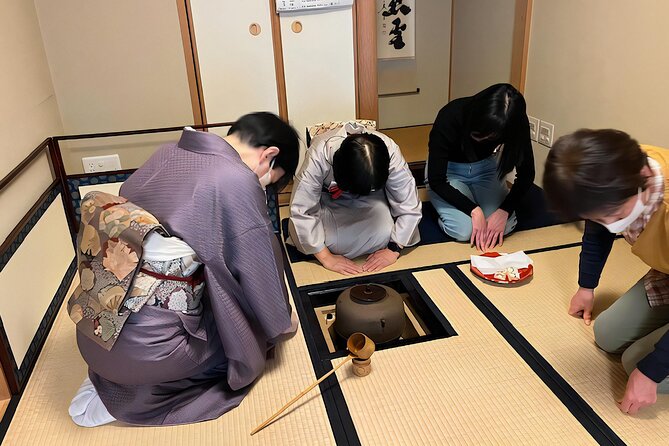
The tea ceremony itself takes roughly 60 to 90 minutes. That estimate includes the room introduction, the demonstration, the explanation of Ryurei-style preparation, and your own tea-making.
You should add the walk from Ibaraki-shi Station and some spare time for finding the meeting point. The experience does not include transport, so train fares and any other travel costs are yours to cover.
The schedule is compact enough to fit into a wider sightseeing day, but do not book a train connection that leaves immediately after the stated end time. The session may take the full 90 minutes, and the walk back to the station takes additional time.
On average, people reserve this experience 37 days ahead. That suggests planning early if your Osaka or Kyoto dates are fixed, especially because the group is private and availability may be limited. Confirmation arrives within 48 hours of booking, subject to availability.
What is included, and what you still need to pay for
The activity includes the tools and materials needed for the lesson, Japanese sweets, and matcha green tea. You do not need to arrange the tea equipment yourself.
Travel expenses are not included. That means you should budget for the train to Ibaraki-shi Station and any local transport you use. The provider does not collect you from central Osaka or Kyoto.
Mobile tickets make it easier to keep the booking details with you, but you should still save the meeting instructions and phone number before setting out. The exact address is confirmed after reservation, so do not rely only on the general meeting-point information.
Free cancellation is available if you cancel at least 24 hours before the start time. Cancellations made less than 24 hours before the experience are not refunded, and late changes are not accepted.
Who will enjoy this Japanese tea experience most
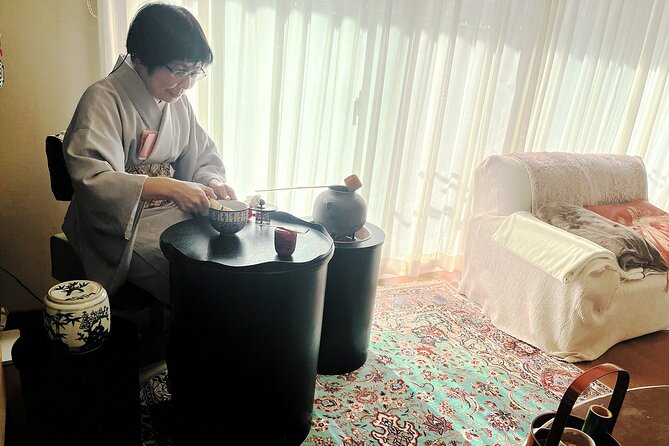
I would recommend this for first-time visitors who want a direct introduction to Japanese culture without committing to a full-day tour. The teacher explains the process in an accessible way, and the hands-on section keeps the lesson from becoming passive.
It also suits couples and small families. A group of four can share the same private session, and the relaxed pace makes it suitable for people with different levels of interest in tea.
This may not be the right choice if you want a major Osaka sightseeing tour, a food-focused outing, or a long formal ceremony. It is a focused cultural activity. You spend most of the time learning about matcha, room etiquette, and tea preparation.
The location should also guide your decision. If you are staying near the main Osaka attractions, you must make a special trip to Ibaraki. If you are planning time between Osaka and Kyoto, that same location becomes much more useful.
Should you book the Ibaraki tea ceremony?
Book it if you want a quiet, private cultural lesson and like the idea of preparing your own matcha. The tatami room, teacher-led demonstration, traditional sweet, and Ryurei table-style practice give you more than a simple tea sample.
The $67.11 price makes the most sense for a group that values personal attention. A private limit of four and an attentive teacher and assistant can justify the cost, especially for people who want to ask questions and learn the correct sequence.
Skip it if you need a central Osaka activity, dislike planning around a train and a 10 to 15 minute walk, or only want a quick cup of green tea. For everyone else, this is a thoughtful way to spend 60 to 90 minutes learning a living Japanese custom in a setting made for it.
FAQ
Where does the tea ceremony take place?
The activity takes place in Ibaraki, Osaka Prefecture. The meeting point is Repark Ibaraki Oike 1-Chome, at 1-chome-14-46 Oike, Ibaraki, Osaka 567-0826, Japan.
How do I reach the meeting point?
The nearest station is Ibaraki-shi Station on the Hankyu Kyoto Line. The walk from the station takes about 10 to 15 minutes.
How long does the experience last?
The session takes approximately 60 to 90 minutes.
What happens during the tea ceremony?
You learn how to enter a tatami room, watch a demonstration with matcha and Japanese sweets, learn about the Ryurei table-style ceremony, and make your own matcha.
Is this suitable for someone new to Japanese tea ceremony?
Yes. The experience is designed for people with little knowledge of Japanese culture as well as those who simply want to enjoy tea and sweets. The tea master provides detailed explanations.
What is included in the price?
The price includes the tools and materials needed for the activity, Japanese traditional sweets, and matcha green tea. Travel expenses are not included.
Can I cancel for a full refund?
Yes, if you cancel at least 24 hours before the experience start time. Cancellations or changes made less than 24 hours before the start time are not accepted for a refund.
Just added in Osaka Prefecture
- Shared Arrival Transfer: Osaka Itami Airport to Osaka City★ 5.0 · 3 reviews
- Best Private Osaka Walking Tour With A Guide 100% Personalised★ 4.5 · 12 reviews
- Private Transfer Between Kyoto and Kansai Airport KIX★ 5.0 · 3 reviews
- Osaka Sushi Cooking Class★ 5.0 · 3 reviews
- Cup Noodles Museum Guided Tour in Osaka★ 4.5 · 4 reviews
- Private Day Tour in Osaka and Kyoto with charter car★ 5.0 · 3 reviews
- Osaka : Cycling Tour Private Seaside Ride Near Kansai Airport★ 5.0 · 3 reviews
- Cook Homestyle Ramen and Gyoza from scratch★ 5.0 · 4 reviews
Osaka Tea Ceremonies, compared.
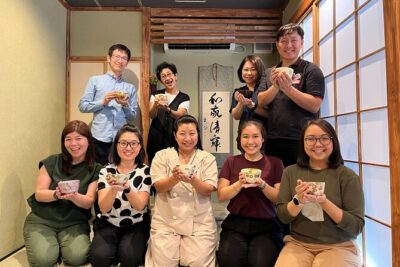

Matcha Making Class in Osaka with Authentic Japanese Sweets Set
Read our review →
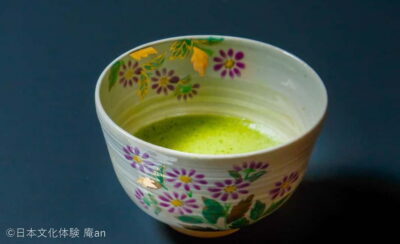
Japanese Traditional Sweets Making and Tea Ceremony
Read our review →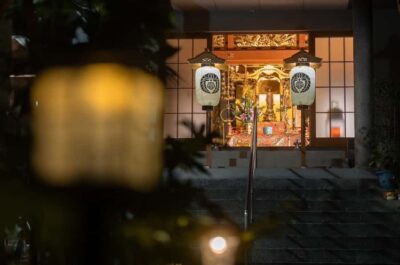
Osaka Temple Cool Foot Bath & Matcha Experience〈45min〉
Read our review →
Samurai Show, Tea Ceremony, Japanese Traditional Activities
Read our review →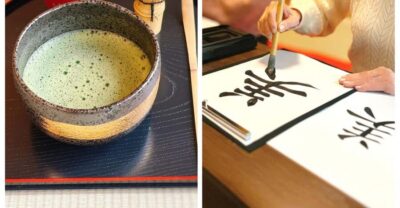
Browse the lists this tour appears in