
Reviewed · KYOTO DAY TRIPS FROM OSAKA
Full Day Tour of Kyoto with Private Transportation
Kyoto’s major sights are spread across the city, and this private tour tackles the hard part: getting from Kiyomizu-dera in the east to Kinkaku-ji in the northwest, then across to Arashiyama and Fushimi Inari. You get a private vehicle, hotel pickup, an English-speaking guide, and a full day to see the city’s headline sights.
I like two things right away. First, the door-to-door transport saves you from piecing together trains, buses, and long walks. Second, the guide can shape the day around your group, from a family-friendly pace to halal, vegan, or other meal needs. Guides named Ben, Christine, Lewis, and Somei have been especially praised for clear English, local tips, photos, and calm handling of busy days.
The tradeoff is simple: this is an ambitious route. You will see a great deal, but the day includes long drives and only set periods at some places. If you prefer quiet temple time or long museum visits, you may find the pace brisk. The remaining tour hours are used for driving between Osaka or Kyoto and the sights.
Key points at a glance
- Five major Kyoto areas in one day: Kiyomizu-dera, the eastern temple lanes, Kinkaku-ji, Arashiyama, and Fushimi Inari.
- Private transportation from Osaka or Kyoto: Fuel, parking, and travel time back to your hotel are included.
- A flexible English-speaking guide: Guides can adjust food stops, shopping, timing, and the order of sights when practical.
- Useful for families and shore excursions: The private format allows changes for children, older family members, port schedules, or an unexpected illness.
- Admission costs are partly covered: Kiyomizu-dera and Kinkaku-ji entrance fees are included, while lunch and personal purchases are not.
- A demanding but efficient day: Moderate physical fitness is needed, and good weather is required for the tour to operate.
Why private transport matters in Kyoto
Kyoto is easy to admire and surprisingly awkward to cover. Its best-known temples and districts sit in different parts of the city, while roads can be slow during busy seasons. On public transport, you would spend much of the day checking routes, finding stops, and walking between stations and gates.
Here, the driver handles the road while your guide handles the day. Parking fees and fuel are included, and the time spent traveling from Osaka or Kyoto to the sights and back to your hotel is built into the experience. That matters if you are staying in Osaka, arriving from a cruise port, or have only one open day.
The private setup also gives you room to adjust. One family had children dropped back at its accommodation for a nap after lunch, while another group changed plans when a person developed a migraine. A different group asked to see ceramic shops, and the guide reshaped the afternoon. These are useful advantages that a fixed coach tour cannot easily provide.
Do not expect a leisurely tour of every site. The advertised duration is about 8 to 10 hours, but Kyoto traffic can stretch the day, and the schedule covers a lot of ground. You are paying for access, coordination, and time saved, not for a slow study of one neighborhood.
More Kyoto day trips from Osaka:
- Kyoto private tour (Shore excursion available from Osaka or Kobe port)
★ 5.0 · 39 reviews - Private Transfer by Sedan from Itami Airport ITM to Kyoto City
★ 4.5 · 31 reviews - Kyoto Full Day Tour from Osaka with Licensed Guide and Vehicle
★ 5.0 · 29 reviews
Kiyomizu-dera and the eastern hillside
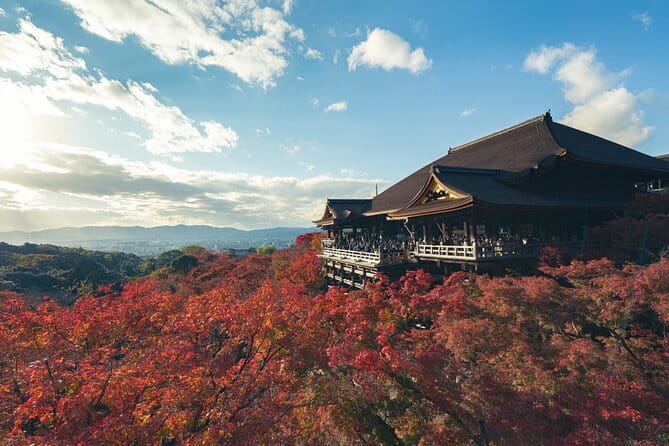
Kiyomizu-dera is a strong opening stop. The temple’s famous wooden stage projects over the hillside, with broad views toward Kyoto and the trees below. In cherry blossom season and during autumn color, the setting is especially striking, but the temple remains a major sight in any season.
You have about two hours here, with admission included. That is enough to see the main temple area and take photographs without treating the visit as a rushed photo stop. Your guide can explain the site and help you find good viewpoints, an advantage when the grounds are crowded.
Expect walking on sloped and uneven surfaces. The tour asks for moderate physical fitness, and this stop is one reason why. Comfortable shoes are a sensible choice, especially since the day continues through historic lanes and shrine paths.
Kiyomizu-dera is also a good place to begin because it gives you both culture and a city view. You are not looking only at architecture. You are seeing how the temple sits above Kyoto, with a sense of the wooded hills and dense city beyond.
Ninenzaka and Sannenzaka, Kyoto’s old lanes
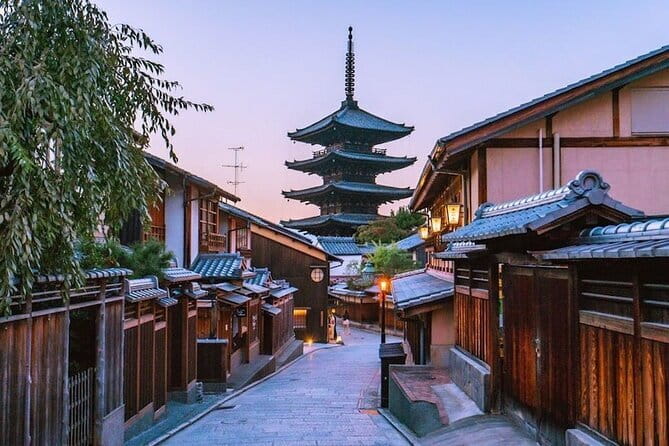
From Kiyomizu-dera, the tour continues through Ninenzaka and Sannenzaka. These stone-paved lanes lead toward Yasaka Pagoda and are lined with traditional wooden buildings, small shops, tea houses, and food counters.
You have about an hour here, and that timing makes sense. The lanes are best enjoyed on foot, at a gentle pace, with room to look into shops or buy a small souvenir. Your guide can point out photo locations and explain how this part of Kyoto connects to the older city.
This is one of the more atmospheric sections of the day, but it can also be crowded. The narrow lanes leave little room to move quickly, so your guide’s timing and route choices matter. If shopping is a priority, tell the guide early. If you mainly want photographs, you will need to keep an eye on the clock.
The combination of Kiyomizu-dera and the old lanes works well. You get a major temple first, then a street-level look at Kyoto’s traditional character rather than a string of religious buildings.
Kinkaku-ji, the Golden Pavilion
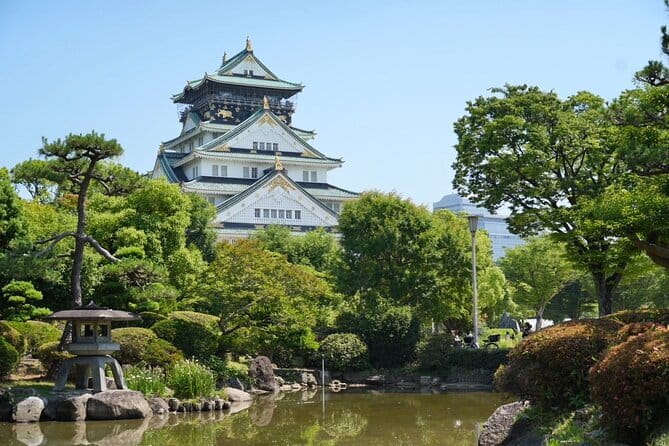
Kinkaku-ji, better known as the Golden Pavilion, is among Kyoto’s most recognizable sights. Its gold-leaf exterior reflects in the pond, creating the classic image seen in guidebooks and photographs.
The visit lasts about an hour, and the entrance fee of 500 yen is included. The route focuses on the main view and surrounding grounds rather than an extended temple study. That is worth knowing before you book: Kinkaku-ji is visually powerful, but the visit is designed to fit into a wider city tour.
Your guide adds value here by explaining the temple’s place in Kyoto and helping you approach the grounds efficiently. One of the practical benefits of a private tour is not having to figure out where to go after leaving the vehicle or how to combine this stop with the rest of the day.
Crowds can be heavy, especially at popular times. The pavilion itself is a brief visual experience, so do not expect a long indoor visit. You are here for the setting, the reflection, the architecture, and the surrounding garden.
A few more Osaka Prefecture half-days worth pricing up
- Osaka: Minoh, Katsuoji Temple, & Minoh Falls Full-day Tour
★ 4.9 · 172 reviews - Osaka’s Best and Brightest: Private Full-Day Tour by Vehicle
★ 5.0 · 147 reviews - Full Day Hiroshima and Miyajima Tour by Bullet Train from Osaka
★ 4.5 · 117 reviews - Amanohashidate & Ine Funaya Sightseeing Full Day Trip from Kyoto
★ 4.5 · 62 reviews
Arashiyama Bamboo Grove and Togetsukyo Bridge
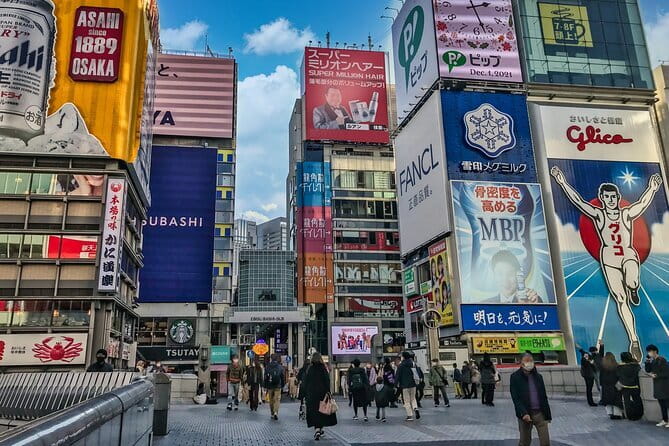
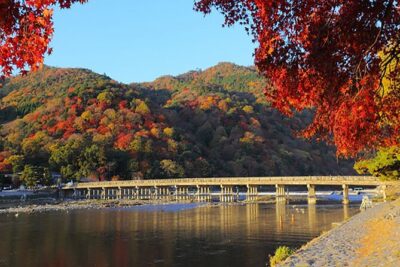
Arashiyama is the biggest nature break in the schedule. The bamboo grove creates a narrow path framed by tall bamboo stalks, giving the area a cool, enclosed feel. You also have time near Togetsukyo Bridge, a well-known wooden crossing over the Katsura River.
The total Arashiyama stop is about two hours, followed by roughly 30 minutes at the Kimono Forest. That gives you enough time to walk through the bamboo area, see the bridge, and take photographs, but not enough for every attraction in Arashiyama.
The bamboo grove is often busy, so expectations matter. Photographs may include other people, and the path can feel more crowded than quiet. Still, the tall bamboo and filtered light make this one of Kyoto’s most distinctive walks.
Togetsukyo Bridge adds a broader view after the enclosed grove. You can pause near the river, take in the surrounding hills, and enjoy a change from temple courtyards and narrow lanes. The tour does not list a separate admission charge for these stops.
Arashiyama also shows why private transport helps. It is far from Kiyomizu-dera and Kinkaku-ji, and combining the western district with the rest of Kyoto in one day takes planning. You will not be left trying to connect several local buses while watching the clock.
The Kimono Forest’s colorful pause
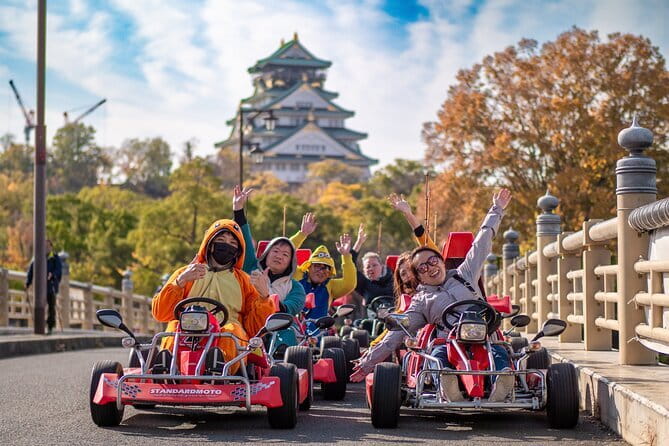
The Kimono Forest is an outdoor art installation near Arashiyama Station. More than 600 cylindrical pillars are wrapped in kimono fabrics and lit as part of the display.
The stop lasts about 30 minutes and has no separate admission charge. It is a short, easy addition to the Arashiyama visit, especially if you enjoy design, textiles, or photographs with a distinctly Japanese feel.
This is not a full museum or a long cultural presentation. Think of it as a compact visual stop between the bamboo grove and the next part of the day. Its bright patterns also provide a welcome change after the natural greens and wooden structures around Arashiyama.
Fushimi Inari and the red torii gates

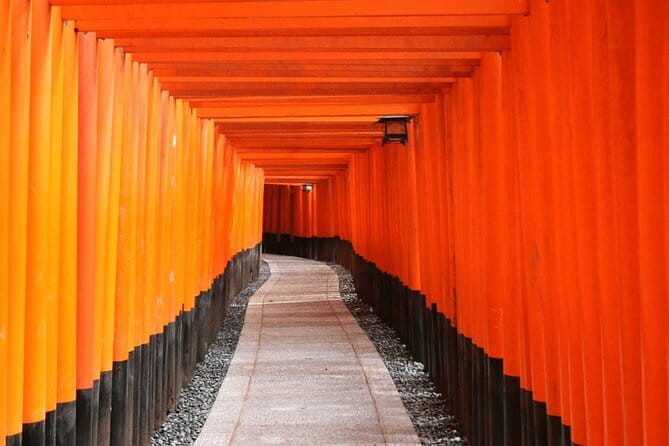
Fushimi Inari-taisha closes the sightseeing route with one of Kyoto’s most memorable images: thousands of red torii gates climbing the sacred Mount Inari.
You have about an hour here. That is enough to walk into the gate tunnel, take photographs, and get a sense of the shrine. It is not enough to hike the full mountain route, so if reaching the upper summit is important to you, ask the guide what is realistic for your schedule and fitness.
The path can be uphill, and the final stop comes after a full day of walking. That makes the private vehicle particularly useful. You can return to a comfortable seat rather than face another train transfer when your legs are tired.
Fushimi Inari is a shrine rather than a temple, so it gives the day a different feel. The red gates, wooded path, and religious setting make a strong final stop, though crowds may thin as you walk farther from the entrance.
Guides, food, and the value of flexibility
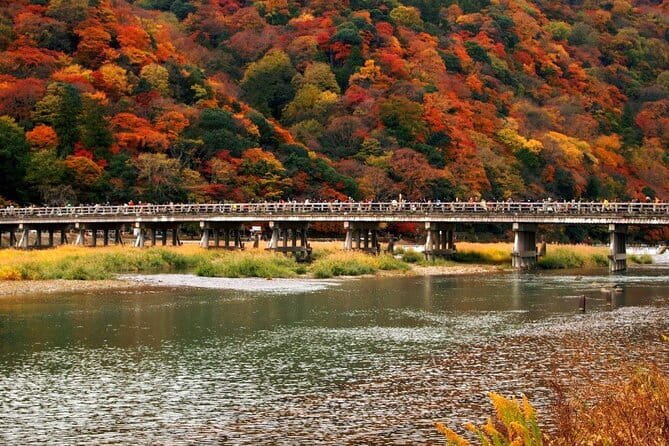
The guide is a major part of this experience. Ben, also identified as Yujiro in some feedback, is praised for strong English, Japanese history and culture, photography, and restaurant suggestions. Christine is noted for careful planning, family support, port pickups, and adapting the route when plans change. Lewis is described as calm, clear, and good at organizing a full day. Somei is praised for crowd-aware timing, photographs, local stops, and arranging a halal restaurant.
Those details matter because a private tour can be either a useful cultural day or simply an expensive ride between famous sites. A good guide gives context at the temples, helps you manage time, and pays attention to your group’s needs.
Lunch is not included, but the guide can help choose a restaurant. Past arrangements included ramen, sushi, wagyu, vegan food, and halal dining. You should state dietary needs before the tour, especially if your group has allergies or strict requirements.
Tips are not included, though they are welcomed. Bring money for lunch, drinks, snacks, shopping, and any personal expenses. The two listed temple admissions are covered, which removes a small but useful bit of friction during the day.
Who gets the best value from $247.92
At $247.92 per person, this is not a budget sightseeing option. The value improves as your group grows, since you are paying for a private vehicle and guide rather than a place on a standard coach. Group discounts are offered, though the exact discount is not specified.
I see the strongest value for families, first-time Kyoto visitors, cruise passengers, and people based in Osaka. If you have one day and want to see the city’s most famous sights without handling the transport yourself, the cost can be reasonable.
It is also useful for groups with different needs. Parents can ask for a slower pace or a child-friendly meal. Groups with food restrictions can request a suitable restaurant. Shore-excursion groups can work backward from a required return time, as long as they allow enough time for the drive back to port.
Solo visitors or couples on a tight budget may find the price harder to justify. Public transportation costs much less, and independent sightseeing allows more time in each district. You are paying for comfort, direct routing, local help, and flexibility.
The tour includes pickup, private transportation, parking, fuel, travel time, an English-speaking guide, and the two temple admissions. That makes the price easier to assess than a bare transport-only service. Still, lunch and tips remain extra.
Practical points before you reserve
The tour lasts approximately 8 to 10 hours, with the remaining time assigned to driving. Pickup is offered, and the activity is private, so only your group participates. A mobile ticket is available, and confirmation is provided at booking.
Wear shoes suited to temple grounds, stone lanes, and shrine paths. Plan for a moderate amount of walking and some uphill sections, especially at Kiyomizu-dera and Fushimi Inari.
Service animals are allowed, and the tour is near public transportation, though the main benefit is the private vehicle. If you need a child car seat, confirm your arrangements carefully. One family brought its own seats, and the vehicle did not supply them.
Good weather is required. If poor weather causes cancellation, you are offered another date or a full refund. You can cancel for a full refund up to 24 hours before the start time. Changes or cancellations made less than 24 hours ahead are not accepted for a refund.
Should you book this Kyoto day tour?
Book it if you want Kyoto’s main sights in one organized day and value a private vehicle more than a low price. The route is broad, the guide can adjust the plan, and the Osaka pickup makes the day far easier than managing several train and bus connections.
I would especially choose it for a family, a larger group, or a shore excursion with a firm return time. Ask for an early start if avoiding the worst crowds matters to you, and tell the guide about food restrictions, children, shopping goals, or mobility concerns before the day begins.
Skip it if your ideal Kyoto visit means lingering at one temple, hiking all of Fushimi Inari, or spending an entire afternoon in Arashiyama. For everyone else, this is an efficient and comfortable way to meet Kyoto’s biggest sights without losing the day to logistics.
FAQ
How long does the private Kyoto tour last?
The experience lasts approximately 8 to 10 hours. Some of that time is used for travel between Osaka or Kyoto, the sightseeing stops, and the return to your hotel.
Is pickup included?
Pickup is offered, and the tour includes travel from Osaka or Kyoto to the destinations and back to your hotel.
Is the tour private?
Yes. Only your group participates in the activity.
Which entrance fees are included?
Admission to Kiyomizu-dera and Kinkaku-ji is included. The stated admission amount for each is 500 yen.
Is lunch included?
No. Lunch and personal expenses are not included. Tips are also separate, though they are welcomed.
Is an English-speaking guide provided?
Yes. An English-speaking tour guide is included. Guides associated with this experience include Ben, Christine, Lewis, and Somei.
What happens if the weather is poor?
The experience requires good weather. If it is canceled because of poor weather, you will be offered a different date or a full refund.
Just added in Osaka Prefecture
- Shared Arrival Transfer: Osaka Itami Airport to Osaka City★ 5.0 · 3 reviews
- Best Private Osaka Walking Tour With A Guide 100% Personalised★ 4.5 · 12 reviews
- Private Transfer Between Kyoto and Kansai Airport KIX★ 5.0 · 3 reviews
- Osaka Sushi Cooking Class★ 5.0 · 3 reviews
- Cup Noodles Museum Guided Tour in Osaka★ 4.5 · 4 reviews
- Private Day Tour in Osaka and Kyoto with charter car★ 5.0 · 3 reviews
- Osaka : Cycling Tour Private Seaside Ride Near Kansai Airport★ 5.0 · 3 reviews
- Kyoto Highlights Private Tour with Pick and Drop★ 4.0 · 5 reviews
Kyoto Day Trips from Osaka, compared.
Hiroshima Miyajima Bus Tour & Shinkansen Ticket
Read our review →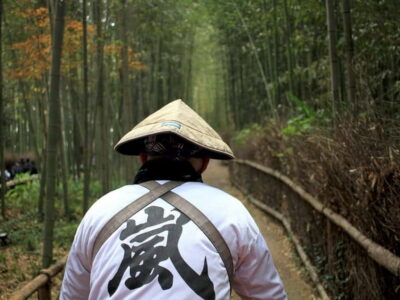
Ancient Capital Tour: Kyoto and Nara Highlights from Kyoto/Osaka
Read our review →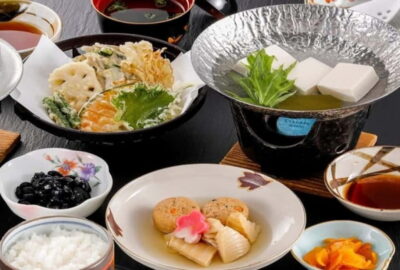
Kyoto & Nara Private customized tour with English speaking Guide
Read our review →
Browse the lists this tour appears in