
Reviewed · KYOTO DAY TRIPS FROM OSAKA
Kyoto Full Day Tour from Osaka with Licensed Guide and Vehicle
Kyoto packs centuries of temples, shrines, gardens, markets, and old lanes into a city that can overwhelm you in a single day. This private tour solves the biggest problem: deciding what to see and how to move between it all. Your guide and driver collect you in Osaka, then shape the day around your chosen three or four sights.
I like the flexible routing and the private vehicle most. A guide can put Fushimi Inari early, steer you toward a quieter temple such as Tofuku-ji, or organize Arashiyama around your energy level. I also like the personal care described by guests working with guides such as Yuka, Tomy, Noriko, Kazuko, and Ichiro.
The trade-off is clear: eight hours is not enough for Kyoto’s full menu. The long drive from Osaka, city traffic, entrance fees, lunch, and walking time all reduce your sightseeing hours. This is a smart overview, not a slow, deep visit to every temple.
Key points to know before booking
- You choose the core sights: Select three or four places from a long list instead of following a fixed bus route.
- Private transport saves effort: Hotel pickup and a dedicated vehicle avoid train changes and crowded public transport.
- A good guide can fix the order: Guides have adjusted routes around traffic, crowds, cruise schedules, children, older adults, and mobility needs.
- Popular places need realistic timing: Fushimi Inari, Kiyomizu-dera, Arashiyama, and Kinkakuji can consume much of the day.
- The price works best for four people: At $1,060.40 per group, the cost is about $265 per person before admissions and lunch when four people share it.
- You must pay some costs yourself: Temple and castle admissions, food, and personal purchases are not included.
From Osaka to Kyoto in a private car
The day begins with pickup in Osaka, which removes the need to find a station, manage luggage, or work out Kyoto’s complicated bus connections. You ride in a private vehicle with only your own party, and an English-speaking licensed guide joins you for the sightseeing.
That matters more than it may sound. Kyoto’s major sights are spread across the city, from Fushimi Inari in the southeast to Arashiyama in the west and Kinkakuji in the northwest. Public transport can be efficient, but changing trains and buses takes time. A car cannot defeat Kyoto traffic, yet it can take you closer to some entrances and keep your day easier to manage.
The experience lasts about eight hours. If you are coming from an Osaka hotel, that is a full day. If you are arriving by cruise ship, the schedule becomes tighter because the drive to Kyoto and back uses a large part of your available time. Several successful itineraries from Osaka Port included around six hours of actual Kyoto sightseeing, so give your guide a firm priority list before departure.
You receive personal attention rather than joining a mixed group. That makes the tour useful for families, couples, older adults, and anyone who wants to avoid navigating Kyoto alone. Only one reservation is allowed per group, and separate bookings cannot be combined.
More Kyoto day trips from Osaka:
- Full Day Tour of Kyoto with Private Transportation
★ 5.0 · 130 reviews - Kyoto private tour (Shore excursion available from Osaka or Kobe port)
★ 5.0 · 39 reviews - Private Transfer by Sedan from Itami Airport ITM to Kyoto City
★ 4.5 · 31 reviews
How the custom itinerary really works
The long list of possible stops can look tempting, but it is not a promise that you will visit all of them. The included service covers a customized tour of three or four sites. The many listed attractions are choices for building your route.
I would decide on two must-see places and two backup options. For example, choose Fushimi Inari and Kiyomizu-dera as your essentials, then let your guide choose between Gion, Nishiki Market, and Nijo Castle based on traffic and time. Another strong plan is Kinkakuji, Ryoan-ji, Arashiyama, and one nearby temple.
Tell the guide what kind of day you want. You might prefer major landmarks, gardens, food, traditional streets, photography, or fewer stops with more time at each. Guides have arranged routes for children, older adults, dietary restrictions, cruise departures, and visitors who needed less walking. One guide even used a wheelchair carried in the vehicle to help an older parent reach more of Fushimi Inari.
The short 15-minute entries attached to many sights should not be read as the ideal visit length. They are brief planning markers. Kiyomizu-dera, Arashiyama, and the bamboo paths deserve much longer if you want to walk and look around. Your guide can explain what is practical, but you should not plan ten or fifteen temples in one day.
Fushimi Inari and southeast Kyoto
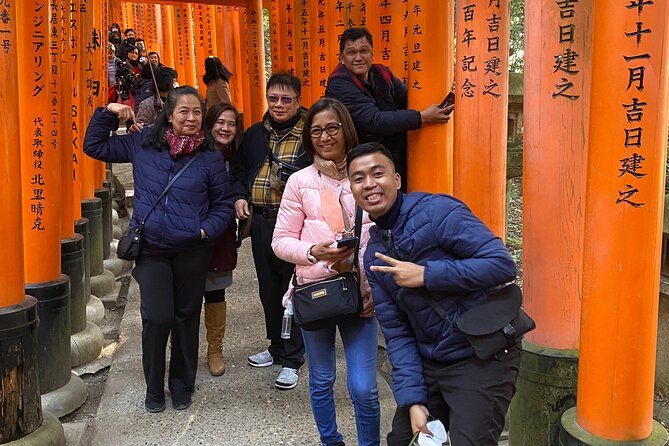
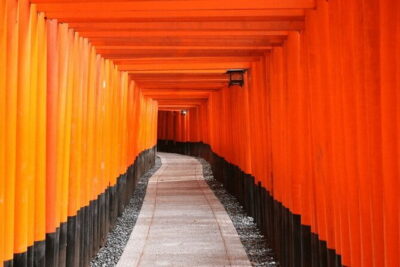
Fushimi Inari-taisha is one of Kyoto’s best-known shrines, marked by thousands of orange torii gates climbing the wooded hillside. The lower section is the easiest part to fit into a busy day, while the full climb takes much longer than many first-time visitors expect.
A private guide helps you understand the shrine’s Shinto customs and the meaning of the gates instead of treating the place as a quick photo stop. I would ask to begin here if it is one of your priorities. Early timing can help, though no tour can guarantee empty paths.
Nearby options include Tofuku-ji and Toji. Tofuku-ji is especially useful when you want a calmer temple visit and Japanese garden design. One itinerary praised its rock gardens as far less crowded than Fushimi Inari. Toji, with its old pagoda and spacious grounds, offers another look at Kyoto’s Buddhist tradition and is free to enter according to the supplied details, though some areas may have separate rules.
These sights work well together geographically. They are a sensible choice if you want temples without crossing the entire city.
Kiyomizu-dera and the Higashiyama streets
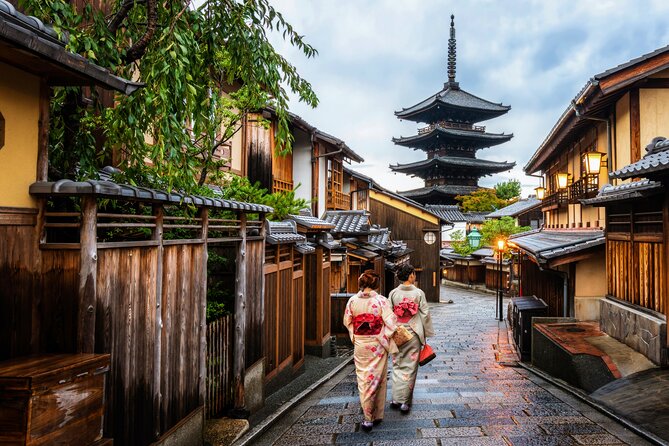
Kiyomizu-dera sits on the eastern hills and is one of Kyoto’s essential stops. Its broad temple grounds, elevated wooden stage, and views over the city make it more than a quick religious site. You can also pair it with the preserved lanes of Higashiyama, where traditional buildings, small shops, and souvenir stalls give you a feel for old Kyoto.
The approach involves walking and can be crowded. Tell your guide if stairs or long distances are difficult. The private car may bring you nearer to useful drop-off points, but it cannot remove every uphill section.
A guide adds value here by explaining the temple’s role and helping you make sense of the surrounding streets. One guide also helped a visitor find specific gifts near the temple and recommended a Japanese restaurant. Lunch is not included, so ask your guide for a place that matches your budget and dietary needs.
Gion and Kennin-ji fit naturally with Kiyomizu-dera. Gion’s narrow lanes are atmospheric, but please treat the district as a living neighborhood rather than a stage set. Your guide can point out traditional architecture and the area around Hanamikoji without encouraging intrusive photography. Kennin-ji provides quiet dry gardens close to the busy streets.
A few more Osaka Prefecture half-days worth pricing up
- Osaka: Minoh, Katsuoji Temple, & Minoh Falls Full-day Tour
★ 4.9 · 172 reviews - Osaka’s Best and Brightest: Private Full-Day Tour by Vehicle
★ 5.0 · 147 reviews - Full Day Hiroshima and Miyajima Tour by Bullet Train from Osaka
★ 4.5 · 117 reviews - Amanohashidate & Ine Funaya Sightseeing Full Day Trip from Kyoto
★ 4.5 · 62 reviews
Nijo Castle, Nishiki Market, and the Imperial Palace
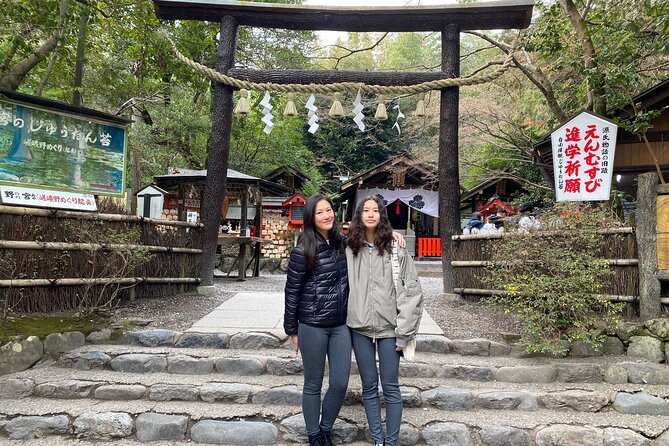
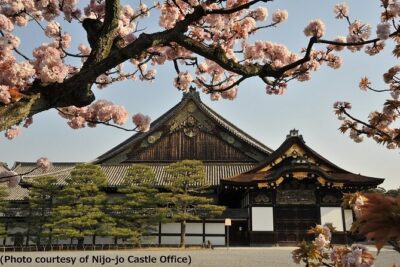
Nijo Castle offers a different side of Kyoto. Built in 1603 as Tokugawa Ieyasu’s Kyoto residence, it connects the city to the shogun-led Edo period. The castle grounds and palace interiors make this a strong choice if you want political history and grand architecture instead of another hilltop temple.
Nishiki Market is Kyoto’s Kitchen, a narrow five-block shopping street lined with more than one hundred shops and restaurants. It is a good place for snacks, food gifts, and a quick look at local ingredients. It can become crowded, and the narrow passage is not ideal for a large group moving slowly, so keep your expectations practical.
The Kyoto Imperial Palace occupies broad grounds and served as the Imperial Family’s residence until 1868, when the capital moved to Tokyo. It gives you open space and a sense of court life, but it is less compact than a temple stop. If you want all three of these places, you may have little time for the eastern or western districts.
Pontocho, the narrow dining lane beside the Kamogawa River, is best treated as an atmospheric pass-through unless you plan to return for dinner. Since lunch is extra, ask whether a market meal or restaurant stop fits your route.
Kinkakuji, Ryoan-ji, and northern Kyoto
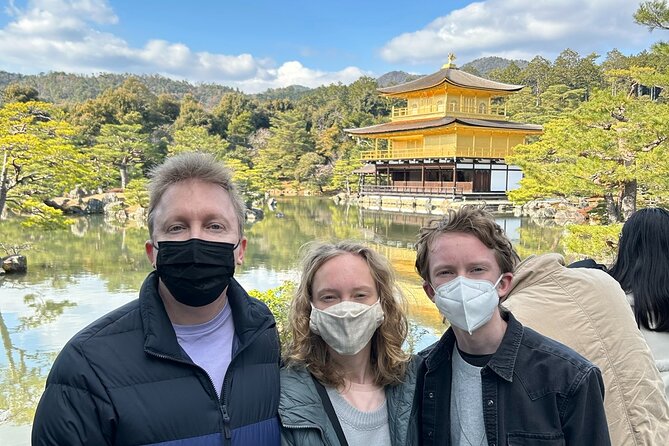
Kinkakuji, the Golden Pavilion, is one of Kyoto’s most recognizable sights. Its upper floors are covered in gold leaf, and the building reflects across the pond in the surrounding garden. It is visually powerful, but the main viewing area can be crowded and the visit follows a set path.
Ryoan-ji pairs well with Kinkakuji. Its famous rock garden is spare and quiet in design, with fifteen stones arranged across raked gravel, though the exact arrangement is not provided in the tour details and a guide can explain the ideas behind the setting. The temple grounds offer a slower contrast to the Golden Pavilion.
Ninna-ji adds another World Heritage temple to this part of the city. It was founded in 888 and is the head temple of the Omuro school of Shingon Buddhism. Its scale and setting make it worthwhile for someone who wants more than the standard Golden Pavilion stop.
I would choose two of these, not all three, unless temples are your main reason for visiting Kyoto. The northern route is efficient on a good traffic day, but fitting it together with Fushimi Inari or Arashiyama can create a rushed schedule.
Arashiyama, bamboo, and the western hills
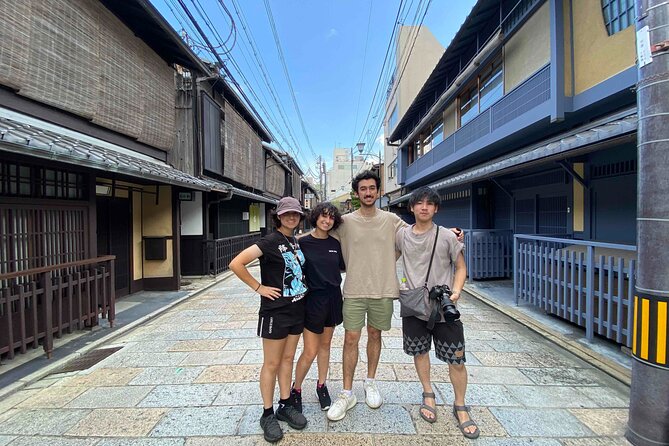
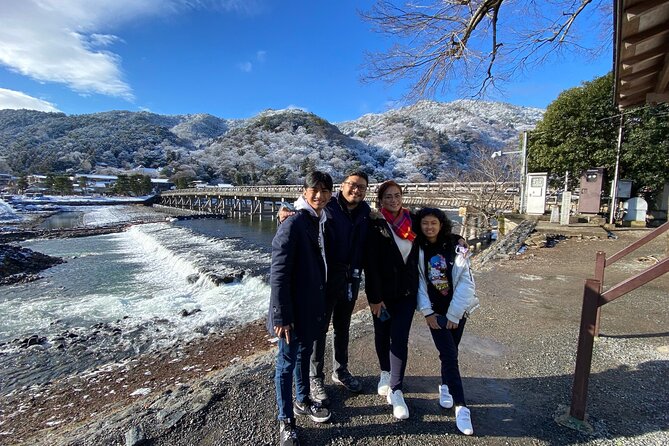
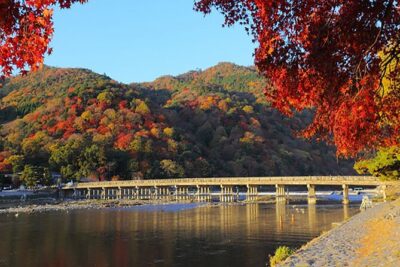
Arashiyama is the most ambitious part of the menu. The district includes the Togetsukyo Bridge, Bamboo Forest Street, Tenryu-ji, and several quieter hillside temples. It has been a destination since the Heian period, when court nobles came for its natural setting.
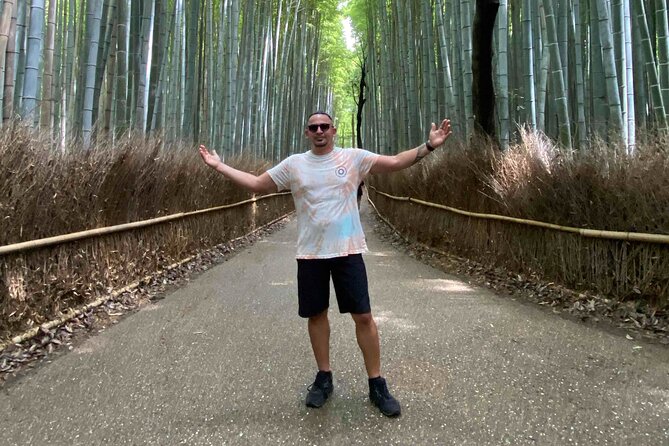
The bamboo paths are attractive, but they are not a private wilderness. The route is popular, and the walk can be short if you only follow the main section. Togetsukyo Bridge provides a useful landmark and open river views.
Tenryu-ji is the leading temple in Arashiyama and a World Heritage site. Its garden and temple buildings deserve time, especially if you prefer thoughtful garden design to a quick photograph. Okochi Sanso Garden, the former villa of actor Okochi Denjiro, adds a more private garden experience, but admission is extra.
Jojakko-ji, Nisonin, Gio-ji, Adashino Nenbutsu-ji, and Otagi Nenbutsu-ji offer quieter alternatives. Gio-ji is known for moss and maple trees. Otagi Nenbutsu-ji has 1,200 stone figures, each with a different expression. These are excellent choices for a second Kyoto day, but too many of them will crowd out the main sights during an eight-hour tour.
Arashiyama also includes Daikaku-ji and Katsura Imperial Villa. Katsura is one of Japan’s finest examples of garden and residential design, but admission and access rules require planning. Do not add it casually to a packed route.
Northern mountains: Kibune, Kurama, and Shugakuin
The tour can reach Kyoto’s northern mountains, including Kibune River, Kurama-dera, and Shugakuin Imperial Villa. These places offer a quieter, more rural side of the area and work well for repeat visitors or people who have little interest in the standard circuit.
Kibune developed around Kifune Shrine in a forested valley. Kurama is known for Kurama-dera and its hot spring. Shugakuin Imperial Villa includes Upper, Middle, and Lower Villas and is managed by the Imperial Household Agency.
The practical warning is distance. You should not combine this northern route with Fushimi Inari, Kiyomizu-dera, and Arashiyama in one day. Pick a regional plan, or you will spend too much of your limited time in the car.
Guides, drivers, and the human side of the day
The quality of this tour depends heavily on the guide assigned to you. The names associated with particularly praised days include Yuka, Tomy, Noriko, Kazuko, Ichiro, Akiko Okada, Emico, Kaeko Tanigawa, and Haru.
The strongest pattern is not theatrical guiding. It is practical judgment. Guides have rearranged stops to manage crowds, checked sites in advance, arranged tea ceremonies, helped with shopping, recommended restaurants, and kept cruise passengers on schedule. One guide and driver worked together to reach the bamboo path despite heavy traffic. Another planned a route that included Nijo Castle, Nishiki Market, Nanzen-ji, Heian Shrine, Gion Shirakawa, and Fushimi Inari from Osaka Port.
That personal coordination is the main reason to book this instead of simply taking a train. Still, English ability and guiding style can vary by assigned guide. Share your priorities and mobility needs before the day so the plan is clear.
What the $1,060.40 price buys you
The price is $1,060.40 for a private group of up to four. Split four ways, that is about $265.10 per person. For two people, the per-person cost is much higher, but you are paying for privacy, door-to-door transport, a driver, and a licensed English-speaking guide.
Admissions, lunch, and personal spending are extra. That matters because several top stops charge entrance fees. If you plan multiple paid temples, the final cost will rise.
I see good value here for four people who want comfort and efficient routing. It is harder to justify if you are a solo budget visitor, comfortable with trains, and happy to see only one or two areas. The tour earns its price through time saved and help with logistics, not through a large number of included attractions.
Free cancellation is available until 24 hours before the start time. Changes made inside that window are not accepted, and poor weather can lead to a new date or a full refund. Service animals are allowed, and most people can participate, but rear-facing car seats are not available. Only a limited number of car seats and booster seats exist, so contact the provider in advance if you need one.
Should you book this Kyoto day tour from Osaka?
Book it if you want to see Kyoto without managing trains, buses, directions, and a tight Osaka return. It is especially useful for a family, a small group of four, an older party, or a cruise passenger with one day in port.
I would book it with a short priority list, not a fantasy itinerary. Choose Fushimi Inari plus Kiyomizu-dera for classic Kyoto, or choose Arashiyama plus northern temples for gardens and quieter sights. Ask for a sensible route, allow time for lunch, and accept that traffic may force a change.
Skip it if your budget is tight or you want to spend a full day in one neighborhood. For everyone else, this is a practical way to get an informed first look at Kyoto, with enough flexibility to make the day feel like your own.
FAQ
How long does the Kyoto tour from Osaka last?
The tour lasts approximately eight hours, including travel between Osaka and Kyoto.
How many attractions can I choose?
The included tour is customized around three or four sites from the available attraction list.
Is transportation included?
Yes. A private vehicle and Osaka pickup are included, along with drop-off after the tour.
Is an English-speaking guide included?
Yes. The tour includes a licensed local English-speaking guide.
Are entrance fees and lunch included?
No. Entrance fees, lunch, and personal expenses are paid separately. Guide entry fees are covered only for sights listed in the tour information.
Can this tour collect me at Osaka Port?
The tour information describes Osaka hotel pickup, while previous arrangements included pickup at the Osaka cruise terminal. Confirm your exact pickup point directly before booking.
What happens if the weather is poor?
If the experience is canceled because of poor weather, you will be offered another date or a full refund. You can also cancel for a full refund up to 24 hours before the start time.
Just added in Osaka Prefecture
- Shared Arrival Transfer: Osaka Itami Airport to Osaka City★ 5.0 · 3 reviews
- Best Private Osaka Walking Tour With A Guide 100% Personalised★ 4.5 · 12 reviews
- Private Transfer Between Kyoto and Kansai Airport KIX★ 5.0 · 3 reviews
- Osaka Sushi Cooking Class★ 5.0 · 3 reviews
- Cup Noodles Museum Guided Tour in Osaka★ 4.5 · 4 reviews
- Private Day Tour in Osaka and Kyoto with charter car★ 5.0 · 3 reviews
- Osaka : Cycling Tour Private Seaside Ride Near Kansai Airport★ 5.0 · 3 reviews
- Cook Homestyle Ramen and Gyoza from scratch★ 5.0 · 4 reviews
Kyoto Day Trips from Osaka, compared.
Hiroshima Miyajima Bus Tour & Shinkansen Ticket
Read our review →
Ancient Capital Tour: Kyoto and Nara Highlights from Kyoto/Osaka
Read our review →
Full Day Tour of Kyoto with Private Transportation
Read our review →
Kyoto & Nara Private customized tour with English speaking Guide
Read our review →Browse the lists this tour appears in