
Reviewed · WORKSHOPS
Osaka: Temari Embroidery Workshop
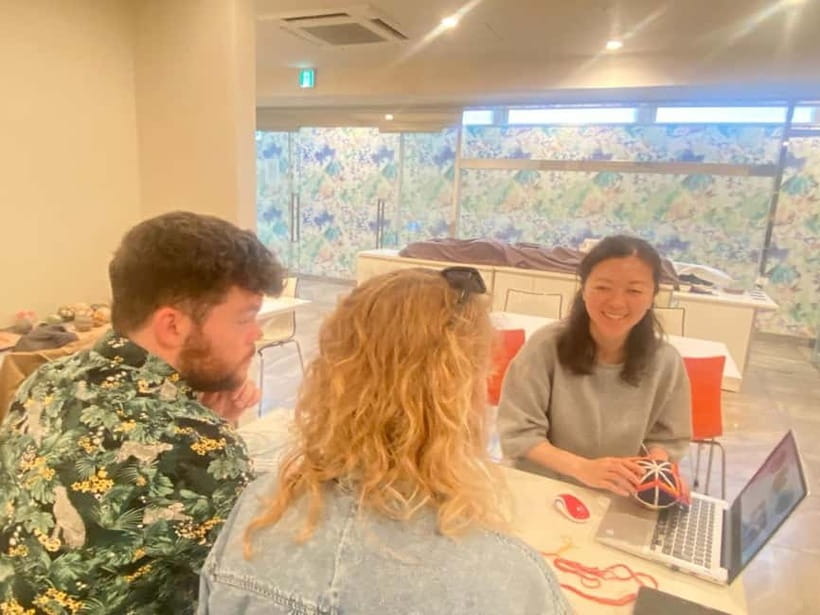
A Temari workshop turns a quiet craft into a useful piece of Japanese culture. At Free Space C-Flat in Shinsaibashi, you’ll learn how to stitch geometric patterns onto a traditional hand-made ball, then continue the second half at home. The class is led in English or Spanish, and the small group size keeps the instruction personal.
I like two things right away: you choose four thread colors, so the finished Temari feels like your own, and the $38 price includes the base ball, needles, thread, instruction, and a video link for finishing the work later. The activity also gives you a souvenir you make yourself, rather than another shop-bought trinket.
The main catch is simple: two hours is not enough to finish the entire ball. You complete one side in class, so you need to be comfortable doing the second side at home. If you have a preferred color for the base, tell the host at least three days ahead.
Key points at a glance
- A 1,000-year-old Japanese craft: Learn the background of Temari before picking up the needle.
- Four thread colors are included: Build your own color combination instead of copying a fixed design.
- Only one side is finished in class: Use the supplied video link to complete the other side at home.
- Small groups of up to 10: The format allows hands-on help while keeping the class social.
- English and Spanish instruction: You do not need Japanese to follow the stitching lesson.
- Central Shinsaibashi meeting point: The class takes place at Free Space C-Flat on the first floor of SARASA HOTEL Shinsaibashi.
What Temari means in Japanese craft
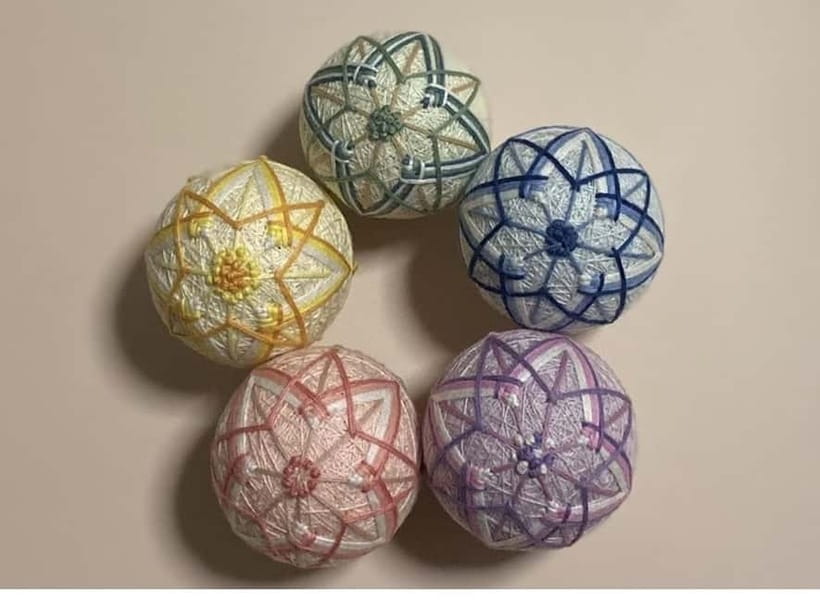
Temari are hand-embroidered balls made by wrapping and stitching thread into balanced patterns. The craft has more than 1,000 years of history in Japan, which gives this short class a useful cultural layer. You are not simply learning a decorative sewing project. You are handling a traditional object whose appeal comes from patience, repetition, and careful design.
The ball shape also makes Temari different from many beginner craft classes. You are not stitching on a flat cloth or following a printed outline. You work around a curved surface, learning how thread lines meet and repeat across the form.
That makes the finished item especially personal. Small differences in color choice and stitch placement will give your Temari its own look. This is a good fit if you enjoy crafts that reward slow, steady work rather than quick results.
The introduction covers the background of Temari before the practical work begins. That short explanation matters because it gives you a reason to pay attention to the pattern. You understand that the design is part of a long Japanese handcraft tradition, not just a colorful ball made for tourists.
A few more Osaka half-days worth pricing up
- Sushi Making Osaka Roll and Authentic Japanese Sushi Class
★ 5.0 · 1,220 reviews - Matcha Making Class in Osaka with Authentic Japanese Sweets Set
★ 5.0 · 509 reviews - Osaka: Ramen and Gyoza Cooking Class in Dotonbori
★ 5.0 · 378 reviews
Starting at Free Space C-Flat in Shinsaibashi
The meeting point is Free Space C-Flat, located on the first floor of SARASA HOTEL Shinsaibashi. You should allow enough time to find the hotel and reach the first-floor space without rushing, especially if you are arriving with luggage or navigating Osaka for the first time.
The location in Shinsaibashi makes the workshop easy to pair with other time in central Osaka. You can schedule it as a calm break from sightseeing, or place it near a shopping and dining period in your day. The activity itself lasts two hours, so it takes less time than a full-day cultural outing while still giving you a real skill to practice.
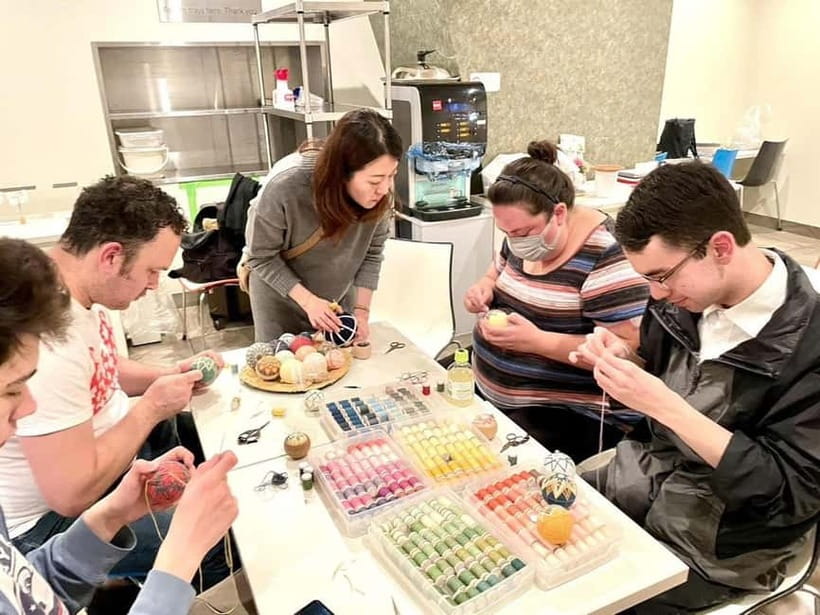
The class is limited to 10 people. That number is small enough for the instructor to watch your technique and help when your thread starts heading in the wrong direction. It also leaves room for a social atmosphere without the feel of a large tour group.
One participant ended up alone in the class and found the instructor fluent in English, attentive, and easy to understand. You cannot count on having a private lesson, but the limited group size gives you a better chance of receiving direct help than you would in a large demonstration.
Choosing the ball and thread colors
The host prepares the Temari base before class. That is a practical choice because making the base from scratch would take far more time than the two-hour session allows. You arrive ready to learn the embroidery rather than spend the whole class on preparation.
A selection of base-ball colors is available. If you already have a favorite color in mind, send that request at least three days before the workshop. This is one of the most useful details to act on early. Your preferred base color may not be guaranteed if you wait until the class begins.
You then choose four embroidery-thread colors. Four is enough to create contrast and rhythm without giving you so many options that the choice becomes difficult. You can select a restrained combination or use stronger contrasts, depending on the kind of souvenir you want.
The choice has real value. A predesigned craft kit can feel generic, but color selection lets you make a Temari that reflects your taste. It also means two people taking the same class can leave with noticeably different objects.
You may want to think about your colors before arriving. Consider whether you want the base to blend with the embroidery or provide a clear background. The instructor can guide you through the stitching, but your color decisions remain your own.
Learning the first stitches with the instructor
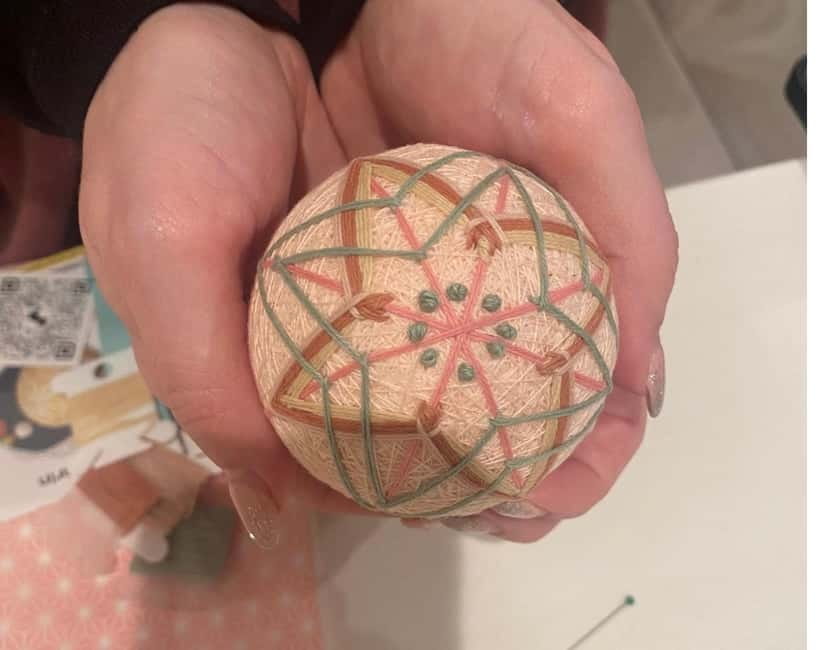
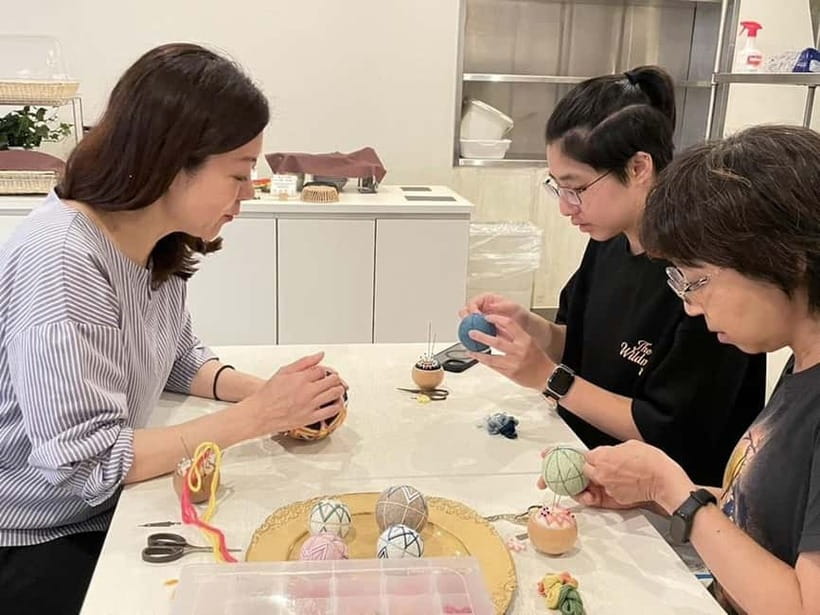
After the introduction and color choices, the instructor demonstrates the stitching technique. You then work alongside the instructor, building the pattern onto the prepared ball.
The curved surface is the key challenge. Thread tension matters, and it can be harder to judge spacing on a round object than on a flat piece of fabric. That is exactly where direct instruction helps. You can show the instructor your work as you go instead of trying to correct every mistake alone.
The supplied needles are part of the activity, so you do not need to bring a sewing kit. The lesson is hands-on from the start. You are not watching a craft expert work while sitting back. You are holding the ball, guiding the thread, and learning through repetition.
English and Spanish are available for instruction. One English-speaking participant specifically found the teacher fluent and easy to understand, with no strong accent causing problems. That makes this a practical option if you want a Japanese craft lesson but do not speak Japanese.
The instructor’s role is especially important for beginners. Temari embroidery can look simple when finished, but consistent lines on a sphere require care. Expect encouragement and correction as you learn rather than a fast, one-time demonstration.
Same city, a completely different kind of afternoon:
- Osaka Go Karting Tour with Funny Costume
★ 5.0 · 2,658 reviews - Osaka Castle: Museum and Tower Entry Ticket
★ 4.5 · 2,380 reviews - Osaka: Shinsekai Food Tour with 13-15 Dishes at 5 Eateries
★ 4.8 · 2,204 reviews - Osaka Food Tour: 13 Dishes at 5 Local Eateries
★ 5.0 · 2,149 reviews
Why the two-hour format works, and where it falls short
Two hours gives you enough time to hear the background, choose materials, learn the method, and make meaningful progress. It also fits neatly into an Osaka itinerary. You do not have to give up an entire day of sightseeing for the class.
The limit is that only one side of the Temari is finished during the workshop. This is not a minor footnote. If you want a complete ball, you have homework after the class.
You receive a video link explaining how to complete the other side. That turns the unfinished portion into a continuation of the experience rather than a project that ends abruptly. Still, you need to set aside time at home and follow the instructions carefully.
You may also be given a needle to continue working at home. The materials supplied in class make that possible, but you should understand the division of labor: the instructor helps you complete the first side, and the video guides you through the rest.
This setup suits people who enjoy finishing projects at their own pace. It may disappoint you if you expect to walk out with a fully completed souvenir after exactly two hours. Think of the workshop as the first half of a craft lesson, not a finished-product assembly line.
What the $38 price includes
At $38 per person, the class offers a reasonable value for a two-hour cultural activity with materials included. You receive the Temari base, four colors of embroidery thread, needles, instruction, and the follow-up video link.
The value is not just in the objects. You are paying for access to a traditional technique and for help using it. A completed souvenir from a shop would be faster, but it would not carry the memory of making it or give you a skill to continue at home.
The included materials also remove common small expenses. You do not need to purchase the base separately or find suitable thread and needles in Osaka. The four-color allowance gives you enough choice to personalize the design without adding a materials charge.
The price works best for people who value participation over speed. If you only want a finished Japanese souvenir, buying one may be more convenient. If you want to understand how the object is made and take part in the process, the workshop offers more for the money.
The reserve-now, pay-later option can help if your Osaka schedule is still moving around. Free cancellation is available up to 24 hours before the activity for a full refund. Check the available start times before booking, since the class lasts two hours and timing matters when you are fitting it between other plans.
Who will enjoy this workshop most
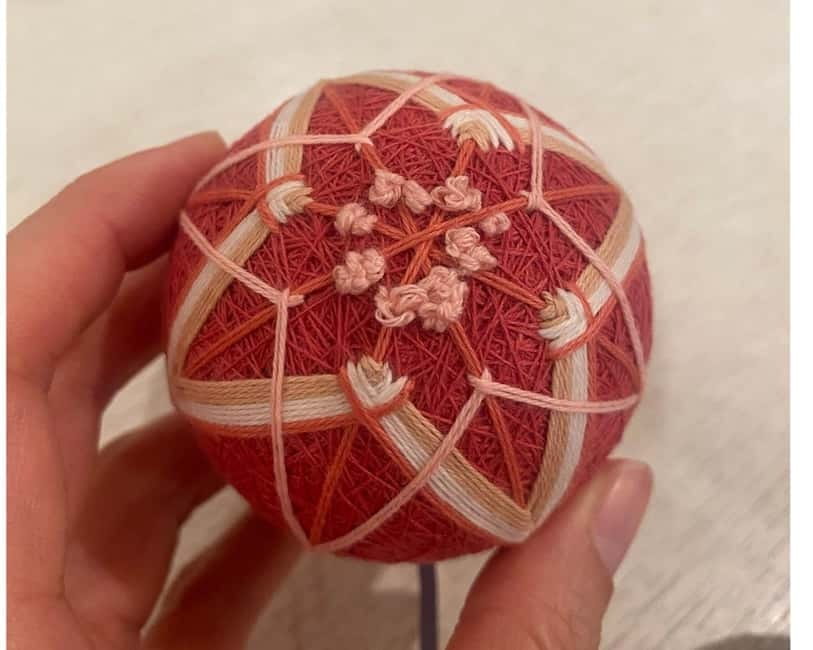
I would recommend this class to you if you enjoy handwork, Japanese culture, or small creative projects. It is also a good rainy-day plan because the experience is centered on a table, materials, and instruction rather than outdoor conditions.
The class suits solo visitors particularly well. The group is small, and the instructor can give you direct attention if space allows. It also works for couples, friends, and families who want to make different souvenirs from the same lesson.
You do not need advanced embroidery skills based on the way the class is structured. The host demonstrates the stitch and works with you as you create the pattern. Still, patience matters more than artistic confidence. The ball is round, and neat results come from taking your time.
This may not be ideal if you dislike unfinished projects or want a high-energy activity. Temari is a measured craft. You sit, concentrate, repeat the stitch, and gradually see the pattern take shape.
The English and Spanish options make the lesson accessible to a wider range of visitors. Wheelchair access is also available, which is useful when planning an activity for a mixed group with different mobility needs.
Practical advice before you book
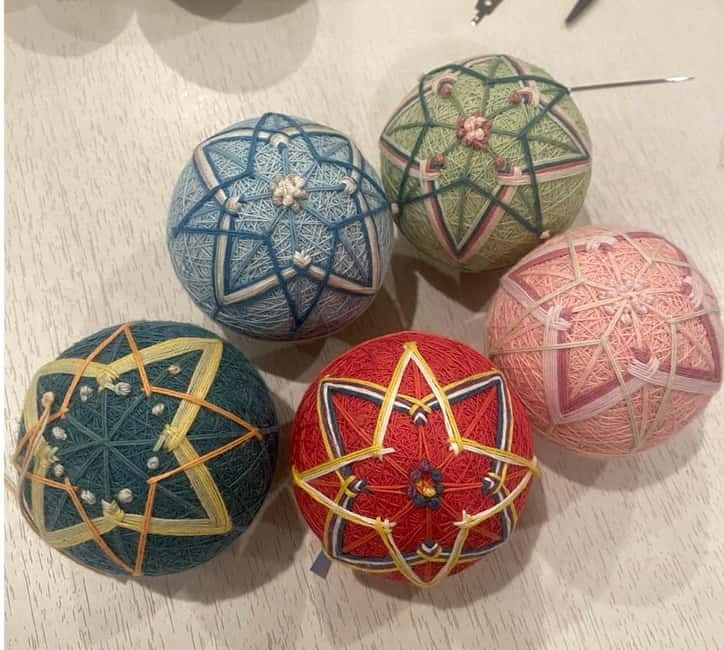
If the base color matters to you, contact the host at least three days ahead. This is the one request that needs advance planning. The thread colors are chosen during the class, but the base is prepared by the host.
Arrive with a little time to spare. The workshop begins at Free Space C-Flat inside SARASA HOTEL Shinsaibashi, and locating the correct space is easier when you are not racing the start time.
Plan your schedule around the full two hours. Do not book a restaurant reservation or transport connection so tightly that you have to leave early. The final part of the class is when your pattern begins to look like a finished design.
Think about how you will finish the second side. The video link is provided for further instruction, but you will get more from the class if you genuinely intend to continue at home. A half-finished Temari can still be a pleasant keepsake, but the point of the follow-up guide is to help you complete what you started.
If you want a souvenir with a personal color scheme, spend a moment considering your preferred palette before class. The instructor will teach the method, but the final style depends heavily on the four colors you select.
Should you book the Osaka Temari workshop?
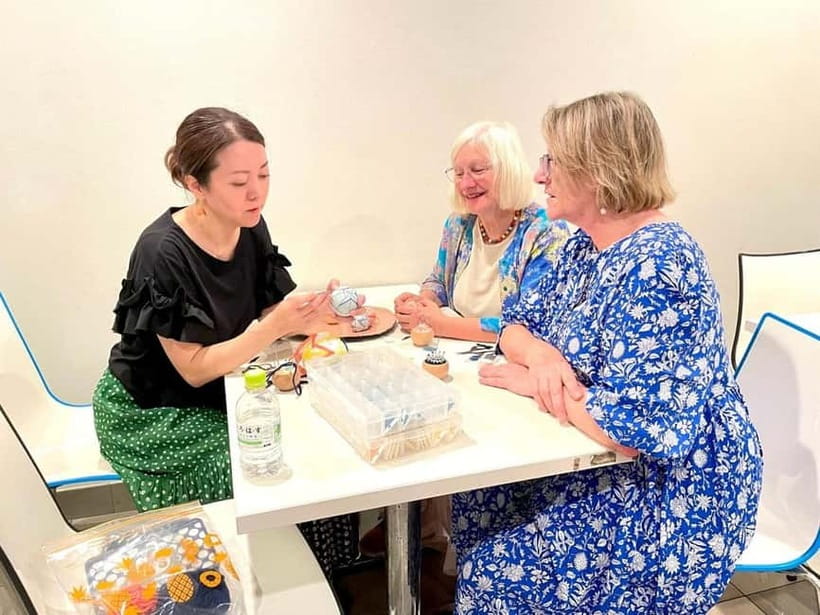
Book it if you want a calm, hands-on cultural activity and like the idea of taking home something you made yourself. The fluent English instruction, Spanish option, small group limit, included materials, and follow-up video make the class practical for international visitors.
The strongest reason to choose it is the combination of cultural context and personal work. You learn about a Japanese craft with more than 1,000 years of history, then apply the technique yourself instead of simply looking at an example.
Skip it if you need a fully finished souvenir before leaving the venue or if you have little interest in embroidery. The unfinished second side is the main limitation, and you must be willing to continue at home.
For most craft-minded visitors, $38 is a fair price for two hours of instruction and materials. Schedule it as a relaxed Shinsaibashi activity, request your preferred base color early, and treat the home finishing step as part of the experience rather than a problem.
FAQ
How long does the Temari workshop last?
The workshop lasts two hours.
How much does the activity cost?
The price is $38 per person.
Where does the workshop meet?
It meets at Free Space C-Flat, located on the first floor of SARASA HOTEL Shinsaibashi.
What languages are available?
Instruction is available in English and Spanish.
How many people can join the class?
The workshop is a small-group activity limited to 10 participants.
What materials are included?
The class includes one Temari base, four colors of embroidery thread, needles, and a video link for further instructions.
Can I choose the colors?
Yes. You can choose four embroidery-thread colors during the class.
Can I request a particular Temari base color?
Yes. Tell the host your preferred base color at least three days in advance.
Will I finish the whole Temari during class?
No. You finish only one side during the two-hour workshop. The video link explains how to complete the other side at home.
Is the workshop wheelchair accessible?
Yes. The activity is wheelchair accessible.
Just added in Osaka
- Urban Canvas: Osaka Street Art Bike Tour★ 5.0 · 10 reviews
- Anime Cosplay Photshoot-50 Digital Photos Provided★ 5.0 · 8 reviews
- TeamLab Botanical Garden Osaka Ticket★ 3.5 · 6 reviews
- Umeda Sky Building & Kuchu Teien Observatory Ticket in Osaka★ 4.5 · 3 reviews
- Immerse in Judo Martial Arts Class from Japan★ 5.0 · 4 reviews
- Cherry Blossom Buddha and Mt.Yoshino with Strawberry Picking Tour★ 4.5 · 5 reviews
- Traditional Home cooking Experience in Osaka, Japan★ 5.0 · 14 reviews
- Traditional Calligraphy Experience near Dotonbori★ 5.0 · 3 reviews
Workshops, compared.
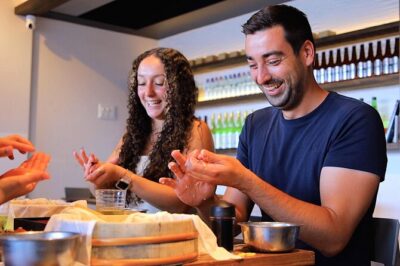
Sushi Making Osaka Roll and Authentic Japanese Sushi Class
Read our review →
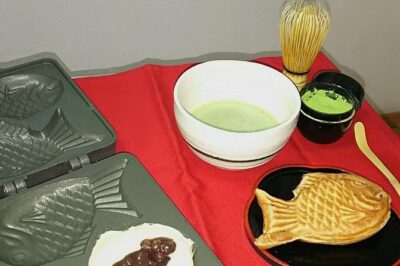
Matcha Making Class in Osaka with Authentic Japanese Sweets Set
Read our review →
Osaka Cooking Class: Okonomiyaki &Japanese cuisines experience
Read our review →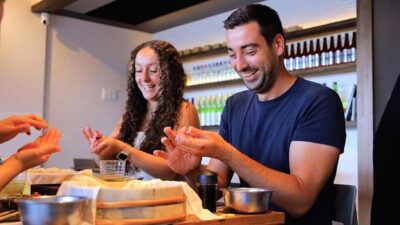
Roll and Authentic Sushi Making Class in Dotonbori
Read our review →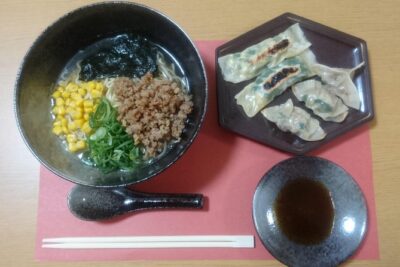

Browse the lists this tour appears in