

Reviewed · WORKSHOPS
Osaka: Sashiko Japanese Craftsmanship Workshop
Sashiko turns simple running stitches into neat geometric art, and this Osaka workshop lets you learn the craft by making something useful. You’ll work with fabric, thread, and a needle, then take home your own set of Sashiko coasters.
I like the small group of no more than eight, which gives Jun time to help beginners and offer extra stitches to faster sewers. I also like the old-house setting, a detail that adds character without turning the class into a formal museum lesson. The main consideration is the two-person minimum: solo bookings may require a new date, a ¥3,000 supplement, or a refund.
Key points to know before you book
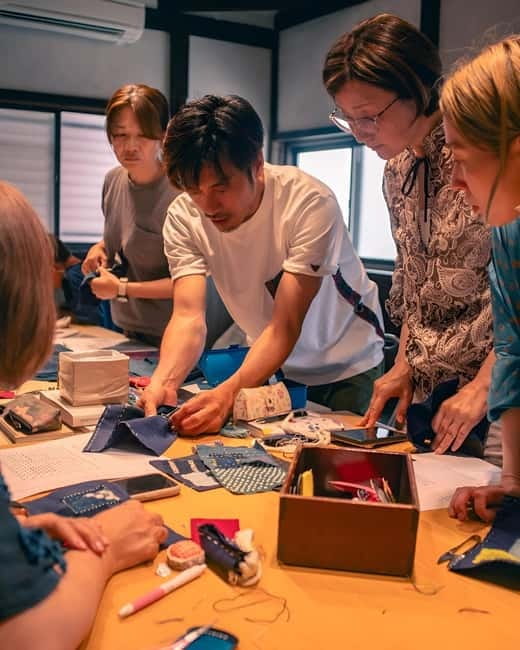
- Make a useful souvenir: You’ll create Sashiko coasters with geometric patterns rather than simply watching a demonstration.
- Learn from Jun: English and Japanese instruction is available, with patient guidance suited to beginners and experienced sewers.
- Enjoy a calm two-hour class: The stitching has a steady, meditative rhythm and leaves time to understand the craft’s cultural background.
- Work in a historic setting: The workshop takes place in an old house with wooden stairs and visible framework.
- Keep your plans flexible: Cancellation is free up to 24 hours before the activity, and reserve-now-pay-later booking is available.
- Check the shop corner: JunAle original goods, sewing kits, hand-dyed threads, and clothing are sold nearby, with cash discounts.
Making Japanese craft with your own hands
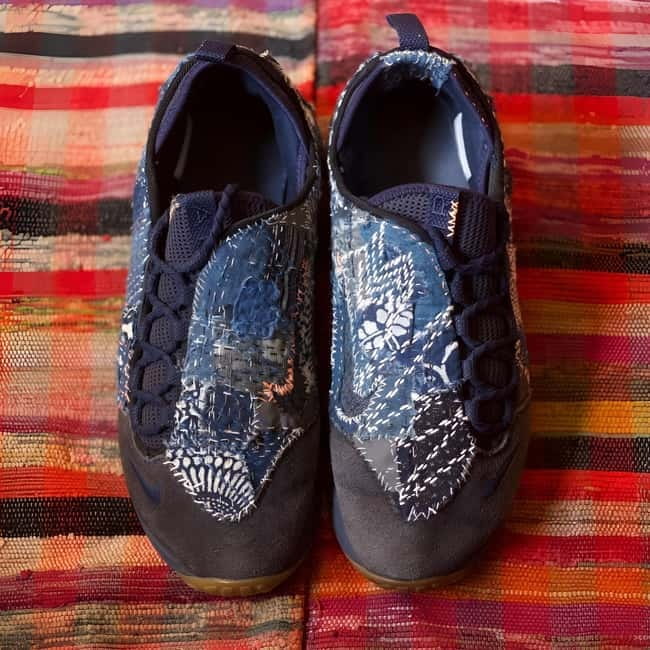
Many Osaka activities are built around eating, shopping, or seeing famous sights. This one asks you to slow down and use your hands. For two hours, your attention shifts from train schedules and crowded streets to the spacing of small stitches.
Sashiko means little stabs, a plain name for a craft with a long working life. During the Edo period, from 1603 to 1868, people in rural Japan used the technique to repair clothing, strengthen thin fabric, and add warmth. Farmers and fishermen could make worn garments last longer, which made Sashiko useful before it became fashionable.
That practical beginning still shapes the appeal of the class. You are not making a fragile ornament that must sit behind glass. You are using a traditional method to create coasters, a small household item that can serve a purpose after you return home.
The workshop also explains how Sashiko moved from repair work into decorative craft. Different parts of Japan developed their own patterns, and many designs carry symbolic meanings. The emphasis here is not on memorizing a long list of motifs. It is on seeing how repeated lines, spacing, and geometry can turn an ordinary piece of cloth into something personal.
A few more Osaka half-days worth pricing up
- Sushi Making Osaka Roll and Authentic Japanese Sushi Class
★ 5.0 · 1,220 reviews - Matcha Making Class in Osaka with Authentic Japanese Sweets Set
★ 5.0 · 509 reviews - Osaka: Ramen and Gyoza Cooking Class in Dotonbori
★ 5.0 · 378 reviews
What happens during the two-hour workshop
The session begins with an introduction to Sashiko and its place in Japanese craft. You’ll hear why the technique developed, how it was used, and how its patterns became more decorative over time.
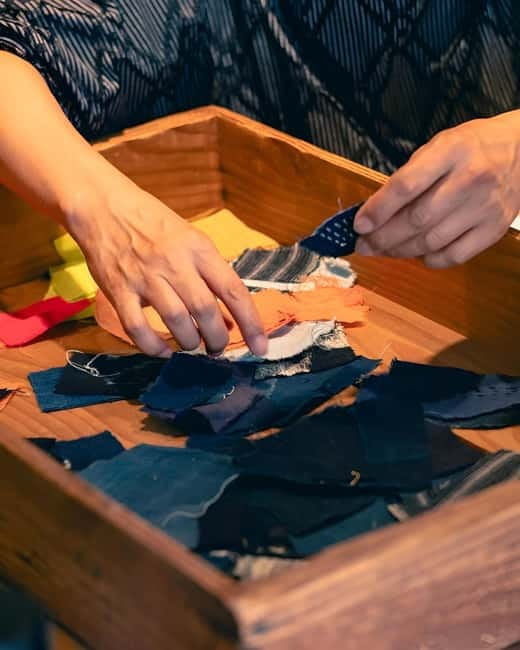
Jun then demonstrates the basic stitches. The tools and materials are provided, including fabric, needles, threads, and other Sashiko supplies. That makes the class easy to join during a trip. You do not need to pack a sewing kit or buy special materials before arriving.
You’ll practice the stitching on a small project, working toward your own Sashiko coasters. The geometric layout gives you a clear guide, which is helpful if you have never tried embroidery. At the same time, the work is not reduced to a quick tourist craft. The regular stitch pattern shows you the patience and control behind the finished design.
Jun’s teaching style appears suited to a mixed group. Beginners receive help with the basic technique, while experienced sewers can move on to additional stitches. One participant who finished early was shown another stitch, so people with sewing experience are less likely to feel held back.
The class ends with your completed Sashiko piece ready to take home. You leave with something made during the session, not just a printed explanation or a photograph. Your finished work may not look factory-perfect, and that is part of its value. The small variations show that you made it yourself.
Why the old Osaka house adds to the class
The workshop is held in a historic-looking house with wooden stairs and exposed framework. The setting matters because Sashiko is best understood as a handcraft passed through homes and working communities, not simply as a modern design trend.
You should not expect a large production studio or a polished chain attraction. The space has a more personal feel, and the small group size keeps the class focused. One thing I would keep in mind is that an old house may feel less uniform and formal than a purpose-built classroom. For many people, that is part of the charm. If you need a highly modern, spacious venue, this may not be your ideal craft class.
With advance notice, you can be met at Kyobashi Station. You are responsible for getting to the venue, so allow time for the journey and confirm the meeting details after booking. The activity is wheelchair accessible, though the presence of wooden stairs means you should check the exact access arrangements in advance if you have specific mobility needs.
A calm activity for hands-on learners
Sashiko is a good match for anyone who likes handwork, drawing, patterns, or quiet concentration. You do not need previous sewing experience. The instruction is available in English and Japanese, and the class is designed as an introduction.
I would especially consider this workshop if you want a break from Osaka’s fast pace. The steady movement of the needle gives the session a calm rhythm. One participant described the work as meditative, and that is a useful way to think about the experience. It is not an action-packed two hours. Its pleasure comes from repeating a simple motion and gradually seeing a pattern take shape.
Families with older children and teenagers may also enjoy it. A family group with teens found the class accessible and fun, and the activity gives everyone a project to focus on. Very young children who struggle with careful needlework may find it difficult, but no specific minimum age is provided, so ask before booking if age is a concern.
The class also works well for people who already sew. You can learn a Japanese technique that differs from ordinary embroidery and see how the same basic stitch can be used for repair, decoration, and pattern-making.
Same city, a completely different kind of afternoon:
- Osaka Go Karting Tour with Funny Costume
★ 5.0 · 2,658 reviews - Osaka Castle: Museum and Tower Entry Ticket
★ 4.5 · 2,380 reviews - Osaka: Shinsekai Food Tour with 13-15 Dishes at 5 Eateries
★ 4.8 · 2,204 reviews - Osaka Food Tour: 13 Dishes at 5 Local Eateries
★ 5.0 · 2,149 reviews
What makes the instruction useful
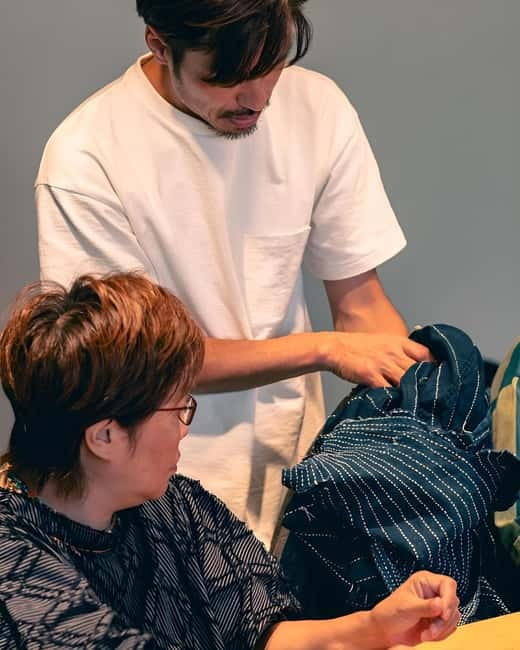
Good craft teaching is less about giving you a finished object and more about showing you how to continue on your own. That is one of the stronger parts of this workshop.
Jun explains the process, demonstrates the stitches, and offers help as you work. The small group limit of eight is important here. A large class could leave beginners struggling with thread tension or stitch spacing. With fewer people, you have a better chance to ask for a correction before a small mistake spreads across the pattern.
The instruction also connects technique with meaning. You learn that Sashiko patterns are not random decoration. Their repeated shapes and regional variations reflect Japanese craft traditions. That context gives your coaster more weight than a generic souvenir.
English-speaking visitors should find the class manageable because English instruction is offered. One instructor connected especially well with an Australian participant after living in Melbourne, which suggests that the teaching team is comfortable working with international participants. The activity details identify Jun as the main instructor, while one account refers to Nene, so the exact instructor may vary by date.
The take-home coaster and the value of making it yourself
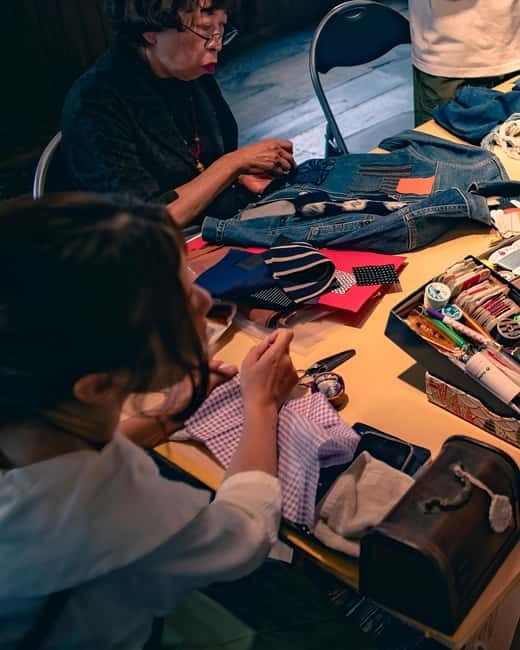
At $67 per person, this is not the cheapest souvenir-making activity in Osaka. It is also not just a short demonstration. The price includes two hours of teaching, all materials and tools, cultural explanation, and a completed Sashiko project.
The value depends on what you want from a craft class. If you only want a low-cost object to put in your luggage, a shop-bought coaster will cost less and take no time. If you want to understand how the object was made and leave with skills you can use again, the price is more reasonable.
You also avoid the extra cost and effort of buying the correct fabric, needles, thread, and pattern materials before the class. The project is small enough to finish in one sitting, which makes it a practical choice during a short Osaka visit.
The coaster format is a smart introduction. A large textile project could become tiring or impossible to finish in two hours. A small piece lets you learn the basics, see your progress, and carry the result home without taking up much luggage space.
Do not judge the class only by how perfect your final stitches look. Sashiko rewards even spacing and care, but first attempts naturally vary. The real souvenir is the combination of the object, the method, and the memory of sitting down to make it.
The small shopping corner beside the workshop

After or around the class, you can browse the small JunAle shopping corner next to the workshop. It carries original JunAle goods, sewing kits, hand-dyed threads, and clothing.
This is useful if the workshop sparks an interest in continuing at home. You can look at materials connected to the craft rather than trying to find Sashiko supplies later without knowing what you need. Cash discounts are available, so bring cash if you think you may buy something.
The shop is an optional extra, not the main reason to book. You should not feel that buying something is required to complete the experience. The workshop already supplies the materials needed for the class and includes your finished project.
Timing, group size, and practical planning
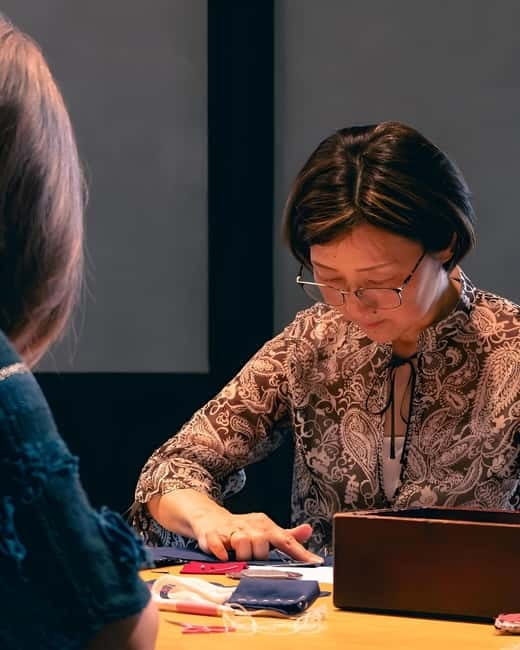
The activity lasts two hours, with starting times based on availability. That makes it fairly easy to place alongside sightseeing, though I would avoid scheduling it too tightly against a major train connection or timed attraction.
The group is limited to eight people. This is small enough for personal help but large enough to create a social setting. You may be seated with other people who have different levels of sewing experience. That can be a plus if you enjoy a relaxed group activity, but less appealing if you want a completely private lesson.
The workshop is listed as wheelchair accessible. Since the venue is an old house with wooden stairs, contact the provider in advance with any detailed access questions. Advance notice is also needed if you want to arrange a meeting at Kyobashi Station.
The booking terms are traveler-friendly. You can reserve now and pay later, and you can cancel for a full refund up to 24 hours before the activity. There is one important condition for solo visitors: the class aims to avoid a single-person surcharge, but if at least two participants do not book, you may be offered another date, asked to pay a ¥3,000 solo supplement, or given a full refund.
Who should book this Sashiko class

I would recommend it to:
- First-time visitors who want a cultural activity beyond food and sightseeing
- People who enjoy sewing, embroidery, quilting, or textile design
- Families with teenagers who can manage careful needlework
- Couples or friends looking for a quiet shared activity
- Visitors who prefer a small class over a large commercial workshop
- Anyone who wants a handmade souvenir with a clear connection to Japan
I would be more cautious if you dislike repetitive handwork or want a fast, highly varied activity. The class depends on patience. You will spend much of the two hours sitting, stitching, and paying attention to small details.
It is also not the right choice if you need a fully private class, since the normal format is a small group. And if you are booking alone, make sure you understand the two-person minimum before paying.
Should you book the Osaka Sashiko Workshop?
Book this workshop if you want to slow down, learn a traditional Japanese craft, and make a useful keepsake with your own hands. Jun’s patient instruction, the limited group size, the old-house setting, and the chance to learn extra stitches make it more than a basic souvenir activity.
At $67, the class makes the most sense when you value the process as much as the coaster. You receive materials, instruction, cultural context, and a project you can continue at home. For a beginner or a keen sewer, that is a fair exchange.
Skip it if your Osaka schedule is packed or if needlework sounds like work rather than relaxation. For everyone else, this is a thoughtful two-hour pause from the city, with a handmade reminder of Japan that will be far more personal than something pulled from a souvenir shelf.
FAQ
How long does the Sashiko workshop last?
The workshop lasts two hours.
How much does the activity cost?
The listed price is $67 per person.
Is the workshop suitable for beginners?
Yes. The class introduces the basic Sashiko techniques and provides guidance for people with no previous experience. More experienced sewers may be shown additional stitches if they finish early.
What will I make during the workshop?
You will make Sashiko coasters using geometric patterns and take your completed textile piece home.
Are tools and materials included?
Yes. Fabric, needles, thread, and other Sashiko-specific tools and materials are provided.
What languages are available, and how large is the group?
Instruction is available in English and Japanese. The group is limited to eight participants.
Just added in Osaka
- Urban Canvas: Osaka Street Art Bike Tour★ 5.0 · 10 reviews
- Anime Cosplay Photshoot-50 Digital Photos Provided★ 5.0 · 8 reviews
- TeamLab Botanical Garden Osaka Ticket★ 3.5 · 6 reviews
- Umeda Sky Building & Kuchu Teien Observatory Ticket in Osaka★ 4.5 · 3 reviews
- Immerse in Judo Martial Arts Class from Japan★ 5.0 · 4 reviews
- Cherry Blossom Buddha and Mt.Yoshino with Strawberry Picking Tour★ 4.5 · 5 reviews
- Traditional Home cooking Experience in Osaka, Japan★ 5.0 · 14 reviews
- Traditional Calligraphy Experience near Dotonbori★ 5.0 · 3 reviews
Workshops, compared.
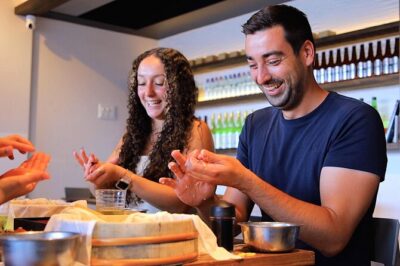
Sushi Making Osaka Roll and Authentic Japanese Sushi Class
Read our review →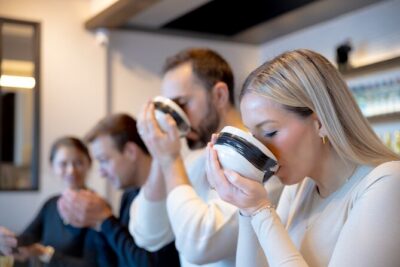
Matcha Making Class in Osaka with Authentic Japanese Sweets Set
Read our review →
Osaka Cooking Class: Okonomiyaki &Japanese cuisines experience
Read our review →
Roll and Authentic Sushi Making Class in Dotonbori
Read our review →

Browse the lists this tour appears in