
Reviewed · WORKSHOPS
Osaka Daruma Workshop — Paint Your Own Good-Luck Daruma
A Daruma is more than a round red souvenir. It is a small reminder to keep working toward a goal, even after you fall short. At DARUMA CLUB in Nipponbashi, you learn that meaning, choose from 10 colors, and paint a doll that is yours alone.
I like the easy location, close enough to Dotonbori and Kuromon Market to fit into a sightseeing day. I also like the calm pace: a video and guide book explain the basics, then you work with brushes, paints, and plenty of room for your own ideas. The main consideration is that this is a quiet workshop, not a noisy drop-in craft class. You must reserve, arrive on time, and keep conversation and photography low.
I especially appreciate the gentle support. Instructor Kelly is described as attentive and quick to replace brushes when needed, and the workshop allows practice first or a Daruma with its face already painted if you feel pressure about getting the features right. At $35 per person, the value comes from the cultural explanation, guided creative time, and finished keepsake, though you should not bring a suitcase or large bag.
Key points to know before you book
- Choose from 10 Daruma colors: Your choice gives the doll a personal starting point before you add your own design.
- Learn the meaning first: The workshop explains the Daruma’s connection with wishes, goals, and the idea of falling seven times and rising eight.
- Plan for 90 to 110 minutes: This is long enough to work carefully, but the end time cannot be extended if you arrive late.
- English and Japanese support: Guidance is available in both languages, with a video and guide book helping you follow the process.
- A good break from sightseeing: The quiet setting gives you time away from Osaka’s busy streets and markets.
- Bring only what you need: Large bags, suitcases, food, and alcohol are not allowed. Non-alcoholic drinks are permitted.
Why painting a Daruma feels more personal than buying one
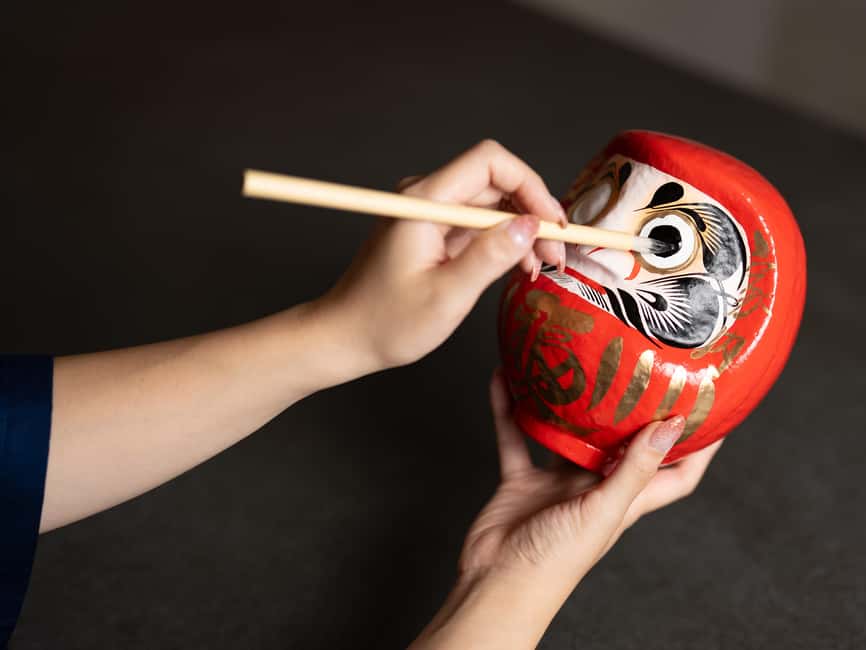
You can find Daruma dolls in shops around Japan, but painting one changes the relationship you have with it. Instead of choosing a finished object from a shelf, you decide how it should look and what it should represent.
The Daruma is linked to perseverance and wishes. Its rounded shape is designed to return upright after being knocked over, which explains the familiar idea of fall seven times, rise eight. That simple message works well for a holiday souvenir because it gives the object a purpose beyond decoration.
The workshop lets you place your own meaning into the process. You might choose a color that appeals to you, add a word or design, or simply enjoy making something with your hands. The activity does not require a background in Japanese culture or art. You receive an introduction before you start, so the doll’s symbolism is not reduced to a cute craft project.
I like this balance. You get a real cultural reference point, but you are not expected to become an expert in Daruma traditions before picking up a brush. The result can be neat, playful, simple, or imperfect. That last option matters. A handmade keepsake should show that you made it.
A few more Osaka half-days worth pricing up
- Sushi Making Osaka Roll and Authentic Japanese Sushi Class
★ 5.0 · 1,220 reviews - Matcha Making Class in Osaka with Authentic Japanese Sweets Set
★ 5.0 · 509 reviews - Osaka: Ramen and Gyoza Cooking Class in Dotonbori
★ 5.0 · 378 reviews
Arriving at DARUMA CLUB in Nipponbashi
The meeting point is DARUMA CLUB, at 2-10-9 Nipponbashi in Chuo Ward, Osaka. Its central position is useful if you are already exploring the southern part of the city. Dotonbori and Kuromon Market are within walking distance, so you can place the workshop between food, shopping, and sightseeing stops.
Do not treat the address as an invitation to arrive at the last second. You are asked to arrive at least five minutes early, and the session cannot be extended if you are late. That is especially important for families, since each person needs a prepared seat and work area.
The room is arranged for the number of people on the reservation. Companions and observers who are not booked cannot enter, and seating is not added for extra people. This rule may feel strict if someone wants to watch, but it helps keep the class manageable and protects the quiet mood.
Wheelchair access is available. You should still plan carefully around your own transport and luggage needs, since transportation costs are not included and large bags or suitcases are not allowed inside.
The first lesson: what the Daruma represents
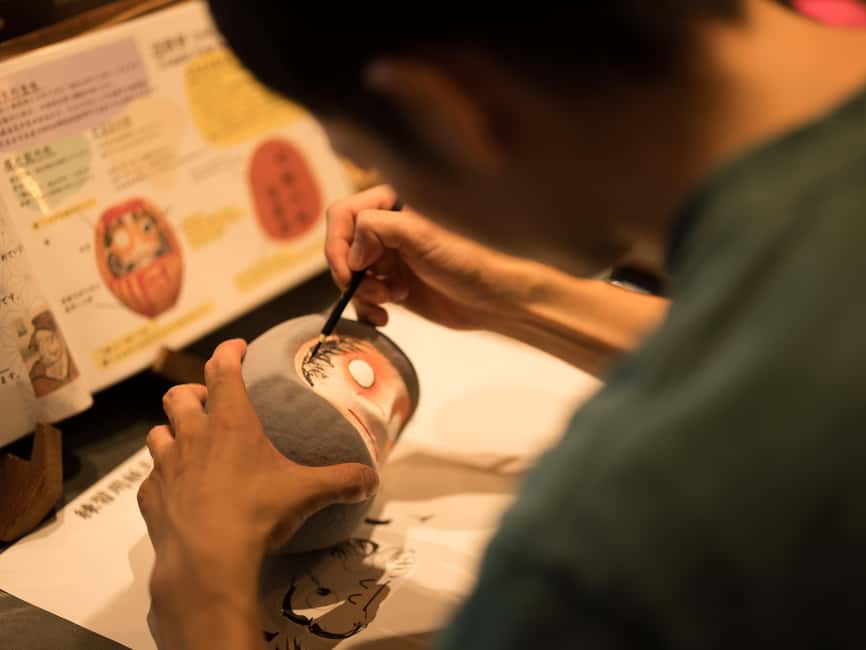
The activity begins with an explanation of the Daruma and its background. A video introduction and guide book help lay out the basic story before you start painting. English and Japanese guidance are available, so you can follow the instructions without needing to understand Japanese.
This opening is short but important. Without it, you might see the Daruma as a cheerful round doll and miss the point. Once you understand its connection with determination and wishes, the painting becomes a small act of reflection.
The workshop is also a useful way to encounter Japanese culture without committing to a formal museum visit or long lecture. You learn through the object in front of you. The lesson gives enough context to make the finished doll meaningful, then lets you spend most of the time creating.
The process is partly self-paced. You can follow the video and guide book, then ask for help when you need it. That format suits people who prefer to work quietly rather than follow constant spoken instructions.
Choosing one of 10 colors
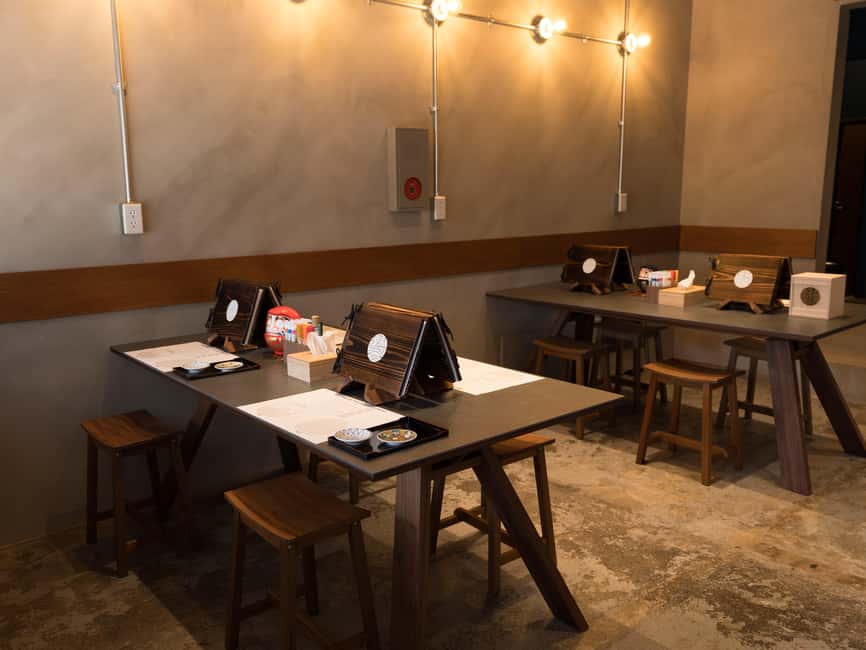
After the introduction, you choose your Daruma from 10 colors. This is one of the most enjoyable decisions because it gives the activity a personal beginning before any painting starts.
The information provided does not assign a fixed meaning to every color, so you should choose based on the color you like or ask the guide if you want more context. The important point is variety. You are not all starting with the same traditional red doll.
You then receive the Daruma and a complete set of painting tools for use during the workshop. The tools are included in the $35 price, so you do not need to bring art supplies or pay a separate rental charge.
The room allows you to work at your own speed, within the 90 to 110 minute session. Some people may finish a straightforward design quickly. Others will want time to sketch, adjust details, or consider the words and symbols they want to add.
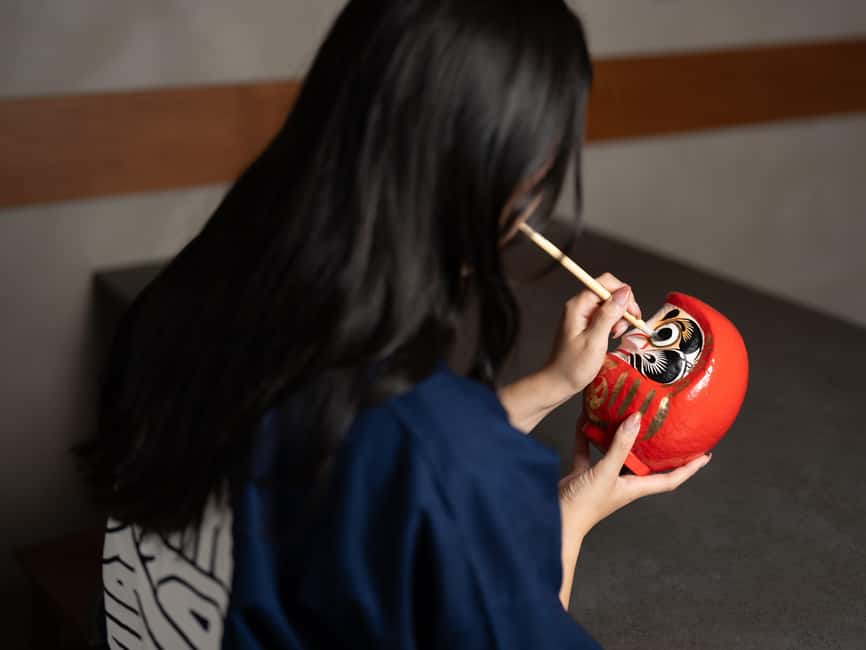
If you are worried about drawing the face, the workshop offers ways to reduce that pressure. You can practice first, and one option allows you to begin with the face already painted. That makes the activity more welcoming for children, nervous adults, and anyone who wants the cultural experience without the fear of ruining the most recognizable feature.
Same city, a completely different kind of afternoon:
- Osaka Go Karting Tour with Funny Costume
★ 5.0 · 2,658 reviews - Osaka Castle: Museum and Tower Entry Ticket
★ 4.5 · 2,380 reviews - Osaka: Shinsekai Food Tour with 13-15 Dishes at 5 Eateries
★ 4.8 · 2,204 reviews - Osaka Food Tour: 13 Dishes at 5 Local Eateries
★ 5.0 · 2,149 reviews
Painting time: quiet concentration in the middle of Osaka
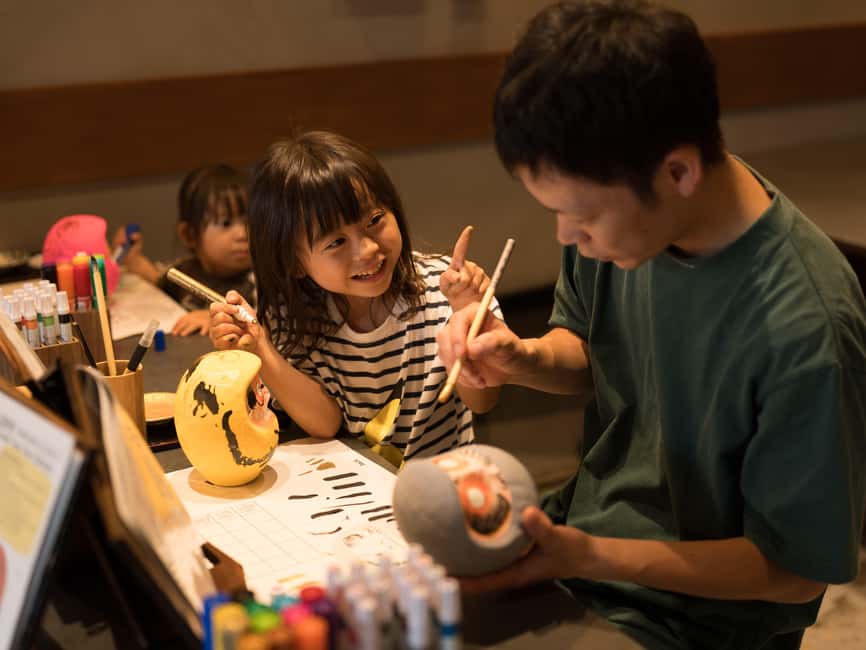
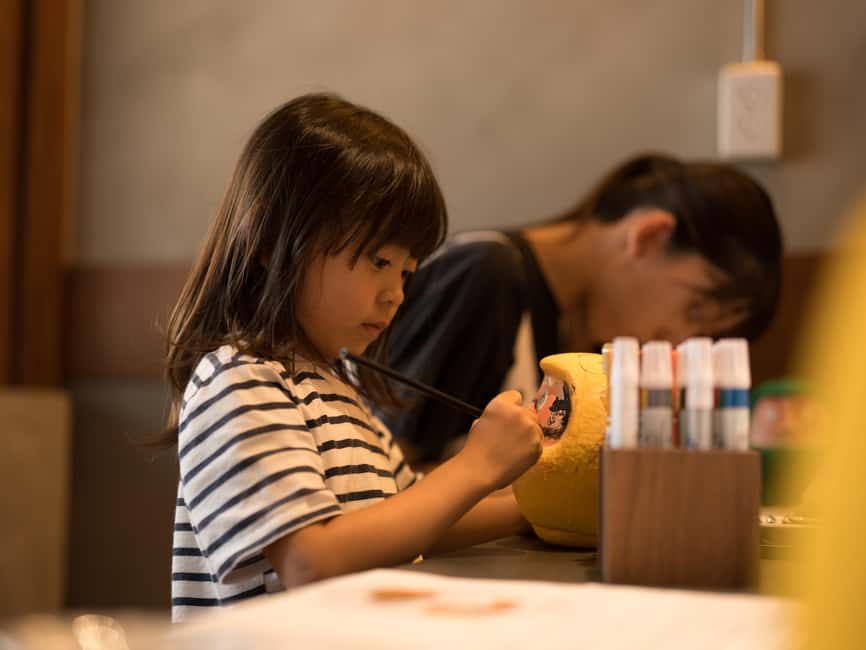
Once the explanation and color choice are finished, the main part of the workshop is yours. You paint your Daruma with the available tools and guidance. The atmosphere is intended to be quiet, and you are asked to keep conversations and photography to a minimum so others can concentrate.
That rule is worth knowing before you book. If you want a lively social craft session with constant photographs and conversation, this may feel restrained. If you have spent the day moving through busy streets, though, the quiet can be a welcome change.
I like the contrast with the rest of an Osaka day. Dotonbori brings bright signs, restaurants, crowds, and plenty of noise. At the workshop, your attention narrows to the shape in front of you and the next brushstroke. You do not need to force this into a spiritual experience, but the repetitive work can provide a calm pause.
The freedom to design the Daruma is another strength. You can add colors, patterns, words, and other details rather than copying one fixed model. The finished doll will not look exactly like a shop-bought Daruma, and that is the point.
Support is available if you need it. The experience includes English and Japanese guidance, and the supplied information highlights attentive help during the session. One instructor, Kelly, is specifically praised for being kind and observant, including replacing brushes before they became a problem. You should expect assistance, but not an artist standing over you and directing every line.
Finishing the doll and taking it home
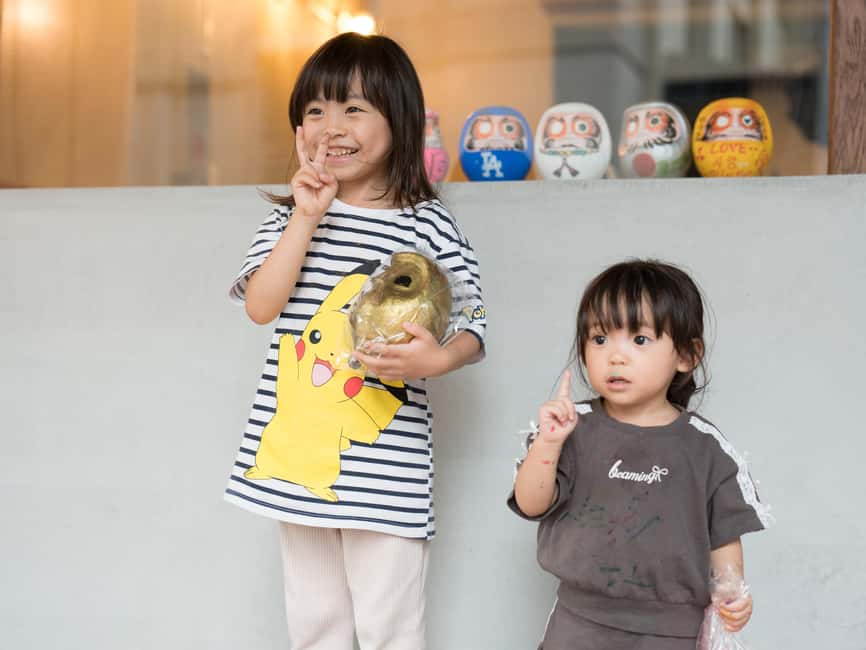
At the end, you take your Daruma home. This is a practical advantage over activities that produce something too fragile, wet, or bulky to fit into a suitcase. Even so, handle your finished piece with care when packing it, especially if you have several more weeks of travel ahead.
A customizable box may also be available as part of some workshop arrangements. Since the included package officially lists the painting tools and Daruma, ask about the box option when booking if presentation matters to you. It can turn the finished piece into a more complete gift or display item.
The doll works well as a personal reminder of a goal, but it can also be a thoughtful present. You might paint one for a friend, a child, a partner, or yourself. The meaning does not depend on producing a perfect design.
The creative part can also encourage a little self-reflection. You may think about what you want to work toward, what you are leaving behind, or simply how you want to remember your time in Osaka. That is a lot more personal than picking up a random magnet at the airport.
Is $35 a fair price?
At $35 per person, this is not the cheapest souvenir stop in Osaka. You could buy a small Daruma for less, and you could visit Dotonbori or Kuromon Market without paying an activity fee.
The value comes from the full package. You receive the Daruma, use of the painting tools, an explanation of its cultural role, multilingual support, a dedicated work space, and 90 to 110 minutes to make something yourself. You are paying for time and guidance as much as for the object.
I think the price is reasonable if you value hands-on activities. It is less convincing if you only want a quick photograph or a ready-made souvenir. The finished Daruma is meaningful because of the time you spend making it, so the activity works best when you are willing to slow down.
The private-group format can also make the cost easier to justify for couples, families, and friends. You are not simply watching a demonstration. Each booked participant receives a place to work and a Daruma to decorate.
Who will enjoy this workshop most?
This suits couples looking for a quieter shared activity, especially after a busy day of shopping and food. You can compare color choices, help each other with designs, and take home matching or completely different dolls.
Families can enjoy it too, but children must be at least six years old and able to sit calmly. The workshop is not designed for running around or loud group behavior. Parents should explain the quiet setting and the need to stay at the work area before booking.
Solo participants are welcome, and this may be one of the better formats for a person traveling alone. You do not need a partner to make the activity work, and the self-paced format lets you focus without feeling rushed.
Art lovers will find plenty of room to play with patterns and lettering. Beginners are equally welcome because practice and a pre-painted face option can remove some of the pressure. You do not need to be good at drawing to leave with a personal Daruma.
It is less suitable for anyone carrying large luggage, seeking a drop-in activity, or hoping to bring along an unbooked companion. It also may not fit a tightly packed schedule, since the end time is fixed and the session can run close to two hours.
Timing, booking, and practical limits
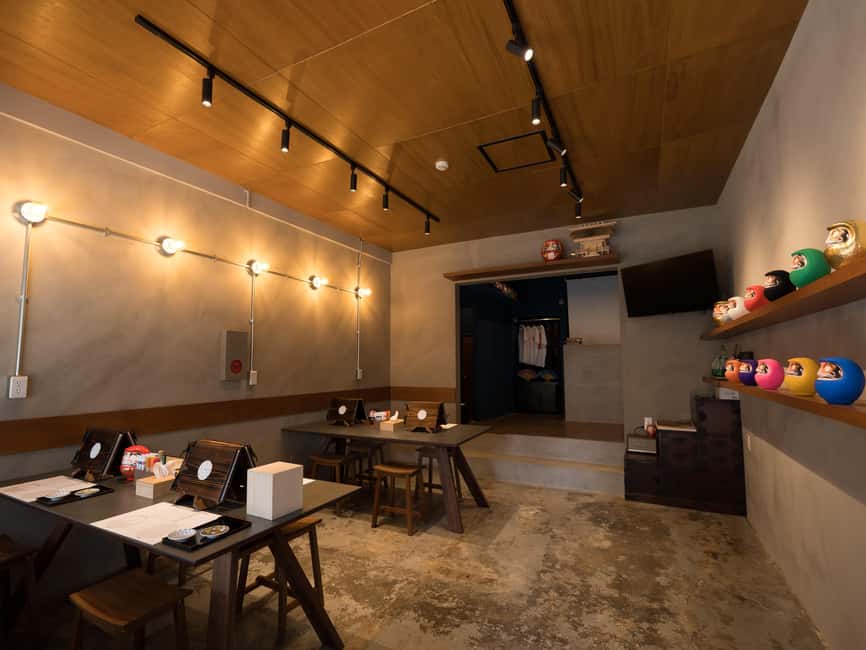
You need a reservation. Entry without one is not allowed, including for companions or observers, and each person needs a booked seat. If the participant count or time slot cannot be selected, that session may be full, so another time must be chosen.
The minimum age is six. All prices are per person, and transportation plus personal purchases are separate.
You can cancel up to 24 hours in advance for a full refund, and the reserve-now-pay-later option allows you to hold a place without paying immediately. These policies are useful if your Osaka schedule is still changing.
Food and alcohol are not allowed inside. Non-alcoholic drinks are permitted. Keep photography and conversation limited, and arrive five minutes before the start. These are small rules, but following them helps preserve the calm atmosphere that makes the activity different from a standard craft shop.
Should you book the Osaka Daruma Workshop?
Book it if you want a hands-on cultural activity, a useful break from central Osaka’s busy streets, and a souvenir with a story attached. The combination of 10 color choices, flexible decoration, English and Japanese support, and a take-home Daruma gives you more than a simple painting lesson.
I would choose this for a couple, a family with older children, or a solo visitor who wants an hour and a half of focused creative time. I would skip it if your schedule is too tight for a fixed 90 to 110 minute session, if you dislike quiet group rules, or if you are mainly looking for the cheapest possible souvenir.
For most people who enjoy making rather than only buying, the $35 price is fair. You leave with a Daruma that carries your own choices, your own small mistakes, and perhaps a wish worth remembering.
FAQ
Where is the Osaka Daruma Workshop located?
The workshop takes place at DARUMA CLUB, 2-10-9 Nipponbashi, Chuo Ward, Osaka City, Osaka Prefecture.
How long does the Daruma painting experience last?
The stated duration is 90 to 110 minutes. The exact time can vary by selected plan, and the end time cannot be extended if you arrive late.
How much does the workshop cost?
The price is $35 per person. Transportation and personal expenses, including merchandise purchases, are not included.
What is included in the price?
A Daruma and a complete set of painting tools for rental are included.
Can I choose the color of my Daruma?
Yes. You can choose one Daruma from 10 different colors and then design it freely.
Is guidance available in English?
Yes. Live guidance is available in English and Japanese. The activity also uses a video introduction and a guide book.
What is the minimum age?
Participants must be at least six years old and able to sit calmly during the experience.
Can I bring a suitcase or large bag?
No. Large luggage, suitcases, oversized luggage, and large bags are not permitted.
Can I cancel my reservation?
Yes. You can cancel up to 24 hours in advance for a full refund. A reserve-now-pay-later option is also available.
Just added in Osaka
- Urban Canvas: Osaka Street Art Bike Tour★ 5.0 · 10 reviews
- Anime Cosplay Photshoot-50 Digital Photos Provided★ 5.0 · 8 reviews
- TeamLab Botanical Garden Osaka Ticket★ 3.5 · 6 reviews
- Umeda Sky Building & Kuchu Teien Observatory Ticket in Osaka★ 4.5 · 3 reviews
- Immerse in Judo Martial Arts Class from Japan★ 5.0 · 4 reviews
- Cherry Blossom Buddha and Mt.Yoshino with Strawberry Picking Tour★ 4.5 · 5 reviews
- Traditional Home cooking Experience in Osaka, Japan★ 5.0 · 14 reviews
- Traditional Calligraphy Experience near Dotonbori★ 5.0 · 3 reviews
Workshops, compared.
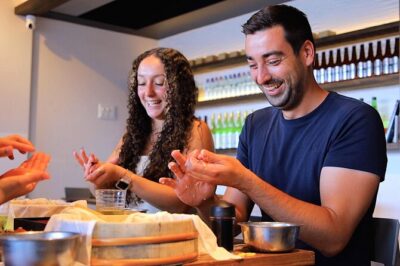
Sushi Making Osaka Roll and Authentic Japanese Sushi Class
Read our review →
Matcha Making Class in Osaka with Authentic Japanese Sweets Set
Read our review →
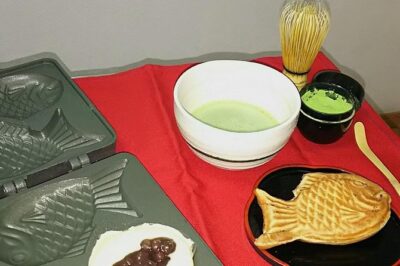
Osaka Cooking Class: Okonomiyaki &Japanese cuisines experience
Read our review →
Roll and Authentic Sushi Making Class in Dotonbori
Read our review →

Browse the lists this tour appears in