
Reviewed · OSAKA SAMURAI EXPERIENCES
Learn The Katana ‘Sword’ Technique of Samurai and Ninja
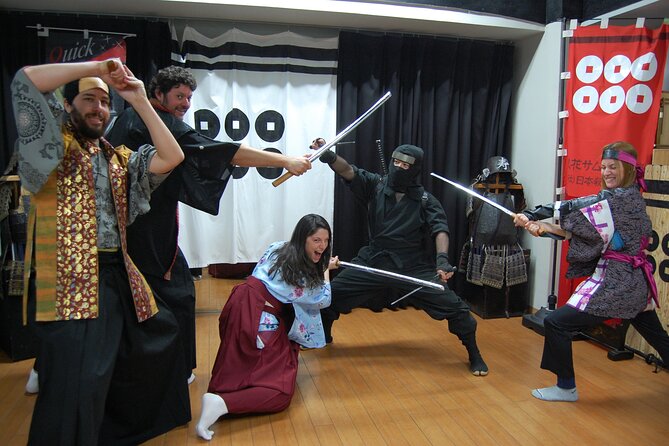
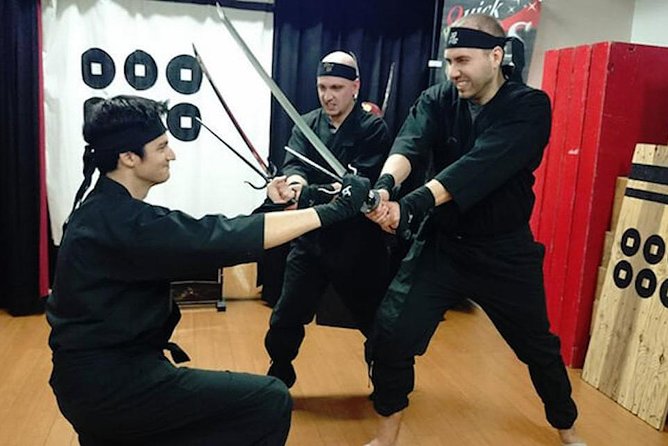
The fun begins with a staged fight by three samurai and a ninja, then you step into the action in kimono, ninja clothing, or samurai armor. You learn how to hold a katana, work through eight basic katas, practice the tate style used for choreographed sword battles, and finish with rubber shuriken throwing.
I like the clear mix of costume, instruction, and performance. I also like that the class stays small, with no more than 10 people, so you are not lost in a crowd. The main consideration is its purpose: this is theater-based samurai training, led by performers with kendo backgrounds, not a serious martial arts course.
Key points at a glance
- Watch a samurai and ninja fight first: Three samurai and one ninja provide a short performance before your own lesson.
- Learn eight katana katas: The instructor covers grip, posture, movement, and basic sword patterns, with time to record video.
- Choose a full warrior costume: You may dress in a kimono, ninja costume, or samurai armor.
- Join a staged tate battle: The lesson ends with you taking part in a group ninja scene.
- Throw rubber shuriken: The star-throwing activity adds a playful ninja finish without using live weapons.
- Small Osaka class: The group is limited to 10 people at the Japan Tatedo Association in Kitahorie.
From audience member to sword-fighting performer
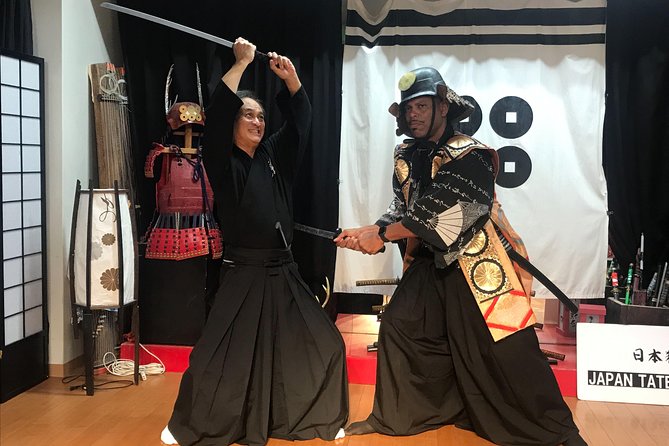
This Osaka class is built around participation. You do not simply watch a choreographed samurai show, pose for a photograph, and leave. You first see the style in action, then learn enough movement to take part in a short scene yourself.
The session takes place at the Japan Tatedo Association, in Osaka’s Nishi Ward. Your meeting point is the Imai Building at 1-chōme-1-27 Kitahorie. The activity ends at the same place, and public transportation is nearby. You arrange your own way there and back, since transportation and hotel pickup are not included.
The class is advertised as about one hour, while the detailed description also calls it a 90-minute lesson. That difference is worth checking when you book, especially if you have a restaurant reservation or another timed activity afterward. Plan your schedule with some breathing room.
The group limit of 10 is useful here. Sword instruction involves watching a demonstration, copying a stance, and getting corrections. A small class should make that easier than a large stage-school group, even if the exact amount of personal coaching depends on the day.
More samurai and ninja experiences in Osaka:
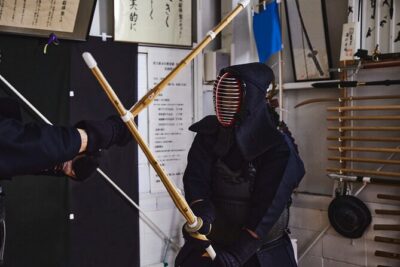
- Samurai Training Experience KENDO in Osaka
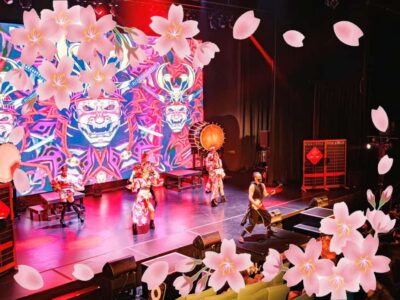
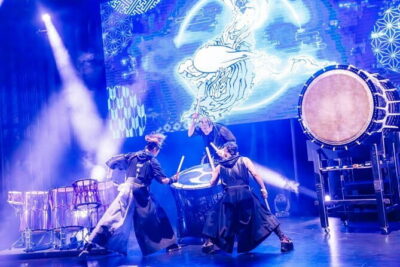
★ 5.0 · 515 reviews - OSAKA NIGHT FUSION Japanese Taiko Kabuki Samurai Dance Show
★ 4.8 · 155 reviews - Osaka: Samurai Training Experience KENDO in Osaka
★ 5.0 · 111 reviews
The opening samurai and ninja performance
The first part gives you a quick lesson in what the class is trying to create. Three samurai and a ninja perform a fighting scene, showing the clean poses, dramatic pauses, and controlled movements used in stage combat.
This opening matters because the lesson is not designed around real combat. It is about the look and rhythm of a samurai or ninja performance. You can see how a sword is presented, how an opponent reacts, and how a scene is made clear to an audience.
That makes the activity easy to understand, even if you know little about Japanese sword arts. You are not expected to arrive with martial arts training. The instructor leads you through the basic positions and gives you a role in the final scene.
The performance also sets the right expectations. If you want a hard physical workout or traditional weapons training, this is likely too light. If you want to learn a few safe movements and become part of a short show, it has a much better fit.
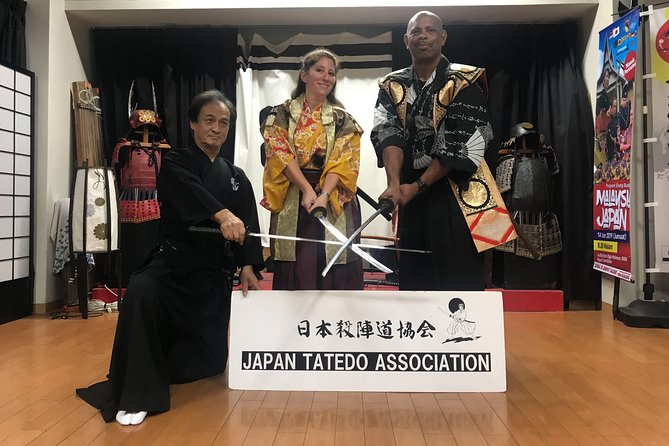
Wearing kimono hakama, ninja clothes, or armor
Costume is not a minor extra here. Dressing for the part changes the tone of the class and helps you understand how the presentation works.
You learn how to wear kimono hakama, then select a traditional kimono, ninja costume, or samurai armor for the lesson. The supplied information does not specify how many costume choices are available at each session, so you should treat the selection as subject to what is on hand.
The costume also affects your movement. A kimono or armor changes how you stand, turn, and hold a sword. That gives the lesson a practical visual link between clothing and performance, rather than making the outfit only a photo prop.
Allow time for getting dressed and adjusted. The stated duration is short, so the class moves at a brisk pace from costume to sword handling to the final scene. If you are traveling with children, give them a quick explanation before arrival that the activity includes changing into a costume and following an instructor’s directions.
Photos are part of the planned session. You also have the chance to take video during the katana practice, which is helpful because eight katas can be a lot to remember after a single class.
Learning the katana and eight basic katas
The sword lesson begins with the fundamentals: how to hold the katana and how to use it for a controlled cutting movement. The instructor teaches eight katas, or formal movement patterns, while focusing on posture, balance, and mental concentration.
The word tate is important here. In this setting, tate refers to choreographed sword performance. It combines stance, timing, balance, and clear movement so that a battle reads well to an audience.
You should not expect to swing a sharp blade at targets. The information provided describes stage sword technique and a performance scene, while the shuriken portion specifically uses rubber stars. The experience is designed for safe, supervised participation rather than weapons practice.
The eight-kata structure gives the lesson more substance than a simple dress-up photo stop. You have a sequence to learn and a reason for each movement. Still, one short class cannot teach real swordsmanship. Think of it as an introduction to Japanese stage combat with a samurai theme.
I like that the lesson includes mental focus as well as hand position. A sword pose looks convincing only when your feet, shoulders, gaze, and timing work together. Even a beginner can see why balance matters once the instructor breaks the movement into parts.
Same city, a completely different kind of afternoon:
- Osaka Go Karting Tour with Funny Costume
★ 5.0 · 2,658 reviews - Osaka Castle: Museum and Tower Entry Ticket
★ 4.5 · 2,380 reviews - Osaka: Shinsekai Food Tour with 13-15 Dishes at 5 Eateries
★ 4.8 · 2,204 reviews - Osaka Food Tour: 13 Dishes at 5 Local Eateries
★ 5.0 · 2,149 reviews
Taking part in the tate battle scene
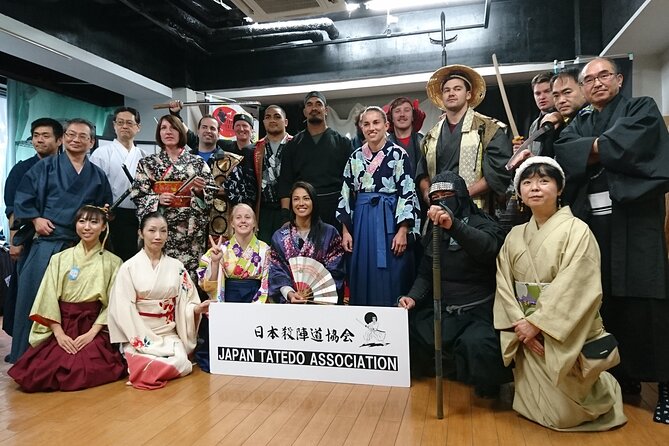
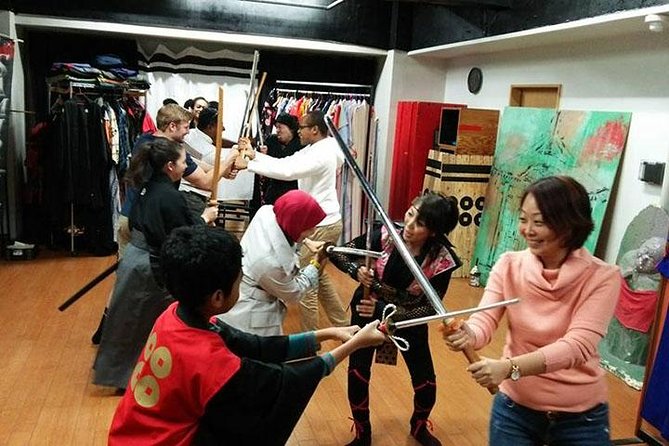
The final group scene is the payoff. After watching the professionals and practicing the basic movements, everyone becomes part of a short ninja or samurai performance.
This is where the class differs from a standard demonstration. You are not asked to perform alone without preparation. The group works together, following the instructor’s direction and using the poses and sword actions from the lesson.
Expect a guided scene rather than an unscripted fight. The goal is a clear, dramatic performance, not competition. That makes it suitable for families, friends, and people who may feel shy about performing in front of others.
The experience has received especially strong praise for being entertaining, patient, and family-friendly. That fits the design of the session: the instructors are there to help you look and move the part, not to test your physical ability.
Partners who prefer not to participate can still enjoy the show, and the performance element gives them something to watch. The supplied information specifically notes that accompanying partners may enjoy seeing the activity as much as the people taking part.
Finishing with rubber shuriken throwing
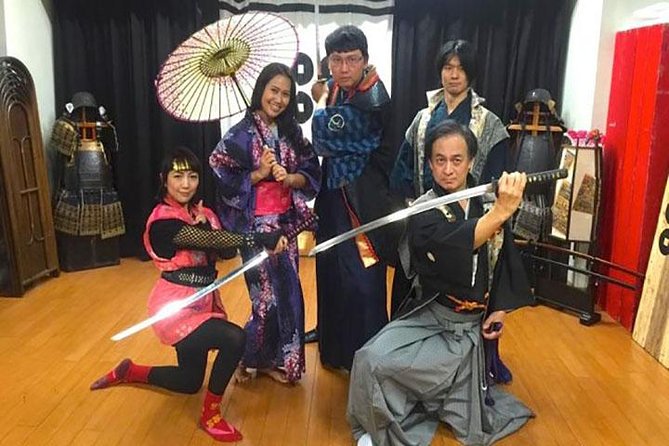
The ninja star activity provides a change of pace after the katana work. You throw a rubber version of the shuriken, keeping the activity playful and suitable for a broad range of participants.
This is not presented as a technical throwing course. It is one part of a themed lesson that also includes costumes, sword forms, a staged fight, and photos. If the shuriken is your main interest, you may find this section brief. If you like variety, it keeps the class from becoming entirely focused on sword posture.
The use of rubber stars is an important detail. You are taking part in a supervised activity with stage-safe equipment, not handling traditional combat weapons. Follow the instructor’s directions closely and wait for your turn.
The star throwing also rounds out the character choice. The samurai elements center on posture and katana form, while the ninja portion adds stealth, costume, and the star-throwing scene. You get a taste of both themes in one short visit.
What the $162.59 price buys you
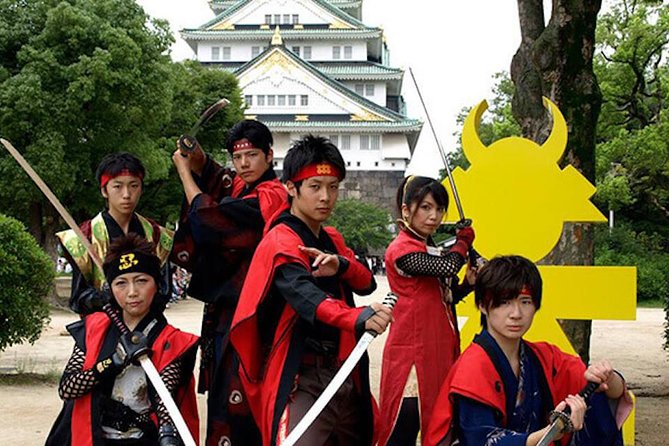
At $162.59 per person, this is not a cheap photo opportunity. The value depends on how much you want from the experience.
The price includes the rental costume and a local instructor. It also covers the guided katana lesson, eight katas, the tate battle activity, rubber shuriken throwing, and picture time. You are paying for a structured, small-group performance lesson rather than a ticket to watch a show.
For a family or group of friends, the cost can make sense if everyone wants to take part. The shared final scene gives the session a social purpose, and group discounts are available. For one person who only wants a quick costume photo, the price may feel high.
The short duration is the main value question. The activity is listed as approximately one hour, though the description also refers to 90 minutes. At this rate, you should want the complete package: instruction, costumes, performance, video, photos, and participation in the final scene.
A current rating of 5 from five posted ratings is encouraging, and the strongest praise centers on fun, patient staff, memorable group moments, and family enjoyment. One important qualification comes through clearly: the class is not for someone seeking a serious martial arts course.
Who will enjoy this Osaka activity most
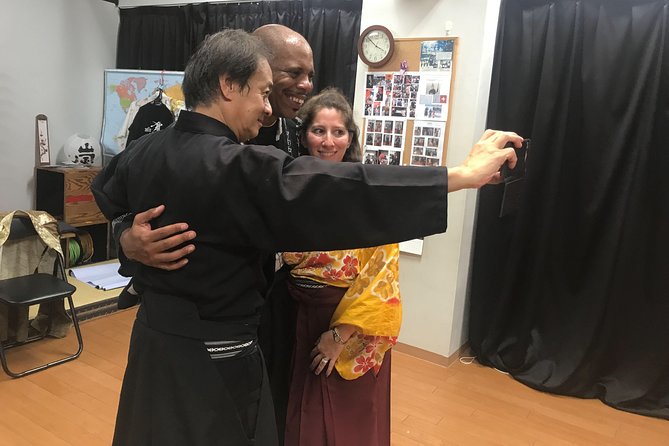
I would recommend this class to you if you want an active cultural experience with a theatrical edge. It works particularly well for:
- Families looking for an activity that children and adults can share
- Friends who want group photos and a memorable performance
- First-time visitors curious about samurai and ninja traditions
- People who prefer participating to sitting through a formal demonstration
- Fans of stage combat, costumes, and Japanese pop culture
You do not need to arrive as a martial artist. Most people can participate, and the instructor teaches the movements during the class.
I would be more cautious if your goal is serious sword training. The instruction is connected to stage performance, and the session is short. It teaches the appearance and structure of sword movement, not the full discipline of kendo, kenjutsu, or another martial art.
The small group helps, but the pace may still feel quick if you want lengthy explanations or repeated practice. You have eight katas, costume time, a battle scene, shuriken throwing, and photographs to fit into one short visit.
Practical details before you book
Your start and end point is the Imai Building, 1-chōme-1-27 Kitahorie, Nishi Ward, Osaka. The venue is near public transportation, but you must make your own way there. Hotel pickup and drop-off are not included.
Booking confirmation arrives within 48 hours, subject to availability. The average booking time is 112 days ahead, which suggests that planning early is sensible, especially if you need a particular date or are traveling during a busy period.
The maximum group size is 10 people. Group discounts are offered, and mobile tickets are available.
Most people can participate, but the supplied details do not give specific information about age limits, footwear, changing facilities, or physical restrictions. If those points matter to you, contact the provider, Beauty of Japan, before booking.
Cancellation terms are strict near the date. Cancel at least six full days before the start for a full refund. Cancellations made two to six full days ahead receive a 50 percent refund, while cancellations less than two full days before the start are not refunded. Changes follow the same time limits, based on Osaka local time.
Should you book the samurai and ninja class?
Book it if you want to dress up, learn recognizable sword movements, throw a rubber shuriken, and join a short staged battle. The combination of a small group, patient instruction, costumes, and a final performance gives you more to do than a standard photo session.
Skip it if you want formal martial arts instruction or a long, technical lesson. At $162.59, the value depends on enjoying the whole package, not just the katana.
For families and friends, this is the stronger choice. You leave with photos, a video-friendly sequence of katas, and a shared scene to remember. Just allow extra time around the advertised duration, arrange your own transportation, and confirm the session length before you lock in other Osaka plans.
FAQ
Where does the samurai and ninja class take place?
The class takes place at the Japan Tatedo Association. The meeting point is the Imai Building, 1-chōme-1-27 Kitahorie, Nishi Ward, Osaka, 550-0014, Japan.
How long does the experience last?
The duration is listed as approximately one hour. The detailed description also refers to a 90-minute lesson, so confirm the expected timing when you book.
What is included in the price?
The price includes a rental costume and a local instructor. The lesson also covers katana handling, eight katas, tate battle practice, rubber shuriken throwing, and picture time.
Are costumes provided?
Yes. You can dress in a traditional kimono, ninja costume, or samurai armor, depending on the available options at the session.
Will I learn how to use a katana?
Yes. The instructor teaches you how to hold the katana and practice eight katas. The lesson focuses on stage sword technique, posture, balance, and mental focus.
Is this a serious martial arts class?
No. The class is designed around stage performance. The instructors are stage actors with a background in kendo, so it is better suited to learning choreographed sword movement than formal martial arts training.
Do I get to take part in a performance?
Yes. At the end, participants take part in a group ninja or samurai scene under the instructor’s direction.
Is shuriken throwing included?
Yes. You throw a rubber version of a shuriken, or ninja star, during the lesson.
How many people can join the class?
The maximum group size is 10 participants.
Is transportation included?
No. Transportation to and from the attraction, as well as hotel pickup and drop-off, are not included. The meeting point is near public transportation.
Can I cancel for a full refund?
Yes, if you cancel at least six full days before the experience start time. Cancelling two to six full days ahead gives a 50 percent refund, while cancellations less than two full days before the start are not refunded.
Just added in Osaka
- Urban Canvas: Osaka Street Art Bike Tour★ 5.0 · 10 reviews
- Anime Cosplay Photshoot-50 Digital Photos Provided★ 5.0 · 8 reviews
- TeamLab Botanical Garden Osaka Ticket★ 3.5 · 6 reviews
- Umeda Sky Building & Kuchu Teien Observatory Ticket in Osaka★ 4.5 · 3 reviews
- Immerse in Judo Martial Arts Class from Japan★ 5.0 · 4 reviews
- Cherry Blossom Buddha and Mt.Yoshino with Strawberry Picking Tour★ 4.5 · 5 reviews
- Traditional Home cooking Experience in Osaka, Japan★ 5.0 · 14 reviews
- Traditional Calligraphy Experience near Dotonbori★ 5.0 · 3 reviews
Osaka Samurai Experiences, compared.
OSAKA NIGHT FUSION Japanese Taiko Kabuki Samurai Dance Show
Read our review →
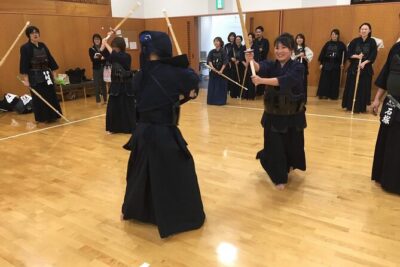
Osaka 2-Hour Genuine Kendo / Samurai Experience In Japan
Read our review →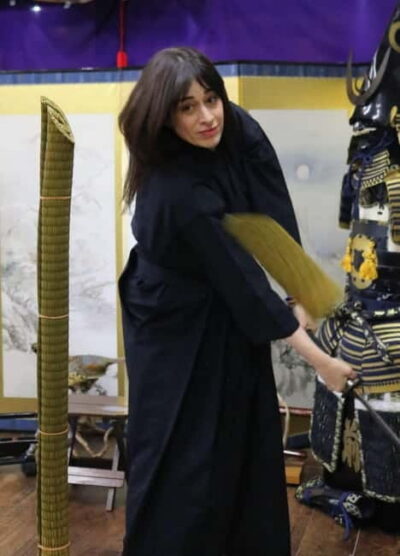
Learn Bushido – Trial Slashing with Samurai Sword
Read our review →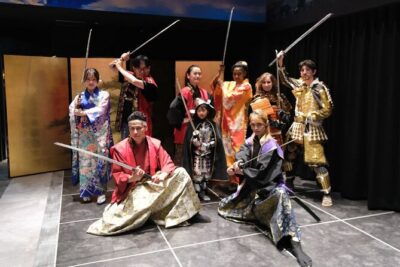
Samurai Show, Tea Ceremony, Japanese Traditional Activities
Read our review →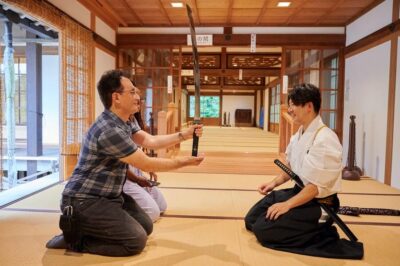
Private Samurai Experience – Train with Sword Master
Read our review →Browse the lists this tour appears in