
Reviewed · OSAKA COOKING CLASSES
Osaka Okonomiyaki Cooking Experience!
Osaka’s famous okonomiyaki is less a restaurant dish than a social meal: mix, cook, share, and adjust it to suit your taste. In this small class near Nagahoribashi, Keiko teaches you how to make the Osaka version, along with miso soup, then sits down with you to eat and talk.
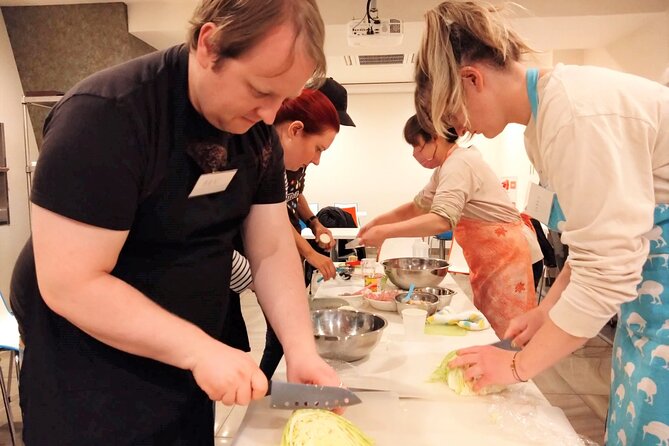
I like the tiny group size, capped at six, because you get real help at the hot plate instead of watching from the back of a crowded room. I also like the local contact: Keiko may be joined by her mother, Sachiko, or other Osaka friends, turning a cooking lesson into a relaxed cultural exchange.
The main thing to consider is that this is a simple, social class rather than a polished culinary school. The food is designed to be made at home, and group cooking means possible cross-contamination, even when dietary requests are arranged in advance.
Key points at a glance
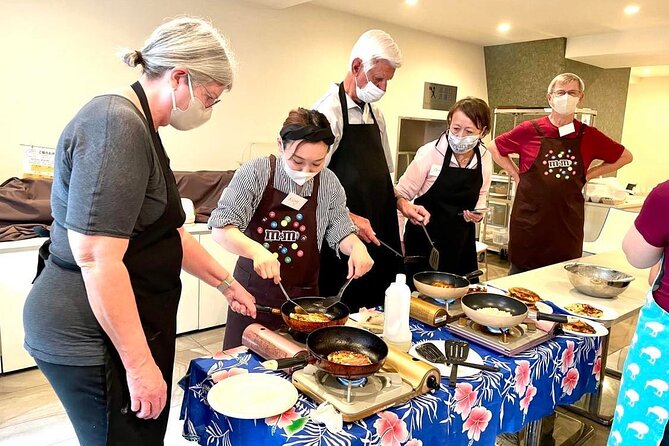
- Cook Osaka-style okonomiyaki yourself: Learn a practical recipe you can repeat with ingredients from home.
- Make miso soup as well: The class covers a second everyday Japanese dish, not only the headline pancake.
- Meet Keiko and local Osaka people: The meal includes conversation, questions, and cultural exchange.
- Small groups matter: A maximum of six people allows hands-on guidance and plenty of time to ask questions.
- Expect personal touches: Handmade aprons and small bags made from used kimono fabric have been given to participants.
- Plan around the 4 p.m. start: The experience lasts about two hours and ends back at the meeting point.
Why okonomiyaki is such a good Osaka lesson
Okonomiyaki is often translated as Japanese pizza or savory pancake, though neither description quite gets it right. The name points to the idea of cooking what you like, and the dish is flexible by nature. That makes it a smart choice for a first cooking class in Japan.
You mix a batter with cabbage and other ingredients, cook it as a thick pancake, and finish it with familiar toppings. The method is straightforward enough for a home kitchen, and you do not need special equipment to repeat it later. Several participants found this especially useful because the lesson did not end at the dinner table. They could take the method home and make their own versions with local ingredients.
The Osaka style is also a good point of comparison with Hiroshima-style okonomiyaki. Keiko explains the regional difference and the place the dish holds in ordinary Japanese family life. You are not simply copying a recipe. You are learning why people gather around the cooking surface and how the dish can change from one household or city to another.
More okonomiyaki classes in Osaka:
- Osaka Cooking Class: Okonomiyaki &Japanese cuisines experience
★ 5.0 · 261 reviews - Cooking Ramen&Gyoza/KatsuCurry/Bento/Okonomiyaki+Store Tour@Osaka
★ 5.0 · 138 reviews - Osaka : Cooking Class Okonomiyaki & Takoyaki course in Nanba
★ 4.9 · 25 reviews
Meeting Keiko near Nagahoribashi
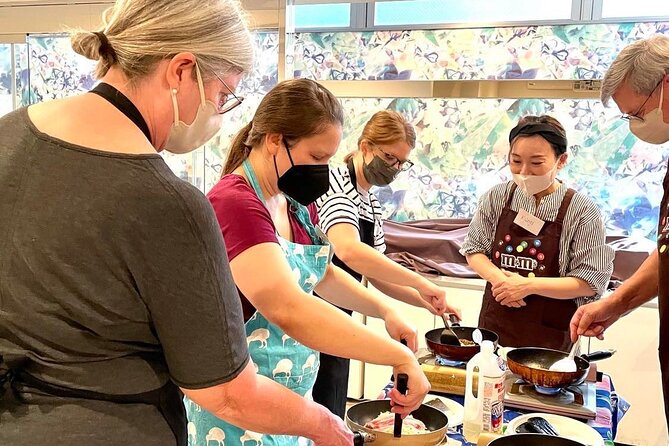
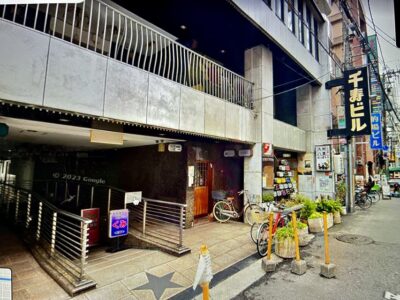
The class starts at 4 p.m. at 1-chōme-1-3 Higashishinsaibashi, Chuo Ward, Osaka. The meeting point is near Nagahoribashi subway station and public transportation, which makes it a practical choice if you are already exploring Shinsaibashi or central Osaka.
Allow time to find the address. The experience takes place in a hostel setting, and the supplied details describe a local, informal venue rather than a large commercial cooking studio. That is part of the appeal, but it also means you should follow the meeting instructions carefully and arrive ready for a personal, home-style class.
Keiko has been running the experience since 2015. English communication is a strong feature, and the class is structured so you can ask questions as you work. She may be assisted by her mother, Sachiko, or other Osaka friends invited to meet the group. The mix can change, but the goal stays the same: cook together and talk with local people.
The opening lesson: ingredients, regions, and everyday food
The first part is not just a quick recipe briefing. Keiko introduces okonomiyaki, its background, and the differences between regional styles. You learn about the ingredients before getting to work, which helps explain why the dish is so adaptable.
This is where the class earns its place on an Osaka schedule. A food tour can show you what to order, but this experience lets you understand how the food fits into daily life. You can ask about substitutions, toppings, cooking methods, and what might be available in your own country.
The teaching style is patient and clear. Families have taken the class with children, including children aged eight and eleven, and solo participants have also found enough conversation to keep the afternoon engaging. If you are traveling alone, the small group gives you an easy way to meet people without the forced feeling of a large group activity.
Making your own Osaka-style pancake
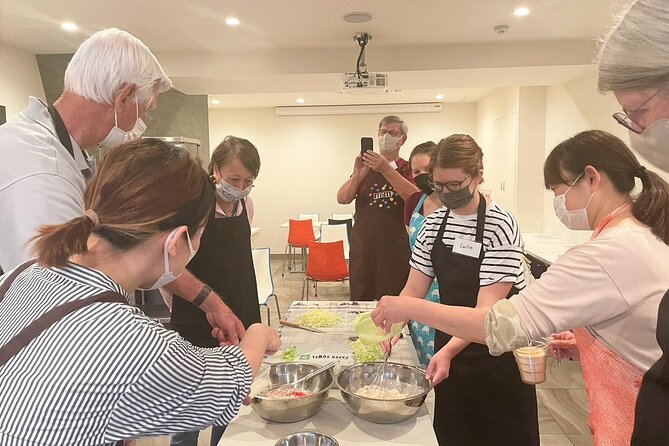
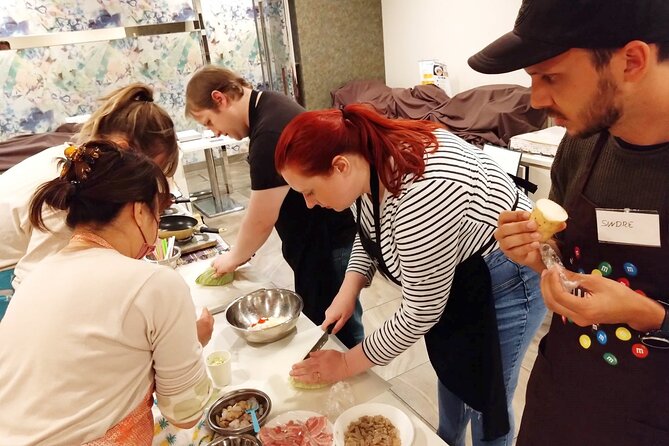
After the introduction, you prepare the okonomiyaki yourself. This is a hands-on class, not a demonstration where you sit back and watch Keiko do everything. You work with the ingredients, follow her instructions, and get help as the pancake takes shape.
The recipe is intentionally simple. That is good news if you want to cook it at home, since you are learning a method rather than being handed a complicated restaurant formula. Participants have described the instructions as easy to follow and the equipment and ingredients as well organized.
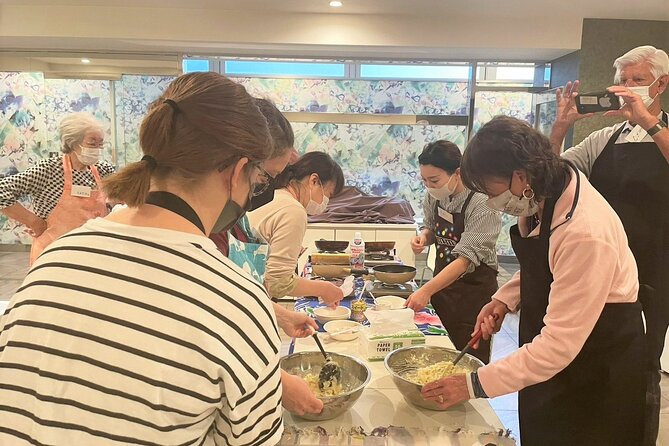
The small group makes a real difference here. With no more than six people, Keiko and her assistants can help when you need it. You can also compare your results with the people around you. One of the pleasures of okonomiyaki is that everyone can make a slightly different version, then discuss what worked.
Do not expect a formal chef-training session. The aim is confidence, conversation, and a tasty meal. Your pancake does not need to look perfect to be a success, and the relaxed approach is better suited to curious home cooks than to anyone seeking advanced technique.
More cooking classes in Osaka:
- Matcha Making Class in Osaka with Authentic Japanese Sweets Set
★ 5.0 · 509 reviews - Osaka Sushi Making Experience
★ 5.0 · 400 reviews - Osaka: Ramen and Gyoza Cooking Class in Dotonbori
★ 5.0 · 378 reviews - Osaka: Traditional Mochi Pounding Experience with Tasting
★ 4.9 · 306 reviews
Miso soup and the meal afterward
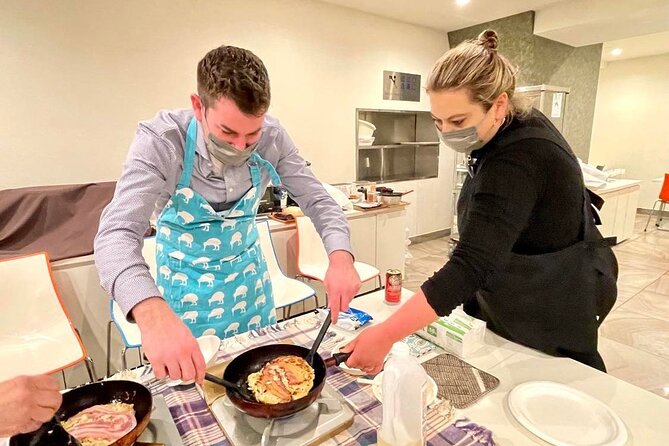
The class also includes miso soup, giving you a second Japanese staple to prepare. It is a useful addition because the soup rounds out the meal and shows how a simple home-cooked Japanese table can come together.
Once the food is ready, you sit down and eat what you made. This shared meal is a central part of the experience. You can ask more questions, compare cooking habits, and talk with Keiko, her family, assistants, and the other people in the class.
Some sessions have included mochi dessert and other small extras, but you should treat those as possible additions rather than guaranteed parts of every booking. The dependable elements are the okonomiyaki, miso soup, cooking instruction, and time spent eating together.
The atmosphere is casual. People have used the class to practice Japanese, while local participants have practiced English and exchanged ideas about food from different countries. That two-way conversation is one of the better reasons to choose this over a standard restaurant meal.
The handmade details that make it personal
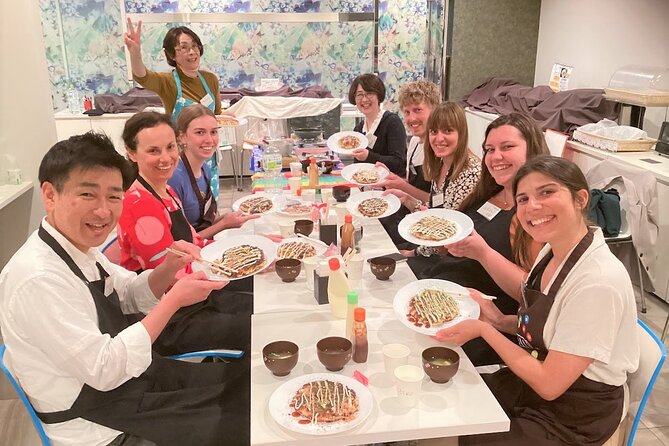
A particularly nice touch is the use of aprons made by Keiko’s mother from kimono material. Small souvenir bags made from used kimono fabric have also been given to participants. These details are not the reason to book the class, but they add warmth and give the afternoon a clear connection to the family hosting it.
Do not count on receiving a specific gift every time. The important point is that the experience has a personal, family-run character. You are meeting people who have put time into the setting, not moving through a scripted food attraction.
That personal tone also explains why the class works well for celebrations. Couples have booked it during honeymoons, families have cooked together, and solo participants have joined social groups. The format leaves room for conversation without losing the main focus on food.
Dietary requests and practical limits
Keiko can accommodate vegan, vegetarian, and halal requests. You should state your needs when booking, not wait until you arrive. The class is designed to adapt the dish, and participants have successfully made vegan versions with guidance.
There are two important cautions. Ingredients may contain refined sugar, and cross-contamination is possible because this is a group lesson. If you have a serious allergy or strict dietary requirement, ask for precise ingredient information before committing. The supplied details do not promise an allergen-free kitchen.
The class is also a better fit for people who enjoy participation. You will be handling ingredients and cooking as part of a shared activity. If you want a quiet meal prepared entirely for you, choose a restaurant instead.
What $49.55 means in Osaka
At $49.55 per person, this is not the cheapest way to eat okonomiyaki in Osaka. A restaurant meal would usually cost less, especially if your only goal is to try the dish.
The price makes more sense when you count what is included in the experience: about two hours of instruction, ingredients for okonomiyaki and miso soup, a prepared meal, a small group, and time with local people. You are paying for participation and access, not just calories.
I see the strongest value for visitors who want a recipe they can repeat. The dish requires no special equipment, and the class explains how to adapt it with ingredients available at home. It can also be good value for a family or couple that would rather share an activity than simply sit at another restaurant.
The value is weaker if you already cook okonomiyaki often or want advanced Japanese cuisine training. This is an approachable introduction, not a professional lesson.
Who should book this cooking class
I would recommend it most to:
- First-time visitors who want a food experience tied to Osaka culture
- Couples looking for a relaxed evening activity
- Families with children who enjoy hands-on cooking
- Solo visitors who want an easy social setting
- Home cooks interested in adaptable recipes
- People who want to meet local Japanese participants and practice conversation
It is also a good pick late in a Japan trip, when you have already eaten plenty of restaurant meals and want something more active. The 4 p.m. start works well as an early dinner, and the class ends back at the meeting point after roughly two hours.
You may want to skip it if your schedule is tight, if you dislike group cooking, or if severe dietary restrictions make shared equipment unsafe. The class is friendly and flexible, but it cannot remove the limits of a group kitchen.
Booking, timing, and cancellation
The experience is often reserved around 45 days ahead, so book early if your Osaka dates are fixed. Confirmation is provided at booking, and the ticket is mobile, which keeps arrival simple once you have the address.
The class is scheduled to start at 4 p.m. Night sessions may be available on some days, depending on the schedule. Confirm the time that applies to your date rather than assuming an evening option is always offered.
Free cancellation is available up to 24 hours before the local start time. Cancellations or changes made less than 24 hours in advance are not accepted for a refund.
My verdict on the Osaka okonomiyaki class
Book this if you want more than a plate of Osaka comfort food. Keiko’s class gives you a usable recipe, a shared meal, and a chance to talk with Osaka people in a small setting. The handmade aprons, local assistants, and relaxed conversation make it feel personal without requiring a full day.
The class is not fancy, and the menu is focused. That is exactly why it works. You leave with the skills to make okonomiyaki at home, a better sense of the Osaka style, and an experience that fits neatly into a two-hour afternoon or early evening.
FAQ
Where does the okonomiyaki cooking class meet?
It meets at 1-chōme-1-3 Higashishinsaibashi, Chuo Ward, Osaka, 542-0083, Japan, near Nagahoribashi subway station.
What time does the experience start?
The listed start time is 4 p.m.
How long does the activity last?
The cooking experience lasts approximately two hours.
Where does the experience finish?
It ends back at the meeting point.
How many people can join the class?
The activity has a maximum of six participants.
What dishes will I learn to make?
You will learn to make Osaka-style okonomiyaki and miso soup.
Can vegan, vegetarian, or halal requests be accommodated?
Yes. The host can accommodate vegan, vegetarian, halal, and similar requests when arranged in advance.
Is cross-contamination possible?
Yes. The host notes that cross-contamination is possible because this is a group lesson.
Does the activity run at night?
Night sessions may be available on some days, depending on the schedule.
What is the cancellation policy?
You can cancel for a full refund up to 24 hours before the experience start time. Cancellations or changes made less than 24 hours before the start are not accepted.
Just added in Osaka
- Urban Canvas: Osaka Street Art Bike Tour★ 5.0 · 10 reviews
- Anime Cosplay Photshoot-50 Digital Photos Provided★ 5.0 · 8 reviews
- TeamLab Botanical Garden Osaka Ticket★ 3.5 · 6 reviews
- Umeda Sky Building & Kuchu Teien Observatory Ticket in Osaka★ 4.5 · 3 reviews
- Immerse in Judo Martial Arts Class from Japan★ 5.0 · 4 reviews
- Cherry Blossom Buddha and Mt.Yoshino with Strawberry Picking Tour★ 4.5 · 5 reviews
- Traditional Calligraphy Experience near Dotonbori★ 5.0 · 3 reviews
- Discover Osaka’s Iconic Umeda Sky Observation★ 5.0 · 6 reviews
Osaka Cooking Classes, compared.
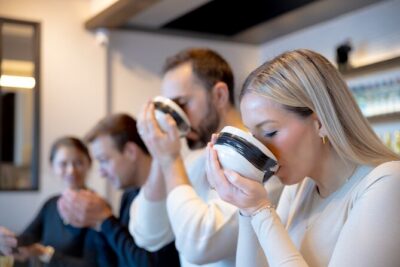
Matcha Making Class in Osaka with Authentic Japanese Sweets Set
Read our review →
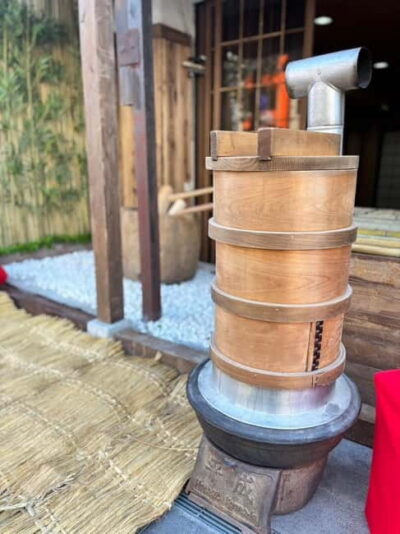
Traditional Mochi Pounding Experience with Tasting
Read our review →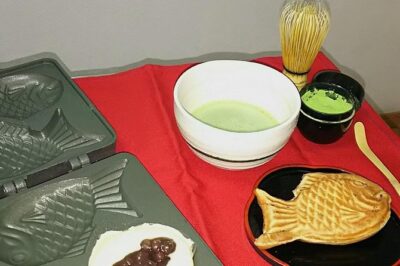
Osaka Cooking Class: Okonomiyaki &Japanese cuisines experience
Read our review →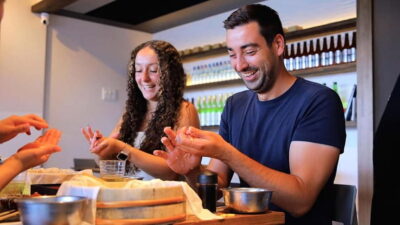
Roll and Authentic Sushi Making Class in Dotonbori
Read our review →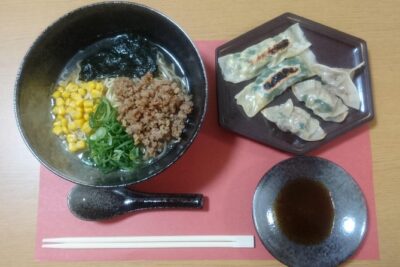
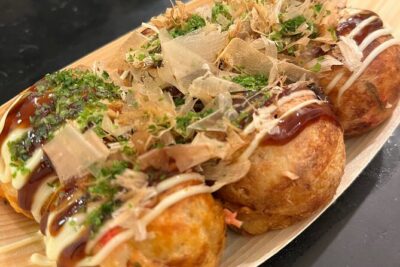
Osaka Sake Tasting & Takoyaki Cooking Experience
Read our review →Browse the lists this tour appears in