
Reviewed · WORKSHOPS
Kintsugi Workshop: Beauty in Brokenness
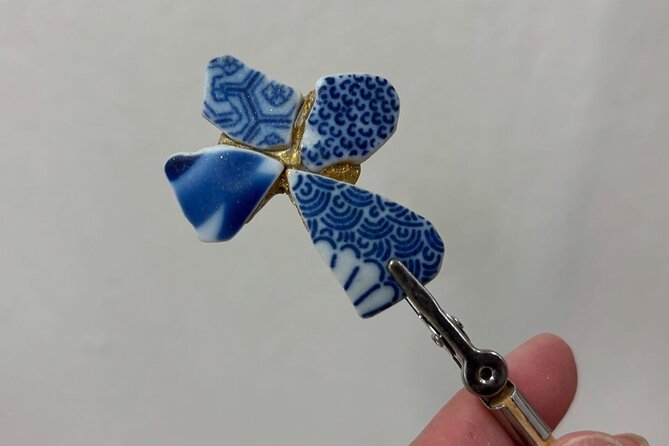
Broken pottery becomes the star of this Osaka workshop. Under Tomoko-san and her apprentice, you repair a ceramic piece with lacquer, resin, and shimmering powder, then take your work home. The result is not factory-perfect. That is the point. Kintsugi treats cracks as part of an object’s story.
I like the small group size, capped at eight, and the calm setting in a real artisan’s studio. I also like that you do the work yourself rather than simply watching a demonstration. The workshop gives you a useful look at wabi-sabi, the Japanese appreciation of imperfection, while producing a keepsake with genuine personal meaning.
One consideration: the available pottery selection may be limited. If you care greatly about a particular color, shape, or size, bring a broken dish of your own, as long as the workshop accepts it. The materials are modern rather than traditional urushi lacquer and pure gold, so this is an accessible introduction to kintsugi, not advanced conservation training.
Key points at a glance
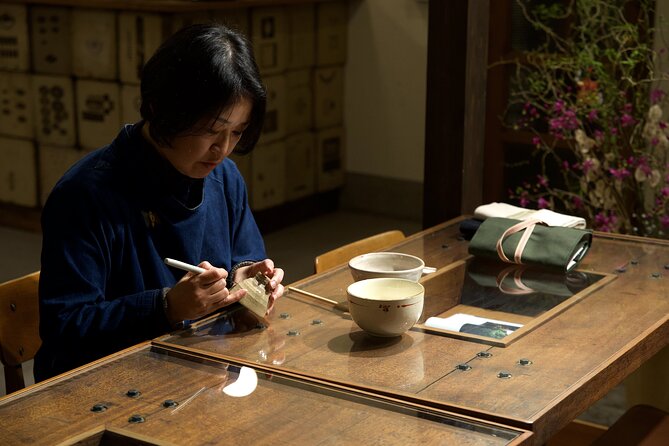
- Repair your own ceramic piece: Choose from broken pottery, join the fragments, fill gaps, and apply the final metallic powder yourself.
- Learn from Tomoko-san: The instructor and her apprentice guide each stage patiently, making the workshop suitable for beginners.
- Work in a real artisan studio: The setting feels more personal than a large craft class, with room for a maximum of eight people.
- Take home a meaningful souvenir: Your finished piece is wrapped for transport, and one participant even received photos of the session the following day.
- Allow about three hours: The 3:00 pm start leaves your morning free, but you should plan your route to Shigita in Joto Ward.
- Know what you are paying for: At $97.73 per person, the price covers instruction, tools, materials, pottery, and the completed work.
Why kintsugi makes a memorable Osaka activity
Many Osaka activities center on food, shopping, or famous sights. This one asks you to slow down and work with your hands. That change of pace matters, especially if your schedule has been full of stations, crowded streets, and quick photographs.
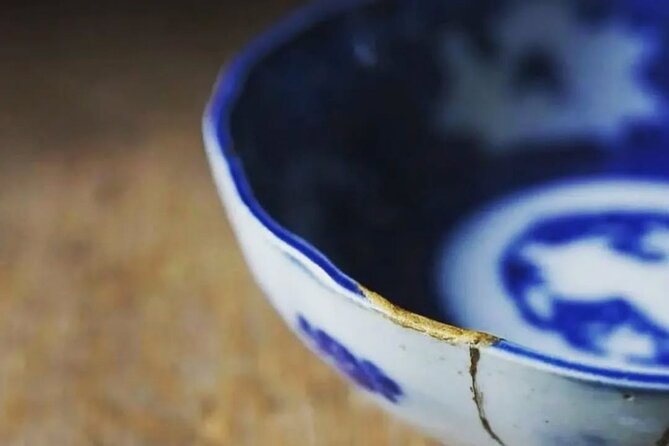
Kintsugi means joined by gold. The craft developed in Japan centuries ago as a way to repair broken ceramics rather than throw them away. Cracks were not disguised. They were marked with lacquer and gold, giving the repaired vessel a new visual life.
The idea connects with wabi-sabi, a Japanese way of seeing beauty in impermanence, age, and imperfection. You do not need to study Japanese philosophy beforehand. The meaning becomes clearer as you handle a broken cup or dish and see it come together again.
I like that the workshop gives this idea a physical form. You will not simply hear a short cultural explanation and move on. You will make decisions, handle tools, wait for guidance, and accept that your finished piece may show small irregularities. Those irregularities are part of its charm.
A few more Osaka half-days worth pricing up
- Sushi Making Osaka Roll and Authentic Japanese Sushi Class
★ 5.0 · 1,220 reviews - Matcha Making Class in Osaka with Authentic Japanese Sweets Set
★ 5.0 · 509 reviews - Osaka: Ramen and Gyoza Cooking Class in Dotonbori
★ 5.0 · 378 reviews
Arriving at Tomoko-san’s studio in Shigita
The workshop begins at 3:00 pm at 102, 1-chōme-4-18 Shigita, in Osaka’s Joto Ward. The studio is near public transportation, and one participant described it as an easy ride on the Osaka Loop train. You are responsible for reaching the meeting point yourself, so check your route before the afternoon appointment.
This is not a tour that begins at a major Osaka landmark. You will need to pay attention to the address and allow enough time to find the studio. That small effort is part of the trade-off for working in an actual artisan space rather than a central tourist facility.
The studio is set up for hands-on work, with the tools and materials ready when you arrive. Brushes, resin, lacquer, and powders are provided. You can come empty-handed, aside from anything you may wish to bring for repair.
The atmosphere is meant to be relaxed and focused. With a maximum of eight people, Tomoko-san and her apprentice can offer more direct help than you would get in a large class. The group may be smaller still. One session had just one other participant, creating plenty of individual attention.
Choosing a broken piece to repair
A key early step is selecting a piece from the available broken pottery. This choice affects the whole project. You will be handling the shape, deciding how the fragments fit, and eventually taking the finished object home, so take a moment before settling on one.
The pottery selection is not described as unlimited. One useful tip is to bring your own broken dish if you have a particular color or shape in mind. That option is especially worth considering if you want to repair a family cup, a favorite bowl, or a piece with sentimental value.
You should confirm any personal item requirements before arriving. The supplied information confirms that the workshop provides broken pottery pieces, but it does not promise that every kind of outside ceramic will be suitable.
For many people, choosing from the studio’s pieces will be simpler. You avoid carrying fragile pottery through Japan and can focus on learning the process. The drawback is less control over the final shape and appearance.
Joining fragments with modern kintsugi materials
Once you have chosen a piece, the practical work begins. Tomoko-san guides you through bonding the broken fragments with synthetic lacquer. You work with the pieces carefully, following the arrangement of the original object.
This is a good point to remember that the workshop uses modern materials. Traditional kintsugi often involves urushi lacquer, which requires careful handling and a much longer curing process. Here, synthetic lacquer and resin make the technique more approachable for a short visitor experience.
The modern approach is useful for beginners. You can learn the basic sequence without needing specialist equipment or prior craft skills. It also keeps the activity within a three-hour format.
You will then fill any missing sections with resin. This step matters because a broken object may have more than a simple clean crack. A small chip or missing fragment changes the outline, and the resin helps rebuild that area before the metallic finish is applied.
Do not expect the repair to vanish. Kintsugi is not about making the pottery look untouched. The new lines and filled sections remain visible, creating a record of what happened to the piece.
Same city, a completely different kind of afternoon:
- Osaka Go Karting Tour with Funny Costume
★ 5.0 · 2,658 reviews - Osaka Castle: Museum and Tower Entry Ticket
★ 4.5 · 2,380 reviews - Osaka: Shinsekai Food Tour with 13-15 Dishes at 5 Eateries
★ 4.8 · 2,204 reviews - Osaka Food Tour: 13 Dishes at 5 Local Eateries
★ 5.0 · 2,149 reviews
Applying the gold-colored finish
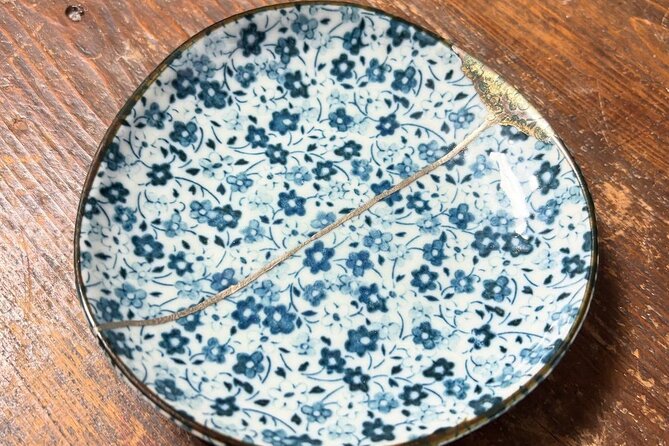
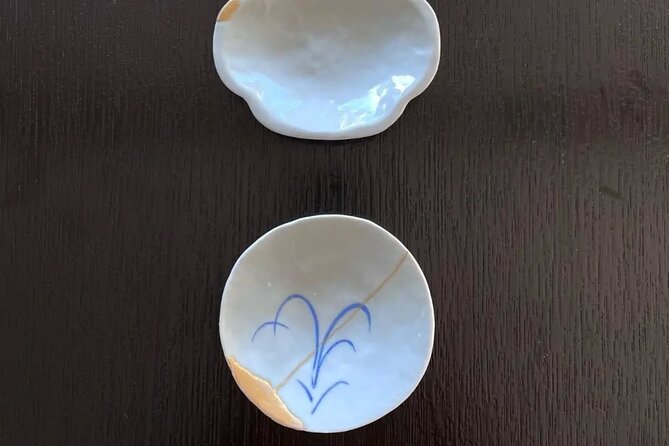
The final stage is one of the most satisfying visually. You gently dust the repaired areas with a silver-based gold powder. The powder gives the seams their bright metallic look and draws attention to the places where the pottery was broken.
The material is described as silver-based gold powder, so you should not expect a solid-gold restoration. That distinction is important when comparing the price with a specialist antique repair service. This is a hands-on cultural craft class using accessible modern materials.
Still, the finish gives your work a clear identity. A plain broken cup becomes something that announces its repair. You can see where the object was damaged and how it was put back together.
The workshop’s pace allows you to follow the process step by step. Tomoko-san is described as patient and accommodating, which matters for a craft where rushing can make alignment and finishing harder. You do not need previous experience, and all the necessary tools are supplied.
What you take home at the end
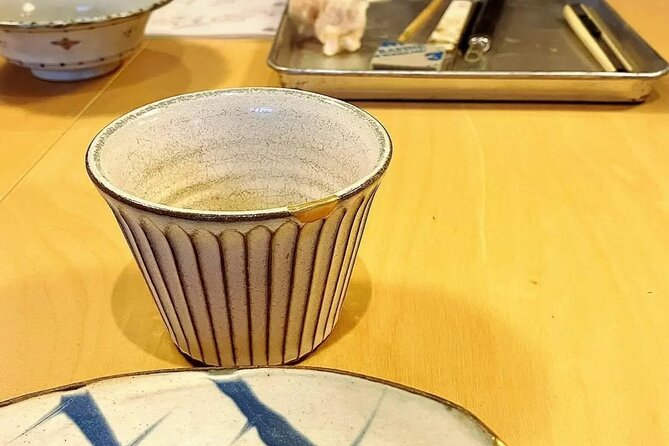
Your completed piece is included in the price. A teacup was safely wrapped for one participant to carry home, a practical detail worth noting if you have a long trip ahead or plan to continue traveling around Japan.
The finished pottery is more than a souvenir bought from a shop. You handled the repair and made the visible choices yourself. Even if the result is slightly uneven, it will be tied to your time in Osaka in a way a mass-produced keepsake cannot match.
One participant also received photographs of the workshop the next day. That detail is not presented as a guaranteed inclusion, so do not book solely expecting photos. Still, it suggests that the experience may provide a pleasant record in addition to the ceramic piece.
You should plan how to pack the pottery for the rest of your trip. The studio wraps the completed work, but ceramic remains fragile. Keep it protected in your luggage and avoid placing heavy items on top of it.
How the three-hour timing works for your Osaka schedule
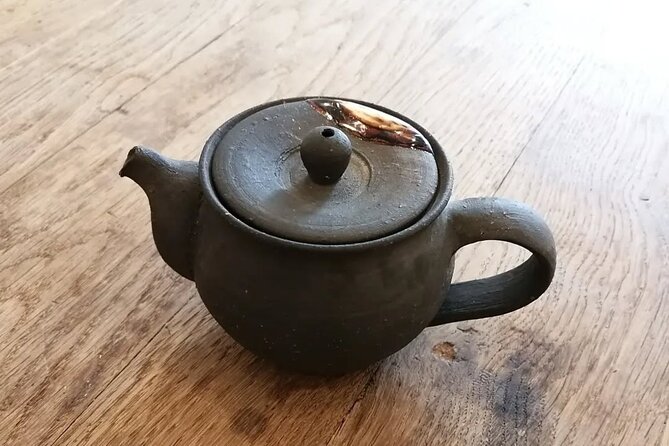
The activity lasts about three hours and begins at 3:00 pm. That makes it a useful afternoon plan. You can spend the morning at another Osaka sight, have lunch before class, and finish in the early evening.
The schedule also gives the craft enough time to feel substantial. A short one-hour demonstration might explain kintsugi, but it would not allow much room for your own repair. Here, you handle several stages and leave with a finished piece.
You should avoid planning a tightly timed evening reservation immediately afterward. The advertised duration is approximate, and the amount of guidance you need may affect the pace. Give yourself some breathing room for the return journey and for carrying your newly wrapped ceramic.
The class ends back at the meeting point. There is no included transportation, so your return route remains your responsibility.
Is $97.73 a fair price?
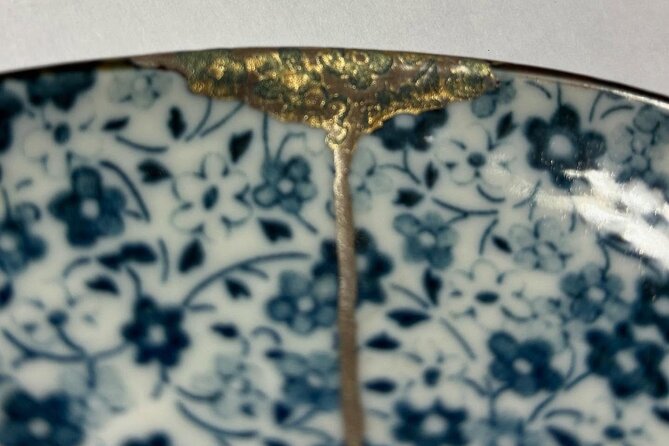
At $97.73 per person, this is not the cheapest craft activity in Osaka. The price makes more sense when you consider what it includes: about three hours of instruction, access to a professional studio, a broken pottery piece, tools, materials, and the finished object to take home.
You are also paying for close guidance. A maximum of eight participants keeps the class personal, and the presence of Tomoko-san and her apprentice means you are not left to guess your way through the repair.
The value depends on what you want. If you are looking for a quick souvenir or a low-cost introduction to Japanese culture, this may feel expensive. If you want a slower activity, direct instruction, and a handmade object with a story, the price is easier to justify.
Group discounts are available, so the cost may work better for couples, families, or friends booking together. The workshop is also a good choice when you want something different from standard sightseeing. You are not just looking at an old craft. You are learning its basic method and creating an object of your own.
Who will enjoy this workshop most
I would recommend this experience to anyone who likes crafts, design, Japanese culture, or thoughtful souvenirs. You do not need to be good with your hands. One of the useful features of the workshop is that beginners can follow the process with guidance.
It also suits people who prefer small groups. Eight participants is the maximum, and the class may be much smaller. That setting gives you more opportunity to ask questions and receive help with delicate steps.
Couples and friends can work side by side without the activity becoming a competition. Families may enjoy it too, although the information only says most people can participate, not that a specific child age range is accepted. Confirm age details before booking if you are bringing children.
This may be less suitable if you want a highly traditional restoration using antique materials. The workshop uses synthetic lacquer, resin, and silver-based gold powder. It teaches the spirit and basic process of kintsugi in a practical format, rather than training you as a conservator.
A few practical points before you book
Confirmation is provided at the time of booking, and the activity offers a mobile ticket. Since the studio is near public transportation, you can reach it by local transit, but you must arrange that trip yourself.
The experience has a free cancellation policy up to 24 hours before the start time. If you cancel later, you will not receive a refund, and changes made inside that period are not accepted. Cut-off times use Osaka local time.
The activity requires good weather. If poor weather causes cancellation, you will be offered another date or a full refund. That policy is worth noting even though the main activity takes place indoors.
Most people can participate, according to the activity details. If you have a specific physical concern related to handling tools, sitting, or working at the studio station, ask the provider before booking.
Should you book the Osaka kintsugi workshop?
Book it if you want a quiet, hands-on cultural experience with a personal result. The small group setting, patient instruction from Tomoko-san, and real studio environment give the afternoon more substance than a quick craft demonstration.
The strongest reason to go is the combination of ideas and action. You learn why repaired pottery can be valued, then test that idea with your own hands. The finished piece may not be flawless, but kintsugi asks you to see that as part of the story.
Think twice if your main goal is a cheap activity, a large choice of pottery, or a strictly traditional gold restoration. For everyone else, especially visitors who enjoy making rather than merely collecting, this is a thoughtful three-hour addition to an Osaka itinerary.
FAQ
Where does the kintsugi workshop take place?
The workshop takes place at 102, 1-chōme-4-18 Shigita, Joto Ward, Osaka, 536-0015, Japan.
What time does the workshop begin?
The scheduled start time is 3:00 pm.
How long does the experience last?
The workshop lasts approximately three hours.
Is transportation to the studio included?
No. You are responsible for arranging transportation to and from the meeting point. The studio is near public transportation.
What materials and tools are provided?
The workshop provides the necessary tools and equipment, including brushes, resin, lacquer, and powders.
Do I need previous craft experience?
No. The activity is designed for beginners, and a professional artisan provides hands-on instruction.
How many people can join the workshop?
The maximum group size is eight participants.
Can I cancel for a refund?
You can cancel up to 24 hours before the start time for a full refund. Cancellations or changes made less than 24 hours before the start time are not accepted for a refund.
Just added in Osaka
- Urban Canvas: Osaka Street Art Bike Tour★ 5.0 · 10 reviews
- Anime Cosplay Photshoot-50 Digital Photos Provided★ 5.0 · 8 reviews
- TeamLab Botanical Garden Osaka Ticket★ 3.5 · 6 reviews
- Umeda Sky Building & Kuchu Teien Observatory Ticket in Osaka★ 4.5 · 3 reviews
- Immerse in Judo Martial Arts Class from Japan★ 5.0 · 4 reviews
- Cherry Blossom Buddha and Mt.Yoshino with Strawberry Picking Tour★ 4.5 · 5 reviews
- Traditional Home cooking Experience in Osaka, Japan★ 5.0 · 14 reviews
- Traditional Calligraphy Experience near Dotonbori★ 5.0 · 3 reviews
Workshops, compared.
Sushi Making Osaka Roll and Authentic Japanese Sushi Class
Read our review →
Matcha Making Class in Osaka with Authentic Japanese Sweets Set
Read our review →
Osaka Cooking Class: Okonomiyaki &Japanese cuisines experience
Read our review →
Roll and Authentic Sushi Making Class in Dotonbori
Read our review →

Browse the lists this tour appears in