
Reviewed · OSAKA COOKING CLASSES
Enjoy artistic TEMPURA Cooking Class
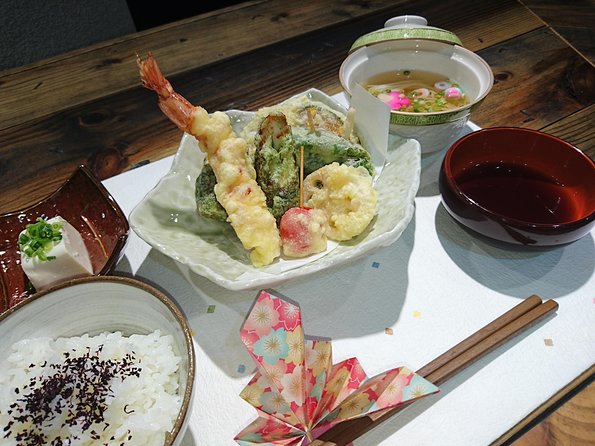
The best part of this Osaka class is that you do not simply watch a chef fry food. You make six kinds of tempura, from four vegetables to two seafood items, including one large shrimp, then sit down and eat what you prepared. You also learn dashi, the savory Japanese stock used in countless soups and sauces.
I like the small maximum group of eight, which gives the instructor room to guide each person through chopping and frying. I also like the practical recipe handouts. The main consideration is the two-hour time limit: this is a focused introduction, not a long culinary course, and the exact ingredients are not specified in advance.
Key points to know before booking
- Six tempura items in one class: Prepare four types of vegetables and two types of seafood, including a large shrimp.
- Dashi is part of the lesson: You learn how to make traditional Japanese soup stock before starting the tempura.
- You eat the meal you cook: The final spread includes your tempura, steamed rice, and chilled tofu.
- Eight people maximum: The small group should make hands-on instruction easier than a large demonstration.
- Lunch or dinner timing: You can choose the session that fits your Osaka plans.
- Recipes go home with you: The class gives you a way to repeat the lesson after returning home.
Making dashi before the frying begins
The class starts at 1-chōme-17-20 Kitahorie in Osaka’s Nishi Ward. After putting on an apron, you begin with dashi, a traditional Japanese broth. This is a smart starting point because tempura is only one part of the meal. The stock gives you a feel for the quieter, more measured side of Japanese home cooking.
The instructor guides you step by step as you make the broth and shares tips for producing a savory soup. That detail matters. Dashi can look simple on the table, but it is a basic building block for Japanese cooking, and learning it adds more value than spending two hours only on frying.
You should also appreciate the change of pace. The class does not rush straight into hot oil. First, you work on a warm, savory element that will accompany the meal. Then you move into ingredient preparation and cooking. For someone new to Japanese food preparation, that order helps the class feel like a complete meal lesson rather than a single recipe.
The supplied information does not identify the dashi ingredients or specify a particular regional style. You should therefore expect instruction in the method and purpose of the stock, but not assume that you will study several broth variations.
More cooking classes in Osaka:
- Matcha Making Class in Osaka with Authentic Japanese Sweets Set
★ 5.0 · 509 reviews - Osaka Sushi Making Experience
★ 5.0 · 400 reviews - Osaka: Ramen and Gyoza Cooking Class in Dotonbori
★ 5.0 · 378 reviews
Preparing four vegetables and two seafood items
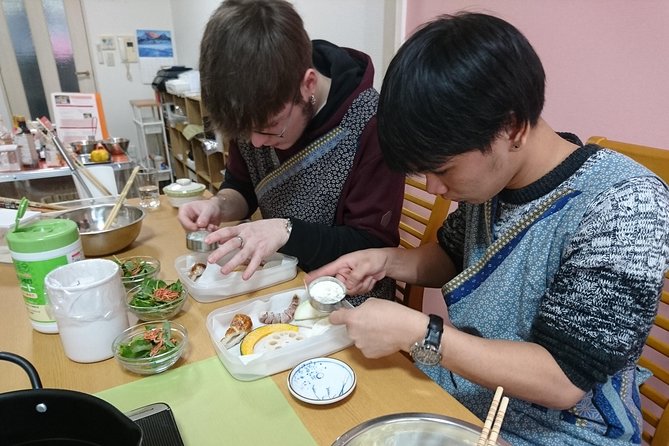
Once the dashi is underway, each participant receives a kitchen knife and chopping board. Having individual equipment is important in a small cooking class. You are not standing behind a counter watching someone else work. You get a direct role in preparing the ingredients.
The menu includes four kinds of vegetable tempura and two types of seafood tempura. One of the seafood pieces is a large shrimp, which gives the class a classic centerpiece. The exact vegetables and the second seafood item are not provided, so the menu may depend on availability.
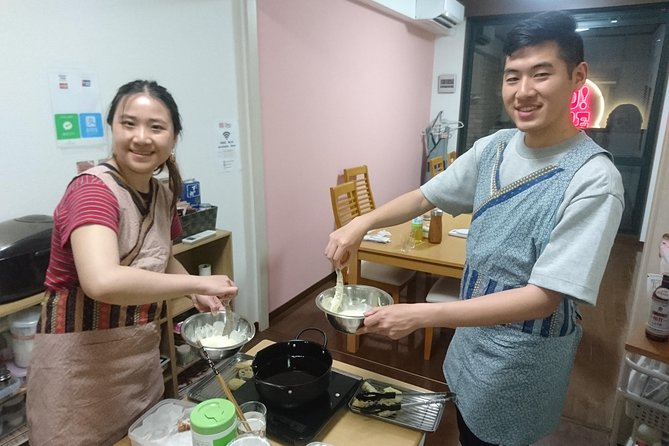
This part of the lesson should appeal to cooks who want useful technique rather than a quick food sample. Tempura looks light and effortless when prepared well, but the process involves careful ingredient preparation and attention to the batter and frying. The class is designed to show you how the pieces come together, with the instructor guiding you through each stage.
The group limit of eight is especially useful here. Chopping and frying require room for questions and correction. With eight or fewer people, you have a better chance of following the instructions closely instead of waiting behind a crowd. The class is still group instruction, so you should not expect a private chef lesson, but the size keeps it personal enough for hands-on work.
The class description does not give the exact frying setup or say how many participants share each cooking station. It does make clear that knives and boards are provided to each participant. That is enough to expect active preparation, though you should follow the instructor’s directions carefully around hot oil.
The meal at the end: tempura, rice, and chilled tofu
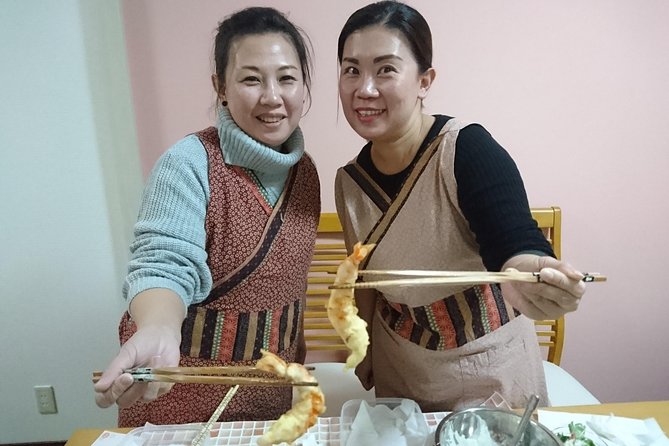
At the end, you arrange the dishes with chopsticks and sit down to eat. The meal includes everything you prepare, along with steamed rice and chilled tofu. Saying Itadakimasu before eating gives the class a small cultural touch and marks the shift from kitchen work to the meal itself.
I like this format because it avoids the common problem of leaving a cooking lesson hungry or treating the food as an afterthought. You get to see the result of your work immediately. The rice and tofu also make the meal feel more complete than a plate of fried pieces alone.
Eating your own cooking can be useful in another way. You can pay attention to texture, seasoning, and the balance between the crisp tempura and the softer side dishes. If a piece comes out differently from another, you have a direct lesson in how preparation affects the final result.
The meal is not presented as a broad survey of Japanese cuisine. It is a compact menu built around tempura and dashi. That focus is a strength if you want to learn one dish properly enough to repeat it at home. It may feel limited if you are hoping to make sushi, ramen, or several regional specialties in the same session.
Why the recipe handout adds real value
The recipes are provided to take home, which makes this more useful than a meal you simply enjoy and forget. Tempura depends on timing and handling, so having written guidance can help you remember the main steps once you are back in your own kitchen.
The class also covers two connected skills. You learn dashi as a soup stock and tempura as a cooking method. That combination gives you more than one recipe to practice. The handout may be particularly helpful for recalling proportions and sequence, though the supplied details do not say how extensive the recipes are.
I would keep the handout with your Japan trip notes and mark the parts you found hardest during class. The instructor’s tips may be easier to remember when connected to the moment you used them. The class is only about two hours, so the written material helps fill in what you may not retain from a fast lesson.
One particularly positive detail is the instructor’s manner. The instructor is described as courteous and joyful, and that warm approach can make a big difference when you are handling unfamiliar equipment or trying to follow cooking directions in a new setting. No instructor name is provided, so you should not expect to request a specific teacher.
Same city, a completely different kind of afternoon:
- Osaka Go Karting Tour with Funny Costume
★ 5.0 · 2,658 reviews - Osaka Castle: Museum and Tower Entry Ticket
★ 4.5 · 2,380 reviews - Osaka: Shinsekai Food Tour with 13-15 Dishes at 5 Eateries
★ 4.8 · 2,204 reviews - Osaka Food Tour: 13 Dishes at 5 Local Eateries
★ 5.0 · 2,149 reviews
An Osaka cooking class in Kitahorie
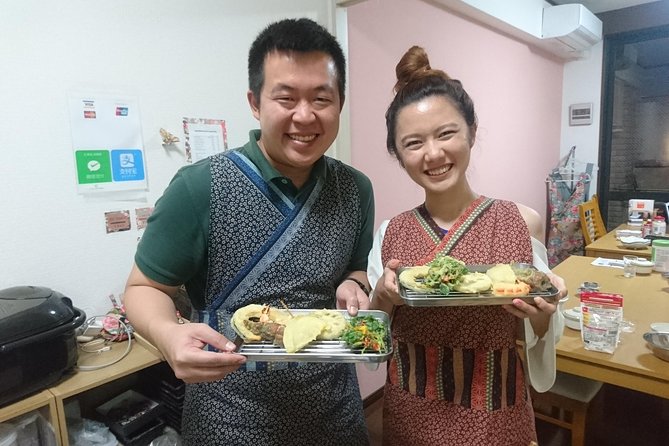
The meeting point is 1-chōme-17-20 Kitahorie, Nishi Ward, Osaka, 550-0014, Japan. The activity ends back at the same meeting point. It is near public transportation, which makes it practical to pair with other plans in Osaka.
Kitahorie gives you a neighborhood setting rather than a major sightseeing landmark as the focus. The class itself is the reason to go, so plan your route carefully and allow enough time to arrive before the start. The available information does not provide a station name, walking time, or detailed directions, so check the meeting instructions after booking.
You can choose a lunch or dinner session. That flexibility is useful if you are arranging a busy Osaka day. A lunch class can fit before an afternoon of sightseeing, while dinner may work better after exploring the city. The class lasts about two hours, but you should allow extra time for transport and for finding the address.
The activity is offered with a mobile ticket. Confirmation is sent within 48 hours of booking, subject to availability. Since the experience is booked an average of 56 days in advance, I would reserve ahead if your Osaka dates are fixed, especially if you want a particular lunch or dinner slot.
Is $70.79 a fair price?
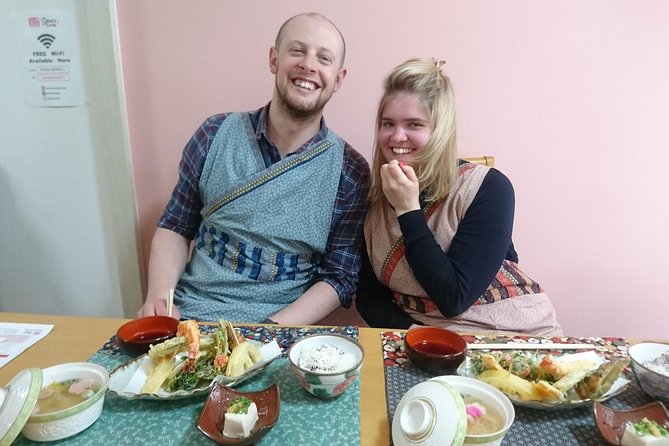
At $70.79 per person, this is not a cheap meal. It is also more than the cost of ordering tempura at a casual Osaka restaurant. The price makes better sense when you count what is included: about two hours of instruction, dashi preparation, six tempura items, individual knives and chopping boards, the finished meal, rice, chilled tofu, and recipes to take home.
You are paying for participation, not just food. If you only want to eat tempura, a restaurant will be the simpler choice. If you want to understand how the meal is made and take the method home, the class offers stronger value.
The maximum group size of eight helps support the price. A crowded demonstration would give you less hands-on time and fewer chances to ask questions. Here, each participant prepares ingredients with provided equipment, which makes the fee easier to justify.
Still, you should keep your expectations realistic. The lesson is short, the menu is focused, and the exact ingredients are not listed. This is best seen as an introductory cooking class with a meal, not a professional-level tempura workshop or a full-day food tour.
Who will enjoy this class most?
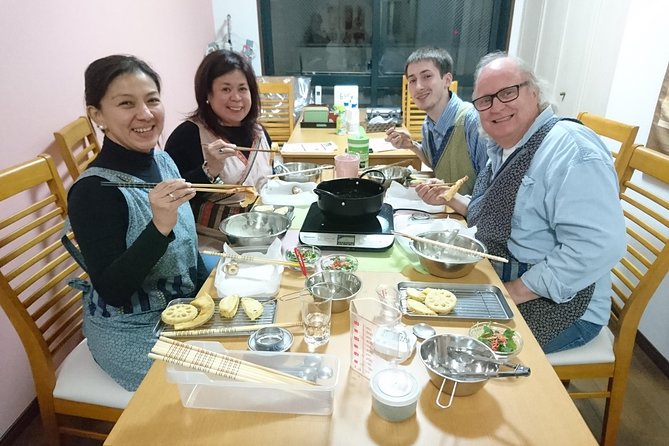
I would recommend it to anyone who likes to understand how a favorite dish is made. It suits solo visitors, couples, families, and small groups who want a practical activity that does not take up an entire day.
It is also a good choice for people who have already eaten tempura in Japan and want to take home a repeatable skill. The recipe handout gives you a useful bridge between the Osaka meal and your own kitchen.
The class should appeal to seafood eaters and people who like vegetables. The menu includes two seafood tempura items and four vegetable varieties, but the supplied details do not explain possible substitutions or dietary accommodations. If you have allergies or food restrictions, confirm them with Sakura Cook before booking.
This may be less suitable if you prefer a passive food tasting, want a large cultural tour, or need a detailed menu before committing. The lesson is centered on cooking, and you should be ready to chop, prepare, and follow instructions.
What the rating tells you, and what it does not
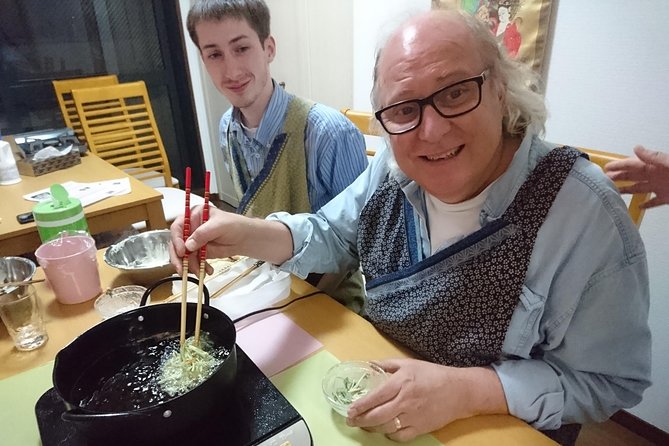
The experience has a 4.6 rating from five submitted ratings. That is a strong result, but the sample is small, so I would not treat it as a broad measure of every class session.
The clearest praise focuses on the instructor’s courteous, joyful manner and the confidence gained from learning to make tempura at home. That is important. A cooking class can have a good menu and still feel awkward if the teacher is rushed or distant. Here, the available feedback points to a friendly teaching style.
The practical takeaway is simple: book this if you value a warm instructor, a small group, and skills you can repeat. Do not book it only because you want the most extensive Osaka food experience. The class offers one focused meal and a compact lesson.
Cancellation and booking details
Free cancellation is available if you cancel at least 24 hours before the experience starts. A cancellation made less than 24 hours in advance is not refunded, and changes during that period are not accepted.
The cut-off uses Osaka local time. Confirmation arrives within 48 hours of booking, subject to availability. Because the average booking point is 56 days before the class, early planning is sensible for a fixed itinerary.
Should you book the Enjoy artistic TEMPURA Cooking Class?
Book it if you want to do more than order tempura. You will prepare dashi, four vegetable tempura items, two seafood items including a large shrimp, and a complete meal with rice and chilled tofu. The small group and recipe handout make the lesson useful beyond the two-hour session.
Skip it if you are looking for a broad food tour, a long professional course, or a guaranteed menu with named ingredients. For most visitors who enjoy cooking, the combination of hands-on work, a friendly instructor, and a meal you make yourself gives the $70.79 price a reasonable return.
FAQ
Where does the tempura cooking class meet?
The class meets at 1-chōme-17-20 Kitahorie, Nishi Ward, Osaka, 550-0014, Japan.
Where does the activity end?
The activity ends back at the meeting point.
How long does the class last?
The class lasts approximately two hours.
How many people can join?
The group has a maximum of eight participants.
What will I cook?
You will make dashi, four kinds of vegetable tempura, and two kinds of seafood tempura, including one large shrimp.
Do I eat the food I prepare?
Yes. The meal includes the tempura you make, steamed rice, and chilled tofu.
Are lunch and dinner sessions available?
Yes. You can choose either a lunch or dinner experience.
What happens if I need to cancel?
You can cancel for a full refund up to 24 hours before the experience start time. Cancellations and changes made less than 24 hours before the start are not accepted for a refund.
More Workshops in Osaka
- Sushi Making Osaka Roll and Authentic Japanese Sushi Class
★ 5.0 · 1,220 reviews - Osaka Cooking Class: Okonomiyaki &Japanese cuisines experience
★ 5.0 · 261 reviews - Osaka: Roll and Authentic Sushi Making Class in Dotonbori
★ 4.9 · 239 reviews - Ramen and Gyoza Cooking Class in Osaka
★ 5.0 · 202 reviews
Just added in Osaka
- Urban Canvas: Osaka Street Art Bike Tour★ 5.0 · 10 reviews
- Anime Cosplay Photshoot-50 Digital Photos Provided★ 5.0 · 8 reviews
- TeamLab Botanical Garden Osaka Ticket★ 3.5 · 6 reviews
- Umeda Sky Building & Kuchu Teien Observatory Ticket in Osaka★ 4.5 · 3 reviews
- Immerse in Judo Martial Arts Class from Japan★ 5.0 · 4 reviews
- Cherry Blossom Buddha and Mt.Yoshino with Strawberry Picking Tour★ 4.5 · 5 reviews
- Discover Osaka’s Iconic Umeda Sky Observation★ 5.0 · 6 reviews
- Traditional Home cooking Experience in Osaka, Japan★ 5.0 · 14 reviews
Osaka Cooking Classes, compared.

Matcha Making Class in Osaka with Authentic Japanese Sweets Set
Read our review →
Traditional Mochi Pounding Experience with Tasting
Read our review →
Osaka Cooking Class: Okonomiyaki &Japanese cuisines experience
Read our review →
Roll and Authentic Sushi Making Class in Dotonbori
Read our review →
Osaka Sake Tasting & Takoyaki Cooking Experience
Read our review →Browse the lists this tour appears in