
Reviewed · OSAKA COOKING CLASSES
Osaka: Traditional Mochi Pounding Experience with Tasting
The fun starts with a surprising workout: you turn steamed glutinous rice into stretchy mochi using traditional tools, then eat what you made. I like the small-group format and the fact that everyone gets a turn. I also like the short cultural introduction, which gives the food a clear place in Japanese life instead of treating it as just a sweet.
The main consideration is the physical effort. Pounding mochi takes more stamina than it looks, and the small room may feel snug when the group is full. Also, find the entrance carefully: it is by the river or canal side, not directly on Dotonbori Street.
Key points to know before booking
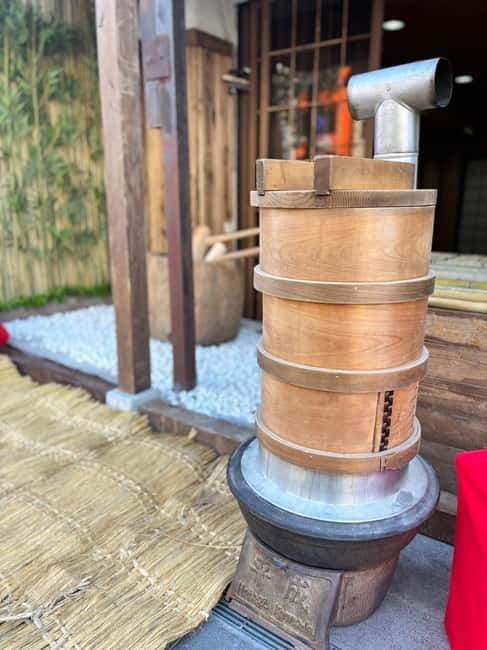
- Rice becomes mochi in front of you: You help mash, pound, shape, and eat the same batch.
- A compact one-hour activity: It fits neatly between sightseeing stops in central Osaka.
- Toppings make the tasting generous: Try kinako, sweet red bean paste, nori, sweet soy sauce, and tea.
- Groups are limited to four: The format gives you more hands-on time than a large class.
- Children can take part: Choose the family experience for all ages rather than the adult plan for ages 13 and up.
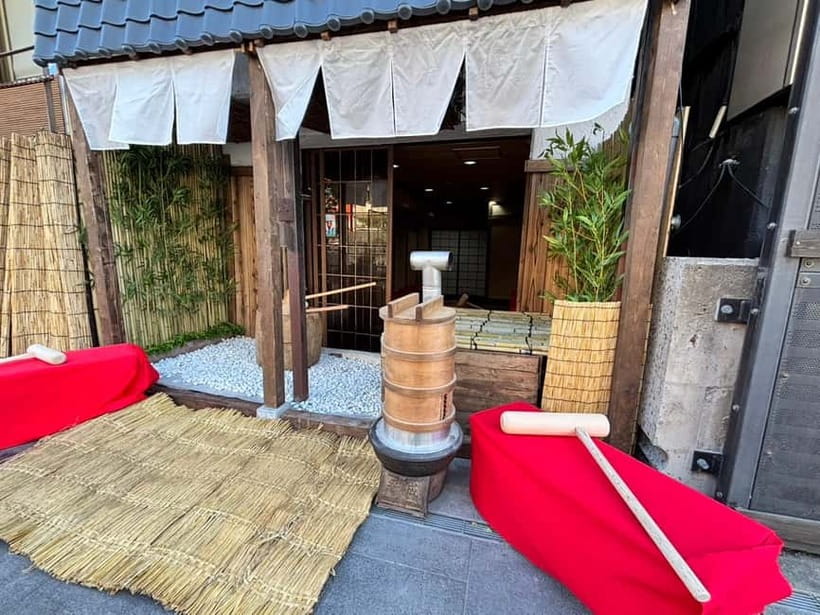
- The entrance takes attention: Look along the canal side and check for a handwritten sign near a hotel entrance.
Turning steamed rice into mochi near Dotonbori
This experience gives you something Osaka sightseeing often lacks: a chance to make part of the food culture yourself. You are not simply handed a sample at the end. You help change cooked glutinous rice from a sticky mass into soft, elastic mochi.
The setting is central, near the Dotonbori area, so it works well before or after a walk along the canal, a meal, or a shopping stop. The location is convenient once you find it, but the entrance can be easy to miss. Several people had trouble because the access point is from the riverfront or canal side rather than Dotonbori Street. Look for the entrance along the river, including a possible handwritten sign at a hotel entrance on the parallel street.
The room is small, which suits a class limited to four participants. That size is a real advantage for the activity. You should not have to stand at the back waiting for your turn with the tools. The tradeoff is that this is not a spacious cooking studio. Wear comfortable clothes and expect a close, hands-on setup.
More cooking classes in Osaka:
- Matcha Making Class in Osaka with Authentic Japanese Sweets Set
★ 5.0 · 509 reviews - Osaka Sushi Making Experience
★ 5.0 · 400 reviews - Osaka: Ramen and Gyoza Cooking Class in Dotonbori
★ 5.0 · 378 reviews
The first 10 minutes explain why mochi matters
The session begins with about 10 minutes on the history and cultural importance of mochi. That is just enough context to make the activity meaningful without using up the hour in a lecture.
You learn about the origins of mochi and its place in Japanese food traditions. The introduction helps explain why this food deserves a traditional preparation method. Mochi is familiar to many people as a packaged sweet, but the class shows you the work and texture behind it.
I appreciate the short length of this opening. You get the useful background, then move quickly to the part you came to do. Guides speak English and Chinese, and the English instruction has been especially helpful for international visitors. Named instructors have included Seina, Taka, Misaki, Moe, Grace, Pari, and Aiko. The teaching style is friendly, cheerful, and active rather than formal.
The introduction also gives families a simple way to bring children into the activity. Young participants do not need to sit through a long talk. They can listen to the story, then take part with help from the guides.
Mashing, pounding, and shaping the rice
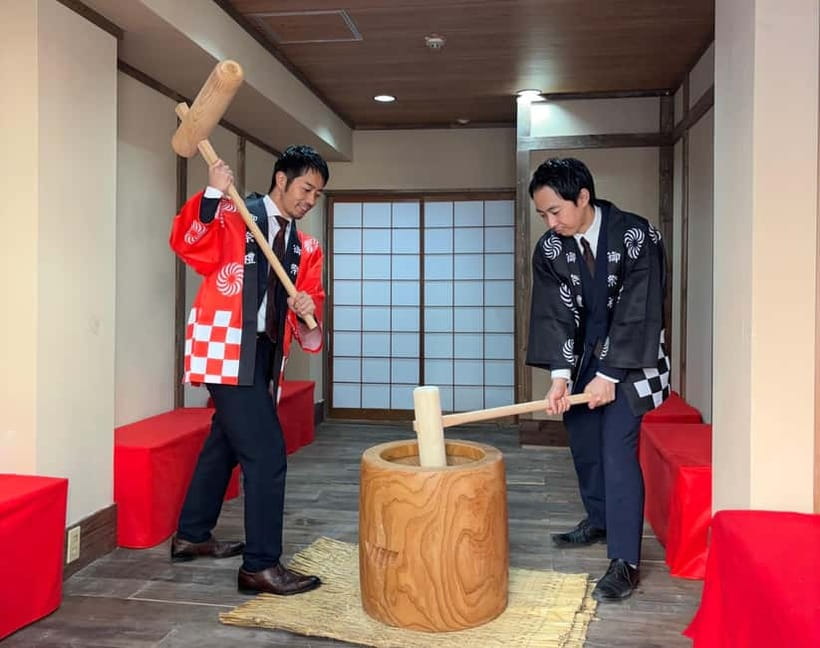
After the introduction, the class moves into the preparation itself. Steamed glutinous rice is worked with traditional tools until it develops the smooth, stretchy texture associated with mochi.
You take turns mashing and pounding the rice. The process has a rhythm, and the guides show you how to use the tools safely and effectively. This is where the class becomes more than a food tasting. Your arms do some work, and the transformation happens gradually rather than by a quick demonstration.
Do not underestimate the effort. One useful tip is to arrive ready to move, not dressed for a quiet museum visit. You will not need athletic clothing, but comfortable clothes make the hour easier. The activity is available year-round, so you can fit it into an Osaka plan in any season.
The group format matters here. With a maximum of four participants, solo visitors can get involved instead of watching other people do the work. The instructors also help take photos and videos, which is useful if you are traveling alone. Families can divide the work among children and adults, with the guides adjusting the activity so everyone has a role.
Once the rice has reached the right texture, you help form the mochi. This gives you a satisfying start-to-finish sequence: cooked rice, pounded dough, shaped pieces, and a tasting plate. It is messy in the best possible way, so choose clothing you can work in comfortably.
Tasting fresh mochi with several Japanese flavors
The final stage is the reward, and it is more substantial than a tiny sample. You taste the fresh mochi with several traditional seasonings and toppings, along with tea.
The available flavors include:
- Kinako, a roasted soybean powder
- Sweet red bean paste
- Nori
- Sweet soy sauce
The range lets you compare dry, salty, sweet, and savory combinations. Kinako gives the mochi a nutty flavor. Red bean paste brings a familiar Japanese sweetness. Nori and sweet soy sauce move the tasting in a more savory direction.
The mochi is served fresh, so the texture is the main event. It is soft, sticky, and elastic in a way that packaged mochi cannot fully reproduce. If you already like mochi, this is a chance to understand its texture at its best. If you are unsure about red bean, try it with another topping or combine it with cream if that option is offered during your session. One useful food lesson from the class is that the same base can taste completely different with a small change in seasoning.
Plan to eat a proper amount. The tasting can be filling, especially after the physical work of pounding the rice. I would schedule this before a lighter meal rather than immediately before a large dinner.
More food and drink tours in Osaka:
- Osaka: Shinsekai Food Tour with 13-15 Dishes at 5 Eateries
★ 4.8 · 2,204 reviews - Osaka Food Tour: 13 Dishes at 5 Local Eateries
★ 5.0 · 2,149 reviews - Hungry Osaka Street Food Tour:15 Tastings & 3 Drinks with a Local
★ 5.0 · 1,727 reviews - Hungry Osaka Street Food Tour: 15 Dishes & 3 Drinks
★ 4.9 · 694 reviews
What makes the guides important
The tools and ingredients are central to the activity, but the guides shape the mood. The instructors are there to explain the process, keep the group moving, help with the pounding, and make sure each person takes part.
The teaching team has been praised for clear English, warm energy, and patience with children. That matters because the pounding process can feel awkward at first. You may not know how hard to strike or when to change from mashing to pounding. The guides take away that uncertainty.
They also help the activity work for mixed groups. A family with young children and a couple can share the session, with everyone getting a suitable role. Children may not have the strength for long pounding, but they can participate in shorter turns, shaping, and tasting.
Solo visitors are also well served. The staff can help with photos, and the small group makes it easier to speak with the other participants. You do not need to arrive with a full party to enjoy this.
The cheerful style may not suit someone seeking a quiet, formal cultural demonstration. This is a social, participatory class. You will be encouraged to join in, laugh, and try the food.
Adults, children, and the two booking choices
There are two plans, so choose carefully when booking. The adult experience is for ages 13 and up and is intended for people seeking a more focused cultural activity. The family experience welcomes all ages and is designed to keep children and adults involved.
For families, the one-hour length is useful. It is long enough to feel worthwhile but short enough to avoid the problem of children losing interest during a lengthy workshop. The activity also gives parents and children a shared task instead of splitting up for separate entertainment.
Teenagers can enjoy the physical side and the photo opportunities. Adults who like food traditions will appreciate learning how the texture is created. Solo visitors benefit from the small group and staff assistance with photos.
The class is less suitable if you dislike sticky foods, need a completely quiet activity, or have no interest in tasting several flavors. The experience centers on touching, pounding, shaping, and eating mochi. That is its strength, but it also defines the limits.
Is $31 a fair price for one hour?
At $31 per person, this is not the cheapest snack stop in Osaka. You can buy ready-made mochi for much less. The value comes from the full process and the personal instruction.
Your fee covers the guided session, ingredients, tools, cultural explanation, tasting, and tea. You also get direct participation rather than a short demonstration. For a first visit to Japan, that makes the price reasonable, especially if you value activities that explain how food is made.
The small group improves the value. A larger class might lower the cost, but you could spend more time watching than doing. Here, up to four people share the session, and each person has a chance to pound and shape the rice.
The class is also easy to fit into a day because it lasts one hour. You are paying for a compact activity near central Osaka, not a half-day excursion that requires transportation. There is no transportation included, so you must make your own way to the meeting point. The exact meeting point can vary by plan.
Practical details that can save you time
Check the meeting instructions closely before leaving. The entrance may be along the river or canal side, not on the main Dotonbori frontage. A handwritten sign near a hotel entrance on a parallel street has helped some people find it.
Wear comfortable clothing suitable for a hands-on activity. You may want sleeves and clothes that you do not mind working in, since the session involves sticky rice, tools, and shaping.
The experience runs year-round, and starting times depend on availability. The guides work in English and Chinese. The group size is limited to four participants.
You can cancel up to 24 hours in advance for a full refund. You can also reserve now and pay later, which is useful if your Osaka schedule is still changing. These policies do not change the nature of the activity, but they make it easier to place the class in a busy sightseeing plan.
Should you book this mochi class?
I would book it if you want a short Osaka activity that combines food, movement, and cultural context. The strongest reasons are the start-to-finish preparation, the small group, and the wide choice of toppings at the end.
Families should choose the all-ages plan. Adults and older teens can consider the 13-and-up experience. Solo visitors should not worry about arriving alone, since the instructors help with photos and keep the group involved.
I would skip it only if you want a passive tasting, dislike sticky textures, or have a tightly packed meal schedule. For most people, $31 buys more than mochi. It buys a clear look at how this traditional food is made, a chance to use the tools yourself, and a snack that is filling enough to count as part of your day.
FAQ
How long does the mochi pounding experience last?
The experience lasts one hour.
How much does the activity cost?
The price is $31 per person.
Where does the experience take place?
It takes place in Osaka, near the central Dotonbori area. The entrance may be on the river or canal side rather than directly on Dotonbori Street.
How many people are in each group?
The activity is limited to four participants.
Which languages do the instructors speak?
Instruction is available in English and Chinese.
Can children participate?
Yes. Choose the Family Experience, which welcomes all ages and is designed for children and adults.
What happens during the session?
You receive a short introduction to mochi, help prepare and pound steamed glutinous rice, shape the mochi, and taste it with traditional toppings and tea.
Which toppings are available?
The tasting includes kinako, sweet red bean paste, nori, and sweet soy sauce.
Is transportation included?
No. Transportation to and from the activity location is not included.
Can I cancel my booking?
Yes. You can cancel up to 24 hours in advance for a full refund.
Just added in Osaka
- Urban Canvas: Osaka Street Art Bike Tour★ 5.0 · 10 reviews
- Anime Cosplay Photshoot-50 Digital Photos Provided★ 5.0 · 8 reviews
- TeamLab Botanical Garden Osaka Ticket★ 3.5 · 6 reviews
- Cherry Blossom Buddha and Mt.Yoshino with Strawberry Picking Tour★ 4.5 · 5 reviews
- Umeda Sky Building & Kuchu Teien Observatory Ticket in Osaka★ 4.5 · 3 reviews
- Immerse in Judo Martial Arts Class from Japan★ 5.0 · 4 reviews
- Traditional Home cooking Experience in Osaka, Japan★ 5.0 · 14 reviews
- Traditional Calligraphy Experience near Dotonbori★ 5.0 · 3 reviews
Osaka Cooking Classes, compared.

Matcha Making Class in Osaka with Authentic Japanese Sweets Set
Read our review →
Osaka Cooking Class: Okonomiyaki &Japanese cuisines experience
Read our review →
Roll and Authentic Sushi Making Class in Dotonbori
Read our review →


Osaka Sake Tasting & Takoyaki Cooking Experience
Read our review →
Browse the lists this tour appears in