
Reviewed · OSAKA COOKING CLASSES
Well-balanced BENTO (lunch box) Cooking Class
The best part of this Osaka class is that you do not simply watch someone prepare Japanese food. You make dashi from scratch, cook seven home-style dishes, shape two triangular rice balls, and arrange the finished meal in your own bento box. It is a useful look at the everyday cooking behind Japanese restaurant meals.
I like the small maximum group of eight, which gives Yumi or Fumi time to help with details such as omelet technique and attractive packing. I also like the balance of the menu: Wagyu beef, shrimp, salmon, egg, mushrooms, squash, green vegetables, rice, and miso soup.
The main consideration is the price, $92.24 per person. That is a serious cost for a 2.5-hour lunch, though the hands-on instruction, ingredients, meal, and cultural explanation make it more than a simple cooking demonstration.
Key points at a glance
- Make dashi first: You learn the basic stock that gives many Japanese dishes their savory flavor.
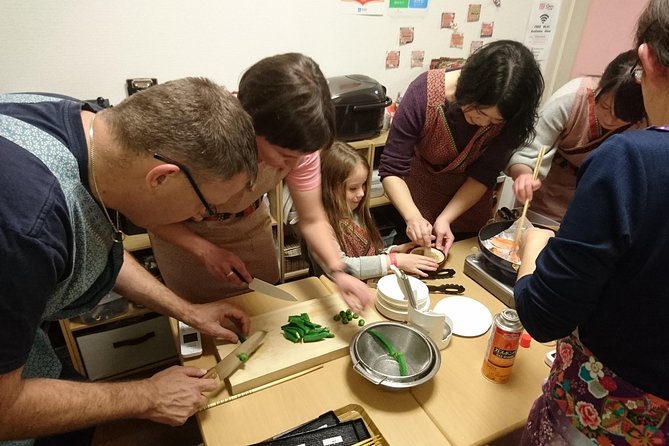
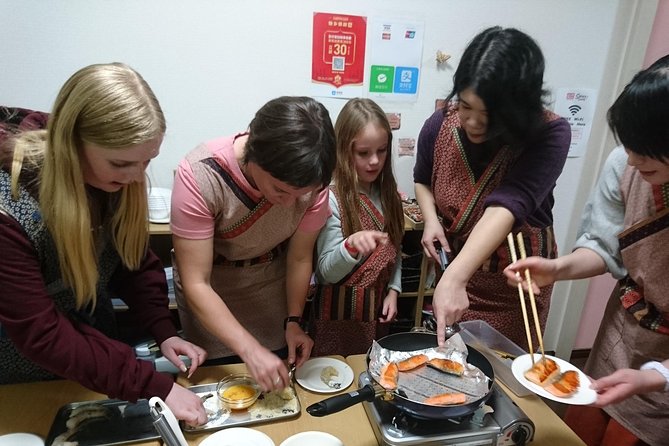
- Prepare seven home-style dishes: The menu uses Wagyu beef, shrimp, salmon, egg, squash, mushrooms, green vegetables, and rice.
- Pack your own bento: Your instructor shows you how to arrange food neatly with fresh vegetables.
- Practice several techniques: The class covers frying, grilling, simmering, and marinating.
- Small group setting: No more than eight people attend, and some sessions may be even smaller.
- Finish with a real meal: You eat the bento you prepared with chopsticks and complimentary miso soup.
Starting at Sakura Cook in Kitahorie
The class begins at Banix北堀江Japan, at 3-chōme 6-2 Kitahorie in Osaka’s Nishi Ward. The meeting point is near public transportation, and the class returns to the same location at the end.
You begin by choosing your favorite lunch box and putting on an apron. That small choice gives the class a personal touch right away. You are not preparing food for an anonymous demonstration. You are building a lunch that you will later arrange, admire, and eat.
The full session lasts about two and a half hours. That is long enough to cover several cooking methods without turning the class into an all-day commitment. It also means you should arrive ready to stay focused. Seven dishes, rice balls, packing, and lunch all fit into a fairly busy schedule.
The group limit is eight people. This matters in a practical way. Cooking classes can become frustrating when one instructor has to supervise a large crowd, but this format allows more direct help. If you attend during a quiet period, you might even have unusually close instruction. One session had only two people, giving the instructor time to explain details at length.
More cooking classes in Osaka:
- Matcha Making Class in Osaka with Authentic Japanese Sweets Set
★ 5.0 · 509 reviews - Osaka Sushi Making Experience
★ 5.0 · 400 reviews - Osaka: Ramen and Gyoza Cooking Class in Dotonbori
★ 5.0 · 378 reviews
Why dashi is the right place to begin
Cooking starts with dashi, the traditional Japanese broth used as a base in many dishes. Learning this first helps you understand why Japanese food can taste full and savory without relying on heavy sauces.
The instructor explains both the process and the role of dashi in Japanese cooking. This is one of the more valuable cultural parts of the class because it connects several dishes to one basic idea. You are not just following isolated recipes. You are seeing how a simple stock supports the flavor of an entire meal.
This section also gives the class a useful sense of order. Japanese home cooking often depends on careful preparation and a number of small steps. Beginning with dashi shows you that the final bento is built from several foundations, not rushed together at the last minute.
If you are new to Japanese cooking, pay attention here. Dashi is one of the techniques most likely to help you understand other dishes you eat during your time in Japan.
Seven dishes with a practical range of techniques
After making the broth, you prepare seven basic Japanese dishes often eaten at home. The listed ingredients include Wagyu beef, shrimp, salmon, egg, squash, mushrooms, green vegetables, and rice.
The menu gives you a good range of flavors and textures. Beef and seafood provide savory depth, vegetables add color, egg brings a soft contrast, and rice forms the center of the meal. It is a more balanced lunch than a class focused on one rich specialty.
The cooking methods are varied. You practice frying, grilling, simmering, and marinating. That variety is important because it keeps the class active and gives you techniques you can use again at home.
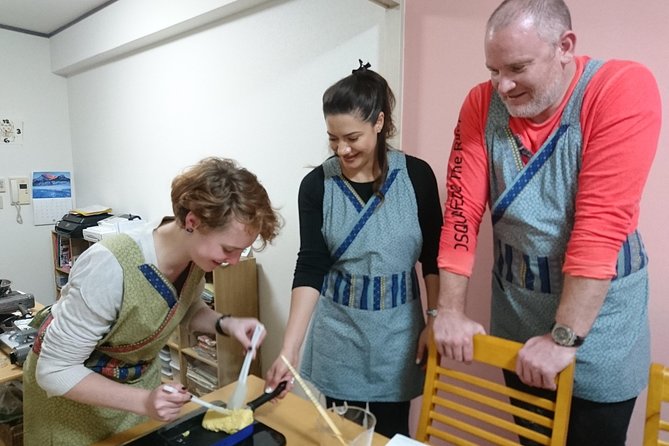
The egg preparation deserves particular attention. One participant enjoyed the omelet technique enough to decide to buy a frying pan specifically for it. You should not assume you will reproduce every Japanese dish perfectly on your first attempt, but the class gives you a clear introduction to the movements and timing involved.
The instructor also makes sure people participate in every dish rather than assigning one person to watch while another cooks. That is especially useful for families or couples who want a shared activity, not just a meal at the end.
Shaping two triangular rice balls
The rice balls are one of the most distinctive parts of the experience. You practice making the triangular shape with plastic molds before completing two rice balls of your own.
This is a simple task, but it adds a hands-on Japanese touch that you can remember long after the class. The molds make the shape accessible, so you do not need advanced knife skills or years of kitchen practice.
The rice balls also help explain the practical side of Japanese packed lunches. A bento is not only a collection of recipes. Shape, portion, color, and arrangement all matter. The rice balls give the box a recognizable centerpiece while the other dishes fill out the meal.
Families should find this section approachable. A 12-year-old participant was able to follow the class, and the format allows children to take part while accompanied by an adult. Younger cooks may need help with hot pans or other kitchen tasks, but the class is designed for active participation rather than passive watching.
A few more Osaka half-days worth pricing up
- Osaka: Five Must-See Highlights Walking Tour & Ramen Lunch
★ 4.7 · 411 reviews - Osaka/Kyoto: Amanohashidate & Miyama Tour with Boat & Lunch
★ 4.6 · 207 reviews - Walking Tour of Osaka’s 5 Must-See Sights, with Ramen for Lunch
★ 5.0 · 158 reviews - 5-Hour Osaka Highlights Bike Tour with Lunch
★ 4.8 · 146 reviews
Packing the bento neatly
Once the dishes are finished, you pack them into your chosen lunch box. Fresh vegetables help fill the spaces and add color, while the instructor advises you on an attractive arrangement.
This is where the class shifts from cooking to presentation. You learn that a bento should look appealing before you take the first bite. The placement of each item affects color, balance, and the feeling of abundance.
The packing section is also practical because it turns separate dishes into a complete meal. You can see how rice, protein, seafood, vegetables, and egg work together in one compact box. The finished bento is both lunch and a record of the work you have done.
Do not rush this step. It is tempting to place everything in the box as soon as the food is ready, but the instructor’s guidance is part of the point. A little care with spacing and color makes a noticeable difference.
Sitting down for bento and miso soup
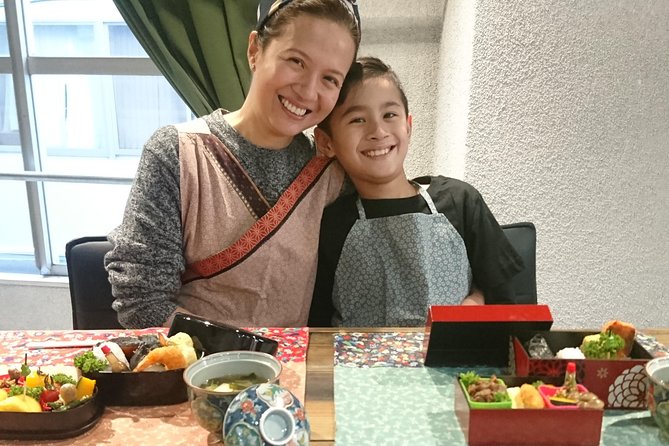
At the end, you place the dishes in the box, add chopsticks, and begin the meal with Itadakimasu. Complimentary miso soup accompanies the bento.
Eating your own cooking changes the mood of the class. You can taste how the dashi works, compare the different methods, and see which dishes you would like to try again. The meal also gives you time to appreciate the balance of the finished box rather than moving straight from one instruction to the next.
The lunch is designed to be healthy and balanced, with vegetables, seafood, beef, egg, and rice. That does not mean every dish will suit every diet, so tell the provider about specific dietary requirements when booking.
The meal is not an extra restaurant stop after the class. It is the final stage of the activity, and that helps justify some of the cost. You are paying for ingredients and instruction, but also for a complete sit-down meal made by you.
The instructors and teaching style
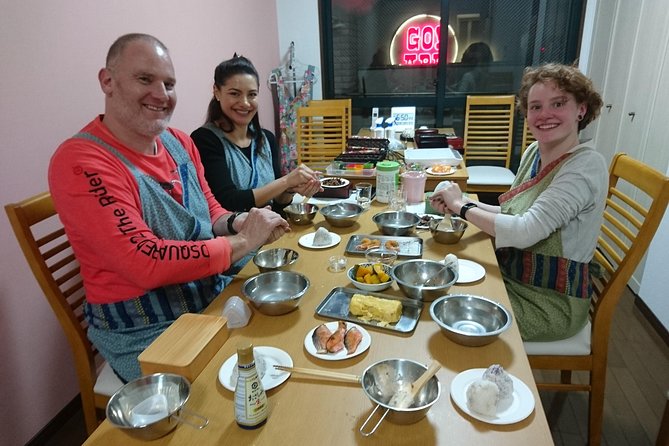
Yumi and Fumi are the instructors named in the available experience information. Yumi explains the background and purpose of dashi and guides people through each dish. Fumi is described as careful and graceful in her instruction, with warm, direct English.
The teaching style appears suited to people with different levels of kitchen experience. Instructions are clear enough for a child to follow, while more experienced cooks can focus on technique, timing, and presentation.
The class also has a professional rhythm. The cooking area is described as clean, punctual, and well organized, which matters when several dishes are being prepared at once. Good timing is especially important here because frying, grilling, simmering, and packing all need to come together.
English instruction is available, though the exact instructor may vary. The information names both Yumi and Fumi, so you should expect one of them or another Sakura Cook instructor rather than assume a particular person will lead every session.
How the $92.24 price measures up
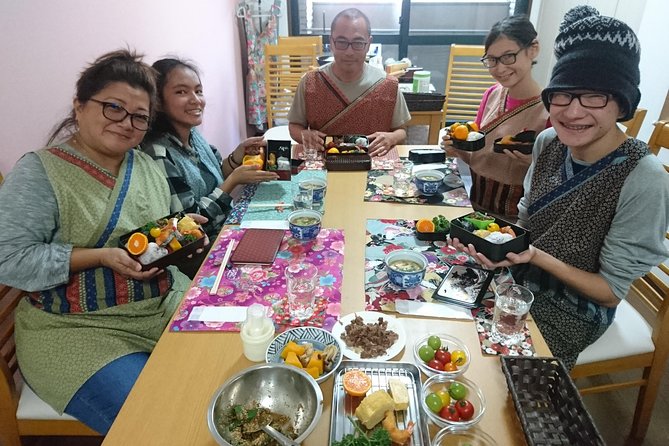
At $92.24 per person, this is not a budget lunch. If your only goal is to eat Japanese food, you can spend far less at a restaurant or convenience store.
The value is in the combination of instruction, ingredients, cultural context, and the finished meal. You prepare seven dishes rather than one recipe, practice several techniques, receive help with presentation, and eat what you make. The small group limit also gives the price more weight than a large demonstration with little personal attention.
I would consider it a fair splurge for a food-focused visit to Osaka, especially if you want to take home skills rather than only photographs. It is less compelling for someone who dislikes cooking, has a very short Osaka schedule, or mainly wants the cheapest possible lunch.
The class is booked an average of 53 days in advance, so it is wise to reserve early if the timing matters. Confirmation arrives within 48 hours, subject to availability, and the mobile ticket makes access simple once the booking is confirmed.
Who will enjoy this Osaka class most
This is a strong choice for families, couples, and small groups who like doing something together. The class gives everyone a role, and the 2.5-hour length fits neatly into a day of sightseeing.
It also suits people who want more context for Japanese food. You learn why dashi matters, how several common cooking methods work, and how a bento is arranged. That makes it more useful than a class built around one flashy dish.
Children must be accompanied by an adult. The format can work well for older children who enjoy cooking, though adults should expect to help with tasks involving heat, knives, or timing.
It may not be ideal for a strict dietary situation unless the provider can accommodate your needs. You are asked to provide dietary requirements at booking, but the standard menu includes beef, shrimp, salmon, egg, mushrooms, and other ingredients. Ask before paying if substitutions are essential.
Timing, booking, and cancellation advice
The experience lasts approximately two hours and 30 minutes and ends back at the meeting point. Since the class is near public transportation, you should allow enough time to reach Kitahorie without arriving breathless or late.
Confirmation is sent within 48 hours, depending on availability. Because the class is often reserved well ahead, book early for popular travel dates.
Free cancellation is available up to 24 hours before the local start time for a full refund. Cancellations or changes made less than 24 hours before the start are not accepted for a refund, so check your Osaka plans before making a final reservation.
Should you book the bento class?
Book it if you want an active food experience with a real meal at the end. The strongest reasons are the small group size, the seven-dish menu, the dashi lesson, and the chance to pack your own bento under guidance from Yumi, Fumi, or another Sakura Cook instructor.
I would especially recommend it for families with older children, first-time visitors curious about everyday Japanese food, and cooks who want techniques they can use at home. The class feels balanced rather than built around one novelty dish.
Skip it if $92.24 feels too high for lunch, if your schedule cannot spare two and a half hours, or if your dietary needs are difficult to accommodate. For everyone else, this is a thoughtful Osaka activity that turns lunch into a lesson, a cultural introduction, and a meal you helped create.
FAQ
Where does the bento cooking class meet?
The class meets at Banix北堀江Japan, 3-chōme 6-2 Kitahorie, Nishi Ward, Osaka, 550-0014. The activity ends back at the same meeting point.
How long does the class last?
The cooking class lasts approximately 2 hours and 30 minutes.
How many people can join?
The maximum group size is eight people.
What food will I prepare?
You prepare seven Japanese home-style dishes using ingredients that include Wagyu beef, shrimp, salmon, egg, squash, mushrooms, green vegetables, and rice. You also make two triangular rice balls.
Will I eat the food I prepare?
Yes. At the end of the class, you pack the dishes into a bento box and eat the meal with chopsticks and complimentary miso soup.
Are children allowed to join?
Yes. Children must be accompanied by an adult.
Can I share dietary requirements?
Yes. You should advise the provider of any specific dietary requirements when booking.
What is the cancellation policy?
You can cancel at least 24 hours before the local start time for a full refund. Cancellations or changes made less than 24 hours before the start time are not accepted for a refund.
More Workshops in Osaka
- Sushi Making Osaka Roll and Authentic Japanese Sushi Class
★ 5.0 · 1,220 reviews - Osaka Cooking Class: Okonomiyaki &Japanese cuisines experience
★ 5.0 · 261 reviews - Osaka: Roll and Authentic Sushi Making Class in Dotonbori
★ 4.9 · 239 reviews - Ramen and Gyoza Cooking Class in Osaka
★ 5.0 · 202 reviews
Just added in Osaka
- Urban Canvas: Osaka Street Art Bike Tour★ 5.0 · 10 reviews
- Anime Cosplay Photshoot-50 Digital Photos Provided★ 5.0 · 8 reviews
- TeamLab Botanical Garden Osaka Ticket★ 3.5 · 6 reviews
- Umeda Sky Building & Kuchu Teien Observatory Ticket in Osaka★ 4.5 · 3 reviews
- Immerse in Judo Martial Arts Class from Japan★ 5.0 · 4 reviews
- Cherry Blossom Buddha and Mt.Yoshino with Strawberry Picking Tour★ 4.5 · 5 reviews
- Traditional Home cooking Experience in Osaka, Japan★ 5.0 · 14 reviews
- Traditional Calligraphy Experience near Dotonbori★ 5.0 · 3 reviews
Osaka Cooking Classes, compared.

Matcha Making Class in Osaka with Authentic Japanese Sweets Set
Read our review →
Traditional Mochi Pounding Experience with Tasting
Read our review →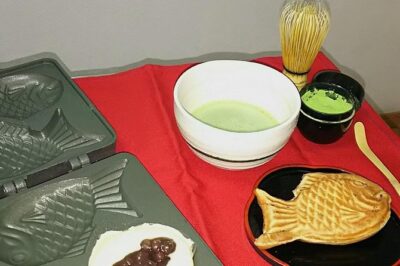
Osaka Cooking Class: Okonomiyaki &Japanese cuisines experience
Read our review →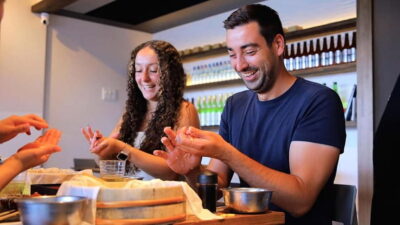
Roll and Authentic Sushi Making Class in Dotonbori
Read our review →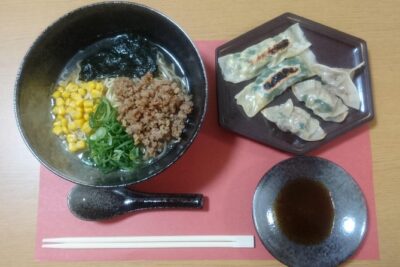
Osaka Sake Tasting & Takoyaki Cooking Experience
Read our review →Browse the lists this tour appears in