
Reviewed · WORKSHOPS
Immerse in Judo Martial Arts Class from Japan
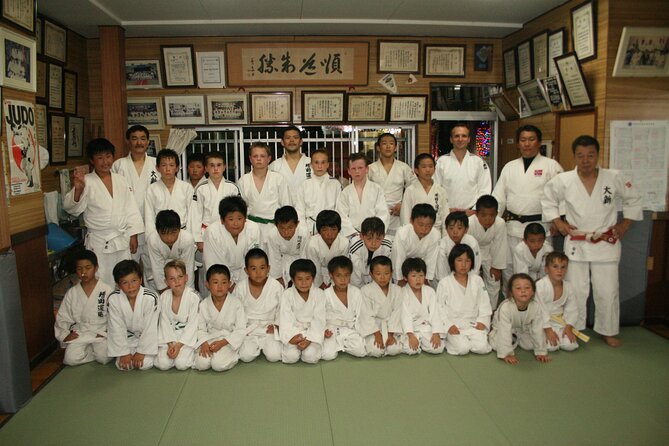
Judo here is not just about throwing someone onto a mat. At Daishin Judo Club, you learn the bow, the balance, the break fall, and the quiet discipline that gives the sport its character. Sensei Akihiro Matsuura, an eighth-dan black belt, has taught for nearly 50 years.
I like the small maximum group of six, which gives you room to ask questions and get help. I also like the honest split between beginner and experienced instruction: first-timers work on safe movement and ukemi, while trained judoka can practice throws and ground work. The main consideration is physical effort. Even at 90 minutes, judo is active, close-contact training, so it may not suit anyone looking for a passive cultural demonstration.
Key points at a glance
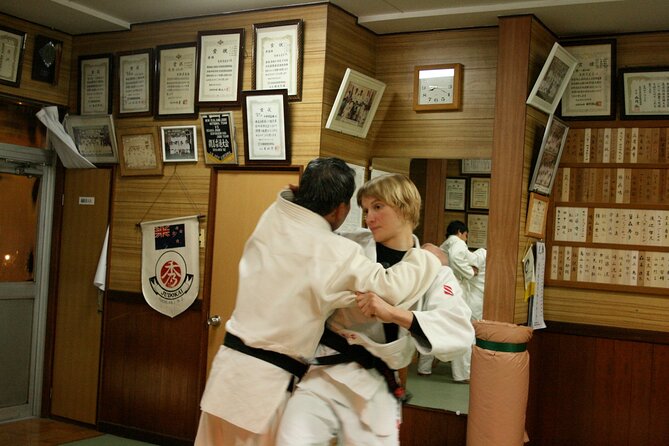
- A real Osaka dojo: Train at Daishin Judo Club, founded in 1976, rather than watching a staged performance.
- Led by Akihiro Matsuura: Your instructor is an eighth-dan black belt with almost five decades of teaching experience.
- Beginners are welcome: Learn basic posture, movement, grappling, ukemi break falls, and introductory throws.
- Useful for experienced judoka: Practice nage-waza throwing techniques and ne-waza ground techniques.
- Small class size: The activity accepts a maximum of six participants, allowing for a more personal session.
- More than exercise: Etiquette, respect, self-control, and Japanese martial arts traditions are part of the lesson.
What makes this Osaka judo class different
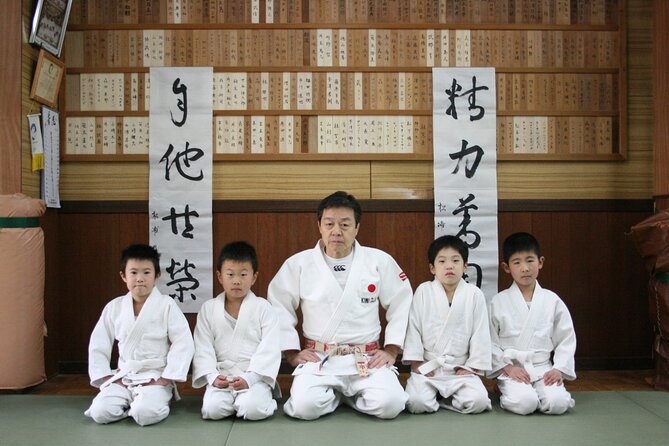
Many cultural activities let you watch. This one asks you to step onto the tatami mat and take part.
That matters because judo makes Japanese manners physical. You do not simply hear about respect and discipline. You practice them through the bow, controlled movement, careful contact, and attention to your partner’s safety. The class gives you a direct look at how a martial art can also function as a form of education.
Daishin Judo Club was founded in 1976, giving the setting decades of continuity. It is a working dojo, not a theater set. The instructor, Akihiro Matsuura, holds an eighth-dan black belt and has taught judo for almost 50 years. His long experience is especially useful for visitors who are unsure how much they can handle or who want clear help with a technique.
The group limit of six is another strong point. A larger class could leave a beginner lost in a crowd of moving bodies. Here, you have a better chance to ask a question, repeat a movement, or receive a correction before a poor habit settles in.
A few more Osaka half-days worth pricing up
- Sushi Making Osaka Roll and Authentic Japanese Sushi Class
★ 5.0 · 1,220 reviews - Matcha Making Class in Osaka with Authentic Japanese Sweets Set
★ 5.0 · 509 reviews - Osaka: Ramen and Gyoza Cooking Class in Dotonbori
★ 5.0 · 378 reviews
Arriving at Daishin Judo Club
The meeting point is Daishinjudo Orthopedic Clinic, at 10-22 Funahashicho in Osaka’s Tennoji Ward, postal code 543-0024. The activity begins and ends at this same meeting point.
The location is near public transportation, which makes it practical to fit into a day in Osaka. Still, allow enough time to find the address. Martial arts classes are time-sensitive, and arriving flustered is not the best way to begin a lesson built around calm attention.
A mobile ticket is provided, so keep your booking available on your phone. Confirmation arrives at the time of booking. Since the class is often reserved about 30 days ahead, I would not leave it until the final days of your Osaka visit if this is a priority.
The class lasts about one hour and 30 minutes. That is long enough to learn and practice several basic ideas, but short enough to fit around sightseeing. You are not signing up for a full-day martial arts course. Think of it as a focused introduction to the sport and the customs around it.
The first lesson: posture, movement, and etiquette
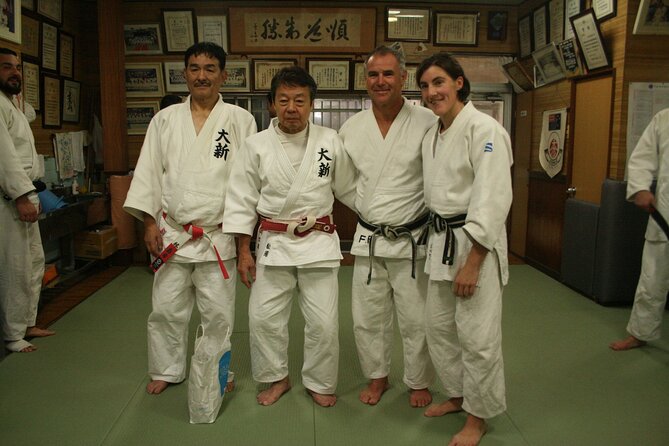
If you have never done judo, the session begins with the foundations. You can expect to work on basic posture and movement before trying more demanding techniques.
This order is important. Judo depends on balance, timing, and control. A beginner who starts by trying to throw without learning how to stand, move, and fall is asking for trouble. The early exercises give you a safer base and help you understand that strength alone is not the point.
Etiquette is part of the lesson, too. Judo places value on respect for your instructor, your training partner, and the dojo itself. The class offers a useful cultural lesson without turning the experience into a lecture. You learn by taking part.
The instructor can speak Japanese, English, and Korean. English support removes a major worry for many visitors, especially when a movement has to be explained quickly. Martial arts instruction relies on short, precise directions, so the ability to ask questions in English is a real practical benefit.
Ukemi and the art of falling safely
One of the most valuable skills for a beginner is ukemi, the judo technique for break falling. It may sound less exciting than a throw, but it is the skill that lets you train with greater confidence.
You learn how to receive a fall and protect yourself rather than stiffening up or landing badly. That makes ukemi useful beyond this single class. It gives you a better sense of body control and shows why proper technique matters in a sport involving grappling and throws.
Expect this part to require attention rather than bravado. You do not need to prove that you are fearless. Listen closely, copy the movement, and let the instructor set the pace. A good martial arts lesson is not a contest between the visitor and the mat.
Once you understand the basic falling technique, you can move toward introductory throwing forms. The class is designed to let a first-timer try judo without pretending that one session will turn you into a black belt.
Same city, a completely different kind of afternoon:
- Osaka Go Karting Tour with Funny Costume
★ 5.0 · 2,658 reviews - Osaka Castle: Museum and Tower Entry Ticket
★ 4.5 · 2,380 reviews - Osaka: Shinsekai Food Tour with 13-15 Dishes at 5 Eateries
★ 4.8 · 2,204 reviews - Osaka Food Tour: 13 Dishes at 5 Local Eateries
★ 5.0 · 2,149 reviews
Grappling and basic throws for first-timers
Judo uses close contact, grips, balance changes, and controlled throws. For a new participant, that can feel unfamiliar at first. The instructor guides you through how to grapple and how to use basic throwing forms rather than simply asking you to copy an advanced athlete.
I like this approach because it gives you context for what you are doing. A throw is not just a dramatic movement. It depends on position, balance, timing, and cooperation between partners. The lesson helps you see the logic behind the technique.
You should expect physical contact. That is central to judo, not an optional extra. If you are uncomfortable with grappling or have a physical limitation that makes falling difficult, consider that before booking. The information provided says most participants can take part, but it does not promise that every technique can be adapted to every condition.
At the same time, the friendly tone of the dojo is a major part of the appeal. The local black belts and other students are described as welcoming, respectful, and willing to teach. That gives the session a social side. You are not just receiving instruction from a sensei, you are meeting people who practice the art as part of their lives.
Options for experienced judoka
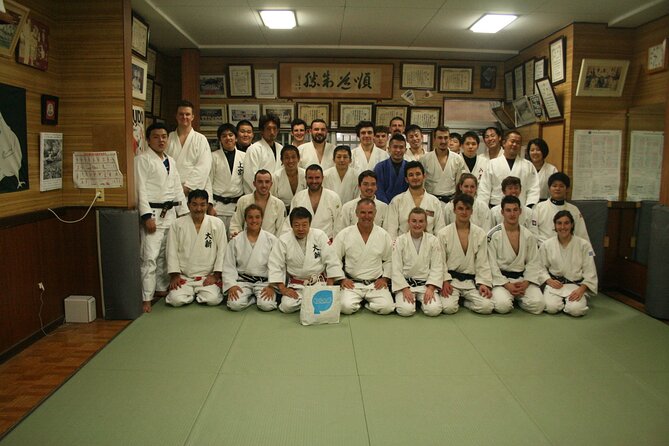
If you already know judo, you do not have to spend the whole class on the first steps. You can ask about nage-waza, or throwing techniques, and ne-waza, or ground techniques.
This flexibility makes the class more useful for a wider range of participants. A traveler with previous training can use the session to revisit technique, ask questions, and train with people at the dojo rather than repeat a very basic tourist lesson.
Randori, or free practice, may also be part of the training. It can be intense and enjoyable, but you should approach it with control. The goal is not to win a short holiday bout at any cost. Respect and mutual safety remain central.
You can also ask about the history of judo. That is a worthwhile addition because the physical practice makes more sense when you understand the values behind it. The lesson connects technique with discipline, balance, self-defense, and mental strength.
Why the small group matters
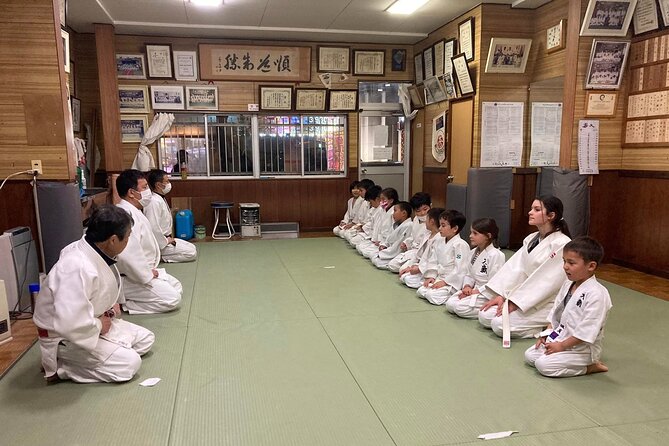
A maximum of six participants changes the feel of the class. You are less likely to disappear into a crowd, and the instructor has a better chance to notice how you are moving.
That matters most during ukemi and basic throws. Small corrections can make a technique safer and easier to understand. You can also ask about a movement without feeling that you are holding up a large class.
The trade-off is that a small activity may have limited availability. The average booking point is about 30 days in advance, so plan ahead if you are visiting Osaka on fixed dates. A group this size also means the session may feel more like a training visit than a large organized tour. That is a strength if you want personal attention, but less so if you prefer to remain anonymous.
The value of the $97.55 price
At $97.55 per person, this is not the cheapest way to spend 90 minutes in Osaka. You are paying more than you would for a basic self-guided cultural stop, and the class does not include a long sightseeing route or several attractions.
The value comes from access and instruction. You receive time in a traditional dojo, guidance from an eighth-dan sensei, a class limited to six people, and a chance to practice skills that are difficult to understand from a museum display. The experience also gives you direct contact with Japanese martial arts culture, rather than a quick photo opportunity.
For someone curious about judo, the cost can make sense. You get a structured lesson and a memory tied to participation, not just observation. For a family member who only wants a short cultural activity with no physical effort, the price may feel high.
I would compare it with the rest of your Osaka plans. If you are already booking several premium activities, this may be one to choose for its distinct character. If your budget is tight, book it only if judo itself interests you. The class is not designed to justify its price through sightseeing extras.
Who should book this activity
This class suits you best if you want a hands-on cultural experience and do not mind getting physical. It is a good match for:
- First-time participants who are willing to learn carefully
- Martial artists who want to practice judo in Japan
- Visitors interested in etiquette, discipline, and traditional training
- Solo visitors who value a small group and direct instruction
- Families or friends with similar interest in trying something active
It may be a poor match if you want a spectator event, dislike physical contact, or are hoping for a relaxed hour of cultural explanation. The session is built around practice. Even the cultural side is taught through movement, manners, and training.
The class can also work well for people traveling together at different skill levels. Beginners can focus on posture, ukemi, and basic throws, while experienced judoka can ask about nage-waza and ne-waza. Be clear about your background at the start so the instructor can guide you properly.
Practical booking details to know
Free cancellation is available if you cancel at least 24 hours before the local start time. Cancellations or changes made within 24 hours are not accepted for a refund, so watch the deadline if your Osaka plans may shift.
Service animals are allowed, and the meeting point is near public transportation. Most participants can take part. The activity ends back at the original meeting point, which makes it easier to plan your next stop.
The instructor speaks Japanese, English, and Korean. That is especially helpful when discussing experience levels, questions about technique, or any concern about the physical work.
Should you book Daishin Judo Club?
Book it if you want to do more than look at Japanese culture from the outside. The combination of a real dojo, a highly ranked instructor, small group size, and practical beginner instruction gives the class a clear purpose.
I would choose it for the chance to learn ukemi, try controlled throws, and understand how respect is built into judo practice. I would also choose it if I had prior judo experience and wanted time with local practitioners rather than a generic introduction.
Think twice if you are avoiding contact sports or want a quiet cultural visit. The $97.55 price is reasonable for specialized instruction and a six-person maximum, but only if you value active participation. For the right person, this is a memorable way to spend 90 minutes in Osaka, with a lesson that reaches beyond the mat.
FAQ
Where does the judo class meet?
The class meets at Daishinjudo Orthopedic Clinic, 10-22 Funahashicho, Tennoji Ward, Osaka, 543-0024, Japan.
Where does the activity end?
The activity ends back at the meeting point.
How long does the judo experience last?
The session lasts approximately one hour and 30 minutes.
How many people can join?
The activity has a maximum of six participants.
Is the class suitable for beginners?
Yes. Beginners practice basic posture and movements, grappling, ukemi break falling, and basic throwing forms.
What can experienced judo participants practice?
Participants with judo experience can work on nage-waza throwing techniques and ne-waza ground techniques.
Which languages can the instructor speak?
The instructor can speak Japanese, English, and Korean.
What is the cancellation policy?
You can cancel for a full refund up to 24 hours before the experience start time. Cancellations or changes made less than 24 hours before the start time are not refunded or accepted.
Just added in Osaka
- Urban Canvas: Osaka Street Art Bike Tour★ 5.0 · 10 reviews
- Anime Cosplay Photshoot-50 Digital Photos Provided★ 5.0 · 8 reviews
- TeamLab Botanical Garden Osaka Ticket★ 3.5 · 6 reviews
- Umeda Sky Building & Kuchu Teien Observatory Ticket in Osaka★ 4.5 · 3 reviews
- Cherry Blossom Buddha and Mt.Yoshino with Strawberry Picking Tour★ 4.5 · 5 reviews
- Traditional Home cooking Experience in Osaka, Japan★ 5.0 · 14 reviews
- Traditional Calligraphy Experience near Dotonbori★ 5.0 · 3 reviews
- Discover Osaka’s Iconic Umeda Sky Observation★ 5.0 · 6 reviews
Workshops, compared.
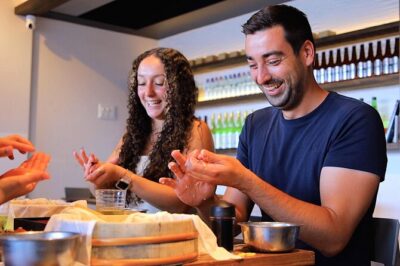
Sushi Making Osaka Roll and Authentic Japanese Sushi Class
Read our review →
Matcha Making Class in Osaka with Authentic Japanese Sweets Set
Read our review →
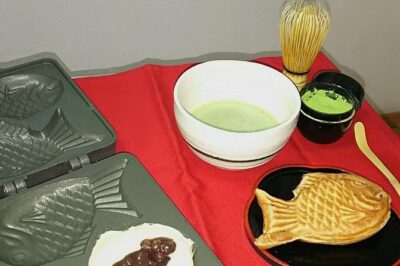
Osaka Cooking Class: Okonomiyaki &Japanese cuisines experience
Read our review →
Roll and Authentic Sushi Making Class in Dotonbori
Read our review →

Browse the lists this tour appears in