
Reviewed · OSAKA KIMONO EXPERIENCES
Real Kimono experience and Tsumami Kanzashi Workshop
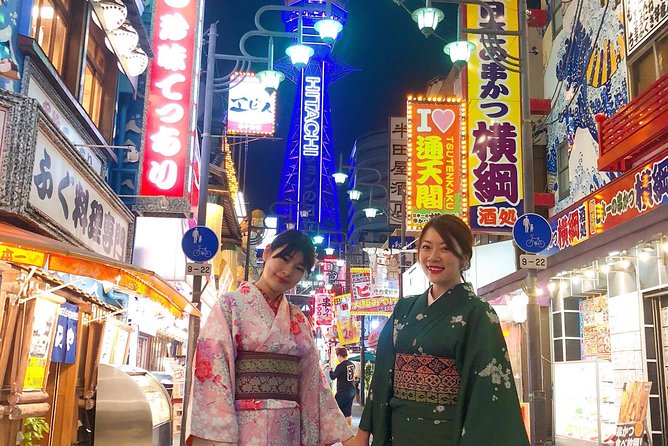
Creating a tsumami kanzashi before putting on a kimono gives this Osaka activity more substance than a quick costume photo. You learn a traditional craft, make a small hair ornament or brooch from chirimen cloth, then wear your creation while exploring Shinsekai near Tsutenkaku Tower.
I like the wide choice of kimonos and obis, and I like that the finished accessory becomes a useful souvenir rather than something you simply look at. The main consideration is time: the whole experience lasts about two hours, but you must return the kimono within one hour, so the stroll and photographs need a little planning.
Key points at a glance
- Make your own tsumami accessory: Learn the basic technique and create a flower hairpin, kanzashi, hair clip, or brooch.
- Choose from many kimono styles: Pick a kimono and obi from the available selection before being dressed.
- Walk through Shinsekai: Wear the kimono around the local area and near Tsutenkaku Tower.
- Private group format: Only your own group takes part, which makes the craft lesson easier to follow.
- Tea or coffee during the workshop: A small, welcome pause while you work with the cloth.
- About $52 per person: The price covers the workshop, kimono experience, photos, and use of the kimono during the outing.
Making a Tsumami Kanzashi in Osaka
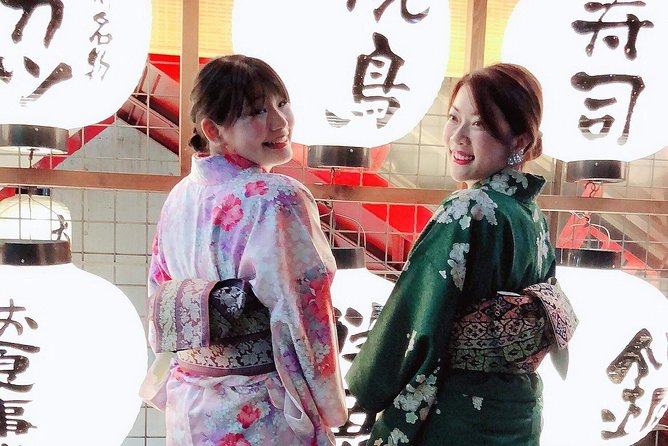
The experience begins with tsumami-zaiku, a traditional Japanese craft made by folding and arranging small pieces of cloth. Here, you work with Japanese chirimen fabric, a textured cloth often used for decorative objects and accessories.
You receive an explanation sheet, followed by a short lesson on the basic technique. The craft can look delicate and complicated at first, but the activity is designed to guide you step by step. You choose the colors and design for the flowers, then assemble your own accessory with help along the way.
That hands-on part is the heart of the experience. A rented kimono can make a fine photograph, but making something yourself gives the afternoon a personal touch. Your final piece might be worn as a hair ornament, used as a hair clip, or kept as a brooch, depending on the design and how you choose to use it.
You do not need to arrive with craft experience. The instructions specifically include guidance through the process, and the private format means the person teaching you can focus on your group. That is useful if children, first-time crafters, or less confident makers are taking part.
Japanese tea or coffee is served while you work. It is a modest detail, but it makes the workshop feel less rushed. You can concentrate on folding and arranging the cloth, ask for help, and enjoy a short cultural activity rather than racing through a photo package.
More kimono experiences in Osaka:
- Osaka: Sumo Show & Experience w/ Optional Kimono & Hot Pot
★ 4.5 · 609 reviews - Learning Zen of Japanese Calligraphy in kimono near Osaka Castle
★ 4.5 · 53 reviews - Osaka: Kimono or Yukata Rental &Photos Service Options
★ 4.9 · 25 reviews
Choosing a Kimono and Obi
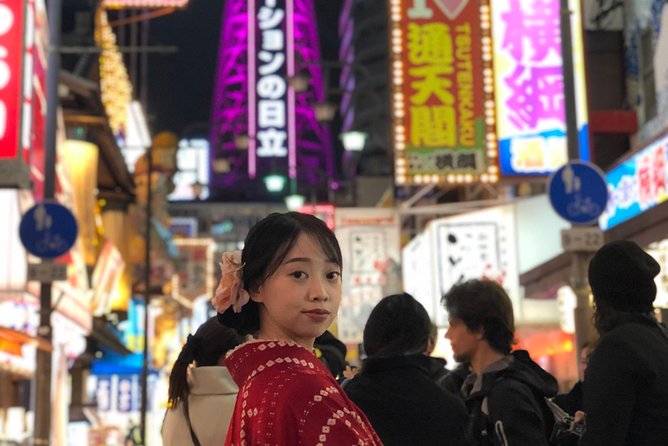
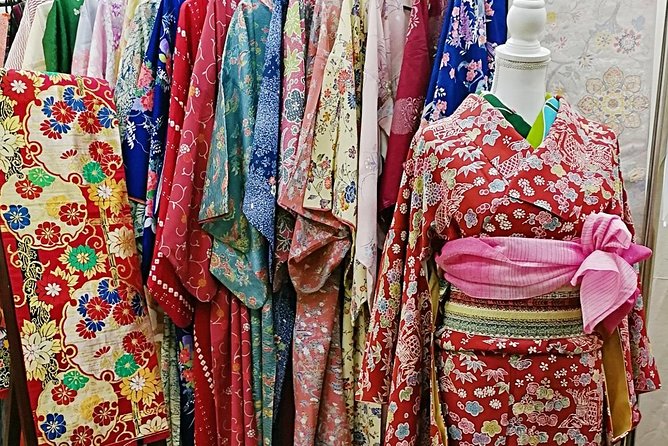
Once your accessory is finished, you choose a kimono and obi from a selection of styles. The range is one of the practical strengths of this outing. You are not simply handed one standard outfit, so you can take part in choosing the colors and overall look.
The word kimono is often used loosely in tourist activities, but this experience presents itself as a real kimono experience with several options available. The supplied information does not specify the exact number of garments, sizes, seasonal styles, or whether every item is available at every departure. If you have a particular color or fit in mind, it is sensible to ask before booking.
The dressing is handled for you. That matters because arranging a kimono and obi correctly is not as simple as slipping on a robe. The dressing stage also helps turn your handmade accessory into part of a complete outfit.
This is a good point to slow down and enjoy the visual side of the experience. Your choices in fabric color and flower design can work with the kimono, or you can deliberately choose a contrasting look. The activity is structured enough for beginners, but still gives you a small creative decision to make.
Photos With Something You Made
After dressing, you take photographs with the accessory you created. This is a stronger keepsake than a rented outfit alone because the image records both parts of the activity: the Japanese clothing and your own craftwork.
The information provided does not specify whether a professional photographer takes the photos, how many images are included, or whether edited digital files are supplied. You should therefore treat this as a photo opportunity included in the experience, not assume a formal photography package.
Bring a phone if you want extra pictures, subject to the host’s instructions. Since this is a private activity for your group, you can focus on taking photos together without sharing the session with a larger crowd. The private setup also works well for couples, families, and friends who want a shared souvenir.
The handmade accessory remains yours to take home. That adds real value to the $52.03 price, especially if you enjoy craft activities and want something small, light, and easy to pack.
A Kimono Walk Through Shinsekai
The outing then moves outside for a stroll around Shinsekai and the Tsutenkaku Tower area. Shinsekai is one of Osaka’s recognizable neighborhoods, and Tsutenkaku Tower provides an easy landmark for your walk and photographs.
You wear the kimono in the area rather than staying indoors for the entire experience. That gives you a closer connection to Osaka’s streets and lets you see how the clothing feels while walking. It also makes the activity more than a studio dress-up session.
Keep the walking portion practical. The entire activity lasts about two hours, and the kimono must be returned within one hour. The workshop, clothing selection, dressing, photos, and outdoor stroll all fit into that schedule, so you should not expect a long, open-ended neighborhood tour.
I would treat the one-hour period as a focused photo walk. Enjoy Tsutenkaku Tower, take pictures with your group, and return on time. Comfortable footwear for the parts of the activity when you are not wearing the kimono is a sensible choice, though the supplied details do not state what footwear is provided or required.
The activity ends back at the meeting point after the kimono is returned. That makes it easy to continue exploring Osaka afterward, provided you allow enough time to get back to the start location.
A few more Osaka half-days worth pricing up
- Sushi Making Osaka Roll and Authentic Japanese Sushi Class
★ 5.0 · 1,220 reviews - Matcha Making Class in Osaka with Authentic Japanese Sweets Set
★ 5.0 · 509 reviews - Osaka: Ramen and Gyoza Cooking Class in Dotonbori
★ 5.0 · 378 reviews - Osaka Cooking Class: Okonomiyaki &Japanese cuisines experience
★ 5.0 · 261 reviews
Meeting Near Nipponbashi and Tsutenkaku
The starting point is 3-chōme-6-19 Nipponbashihigashi in Naniwa Ward, Osaka, postal code 556-0006. The location is near public transportation, which helps when you are fitting the activity into a day of sightseeing.
You should plan to arrive with enough time to find the meeting point. A two-hour appointment leaves little room for getting lost, late arrivals, or an extended walk from a station. The mobile ticket is useful for keeping the booking details close at hand.
The activity returns to the same meeting point. That simple start and finish can be convenient if you are visiting nearby areas, but do not confuse the experience with a full guided tour of Osaka. The walk is part of the kimono activity and centers on Shinsekai and Tsutenkaku Tower.
What the $52.03 Price Covers
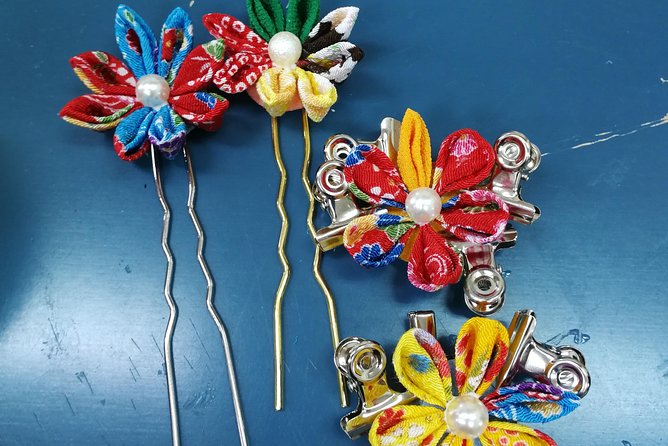
At about $52.03 per person, this experience is priced above a basic kimono rental but includes several connected parts. You are paying for instruction in tsumami-zaiku, materials for the accessory, help with the craft, tea or coffee, kimono and obi selection, dressing, photographs, and a short outing in the clothing.
The value depends on what you want from a cultural activity. If you only want a quick kimono photograph, a simpler rental could cost less. If you enjoy making things and want to keep a handmade Japanese accessory, this package offers more to remember.
The private format also matters. Only your group participates, so you are not sharing the craft lesson with a large class. That can make the price easier to justify for a family or small group, particularly if a group discount applies to your booking.
The price does not appear to include a long neighborhood tour, admission to Tsutenkaku Tower, or a professional photography package. Those items are not listed, so you should budget separately if you want them. The activity centers on making, dressing, photographing, and strolling near the tower rather than visiting the tower itself.
Who Will Enjoy This Most
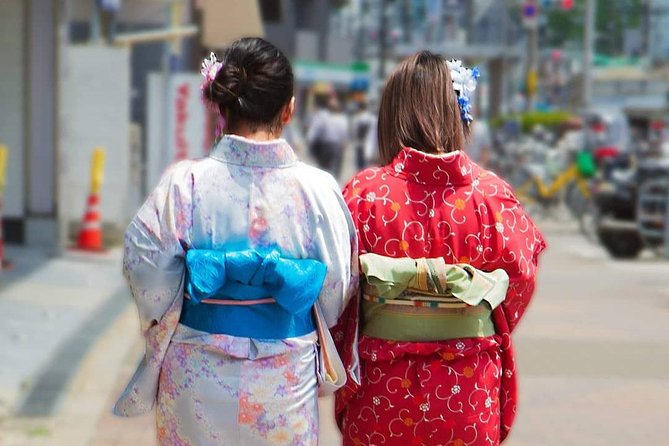
This experience suits you if you want an activity with something to do, not just something to watch. The craft lesson gives children and adults a clear project, while the kimono portion adds a traditional Japanese setting for photographs.
It is also a good choice for a mixed group. One supplied account describes the activity as enjoyable even for the man in the group, which is useful to remember if not everyone in your party is eager to dress in a kimono. The accessory can be a hairpin, hair clip, or brooch, so the craft does not have to feel limited to one type of participant.
Couples and friends may like the private setup and the shared photographs. Families should consider the short timetable and the need to return the kimono within one hour. Anyone who dislikes hands-on work or staged photos may find the experience less appealing.
The activity is described as suitable for most people, and confirmation arrives at booking. Specific accessibility details are not provided, so you should contact the provider directly if mobility, seating, or dressing assistance is important for your group.
A Few Practical Tips Before You Go
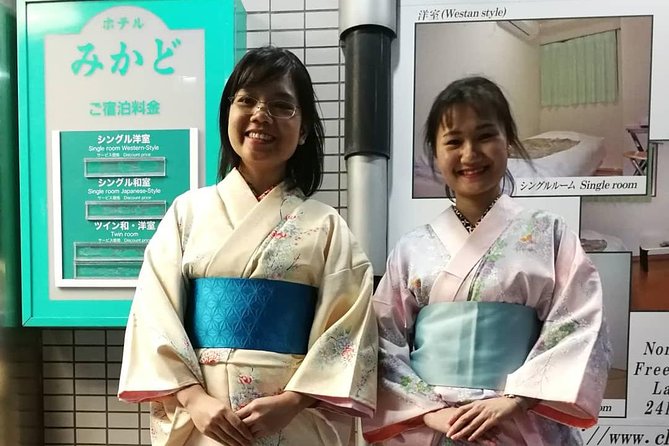
Read the explanation sheet carefully at the start. The first lesson covers the basic folding technique, and paying attention then will make the flower-making stage easier.
Choose your accessory colors with the kimono in mind. You can match the fabric to the outfit or use a contrasting color for a clearer photograph. Since the accessory is yours to keep, pick a design you will actually enjoy wearing or displaying later.
Allow time for the return walk. The kimono rental period is limited to one hour, and the experience ends at the original meeting point. Your outdoor route should stay close enough to Shinsekai and Tsutenkaku Tower for an unhurried return.
Wear something that allows you to change comfortably. The provided details do not specify what clothing is worn under the kimono, so avoid making assumptions about the dressing process and ask the host if you need exact guidance.
Book early if your Osaka schedule is fixed. The experience is booked, on average, 61 days in advance, which suggests that popular dates can fill well ahead of time. Free cancellation is available if you cancel at least 24 hours before the local start time. Cancellations or changes made later are not accepted for a refund.
Is This Osaka Kimono Experience Worth Booking?
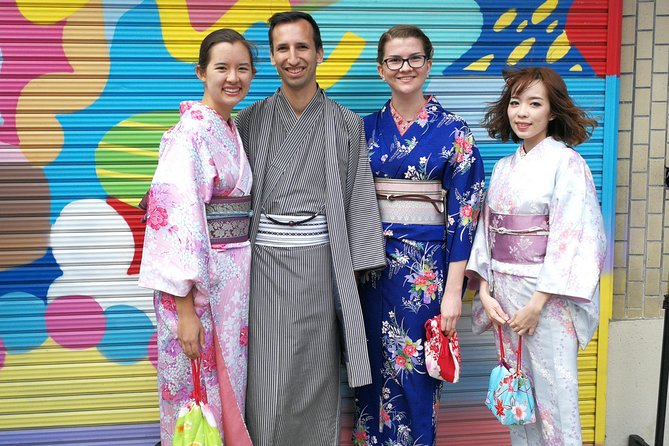
I would book this if you want a compact cultural activity that combines craft, clothing, photographs, and a short walk. The strongest reason is the handmade tsumami accessory. It gives you a lasting souvenir and makes the kimono session feel personal rather than purely decorative.
The experience is especially good for a private group that values guidance and a broad choice of kimonos and obis. The tea or coffee, step-by-step help, and nearby Shinsekai setting add comfort and local character without requiring a full day.
I would choose something else if you want a long kimono rental, a detailed tour of Osaka, a visit inside Tsutenkaku Tower, or a formal photography session with guaranteed edited images. Those features are not part of the stated program.
For most people who can manage a two-hour schedule and enjoy a small craft project, the $52.03 price is fair. Just remember the key limit: you have one hour in the kimono, so keep your stroll near the meeting area and make the most of your photos.
FAQ
How long does the experience last?
The activity lasts approximately two hours.
How much does the experience cost?
The listed price is $52.03 per person. Group discounts are available.
Where does the experience begin?
It begins at 3-chōme-6-19 Nipponbashihigashi, Naniwa Ward, Osaka, 556-0006, Japan.
Where does the experience end?
It ends back at the meeting point after you return the kimono.
What will I make during the workshop?
You will make a tsumami-zaiku accessory, such as a kanzashi, hair clip, or brooch, using Japanese chirimen cloth.
Can I choose my kimono?
Yes. You can choose a kimono and obi from the available selection before being dressed.
How long can I wear the kimono outside?
You must return the kimono within one hour. The stroll includes the Shinsekai and Tsutenkaku Tower area.
Can I cancel for a refund?
Yes, free cancellation is available if you cancel at least 24 hours before the experience start time. Cancellations or changes made less than 24 hours before the start time are not accepted for a refund.
Just added in Osaka
- Urban Canvas: Osaka Street Art Bike Tour★ 5.0 · 10 reviews
- Anime Cosplay Photshoot-50 Digital Photos Provided★ 5.0 · 8 reviews
- TeamLab Botanical Garden Osaka Ticket★ 3.5 · 6 reviews
- Umeda Sky Building & Kuchu Teien Observatory Ticket in Osaka★ 4.5 · 3 reviews
- Immerse in Judo Martial Arts Class from Japan★ 5.0 · 4 reviews
- Cherry Blossom Buddha and Mt.Yoshino with Strawberry Picking Tour★ 4.5 · 5 reviews
- Traditional Calligraphy Experience near Dotonbori★ 5.0 · 3 reviews
- Discover Osaka’s Iconic Umeda Sky Observation★ 5.0 · 6 reviews
Osaka Kimono Experiences, compared.
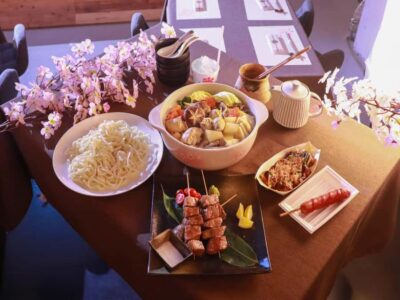
Sumo Show & Experience w/ Optional Kimono & Hot Pot
Read our review →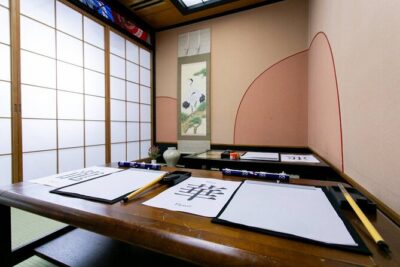
Learning Zen of Japanese Calligraphy in kimono near Osaka Castle
Read our review →

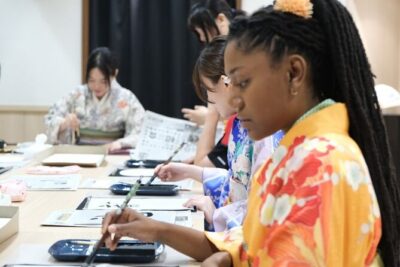
Premium Kimono Dressing, Tea Ceremony, Calligraphy, Samurai show
Read our review →
Japanese miniature kimono made with origami in Osaka
Read our review →
Osaka Kimono Experience – Quick Traditional Dress & Photos
Read our review →
Browse the lists this tour appears in