
Reviewed · DOTONBORI TOURS
Osaka Dotonbori: Hand Roll Sushi Experience
Dotonbori is famous for neon signs, street food, and crowds, but this experience gives you a quieter view of Osaka’s food culture. In a tatami room above the Dotonbori River, you learn how sushi rice is seasoned, taste real wasabi, and make hand-rolled sushi with seasonal seafood. I like the hands-on format and the chance to see Dotonbori from a seated riverfront room rather than from street level.
I also like that the experience explains small details many visitors miss, including the flavor of Japanese rice, the balance of vinegar and rice, and why real wasabi smells and tastes different from the common paste. The main consideration is choice: the seafood selection is prepared for you, so you may receive fish you do not personally like, and the sushi is eaten as you make it rather than saved for one final presentation.
Key points to know before booking
- Two-hour sushi lesson: Choose a noon or 2 pm session, with both classes taught in English.
- Tatami room by the river: The setting offers a calmer break from Dotonbori’s busy main streets.
- Real wasabi tasting: You get to notice its fresh aroma and sharper, more complex heat.
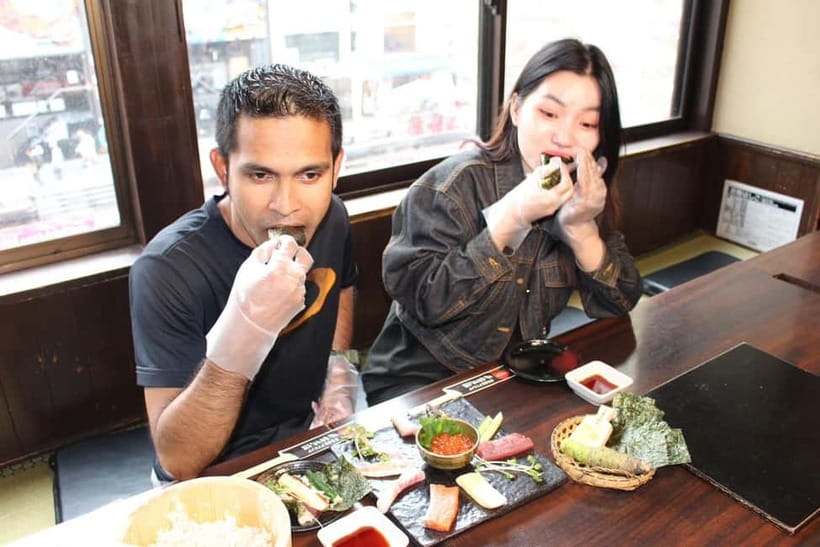
- You make and eat the sushi: The lesson is practical, not just a demonstration.
- 8,000 yen per person: The price includes ingredients, tools, instruction, and one soft drink.
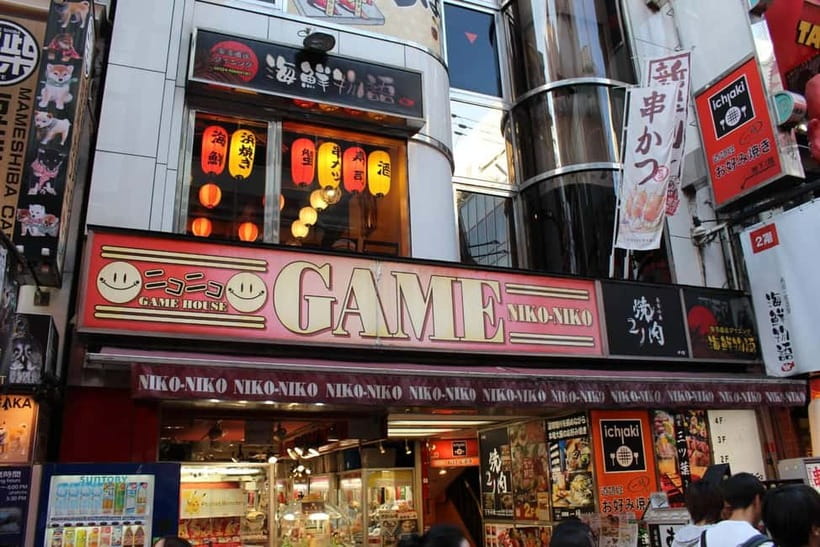
- Restaurant entrance: Find Kaisen Monogatari Dotonbori on the second floor of Nico Building, above a game arcade.
A sushi lesson in the middle of Dotonbori
The location is part of the appeal. Kaisen Monogatari Dotonbori is at 1-6-12 Dotonbori, Chuo-ku, on the second floor of Nico Building. The entrance is on the main street, but the first floor is a game arcade, so you need to look up and follow the building access rather than expect a quiet street-level restaurant door.
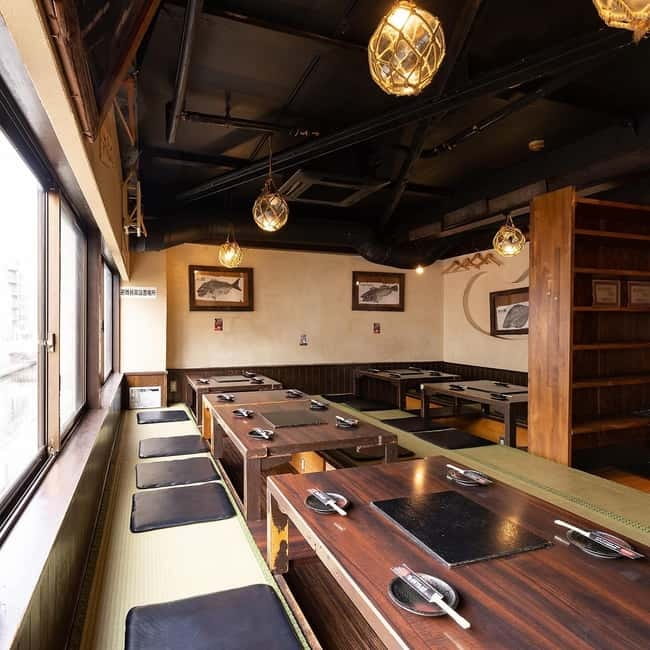
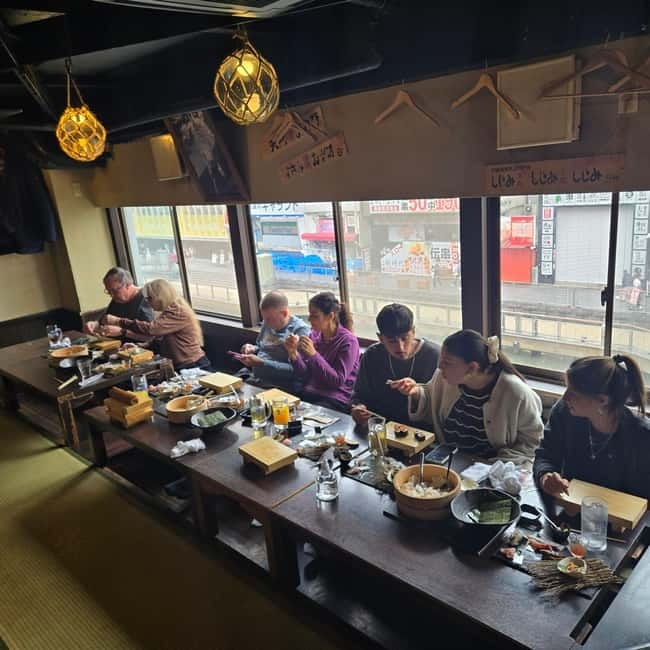
Once inside, the mood changes. You sit in a tatami room with a view toward the Dotonbori River. That contrast matters: outside, Dotonbori is all bright signs and movement; inside, you have space to concentrate on rice, seafood, and rolling technique.
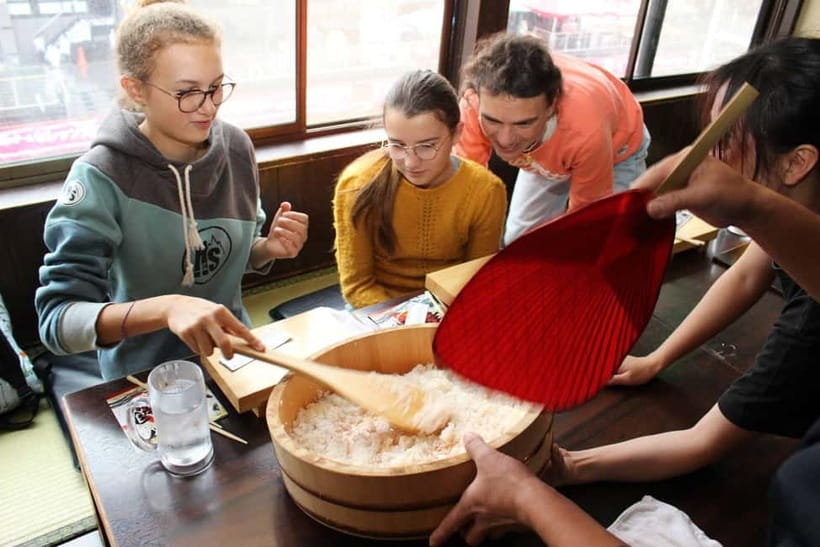
You meet an English-speaking chef and assistant for a two-hour session. Their role is practical. They explain the steps, demonstrate the methods, answer questions, and help you when your roll does not quite cooperate. The experience is suitable for families and first-time sushi makers, since you are not expected to arrive with cooking skills.
This is not a formal sushi-chef apprenticeship. You will not spend days learning knife work or fish preparation. Instead, it offers a friendly introduction to the parts of sushi you can understand and practice in one sitting.
More Dotonbori walks and food stops:
- Osaka Local Foodie Walking Tour in Dotonbori and Shinsekai
★ 5.0 · 985 reviews - Osaka: Dotonbori District River Cruise with Drink Discount
★ 4.2 · 876 reviews - Ultimate Osaka Walking Tour: Castle, Dotonbori & Hidden Gems
★ 5.0 · 862 reviews
What happens during the two-hour session
The lesson begins with an introduction to sushi. This gives you some useful context before you start handling ingredients. Sushi is not simply raw fish placed on rice. The rice, vinegar, temperature, texture, and balance of toppings all affect the result.
Next comes the sushi rice session. You learn about Japanese rice and how vinegar is mixed through it. This is a small step, but it is one of the most valuable parts of the class because rice forms the base of almost every piece you make.
Pay attention here. The amount of vinegar and the way it is mixed can change the flavor and texture of the rice. The lesson helps you see why a bowl of sushi rice tastes different from ordinary steamed rice, even before you add seafood.
The wasabi tasting follows. You taste authentic Japanese wasabi and compare its aroma and spiciness with the familiar green paste often served outside Japan. Real wasabi is known for a fresher scent and a heat that feels different from the blunt burn of standard horseradish-based paste.
This part is especially useful if you have eaten sushi many times but never stopped to think about the condiment. The tasting gives you a clear sensory memory to take into the rest of your meals in Japan. It also adds a little fun to the class, since the flavor can surprise you.
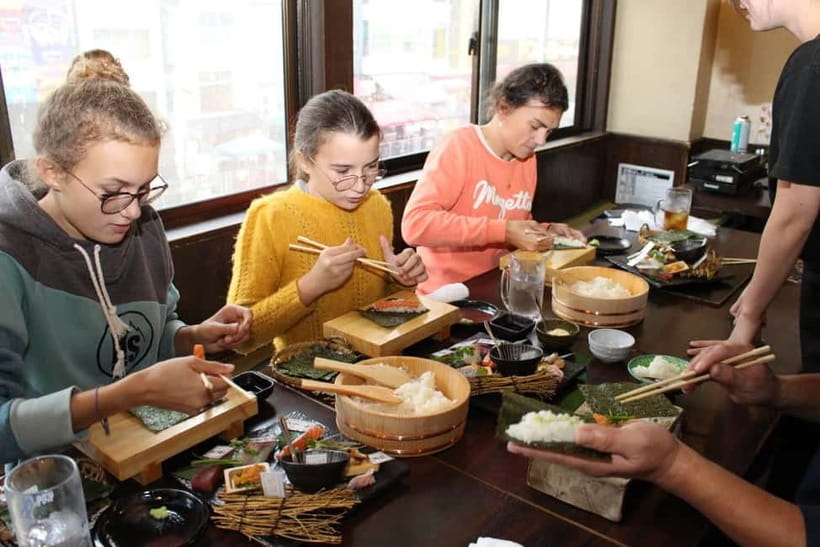
The final part is the hand-rolled sushi session. You work with the ingredients, assemble your rolls, and learn how to handle the rice and fillings. The staff guide you through the process, so you can ask for help with shaping, filling, or rolling.
The sushi is eaten as you make it. That keeps the lesson moving and means you get to taste each result while the ingredients are fresh. It also means you should not expect a large platter at the end showing every roll you made. If you enjoy photographing a finished spread, this format may feel slightly disappointing.
Seasonal seafood and the question of choice
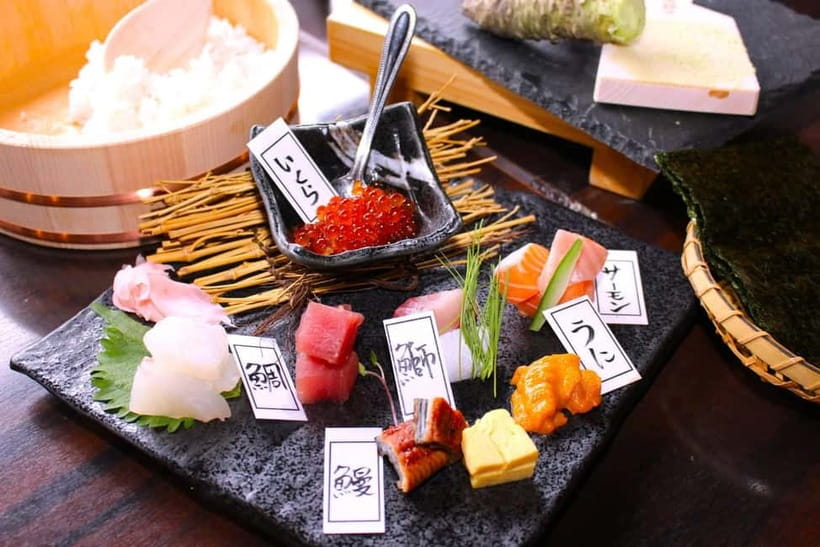
The seafood selection is presented as a way to introduce you to seasonal Japanese flavors. That can be a good feature for someone who wants to try ingredients beyond the familiar salmon and tuna. It connects the meal to the Japanese habit of paying attention to season and freshness.
At the same time, the seafood is not fully customizable. You do not simply choose every fish for your own plate. If you dislike a particular ingredient, some of it may go uneaten, which is worth considering for picky eaters.
For most people, this is a small tradeoff. The class is designed around a prepared assortment, and that allows the chef to keep the lesson organized for the group. But if you have strong food preferences, ask about the seafood selection before booking. The supplied information does not promise substitutions.
You also need to distinguish between this experience and a full restaurant meal. The included food is the sushi you prepare, along with one soft drink. Other meals and drinks are not included. You should arrive ready to eat what you make, especially since the practical part of the class forms the main meal component.
Why the tatami setting matters
The tatami room gives this activity a sense of place. You are not in a generic cooking studio on the edge of town. You are in a Japanese restaurant in central Dotonbori, with the river visible from the room.
That makes the experience easy to pair with sightseeing. You can spend the morning around Shinsaibashi and Dotonbori, attend the noon session, then continue exploring afterward. The 2 pm start works well if you prefer a slower morning or want lunch to be part of the class.
The room also provides a welcome pause from the noise outside. I would not book this solely for a scenic river view, since the supplied details do not describe the size or exact quality of the view. Still, the setting adds something that a standard cooking classroom would not.
Tatami seating may not suit every person, especially if sitting on the floor is uncomfortable. The information does not specify alternative seating, so contact the provider if that is an important concern for you.
More sushi making classes in Osaka:
- Sushi Making Osaka Roll and Authentic Japanese Sushi Class
★ 5.0 · 1,220 reviews - Osaka Sushi Making Experience
★ 5.0 · 400 reviews - Osaka: Roll and Authentic Sushi Making Class in Dotonbori
★ 4.9 · 239 reviews - Osaka: Sushi Class in Dotonbori
★ 4.9 · 160 reviews
The value of 8,000 yen
The stated price is 8,000 yen per person, tax included, or about $54 depending on the booking currency and exchange rate. That is not a cheap way to eat sushi, but it includes more than a restaurant plate.
Your fee covers the sushi introduction, the rice-making session, wasabi tasting, hands-on instruction, ingredients, tools, and one soft drink. You also get a two-hour activity in a central Osaka location. The staff’s guidance is an important part of the value, especially if you want to understand the techniques rather than simply watch a chef prepare food.
The comparison is simple. If your only goal is to eat the greatest possible amount of sushi, a restaurant may offer better value. If you want a meal plus a cultural activity, the price makes more sense. You are paying for instruction, participation, and the chance to make the food yourself.
The experience has received a 4.8 rating from 13 reviews, and the strongest praise focuses on the friendly chef and assistant, fresh ingredients, generous food, and welcoming atmosphere. That pattern suggests the human side of the activity is one of its best features.
Several comments also point to the amount of food. You should still think of this as a lesson with a meal, not an all-you-can-eat sushi session. The exact amount can depend on the prepared ingredients and the pace of your group.
Who will enjoy this most
I would recommend this class to first-time visitors who want a simple way into Japanese food culture. You learn enough to make the sushi yourself, but the lesson does not appear to require advanced cooking skills.
It also suits families. A family of five has used the activity together, and the assistant helped with questions and each step. Children who enjoy making their own food may find the rolling process more memorable than simply sitting at a sushi counter.
Couples and small groups can also use it as a shared activity in the middle of a Dotonbori day. The setting is more personal than a large sightseeing tour, and the food gives everyone something to discuss and compare.
You may want to choose another activity if you are a serious sushi student seeking detailed knife skills, fish-cutting instruction, or a highly formal chef-led course. Those features are not included in the stated program.
The class is also less suitable for anyone who wants complete control over the menu. The seafood selection is prepared in advance, and the format does not promise a final display of every piece you create.
Practical details that make the day easier
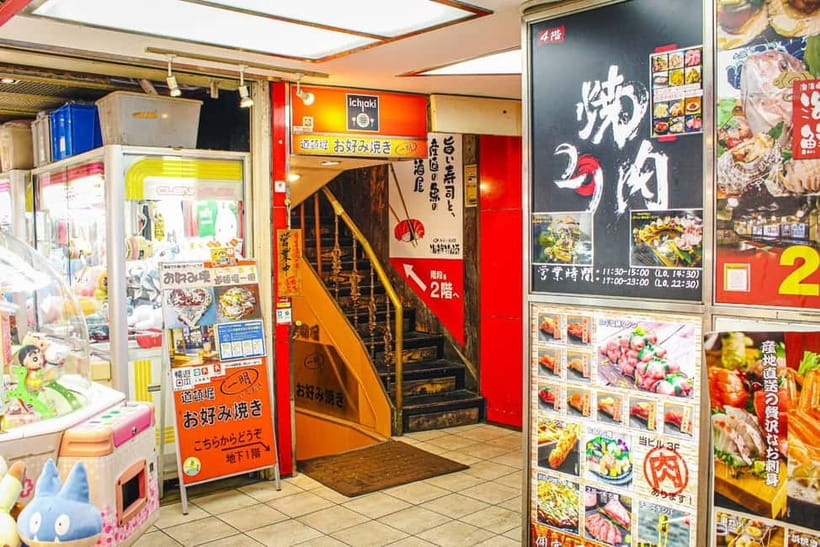
Sessions run twice daily, at 12 pm and 2 pm, and each lasts two hours. Allow time to find the building, since the entrance is on the main street and the first floor contains a game arcade. Look for Nico Building and go to the second floor.
The meeting point is the restaurant itself, Kaisen Monogatari Dotonbori. The activity ends there as well, so you do not need to arrange a separate return transfer.
Transportation is not included. You make your own way to Dotonbori, and no pickup service is listed. Comfortable clothes are sensible because you will be handling food and working at the table. The suggested items also include a hat, camera, and water.
Only English is listed as the activity language. The class has an English-speaking chef and assistant, but you should not assume that instruction is available in other languages.
If your Osaka schedule may change, the booking terms allow cancellation up to 24 hours in advance for a full refund. You can also reserve and pay later, which helps if you are still arranging the rest of your Japan itinerary.
Small details that improve the experience
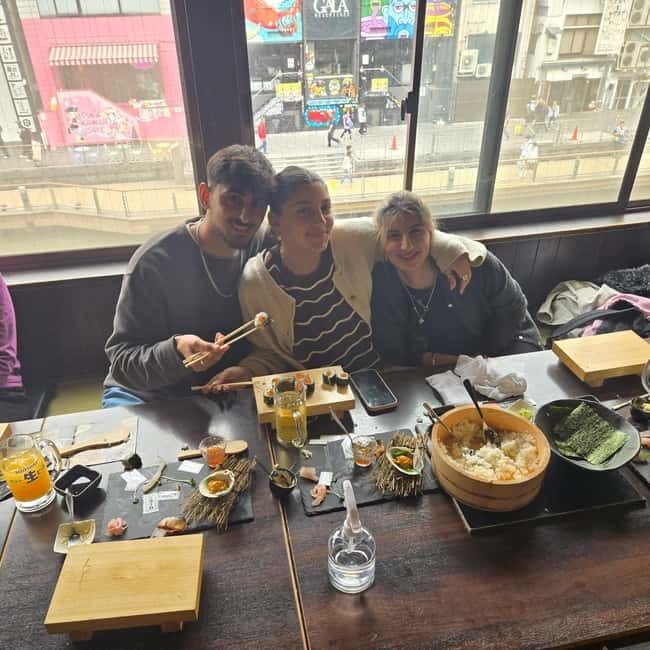
Arrive with a real appetite, but not one so large that you expect a full restaurant feast. You will taste your work during the lesson, and the food itself is part of the activity.
Keep your camera ready, but do not expect every stage to wait for a long photo session. Since you eat the sushi as you make it, take pictures along the way rather than saving all photography for the end.
Pay close attention to the wasabi. It is the most distinctive tasting moment in the session and gives you a better reference point for ordering sushi elsewhere in Japan.
If you have a strong dislike of certain fish, tell the staff as early as possible. The seafood is not presented as a fully choose-your-own selection, so advance communication is wiser than assuming every ingredient can be changed.
Finally, plan the class around your Dotonbori visit. The noon session can replace a conventional lunch, while the 2 pm option gives you time to eat earlier and treat the lesson as a late lunch or early dinner.
Should you book the Dotonbori hand-roll sushi experience?
Book it if you want a friendly, practical food lesson in a central Osaka setting. The best parts are the real wasabi tasting, the explanation of sushi rice, the fresh ingredients, and the chance to eat your own hand-rolled sushi in a tatami room overlooking the river.
Think twice if you need a fully customizable menu, dislike sitting on tatami, or want advanced sushi training. The chef chooses the seafood selection, and the activity is built for a relaxed introduction rather than professional instruction.
For most visitors, the combination of location, food, and hands-on teaching makes the 8,000 yen price reasonable. It gives you more than a meal, but it remains light and approachable enough for a first sushi class.
FAQ
Where does the hand-roll sushi experience take place?
It takes place at Kaisen Monogatari Dotonbori, on the second floor of Nico Building, 1-6-12 Dotonbori, Chuo-ku, Osaka.
How do I find the entrance?
The entrance is on the main street. The first floor of the building is a game arcade, so go inside Nico Building and continue to the second floor.
How long does the experience last?
Each session lasts two hours.
What time can I book the activity?
The experience is offered twice a day, at 12 pm and 2 pm.
What is included in the price?
The price includes a sushi introduction, sushi rice-making session, wasabi tasting, hands-on hand-rolled sushi preparation, all materials and tools, and one soft drink.
Is transportation included?
No. Transportation to and from the activity location is not included.
Is the activity offered in English?
Yes. English is listed as the available language.
How much does the experience cost?
The stated cost is 8,000 yen per person, including tax. The listed price is also shown as about $54 per person.
Can I cancel for a full refund?
Yes. You can cancel up to 24 hours in advance for a full refund.
Just added in Osaka
- Urban Canvas: Osaka Street Art Bike Tour★ 5.0 · 10 reviews
- Anime Cosplay Photshoot-50 Digital Photos Provided★ 5.0 · 8 reviews
- TeamLab Botanical Garden Osaka Ticket★ 3.5 · 6 reviews
- Umeda Sky Building & Kuchu Teien Observatory Ticket in Osaka★ 4.5 · 3 reviews
- Immerse in Judo Martial Arts Class from Japan★ 5.0 · 4 reviews
- Cherry Blossom Buddha and Mt.Yoshino with Strawberry Picking Tour★ 4.5 · 5 reviews
- Traditional Home cooking Experience in Osaka, Japan★ 5.0 · 14 reviews
- Traditional Calligraphy Experience near Dotonbori★ 5.0 · 3 reviews
Dotonbori Tours, compared.
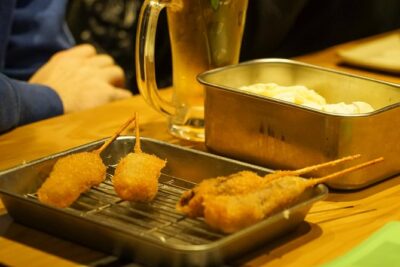
Osaka Local Foodie Walking Tour in Dotonbori and Shinsekai
Read our review →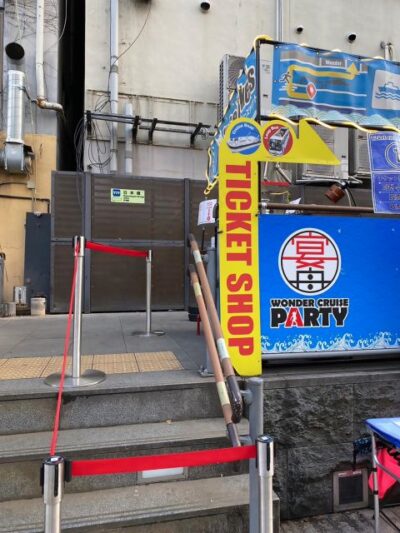
Dotonbori District River Cruise with Drink Discount
Read our review →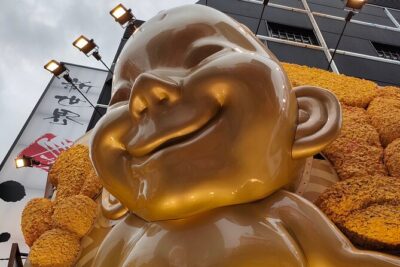
Ultimate Osaka Walking Tour: Castle, Dotonbori & Hidden Gems
Read our review →
Roll and Authentic Sushi Making Class in Dotonbori
Read our review →
Osaka Local Bar Crawl in Dotombori & Uranamba Area
Read our review →
Browse the lists this tour appears in