
Reviewed · OSAKA COOKING CLASSES
Making Soba noodles at Temple
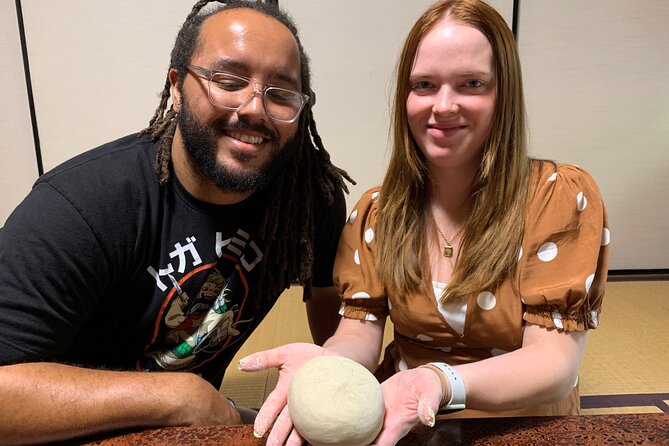
Making noodles in a temple is the unusual part here. In about two hours, you’ll prepare traditional soba in a quiet Osaka setting, then eat what you made. I like the mix of hands-on work and temple time, especially since the session includes a visit to the main hall and Buddha statue.
I also like the small private format. Your group gets a calm lesson rather than a crowded cooking demonstration, and guide Hiro has been known to take photos during the class and AirDrop them afterward. The main thing to consider is the price: at $68.29 per person, this is more costly than a basic meal, so its value depends on how much you want the cultural activity, not just the food.
Key points to know before booking
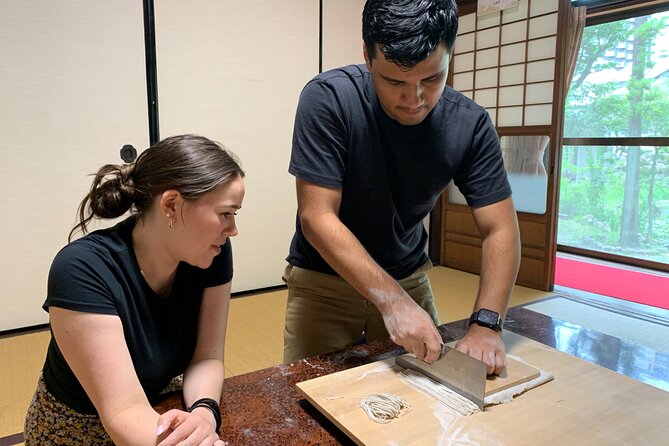
- Make and eat your own soba: The noodles you prepare are cooked and served for you to taste.
- Set in a historic temple: The activity includes time in the main hall and a look at the Buddha statue.
- Private group experience: Only your own party participates, creating a quiet and personal lesson.
- About two hours long: It fits neatly into a half-day Osaka plan without taking over your schedule.
- Guide Hiro may provide photos: During the class, he has taken pictures and shared them by AirDrop.
- Buckwheat allergy warning: Soba is made from buckwheat flour, so this activity is not suitable for everyone.
Why this Osaka soba class feels different
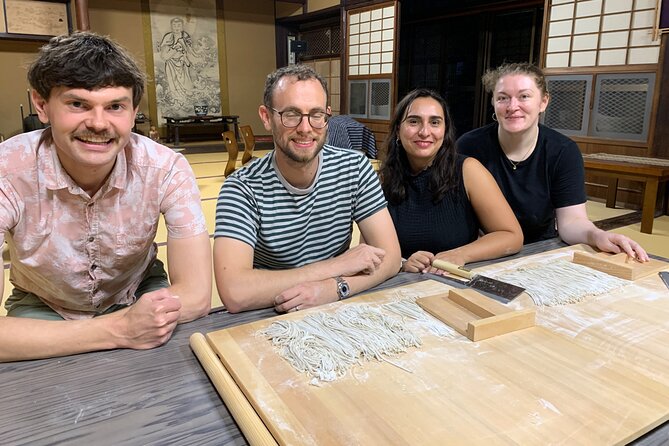
Osaka has no shortage of food experiences, but many happen in busy restaurants or commercial cooking studios. This class places the food lesson inside a temple at 1-chōme-3-68 Shitaderamachi, in Tennoji Ward. That setting changes the pace before you even touch the flour.
You are not only learning how a familiar Japanese food is made. You are also spending time in a religious space, with access to the main hall and Buddha statue. The setting gives the class a sense of occasion without making it formal or stiff.
I especially like the contrast between the practical work of making noodles and the quiet surroundings. Soba is humble food, but preparing it yourself makes the final bowl more personal. You will know that the noodles on the table came from your own effort, not from a kitchen behind a counter.
The class is described as calm and warm, with the feel of returning to a family home. That is a useful way to think about it. This is not a loud, showy performance built around a long list of sights. It is a small cultural encounter with time for conversation, instruction, and food.
More temple tours in Osaka:
- Osaka: Minoh, Katsuoji Temple, & Minoh Falls Full-day Tour
★ 4.9 · 172 reviews - Osaka Temple Cool Foot Bath & Matcha Experience〈45min〉
★ 4.9 · 82 reviews - Osaka: Mind & Spirit Balance Temple Reiki Healing
★ 5.0 · 41 reviews
Arriving at the Shitaderamachi temple
The meeting point is at 1-chōme-3-68 Shitaderamachi, Tennoji Ward, Osaka, postal code 543-0076. The location is near public transportation, but private transportation is not included, so you will need to make your own way there.
Give yourself enough time to find the entrance. Temple addresses can be less obvious than the entrance to a hotel or restaurant, and a calm activity starts better when you are not rushing through nearby streets. Your booking confirmation should be kept handy on your phone, since the experience uses a mobile ticket.
Once you arrive, the change in mood is part of the experience. Osaka can be energetic and noisy, but the class is designed around a quieter temple atmosphere. The small group size helps here. You are not trying to hear a guide over a room full of unrelated parties.
Because this is a private activity, only your group takes part. That makes it a good pick for families, couples, or friends who want to share one activity without being folded into a large class. It also suits travelers who prefer to ask questions freely and work at a comfortable pace.
The temple visit and Buddha hall
The temple is not simply a backdrop for the cooking lesson. You can visit the main hall and see the Buddha statue as part of the activity. This gives the outing a second layer, especially if you want a cultural experience that reaches beyond food.
The available information does not promise a long guided temple tour, so you should not book this expecting an extensive religious history lesson. Think of the temple visit as a meaningful part of a small food class, not as a separate sightseeing program.
That distinction matters. If your main goal is to see major Osaka landmarks, this will not replace a full day of sightseeing. If you want a quieter stop that lets you connect food with place and tradition, the temple setting adds real value.
You should also be respectful while moving through the grounds and main hall. Follow the guide’s instructions about where to stand, what you may photograph, and how to behave near the Buddha statue. The peaceful quality of the activity depends partly on keeping the setting peaceful.
Learning to make traditional soba
The central part of the class is hands-on soba making. The experience presents soba as a traditional Japanese food and lets you prepare the noodles yourself rather than simply watching someone else cook.
The supplied details do not specify every stage of the recipe or the tools used, so I would not promise a particular technique or a full professional noodle-making course. What you can count on is direct participation in making soba, followed by eating the noodles you prepared.
That makes this a good activity for people who learn by doing. You will have a clear reason to pay attention: the final food is your own. Small differences in texture or shape become part of the fun rather than a problem to hide.
For families, the private format may be especially helpful. Children can take part with their parents or relatives without the pressure of keeping up with strangers. The activity is also suitable for adults who want something more memorable than a standard restaurant meal.
I would not choose this class only because you are searching for the best soba in Osaka. The point is not a chef preparing a perfect bowl for you. The point is the process, the setting, and the satisfaction of tasting the result.
More cooking classes in Osaka:
- Matcha Making Class in Osaka with Authentic Japanese Sweets Set
★ 5.0 · 509 reviews - Osaka Sushi Making Experience
★ 5.0 · 400 reviews - Osaka: Ramen and Gyoza Cooking Class in Dotonbori
★ 5.0 · 378 reviews - Osaka: Traditional Mochi Pounding Experience with Tasting
★ 4.9 · 306 reviews
Eating the noodles you made
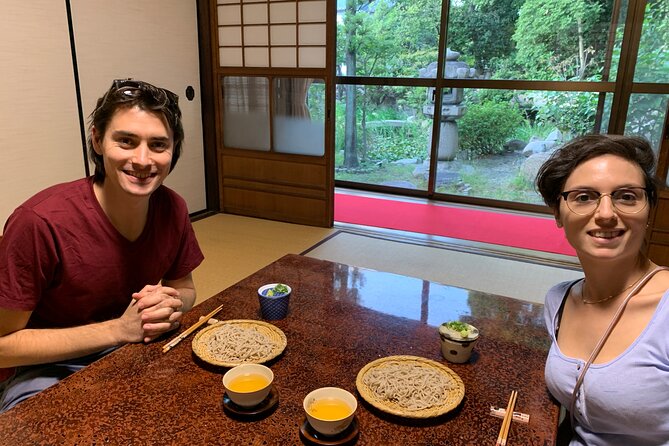
After the preparation, you get to eat the soba. This is the payoff, and it gives the lesson a clear ending. Rather than leaving with an unfinished craft or a recipe card, you taste the food while the experience is still fresh.
The food is served at a Japanese-style table, according to the experience details. That adds to the sense that you are being welcomed into a traditional setting rather than passing through a commercial kitchen.
The meal is not described as a large lunch or a full restaurant course. Included items are listed as soba noodles and snacks, so you should keep your expectations focused on the noodles you make. If you are very hungry, plan your wider day with that in mind.
There is also a special pleasure in eating food that may not look perfectly uniform. Your bowl reflects the work of your group. I like that this gives the meal a story, and it creates a natural moment to compare how the noodles turned out.
If Hiro is leading your session, he may take photos while you work and share them by AirDrop at the end. That is a useful touch, since cooking classes can be awkward to photograph when your hands are busy. It also gives you a record of the activity without asking you to spend the whole lesson behind your phone.
What the two-hour schedule means for your day
The listed duration is about two hours. That is long enough for a proper activity, temple time, and a meal, but short enough to fit into a larger Osaka itinerary.
You could place it beside other Tennoji-area plans, though the exact travel time between stops depends on your schedule and transport. Since the class begins and ends at the same meeting point, it is easy to plan around without arranging a separate ride at the finish.
A two-hour session also keeps the experience approachable. You do not need to devote an entire day to cooking, and you are unlikely to feel that the class has taken over your Osaka visit. At the same time, it is not a rushed photo stop.
The pace may appeal to you if you want a break from major attractions. After several crowded streets, train stations, or shopping areas, a quiet temple and a focused food activity can reset your day.
One practical point: the activity requires good weather and may be canceled in poor weather. That is worth remembering even though much of the class takes place at a temple. Keep the provider’s contact details available and avoid placing your most time-sensitive plans directly against this booking.
Is $68.29 per person a fair price?
At $68.29 per person, this is not the cheapest way to eat soba in Osaka. You can find a simple bowl of noodles for far less. The price makes more sense when you treat the activity as a private cultural lesson that includes food, temple access, a guide, and about two hours of your day.
The private format is the biggest value point. You are paying for your own group rather than joining a large class, and that can make the experience more relaxed and flexible. It is also useful if you are traveling with family members who have different cooking skills or need more patient instruction.
The temple location adds value too. A normal cooking studio could teach you about noodles, but this class connects the food with a quiet traditional place and a Buddha hall. That setting is likely to matter more to you if you want a sense of local culture rather than a quick recipe lesson.
I would call the price reasonable for a special occasion, a family activity, or a couple’s experience. I would be less likely to recommend it to a solo budget traveler whose main aim is simply to eat inexpensive soba. The food alone does not justify the full cost. The setting and personal instruction do.
Who should book this experience?
This class suits you best if you enjoy food, small groups, and cultural activities with a calm pace. It is particularly appealing for families who want to do something together, since everyone can help make the noodles and then share the result.
It also works well for couples looking for a quieter Osaka memory. The temple setting gives the activity a sense of place, while the noodle making keeps it active enough that you are not only standing and listening.
You may also like it if you have already seen several of Osaka’s major sights and want a different kind of afternoon. The class gives you a reason to visit the Tennoji area and lets you spend time in a traditional setting.
This is less suitable if you dislike hands-on activities, want a large meal, or expect a detailed temple tour. It is also unsuitable for anyone with a buckwheat allergy. Soba is made from buckwheat flour, so check carefully before booking if you have any concern about ingredients.
The experience is listed as a private tour, but do not confuse private with fully customized. The available information confirms that only your group participates, not that you can redesign the lesson or add private transportation. Contact the provider if your preferred date or time is not available.
Booking, cancellation, and practical details
Confirmation is provided at the time of booking, and the activity uses a mobile ticket. Keep the ticket accessible on your phone when you approach the meeting point.
Free cancellation is available if you cancel at least 24 hours before the start time. Cancellations made less than 24 hours before the experience are not refunded, and changes inside that period are not accepted. The cut-off follows local Osaka time.
If poor weather causes the provider to cancel, you will be offered another date or a full refund. Since the activity requires good weather, avoid assuming that the booking is guaranteed in all conditions.
The experience ends back at the meeting point. No private transportation is included, so arrange your own route to and from the temple. Since the class is near public transportation, you can build it into a day based around Osaka’s rail and subway network.
Should you book the temple soba class?
Book it if you want a small, personal food experience that combines cooking with a quiet temple visit. The strongest reasons are the private group, the chance to eat your own soba, the main hall and Buddha statue, and the warm teaching style associated with Hiro.
Skip it if you are focused only on low-cost dining or want an extensive temple tour. At $68.29, the value comes from the full experience, not the bowl of noodles alone. For families, couples, and anyone seeking a peaceful break from Osaka’s busy streets, this is a memorable and well-focused choice.
FAQ
Where does the soba-making experience begin?
It begins at 1-chōme-3-68 Shitaderamachi, Tennoji Ward, Osaka, 543-0076, Japan.
How long does the activity last?
The experience lasts approximately two hours.
Is transportation included?
No. Private transportation is not included. The meeting point is near public transportation, and the activity ends back at the same meeting point.
Is this a private activity?
Yes. Only your own group participates in the activity.
Can I visit the temple’s main hall?
Yes. The experience includes a visit to the main hall and the Buddha statue.
Is soba included in the price?
Yes. The noodles you make are included, and you can sample the soba yourself. Snacks are also listed among the included items.
What if I have a buckwheat allergy?
Soba is made from buckwheat flour, so people with a buckwheat allergy may not be able to eat it. Check with the provider before booking if you have an allergy concern.
Just added in Osaka
- Urban Canvas: Osaka Street Art Bike Tour★ 5.0 · 10 reviews
- Anime Cosplay Photshoot-50 Digital Photos Provided★ 5.0 · 8 reviews
- TeamLab Botanical Garden Osaka Ticket★ 3.5 · 6 reviews
- Umeda Sky Building & Kuchu Teien Observatory Ticket in Osaka★ 4.5 · 3 reviews
- Immerse in Judo Martial Arts Class from Japan★ 5.0 · 4 reviews
- Cherry Blossom Buddha and Mt.Yoshino with Strawberry Picking Tour★ 4.5 · 5 reviews
- Traditional Home cooking Experience in Osaka, Japan★ 5.0 · 14 reviews
- Traditional Calligraphy Experience near Dotonbori★ 5.0 · 3 reviews
Osaka Cooking Classes, compared.
Matcha Making Class in Osaka with Authentic Japanese Sweets Set
Read our review →
Traditional Mochi Pounding Experience with Tasting
Read our review →
Osaka Cooking Class: Okonomiyaki &Japanese cuisines experience
Read our review →
Roll and Authentic Sushi Making Class in Dotonbori
Read our review →
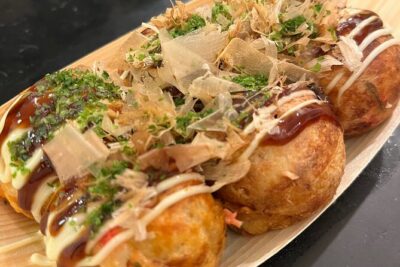
Osaka Sake Tasting & Takoyaki Cooking Experience
Read our review →Browse the lists this tour appears in