
Reviewed · UMEDA SKY BUILDING TICKETS
Japanese home cooking class in Osaka Umeda
The best part of this Osaka class is that you cook in a real home kitchen, not a restaurant classroom. Hisako and Naoko guide you through everyday dishes, explain what to buy at Japanese supermarkets, and show you how home cooking differs from food prepared for restaurant customers.
I like the private format, which lets you work at your own pace, and I like the practical recipes. Printed instructions, supermarket advice, and dishes such as udon, tempura, bento, and onigiri give you a fair shot at cooking the meal again. The main consideration is the short two-hour schedule: you will learn a lot, but you will not get a full survey of Japanese cooking.
Key points to know before booking
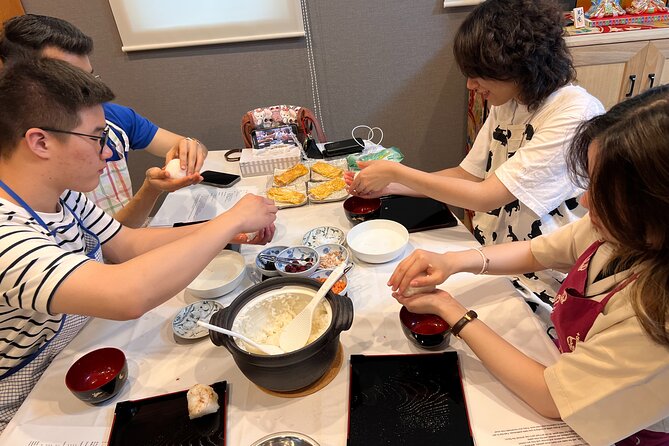
- Choose your menu: Options include bento, takoyaki, udon, tempura, onigiri, beef stew, and other local specialties.
- Cook with Hisako and Naoko: The hosts teach with demonstrations, simple steps, patience, and plenty of practical tips.
- Expect a private lesson: Only your group participates, so you can ask questions and set the pace.
- Eat what you make: Lunch is included, along with water and Japanese tea.
- Take the lesson home: Printed recipes and instructions help you recreate the dishes later.
- Plan for local transport: The meeting point is at 1-chōme-4-1 Tamagawa in Fukushima Ward, and private transportation is not included.
Cooking Japanese food in a real Osaka home
This is a hands-on lunch, not a demonstration where you sit back and watch someone else chop vegetables. You work in the kitchen and dining room of a typical Osaka house, preparing dishes with local hosts before sitting down to eat what you made.
That setting matters. Japanese restaurant food often arrives polished, carefully arranged, and prepared with professional equipment. Home cooking is usually more practical. The recipes here are selected with your own kitchen in mind, so you can understand the process without needing a restaurant staff or a long list of hard-to-find tools.
The class is run as a private activity. That makes the two-hour format more useful than it might first appear, since you can stop to ask about an ingredient, repeat a technique, or request a slower explanation. If your group has mixed cooking experience, this flexibility should help.
Hisako and Naoko are the central part of the experience. They demonstrate each step, break the work into manageable tasks, and offer advice as you cook. Their English is described as very good, which is important in a lesson where small details matter, such as texture, timing, and how much seasoning to use.
More Umeda and observation deck tickets:
- Osaka: Umeda Sky Building Official E-Ticket
★ 4.6 · 1,131 reviews - Osaka: Abeno Harukas 300 Observatory E-Ticket
★ 4.2 · 169 reviews - Meet Osaka locals and Japanese speaking experience at Pub Umeda
★ 5.0 · 58 reviews
Picking dishes that fit your interests
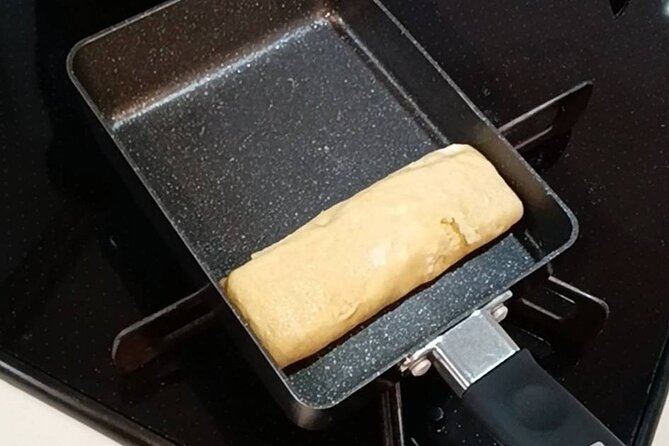
The menu can include familiar Osaka specialties and everyday Japanese dishes. Depending on the option available for your booking, you might prepare bento, takoyaki, udon, tempura, onigiri, or beef stew.
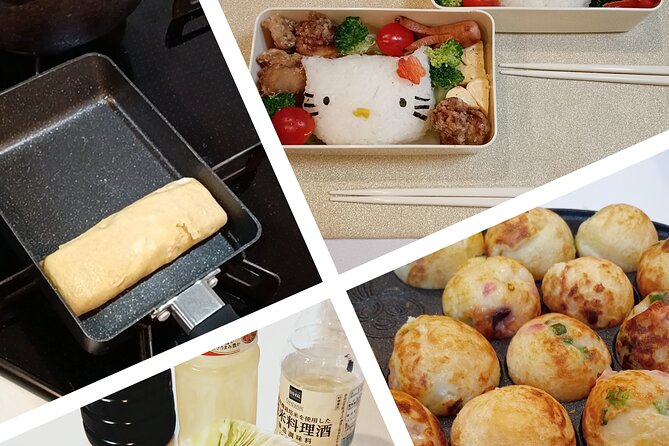
Bento is a good choice if you want to understand how several small portions work together in one meal. It also gives you a sense of the care that goes into Japanese lunch boxes, where color, shape, and variety matter along with flavor.
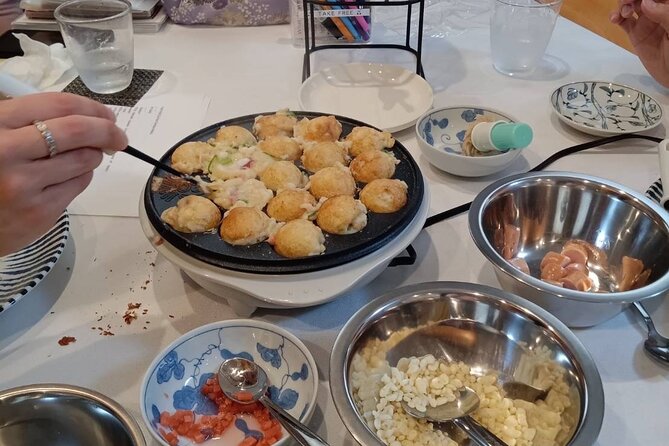
Takoyaki is closely linked with Osaka. These round, batter-based snacks are a local favorite, and making them yourself gives you a better feel for the cooking process than simply buying a tray from a street vendor. The class also lets you see how an Osaka specialty fits into home cooking.
Udon and tempura offer different techniques. Udon gives you a chance to work with noodles and broth, while tempura requires attention to batter and frying. One participant who had never fried food before found the method easy enough to repeat at home, which suggests that the instruction is aimed at ordinary cooks rather than experts.
Onigiri is another practical option. These rice portions are simple in concept, but shaping them properly takes a little care. They are also among the easiest Japanese foods to recreate later, provided you can find the right rice.
Beef stew gives the class a different feel. It is less obviously associated with Osaka than takoyaki, but it is the kind of comforting dish that shows how Japanese home cooking can be familiar, adaptable, and suitable for a regular kitchen.
If you have a particular dish in mind, check the available menu before booking. The experience description names several choices, but it does not promise that every dish will be offered at every session.
What the two-hour lesson feels like
The activity begins at 10:00 a.m. at the stated meeting point in Tamagawa, in Osaka’s Fukushima Ward. From there, you enter the home-style cooking setting and meet your hosts.
The lesson starts with instruction and preparation. You can expect the hosts to demonstrate the dishes, explain the ingredients, and guide you through the work rather than handing you a recipe and leaving you alone. The private arrangement means you can ask questions about Japanese customs, ingredients, shopping, or other parts of life in Japan while you cook.
The pace is designed to fit a two-hour session, so the menu is likely planned for steady progress. You should not expect a long market visit or a professional cooking course with advanced knife training. Instead, you get a compact lesson focused on making a meal and understanding how to repeat it.
After cooking, you eat lunch at the home. Water and Japanese tea are provided with the meal. This final sitting is more than a convenient end to the class. It gives you time to taste the results, compare the dishes, and talk with the hosts without trying to follow the next instruction.
The activity ends back at the meeting point. Private transportation is not included, so you need to make your own way there and back using Osaka’s public transportation network or another option.
The practical value of supermarket advice
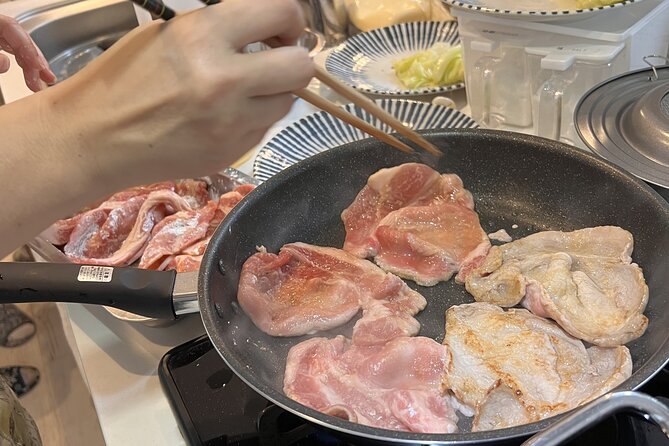
One of the most useful features is the advice about Japanese supermarkets. A recipe is only as useful as your ability to find the ingredients, and Japanese packaging can be confusing even when the food itself is familiar.
Hisako and Naoko can explain which ingredients to buy and what to look for. That guidance can help you avoid buying an unsuitable substitute or an unnecessarily expensive product. It also gives you a clearer picture of the food Japanese households actually use, rather than limiting your understanding to dishes served in restaurants.
I would pay close attention to brand types, package markings, and ingredient names during this part of the discussion. You may not remember every detail, but knowing what kind of noodles, rice, seasoning, or cooking ingredient to seek out can make a big difference when you try the recipe later.
The class does not include a supermarket visit, so this is advice rather than a shopping tour. That keeps the activity focused and helps fit cooking and lunch into two hours, but it means you will not be guided through store aisles in person.
More cooking classes in Osaka:
- Matcha Making Class in Osaka with Authentic Japanese Sweets Set
★ 5.0 · 509 reviews - Osaka Sushi Making Experience
★ 5.0 · 400 reviews - Osaka: Ramen and Gyoza Cooking Class in Dotonbori
★ 5.0 · 378 reviews - Osaka: Traditional Mochi Pounding Experience with Tasting
★ 4.9 · 306 reviews
Recipes you can realistically make again
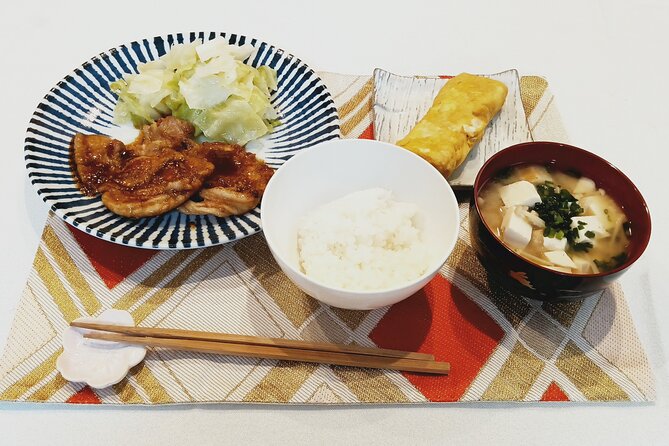
A cooking class is poor value if the finished meal is impressive but impossible to reproduce. This one is built around more accessible recipes, and the printed recipes and instructions are a major advantage.
The handouts give you something concrete to use after leaving Osaka. They should be especially helpful for remembering quantities, order of preparation, and any steps that seemed obvious during the lesson but become less clear a few weeks later.
The reported results are encouraging for home cooks. One couple made dishes they felt confident preparing again, while another group made udon and tempura from scratch. The point is not to turn you into a Japanese chef in two hours. The point is to give you a few dishes and techniques you can carry into your own kitchen.
That makes the experience a good match for people who enjoy food but do not cook often. You can ask for clarification as you go, and the hosts are there to correct small mistakes before they become large ones.
Tea, conversation, and Japanese culture
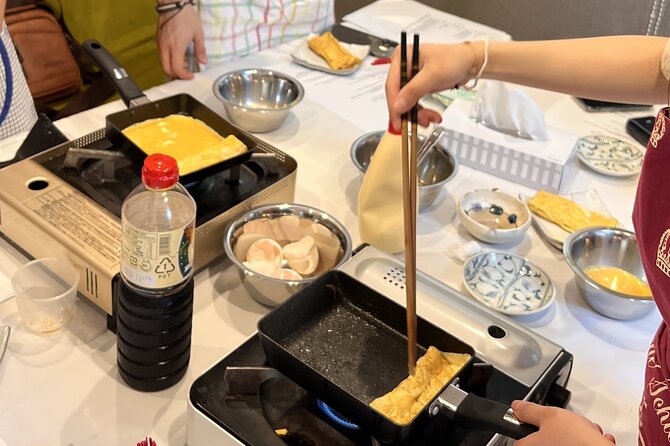
The class includes more than food preparation. You can ask about Japan as you cook, then talk with your hosts over lunch and tea.
Some sessions may include extra cultural elements. One family prepared udon, onigiri, and tempura, took part in a tea ceremony, and had the opportunity to wear traditional kimonos. These details appear in the experience feedback, but they should not be treated as guaranteed features of every booking. If tea ceremony or kimono dressing is important to you, confirm it before you reserve.
Even without those additions, the home setting gives the class a personal quality. You are not simply learning a recipe from a screen or tasting a dish at a counter. You are sharing a meal in the hosts’ cooking space and can ask questions that rarely arise during a standard food tour.
For families, this can be a particularly nice way to spend a morning. Children can take part in food preparation, and the private format avoids the pressure of keeping up with an unknown group. The hosts have also been described as caring and encouraging, which should help younger cooks feel comfortable.
Is $59.12 a fair price?
At $59.12 per person, the price is reasonable if you value instruction and a personal setting, not just lunch. You are paying for a private two-hour class, guidance from two hosts, the meal you prepare, tea and water, and recipes to take home.
A restaurant lunch in Osaka can cost less, especially if you choose noodles or a casual local dish. But restaurant dining will not show you how the food is made, explain supermarket ingredients, or give you a recipe you can practice later. Compared with a large group cooking course, a private lesson also gives you more room to ask questions and work at your own pace.
The value depends partly on your menu. A class featuring several techniques, such as udon and tempura, may feel more substantial than a session centered on one simple dish. Check what you can choose before booking, particularly if you have dietary needs or a strong preference.
The class is also good value for families or couples who want one shared activity. Because only your group participates, you do not have to adapt your morning to strangers. That privacy is a real part of the price.
Getting to Tamagawa and planning your morning
The stated starting point is 1-chōme-4-1 Tamagawa, Fukushima Ward, Osaka, 553-0004, Japan. The activity is near public transportation, but private transportation is not included.
Allow enough time to find the exact entrance and arrive before the 10:00 a.m. start. The experience information describes a home setting, while one account identifies the SGS building, so it is sensible to check the final meeting instructions carefully after booking.
The booking confirmation is provided at the time of reservation. Mobile tickets make it easy to keep the details on your phone, but I would still save the address and start time where you can access them quickly.
Free cancellation is available if you cancel at least 24 hours before the local start time. Changes or cancellations made inside that period are not accepted for a refund. That policy is standard enough, but the timing matters if your Osaka plans are still shifting.
Who should book this Osaka cooking class?
I would recommend it to you if you want to do more than eat Japanese food. It suits home cooks, couples, families, and anyone who likes meeting local people through a shared meal.
It is also a good pick if you want practical dishes rather than showy restaurant techniques. Bento, udon, onigiri, tempura, and beef stew all offer different lessons, and the printed recipes make the experience useful after your trip.
You may want another option if you need a fully structured professional course, a long market visit, or a guaranteed menu. The class lasts about two hours, and the available dishes and cultural extras may vary. It is best viewed as a friendly home lesson with lunch, not a full culinary school.
Should you book it?
Book this class if the idea of cooking with Hisako and Naoko, asking questions in a private setting, and eating a Japanese meal you helped prepare sounds better than another restaurant lunch. The strongest reasons to choose it are the personal instruction, supermarket advice, printed recipes, and the chance to learn food that you can make at home.
Skip it if your main goal is sightseeing or if you prefer a quick tasting experience. For everyone else, the $59.12 price buys a useful, personal morning in Osaka, with enough food knowledge to keep working in your own kitchen after the trip.
FAQ
Where does the cooking class take place?
The stated meeting point is 1-chōme-4-1 Tamagawa, Fukushima Ward, Osaka, 553-0004, Japan. The activity takes place in a home kitchen and dining room setting.
What time does the experience start?
The class starts at 10:00 a.m.
How long does the cooking class last?
The activity lasts approximately two hours.
Is the class private?
Yes. Only your group participates, and you can move through the lesson at your own pace.
Who teaches the class?
The hosts are Hisako and Naoko.
What dishes can I learn to make?
Available dishes can include bento, takoyaki, udon, tempura, onigiri, and beef stew, along with other Japanese home-cooking specialties.
Is lunch included?
Yes. Lunch is included, and you eat the food prepared during the class.
Are drinks provided?
Water and Japanese tea are provided with the meal.
Is transportation included?
No. Private transportation is not included. The meeting point is near public transportation.
Can I cancel for a refund?
Yes. You can cancel at least 24 hours before the local start time for a full refund. Cancellations or changes made less than 24 hours before the start are not accepted for a refund.
More Workshops in Osaka
- Sushi Making Osaka Roll and Authentic Japanese Sushi Class
★ 5.0 · 1,220 reviews - Osaka Cooking Class: Okonomiyaki &Japanese cuisines experience
★ 5.0 · 261 reviews - Osaka: Roll and Authentic Sushi Making Class in Dotonbori
★ 4.9 · 239 reviews - Ramen and Gyoza Cooking Class in Osaka
★ 5.0 · 202 reviews
Just added in Osaka
- Urban Canvas: Osaka Street Art Bike Tour★ 5.0 · 10 reviews
- Anime Cosplay Photshoot-50 Digital Photos Provided★ 5.0 · 8 reviews
- TeamLab Botanical Garden Osaka Ticket★ 3.5 · 6 reviews
- Umeda Sky Building & Kuchu Teien Observatory Ticket in Osaka★ 4.5 · 3 reviews
- Immerse in Judo Martial Arts Class from Japan★ 5.0 · 4 reviews
- Cherry Blossom Buddha and Mt.Yoshino with Strawberry Picking Tour★ 4.5 · 5 reviews
- Traditional Home cooking Experience in Osaka, Japan★ 5.0 · 14 reviews
- Traditional Calligraphy Experience near Dotonbori★ 5.0 · 3 reviews
Umeda Sky Building Tickets, compared.


Meet Osaka locals and Japanese speaking experience at Pub Umeda
Read our review →
Osaka Umeda:PICCADILLY LIVE SHOW & NIGHTCLUB TICKET & Shisha
Read our review →

Browse the lists this tour appears in