
Reviewed · OSAKA COOKING CLASSES
90 min Shared Handmade Udon Experience
The best part of this Osaka class is the foot-kneading. You press and work the udon dough with your feet, a traditional Sanuki method that gives the noodles their firm yet smooth texture. I like that you do not simply watch a chef make noodles, you take part in the messy, funny work and then eat the result.
I also like the home recipe and the chance to taste the noodles right away in a Michelin-listed restaurant. The warm teaching style of Keiko and Nozomi suits families and first-time cooks. The main drawback is that this is a shared class, and the restaurant may group you with other people. Alcohol, tempura, and extra udon cost more, too.
Key Points
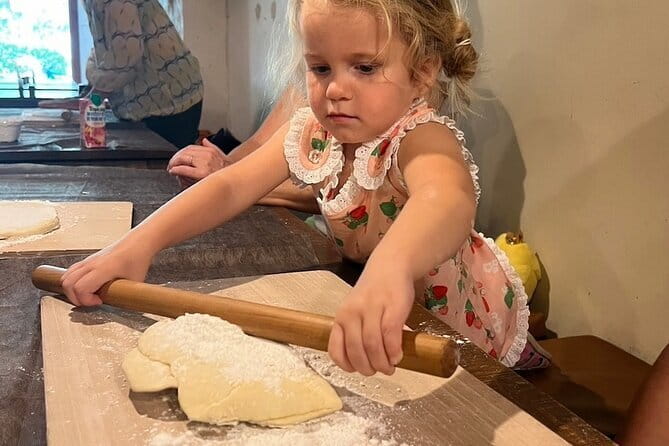
- Foot-kneaded Sanuki udon: Work the dough with your feet for the texture this regional noodle is known for.
- Fresh noodles cooked for you: The chef prepares your udon after class and serves it hot or cold.
- Natural broth: Kombu, shiitake mushrooms, and katsuobushi create the soup without additives.
- Useful take-home recipe: You receive instructions for making udon at home, not just a one-time meal.
- Family-friendly format: Children age 2 and older can join, and kids as young as 4 have taken part.
- Small restaurant setting: The class takes place at Udonzin Beat, a cozy Osaka restaurant featured in the Michelin guide from 2018 through 2023.
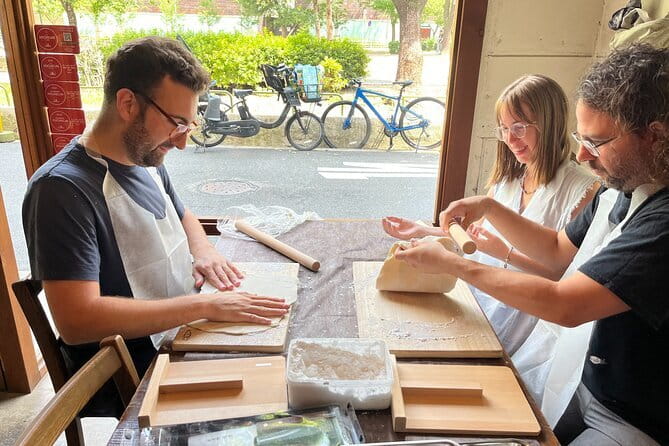
Udon is often treated as a quick bowl of noodles, but this class shows you the work behind that bowl. At Udonzin Beat, you make Sanuki-style udon from dough, use your feet to knead it, and then hand it over to the chef for cooking.
The class lasts about 90 minutes and takes place at 1-chōme-16-17 Shinmachi in Osaka’s Nishi Ward. It ends where it begins, so you do not need to arrange transport between the lesson and the meal.
The activity costs $52.85 per person. That includes the lesson, your udon tasting, the recipe, photos taken during the class, and local taxes. For a food activity in a working restaurant, that is a fair price, especially because you receive both a meal and a practical skill. Still, you should budget extra if you want sake, beer, tempura, or an additional serving of noodles.
Starting at the Shinmachi Restaurant
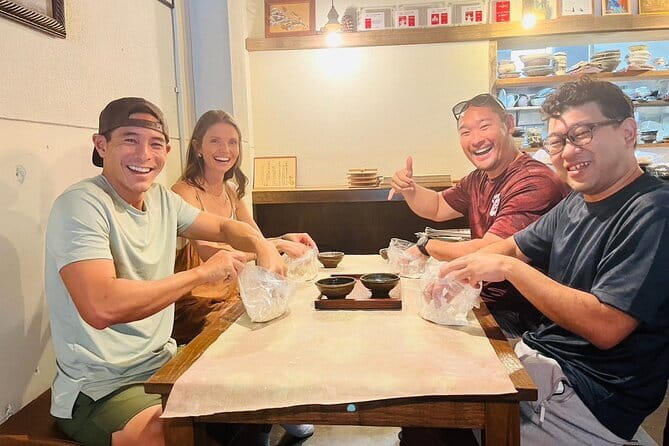
The class begins at Udonzin Beat, a real restaurant rather than a separate cooking school set up only for demonstrations. That matters because the lesson connects directly to the food you eat afterward. You are making the same kind of noodles the restaurant serves, then having the chef cook them for you.
The setting is small and cozy. That can make the class feel personal, but it also means the room may not feel spacious when the group is full. The maximum group size is 20, and one class included 11 friends from three families. You might be working beside people you did not arrive with, so come ready to share the activity and make room for other hands at the work surface.
Arrive on time. The restaurant returns to serving regular customers after the class, so late arrivals can affect the lesson. Wear clothes you do not mind getting messy. Flour, dough, and foot-kneading are a poor match for your best dinner outfit.
More cooking classes in Osaka:
- Matcha Making Class in Osaka with Authentic Japanese Sweets Set
★ 5.0 · 509 reviews - Osaka Sushi Making Experience
★ 5.0 · 400 reviews - Osaka: Ramen and Gyoza Cooking Class in Dotonbori
★ 5.0 · 378 reviews
Learning Why Sanuki Udon Is Different
The lesson focuses on Sanuki udon, a style associated with a firm, smooth bite. The dough is kneaded with your feet, which gives the activity its unusual character and helps create the texture that sets these noodles apart from many packaged versions.
You do not need cooking experience. The instruction is designed for beginners, and the hands-on work gives children and adults something useful to do at every stage. If you are traveling with kids, the foot-kneading is likely to hold their attention better than a lecture about flour and water.
The class also includes an explanation of udon’s background and preparation. That context helps you understand why the dough is treated this way instead of simply following steps without knowing what they achieve. Keiko has led family groups in the class, while Nozomi has been praised for clear, kind instruction.
The experience is not a formal chef-training session. In 90 minutes, you learn a method and enjoy a meal, but you should not expect to master every detail of professional noodle production. The value is in taking part, learning a repeatable recipe, and tasting the difference fresh dough can make.
The Foot-Kneading Portion
The most memorable part is also the one most likely to make you laugh. Instead of kneading the dough only with your hands, you use your feet. This is the Sanuki technique the class is built around.
That approach makes the lesson physical and social. In a shared group, you may find yourself comparing methods with the people beside you, especially if children are taking part. The process is easy to understand, but you still need to follow the instructor’s directions and take care with the dough.
The class does not promise that you will shape perfect noodles like a professional. That is fine. The point is to feel the dough change as you work it and then see how that effort affects the final bowl.
If you have a wheat allergy, this is not a suitable activity. Vegetarian participation is available, but you should provide dietary information in advance so the restaurant can prepare properly.
Eating the Noodles You Made

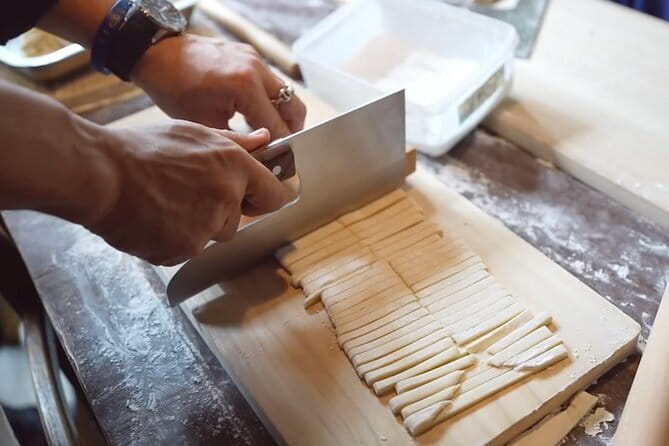
After the hands-on work, the chef cooks your noodles and serves them as a tasting. You can have the udon hot or cold, which lets you choose the style that best suits your meal or the season.
The broth uses all-natural, additive-free ingredients: kombu, shiitake mushrooms, and katsuobushi, also known as bonito stock. These are classic Japanese ingredients, and the combination gives the bowl a clear connection to everyday Japanese cooking rather than a generic soup base.
The chef handles the cooking, so you can focus on the finished texture and flavor. This is important because handmade noodles can be difficult to cook consistently at home. You get to eat the result without spending the rest of the class worrying about timing.
You may also order side dishes such as tempura or extra udon, but these are not part of the $52.85 fee. Sake and beer are available as well, though drinks cost extra. I would treat those additions as optional rather than necessary. The class already includes a complete udon tasting, and the noodle-making is the main event.
Same city, a completely different kind of afternoon:
- Osaka Go Karting Tour with Funny Costume
★ 5.0 · 2,658 reviews - Osaka Castle: Museum and Tower Entry Ticket
★ 4.5 · 2,380 reviews - Osaka: Shinsekai Food Tour with 13-15 Dishes at 5 Eateries
★ 4.8 · 2,204 reviews - Osaka Food Tour: 13 Dishes at 5 Local Eateries
★ 5.0 · 2,149 reviews
A Recipe You Can Use After Osaka
Many food classes end when the plate is empty. This one gives you a recipe to take home, which improves the value for anyone who wants to repeat the experience.
The recipe cannot replace practice, and your first attempt in your own kitchen may not match the restaurant bowl. Still, you leave with more than a pleasant memory. You have seen the dough, worked it with your feet, and tasted the cooked noodles. Those reference points make the written instructions easier to understand later.
I particularly like this feature for people spending several days in Japan. You can return home and make udon while remembering the Osaka class, rather than letting the activity fade into a collection of food photographs.
The instructor also takes and shares photos during the class. That is useful when your hands are covered in dough and nobody in your group wants to stop and take pictures. It also gives families a record of the activity, though you should be comfortable being photographed as part of the lesson.
How the Shared Format Affects the Experience
This is not a private class by default. You may be paired with other participants, and the class requires at least two people. If you are alone, or if your party is one adult with children, contact the provider before booking to find a suitable session.
The shared format keeps the activity social and may help you meet people from other countries. It also means the pace is not controlled entirely by your own group. A large class can feel less intimate than a private cooking lesson, particularly when the maximum is 20 people.
For most people, 90 minutes is a sensible length. It is long enough to make and eat the noodles without taking half a day from your Osaka plans. The short format also works well before or after sightseeing in the city. If you want an extended lesson covering several dishes, this is not that kind of class.
Families should note that children age 2 and older can participate. The listed child fee is ¥5,000. Very young children may need close help during the dough work, so an adult should be ready to assist rather than expect the instructor to manage every child in the group.
Price, Timing, and What You Actually Receive
At $52.85 per person, the price covers more than a bowl of udon. You receive instruction, the noodle tasting, a recipe, photos, and local taxes. The restaurant setting and the Michelin guide recognition from 2018 through 2023 add useful context, but the real value is the combination of activity and meal.
If you only want to eat udon, ordering it at a restaurant will cost less and take less time. Book this class because you want to understand how the noodles are made and enjoy a playful activity. The recipe and photos make the fee easier to justify for families and food-focused visitors.
The mobile ticket is convenient, and confirmation is provided at booking. Public transportation is nearby, though the information supplied does not specify a particular station or walking time. Plan to arrive with enough time to find the address in Shinmachi rather than cutting it close.
Free cancellation is available if you cancel at least 24 hours before the start time. Changes or cancellations inside that window are not refunded. The class also requires a minimum number of participants, so if the provider cancels for that reason, you can receive a different date or experience, or a full refund.
Who Should Book This Udon Class
I would recommend this for:
- Families looking for a hands-on Osaka activity
- Couples who enjoy food and want something more active than a restaurant meal
- First-time cooks who want simple, guided instruction
- Visitors interested in Japanese ingredients and everyday food traditions
- Anyone who wants a recipe and photos to take home
I would think twice if you have a wheat allergy, dislike group activities, or want a private, polished cooking lesson. The class can get messy, and the restaurant may be shared with a fairly large group.
Vegetarians can join with advance notice. If you have any other dietary restriction, tell the provider before the class rather than waiting until you arrive.
Should You Book It?
Book this class if you want a short, friendly food activity where you make something with your own hands and eat it soon after. The foot-kneading makes it different from a standard cooking demonstration, while the natural broth, recipe, and restaurant setting give the 90 minutes substance.
Skip it if you only want a quick meal or if you prefer private instruction. For everyone else, the combination of Sanuki technique, fresh noodles, and a practical recipe makes this a worthwhile addition to an Osaka visit, especially for families and food lovers.
FAQ
How long does the handmade udon experience last?
The activity lasts approximately 1 hour and 30 minutes.
Where does the class take place?
It takes place at Udonzin Beat, located at 1-chōme-16-17 Shinmachi, Nishi Ward, Osaka, 550-0013, Japan.
Where does the activity end?
The class ends back at the meeting point, at Udonzin Beat.
Is the udon lesson suitable for beginners?
Yes. The activity is designed for people with no cooking experience, and both children and adults can take part.
Can children join the class?
Yes. Children age 2 and older can participate. The listed fee for children is ¥5,000.
Can I join the class alone?
Classes require at least two participants. If you want to join alone, or if your group includes one adult and children, contact the provider in advance to find a suitable session.
Is the class vegetarian-friendly?
Yes. A vegetarian option is available. You should provide dietary information in advance.
Are drinks and side dishes included?
No. Alcoholic drinks, including sake and beer, are not included. Tempura and extra udon are also available at an additional cost.
Can I cancel for a full refund?
Yes, if you cancel at least 24 hours before the experience start time. Cancellations or changes made less than 24 hours before the start time are not refunded.
Just added in Osaka
- Urban Canvas: Osaka Street Art Bike Tour★ 5.0 · 10 reviews
- Anime Cosplay Photshoot-50 Digital Photos Provided★ 5.0 · 8 reviews
- TeamLab Botanical Garden Osaka Ticket★ 3.5 · 6 reviews
- Umeda Sky Building & Kuchu Teien Observatory Ticket in Osaka★ 4.5 · 3 reviews
- Immerse in Judo Martial Arts Class from Japan★ 5.0 · 4 reviews
- Cherry Blossom Buddha and Mt.Yoshino with Strawberry Picking Tour★ 4.5 · 5 reviews
- Traditional Calligraphy Experience near Dotonbori★ 5.0 · 3 reviews
- Discover Osaka’s Iconic Umeda Sky Observation★ 5.0 · 6 reviews
Osaka Cooking Classes, compared.
Matcha Making Class in Osaka with Authentic Japanese Sweets Set
Read our review →
Traditional Mochi Pounding Experience with Tasting
Read our review →
Osaka Cooking Class: Okonomiyaki &Japanese cuisines experience
Read our review →
Roll and Authentic Sushi Making Class in Dotonbori
Read our review →

Osaka Sake Tasting & Takoyaki Cooking Experience
Read our review →Browse the lists this tour appears in