
Reviewed · OSAKA COOKING CLASSES
Traditional Home cooking Experience in Osaka, Japan
Osaka’s Cook, Taste and Enjoy Osaka class puts you at the counter, cooking dishes you might otherwise only order. You choose between a sukiyaki-based menu and one built around wagyu roast beef, then eat what you prepare with the group.
I like the focus on seasonal Japanese ingredients and the direct relationship with a rice farmer in Minamiuonuma, famous for Koshihikari rice. I also like the friendly, hands-on teaching, with staff cooking alongside you rather than simply demonstrating from a distance.
The main consideration is the price: at $104.51 per person, this is not a bargain meal. It makes more sense if you value instruction, a small group, quality ingredients, and a cultural activity as much as the food itself.
Key points to know before you book
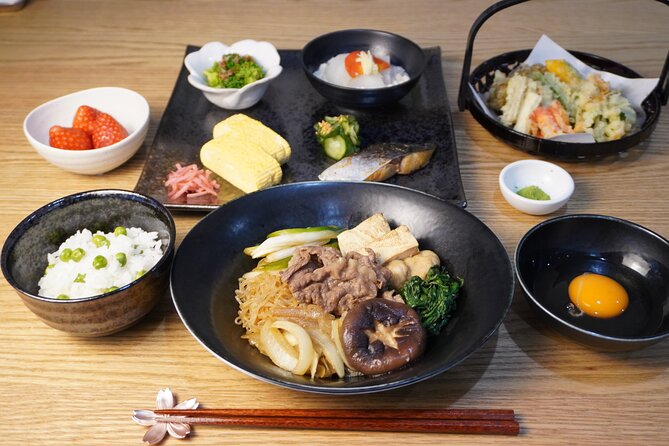
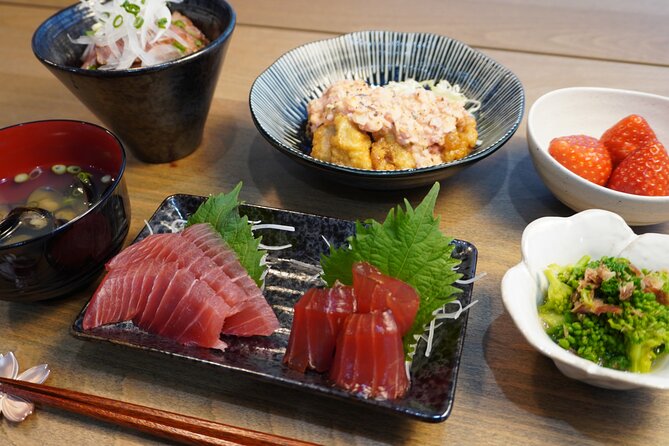
- Choose your menu when reserving: Course A includes sukiyaki, tempura, and rolled omelet, while Course B includes wagyu roast beef bowl, chicken nanban, and sashimi.
- Expect a small class: The maximum is eight people, which gives the chef room to guide each person.
- Plan on about two hours: You cook, eat, and enjoy the social side of the class at the same meeting point.
- Rice is treated as a main ingredient: The class uses Koshihikari rice purchased from a contracted farmer in Minamiuonuma, Niigata Prefecture.
- Water is included, other drinks cost extra: Alcohol is not part of the price.
- The class has a strong personal touch: One session included songs and a traditional instrument performance by Keiko.
Cooking Osaka food instead of just ordering it
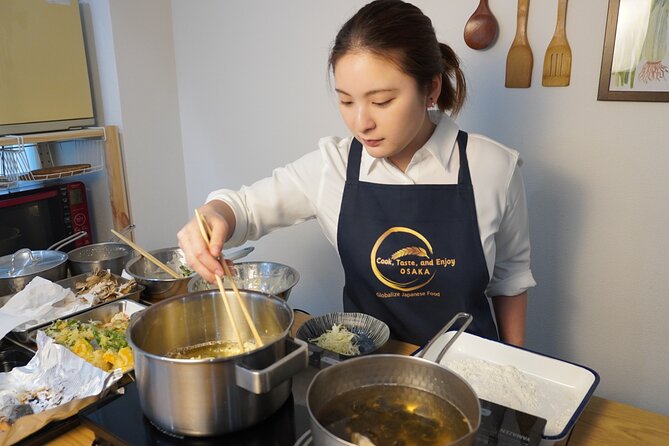
Many food experiences in Japan come down to watching someone else prepare a dish. This one gives you a more active role. The point is not only to learn a recipe, but to cook alongside an experienced instructor, sit down with the food, and enjoy the process.
That approach fits Osaka well. The city is famous for eating out, but home cooking shows another side of Japanese food. You get to see how several familiar dishes are assembled, how ingredients are handled, and how a meal comes together beyond the restaurant counter.
The activity takes place at 2 Chome-13 Nishishinsaibashi in Chuo Ward. It ends where it begins, so you do not need to arrange a separate ride back after eating. The meeting point is near public transportation, a useful detail if you are fitting the class between sightseeing stops in central Osaka.
The class is limited to eight people. That number matters. In a cooking lesson, a large crowd can leave you watching from the back, while a small group makes it easier to follow instructions and ask for help. The available information does not promise a private class, but the maximum size is small enough for a more personal format.
More cooking classes in Osaka:
- Matcha Making Class in Osaka with Authentic Japanese Sweets Set
★ 5.0 · 509 reviews - Osaka Sushi Making Experience
★ 5.0 · 400 reviews - Osaka: Ramen and Gyoza Cooking Class in Dotonbori
★ 5.0 · 378 reviews
Course A or Course B: make the choice carefully
You need to select your menu at the time of booking. The two options are different enough that you should not treat the course choice as a minor detail.
Course A features sukiyaki, tempura, and rolled omelet. Sukiyaki brings the familiar combination of thinly sliced meat, vegetables, and a savory-sweet sauce. Tempura gives you a lesson in a different style of cooking, built around a light coating and hot oil. The rolled omelet adds a Japanese home-style staple with a very different texture from the other two dishes.
This course may suit you if you want a broad look at classic Japanese cooking methods. You move from a simmered or cooked dish to frying, then to the careful shaping of an omelet. It offers variety without making the meal depend on one main ingredient.
Course B includes a wagyu roast beef bowl, chicken nanban, and sashimi. The wagyu bowl is the most obvious draw for many people, especially if you want to try a high-quality Japanese beef dish in a more relaxed setting. Chicken nanban brings another style of Japanese comfort food, while sashimi adds a raw preparation to the menu.
This course may suit you if you want a meal with a more luxurious centerpiece. One session included a beautiful cut of wagyu beef, and the combination of beef, chicken, and sashimi gives the class a wide range of flavors and textures.
The description says that both courses involve making two dishes together, while the menus name three foods for each course. Because of that wording, you should confirm the exact preparation schedule if knowing how many dishes you will personally make is important to you. The listed menus clearly identify the foods associated with each choice, but the hands-on portion may not give equal cooking time to every item.
Seasonal ingredients and unusually serious rice
The class changes its ingredients with Japan’s four seasons. That gives the food a sense of place and time, rather than treating Japanese cooking as a fixed list of recipes available all year.
Seasonality also helps explain why the same class can feel different on another visit. The exact produce may change, even though the broad menu remains connected to Japanese home cooking. If you are returning to Osaka, this is one reason the experience may not feel identical twice.
The rice receives special attention. It is Koshihikari rice bought directly from a contracted farmer in Minamiuonuma City, Niigata Prefecture, one of Japan’s leading rice-producing areas. That is more specific than simply saying the class serves Japanese rice.
For you, the practical value is simple: rice is not treated as filler on the plate. It is part of the meal’s quality and a chance to notice how much Japanese cooking depends on good rice. You may not leave able to identify every rice variety, but you will have a clearer sense of why the ingredient matters.
What the two-hour schedule feels like
The advertised duration is about two hours. That is long enough for a proper cooking activity and shared meal, but short enough to fit into a busy Osaka day.
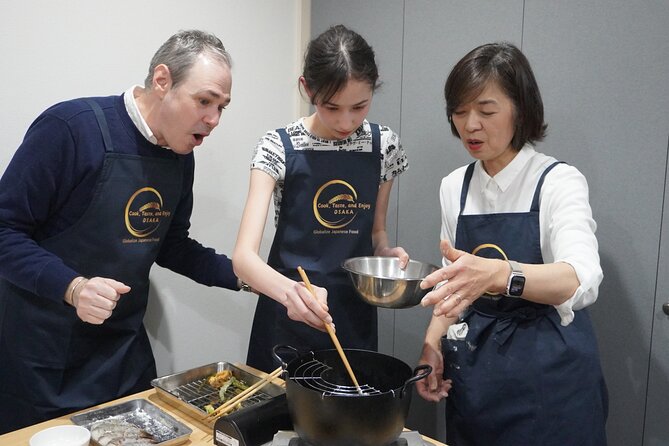
You can expect the session to move through several stages: meeting the instructor and other participants, preparing the chosen dishes, cooking with guidance, and eating together. The staff are described as cooking alongside you, which suggests a practical class rather than a lecture followed by a meal.
An experienced instructor guides the work, and the host has been described as friendly and able to communicate in English. The chef is also described as skilled, helpful, and kind. The names of the host and chef are not provided, so you should not expect a named celebrity chef or a formal restaurant presentation.
The class also has a social side. One reported session lasted about two and a half hours and included songs and a traditional instrument performance by Keiko. The standard duration is about two hours, so the performance may not be part of every booking or may depend on the day’s program. Still, it shows that the activity can include more than recipe instruction.
That extra cultural element may be a pleasant surprise if you want a relaxed introduction to Japan. It may be less appealing if you want a tightly timed, technique-heavy cooking course with no entertainment. The stated goal is to have fun while cooking, and the format seems built around that balance.
Same city, a completely different kind of afternoon:
- Osaka Go Karting Tour with Funny Costume
★ 5.0 · 2,658 reviews - Osaka Castle: Museum and Tower Entry Ticket
★ 4.5 · 2,380 reviews - Osaka: Shinsekai Food Tour with 13-15 Dishes at 5 Eateries
★ 4.8 · 2,204 reviews - Osaka Food Tour: 13 Dishes at 5 Local Eateries
★ 5.0 · 2,149 reviews
The teaching style: friendly help, not culinary school
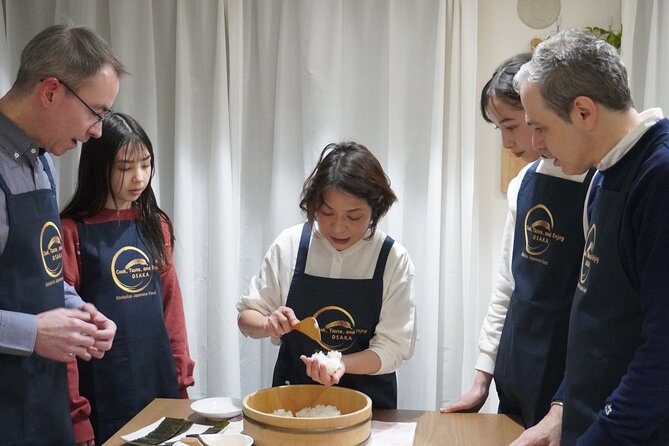
You should approach this as a home-cooking experience, not professional chef training. The class is designed to help you prepare recognizable Japanese dishes and enjoy them soon after.
That makes it a good fit for beginners and for people who want a low-pressure activity during a first visit to Osaka. You do not need to arrive with advanced knife skills or a detailed understanding of Japanese cuisine. The instructor’s role is to guide you through the work and cook with you.
The small maximum group size should help. If you are unsure how to handle an ingredient or how a dish should look, you have a better chance of getting direct assistance than in a large demonstration class.
The friendly English-speaking host is another practical advantage for international visitors. Still, no class can remove every language gap, and the information does not specify the full range of languages offered. If you have food allergies, dietary restrictions, or concerns about raw food, ask before booking rather than assuming the menu can be changed.
What makes the meal worth the $104.51 price
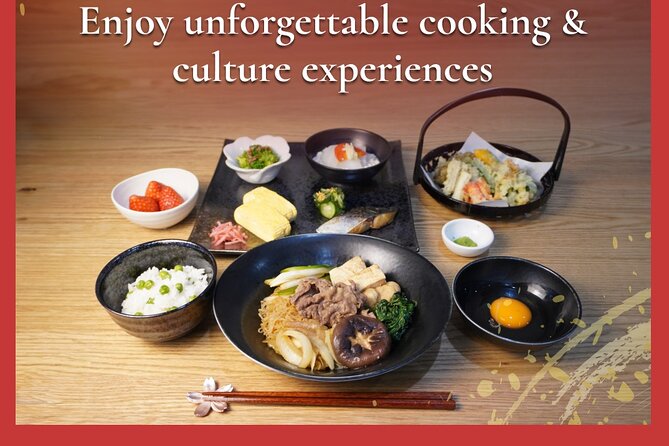
At $104.51 per person, this activity costs more than simply eating a Japanese meal in Osaka. The comparison is not quite fair, though, because you are paying for food, instruction, ingredients, time with a chef, and a cultural activity in one package.
The value is strongest if you would otherwise book a separate food tour or cultural workshop. You get a meal and a lesson, plus the chance to ask questions while the food is being prepared. The group limit of eight adds value because individual attention is part of what separates a small class from a large demonstration.
The quality of the rice and the use of seasonal ingredients also support the price. Wagyu in Course B may make that option feel more substantial, though the data does not specify the amount of beef or the precise cut. Do not book expecting an unlimited feast or a luxury restaurant tasting menu. Book it for the participation and the chance to understand the food you are eating.
Course A may offer better variety across cooking methods, while Course B may feel more special if wagyu is high on your Osaka food list. The best value depends on what you want to take home: a wider lesson in Japanese cooking, or a menu with a premium beef centerpiece.
Who will get the most from this class
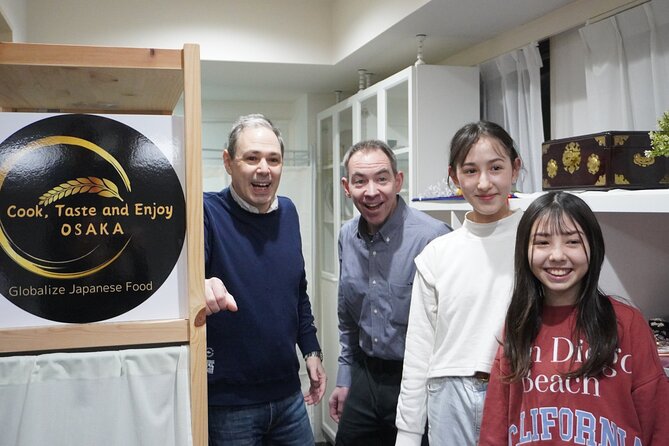
I would recommend this class to you if you want a hands-on food activity and prefer meeting people around a table rather than sitting through a formal presentation. It suits couples, siblings, friends, and solo visitors who enjoy cooking with a small group.
It is also a good option for a short Osaka visit. Two hours is manageable, and the activity begins and ends in Nishishinsaibashi. You can build the rest of your day around the class without committing to a half-day excursion.
Families may also like the social format, though the available information does not state a minimum age or specific child policy. Check those details before booking if you are traveling with children.
Food-focused visitors should compare the two menus carefully. Choose Course A for sukiyaki, tempura, and rolled omelet. Choose Course B for wagyu roast beef bowl, chicken nanban, and sashimi. If you dislike raw fish, Course A is the safer choice because Course B specifically includes sashimi.
You may want to skip it if your main goal is a long, technical cooking workshop. The class emphasizes fun, shared cooking, and eating together. It is not presented as a professional-level course, and the possible music and instrument performance reinforces its cultural and social character.
Practical details that affect your day
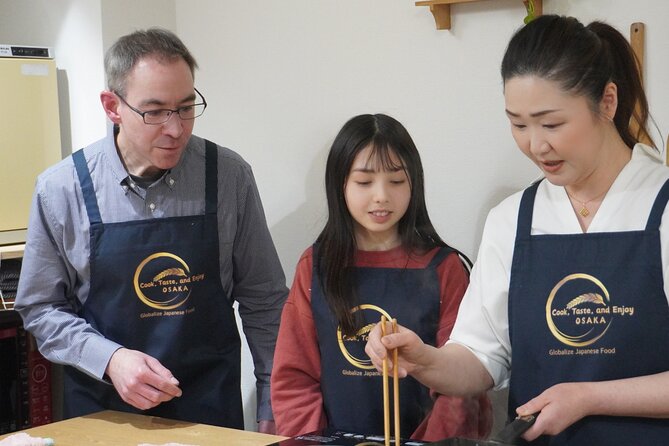
The activity uses a mobile ticket, so keep your booking accessible on your phone. Confirmation is sent within 48 hours, subject to availability. Since the class is often booked about 19 days ahead, planning early is sensible if your Osaka schedule is tight.
Water is free. Other drinks are charged separately, and alcoholic beverages are not included. You should budget a little extra if you want something beyond water with the meal.
The cancellation policy is flexible if your plans are still changing. You can cancel for a full refund up to 24 hours before the start time. Cancellations or changes made less than 24 hours before the start time are not accepted for a refund, and the cut-off follows Osaka local time.
The meeting point is 2 Chome-13 Nishishinsaibashi, Chuo Ward, Osaka, 542-0086, Japan. Since the exact room or entrance details are not provided here, check your confirmation carefully before setting out. Allow enough time to find the location, especially if you are coming from another part of the city.
Should you book Cook, Taste and Enjoy Osaka?
Book this class if you want more than a meal and less than a full culinary course. The best reasons are the small maximum group, seasonal ingredients, carefully sourced Koshihikari rice, and the chance to prepare and eat Japanese home dishes with direct guidance.
Choose Course A for variety and classic cooking methods. Choose Course B if wagyu is the main attraction and you also want chicken nanban and sashimi. At $104.51, it is a considered purchase, but the cost is easier to justify if you value the instruction and cultural exchange as much as the food.
I would pass if you want a cheap lunch, a guaranteed performance, or a highly technical chef lesson. For a friendly, compact, food-centered introduction to Osaka, though, this is a strong choice, especially during a short stay when two hours can deliver both a meal and a memorable local activity.
FAQ
Where does the cooking class take place?
The class begins at 2 Chome-13 Nishishinsaibashi, Chuo Ward, Osaka, 542-0086, Japan. The activity ends back at the same meeting point.
How long does the experience last?
The advertised duration is approximately two hours. One session was described as lasting about two and a half hours, so allow some flexibility in your schedule.
What are the two menu choices?
Course A features sukiyaki, tempura, and rolled omelet. Course B features wagyu roast beef bowl, chicken nanban, and sashimi. You must choose Course A or Course B when making your reservation.
How many people can join the class?
The maximum group size is eight people.
Is water included in the price?
Yes. Water is free, while other drinks are charged separately. Alcoholic beverages are not included.
Is the class near public transportation?
Yes. The meeting point is described as being near public transportation.
Can I cancel for a full refund?
Yes, if you cancel at least 24 hours before the experience start time. Cancellations or changes made less than 24 hours before the start time are not accepted for a refund.
Just added in Osaka
- Urban Canvas: Osaka Street Art Bike Tour★ 5.0 · 10 reviews
- Anime Cosplay Photshoot-50 Digital Photos Provided★ 5.0 · 8 reviews
- TeamLab Botanical Garden Osaka Ticket★ 3.5 · 6 reviews
- Umeda Sky Building & Kuchu Teien Observatory Ticket in Osaka★ 4.5 · 3 reviews
- Immerse in Judo Martial Arts Class from Japan★ 5.0 · 4 reviews
- Cherry Blossom Buddha and Mt.Yoshino with Strawberry Picking Tour★ 4.5 · 5 reviews
- Traditional Calligraphy Experience near Dotonbori★ 5.0 · 3 reviews
- Discover Osaka’s Iconic Umeda Sky Observation★ 5.0 · 6 reviews
Osaka Cooking Classes, compared.

Matcha Making Class in Osaka with Authentic Japanese Sweets Set
Read our review →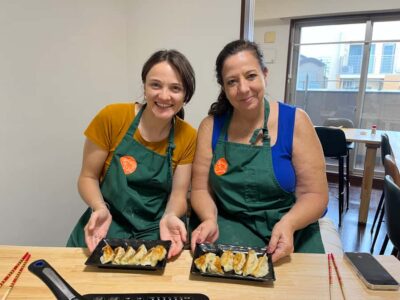
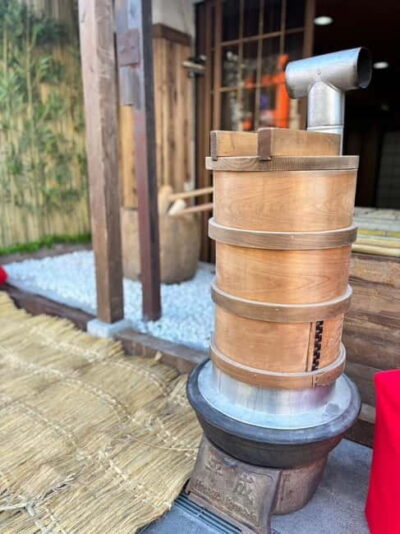
Traditional Mochi Pounding Experience with Tasting
Read our review →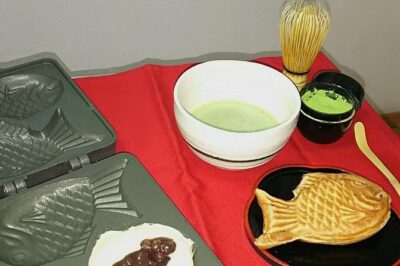
Osaka Cooking Class: Okonomiyaki &Japanese cuisines experience
Read our review →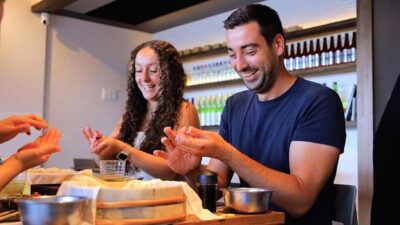
Roll and Authentic Sushi Making Class in Dotonbori
Read our review →
Osaka Sake Tasting & Takoyaki Cooking Experience
Read our review →Browse the lists this tour appears in