
Reviewed · OSAKA CASTLE TOURS
Samurai Armor & Sword experience with phot near Osaka Castle
The most memorable part of this 90-minute samurai experience is the change in perspective. You do not simply pose in a costume. You learn how to walk with a sword, bow before a shrine, draw and return the blade, then try a controlled cut with a real samurai sword. I like the clear structure and the chance to wear full armor indoors. I also like that your photos are sent by email, so you are not left fumbling with a phone while dressed as a warrior.
The main caution is practical: this activity is held at Samurai Honor in Joto-ku, not inside Osaka Castle itself. You must arrive 30 minutes early, and the operator has had occasional overbooking cancellations, so confirm the schedule before setting out.
Key points at a glance
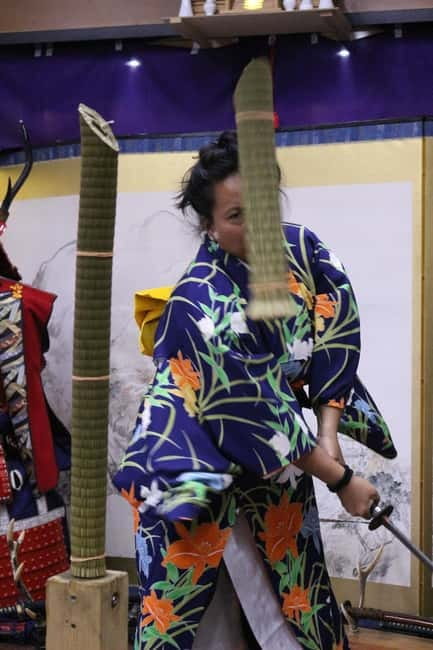
- Real sword cutting: After practice with an iai sword, you try a supervised cut using a real samurai sword.
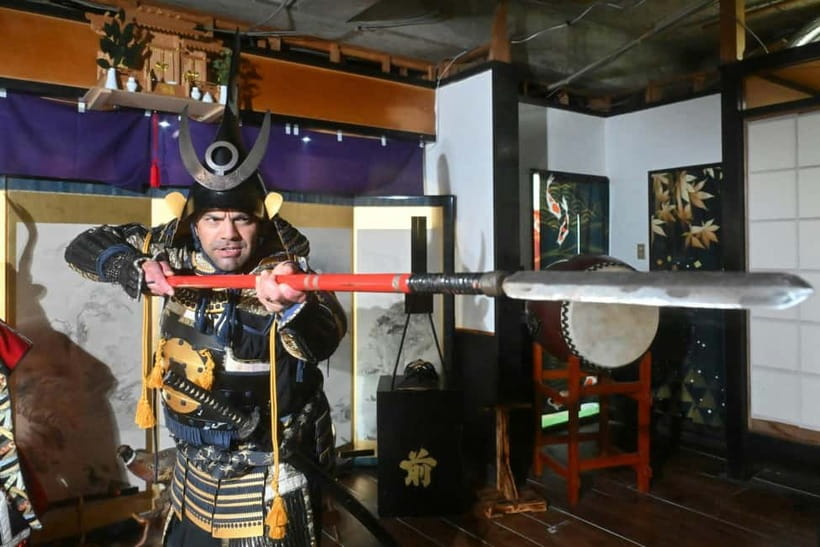
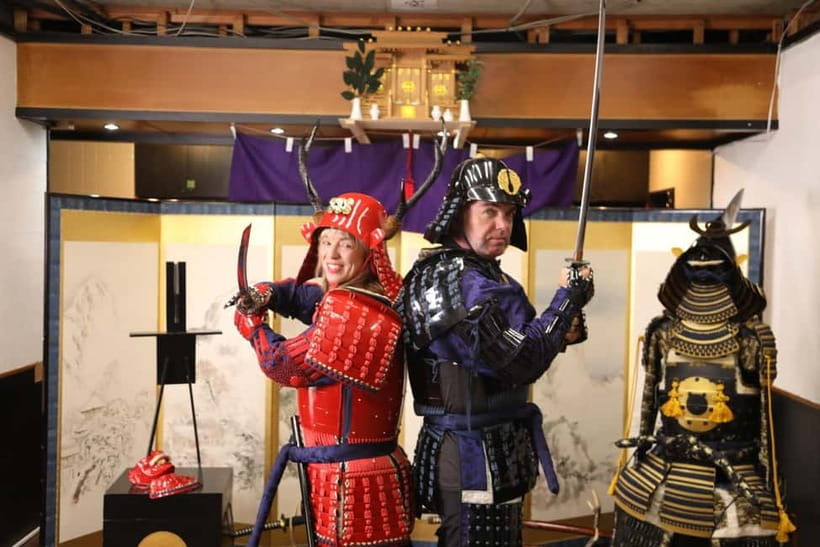
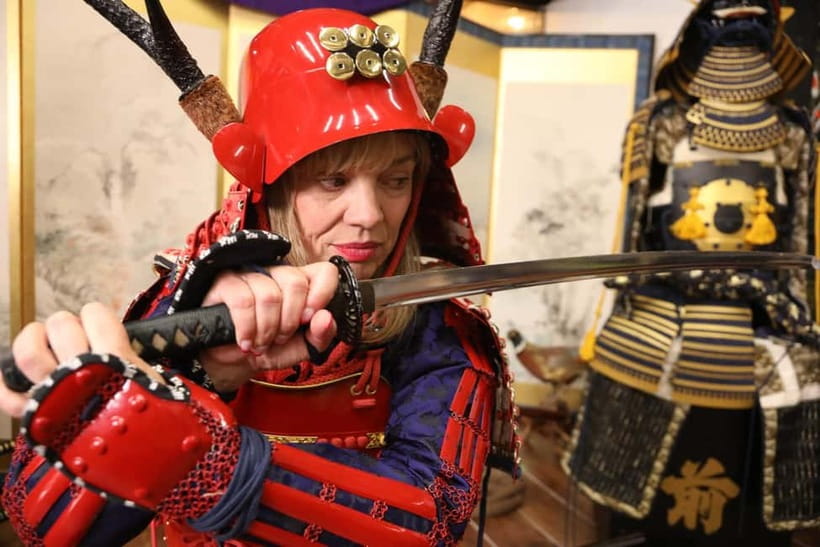
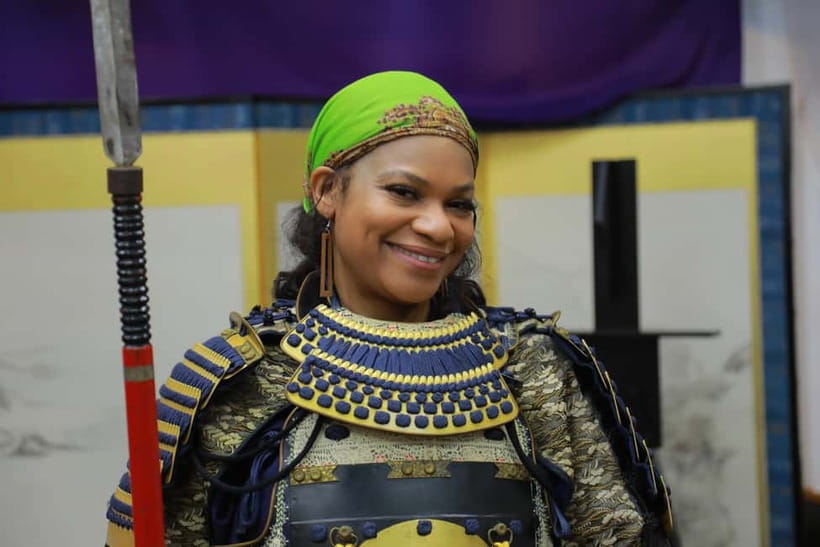
- Armor and helmet included: You dress as a mounted or foot soldier might have appeared before battle and take commemorative photos.
- Bushido etiquette matters: Bowing, sword placement, walking position, and careful handling are part of the lesson.
- Private 90-minute session: The format gives the instructor room to correct your stance and explain each movement.
- English instruction available: Japanese and English are offered, with other languages possible only if staff schedules allow.
- Best meeting-point clue: Look for the wooden Honor of the Samurai sign, pamphlet rack, and hanging kimono or hakama.
What this Osaka samurai lesson really offers
This is less a stage show and more a short martial arts lesson with costume, ritual, and photography built in. The sword is the center of the session, but the instructor also spends time explaining why samurai manners were so careful.
That detail gives the activity more shape than a quick dress-up stop. You learn that the blade was not just a weapon. It represented status, self-respect, and responsibility. The lesson connects the sword to everyday behavior, from how it sat in the belt to how a samurai walked along the road.
I would not book this expecting a long lecture on Japanese military history. The focus is physical. You bow, change clothes, handle a training sword, practice the basic movements, and then put on armor for photographs. It is a good fit if you learn best by doing.
The experience takes place at Bushi no Homare, also described as Samurai Honor, at Excellence Takayama 1F, 2-3-19 Shiginonishi, Joto-ku, Osaka. It is promoted as the only samurai activity near Osaka Castle where you can wear armor and try sword cutting, though the address itself is not at the castle grounds.
More ways to see Osaka Castle:
- Osaka Castle: Museum and Tower Entry Ticket
★ 4.5 · 2,380 reviews - Osaka Castle Walking Tour and Castle Tower Admission
★ 5.0 · 561 reviews - 5-Hour Osaka Bike Tour to the Neighborhood of Osaka Castle
★ 5.0 · 319 reviews
Arriving at Samurai Honor in Joto-ku
Give yourself time to find the entrance. The useful landmark is a wooden sign reading Honor of the Samurai. In front of the shop, look for a rack holding Samurai Honor activity pamphlets. Kimonos and hakama may also be hanging nearby, which can make the location easier to spot.
The supplied map directs you to Google Maps because the Apple Maps address is reported to be wrong. I would use the Google Maps link and check the pin before leaving your hotel. There is no hotel or station pickup, and transportation is not included.
Arrive 30 minutes before your booked time. That early arrival is not wasted padding. You need instructions and time to change, and a late arrival could cut into the lesson itself.
Wear or bring a T-shirt. The session includes Japanese clothing, so a simple top is the sensible choice. Food, alcohol, drugs, pets, strollers, and baby carriages are not allowed. Assistance dogs are permitted.
Changing into dogi and hakama
The first step is changing into samurai clothing, including a dogi and hakama. This gives you the proper base for the sword lesson and makes the later armor fitting more convincing.
The clothing also changes how you move. A loose tourist costume can encourage careless gestures, but traditional training clothes make you pay attention to posture, balance, and the position of your hands. That matters during sword practice, where a small change in stance affects the whole movement.
This is not a fashion session with a sword added at the end. The clothing prepares you for a lesson built around conduct. You are expected to handle the equipment carefully and follow the instructor’s directions.
Beginning with a bow before the shrine
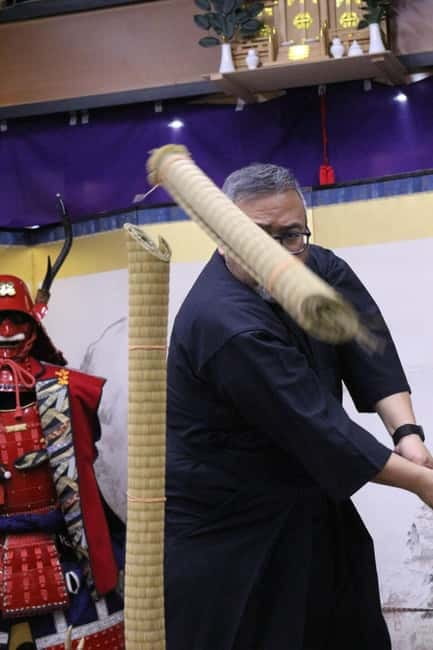
Training starts and ends with a bow before a shrine in the dojo. The practice follows the idea that training draws strength from the ancient god of war, and the bow sets the tone before anyone swings a blade.
I like this part because it keeps the session from becoming a simple action pose. The bow says that the sword deserves respect and that the person holding it has obligations. You do not need prior martial arts experience to understand the point.
The ritual is brief, but it gives the activity a clear beginning. For many visitors, this may be their first experience of a dojo setting, and the quiet formality helps separate the lesson from ordinary sightseeing.
More samurai and ninja experiences in Osaka:
- Samurai Training Experience KENDO in Osaka
★ 5.0 · 515 reviews - OSAKA NIGHT FUSION Japanese Taiko Kabuki Samurai Dance Show
★ 4.8 · 155 reviews - Osaka: Samurai Training Experience KENDO in Osaka
★ 5.0 · 111 reviews - Osaka: A Modern Samurai, Kabuki, Taiko, & Dance Show
★ 4.5 · 66 reviews
Learning sword etiquette and Bushido manners
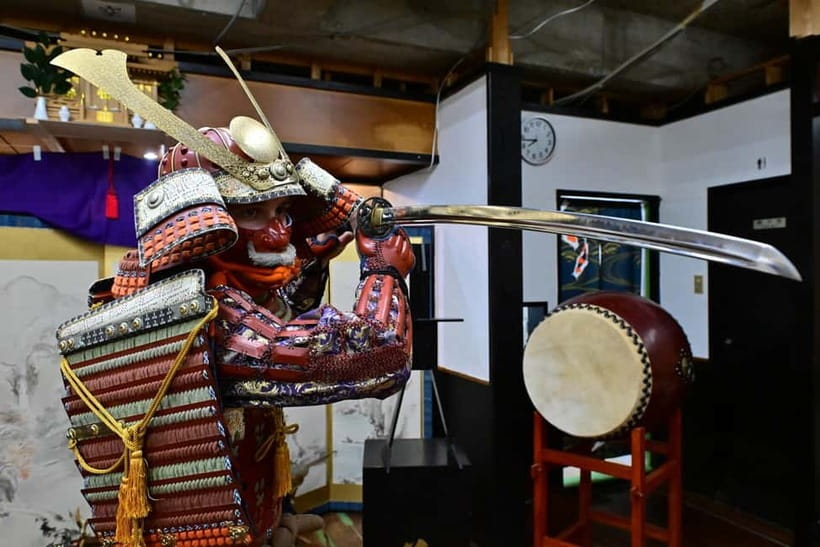
The instructor explains how samurai carried and treated their swords. The blade is placed in the belt with the cutting edge facing upward. You learn to walk on the left side of the road so that sword scabbards do not strike those passing in the opposite direction.
You also hear how samurai kept their swords close, even during peaceful periods. The lesson presents the sword as part of daily life, not an object brought out only for war. It was carried while eating with family and kept close enough to draw quickly if danger appeared.
Some of this material is simplified for a short session, but it gives useful context to the physical drills. When you are told to keep the scabbard and hilt in a particular position, you understand that the movement is tied to a larger code of behavior.
This is also where Bushido enters the lesson. The emphasis is on pride, self-control, and responsibility. The sword is deadly, so the person carrying it must show restraint. That is a more useful introduction than treating samurai culture as a collection of dramatic poses.
Practicing battou, chiburui, and nottou
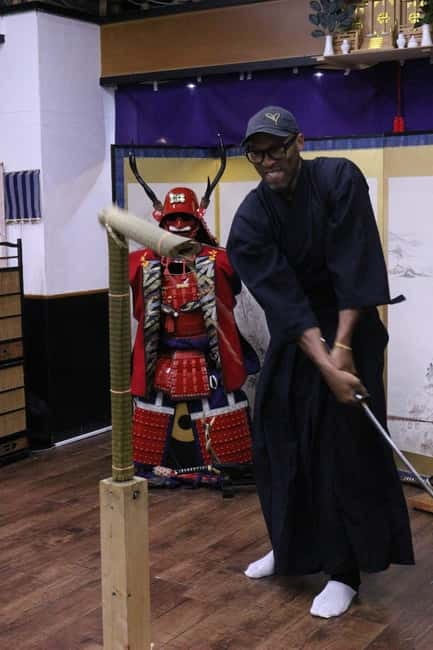
You begin with an iai practice sword rather than moving straight to the real blade. The instructor teaches the basic sequence:
- Battou, drawing the sword from the scabbard to cut
- Chiburui, the symbolic action of removing blood from the blade
- Nottou, returning the sword to its scabbard
The names may sound daunting, but the movements are broken into manageable parts. You practice the stance, draw, cut, symbolic cleaning motion, and return to the scabbard.
The instruction stresses that the downward swing should use the sword’s weight rather than raw arm strength. When the movement is correct, the blade produces a distinctive hi-nari sound. That sound gives you immediate feedback, even if you have never handled a sword before.
This is the section where an attentive instructor matters most. You need help with foot position, grip, and timing. The activity includes a certified professional instructor, and the teaching has been praised for being clear, safe, and enjoyable.
Do not rush this portion because you are waiting for the armor. The practice sword work is the foundation for the real cutting attempt. It also gives you the best sense of how much control a sword requires.
Trying a real samurai sword
After the basic forms, you try sword cutting with a real samurai sword under supervision. This is the moment most people book the activity for, but it works because the lesson has prepared you for it.
The claim of the world’s best cutting performance is promotional language, so I would treat it as enthusiasm rather than a technical measurement. Still, a real Japanese sword is a serious tool, and the chance to use one in a controlled class is unusual.
The important thing is not power. A hard swing is not the goal. The instructor wants you to maintain the stance, follow the motion, and respect the blade. That makes the exercise feel more like a test of concentration than a movie fight.
Safety is built into the sequence. You first learn with an iai practice sword, then receive direct instruction in basic kata, stance, and swings before attempting the cut. Follow the instructor exactly, and do not treat the blade as a prop for jokes or fast improvisation.
If you want a dramatic sword battle, this is not that. If you want to understand the discipline behind a clean cut, it offers something more useful.
Putting on armor and taking photographs
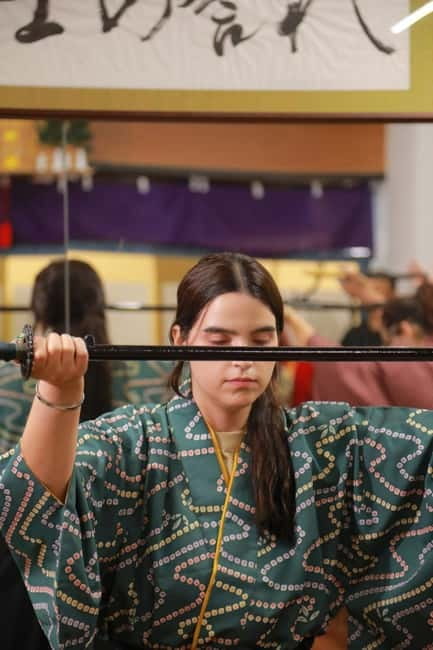
The final major feature is wearing samurai armor and a helmet indoors. The armor represents what a samurai might wear before battle, when appearance, dignity, and readiness all mattered.
Armor is heavier and more restrictive than modern clothing, so putting it on gives you a practical sense of why posture and movement mattered. You will not be marching into Osaka Castle, but you will feel the difference between a light costume and protective gear.
The photographs are taken while you wear the armor. This is a strong value point because the activity gives you a lasting record of the experience without requiring you to organize a separate photographer. The image files are sent to a designated email address after the session.
The photo time also provides a natural finish. You have learned the manners, practiced the sword movements, tried the cut, and then get to preserve the visual result. If you are planning a special Japan trip or want a family keepsake, the emailed photos add more value than a quick phone snapshot.
How the $106 price compares with the experience
At $106 per person, this is not a low-cost photo stop. You are paying for instruction, clothing, access to armor, a private-group format, and a real sword-cutting session, not just ten minutes in a rented costume.
The private format is important. You have more room to ask questions and receive corrections than you would in a large group. It also makes the 90-minute duration feel purposeful rather than rushed.
The price includes samurai clothing, indoor armor use, an English-speaking staff member, a certified professional instructor, taxes, tips, and photo shooting with the images emailed to you. Transportation and personal expenses are extra, but there is no separate tip request listed.
I see the best value for someone who would otherwise pay for a standard costume photo session and still want a cultural activity. If you only want a quick picture near Osaka Castle, the price may feel high. If you want instruction and a hands-on lesson, the cost is easier to justify.
Language, group size, and physical demands
The default interpretation language is English, with Japanese also available. Italian, Spanish, French, Chinese, Thai, and Indonesian may be possible, but staff availability must be checked before booking. Do not assume a non-English interpreter will be present.
The activity is for a private group. The information does not give a maximum number, so ask if your party is large. The private format should suit couples, friends, and families with older children who can follow careful instructions.
Children under 10 are not accepted. Babies under one year, people over 80, and people with altitude sickness are also listed as unsuitable. The session involves changing clothes, standing, holding a sword, moving through basic forms, and wearing armor, so anyone with mobility or health concerns should ask the operator before booking.
Party groups and bachelor or bachelorette groups are not allowed. That rule makes sense here. The activity depends on focus and safe handling, not rowdy performance.
The overbooking warning and cancellation terms
There is one booking concern I would take seriously. The operator has cancelled some sessions because of overbooking, including cancellations on the morning of the booked date. That can spoil a carefully planned Osaka day, especially if you have arranged the activity around a visit to the castle.
You can cancel up to 24 hours in advance for a full refund, and the reserve-now, pay-later option keeps your money flexible. Those are useful protections, but they do not replace checking your confirmation and schedule before traveling to the meeting point.
I would avoid booking this as the only fixed activity on your last morning in Osaka. Give yourself room to adjust if the operator needs to change the time.
Who should book this experience?
I would recommend it to you if you want:
- A structured cultural activity rather than a quick costume photo
- A private lesson with English instruction
- A chance to handle a real samurai sword under supervision
- Armor photographs that are sent to your email
- A memorable addition to an Osaka Castle sightseeing day
- An activity suited to adults and children aged 10 or older
I would skip it if you dislike formal instruction, standing practice, or changing into traditional clothing. It is also a poor match if you want a full-day historical tour, outdoor combat demonstration, or transportation from your hotel.
The best timing is after visiting Osaka Castle, when the subject is already on your mind. Just remember that the dojo is at its own address in Joto-ku, so plan the transfer rather than assuming you can walk straight from the castle gate.
Should you book Samurai Honor?
Book this if you want to do more than look at samurai objects. The careful bowing, sword etiquette, basic kata, real cutting attempt, armor fitting, and emailed photographs give the 90 minutes a clear arc.
The strongest parts are the instruction and the hands-on practice. The main weaknesses are the price, the need to find an address that can be confusing on Apple Maps, and the risk of an overbooking cancellation.
For a first samurai activity in Osaka, I think it is a good choice when your priority is participation. Confirm the location and booking before you go, arrive early, and treat the sword as a weapon rather than a toy. Do that, and you will leave with more than a costume photo. You will have a practical sense of the discipline behind the image.
FAQ
Where is the samurai experience held?
It is held at Bushi no Homare, also called Samurai Honor, at Excellence Takayama 1F, 2-3-19 Shiginonishi, Joto-ku, Osaka-shi, Osaka 536-0014.
Is the experience inside Osaka Castle?
No. The activity is near Osaka Castle but takes place at the Samurai Honor location in Joto-ku.
How do I find the meeting point?
Look for the wooden sign reading Honor of the Samurai. A pamphlet rack is placed in front of the store, and hanging kimonos and hakama may also help you identify the entrance.
How early should I arrive?
Arrive 30 minutes before your reserved start time for instructions and changing clothes.
How long does the activity last?
The experience lasts 90 minutes.
Is English instruction available?
Yes. English and Japanese are available. Other languages may be possible if staff schedules allow, but you must ask before booking.
Is the activity private?
Yes. It is offered as a private-group experience.
Is sword cutting included?
Yes. After practicing with an iai practice sword and learning the basic movements, you try cutting with a real samurai sword under instruction.
Are armor photographs included?
Yes. You wear samurai armor and a helmet for photographs, and the photo data is sent to a designated email address.
What is included in the price?
The price includes samurai clothing, indoor armor use, English-speaking staff, a certified professional instructor, taxes, tips, and photo shooting. Transportation, pickup, drop-off, movie shooting, and personal expenses are not included.
Just added in Osaka
- Urban Canvas: Osaka Street Art Bike Tour★ 5.0 · 10 reviews
- Anime Cosplay Photshoot-50 Digital Photos Provided★ 5.0 · 8 reviews
- TeamLab Botanical Garden Osaka Ticket★ 3.5 · 6 reviews
- Umeda Sky Building & Kuchu Teien Observatory Ticket in Osaka★ 4.5 · 3 reviews
- Immerse in Judo Martial Arts Class from Japan★ 5.0 · 4 reviews
- Cherry Blossom Buddha and Mt.Yoshino with Strawberry Picking Tour★ 4.5 · 5 reviews
- Traditional Home cooking Experience in Osaka, Japan★ 5.0 · 14 reviews
- Traditional Calligraphy Experience near Dotonbori★ 5.0 · 3 reviews
Osaka Castle Tours, compared.
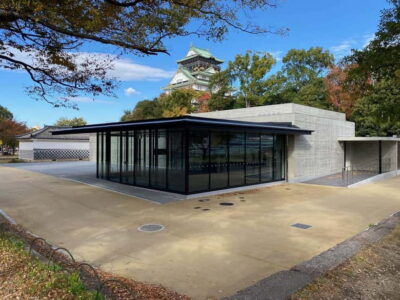

Osaka Castle Walking Tour and Castle Tower Admission
Read our review →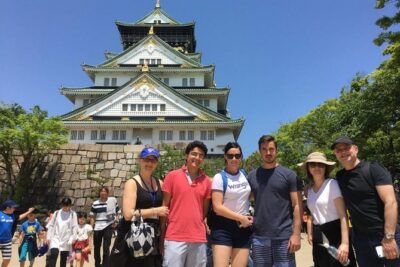
5-Hour Osaka Bike Tour to the Neighborhood of Osaka Castle
Read our review →

PRIVATE 6hr, Food tour from Osaka Castle, Kuromon, Dotonbori.
Read our review →
A Tour to Explore the Symbol of Osaka: Osaka Castle
Read our review →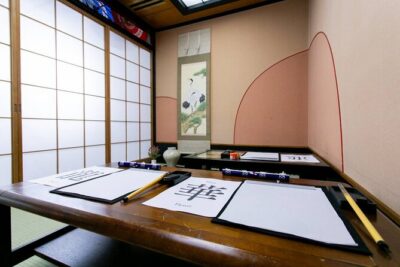
Learning Zen of Japanese Calligraphy in kimono near Osaka Castle
Read our review →Browse the lists this tour appears in