
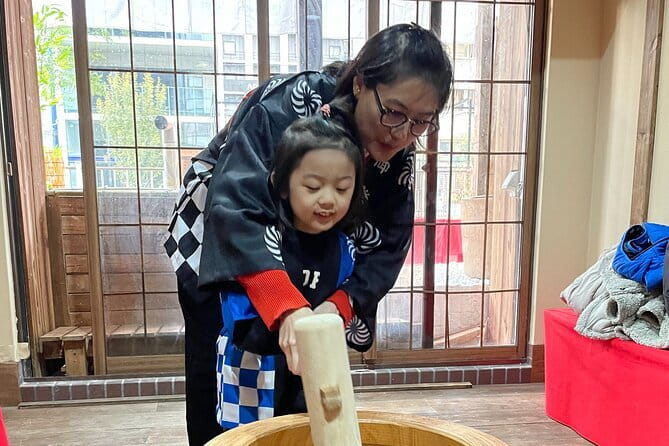
Reviewed · OSAKA COOKING CLASSES
【Family Friendly】Traditional Mochi Pounding Experience
In Osaka’s Dotonbori, you can turn a simple rice cake into a small cultural lesson. This family-friendly mochi pounding session explains the custom, lets you work with a mortar and pestle, and ends with fresh mochi and tea. The best part is the short path from raw rice to something warm and chewy on your plate.
I like the hands-on work and the easy location. You are not just watching a demonstration, and the meeting point puts you close to Dotonbori’s bright food streets before or after the session. I also like the patient teaching, which matters when young children, grandparents, and first-time visitors share the same group.
The main consideration is texture. Fresh mochi is soft and sticky, and older people should eat small pieces because it can be a choking risk. The session is also brief, about 45 minutes to an hour, so it suits a quick cultural stop rather than a full cooking class.
Key Points at a Glance
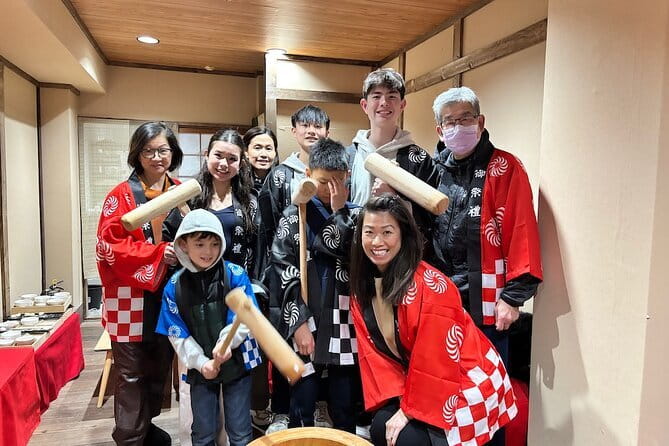
- Pound your own mochi: Use traditional tools to turn steamed glutinous rice into a smooth, stretchy dough.
- A short cultural introduction: Begin with about 10 minutes on the history and meaning of mochi pounding in Japan.
- Good for mixed-age groups: Children under 13 may join, and adults can take part without children.
- Taste several traditional toppings: Try the mochi plain or with kinako, sweet red bean paste, nori, and sweet soy sauce.
- Small group setting: The maximum is 10 people, which helps keep the activity manageable.
- Dotonbori location: Meet at Oh Mochi, 2-chōme-4-11 Dōtonbori, and finish at the same place.
Why Mochi Pounding Makes a Good Osaka Stop
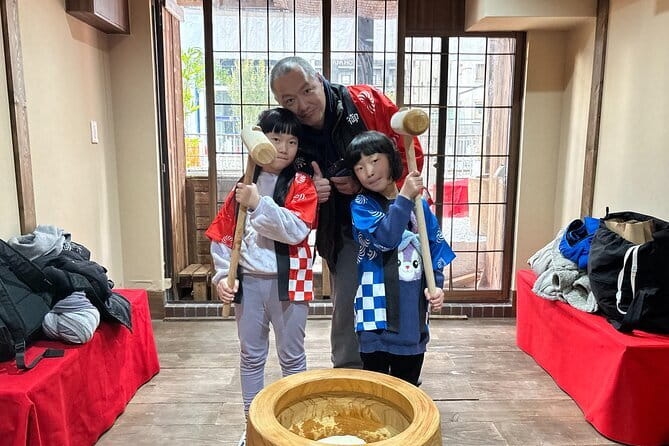
Mochi is more than a sweet found in Japanese shops. It is made from glutinous rice that becomes sticky and elastic after steaming and pounding. The pounding itself, known as mochitsuki, has a long place in Japanese food culture and is often linked with seasonal celebrations and New Year customs.
You get a useful introduction before picking up the tools. The talk lasts about 10 minutes, so it gives you enough context without turning the activity into a lecture. I appreciate that balance. You learn why the process matters, then put that information to work with your own hands.
The activity also shows something that a packaged mochi snack cannot: how much effort goes into the texture. Steamed rice must be worked until it becomes a unified dough. That change is quick to see but surprisingly physical to do, especially when the group keeps a steady rhythm.
A shared chant such as yo shoi may help set the pace during the pounding. It adds a bit of ceremony and makes the process easier for children to follow. Do not expect a private, quiet cooking lesson. The appeal is the shared rhythm, the noise of the tools, and the quick transformation of rice.
More cooking classes in Osaka:
- Matcha Making Class in Osaka with Authentic Japanese Sweets Set
★ 5.0 · 509 reviews - Osaka Sushi Making Experience
★ 5.0 · 400 reviews - Osaka: Ramen and Gyoza Cooking Class in Dotonbori
★ 5.0 · 378 reviews
Starting at Oh Mochi in Dotonbori
The activity begins at Mochi Pounding Experience Osaka, also called Oh Mochi, at 2-chōme-4-11 Dōtonbori, Chuo Ward, Osaka. The location is near public transportation and gives you a useful way to fit a short cultural activity into a day in central Osaka.
The meeting point is especially practical if you already plan to visit Dotonbori. You can arrange the session around food shopping, sightseeing, or an evening walk through the district. Since the activity ends at the same location, you do not need to plan a complicated transfer at the end.
The exact meeting instructions should still be checked when you book. A mobile ticket is provided, and confirmation arrives at booking. For a family with young children, having the ticket on a phone keeps the arrival process simple, though you should make sure your phone is charged.
The maximum group size is 10 people. That is small enough for the instructor to watch the pounding process and help with the shaping. It also means the atmosphere may depend on the people booked for your time. A lively group can make the chant and rhythm more fun, while a shy group may need a little encouragement.
The 10-Minute Introduction to Mochi Culture
The opening talk covers the history and cultural significance of mochi pounding. This is a small but important part of the session. Without it, the activity could feel like a novelty food demonstration. With it, you understand why the tools, timing, and shared rhythm matter.
You will hear about mochi as a traditional Japanese food and learn how pounding changes steamed glutinous rice into the chewy cakes familiar in Japan. The explanation is designed for an international audience, so you do not need prior knowledge of Japanese food customs.
English instruction is available. Chinese support is offered through slides or interpretation using ChatGPT. If you are booking for a mixed-language family, this is worth noting in advance, especially if a child or older relative needs more help following spoken directions.
The talk is short enough for children to handle. Parents have said that children as young as five and six enjoyed taking part, while teenagers also found the activity worthwhile. That range is one of the strongest reasons to consider this session for a family itinerary.
Steaming Rice Before the Pounding Begins
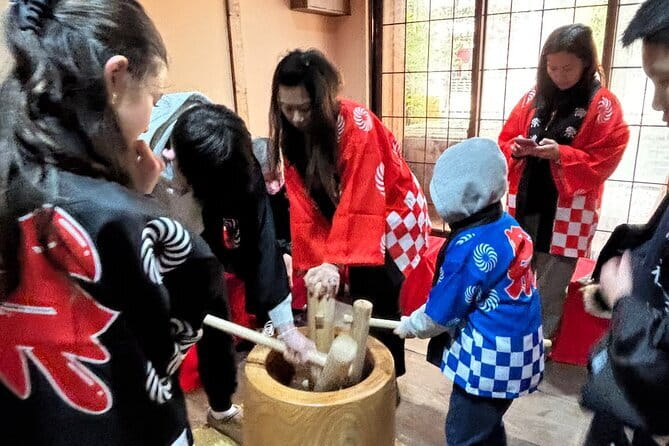
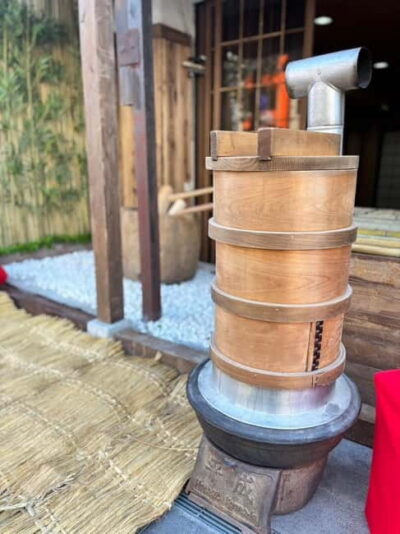
The next stage involves steaming the glutinous rice. The available details do not promise that you will carry out every part of the steaming process from start to finish, so think of this as a guided look at the preparation rather than a long rice-cooking workshop.
This step matters because mochi depends on the right texture before pounding begins. Ordinary cooked rice will not produce the same result. The sticky rice must be softened properly so it can be worked with the traditional mortar and pestle.
For children, steaming provides a useful pause before the more active part. You can explain that the rice is changing because of heat, then show how the pounding completes the process. For adults, it helps connect the finished sweet on the plate with the work that came before it.
The process is compact. You will not spend hours preparing ingredients, washing equipment, or making several separate dishes. That is good news if Dotonbori is one stop among many, though it also means you should not book this expecting a full kitchen class.
Same city, a completely different kind of afternoon:
- Osaka Go Karting Tour with Funny Costume
★ 5.0 · 2,658 reviews - Osaka Castle: Museum and Tower Entry Ticket
★ 4.5 · 2,380 reviews - Osaka: Shinsekai Food Tour with 13-15 Dishes at 5 Eateries
★ 4.8 · 2,204 reviews - Osaka Food Tour: 13 Dishes at 5 Local Eateries
★ 5.0 · 2,149 reviews
Taking Your Turn With the Mortar and Pestle

This is the heart of the session. You join the instructor and other participants in pounding the steamed rice with traditional tools. The goal is to work the rice into a smooth, cohesive mochi dough.
The instructor demonstrates the pace and helps you use the equipment safely. You should follow the rhythm rather than swing as hard as possible. Mochi pounding is about timing and teamwork, not brute strength. The short chant can help everyone keep together.
This part is particularly effective with children because it gives them a clear job. They are not asked to sit still and watch a long demonstration. They can take a turn, see the dough change, and then eat the result. Parents should still keep close watch, since the tools are part of an active food-making process.
The reviews supplied for this experience include families with children aged five and six, teenagers, and grandparents around 70. That makes the session unusually broad in age range. Still, the actual level of physical effort can vary by participant. If someone has limited strength or mobility, they may prefer a shorter turn and more time shaping or tasting.
The pounding also creates the strongest memory of the activity. Many food classes end with a dish that looks professional because an instructor did most of the work. Here, the finished mochi is tied directly to the group’s shared effort. It may not look perfectly uniform, and that is part of the fun.
Shaping and Eating the Fresh Mochi

After pounding, you help shape the mochi and move on to the best reward: tasting it while it is fresh. The mochi may be served plain or with traditional additions. Options listed for the session include kinako, sweet red bean paste, nori, and sweet soy sauce, along with other seasonings and ingredients.
Kinako is roasted soybean powder with a nutty taste. Sweet red bean paste gives the mochi a familiar Japanese dessert flavor. Nori adds a savory note, while sweet soy sauce provides a salty-sweet finish. Trying more than one topping lets you see how flexible mochi can be.
A cup of tea is served with the tasting. That small detail helps slow down the end of the activity. Instead of rushing straight back into Dotonbori, you get a few minutes to compare flavors and enjoy what you made.
The number of choices may vary by the session, but the supplied details describe five traditional seasonings and ingredients, while one participant recalled eight options. The practical point is that you should have several ways to try the mochi, not just one fixed flavor.
If you are vegan or vegetarian, the activity states that dietary preferences can be accommodated. It is still wise to communicate your needs when booking, since toppings and preparation details can matter. Do not assume every accompaniment is suitable without asking.
Fresh mochi has a different character from packaged mochi. It is warmer, softer, and often more elastic. That texture is exactly what makes it special, but it also requires care. Older people should eat small portions, and adults should keep a close eye on younger children while they are tasting.
How Much Time to Allow in Dotonbori
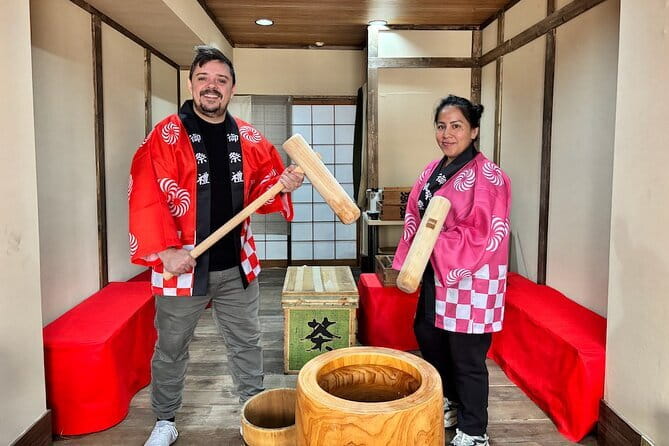
The stated duration is about one hour. A detailed description breaks the session into the introduction, steaming, pounding, shaping, and tasting. In practice, the activity may finish in about 45 minutes, depending on the group and the pace of instruction.
I would allow a full hour in your schedule and avoid booking a train, restaurant reservation, or timed attraction immediately afterward. The experience is short, but you need time to find the meeting point and settle the group before it begins.
The brief length is a strength for many Osaka itineraries. Families can fit it between larger attractions without giving up half a day. It also works for adults who want one focused food activity but do not want an extensive cooking course.
The limitation is that the session cannot explore every side of mochi culture in depth. If you want a detailed history lesson, multiple recipes, or a long market visit, this will feel light. If you want one active, edible introduction, the timing is sensible.
Is the $32.29 Price Good Value?
At $32.29 per person, the cost covers more than a snack. You are paying for instruction, the cultural introduction, use of traditional equipment, the hands-on preparation, several toppings, and tea.
I consider that fair value for a central Osaka activity that lasts close to an hour and welcomes both children and adults. The value improves if you would otherwise spend money on a separate mochi tasting, since you get to make the food as well as eat it.
For a family, the total cost can add up quickly. Two adults and two children would cost more than a casual dessert stop, so you should decide if the hands-on element is worth the extra money. For many families, the shared activity is the point. It gives children something to do and leaves you with a food memory tied to the place.
The small group limit also helps the price feel reasonable. You are not simply watching a large public performance from the back. You get a turn with the tools and direct instruction. Still, the session is not a bargain food tour. Book it for the cultural activity, not just for the amount of mochi on the plate.
Who Will Enjoy This Most?
This is a good match for families with children under 13, especially if your children enjoy making things with their hands. The age range can work well for a group that includes young children, teenagers, parents, and grandparents.
Adults without children can join too. If you like Japanese food traditions and want something more active than a tasting, this gives you a clear reason to take part. It is also a useful choice for a rainy-day plan only if the operator keeps the session running, since the activity requires good weather and may be canceled in poor conditions.
Vegetarians and vegans can request accommodation. Mochi itself is made from glutinous rice, but the toppings and serving details are still worth confirming for your needs.
I would be less likely to recommend it to someone who wants a quiet, private lesson or a serious culinary course. The appeal is the group rhythm, simple explanation, direct participation, and quick tasting.
Practical Details Before You Book
The activity has free cancellation if you cancel at least 24 hours before the local start time. Cancellations or changes made within 24 hours are not refunded or accepted. If poor weather causes the operator to cancel, you are offered another date or a full refund.
A mobile ticket is provided, and confirmation arrives at booking. The experience begins and ends at Oh Mochi in Dotonbori. It is near public transportation, but the supplied details do not give a station name or walking time, so check the map before setting out.
Plan to eat the mochi in small pieces, especially for older family members. Children should be supervised while eating. The operator describes the activity as suitable for vegans and vegetarians, but you should state your dietary needs ahead of time.
Should You Book the Mochi Pounding Experience?
Book it if you want a short, active food experience that works across several generations. The strongest reasons are the chance to use traditional tools, the patient instruction, the fresh tasting at the end, and the location near Dotonbori. Families can expect a shared activity rather than another attraction where children simply follow along.
Skip it if your schedule is already packed with fixed reservations, if you dislike sticky foods, or if you want a full-day Japanese cooking course. The session is compact and focused. Its value comes from the hands-on moment and the connection between pounding and tasting.
For most families spending time in central Osaka, I would book it as a one-hour cultural break. It gives you a story to tell, several flavors to try, and a better understanding of how a familiar Japanese sweet is made.
FAQ
Is the mochi pounding experience suitable for children under 13?
Yes. The activity is available for children under 13 and is designed as a family-friendly experience. Adults can also join without children.
How long does the activity last?
The stated duration is about one hour. The full process may take approximately 45 minutes, depending on the group.
Where does the activity begin and end?
It begins and ends at Mochi Pounding Experience Osaka, also called Oh Mochi, at 2-chōme-4-11 Dōtonbori, Chuo Ward, Osaka, 542-0071, Japan.
What will I do during the experience?
You receive a short introduction to mochi pounding, take part in steaming glutinous rice, pound the rice with traditional tools, shape the mochi, and taste it with tea and traditional toppings.
What toppings are available?
The listed options include kinako, sweet red bean paste, nori, and sweet soy sauce. The session also includes other seasonings and ingredients, with the exact selection potentially varying.
Can vegans and vegetarians join?
Yes. The activity states that vegan and vegetarian dietary preferences can be accommodated. Share your requirements when booking.
What is the cancellation policy?
You can cancel for a full refund up to 24 hours before the local start time. Cancellations or changes within 24 hours are not refunded. If poor weather forces cancellation, you are offered another date or a full refund.
Just added in Osaka
- Urban Canvas: Osaka Street Art Bike Tour★ 5.0 · 10 reviews
- Anime Cosplay Photshoot-50 Digital Photos Provided★ 5.0 · 8 reviews
- TeamLab Botanical Garden Osaka Ticket★ 3.5 · 6 reviews
- Umeda Sky Building & Kuchu Teien Observatory Ticket in Osaka★ 4.5 · 3 reviews
- Immerse in Judo Martial Arts Class from Japan★ 5.0 · 4 reviews
- Cherry Blossom Buddha and Mt.Yoshino with Strawberry Picking Tour★ 4.5 · 5 reviews
- Traditional Home cooking Experience in Osaka, Japan★ 5.0 · 14 reviews
- Traditional Calligraphy Experience near Dotonbori★ 5.0 · 3 reviews
Osaka Cooking Classes, compared.

Matcha Making Class in Osaka with Authentic Japanese Sweets Set
Read our review →
Traditional Mochi Pounding Experience with Tasting
Read our review →
Osaka Cooking Class: Okonomiyaki &Japanese cuisines experience
Read our review →
Roll and Authentic Sushi Making Class in Dotonbori
Read our review →


Osaka Sake Tasting & Takoyaki Cooking Experience
Read our review →Browse the lists this tour appears in