
Reviewed · OSAKA TEMPLE TOURS
Osaka Temple :Warm Bamboo Oil Massage – Deep Restore〈90min〉
Osaka’s temple massage combines a serious 90-minute body treatment with quiet Japanese customs that give the visit a clear sense of place. You change into a simple yukata, offer incense, meditate with a bell and kneaded incense, then settle into a warm bamboo and oil massage before tea and sweets.
I like the small-group format, limited to three people, and the way the experience includes more than a spa treatment. The tea ceremony and temple introduction make the visit feel thoughtful, while the complimentary smartphone photos give you a useful keepsake. The main thing to consider is that Zen meditation may be shared with other people unless you request a private session.
Key points at a glance
- Warm bamboo massage: A full-body oil treatment uses warmed bamboo and hands, with myofascial release intended to ease tight areas.
- Temple customs included: You offer incense, learn about Japanese worship culture, and meditate with a bell and kneaded incense.
- Tea with context: Matcha and original Japanese sweets come with an explanation of the ceremony’s cultural and historical background.
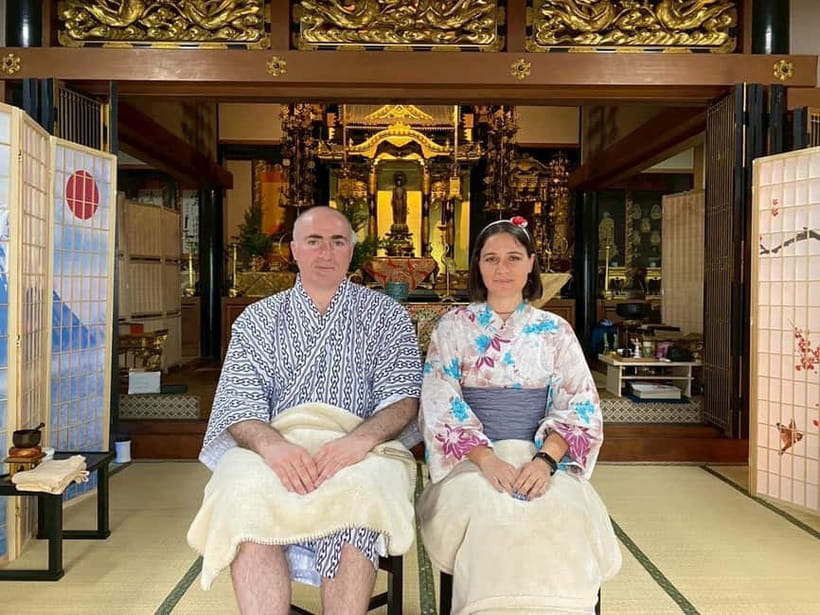
- Yukata and photos: You change into a simple yukata and receive complimentary smartphone photos taken during the temple visit.
- Small group setting: The experience is limited to three participants, though meditation can be shared unless arranged privately.
- Useful location tip: Enter Japanese Massage -the one&only- into Google Maps, not the temple name. The restaurant Tossa de coracao is the nearby landmark.
A temple visit with a massage at its center
Many Japanese cultural activities ask you to sit, watch, and listen. This one gives you a more active form of rest. The massage is the main physical treatment, while incense, meditation, tea, and the yukata help you slow down before and after it.
The full program lasts two hours, with a 90-minute treatment included in that time. That distinction matters. This is not a two-hour massage. You are paying for a compact cultural visit built around a substantial body treatment.
The provider is japanese massage 唯一無二 -the one&only-. English and Japanese are available, so you can take part even if you know little about Japanese customs. The small group size should also make it easier to ask questions and follow the rituals without feeling lost in a crowd.
I would plan this for a day when you want to recover from walking, shopping, or sightseeing. It is less suitable if you want a quick massage with no ceremony, clothing change, or explanation.
More temple tours in Osaka:
- Osaka: Minoh, Katsuoji Temple, & Minoh Falls Full-day Tour
★ 4.9 · 172 reviews - Osaka Temple Cool Foot Bath & Matcha Experience〈45min〉
★ 4.9 · 82 reviews - Osaka: Mind & Spirit Balance Temple Reiki Healing
★ 5.0 · 41 reviews
Arriving at the right entrance in Osaka
The meeting-point warning is important. When you use Google Maps, enter Japanese Massage -the one&only- rather than the temple’s name. Using the temple name can send you to the back entrance, where it may be hard to find the correct place.
If you get turned around, search for the restaurant Tossa de coracao. The activity is right next to it. This is the kind of small practical detail that can save you from arriving flustered, especially if you have a fixed appointment and are trying to begin in a calm frame of mind.
The meeting point is in Osaka on Honshu. Specific transport directions are not provided, so allow enough time to locate the correct entrance. I would save the provider’s name and the restaurant landmark before leaving your hotel.
Once inside, the welcome drink and change into a simple yukata begin the transition from ordinary sightseeing to the temple setting. The yukata is not presented as formal dress, and you should think of it as part of the atmosphere rather than a full costume rental.
Incense, worship, and a few quiet minutes
The temple visit starts with an incense offering and an introduction to the temple’s history and Japanese worship culture. This gives the customs some meaning instead of reducing them to a photo opportunity.
You then take part in meditation with a bell and kneaded incense. The details are simple, but they give you something to focus on. The bell marks the shift into silence, while the scent of incense helps set the mood.
Zen meditation may be shared with other participants. If you want complete privacy, request a private session before booking or contact the provider about availability. The activity is limited to three people, so even a shared meditation should be relatively small in scale, but it is not automatically private.
This part will suit you if you enjoy learning through a short ritual. If you find sitting quietly uncomfortable, the meditation is still brief within a larger program, but it is not something to skip casually. It is part of the cultural shape of the visit.
Foot bath and scrub massage before the main treatment
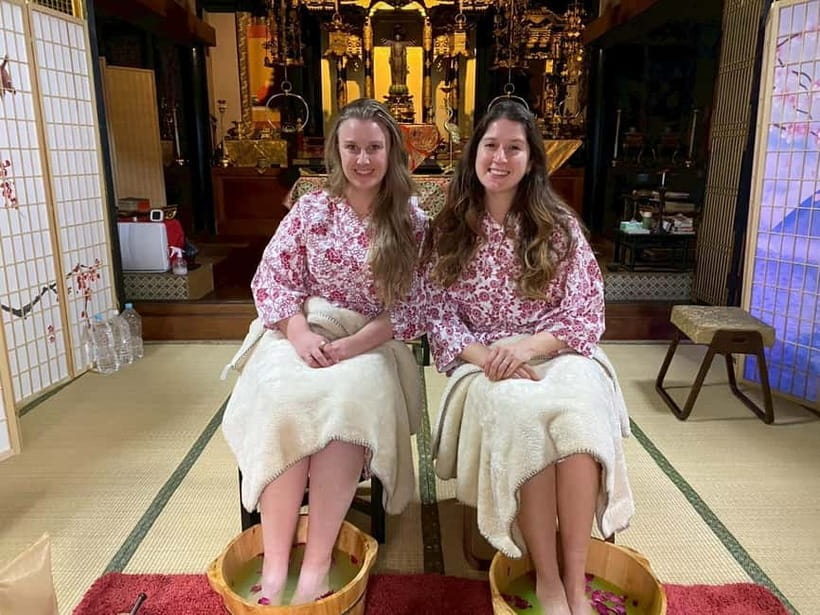
Before the full-body work begins, you receive a foot bath and scrub massage. This is a practical start to the treatment, since it helps you settle physically before the longer session.
The foot treatment also gives you a gentle introduction to the provider’s touch. After changing into a yukata, taking part in temple customs, and sitting for meditation, the warm water helps move the experience back toward the spa side of the program.
The supplied details do not specify the temperature, products, or exact length of the foot bath. You can expect it to be one stage of the treatment rather than a separate long spa service.
More massage and spa sessions in Osaka:
- Osaka Temple Head Spa &Matcha Facial – Refresh & Glow〈90min〉
★ 5.0 · 24 reviews - Osaka: Tennen Onsen Naniwa-no-Yu, the famous hot spring spa
★ 4.7 · 19 reviews - Osaka: Japanese Zen Massage and Facial at the Temple/180-min
★ 4.8 · 10 reviews - Osaka:Bamboo Healing Massage at the Temple <90-min>
★ 5.0 · 9 reviews
What the 90-minute bamboo oil massage feels designed to do
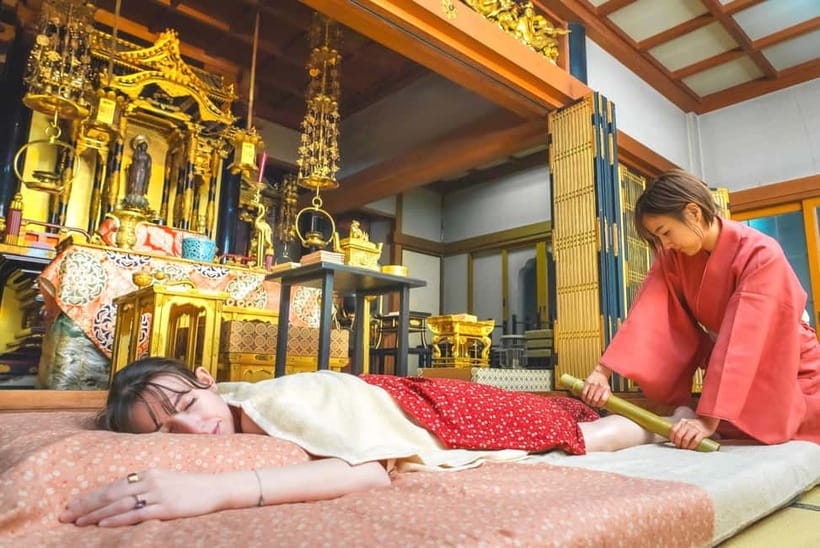
The central treatment combines full-body oil massage, hand work, warm bamboo, and myofascial release. Bamboo adds a different sensation from a standard oil massage. The therapist can use it as a smooth tool along larger areas of the body, while hands provide more direct pressure and adjustment.
Myofascial release is aimed at tight connective tissue and restricted movement rather than simple surface stroking. That does not mean the treatment will feel intense for everyone. Pressure depends on the practitioner and your preferences, so tell the therapist what you want before the massage begins.
One named practitioner, Arisa, is associated with a particularly strong massage experience. If you hope to request a specific practitioner, ask when booking, since the available staff and scheduling are not guaranteed in the supplied information.
The massage is described as an aroma treatment with bamboo and warm oil. You should expect oil on the skin and may want to avoid scheduling it immediately before putting on delicate clothing. The activity includes a simple yukata, but no separate information is given about showers or changing facilities after the massage, so ask the provider if that matters to you.
The program also describes Reiki as a non-contact Japanese energy-healing method intended to support relaxation and emotional balance. Treat this as a quiet, non-touch element rather than another hands-on massage technique. It may appeal to you if you enjoy calm, reflective wellness practices. If you prefer treatments based only on physical massage, this part may feel less essential.
Tea, matcha, and sweets after the bodywork
The traditional tea ceremony follows the treatment. You receive matcha and original Japanese sweets, along with an explanation of the ceremony’s cultural and historical background.
This is one of the strongest reasons to choose this activity over a regular massage. Tea ceremony customs can look mysterious if you only see them from a distance. A clear explanation helps you understand the gestures, the setting, and the relationship between tea, hospitality, and attention to detail.
The timing also makes sense. After 90 minutes of massage, you are likely to appreciate a quiet drink more than a rushed meal or another busy activity. The sweets provide a small taste of Japanese confectionery without turning the visit into a food tour.
The tea ceremony is educational, but it is not described as a formal multi-course tea event. Keep your expectations in proportion. You are getting a cultural explanation and matcha with sweets as part of a two-hour wellness visit.
The yukata photo is a useful final keepsake
The activity includes complimentary smartphone photos of your time in the temple. You wear the simple yukata, and the photos are provided for you to take home.
This is a nice touch because the program includes several visual elements: the temple setting, incense, tea, and traditional clothing. You do not need to arrange a separate photographer or pay an extra photo fee according to the supplied details.
The photos are taken with a smartphone, so think of them as casual keepsakes rather than a professional portrait session. If you are visiting as a couple or small group, the limited group size may make it easier to get a photo together, though the exact photo arrangements are not specified.
Is $129 a fair price?
The listed price is $129 per person. That is more than you would pay for a basic massage, but this is not priced as massage alone.
Your fee covers a 90-minute full-body treatment, a foot bath and scrub massage, temple access, incense, meditation, a yukata, matcha, Japanese sweets, cultural explanations, and smartphone photos. The value depends on how much you want the cultural parts. If you only want muscle work, a standard Osaka spa may offer better value. If you want one planned activity that joins wellness with Japanese customs, the price is easier to justify.
The small group size also matters. The experience is limited to three people, which gives it a more personal scale than a large cultural demonstration. Still, meditation can be shared unless you request a private arrangement, so do not assume the entire visit is exclusive.
Couples may find the price worthwhile because the activity offers a shared, quiet occasion rather than separate spa appointments. Solo visitors can also benefit from the guided format, especially if they want a structured introduction to incense, meditation, and tea.
Who will enjoy this most?
I would recommend this to you if you want a break from Osaka’s fast pace and like activities that mix body care with cultural explanation. It suits people who enjoy quiet rituals, small groups, and a gentle introduction to Japanese customs.
It is also a good choice after several active sightseeing days. The warm oil massage and foot bath provide the physical rest, while the tea ceremony and meditation give the visit a clear rhythm.
Couples should note that reservations for three people are available by email. If your party has three participants, contact the provider directly rather than assuming the ordinary booking path will handle it.
You may want to choose another activity if you dislike oil massage, do not want to change into a yukata, or prefer a private treatment from start to finish. The cultural portions require your attention, and the meditation is not automatically private.
Booking details worth knowing
The experience lasts two hours, with starting times based on availability. The listed languages are English and Japanese, and the instructor-led format means you can receive explanations rather than simply follow along.
Free cancellation is available up to 24 hours before the activity for a full refund. You can also reserve now and pay later, which helps if your Osaka schedule is still shifting.
The activity allows you to skip the ticket line. Since this is a small temple-based appointment rather than a major public attraction, the main practical advantage is a smoother arrival rather than a long attraction queue.
Bring the correct map name, arrive with enough time to find the entrance, and mention any preference for meditation privacy or massage pressure early. Those simple steps will do more for your comfort than packing anything special.
Should you book the Osaka temple massage?
Book it if you want a restorative massage wrapped in Japanese culture, not just a treatment table. The strongest parts are the warm bamboo and oil work, the calm temple setting, the matcha explanation, and the small group size.
I would especially choose it for a couple, a solo visitor who wants guided cultural contact, or anyone needing a quiet afternoon after busy Osaka sightseeing. The main caution is the format: 90 minutes of massage sits inside a two-hour program, and meditation may be shared.
At $129, this is a specialty experience rather than a budget massage. For the right person, the combination of treatment, temple customs, tea, yukata, and photos makes the extra cost reasonable. Use the exact meeting-point name, ask about private meditation if needed, and book this when you want the whole visit to slow down.
FAQ
Where does the activity take place?
The experience takes place at a temple in Osaka on Honshu, Japan. Use Japanese Massage -the one&only- in Google Maps to find the correct location.
What should I search for if I cannot find the meeting point?
Search for the restaurant Tossa de coracao. The provider is right next to it.
How long does the activity last?
The full activity lasts two hours. The listed treatment portion is 90 minutes.
Is the massage full body?
Yes. The activity includes a full-body oil massage using warm bamboo and hands, with myofascial release.
Is a foot treatment included?
Yes. You receive a foot bath and scrub massage before the main massage.
Is meditation private?
Not automatically. Zen meditation may be shared with other participants unless you request a private experience.
What language is the activity offered in?
Instruction is available in English and Japanese.
How many people can join?
The experience is limited to three participants. Reservations for three people are available by email.
What is included with the tea ceremony?
The tea portion includes matcha, original Japanese sweets, and an explanation of the ceremony’s cultural and historical background.
Can I cancel for a refund?
You can cancel up to 24 hours in advance for a full refund. Reserve now and pay later is also available.
Just added in Osaka
- Urban Canvas: Osaka Street Art Bike Tour★ 5.0 · 10 reviews
- TeamLab Botanical Garden Osaka Ticket★ 3.5 · 6 reviews
- Anime Cosplay Photshoot-50 Digital Photos Provided★ 5.0 · 8 reviews
- Umeda Sky Building & Kuchu Teien Observatory Ticket in Osaka★ 4.5 · 3 reviews
- Immerse in Judo Martial Arts Class from Japan★ 5.0 · 4 reviews
- Cherry Blossom Buddha and Mt.Yoshino with Strawberry Picking Tour★ 4.5 · 5 reviews
- Traditional Home cooking Experience in Osaka, Japan★ 5.0 · 14 reviews
- Traditional Calligraphy Experience near Dotonbori★ 5.0 · 3 reviews
Osaka Temple Tours, compared.
Minoh, Katsuoji Temple, & Minoh Falls Full-day Tour
Read our review →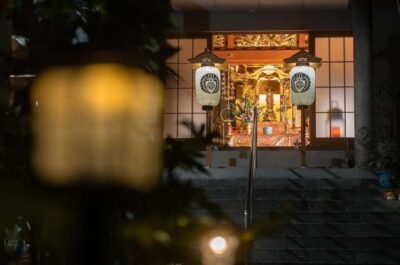
Osaka Temple Cool Foot Bath & Matcha Experience〈45min〉
Read our review →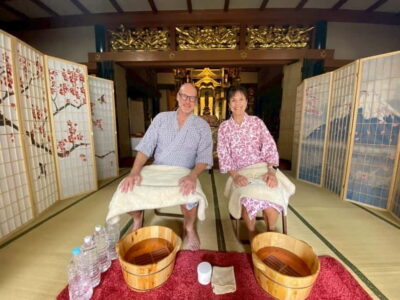
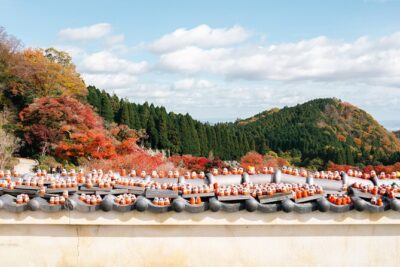
Katsuo-ji Temple, Arashiyama Forest, & Nara Park
Read our review →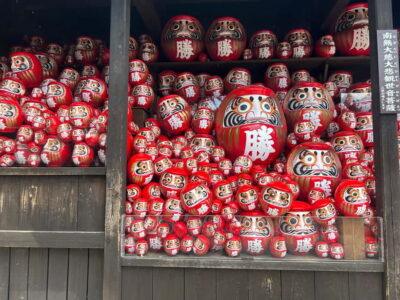
Minoh Waterfall & Katsuo-ji Temple Half-Day Tour
Read our review →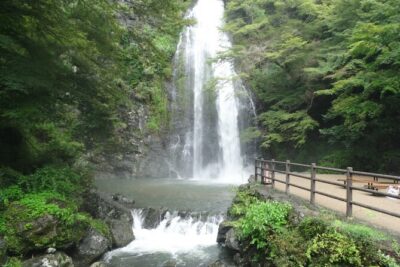
Osaka Half-day E-bike Adventure: Minoh Falls & Katsuoji Temple
Read our review →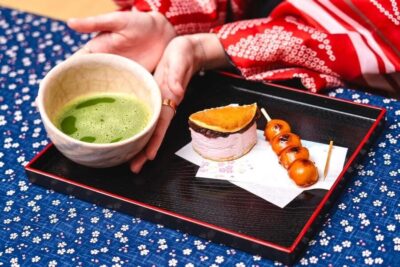
Osaka Temple Head Spa &Matcha Facial – Refresh & Glow〈90min〉
Read our review →
Browse the lists this tour appears in