
Reviewed · DOTONBORI TOURS
Osaka Morning Tour: Shitennoji Temple, Shinsekai &Doutonbori
Osaka’s personality comes through best in its back streets, small eateries, and easygoing neighborhoods. This private walk takes you from peaceful Tennoji Park to the 1,400-year-old Shitennoji Temple, then into Shinsekai for retro arcades, neon streets, and classic Osaka food.
I like two things right away: the one-group-only format, which lets your guide adjust the pace, and the food stops, which include takoyaki, a drink, and a croquette. Guides such as Ben, Hiro, and Sena are praised for personal stories, photo tips, and knowing where to eat beyond the obvious tourist strips.
The main consideration is that the included food is limited. Okonomiyaki and kushikatsu may be part of the route, but extra dishes and drinks at additional restaurants cost more, so budget beyond the $74 tour price if you want a full food crawl.
Key points at a glance
- Shitennoji Temple: Visit Japan’s oldest Buddhist temple and hear stories tied to its 1,400-year past.
- Tennoji Park: Begin with a quieter stretch of greenery before the city streets and food stops.
- Shinsekai food culture: Try included takoyaki and a croquette, with chances to order kushikatsu and okonomiyaki separately.
- Private guiding: Your group is the only group on the walk, allowing for a more personal pace and customized stops.
- Local perspective: Guides including Ben, Hiro, and Sena focus on everyday Osaka, food traditions, photo spots, and places many visitors miss.
- Simple meeting point: Meet at the north exit of Tenno-ji Station, where staff hold a Goen Japan sign.
Why this walk gives you a useful first look at Osaka
Osaka can feel loud and fast at first. This tour gives you a gentler start, then gradually adds more street life and food. You begin at Tenno-ji Station, walk through Tennoji Park, visit Shitennoji Temple, and continue toward Shinsekai.
That order works well. You get a bit of context before entering the food districts, and you see how Osaka shifts from temple grounds to neighborhood streets. The route is not just a string of famous sights. It links religious history, public green space, old-style entertainment, and local eating habits.
The private format matters here. With one group only, you can ask why a temple matters, pause for a photograph, or tell your guide what kind of food you want to try. The guide can also adjust the conversation for first-time visitors or people already familiar with Osaka.
The walk is conducted in English. Guides named in the available information include Ben, Hiro, and Sena. Their strengths appear slightly different in practice, but the common thread is personal attention. Ben is praised for food knowledge, local stories, and finding out-of-the-way places. Hiro is noted for temple history, conversation, and photo spots. Sena is described as especially strong on Tennoji’s past, food, and thoughtful planning.
More Shinsekai and Tsutenkaku tours:
- Osaka: Shinsekai Food Tour with 13-15 Dishes at 5 Eateries
★ 4.8 · 2,204 reviews - Osaka Local Foodie Walking Tour in Dotonbori and Shinsekai
★ 5.0 · 985 reviews - Osaka: Tsutenkaku Tower Entry Ticket
★ 3.8 · 125 reviews
Starting at Tenno-ji Station and Tennoji Park
The meeting point is the north exit of Tenno-ji Station. Look for the Goen Japan logo. That detail is useful in a large station, where choosing the wrong exit can put you on the wrong side of the neighborhood.
From there, the route moves into Tennoji Park. This gives you a break from traffic and signage before the main sights. Your guide uses the park to explain Osaka’s past and point out details you might otherwise pass without noticing.
I like this opening because it avoids throwing you straight into the busiest shopping streets. You have time to settle into the walking pace, meet your guide, and ask for recommendations for the rest of your Osaka stay.
The park itself is not presented as the main attraction. Think of it as a calm introduction and a place for conversation. If you want a tour built around grand gardens or long, formal sightseeing, this is not that. Its value comes from the transition it creates between the station and Shitennoji.
Shitennoji Temple and 1,400 years of Buddhist history
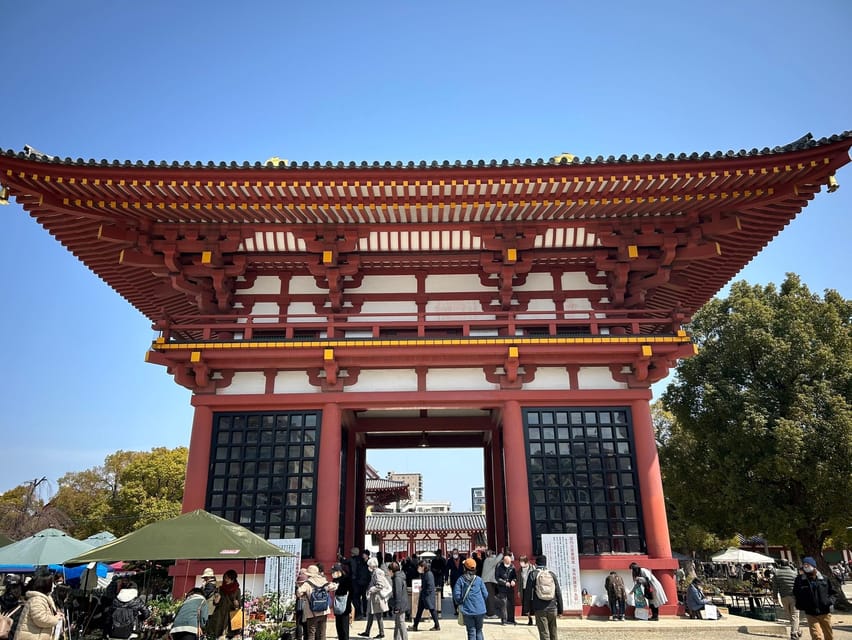
Shitennoji is the historical center of the experience. It is recognized as Japan’s oldest Buddhist temple, with a legacy reaching back about 1,400 years. That gives your guide plenty to explain, from the temple’s place in Japanese Buddhism to the way religious sites fit into Osaka’s development.
You can see the temple grounds while hearing the story behind them instead of simply taking photographs and moving on. The guide-led approach is especially useful here because the meaning of a temple is not always obvious from its gates, courtyards, or buildings.
The temple also provides a sharp contrast with Shinsekai later in the walk. At Shitennoji, the mood is quiet and reflective. A short time later, you are looking at signs, snack shops, and arcade culture. That contrast tells you more about Osaka than either setting would on its own.
The tour does not promise a long formal lecture or a specialist archaeology lesson. The appeal is the human scale of the explanation. You can ask questions as they arise, and guides such as Hiro, Ben, or Sena can connect the site to broader stories about Tennoji and Osaka.
If temple history is your main reason for booking, remember that this is also a food and neighborhood tour. The temple is one important part of the morning, not the entire focus.
Entering Shinsekai, where old Osaka meets street food
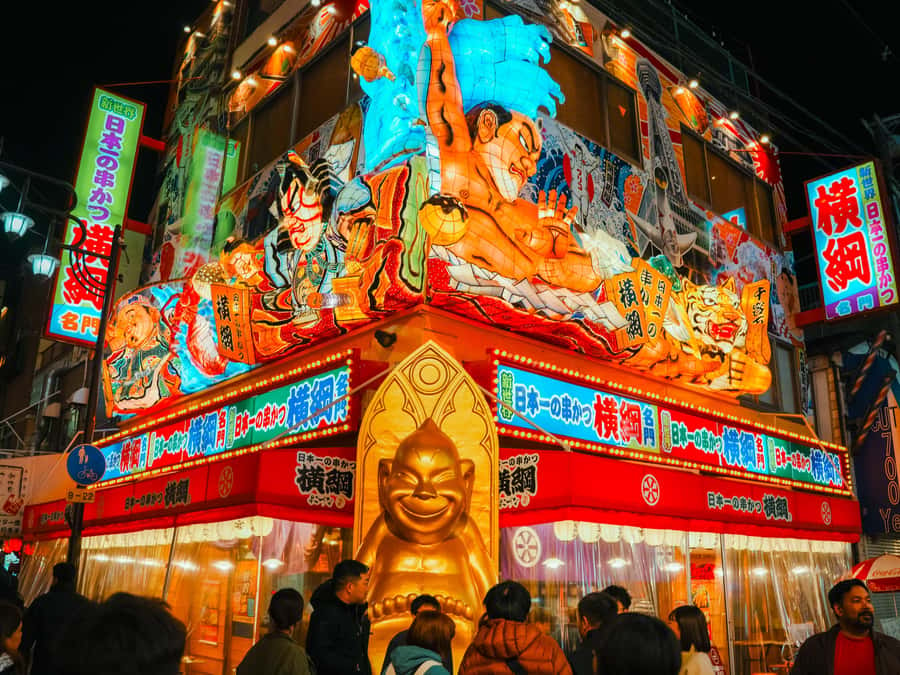
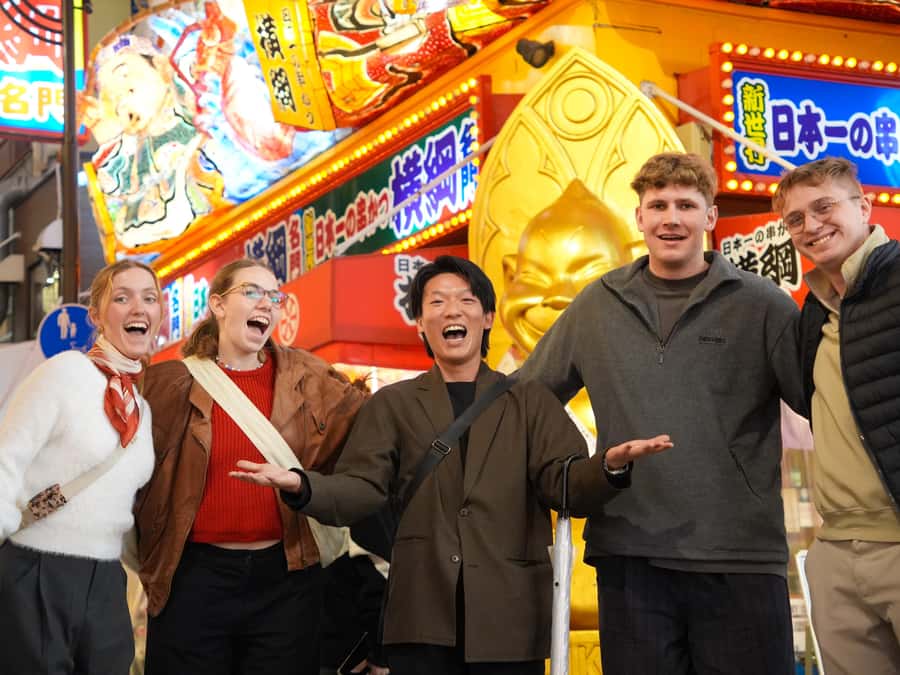
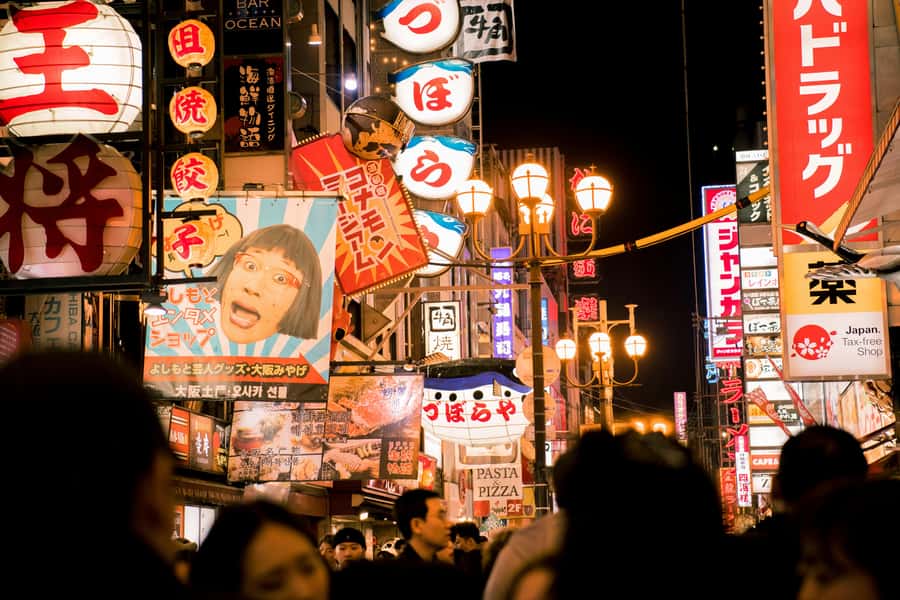
Shinsekai is where the tour becomes more playful. The district is known for retro streets, neon signs, quirky shops, and game arcades. It has a different feel from polished shopping areas and major sightseeing corridors.
Your guide takes you through the area while explaining its character. The point is not only to see the signs and old-fashioned storefronts. It is to understand the food habits and casual social life tied to this part of Osaka.
This is also where the food becomes central. Osaka is often associated with dishes meant to be shared, ordered casually, and eaten without ceremony. The tour introduces that side of the city through takoyaki, croquette, okonomiyaki, and kushikatsu.
The route can include colorful murals, small tea houses, and snack shops. These stops are described as flexible rather than fixed monuments, which is one of the benefits of having a private guide. You are not being moved along with a large group at a rigid pace.
There is one practical limit. The tour title includes Dotonbori, but the detailed route information focuses on Tennoji, Shitennoji, and Shinsekai. If seeing the famous Dotonbori canal and signs is essential to your plans, confirm how that area fits into your specific route before booking. Do not assume the morning walk gives it the same attention as Shinsekai.
More Dotonbori walks and food stops:
- Osaka: Dotonbori District River Cruise with Drink Discount
★ 4.2 · 876 reviews - Ultimate Osaka Walking Tour: Castle, Dotonbori & Hidden Gems
★ 5.0 · 862 reviews - Tea Ceremony Experience in Osaka Doutonbori
★ 5.0 · 754 reviews - Osaka: Ramen and Gyoza Cooking Class in Dotonbori
★ 5.0 · 378 reviews
What you actually eat, and what costs extra
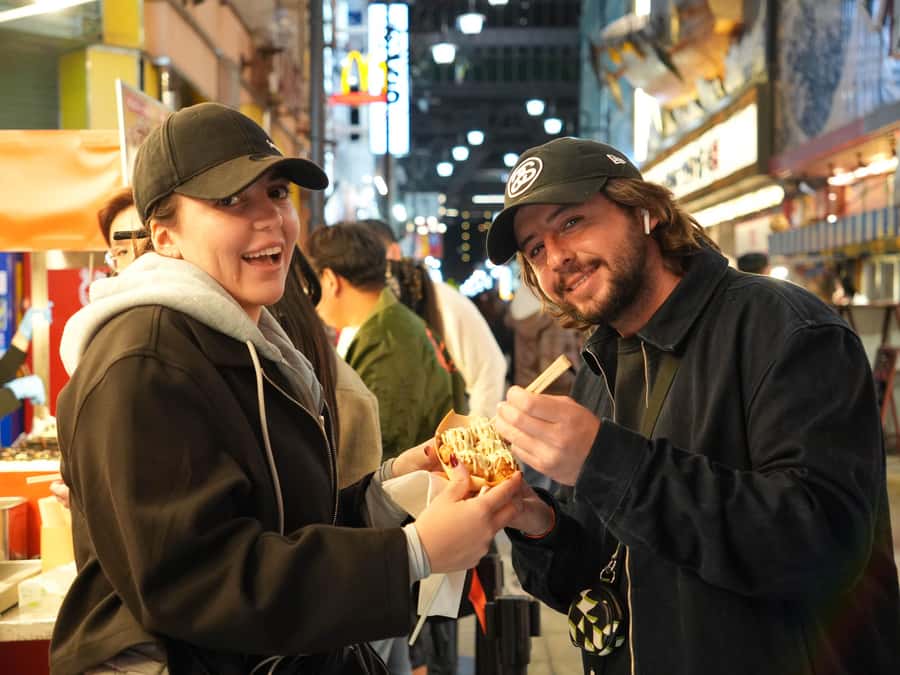
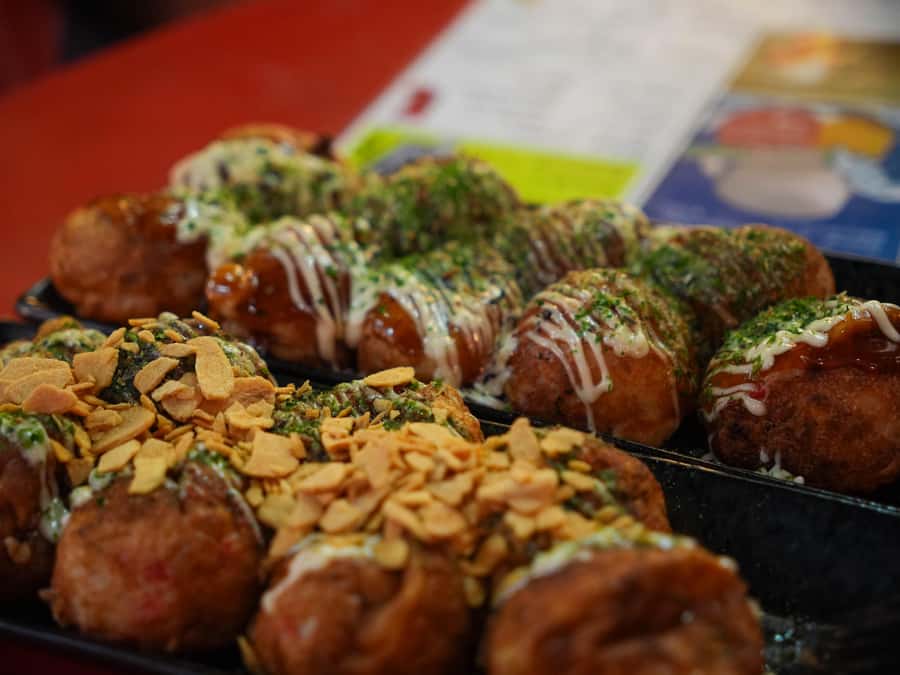
The included food is modest but useful for sampling Osaka flavors. You receive a box of takoyaki, one drink that can be alcoholic or non-alcoholic, and one croquette.
Takoyaki is a round fried snack made from batter with tender octopus inside. It is strongly associated with Osaka and is best understood as an everyday comfort food rather than a formal meal. The included box gives you a chance to try it without having to choose a shop on your own.
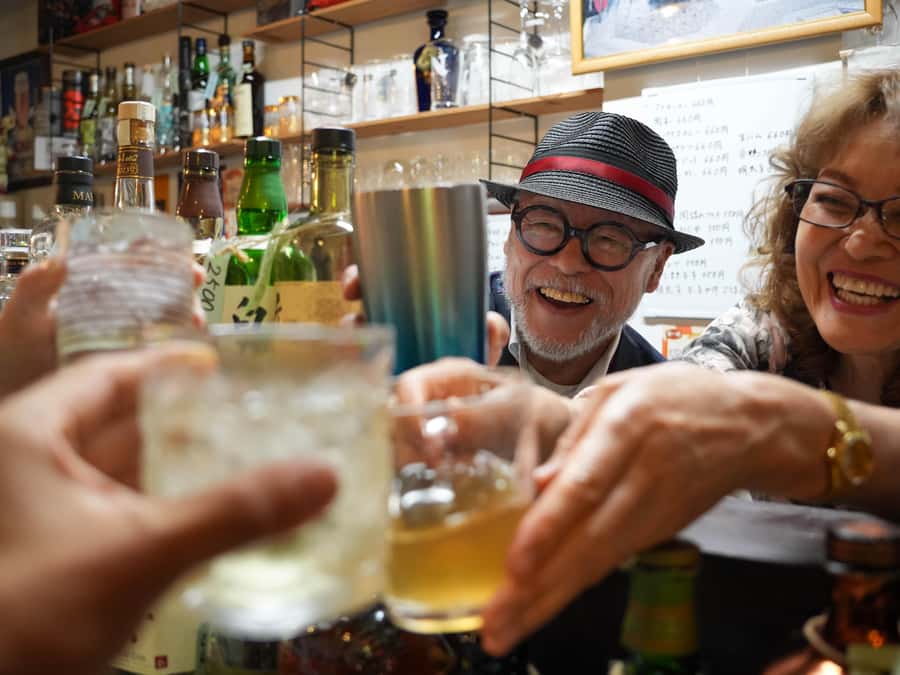
The croquette adds another simple local snack, while the drink makes the stop feel more like a break than a quick tasting. You can choose alcohol or a non-alcoholic option, which helps if you are traveling with different preferences in your group.
The route also introduces kushikatsu and okonomiyaki at local places. Kushikatsu consists of skewered and fried food, while okonomiyaki is a savory pancake-style dish. The available information makes clear that additional food and drinks at a second or third restaurant are not included.
That distinction affects the value. At $74 per person, you are paying for the private guide, walking route, local context, personalized advice, and the included snacks. You are not buying an all-you-can-eat food tour.
If you want to sample more than the included items, carry a little extra spending money. That is not a flaw, but you should know the difference between a tasting walk and a full lunch crawl before you reserve.
The guide makes the difference
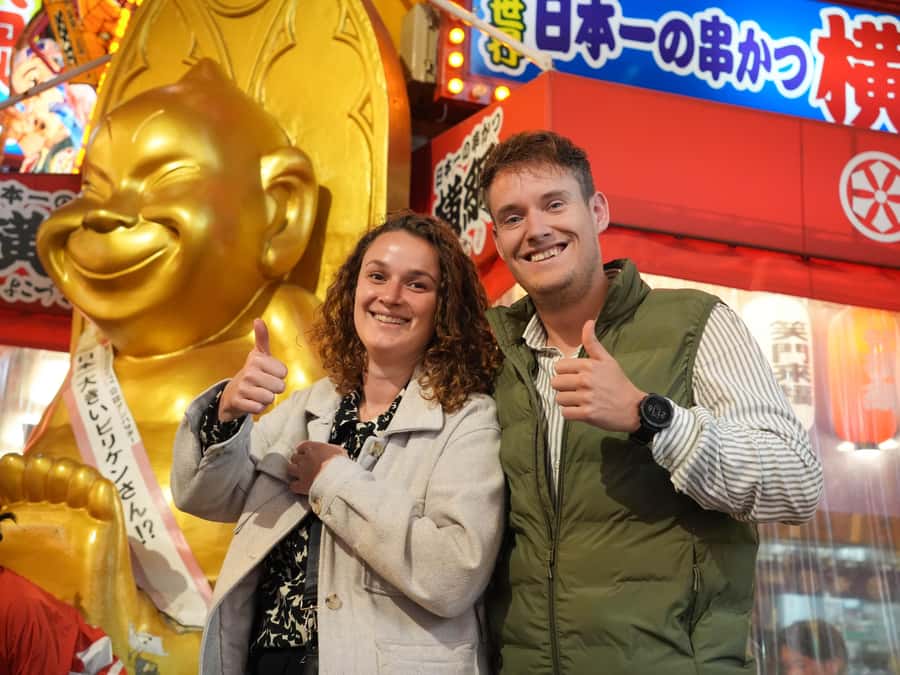
The strongest feature of this experience is the guide. The stops matter, but the quality of the walk depends on how well someone connects them.
Ben is repeatedly praised for being friendly, thoughtful, and especially strong on Osaka food and local places. His approach appears suited to people who want to eat like locals and find places beyond the most obvious tourist routes.
Hiro is associated with a good mix of history, food, conversation, and photography. If you want someone to help explain Shitennoji and also point out strong places for pictures, his style sounds like a good match.
Sena is described as offering detailed Tennoji history, good food choices, and carefully planned stops. The personal conversation and photo opportunities are part of the appeal, not extras added at the last minute.
You may not be able to choose a particular guide unless the operator confirms it. Still, knowing these names helps you understand the tone of the experience. This is not a scripted audio walk. It is built around a local person sharing stories, answering questions, and making suggestions for the rest of your time in Osaka.
What the private format means for you
A private tour costs more than joining a large group, but you get something concrete in return. Your group does not have to wait for strangers, and your guide can respond to your interests.
You can spend more time on temple history if that is what you enjoy. You can ask for more food advice if eating is your priority. You can also request personal recommendations for later in the trip, one of the listed benefits of the experience.
The private setup is particularly useful for families, couples, and small groups with mixed interests. One person can ask about religion, another can focus on food, and another can look for photo locations without turning the tour into a negotiation with twenty other people.
The trade-off is that flexibility depends on the guide and the route available that day. The experience is customizable, but it does not promise every possible stop. A private format gives you room to shape the walk, not unlimited access to every Osaka sight.
Is $74 a fair price?
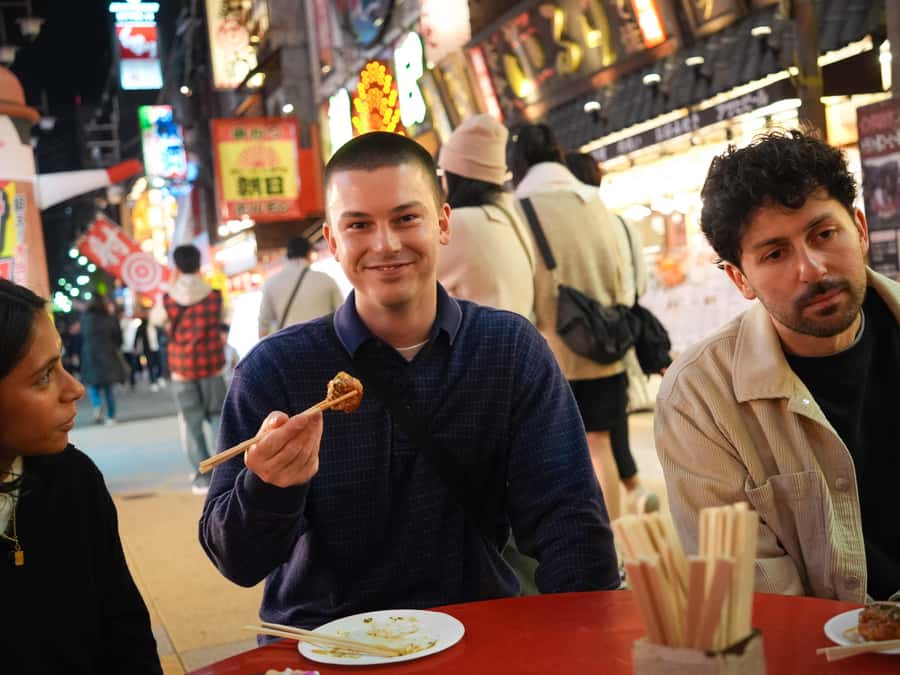
For a standard sightseeing walk, $74 per person may feel high. For a private English-language experience that includes a local guide, three food or drink inclusions, and personalized recommendations, the price is easier to justify.
The value is strongest if you are new to Osaka and want a quick introduction to Tennoji and Shinsekai without spending time choosing restaurants or working out the neighborhood yourself. You are also paying for local judgment, which can save you from eating at a place that does not suit your taste or missing a useful side street.
The value is weaker if you already know Osaka well, prefer to explore alone, or want a large meal included in the price. You will need to pay for extra food and drinks, and the walk is not designed as a full dining package.
I would treat the included food as an introduction, then decide during the walk whether you want to add okonomiyaki, kushikatsu, or other dishes. That keeps your spending under control while leaving room for a proper local meal.
Who should book this Osaka walk?
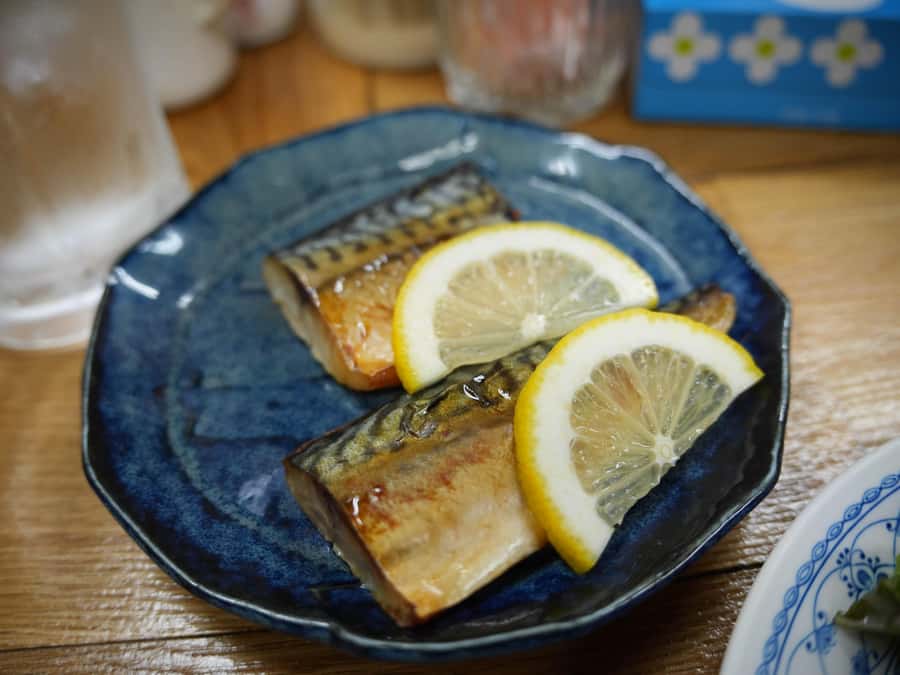
I would recommend it most strongly to first-time visitors who want history and food in the same experience. It is also a good fit if you like asking questions, taking photographs, and getting advice tailored to your own plans.
Food lovers should enjoy the mix of takoyaki, croquette, kushikatsu, and okonomiyaki. History-minded visitors will appreciate Shitennoji and the stories connected to Tennoji. Couples and small families may like the private pace more than a crowded group tour.
You may want to skip it if your priority is only Dotonbori, only temple sightseeing, or a large included lunch. In those cases, confirm the route and food plan first. The detailed route is strongest around Tennoji, Shitennoji, and Shinsekai.
The activity starts and ends at the Tenno-ji Station meeting point. You can reserve now and pay later, and cancellation is allowed up to 24 hours before the activity for a full refund.
Should you book the Goen Japan experience?
Book this tour if you want a personal introduction to Osaka that mixes one major temple with neighborhood food and local stories. The best parts are the private format, the relaxed movement from Tennoji Park to Shitennoji and Shinsekai, and guides such as Ben, Hiro, and Sena who bring clear personal knowledge to the walk.
Go in with the right expectations. You receive a box of takoyaki, a drink, and a croquette, but extra restaurant food costs more. Confirm the Dotonbori portion if that sight is important to you.
For a first Osaka morning, the combination is appealing: history first, street life next, and food throughout. At $74, it is a good buy for personal guidance and a local introduction, but less compelling if you want a cheap meal or a self-guided stroll.
FAQ
Where does the Osaka Morning Tour begin?
The tour begins at the north exit of Tenno-ji Station. Staff will be holding the Goen Japan company logo.
Where does the tour end?
The activity ends back at the meeting point at Tenno-ji Station.
Is this a private tour?
Yes. It is a one-group-only tour, so your group receives the guide’s attention and can enjoy a more customizable walking experience.
What language is the tour offered in?
The tour is offered in English.
What food and drink are included?
The inclusions are one box of takoyaki, one drink, and one croquette. The drink can be alcoholic or non-alcoholic.
Are okonomiyaki and kushikatsu included in the price?
The route includes opportunities to enjoy okonomiyaki and kushikatsu, but additional food and drinks at a second or third restaurant are not included.
Does the tour visit Shitennoji Temple and Tennoji Park?
Yes. The route includes Tennoji Park and Shitennoji Temple, along with the Shinsekai area.
Can I cancel for a full refund?
Yes. You can cancel up to 24 hours in advance for a full refund. You can also reserve and pay later, with nothing due at the time of booking.
More Morning in Osaka
- Osaka Early Morning Tour with English-Speaking Guide Dotonbori
★ 5.0 · 110 reviews - Osaka: Early Morning Osaka Castle Guided Tour, Avoid Crowds
★ 4.9 · 12 reviews - Nara Early Morning Tour (Osaka Departure Option)
★ 5.0 · 7 reviews - Osaka Early Morning Osaka Castle Tour Avoid Crowds
★ 5.0 · 3 reviews
More Temple Tours in Osaka
- Osaka: Minoh, Katsuoji Temple, & Minoh Falls Full-day Tour
★ 4.9 · 172 reviews - Osaka Temple Cool Foot Bath & Matcha Experience〈45min〉
★ 4.9 · 82 reviews - Osaka: Mind & Spirit Balance Temple Reiki Healing
★ 5.0 · 41 reviews - Katsuo-ji Temple, Arashiyama Forest, & Nara Park
★ 4.0 · 37 reviews
Just added in Osaka
- Urban Canvas: Osaka Street Art Bike Tour★ 5.0 · 10 reviews
- Anime Cosplay Photshoot-50 Digital Photos Provided★ 5.0 · 8 reviews
- TeamLab Botanical Garden Osaka Ticket★ 3.5 · 6 reviews
- Umeda Sky Building & Kuchu Teien Observatory Ticket in Osaka★ 4.5 · 3 reviews
- Immerse in Judo Martial Arts Class from Japan★ 5.0 · 4 reviews
- Cherry Blossom Buddha and Mt.Yoshino with Strawberry Picking Tour★ 4.5 · 5 reviews
- Traditional Home cooking Experience in Osaka, Japan★ 5.0 · 14 reviews
- Traditional Calligraphy Experience near Dotonbori★ 5.0 · 3 reviews
Dotonbori Tours, compared.
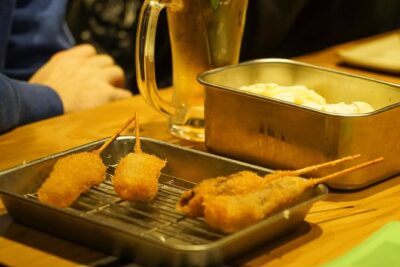
Osaka Local Foodie Walking Tour in Dotonbori and Shinsekai
Read our review →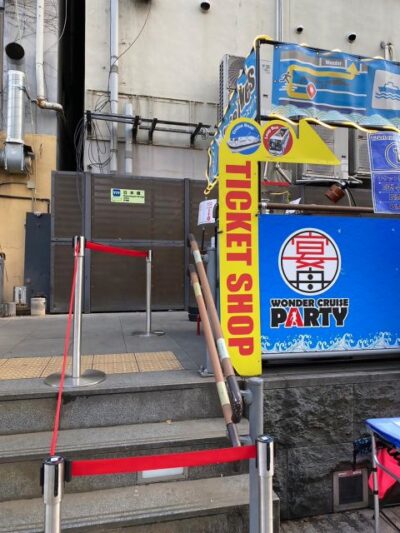
Dotonbori District River Cruise with Drink Discount
Read our review →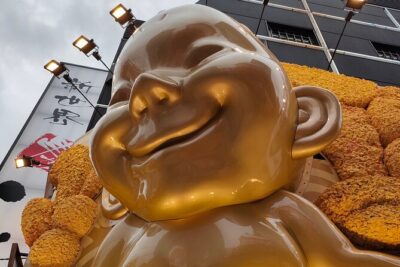
Ultimate Osaka Walking Tour: Castle, Dotonbori & Hidden Gems
Read our review →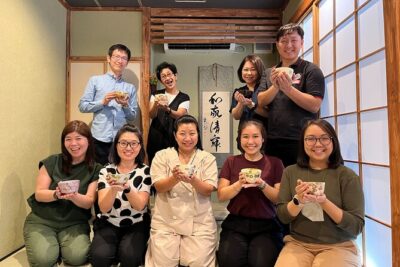
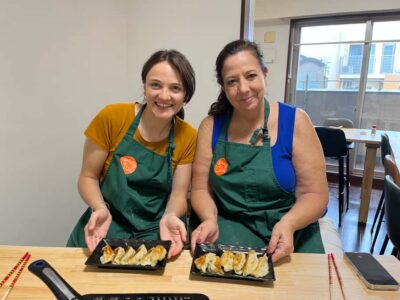
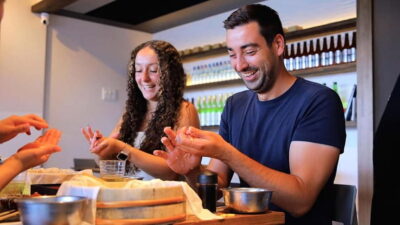
Roll and Authentic Sushi Making Class in Dotonbori
Read our review →
Osaka Local Bar Crawl in Dotombori & Uranamba Area
Read our review →
Browse the lists this tour appears in