
Reviewed · DOTONBORI TOURS
Osaka Early Morning Tour with English-Speaking Guide Dotonbori
Osaka’s appeal comes into focus when you connect its grand castle, old shopping lanes, food markets, and neon canal district in one morning. This four-hour walk does exactly that, finishing beneath the famous Glico sign in Dotonbori. I like the small maximum of eight people, which gives you a better chance to ask questions and follow the guide through busy streets. I also like the mix of history and everyday Osaka, from castle grounds to kitchenware shops and market stalls.
The main drawback is that this is a brisk overview, not a deep visit to every site. Osaka Castle’s admission is not included, and the tour generally explores the grounds rather than taking you inside the castle. You also pay about ¥430 for public transportation, so budget for that on top of the $60.78 tour price.
Key points at a glance
- Osaka Castle grounds first: Learn about the castle’s role in Japan’s unification while walking through its gardens and surrounding grounds.
- Seven very different stops: The route moves from Shinsekai and Kuromon Market to anime shops, kitchenware stores, a small temple, and Dotonbori.
- Maximum of eight people: A small group makes it easier for the guide to adjust the pace and answer questions.
- Food is part of the price: One Osaka street food item and one alcoholic or non-alcoholic drink are included.
- Subway rides connect the districts: The ¥430 transportation charge is separate, and an IC card or day pass can make the rides easier.
- A useful first-day orientation: The tour ends in Dotonbori, where you can continue eating, shopping, or return later to favorite areas.
Why this four-hour route works in Osaka
Osaka is not a city you understand from one monument. Its character is spread across separate districts, each with its own mood and purpose. This tour links several of them without asking you to work out the subway route yourself.
You begin at 9:30 a.m. at the Starbucks in Osaka Castle Park, near JO-TERRACE OSAKA. From there, the route uses both walking and public transportation. That matters because Osaka Castle and Dotonbori are not next door to each other, and the subway lets you cover more ground than a single neighborhood walk.
I see this as an orientation tour rather than a full sightseeing day. You get the broad picture, hear the stories that give each district meaning, and collect ideas for where to return later. Several guides, including Shizuka, Yusuke, Satsuki, Hikaru, Ryoichi, and Taira, have been praised for clear English, personal attention, and adapting the route to group interests.
The small-group format is especially useful here. A group of up to eight people can pause at a food stall or narrow lane without the delays that come with a large coach group. If the group is smaller, the experience may feel close to a private walk, though that is not guaranteed.
More Dotonbori walks and food stops:
- Osaka Local Foodie Walking Tour in Dotonbori and Shinsekai
★ 5.0 · 985 reviews - Osaka: Dotonbori District River Cruise with Drink Discount
★ 4.2 · 876 reviews - Ultimate Osaka Walking Tour: Castle, Dotonbori & Hidden Gems
★ 5.0 · 862 reviews
Osaka Castle: history before the city wakes up
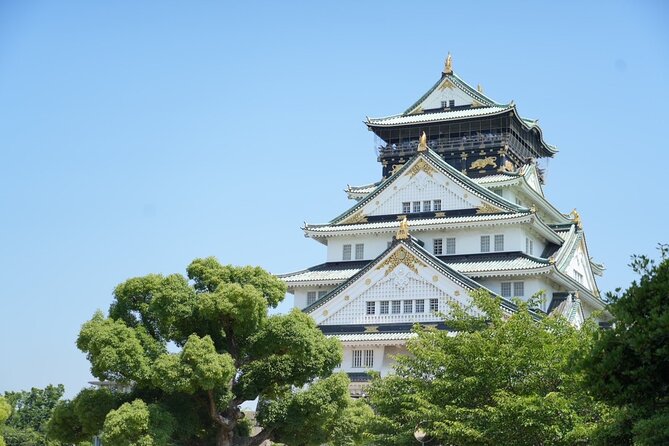
Osaka Castle is the tour’s grand opening. The fortress was built in the late 16th century and played an important role in the unification of Japan. Its broad grounds, stone walls, gardens, and impressive architecture give you a strong visual introduction to Osaka.
Your guide explains the history as you walk, rather than simply pointing toward the main tower. That approach is useful because the castle grounds contain more than one photo stop. You can look at the scale of the walls and gates, hear about the castle’s political role, and take in the surrounding park.
The timing gives you a calmer start than a visit at the busiest part of the day. Some guides also point out seasonal sights, including cherry blossoms when they are in bloom. One guide, Yusuke, was praised for finding good photo locations, while another guide, Satsuki, was noted for bringing the castle’s past to life with stories.
Set your expectations carefully. The listed castle admission is not included, and the experience generally focuses on the grounds rather than an interior visit. One person specifically wished to go inside but found the line too long. If entering the castle tower is a top priority, you may need to return independently and allow extra time.
Shinsekai: old Osaka character in a short stop
The tour then reaches Shinsekai, a district known for its nostalgic feel, shops, eateries, and mix of older and newer Osaka. The planned stop is about 30 minutes, enough to get a sense of the streets but not enough for a long meal or detailed exploration.
This is one of the places where a local guide adds real value. You can ask what the district is known for, how it fits into Osaka life, and which streets deserve a second look. The route gives you a taste of the area without using the entire morning in one neighborhood.
Because the stop is short, you should think of Shinsekai as an introduction. If you want to browse every shop or settle in for a longer meal, save that for after the tour or another day. The benefit is variety: you see Shinsekai, then continue to other parts of the city instead of spending all four hours in one zone.
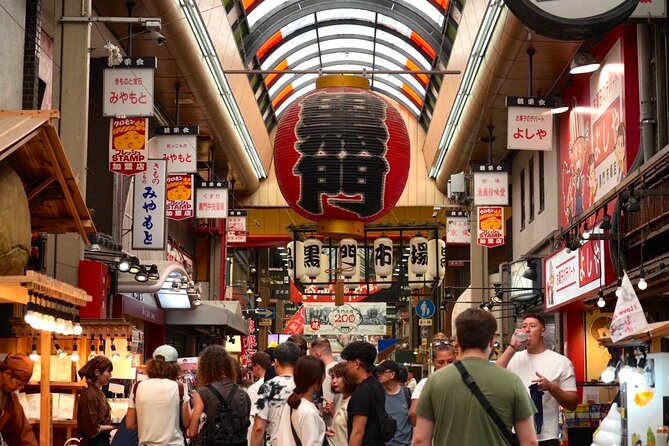
Kuromon Market: Osaka’s kitchen with a food stop
Kuromon Market is one of the most practical stops on the route. Known as Osaka’s Kitchen, it is filled with seafood, produce, prepared food, and small places selling local bites. The market gives you a direct look at Osaka’s food culture, not just a restaurant recommendation.
One street food item and one drink are included in the tour price. The drink may be alcoholic or non-alcoholic, which gives you some choice. Your guide can also help you select food, a useful service when menus are unfamiliar or stalls offer more options than you can reasonably sample.
The planned market visit is about 30 minutes. That is enough for the included food stop and a quick look around, but you should not expect a long, leisurely market lunch. Some tours have included a sit-down food break with choices from a menu, while others have focused more on vendor food. The exact food choice can vary, so go with an appetite but do not assume a full meal is covered.
I like this part because it turns the food into a social and practical lesson. You are not only being told that Osaka is famous for eating. You are shown a place where ingredients and ready-to-eat dishes are part of daily life.
A few more Osaka half-days worth pricing up
- Osaka Morning Tour: Shitennoji Temple, Shinsekai &Doutonbori
★ 5.0 · 23 reviews - Osaka: Early Morning Osaka Castle Guided Tour, Avoid Crowds
★ 4.9 · 12 reviews - Nara Early Morning Tour (Osaka Departure Option)
★ 5.0 · 7 reviews - Osaka Early Morning Osaka Castle Tour Avoid Crowds
★ 5.0 · 3 reviews
Nipponbashi Denden Town for anime, games, and electronics
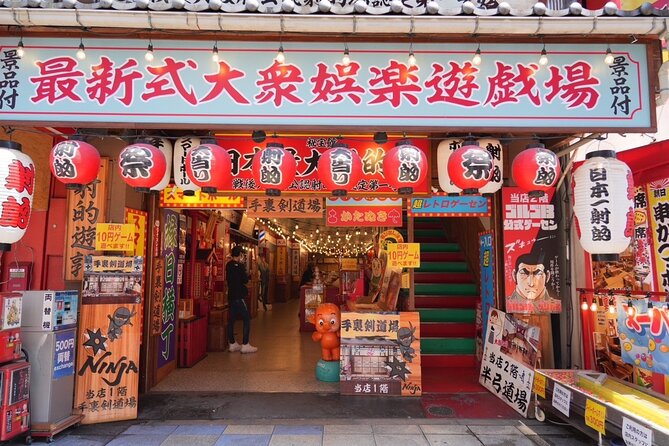
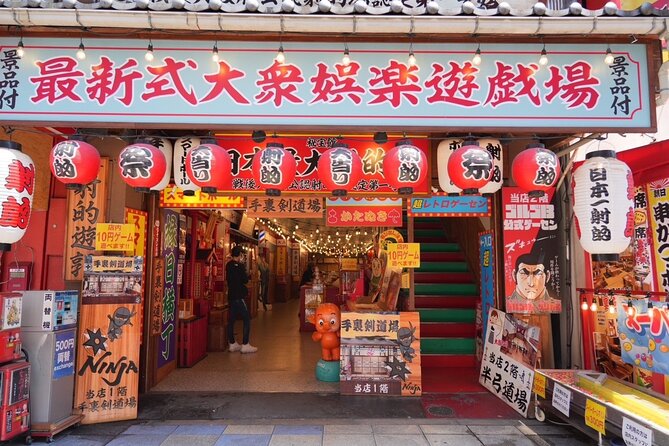
Nipponbashi Denden Town changes the tone again. This district is Osaka’s main area for electronics, anime, gaming, and Japanese pop culture. The stop lasts about 20 minutes, so it is more of a guided pass through the area than a shopping session.
If anime, games, or electronics are high on your list, pay close attention to the shops your guide points out. You may want to return later with more time and a clear idea of what you are looking for. The short visit works well as a first look, especially if you are not familiar with the neighborhood.
This stop also shows why the route is more useful than a standard list of famous sights. Osaka is not only castle history and canal lights. Denden Town adds a modern, playful side of the city, and the guide can help explain what makes the area different from the older market districts.
Doguyasuji: a shopping street for cooks
Sennichimae Doguyasuji Shopping Street is a compact but memorable stop. Its shops specialize in kitchenware, chef tools, cooking gadgets, dishes, and other supplies used by restaurants and home cooks.
The scheduled 15 minutes is short, but it gives you enough time to see the theme of the street and spot souvenirs that are more useful than a generic trinket. If you collect Japanese knives, tableware, cooking tools, or unusual kitchen items, you may want to return after the tour.
Do not count on having time for a major purchase here. The stop is designed to introduce the street, not to give you a long shopping break. Still, it is a smart inclusion because it connects Osaka’s food reputation with the tools behind that food.
Hozen-ji Temple and the lanes around it
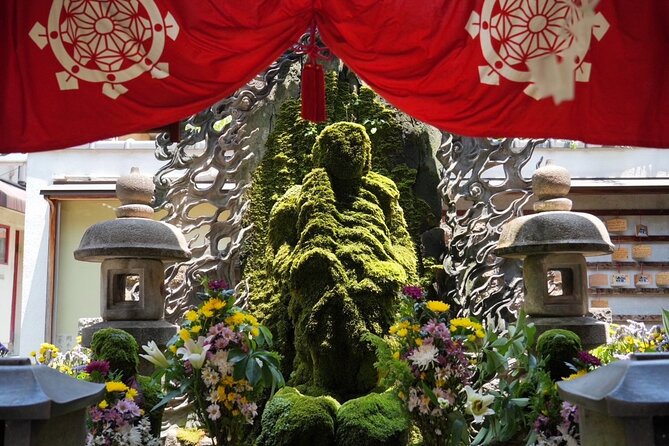
Hozen-ji Temple offers a quiet pause in the middle of the city. It is known for its moss-covered statue of Fudo Myo-o and the traditional cobblestone lanes nearby. The planned visit is about 15 minutes.
This is a small stop, but it helps balance the louder market and shopping districts. Your guide can explain the temple’s place in the neighborhood, and you have a chance to slow down before reaching Dotonbori.
Be respectful with your time here. It is a compact temple visit rather than a large religious complex, and the value comes from the atmosphere, the statue, and the contrast with the surrounding commercial streets. A guide can help you notice details you might otherwise walk past.
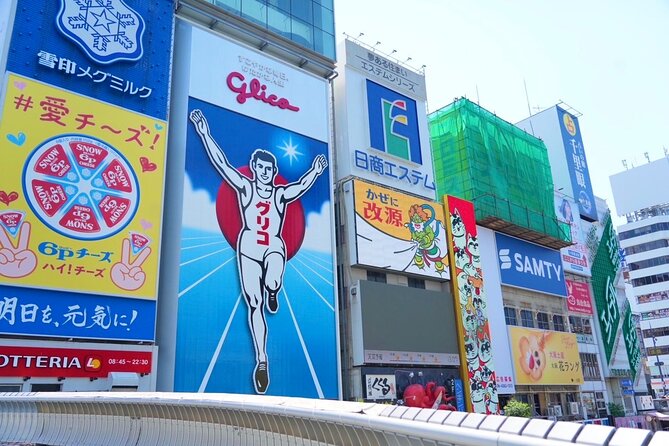
Dotonbori: finish under the Glico running man
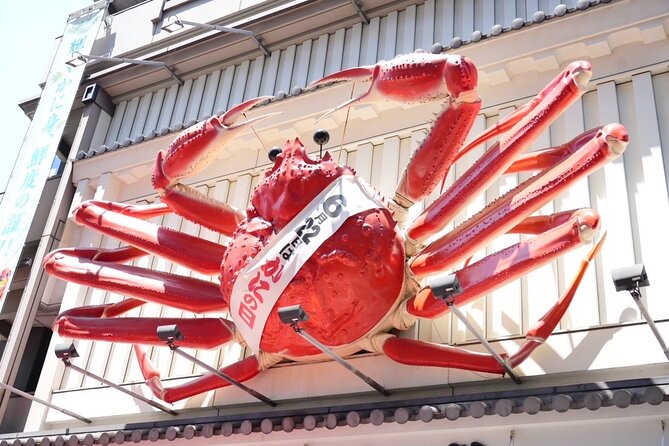
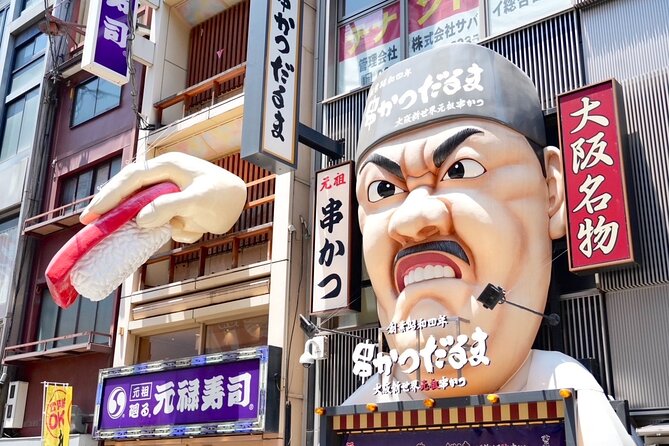
The tour ends in Dotonbori, one of Osaka’s most recognizable areas. You finish in front of the famous Glico sign near Ebisu Bridge, with views toward the Dotonbori Canal and the district’s bright signs.
The final stop lasts about 30 minutes. Your guide can explain the landmarks, point out places to eat, and help you understand the layout of the area. This is also a convenient ending because you can remain in Dotonbori for lunch or continue exploring around Namba.
If you are unsure how to continue, the guide can assist you in reaching Namba Station. That small bit of help matters after a morning of walking and subway rides, especially if Osaka is your first stop in Japan.
Dotonbori is much livelier later in the day, so the morning timing gives you an early look before the area reaches its full evening intensity. You can then decide if you want to return for dinner, photographs, or more shopping.
Walking, subway rides, and the real pace
This is described as a walking tour, but it is not four straight hours on foot. You walk through each district and use trains between areas. The route covers a lot, so comfortable shoes are important even though the pace has been described as manageable.
The public transportation fare is about ¥430 per person and is not included. A rechargeable IC card such as a Suica-type card or an all-day train pass can make the subway portions easier. Bring the fare separately and expect the guide to lead you through several transfers or station connections.
The group’s pace can affect the experience. A recent knee injury was accommodated successfully by one guide, and other guides have adjusted routes to suit group preferences. Still, you should be ready for regular walking, standing, stairs, and movement through crowded public areas.
The 9:30 a.m. start is useful for making the most of a day in Osaka. You finish around early afternoon, leaving time for additional shopping, a museum, a meal, or a second visit to one of the districts you saw.
What the $60.78 price really covers
At $60.78 per person, the cost is reasonable if you value a guide who handles the route and adds context. The price includes an English-speaking guide, one street food item, and one drink. It does not include public transportation or attraction admissions.
The strongest value is the structure. Osaka’s districts are spread out, and planning a route from Osaka Castle to Shinsekai, Kuromon Market, Denden Town, Doguyasuji, Hozen-ji, and Dotonbori would take time. You are paying for the route, explanations, local recommendations, and the ability to ask questions as you go.
The value is lower if you prefer to move slowly, shop at length, or enter every major attraction. The castle interior is not included, and several stops are short. Independent visitors can spend less by using trains and walking alone, but they will need to arrange the route and research the background themselves.
The maximum group size of eight helps justify the price. This is not a giant bus outing, and the guide can usually hear your questions and respond without turning every pause into a production.
Which guide style suits you
The guide names connected with this experience include Shizuka, Yusuke, Hikaru, Satsuki, Ryoichi, Ryosuke, Kanji, Arisa, Taira, Ryo, Aya, and Susan. The exact guide depends on the date and assignment, so you should not assume you can select a particular person.
The strongest pattern is personal guidance. Shizuka has been praised for adjusting the pace for a knee injury. Yusuke has been noted for clear communication, local history, and finding photo spots. Ryoichi has shared personal experiences from growing up in Osaka, while Taira has been especially good at shaping the walk around individual interests.
Some guides may be younger, including college students, but that does not automatically mean a weaker experience. One guide was described as polite and familiar with the city. What matters most is your willingness to ask questions and tell the guide what interests you.
Who should book this Osaka morning walk?
I would choose this tour for a first morning in Osaka, especially if you want a broad introduction before deciding where to spend the rest of your time. It suits solo visitors, couples, families, and small groups who prefer conversation and local explanation over a large coach format.
It is also a good match for anyone arriving with a short schedule. You see several major areas in four hours, then finish in Dotonbori with the afternoon still open.
Food lovers, castle fans, pop-culture shoppers, and photographers all get something specific from the route. Families may appreciate the variety, while people with limited mobility should discuss their needs with the guide and remember that the route includes walking and public transportation.
I would not book it if your main goal is a long Osaka Castle visit, extensive shopping, or a slow market meal. In that case, choose one district and explore it independently. This tour is at its best as a well-organized introduction.
Should you book it?
Book it if you want Osaka explained as a city of connected neighborhoods, not just a set of famous pictures. The combination of castle grounds, local food, markets, pop culture, kitchenware, temple lanes, and Dotonbori gives you a useful first map of the city.
The main tradeoff is breadth over depth. You will not linger everywhere, and you must pay the transport fare separately. But with a small group, an English-speaking guide, included food and drink, and a finish at the Glico sign, this is a practical way to get your bearings fast.
Free cancellation is available up to 24 hours before the 9:30 a.m. start. If you book, arrive on time at the Starbucks in Osaka Castle Park and keep the afternoon free for the area that catches your interest most.
FAQ
Where does the Osaka morning tour start?
The tour starts at Starbucks Coffee in Osaka Castle Park, near JO-TERRACE OSAKA, at 9:30 a.m.
Where does the tour finish?
It ends in Dotonbori, in front of the famous Glico sign. The guide can help you reach Namba Station if needed.
How long does the tour last?
The experience lasts approximately four hours.
How many people can join the tour?
The maximum group size is eight people.
Is Osaka Castle admission included?
No. Admission tickets to attractions are not included, and the tour generally focuses on walking around the castle grounds.
Is public transportation included?
No. Public transportation costs about ¥430 per person and must be paid separately.
Is food included?
Yes. The tour includes one Osaka street food item and one drink. The drink can be alcoholic or non-alcoholic.
Can I cancel for a full refund?
Yes. You can cancel up to 24 hours before the local start time for a full refund. Changes or cancellations made less than 24 hours before the start are not refunded.
Just added in Osaka
- Urban Canvas: Osaka Street Art Bike Tour★ 5.0 · 10 reviews
- Anime Cosplay Photshoot-50 Digital Photos Provided★ 5.0 · 8 reviews
- TeamLab Botanical Garden Osaka Ticket★ 3.5 · 6 reviews
- Cherry Blossom Buddha and Mt.Yoshino with Strawberry Picking Tour★ 4.5 · 5 reviews
- Umeda Sky Building & Kuchu Teien Observatory Ticket in Osaka★ 4.5 · 3 reviews
- Immerse in Judo Martial Arts Class from Japan★ 5.0 · 4 reviews
- Traditional Home cooking Experience in Osaka, Japan★ 5.0 · 14 reviews
- Traditional Calligraphy Experience near Dotonbori★ 5.0 · 3 reviews
Dotonbori Tours, compared.
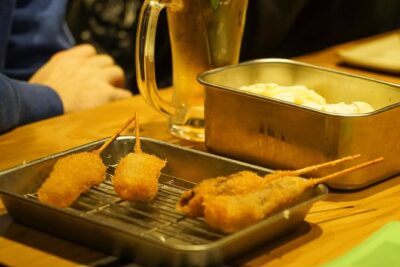
Osaka Local Foodie Walking Tour in Dotonbori and Shinsekai
Read our review →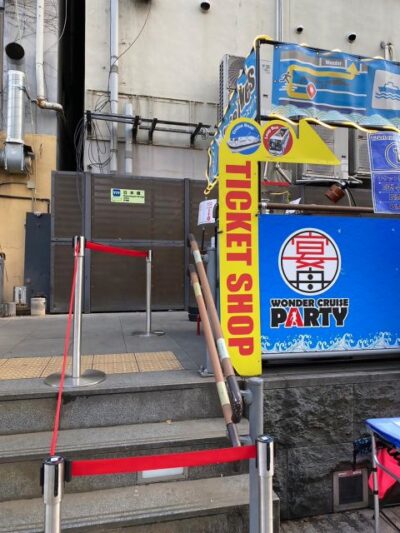
Dotonbori District River Cruise with Drink Discount
Read our review →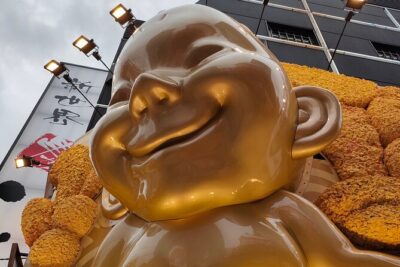
Ultimate Osaka Walking Tour: Castle, Dotonbori & Hidden Gems
Read our review →
Roll and Authentic Sushi Making Class in Dotonbori
Read our review →
Osaka Local Bar Crawl in Dotombori & Uranamba Area
Read our review →
Browse the lists this tour appears in